
2027 Fastest Online Cloud Engineering Bootcamps

Co-Founder and Chief Data Scientist
Choosing an online cloud engineering bootcamp is not just a question of which program is fastest. The better question is whether the training will actually prepare you for cloud certifications, hands-on infrastructure work, and a realistic job search in a market where employers increasingly expect practical AWS, Azure, Linux, DevOps, networking, security, and automation skills.
This guide is for career changers, IT support professionals, students, and working technologists comparing accelerated online cloud engineering bootcamps in the USA. You will learn what these programs teach, how much they cost, which certifications they may support, what salaries are commonly reported for cloud roles, and how to avoid paying for a program that does not match your goals.
Instead of treating every bootcamp as equal, this guide focuses on the decision points that matter: curriculum depth, labs, instructor support, certification preparation, cost, schedule, career services, and whether a program is better suited for beginners, IT professionals, or people targeting DevOps, cloud security, or cloud architecture.
Quick answer: Is an online cloud engineering bootcamp worth it?
An online cloud engineering bootcamp can be worth it if you need structured, job-focused training in cloud platforms, Linux, DevOps, containers, networking, security, and certification preparation faster than a traditional degree pathway. It is usually most valuable for learners who will complete labs, build projects, earn recognized certifications, and actively network or apply for cloud support, cloud administrator, DevOps, or junior cloud engineering roles.
A bootcamp is less likely to pay off if you choose only by advertised speed, skip hands-on practice, assume a certificate alone guarantees employment, or enroll without checking whether exam vouchers, labs, mentorship, and career support are included in the price.
What are the benefits of getting an online cloud engineering bootcamp qualification?
- Clearer access to cloud roles: Bootcamp training can help prepare learners for jobs such as Cloud Engineer, Cloud Architect, DevOps Engineer, Cloud Security Engineer, Cloud Administrator, and Cloud Support Specialist.
- Strong salary potential: Cloud skills are associated with high-paying IT roles. The average base pay for cloud engineers in the U.S. in 2025 is approximately $129,464 annually, though actual pay varies by experience, location, employer, and specialization.
- Flexible study options: Online programs may offer self-paced, part-time, live-online, or hybrid formats, making them practical for working adults and career changers who cannot attend campus full time.
What can I expect from an online cloud engineering training bootcamp?
Most online cloud engineering bootcamps are designed to move learners quickly from cloud fundamentals into applied infrastructure work. The strongest programs combine conceptual instruction with labs, projects, troubleshooting exercises, and certification-aligned practice.
- Certification-focused preparation: Many programs cover cloud service models such as infrastructure as a service (IaaS), platform as a service (PaaS), and software as a service (SaaS), along with exam objectives for cloud certifications from AWS, Azure, Google Cloud, CompTIA, the Linux Foundation, or other providers.
- Guided learning structure: Training may include live classes, recorded lessons, instructor office hours, practice exams, virtual labs, peer collaboration, and capstone projects.
- Hands-on technical practice: Expect to work with cloud deployment, storage, compute, networking, identity access, monitoring, automation, containers, and troubleshooting rather than only watching lectures.
- Accelerated schedule: Bootcamps compress training into a shorter timeline than degree programs. Some last days or weeks; others run several months or longer depending on depth, pacing, and career support.
Where can I work with an online cloud engineering training bootcamp qualification?
Cloud engineering skills apply across many industries because organizations rely on cloud infrastructure for software delivery, data storage, analytics, security, remote work, and digital operations.
- Corporate IT teams: Manage cloud infrastructure, access controls, migrations, monitoring, backup, and internal systems for organizations of different sizes.
- Managed service providers: Support multiple client environments, often gaining exposure to varied cloud architectures and troubleshooting scenarios.
- Technology companies: Work for cloud providers such as Amazon, Microsoft, and Google, or for companies that build products on their platforms.
- Consulting firms: Help clients plan migrations, reduce infrastructure risk, improve reliability, and design cloud strategies.
- Startups: Build and scale cloud environments where infrastructure choices directly affect product speed, cost, and uptime.
- Remote-first employers: Many cloud roles can be performed remotely when the employer supports distributed infrastructure teams.
How much can I make with an online cloud engineering training bootcamp qualification?
Salaries depend heavily on role, experience, location, certifications, technical depth, and employer size. A bootcamp can help build skills, but it does not guarantee a specific salary.
- Early-career roles: A Cloud Support Associate can expect to make an average salary of around $85,000. For those just starting, the average salary for an entry-level cloud engineer is about $101,337.
- Mid-level roles: A Cloud Engineer with a few years of experience can command an average salary of $119,000 to $129,464 per year.
- Senior and specialized roles: A Cloud Architect earns an average of $135,454, while a Cloud Security Engineer can make around $136,485 annually. Professionals with expertise in specific platforms can earn even more, with AWS and Azure cloud engineers earning a median of $140,000 or more.
- Fastest Online Cloud Engineering Bootcamps for 2027
- Benefits of Online Cloud Engineering Bootcamps
- How to Choose the Right Cloud Engineering Bootcamp
- Prerequisites and Application Process
- Cloud Engineering Skills You Should Learn
- Career Paths After a Cloud Engineering Bootcamp
- Cost and Financing Options
- Salary Expectations After Bootcamp Training
- Online vs. In-Person Cloud Bootcamps
- Cloud Engineering Specializations
- Job Market for Bootcamp Graduates
- Cloud Engineering Trends and Outlook
- Accreditation and Industry Recognition
- Return on Investment
- Cross-Disciplinary Tech Skills
- Management Training for Cloud Leadership
Fastest Online Cloud Engineering Bootcamps for 2027
The programs below are presented to help readers compare accelerated online cloud engineering bootcamps by duration, focus area, cost information, included credentials, and institutional or provider recognition. Use the list as a starting point, not as a substitute for contacting each provider and verifying current tuition, schedule, exam voucher policies, refund terms, and career services.
Research.com evaluates education options using institutional and program information from reliable sources, including the IPEDS database, Peterson’s database—including their Distance Learning Licensed Data Set—College Scorecard, and the National Center for Education Statistics. Additional details about evaluation practices are available on the Research.com methodology page.
Here are the fastest online cloud engineering bootcamps for 2027.
| Program | Best fit | Length | Cloud or DevOps focus |
| Amagi Academy | Learners seeking an intensive DevOps and cloud infrastructure program with mentoring | 7 weeks | DevOps, automation, database management, cloud infrastructure |
| California Institute of Technology | Learners seeking a longer university-backed cloud architecture program | 8 months | AWS, Azure, migration, disaster recovery, architecture |
| Clarusway | Students who want AWS and DevOps training with internship-style experience | 37 weeks | AWS, DevOps, cloud automation |
| Cognixia | Learners looking for a shorter AWS-focused training option | 36 hours | AWS architecture and cloud solutions deployment |
| DevOps University | Budget-conscious learners needing DevOps fundamentals | Recorded sessions 15 hours/ self-paced | DevOps and cloud computing fundamentals |
| Linux Foundation | Beginners who want Linux, Kubernetes, and certification vouchers | 24 weeks, self-paced | Linux, DevOps, cloud computing, Kubernetes |
| University of New Orleans | Learners seeking Linux Foundation-aligned non-credit cloud training | 6 months | Linux, DevOps, containers, Kubernetes |
| QuickStart | Beginners looking for AWS, networking fundamentals, and university-affiliated certificates | 12–20 weeks | Cloud engineering, AWS, networking |
| Qwasar Silicon Valley | Learners who want portfolio projects and interview preparation | Up to 24 months | Cloud engineering, DevOps, automation |
| Trainingcamp | IT professionals seeking rapid CompTIA Cloud+ certification preparation | 5 days intensive | Cloud architecture, deployment, security, troubleshooting |
1. Amagi Academy
The Amagi Academy DevOps Live Course is an online program for learners who want concentrated training in DevOps, cloud infrastructure management, automation, and database management. Its format includes class instruction, mentor sessions, individual assignments, and group projects, which can be useful for students who need accountability and practical work rather than a fully self-directed course.
The program also emphasizes job preparation through interview practice, resume support, job placement assistance, and mentorship. Applicants must complete a one-on-one interview, which is used to assess background, goals, and motivation. Because financing options are limited, prospective students should compare the total price with the level of personal support and project feedback they expect to receive.
- Program Length: 7 weeks
- Tracks/Concentrations: DevOps, Cloud Infrastructure Management, Automation, Database Management
- Tuition Cost: Premium price: $19,500 (full course + weekly 1:1 sessions), Standard price: $16,500 (full course), Online, self-paced price: TBA (full course), Optional discounted price: $4,000 (citizens/residents of developing/emerging countries)
- Required Credits to Graduate: Complete all courses
- Accreditation: Not specified
2. California Institute of Technology
The California Institute of Technology Cloud Computing Bootcamp is an online program developed with Microsoft and aimed at learners preparing for cloud architect and cloud engineering responsibilities. The curriculum covers AWS and Azure, cloud architecture principles, application migration, autoscaling, cloud workloads, database management, disaster recovery, and identity access management.
Students complete over 40 hands-on projects and sandboxed labs, then finish with a capstone project across four domains. The program includes mentorship, resume writing assistance, access to a global recruiter network, a Caltech CTME campus visit, networking opportunities, a Cloud Computing Bootcamp certificate, and up to 15 CEUs from Caltech CTME. It is best suited for learners who want a longer, structured, university-associated pathway rather than a short exam-prep course.
- Program Length: 8 months
- Tracks/Concentrations: AWS, Azure, Cloud Architecture, Application Migration, Disaster Recovery
- Tuition Cost: Not specified
- Required Credits to Graduate: Up to 15 CEUs
- Accreditation: California Institute of Technology Center for Technology and Management Education (Caltech CTME)
3. Clarusway
Clarusway offers an online AWS and DevOps bootcamp combining lectures, labs, projects, and internship opportunities. The program is structured around AWS services, DevOps tooling, and automation skills, making it relevant for learners who want portfolio evidence and practical exposure.
The program is accessible to beginners as well as students with some IT experience. Career support includes interview preparation and job placement assistance. Because the program includes a substantial number of didactic/video and lab/project hours, students should make sure their weekly schedule can support the workload before enrolling.
- Program Length: 37 weeks
- Tracks/Concentrations: AWS, DevOps, Cloud Automation
- Tuition Cost: $13,800 / Free AWS & DevOps Internships
- Required Credits to Graduate: 441 hrs didactic/video sessions, 124 hrs Labs/Projects sessions
- Accreditation: Not specified
4. Cognixia
Cognixia provides Cloud Computing with AWS Training for learners who want a shorter program focused on designing, deploying, and managing AWS cloud solutions. The course covers AWS architecture and services, hands-on labs, real-world projects, and exam preparation for AWS certifications.
This option may fit beginners or working professionals who want targeted AWS upskilling without committing to a multi-month program. Students should verify how much instructor interaction, lab access, and certification preparation are included at the listed price.
- Program Length: 36 hours
- Tracks/Concentrations: AWS Cloud Architecture, Cloud Solutions Deployment
- Tuition Cost: $549.00 total
- Required Credits to Graduate: 12 modules
- Accreditation: Not specified
5. DevOps University
DevOps University offers a Certified DevOps Foundation workshop for learners who want an affordable introduction to DevOps concepts connected to cloud engineering. The course covers cloud computing basics, DevOps practices, and automation through recorded content and self-paced study.
This is a low-cost option for learners exploring the field or preparing to build foundational knowledge before a deeper cloud program. It is not the same as an immersive bootcamp with months of labs, mentorship, and career coaching, so students should match expectations to the course scope.
- Program Length: Recorded sessions 15 hours/ self-paced
- Tracks/Concentrations: DevOps, Cloud Computing Fundamentals
- Tuition Cost: $99 (discounted)
- Required Credits to Graduate: Completion of modules
- Accreditation: Not specified
6. Linux Foundation
The Linux Foundation Cloud Engineer IT Professional Program is built for beginners who need a structured route into Linux administration, DevOps, cloud computing, and Kubernetes. The curriculum is performance-oriented and emphasizes labs and real-world tasks.
Students receive exam vouchers for the Linux Foundation Certified System Administrator (LFCS) and Certified Kubernetes Administrator (CKA) exams. Live office hours, mentorship, and a dedicated discussion group support the self-paced format. This program is especially relevant for learners who want Linux and Kubernetes credentials alongside cloud engineering fundamentals.
- Program Length: 24 weeks, self-paced
- Tracks/Concentrations: Linux Administration, DevOps, Cloud Computing, Kubernetes
- Tuition Cost: $1,300
- Required Credits to Graduate: 5 courses and 2 certifications (LFCS & CKA)!
- Accreditation: The Linux Foundation
7. University of New Orleans
The University of New Orleans Professional, Adult, and Continuing Education (PACE) Cloud Engineer Boot Camp is a fully online, non-credit program that prepares students for cloud administration and certification-related skills. The program includes 220 hours of instruction over six months and begins with Linux fundamentals before moving into DevOps, cloud computing, containers, and Kubernetes.
Students receive prepaid vouchers for the Linux Foundation Certified System Administrator (LFCS) and Certified Kubernetes Administrator (CKA) exams. The curriculum is developed by experts from the Linux Foundation, which can be valuable for learners seeking industry-aligned Linux and Kubernetes preparation through a university continuing education unit.
- Program Length: 6 months
- Tracks/Concentrations: Linux, DevOps, Cloud Computing, Containers, Kubernetes
- Tuition Cost: Not specified
- Required Credits to Graduate: Non-credit course
- Accreditation: The Linux Foundation
8. QuickStart
QuickStart offers an Online Cloud Engineering Bootcamp covering networking fundamentals, cloud computing, AWS functionality, and real-world IT projects. The program prepares students for the AWS Certified Cloud Practitioner certification and helps them build a portfolio.
QuickStart offers full-time and part-time formats lasting 12–20 weeks and partners with universities such as Hofstra University, UC Santa Barbara, and the University of Texas at Arlington. Students can earn a certificate from their selected institution. No prerequisites are required, making this option accessible to beginners, though applicants should still be prepared to learn networking and cloud concepts quickly.
- Program Length: 12–20 weeks
- Tracks/Concentrations: Cloud Engineering, AWS, Networking Fundamentals
- Tuition Cost: Not specified
- Required Credits to Graduate: Non-credit course
- Accreditation: University certificate from partner institutions
9. Qwasar Silicon Valley
Qwasar Silicon Valley offers the Elite Cloud Engineering Bootcamp, an online program with a strong emphasis on technical depth, portfolio work, and interview preparation. The curriculum covers cloud infrastructure, DevOps, and automation, with projects designed to demonstrate practical ability.
The program may suit learners who want a longer pathway with mentorship and job-readiness support. Because the stated length is up to 24 months, prospective students should ask how pacing works, what milestones are required, and how career support is delivered throughout the program.
- Program Length: Up to 24 months
- Tracks/Concentrations: Cloud Engineering, DevOps, Automation
- Tuition Cost: Not specified
- Required Credits to Graduate: Completion of course modules
- Accreditation: Not specified
10. Trainingcamp
Trainingcamp offers a CompTIA – Cloud+ Certification Boot Camp for learners who want a short, intensive path to CompTIA Cloud+ preparation. The program covers cloud architecture, deployment, security, and troubleshooting.
This type of program is best for learners who can handle concentrated instruction and already have enough IT familiarity to absorb certification content quickly. Students should confirm exam voucher policies, retake support, lab availability, and post-course access before enrolling.
- Program Length: 5 days intensive
- Tracks/Concentrations: Cloud Architecture, Deployment, Security, Troubleshooting
- Tuition Cost: $2,995
- Required Credits to Graduate: Completion of course modules
- Accreditation: CompTIA
This list focuses on cloud engineering programs. If you are comparing broader programming pathways, review Research.com’s guide to the best coding bootcamps available online.
What are the benefits of attending online cloud engineering training bootcamps?
Online cloud engineering bootcamps can be useful because they focus on marketable cloud skills rather than broad academic coursework. The best programs teach platform tools, infrastructure concepts, automation, troubleshooting, and certification objectives in a format designed for career transition or rapid upskilling.
- Faster skill-building: Bootcamps compress cloud engineering training into a shorter period than degree programs. This intensive model is similar to the fastest online CISM training bootcamps, which help cybersecurity professionals build targeted management and security credentials.
- Schedule flexibility: Online delivery allows students to study from home, continue working, and choose from self-paced, part-time, or live-online formats.
- Certification alignment: Many programs map lessons to certifications from AWS, Azure, GCP, CompTIA, the Linux Foundation, or other recognized providers.
- Applied practice: Labs, simulations, cloud accounts, automation tasks, and capstone projects can help students demonstrate actual technical ability.
- Career transition support: Some bootcamps include resume reviews, mock interviews, portfolio coaching, and job search assistance.
For beginners, the right first step may be foundational IT training before a cloud-specific program. A fast-track CompTIA A+ certification online can help build essential hardware, networking, operating system, and troubleshooting knowledge that supports later cloud learning.
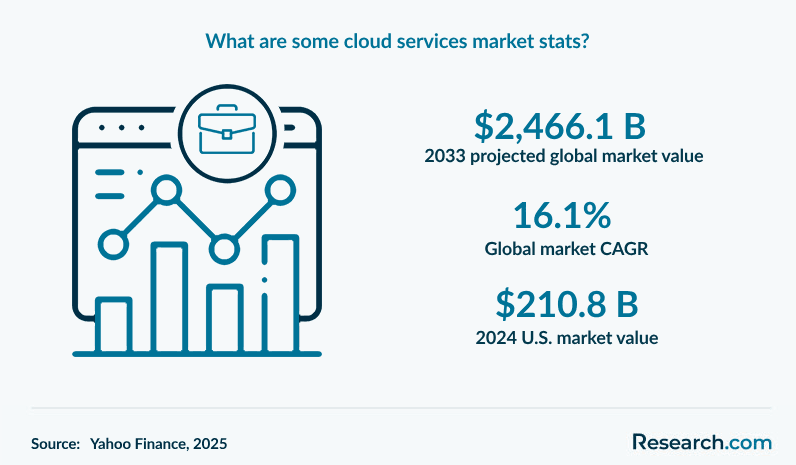
The global cloud services market is experiencing significant growth, projected to expand from USD 644.5 billion in 2024 to USD 2,466.1 billion by 2033, reflecting a compound annual growth rate (CAGR) of 16.1%. In 2024, North America is expected to lead the market with a 38.9% share, while Infrastructure as a Service (IaaS) is anticipated to be the dominant service model, accounting for 44.9% of the market.
Among applications, asset management is projected to hold the largest market share at 34.1%. This expansion is driven by trends like multi-cloud adoption for flexibility and edge computing integration to reduce latency.
Within this global landscape, the U.S. cloud services market is also set for major expansion, with projections showing an increase from USD 210.8 billion in 2024 to USD 747.9 billion by 2033. This represents a robust CAGR of 15.1% for the U.S. market specifically. The adoption of digital transformation initiatives across various sectors and the strategic use of multi-cloud architectures are key factors underpinning this dynamic growth.
The graphic below summarizes this cloud services market growth and the business adoption trends behind it.
How do I choose the best online cloud engineering training bootcamp for my specific needs and career goals?
The best cloud engineering bootcamp is the one that matches your current skill level, target role, preferred learning format, budget, and certification plan. A beginner targeting cloud support should not evaluate programs the same way as an experienced systems administrator preparing for Kubernetes, DevOps, or cloud architecture roles.
If you want a vendor-neutral credential before specializing in AWS or Azure, an accelerated CompTIA Cloud+ certification training online can be a practical route to platform-independent cloud concepts.
| Decision factor | What to check | Why it matters |
| Curriculum fit | Match course topics to your target role and exam objectives | A DevOps-heavy program may not be ideal if your immediate goal is cloud support or Azure administration |
| Hands-on labs | Ask how many labs, projects, and cloud deployments are required | Employers value proof that you can configure, troubleshoot, and automate systems |
| Instructor background | Review cloud certifications, work history, and teaching availability | Experienced instructors can explain trade-offs beyond exam memorization |
| Learning format | Compare live-online, self-paced, part-time, and full-time options | Your schedule and discipline level affect completion |
| Included costs | Confirm whether tuition includes exam vouchers, labs, cloud credits, books, and retakes | A low sticker price may become expensive if essentials are extra |
| Career support | Ask about resume reviews, mock interviews, employer introductions, and portfolio help | Career services vary widely and are not always equal to job placement |
| Reputation | Check outcomes, reviews, alumni examples, and employer recognition | Provider credibility can affect confidence in the credential |
- Verify recognition and reputation: Look for reputable providers, transparent student feedback, and meaningful industry or university connections.
- Confirm curriculum alignment: Make sure the course supports your target credential, such as AWS Certified Solutions Architect or Microsoft Certified: Azure Administrator Associate.
- Evaluate instructor expertise: Instructors should have relevant cloud experience and strong technical credentials.
- Choose the right format: Live instruction helps learners who need structure; self-paced training works best for disciplined students with predictable study time.
- Prioritize labs: A cloud bootcamp without substantial hands-on work is unlikely to build job-ready confidence.
- Assess support services: Mentorship, technical help, office hours, and career coaching can make a major difference in completion and job search readiness.
- Compare total cost: Review tuition, financing terms, exam fees, lab costs, software, hardware, and refund policies.
- Ask for outcomes carefully: If a bootcamp advertises placement rates, ask how they define placement, what time period they use, and whether part-time, contract, or unrelated roles are included.
A strong bootcamp should fit your goals and constraints rather than force you into a generic path. Before enrolling, speak with admissions, request a syllabus, review sample projects, and compare at least three programs.
In 2023, computer and information research scientists held about 36,600 jobs. The data, as shown in the graph below, shows a clear employment trend, with the federal government (excluding the postal service), being the single largest employer, accounting for 29% of these roles.
The private sector is also a major employer, with computer systems design and related services employing 22% of scientists, and research and development services in the physical, engineering, and life sciences making up another 16%. Smaller proportions work for software publishers and state colleges, universities, and professional schools, which employed 8% and 6% of these scientists, respectively.
Professionals who want to combine cloud expertise with high-level security credentials may also compare the fastest online CISSP training bootcamps, especially if they are targeting senior security, governance, or risk-focused roles.
Some computer and information research scientists collaborate online with other specialists. The employment distribution shows that these workers are concentrated in government, private-sector research, systems design, and academic settings, underscoring the role of advanced computing expertise across public, private, and education sectors.
What are the prerequisites and application process for online cloud engineering training bootcamps?
Admissions requirements vary widely. Some programs accept complete beginners, while others assume familiarity with networking, Linux, troubleshooting, or scripting. The more advanced the bootcamp, the more important it is to assess your readiness before paying tuition.
- Foundational IT knowledge: Many programs recommend basic understanding of networks, operating systems, command-line tools, and scripting, even when they do not require prior work experience.
- High school diploma or equivalent: Many bootcamps expect applicants to have a high school diploma or GED. You do not necessarily need a cheap computer science degree to begin cloud training, although some employers may prefer or require a degree for certain roles.
- Online application: Most providers ask for personal details, education history, work background, and career goals.
- Interview or assessment: Selective programs may use a technical quiz or admissions interview to evaluate motivation and readiness.
- Technical setup: Students typically need a reliable computer, stable internet, browser access, and the ability to use cloud platforms, virtual labs, or required software.
- Identity verification: Some programs may request a driver’s license, passport, or other proof of identity.
Advanced cloud roles may still require a bachelor’s or master’s degree, particularly in research, architecture, or leadership contexts. However, many bootcamps focus on the practical skills employers look for in junior and mid-level infrastructure positions.
What essential skills will I learn in a top online cloud engineering training bootcamp?
A strong cloud engineering bootcamp should help you move beyond basic cloud vocabulary into technical tasks used in real work environments. The curriculum should include platform knowledge, infrastructure, automation, security, monitoring, and troubleshooting.
- Major cloud platforms: Students usually focus on at least one provider such as Amazon Web Services (AWS), Microsoft Azure, or Google Cloud Platform (GCP).
- Compute, storage, and networking: Training should cover virtual machines, storage services, databases, virtual networks, routing, firewalls, and connectivity.
- Linux and systems administration: Many cloud roles require comfort with Linux commands, permissions, services, processes, and troubleshooting.
- Automation and scripting: Programs may introduce Python, shell scripting, Terraform, CloudFormation, or other infrastructure-as-code tools.
- DevOps and CI/CD: Learners should understand how development and operations teams use automation, version control, testing, and deployment pipelines with tools such as Jenkins or GitLab.
- Containers and orchestration: Docker and Kubernetes are common topics in programs that prepare students for modern cloud infrastructure and application deployment.
- Cloud security: Essential topics include identity and access management, encryption, least privilege, logging, compliance basics, and vulnerability reduction. Learners focused on security may also explore the shortest CCSP training online programs for targeted Certified Cloud Security Professional exam preparation.
- Monitoring and troubleshooting: Students should practice diagnosing performance, availability, configuration, access, and cost issues using cloud-native tools.
What are some career prospects after completing an online cloud engineering training bootcamp?
Bootcamp graduates often target entry-level or transition roles first, then move into more specialized positions as they gain experience, certifications, and project depth. If you are interested in cloud security, the shortest CompTIA CySA+ certification training can complement cloud skills with threat detection and security operations knowledge.
| Role | Typical focus | Who it may suit |
| Cloud Support Specialist | Troubleshooting user, service, and infrastructure issues | Beginners with customer support, help desk, or IT foundations |
| Cloud Administrator | Managing users, resources, monitoring, backups, and routine operations | Learners who like operational stability and systems management |
| Cloud Engineer | Building, maintaining, and improving cloud infrastructure | Students with strong lab experience and infrastructure knowledge |
| DevOps Engineer | Automating deployments, CI/CD pipelines, and infrastructure workflows | Learners comfortable with scripting, tools, and cross-team work |
| Cloud Architect | Designing cloud strategy, architecture, migration, and scalability plans | Experienced professionals with broad technical and business judgment |
| Cloud Security Engineer | Securing cloud infrastructure, identities, networks, and data | Students with security interest and strong risk-awareness |
Career growth usually depends on continuing to build projects, earning relevant certifications, documenting technical work, and gaining production experience. A bootcamp can open the door, but advancement comes from demonstrated ability over time.
How much do online cloud engineering bootcamps cost and what financing options are available?
Online cloud engineering bootcamp costs vary by provider, length, instructor support, university affiliation, labs, exam vouchers, and career services. Always compare total cost, not only advertised tuition.
- Tuition range: Online cloud engineering bootcamps can range from around $2,000 to over $20,000. More affordable options are often self-paced or shorter in duration, with tuition typically falling between $2,000 and $6,000. More immersive, comprehensive programs with extensive support can cost upwards of $18,000 to $24,500.
- Included resources: Check whether certification exam vouchers, cloud lab access, practice tests, tutoring, project reviews, and career services are included or billed separately.
- Installment plans: Some programs allow students to spread payments across several months.
- Loan partners: Bootcamps may work with lenders such as Climb Credit or Ascent Funding.
- Income Share Agreements: ISAs may reduce upfront cost but require repayment as a percentage of income after employment; read terms carefully.
- Scholarships and grants: Some providers and organizations offer tech training scholarships or grants.
- Employer sponsorship: Current employers may reimburse or sponsor cloud training when it supports business needs.
- Government funding: Eligible veterans may be able to use programs such as the GI Bill at approved institutions.
| Question to ask before paying | Why it matters |
| Does tuition include exam vouchers? | Certification exams can add cost if not included |
| How long do I keep access to labs and recordings? | Short access windows can hurt review and exam preparation |
| What happens if I fall behind? | Policies on extensions, cohorts, and support vary |
| Are job placement claims audited or clearly defined? | Placement language can be misleading without definitions |
| What is the refund policy? | Accelerated programs can become costly if you withdraw |
How much can you earn after obtaining online cloud engineering training bootcamp qualifications?
Graduates of affordable cloud engineering online training bootcamps may qualify for roles such as cloud support associate, junior cloud engineer, cloud administrator, or related IT infrastructure positions. Reported averages include cloud support associate positions averaging $85,000 annually and starting cloud engineer roles offering around $101,337. With a few years of experience, mid-level cloud engineers can expect salaries ranging from $119,000 to $129,464.
Specialization can increase earning potential. Cloud architects make an average of $135,454, cloud security engineers earn around $136,485, and cloud engineers specializing in high-demand platforms like AWS and Azure command median salaries of $140,000 or more.
Based on 2025 data shown in the graph below, the average salary for a cloud computing engineer in the United States is $123,922. There is a clear and significant trend of salary growth that corresponds with experience level. For instance, a cloud engineer I has an average salary of $87,480, which increases to $105,090 for a cloud engineer II, $130,090 for a cloud engineer III, and tops out at $154,840 for a cloud engineer IV.
Location also affects pay. Major California tech hubs report the highest city-level salaries, with cloud engineers in San Jose averaging $136,136 and those in San Francisco earning $134,798. State-level data shows considerable variation; for example, the average salary in the District of Columbia is $119,504, and in California it is $119,050, while states like Arkansas ($97,507) and Alabama ($99,158) have averages below $100,000.
The salary pattern is clear: experience level and geography are major drivers of compensation. Bootcamp training can help build qualifications, but salary outcomes still depend on employer demand, role scope, interview performance, and proven technical ability.
Professionals who want to combine cloud skills with leadership or policy roles in government may also consider the shortest online degree in public administration as a pathway toward managing technology initiatives in public agencies.
What are the key benefits and drawbacks of online versus in-person cloud engineering training bootcamps?
Online and in-person cloud engineering bootcamps can both work, but they suit different learners. The right choice depends on your schedule, need for structure, preferred interaction style, budget, and ability to stay motivated.
| Format | Advantages | Limitations | Best for |
| Online bootcamp | Flexible location, no commuting, more schedule options, possible lower total cost | Less face-to-face interaction, requires self-discipline, can feel isolating | Working adults, remote learners, self-motivated students, budget-conscious learners |
| In-person bootcamp | Direct interaction, structured environment, immediate feedback, stronger campus networking | Less schedule flexibility, travel or relocation costs, possible time away from work | Learners who need daily structure and in-person collaboration |
Online Bootcamps
- Benefits: Online learning offers flexibility, convenience, access from anywhere, and a range of formats such as self-paced, part-time, and full-time study. When paired with the cheapest online cloud engineering bootcamps, it may reduce total education costs.
- Drawbacks: Students may receive less direct interaction with instructors and peers, and success often depends on strong time management and motivation.
In-Person Bootcamps
- Benefits: Campus-based programs can provide more direct instructor access, peer learning, structured schedules, and in-person networking.
- Drawbacks: They may require travel, relocation, higher total cost, fixed schedules, and time away from work or caregiving responsibilities.
As shown in the graphic below, the software as a service (SaaS) market was worth approximately 250 billion U.S. dollars in 2025 and is projected to reach 299 billion U.S. dollars within the same year. SaaS applications are operated in the cloud and are typically accessible to users through web interfaces, as well as via desktop and mobile applications.
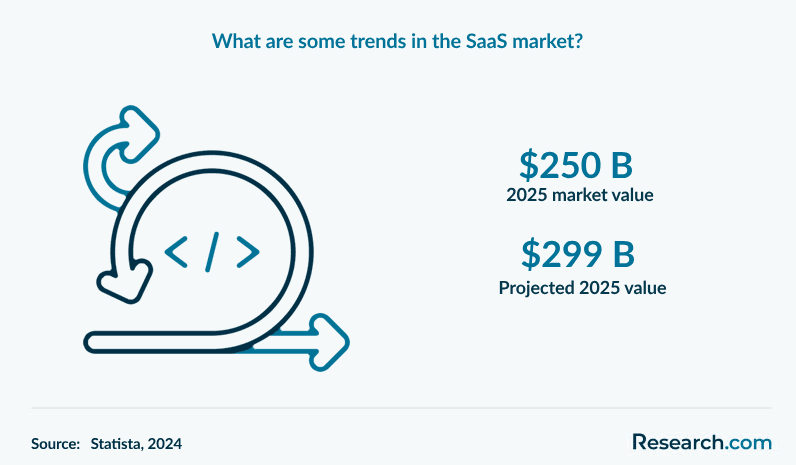
The broader SaaS market is expected to keep expanding as organizations adopt cloud-based tools for customer resource management (CRM), enterprise resource planning (ERP), web hosting, eCommerce, and other business functions.
What subspecialties and career paths are available for online cloud engineering training bootcamp graduates?
Cloud engineering is not one single career path. After learning fundamentals, graduates can specialize based on whether they prefer architecture, automation, security, networking, data, or AI-related infrastructure.
- Cloud architecture: Design cloud strategies, service choices, migration plans, scalability models, and infrastructure patterns.
- Cloud development and DevOps: Build cloud-native applications, automate deployments, and manage CI/CD workflows.
- Cloud security: Protect cloud systems, manage identity and access, monitor threats, and implement security controls.
- Cloud networking: Configure connectivity, segmentation, routing, hybrid networking, and performance across cloud environments.
- Cloud data engineering: Build data pipelines, storage architectures, and large-scale processing workflows on AWS, Azure, or GCP.
- AI and machine learning infrastructure: Support cloud environments used to build, train, and deploy machine learning models. Learners interested in this direction may also compare the best bootcamps for data science.
Most specializations require continued learning after the first bootcamp. Certifications, production experience, open-source projects, and a documented portfolio can all help signal readiness.
What is the job market like for online cloud engineering training bootcamp graduates?
The job market for cloud engineering bootcamp graduates is promising, but it is also competitive. Employers value cloud skills, yet they typically look for proof of hands-on work, certifications, troubleshooting ability, and communication skills—not just a bootcamp completion certificate.
- High demand for cloud skills: A 2025 report indicates that cloud professionals are in greater demand than ever, partly driven by the need for infrastructure to support new AI solutions.
- Broad industry use: Cloud skills are used in technology, finance, healthcare, retail, government, consulting, and many other sectors. Learners interested in healthcare leadership may explore an accelerated online Master of Science in Healthcare Management for roles overseeing IT systems in hospitals, health networks, or telemedicine organizations.
- Growth in cloud spending: Global spending on public cloud services is predicted to grow significantly. One forecast predicts cloud spending will grow 19% in 2025 alone. The overall cloud computing market is projected to grow from over $780 billion in 2025 to over $2.2 trillion by 2032.
- Skills gap: Employers continue to report difficulty finding qualified cloud talent with practical experience, which can benefit learners who complete labs, certifications, and portfolio projects.
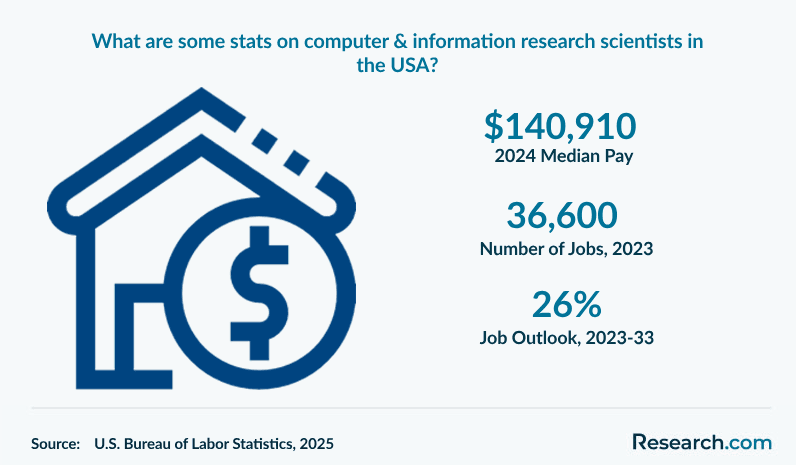
In 2024, the median pay for computer and information research scientists was $140,910 per year, or $67.74 per hour. The typical entry-level education for this field is a Master's degree, and generally, no prior work experience or on-the-job training is required. The number of jobs for computer and information research scientists was 36,600 in 2023.
This profession shows a very strong growth trend, with a projected job outlook of 26% from 2023 to 2033, which is considered much faster than average. This growth is expected to create an additional 9,400 jobs over the decade.
The graphic below shows that computer and information research science is a high-paying field with strong projected growth, although entry into that occupation typically requires advanced education rather than bootcamp training alone.
What are the current industry trends and future outlook for online cloud engineering careers?
Cloud engineering careers are being shaped by infrastructure modernization, AI adoption, security pressure, multi-cloud strategies, and the need to control cloud costs. These trends favor professionals who keep learning beyond an initial bootcamp.
- Cloud market expansion: The cloud computing market is expanding quickly, with projections showing it will grow from over $780 billion in 2025 to more than $2.2 trillion by 2032. More cloud spending generally increases demand for professionals who can deploy, secure, automate, and maintain infrastructure.
- AI and machine learning infrastructure: AI workloads require scalable compute, storage, networking, monitoring, and cost control, all of which are connected to cloud engineering.
- Specialized cloud roles: Employers increasingly need professionals in cloud security, data engineering, multi-cloud architecture, and automation. Learners still building foundational skills can compare best value online IT training bootcamps.
- Persistent talent shortage: The cloud skills gap continues to make hands-on experience and recognized certifications valuable for job seekers.
- Cost optimization and governance: As cloud usage grows, organizations need engineers who understand not only deployment but also monitoring, rightsizing, access control, and waste reduction.
Are online cloud engineering bootcamp certifications accredited and industry-recognized?
Some online cloud engineering bootcamps are affiliated with universities, professional organizations, or certification providers, while others are private training programs with no formal accreditation listed. A bootcamp certificate is not the same thing as a college degree, and employer recognition varies.
To evaluate legitimacy, check whether the program prepares students for recognized certifications, whether instructors hold current cloud credentials, whether the curriculum includes real labs, and whether employers understand the provider. Programs associated with CompTIA, the Linux Foundation, Caltech CTME, or university continuing education units may carry different forms of recognition, but students should verify exactly what credential they receive.
If you are planning a broader academic investment in emerging technology, you may also compare the cheapest masters in artificial intelligence.
Is the ROI for online cloud engineering bootcamps justified?
The return on investment depends on your starting point, tuition, financing terms, certification outcomes, job market, and how quickly you can convert training into paid work. A lower-cost bootcamp with strong labs and certification alignment may outperform an expensive program if you are disciplined and already have IT foundations. A higher-cost program may be justified if it provides live instruction, mentorship, substantial projects, exam vouchers, and credible career support that you will actually use.
Compare immediate cost against realistic career benefits. Do not evaluate ROI only by advertised graduate salaries. Consider your current income, opportunity cost, debt terms, probability of completion, local or remote job options, and whether you need additional credentials. Some professionals combine cloud skills with other fields; for example, interdisciplinary learners may explore cheap biotechnology master's programs online when their long-term goals involve biotech, data, or regulated technical environments.
| ROI improves when... | ROI weakens when... |
| The program includes labs, projects, and certification preparation | The program is mostly lecture-based with little applied work |
| You already have IT, networking, or troubleshooting foundations | You enter an advanced bootcamp without prerequisite knowledge |
| Financing terms are clear and manageable | You take on expensive debt without understanding repayment |
| You build a portfolio and apply consistently | You expect the bootcamp certificate alone to secure a job |
| The curriculum aligns with your target role | You choose based only on speed or brand name |
Common mistakes to avoid when choosing a cloud engineering bootcamp
- Choosing the shortest program automatically: A 5-day intensive may be useful for exam review, but beginners often need more time for labs and practice.
- Ignoring prerequisites: Cloud engineering builds on networking, Linux, security, and scripting. Skipping foundations can make advanced topics harder.
- Focusing only on tuition: Exam vouchers, labs, retakes, software, and financing fees can change the true cost.
- Assuming all certificates are equal: A provider-issued completion certificate is different from an industry certification such as CompTIA Cloud+, LFCS, CKA, AWS, or Azure credentials.
- Not checking career support details: “Job assistance” may mean anything from a resume template to one-on-one coaching and employer introductions.
- Relying only on rankings: Rankings can help narrow choices, but your best program depends on your goals, background, budget, and learning style.
- Skipping portfolio work: Employers often want to see what you can build, troubleshoot, automate, and explain.
Can Cross-Disciplinary Tech Skills Boost Cloud Engineering Careers?
Yes. Cloud engineers often work with software teams, data teams, cybersecurity teams, product managers, and business leaders. Skills in software development, data science, AI, security, and even interactive systems can make a cloud professional more adaptable.
For example, learners interested in infrastructure for interactive platforms, simulations, or cloud-hosted applications may find useful context in the best online programs for game development. Cross-disciplinary skills are most valuable when they connect directly to a target role rather than distract from core cloud competence.
Can advanced management training further enhance leadership roles in cloud engineering?
Advanced management training can help cloud engineers move from implementation roles into technical leadership, program management, architecture governance, or executive-facing infrastructure strategy. Leadership roles require more than technical skill; they also involve budgeting, vendor management, risk assessment, team coordination, and aligning cloud projects with business outcomes.
Professionals who want to bridge technical expertise and management may consider an accelerated online engineering management masters, especially if they aim to lead cloud migration programs, manage engineering teams, or oversee enterprise-scale infrastructure initiatives.
Key Insights
- Bootcamps can accelerate cloud career preparation, but they are not shortcuts around practice. The most valuable programs include labs, projects, troubleshooting, certification preparation, and feedback.
- Match the program to your target role. Cloud support, cloud administration, DevOps, cloud security, and architecture require overlapping but different skill sets.
- Costs vary widely. Online cloud engineering bootcamps can range from around $2,000 to over $20,000, with more immersive programs costing upwards of $18,000 to $24,500.
- Cloud salaries rise with experience. The average U.S. salary for a cloud computing engineer was $123,922 in 2025, with cloud engineer I averaging $87,480 and cloud engineer IV reaching $154,840.
- Location affects compensation. Cloud engineers in San Jose average $136,136, while state averages such as Arkansas ($97,507) and Alabama ($99,158) are below $100,000.
- The U.S. cloud services market is projected to grow strongly. It is expected to increase from USD 210.8 billion in 2024 to USD 747.9 billion by 2033, representing a CAGR of 15.1%.
- SaaS remains a major cloud segment. The SaaS market was worth approximately 250 billion U.S. dollars in 2025 and is projected to reach 299 billion U.S. dollars within the same year.
- Computer and information research science is a related but more advanced path. In 2024, the median pay was $140,910 per year, and the field is projected to grow 26% from 2023 to 2033, adding about 9,400 new jobs.
- Employer distribution shows the importance of advanced computing skills. In 2023, the top employer of computer and information research scientists was the federal government at 29%, followed by computer systems design at 22% and research and development services at 16%.
References:
- Salary.com. (2025). Cloud Computing Engineer Salary. Salary.com.
- Salary.com. (2025). Cloud Engineer I Salary in Hobart, WA (May, 2025). Salary.com.
- Salary.com. (2025). Cloud Engineer I Salary in Washington (June, 2025). Salary.com.
- Salary.com. (2025). Cloud Engineer I Salary, Hourly Rate (June, 2025) in the United States. Salary.com.
- Salary.com. (2025). Cloud Engineer Salary in the United States. Salary.com.
- Salary.com. (2025). Senior Cloud Engineer Salary. Salary.com.
- Salary.com. (2025, January 1). Cloud Engineer Salary in the United States. Salary.com.
- Statista. (2024). Worldwide software as a service (SaaS) revenue from 2010 to 2026. Statista.
- U.S. Bureau of Labor Statistics. (2019, September 4). Computer and information research scientists. Occupational Outlook Handbook. U.S. Bureau of Labor Statistics.
- Yahoo Finance. (2025, January 29). Global cloud services market expected to reach USD 2,495.2 billion by 2032, growing at a CAGR of 16.40% from 2023 to 2032: Market Research Future. Yahoo Finance.
Other Things You Should Know About Online Cloud Engineering Training Bootcamps
The fastest online cloud engineering bootcamps in 2027 focus on major platforms like AWS, Azure, and Google Cloud. These platforms are integrated into the curriculum to provide hands-on experience, preparing students for industry-recognized certifications upon completion.
Yes. Most accelerated cloud engineering bootcamps require hands-on labs and a final capstone or portfolio project. Labs often use AWS, Microsoft Azure, or Google Cloud, and the capstone is commonly completed in the last 1 to 2 weeks of the program to demonstrate deployment and automation skills.


