
2027 Easiest Information Technology Degree Programs

Co-Founder and Chief Data Scientist
Choosing an information technology degree can feel confusing if you are new to tech, returning to school, working full time, or worried about heavy math and programming requirements. The best “easiest” information technology programs are not low-quality shortcuts; they are programs designed to be more accessible through flexible formats, beginner-friendly coursework, strong student support, and practical career preparation.
This matters because IT is no longer limited to traditional tech companies. Employers in healthcare, education, finance, government, retail, and business services need people who can support networks, secure systems, troubleshoot devices, manage data, and help teams use technology effectively. AI is also changing the field. The global artificial intelligence market is expected to grow to $826.73 billion by 2030, which means organizations will need IT professionals who can help manage, maintain, secure, and support AI-enabled tools and infrastructure.
This guide explains what to expect from accessible information technology degree programs, how long they take, what they cost, how to compare online and campus options, which careers they can lead to, and how to choose a program that is manageable without sacrificing educational value.
Quick Answer: What Makes an Information Technology Degree Program “Easy”?
The easiest information technology degree programs are usually those with flexible online or hybrid delivery, beginner-focused courses, clear admissions requirements, generous student support, and practical assignments instead of highly theoretical coursework. They are often a good fit for students who want an entry point into IT without immediately committing to advanced computer science, engineering, or intensive mathematics.
Students should still evaluate these programs carefully. A program that is easy to enter is not always the best value. Accreditation, total cost, transfer policies, career services, hands-on labs, and alignment with entry-level IT roles matter more than convenience alone.
What are the benefits of enrolling in the easiest information technology degree programs?
Accessible IT programs can help students build confidence while learning marketable technical skills. Many are structured around core topics such as computer hardware, operating systems, networking, databases, cybersecurity basics, IT support, and introductory programming. This makes them especially useful for students without a strong technical background.
Another major advantage is flexibility. Many beginner-friendly IT programs offer online courses, part-time enrollment, asynchronous lessons, tutoring, academic advising, and career support. These features can make it easier to study while working, caring for family, or transitioning from another career.
The main benefit is not that the coursework is effortless. Rather, the learning path is more manageable. Students can gain a practical foundation for entry-level roles while deciding whether they want to specialize later in cybersecurity, cloud computing, data analytics, software development, health informatics, or another advanced technology field.
What can I expect from the easiest information technology degree programs?
You can expect a practical curriculum that starts with the basics and gradually introduces more technical subjects. Instead of assuming you already know how networks, servers, databases, or code work, these programs typically begin with foundational concepts and applied exercises.
Common features include introductory networking, computer systems, help desk support, operating systems, software applications, database fundamentals, basic web development, and cybersecurity awareness. Many programs also include projects, simulations, virtual labs, or troubleshooting exercises that resemble tasks performed in entry-level IT jobs.
Students often choose these programs because they offer structure and support. You may find recorded lectures, online discussion boards, tutoring, academic coaching, career advising, and flexible pacing options. The strongest programs make the material approachable while still requiring consistent effort, problem-solving, and hands-on practice.
Where can I work after graduating from the easiest information technology degree programs?
Graduates can pursue entry-level technology jobs in many sectors, not just software companies. Hospitals, universities, banks, insurance firms, government agencies, nonprofits, school districts, manufacturers, and small businesses all need IT staff to keep systems working and users supported.
Common starting roles include IT support specialist, help desk technician, technical support specialist, junior network administrator, systems support associate, entry-level systems analyst, and junior database or web support roles. These jobs usually involve troubleshooting user issues, maintaining devices, supporting networks, documenting problems, escalating complex tickets, and helping organizations keep technology operations stable.
The degree can also serve as a foundation for more specialized paths. With experience, certifications, or additional education, graduates may move toward cybersecurity, cloud administration, network engineering, software development, data analytics, or IT management.
How much can I make with a degree from the easiest information technology degree programs?
Graduates from accessible IT programs often begin in support, help desk, networking, or systems roles. Starting salaries commonly fall around $40,000 to $55,000 annually, depending on the role, employer, geographic location, prior experience, and technical skills.
Salary growth usually depends on what you do after graduation. Professionals who gain experience, build a portfolio of projects, earn relevant certifications, or move into higher-demand specialties such as cybersecurity, networking, database management, cloud computing, or software development may qualify for higher-paying roles. More advanced positions, including systems analyst or network engineer, can rise to $60,000 or more.
No degree guarantees a specific salary. When comparing programs, look for career outcomes, employer partnerships, internship options, certification preparation, and alumni job placement information instead of relying only on advertised salary potential.
- Easiest Information Technology Programs for 2027
- How long does it take to complete accessible IT programs?
- How do online and flexible IT programs compare with campus programs?
- What is the average cost of beginner-friendly IT programs?
- What financial aid options are available for IT students?
- What are the admission requirements for accessible IT programs?
- What courses are commonly included in beginner-friendly IT programs?
- What IT specializations can students choose?
- How should you choose the best accessible IT program?
- Can an accessible IT program prepare you for advanced study?
- Can beginner-friendly IT programs lead to cybersecurity skills?
- How do accessible IT programs maintain quality and relevance?
- What careers are available after completing an IT program?
- What does the job market look like for IT graduates?
- Do accessible IT programs offer career support and internships?
- Can an IT degree lead to advanced technology fields?
- Can accessible IT programs lead to higher-paying careers?
- Are IT programs keeping up with industry trends?
- How do accreditation and cost affect program value?
- Can IT programs support a move into health informatics?
Easiest Information Technology Programs for 2027
How We Rank Schools
Research.com created this ranking to help students compare accessible information technology programs using transparent, data-informed criteria. Since tuition, time commitment, flexibility, accreditation, and career preparation can affect the value of a degree, our team reviewed multiple indicators rather than relying on reputation alone.
The ranking draws on trusted higher education data sources, including:
- IPEDS database: Used for institutional data such as enrollment, graduation rates, and financial aid information.
- Peterson’s database: Used for program, admissions, and institutional finance details.
- College Scorecard database: Used for information on college costs, financial aid, completion rates, and post-graduation earnings.
- National Center for Education Statistics: Used to evaluate broader U.S. higher education data related to quality, access, and affordability.
For more detail about how Research.com evaluates schools and programs, review our methodology section.
1. Purdue Global
Purdue Global offers an Associate of Applied Science in Information Technology for students who want an entry-level IT foundation. The program introduces programming, development, networking, software troubleshooting, and hardware concepts, making it suitable for learners seeking a shorter path into technical support or related roles.
- Program Length: 2 years
- Tracks/concentrations: N/A
- Cost per Credit: $371.00
- Required Credits to Graduate: 90 quarter credits
- Accreditation: Higher Learning Commission
2. Rasmussen University
Rasmussen University offers an online Associate of Science in Information Technology that can prepare students for entry-level IT work in as few as 18 months. The curriculum covers networking, programming, IT support, communication, and critical thinking, with applied learning designed to help graduates pursue roles in areas such as network support and information security.
- Program Length: 18 months to 2 years
- Tracks/concentrations: N/A
- Cost per Credit: $307
- Required Credits to Graduate: 90
- Accreditation: Higher Learning Commission
3. Columbia Southern University
Columbia Southern University offers a Bachelor of Science in Information Technology focused on applying technology solutions in business settings. Students study IT systems, information management, organizational communication, and technology services. The program can support career goals in sectors such as banking, government, academia, and business operations, including entry-level management-oriented technology roles.
- Program Length: 4 years
- Tracks/concentrations: N/A
- Cost per Credit: $270
- Required Credits to Graduate: 120
- Accreditation: Southern Association of Colleges and Schools Commission on Colleges
4. Southern New Hampshire University
Southern New Hampshire University offers a Bachelor of Science in Information Technologies that combines technical training, business knowledge, and problem-solving. Students study IT fundamentals, data management, computational thinking, collaboration, communication, and system solutions. The program also offers several concentration options for students who want to tailor the degree toward a specific career direction.
- Program Length: 4 years
- Tracks/concentrations: Business Management, Cybersecurity, Data Analytics, Project Management for IT, Software Development
- Cost per Credit: $330
- Required Credits to Graduate: 120
- Accreditation: New England Commission of Higher Education
5. Liberty University
Liberty University offers a Bachelor of Science in Information Technology that blends technical preparation with leadership, teamwork, and a Christian worldview. Students learn to develop IT services, software, and systems, and they complete a capstone project tied to real-world technology challenges, such as security applications, cloud tools, or AI-enabled decision-support systems.
- Program Length: 4 years
- Tracks/concentrations: Application and Database Development, Data Networking and Security, Gaming Design, Web and Mobile Programming
- Cost per Credit: $390
- Required Credits to Graduate: 120
- Accreditation: Southern Association of Colleges and Schools Commission on Colleges
Program Comparison at a Glance
| School | Degree Level | Best Fit | Cost per Credit | Credits Required |
| Purdue Global | Associate | Students seeking a practical entry-level IT foundation | $371.00 | 90 quarter credits |
| Rasmussen University | Associate | Learners who want an online option that may be completed quickly | $307 | 90 |
| Columbia Southern University | Bachelor’s | Students interested in business-focused IT roles | $270 | 120 |
| Southern New Hampshire University | Bachelor’s | Students who want concentration choices within IT | $330 | 120 |
| Liberty University | Bachelor’s | Students seeking IT training with leadership and capstone experience | $390 | 120 |
How long does it take to complete the easiest information technology programs?
Most accessible information technology programs take 2 to 4 years, depending on the degree level and enrollment pace. An IT associates degree online or campus-based associate program can usually be completed in about 2 years, while a bachelor’s degree commonly takes 3 to 4 years.
Completion time can change based on several factors: transfer credits, full-time or part-time enrollment, accelerated terms, prior learning credit, military or workplace training, and whether the program requires internships or capstone projects. Students who already have college credits or professional IT experience may be able to shorten the timeline if the school accepts those credits.
| Program Type | Typical Length | When It Makes Sense |
| Associate degree | About 2 years | Best for students who want a faster path into IT support or junior technical roles |
| Bachelor’s degree | 3 to 4 years | Best for students seeking broader career options, advancement potential, or graduate school preparation |
| Accelerated or online format | Varies by program | Best for motivated students who can manage condensed coursework and independent study |
| Part-time format | Longer than standard timelines | Best for working adults, caregivers, or students balancing school with other responsibilities |
The rise in computer and information sciences bachelor’s degrees over the last decade shows that many students see technology education as a practical investment, especially as employers depend more heavily on digital systems.
How do the easiest information technology programs compare to an on-campus program?
Accessible IT programs are often offered online or in hybrid formats, which can make them more convenient than traditional campus programs. Online programs may allow students to complete lessons asynchronously, attend virtual labs, and study around work or family obligations. This structure is especially helpful for adult learners and career changers.
Campus-based programs can offer advantages, too. Students may benefit from in-person labs, face-to-face mentoring, local networking, student organizations, and structured class schedules. Some learners also perform better when they have regular on-campus accountability.
The better option depends on your learning style, schedule, location, and career goals. Students who want career advancement beyond entry-level IT may eventually consider graduate-level options, including cheap MS in Data Science courses in USA, if their long-term goals involve analytics, machine learning, or data-driven decision-making.
| Factor | Online or Flexible IT Program | On-Campus IT Program |
| Schedule | Often more adaptable for working students | Usually follows fixed class meeting times |
| Learning environment | Requires self-discipline and comfort with digital tools | Offers more direct classroom interaction |
| Labs and projects | May use virtual labs, simulations, and remote platforms | May include physical labs and in-person equipment access |
| Networking | Often depends on online engagement and career services | May provide stronger local peer and faculty connections |
| Best for | Adults, commuters, remote learners, and students needing flexibility | Students who prefer structured schedules and face-to-face support |
What is the average cost of the easiest information technology programs?
The cost of accessible information technology programs varies widely by school type, degree level, residency status, delivery format, and credit requirements. The median in-state public tuition is $6,593, while the median in-state private tuition is $32,640. These are growing 9.14% and 2.97%, respectively.
Online programs can sometimes reduce costs related to commuting, housing, and campus fees, though students should still compare the full cost of attendance. Annual costs can range from $7,000 to $20,000 per year, while private institutions or specialized programs may charge more.
Do not compare tuition alone. Ask about technology fees, books, lab fees, certification exam costs, transfer credit acceptance, prior learning credit, payment plans, and whether tuition changes by term or residency status.
| Cost Factor | Why It Matters | Question to Ask |
| Tuition per credit | Determines the base cost of the program | How many total credits are required to graduate? |
| Fees | Technology, lab, online, and graduation fees can add up | What fees are mandatory each term? |
| Transfer credits | Accepted credits can reduce both time and cost | How many previous credits can I transfer? |
| Books and software | IT programs may require software, hardware, or lab access | Are course materials included in tuition? |
| Certification preparation | Some programs align with industry certifications | Are exam vouchers or prep materials included? |
What are the financial aid options for students enrolling in the easiest information technology programs?
Students in eligible IT degree programs may be able to use several forms of financial aid. Availability depends on the institution, enrollment status, financial need, academic performance, and program eligibility.
- Federal Student Aid: Students can submit the Free Application for Federal Student Aid (FAFSA) to be considered for federal grants, loans, and work-study. Need-based grants, including the Pell Grant, do not have to be repaid.
- State Grants and Scholarships: Many states provide aid for residents attending eligible colleges or universities.
- School-Specific Scholarships: Colleges may offer scholarships based on academic merit, financial need, military status, transfer status, or program area.
- Private Scholarships: Technology companies, professional associations, nonprofits, and community organizations may offer scholarships for IT students.
- Employer Tuition Assistance: Some employers reimburse tuition or help pay for job-related IT education.
- Work-Study Programs: Eligible students may work part time through federally supported or campus-based jobs to help cover expenses.
Information Technology can be a practical choice for students comparing career-focused degrees, especially alongside other highest paying 4 year degrees. Still, students should calculate borrowing carefully and avoid taking on debt based only on optimistic salary assumptions.
What are the prerequisites for enrolling in the easiest information technology programs?
Admission requirements for accessible IT programs are usually straightforward, especially at the associate and bachelor’s levels. Most schools look for evidence that the student is academically prepared and able to complete college-level coursework.
- High School Diploma or GED: Most associate and bachelor’s programs require proof of high school completion or an equivalent credential.
- Basic Computer Skills: Students are often expected to know how to use email, browsers, word processing tools, file storage, and learning platforms.
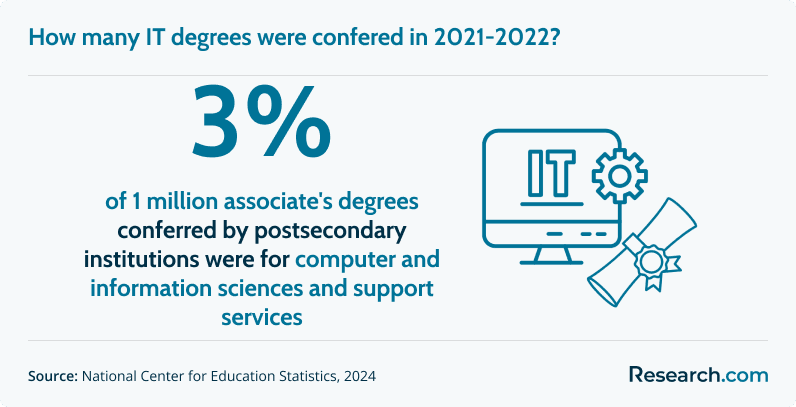
- Math and English Proficiency: Some schools evaluate placement in college-level math or writing, though requirements vary.
- Standardized Test Scores: Some institutions request SAT or ACT scores, but many accessible programs do not require them.
- Application and Interview: Many programs require an application and transcripts; some may ask for a personal statement, advisor meeting, or brief interview.
Students who want to build confidence before enrolling can start with short, focused training through the best information technology courses online or comparable campus-based options.
What courses are typically in the easiest information technology programs?
Beginner-friendly IT programs usually focus on applied technical skills. The goal is to help students understand how computer systems, networks, users, software, and data interact in real organizations.
- Introduction to Computers: Covers hardware, software, operating systems, files, applications, and basic computing terminology.
- Networking Fundamentals: Introduces network components, internet protocols, connectivity, and basic troubleshooting.
- IT Support and Help Desk: Teaches ticketing, customer communication, problem diagnosis, documentation, and escalation.
- Operating Systems: Explains the basics of Windows, macOS, and Linux administration and troubleshooting.
- Database Management: Introduces data storage, tables, queries, and basic database concepts.
- Web Development Basics: Covers introductory HTML, CSS, page structure, and basic design principles.
- Cybersecurity Fundamentals: Reviews common threats, access controls, data protection, and security awareness.
- Software Applications: Builds practical proficiency with productivity tools, spreadsheets, presentations, and collaboration platforms.
Students who become interested in data-focused work may also benefit from a data analytics certification online, especially if they want to learn how organizations turn raw data into usable business insight.
What types of specializations are available in the easiest information technology programs?
Some accessible IT programs offer concentrations or electives that let students explore a career direction without leaving the general IT pathway. The right specialization depends on the type of work you want to do after graduation.
- Network Administration: Focuses on setting up, monitoring, securing, and troubleshooting computer networks.
- IT Support: Prepares students to solve user problems involving hardware, software, accounts, devices, and applications.
- Cybersecurity: Introduces security practices for protecting systems, networks, users, and data. Students can also build focused skills through cyber security courses online.
- Web Development: Covers website creation and maintenance using tools and languages such as HTML, CSS, and JavaScript.
- Database Management: Teaches students how to organize, query, maintain, and protect structured data.
- Cloud Computing: Introduces cloud platforms, storage, networking, virtual infrastructure, and service models.
- Software Development: Provides introductory programming knowledge for students interested in building applications.
Students interested in the intersection of healthcare and technology may explore health informatics. Reviewing the best careers with a masters in health informatics can help clarify how IT skills can apply to clinical data, healthcare systems, and digital patient records.
Many of these specializations are expected to remain relevant as employers continue adopting cloud tools, cybersecurity practices, digital workflows, data systems, and AI-supported operations.
How to choose the best easiest information technology programs?
The best accessible IT program is one that fits your schedule and learning needs while still providing credible training, recognized accreditation, and career preparation. Avoid choosing a school only because it looks easy, fast, or inexpensive.
- Check accreditation first: Accreditation affects financial aid eligibility, credit transfer, employer recognition, and graduate school options.
- Review the curriculum: Look for a clear sequence of beginner, intermediate, and applied courses in networking, systems, support, security, databases, and programming basics.
- Compare flexibility: Decide whether you need asynchronous online courses, evening classes, hybrid labs, accelerated terms, or part-time enrollment.
- Calculate total cost: Include tuition, fees, books, technology requirements, certification exams, commuting, and lost work time.
- Evaluate support services: Prioritize programs with tutoring, writing support, tech support, advising, and responsive faculty access.
- Ask about career outcomes: Look for internship access, resume help, job boards, employer partnerships, career coaching, and graduate placement data.
Questions to ask before enrolling
| Question | Why It Matters |
| Is the institution accredited by a recognized accreditor? | Accreditation helps protect the value and transferability of your degree. |
| Does the program include hands-on labs or projects? | Employers often want evidence that graduates can solve real technical problems. |
| Can I transfer previous credits? | Transfer credits can reduce cost and time to graduation. |
| Are courses aligned with certifications? | Certification preparation can strengthen entry-level job applications. |
| What support is available for online students? | Remote learners need reliable advising, tutoring, library, and technical support. |
| What jobs do recent graduates obtain? | Career outcomes show whether the program connects to realistic employment paths. |
Can easiest IT programs serve as a foundation for advanced academic pursuits?
Yes. A beginner-friendly IT program can provide the academic and technical base needed for more advanced study. Students who start with foundational coursework in networks, systems, databases, programming, and cybersecurity can later move into more specialized undergraduate or graduate programs.
This path is especially useful for students who are not ready to begin with a rigorous computer science or engineering curriculum. After gaining confidence and work experience, graduates may pursue advanced study in artificial intelligence, cybersecurity, data analytics, software engineering, cloud computing, or information systems leadership. Students considering a graduate route can review an online computer science masters degree to understand how advanced programs build on technical foundations.
Do easiest IT programs offer a pathway to specialized cybersecurity skills?
Many accessible IT programs now include introductory cybersecurity topics because security affects nearly every technology role. Students may learn about passwords, access controls, network threats, secure configuration, risk management, compliance, and incident response basics.
However, an introductory IT degree is usually not enough by itself for advanced cybersecurity roles. Students who want to specialize should look for programs with security labs, networking depth, certification alignment, and opportunities to practice threat detection or system hardening. After completing a general IT foundation, students may consider an accelerated cyber security degree online or related cybersecurity training to build more specialized skills.
How do easiest IT programs ensure academic quality and industry relevance?
Strong accessible IT programs maintain quality through accreditation, curriculum review, employer input, faculty expertise, applied projects, and alignment with current workplace tools. A program should be manageable for beginners, but it should not avoid the technical competencies employers expect from entry-level IT graduates.
Students should look for signs that the program is connected to the labor market. Useful indicators include advisory boards, certification preparation, virtual or physical labs, internship options, capstone projects, career coaching, and regular curriculum updates. Comparing an online information technology program with other options can help students identify programs that combine flexibility with credible academic standards.
What career paths are available for graduates of the easiest information technology programs?
Graduates can begin in several entry-level IT roles and then move into more specialized or senior positions with experience. The first job is often a support or operations role, which helps graduates learn systems, users, networks, troubleshooting, and workplace communication.
- IT Support Specialist: Helps users resolve hardware, software, account, connectivity, and application problems.
- Help Desk Technician: Responds to tickets, diagnoses user issues, documents fixes, and escalates complex problems.
- Network Administrator: Maintains network performance, monitors connectivity, handles updates, and supports secure access.
- Systems Administrator: Manages servers, operating systems, accounts, backups, updates, and internal systems.
- Technical Support Specialist: Provides deeper troubleshooting for specific products, platforms, devices, or enterprise systems.
- Web Developer (Entry-Level): Builds and maintains websites using foundational coding and web design skills.
- Database Administrator (Entry-Level): Supports data organization, access, accuracy, maintenance, and basic database operations.
These roles can be practical starting points for students who want a technology career without immediately completing a highly advanced degree. Students comparing shorter career-focused pathways may also want to review quick degrees that pay well as part of a broader education and ROI comparison.
What is the job market for graduates with a degree from the easiest information technology programs?
The job market for IT graduates remains broad because nearly every organization depends on technology infrastructure, user support, software systems, networks, and cybersecurity practices. According to the U.S. Bureau of Labor Statistics (BLS), employment of computer support specialists is projected to grow 6% from 2023 to 2033, faster than the average for all occupations.
The BLS also projects software developers, quality assurance analysts, and testers to grow 17% over the same period, much faster than the average. This growth is tied to continued demand for software, digital systems, and security-conscious development practices.
Median wages vary by occupation. The median annual wage for computer support specialists is about $55,510. Network and computer systems administrators earn a median wage of $84,810. Information security analysts can expect a median salary of $102,600 annually.
Students should interpret these numbers carefully. Entry-level graduates from accessible IT programs may not immediately qualify for the higher-paying roles listed above. Experience, certifications, specialization, location, and employer type all influence earnings. Students who want to move toward software-focused roles may later consider an affordable online software engineering degree.
| Career Area | Typical Entry Point | Growth or Salary Detail Stated | How to Advance |
| IT support | Help desk technician or support specialist | Computer support specialists are projected to grow 6% from 2023 to 2033 | Gain troubleshooting experience, document projects, and pursue relevant certifications |
| Systems and networking | Junior administrator or support associate | Network and computer systems administrators earn a median wage of $84,810 | Build networking, server, cloud, and security skills |
| Cybersecurity | Security support, systems support, or network support role | Information security analysts can expect a median salary of $102,600 annually | Develop security labs, earn credentials, and gain hands-on incident response experience |
| Software and QA | Junior developer, QA tester, or technical support role | Software developers, quality assurance analysts, and testers are projected to grow 17% from 2023 to 2033 | Build coding projects, learn testing tools, and strengthen programming fundamentals |
Do the easiest IT programs offer robust career support and internship opportunities?
Some accessible IT programs provide strong career services, while others offer only basic advising. This is why students should verify support before enrolling. Helpful services include resume reviews, mock interviews, job boards, employer events, internship coordination, LinkedIn profile guidance, portfolio support, and access to alumni networks.
Internships are especially valuable because many entry-level IT employers want proof of hands-on experience. If a program does not require an internship, ask whether it offers virtual labs, service desk simulations, capstone projects, employer-sponsored projects, or opportunities to work with real systems. Students comparing cost-conscious technical programs may also explore low cost online schools for engineering to understand how different technical fields structure affordability and career preparation.
Can easiest IT programs serve as a launchpad for advanced technology fields?
Yes. A general IT degree can introduce the systems thinking and technical literacy needed for more advanced fields. Students may begin with support, networking, databases, and security, then specialize after discovering which area fits their strengths.
Many programs now expose students to cloud platforms, analytics, cybersecurity, automation, and introductory AI concepts. Students who become interested in machine learning, intelligent systems, or AI-enabled applications may later explore an online artificial intelligence program after building a stronger technical foundation.
What do graduates say about accessible information technology programs?
-
: "
“The online format made the degree possible while I was working and supporting my family. I could review recorded lessons, join discussions when my schedule allowed, and complete projects that helped me practice real IT tasks without commuting to campus.” — Marcus
"
-
: "
“I wanted an affordable way to learn skills that employers recognize. The courses connected well with certification topics, and the online support made it easier to stay motivated. I saved money on transportation and housing while building confidence for a technology career.” — Ralph
"
-
: "
“The virtual labs were the most useful part of my program. I expected online learning to feel disconnected, but the platform, group projects, and instructor feedback helped me stay engaged. The experience showed me that online IT training can still be interactive and practical.” — Victoria
"
Can easiest IT programs pave the way to high-paying opportunities?
Accessible IT programs can lead to higher-paying opportunities over time, but usually not automatically. Many graduates start in support or junior technical roles, then increase their earning potential by gaining experience, building specialized skills, earning certifications, and moving into roles with more responsibility.
The clearest path is progression: start with foundational IT work, identify a specialty, develop proof of skill, and apply for more advanced positions. Students interested in long-term compensation trends can compare technology roles and review computer science jobs salary information to understand how specialization, technical depth, and experience influence pay.
Are easiest IT programs adapting to emerging industry trends?
Many IT programs are updating coursework to reflect current workplace needs. Common additions include cloud computing, cybersecurity fundamentals, virtual labs, simulation-based troubleshooting, data management, automation concepts, and exposure to AI-enabled tools. These updates matter because employers increasingly expect IT workers to understand secure remote access, cloud platforms, digital collaboration, and data-driven systems.
Some programs also offer niche technology tracks, such as online game development classes, for students who want to apply IT, coding, design, and interactive media skills to specialized markets. Students should confirm that any specialization includes practical projects and relevant tools, not just broad survey courses.
How do accreditation and program cost influence educational value?
Accreditation and cost are two of the most important value indicators. Accreditation helps show that an institution meets recognized academic standards. It can also affect financial aid, credit transfer, graduate school admission, and employer confidence.
Cost should be evaluated in relation to outcomes. A cheaper program is not always better if it lacks support, career services, labs, or recognized accreditation. A more expensive program may be worth considering only if it offers strong completion support, transfer credit opportunities, employer connections, and clear career preparation. Students comparing affordability across technical fields can review electrical engineer school cost information to see how program cost analysis works in another technology-related discipline.
Can easiest IT programs pave the way to health informatics careers?
Yes, an accessible IT program can be an early step toward health informatics if it helps students build skills in systems, databases, cybersecurity, data management, and user support. Healthcare organizations rely heavily on electronic health records, clinical systems, data reporting, privacy safeguards, and digital workflow tools.
Students who want to specialize in healthcare technology may later pursue online health informatics degree programs. This path can help bridge general IT knowledge with healthcare data, clinical operations, compliance, and patient information systems.
Common Mistakes to Avoid When Choosing an Easy IT Degree Program
- Assuming “easy” means low effort: IT still requires problem-solving, practice, and persistence. Choose a manageable program, not one that avoids essential skills.
- Ignoring accreditation: Unaccredited or poorly recognized programs can create problems with financial aid, credit transfer, and employer recognition.
- Looking only at tuition: Fees, books, software, hardware, certification exams, and extra terms can change the real cost.
- Skipping career services research: A flexible program is less valuable if it does not help students prepare for jobs.
- Overlooking hands-on learning: Employers often want practical ability, so labs, projects, simulations, and internships matter.
- Assuming online programs are automatically easier: Online study requires time management, self-direction, and comfort with digital platforms.
- Expecting a guaranteed salary: Salary depends on location, role, employer, experience, certifications, and specialization.
Practical Steps Before You Enroll
- Define your goal: Decide whether you want a fast entry into IT support, a bachelor’s degree for broader advancement, or a foundation for graduate study.
- Verify accreditation: Check the school’s accreditor through official sources and confirm that the program is eligible for financial aid if you need it.
- Compare total cost: Calculate tuition, fees, books, software, equipment, transportation, and the cost of extra terms.
- Request a transfer evaluation: If you have previous college credits, military training, certifications, or professional learning, ask how much can count toward the degree.
- Review the course list: Make sure the curriculum includes networking, systems, support, databases, security, and applied projects.
- Ask about job preparation: Look for internships, career coaching, resume help, mock interviews, employer partnerships, and certification alignment.
- Test the learning format: If possible, preview the online platform, sample a course, or speak with current students.
- Plan your next credential: Identify whether you may later need certifications, a bachelor’s degree, a master’s degree, or specialized training.
Key Insights
- The best “easiest” IT programs are accessible and supportive, not academically meaningless. Look for flexibility, beginner-friendly sequencing, hands-on work, and strong advising.
- AI adoption is increasing the need for IT professionals who can support systems, data, networks, security, and AI-related infrastructure. The global artificial intelligence market is projected to grow to $826.73 billion by 2030.
- Accessible IT programs commonly lead to entry-level roles such as IT support specialist, help desk technician, network administrator, and systems support roles, with starting salaries often around $40,000 to $55,000 annually.
- Program costs vary significantly. The median in-state public tuition is $6,593, while the median in-state private tuition is $32,640, growing by 9.14% and 2.97%, respectively.
- Labor market data supports continued demand: BLS projects computer support specialists to grow 6% from 2023 to 2033, while software developers, quality assurance analysts, and testers are projected to grow 17% over the same period.
- Online and hybrid IT programs can be ideal for working adults, but students should confirm accreditation, lab access, career services, transfer policies, and total cost before enrolling.
- The strongest ROI often comes from combining an accessible IT degree with experience, certifications, projects, internships, and later specialization in areas such as cybersecurity, cloud computing, data analytics, software development, or health informatics.
References:
- Data USA. (2024). Information technology. datausa.io
- Colorado State University Global. (2024). What jobs can I get with a bachelor's degree in information technology? csuglobal.edu
- University of the Cumberlands. (2024). What can you actually do with a degree in information technology? ucumberlands.edu
- U.S. Bureau of Labor Statistics. Computer support specialists. bls.gov
- U.S. Bureau of Labor Statistics. Software developers, quality assurance specialists, and testers. bls.gov
Other Things You Should Know About the Easiest Information Technology Programs
Yes, many institutions offer online information technology degree programs in 2027, known for flexibility and accessibility. These programs often include asynchronous courses, allowing students to learn at their own pace while balancing other commitments, without compromising the curriculum's rigor or academic integrity.
Yes. Regionally accredited schools often accept up to 60 lower-division transfer credits for a bachelor’s degree, which can reduce a 120-credit program by about two years. Final acceptance depends on course equivalency, minimum grades, and the school’s transfer policy.


