2027 Most Affordable Online Software Engineering Bootcamps

Co-Founder and Chief Data Scientist
Choosing an online software engineering bootcamp is a practical decision about time, money, learning style, and career risk. Bootcamps can help career changers and early-career professionals build job-ready coding skills faster than a traditional degree, but the quality, cost, pacing, support, and employer recognition vary widely by provider.
This guide is designed for learners comparing affordable online software engineering bootcamps for 2027. It explains what bootcamps teach, how much they cost, how long they take, what financing options are available, what jobs graduates may pursue, and how to avoid choosing a program that does not fit your goals.
You will also find a ranked list of affordable programs, decision tables, career comparisons, common mistakes, and practical questions to ask before enrolling. The goal is not simply to identify the cheapest bootcamp, but to help you choose the lowest-cost option that still offers the structure, technical depth, career support, and portfolio development you need.
Quick Answer: Are Online Software Engineering Bootcamps Worth Considering?
Online software engineering bootcamps can be worth considering if you want a faster, skills-focused route into software development and can commit consistent time to coding practice, projects, and job preparation. They are usually shorter than degree programs, often lasting a few months to a year, and they focus on practical tools such as programming languages, web frameworks, databases, APIs, Git, and portfolio projects.
They are not the right fit for everyone. Students who need deep computer science theory, formal academic accreditation, or a degree for a specific employer may be better served by a traditional program. A bootcamp is strongest when it provides rigorous projects, mentor feedback, transparent outcomes, career coaching, and a curriculum aligned with the roles you want.
What are the benefits of enrolling in a Software Engineering Bootcamp?
- Shorter training timeline. Bootcamps are built for intensive skill development and can help students move from beginner-level coding to portfolio-ready projects faster than many traditional academic pathways.
- Career-focused curriculum. Instead of covering broad general education requirements, most bootcamps emphasize tools used in software development jobs, including programming languages, frameworks, databases, version control, testing, and deployment workflows.
- Flexible online access. Online delivery allows learners to study from home, avoid relocation, and choose full-time, part-time, or self-paced formats depending on the program.
- Strong market relevance. The global software development service market is projected to grow from $435.99 billion in 2024 to $1,475.9 billion by 2033, pointing to continued demand for professionals who can build and maintain software systems (Business Research Insights, 2024).
- High earning potential, with important caveats. The median salary for software engineers in the U.S. is $147,524 per year (ZipRecruiter, 2025). Actual salaries depend on location, experience, role, portfolio strength, employer, and technical specialization.
What can I expect from Online Software Engineering Bootcamps?
An online software engineering bootcamp is an intensive training program that teaches practical programming and development skills through projects, exercises, mentorship, and career preparation. Most programs focus less on academic theory and more on helping students build applications, solve coding problems, and prepare for entry-level developer interviews.
Typical timelines range from 3 to 12 months, depending on whether the bootcamp is full-time, part-time, or self-paced. A full-time format can feel like a job because students may spend most weekdays in lessons, labs, coding assignments, and team projects. Part-time options spread the workload across evenings, weekends, or flexible study windows.
Students commonly learn JavaScript, Python, Java, C#, or similar languages, along with frameworks and tools such as React, Node.js, Django, Git, GitHub, SQL databases, APIs, and deployment platforms. Many programs also include debugging, testing, Agile collaboration, technical interview practice, and capstone projects.
The best bootcamps do more than provide videos. They create a structured path from fundamentals to employable projects, with regular feedback, instructor access, peer interaction, and career coaching. Before enrolling, confirm how much live instruction, mentor support, project review, and job-search guidance are included in the tuition.
Where can I work after completing a Software Engineering Bootcamp?
Software engineering bootcamp graduates may pursue technical roles in startups, software companies, finance, healthcare, education, e-commerce, marketing agencies, government contractors, and corporate IT teams. The most realistic first role depends on the student’s portfolio, interview performance, prior work experience, and the program’s technical focus.
| Role | What the job usually involves | Best fit for learners who enjoy |
| Front-End Developer | Building the visible parts of websites and applications, including layouts, interactive features, and responsive user interfaces. | Design, user experience, JavaScript, CSS, accessibility, and visual problem-solving. |
| Back-End Developer | Creating server-side logic, APIs, database connections, authentication, and application performance features. | Systems thinking, databases, security basics, APIs, and application architecture. |
| Full-Stack Developer | Working across both front-end and back-end layers to build complete web applications. | Broad technical variety and end-to-end product development. |
| Software Engineer | Designing, testing, maintaining, and improving applications or systems used by customers, employees, or internal teams. | Programming, problem-solving, debugging, collaboration, and long-term code quality. |
| QA Engineer or Test Engineer | Testing software, finding bugs, documenting issues, and improving product reliability before release. | Detail-oriented analysis, quality control, automation, and structured testing. |
| DevOps Engineer | Supporting deployment pipelines, cloud infrastructure, automation, monitoring, and collaboration between development and operations teams. | Infrastructure, scripting, cloud tools, automation, and operational reliability. |
Remote work is common in software roles, but remote jobs can also be more competitive because applicants may be drawn from a broader labor market. New bootcamp graduates should be prepared to demonstrate projects, explain code clearly, complete technical assessments, and show they can work independently.
How much can I make after a Software Engineering Bootcamp?
Bootcamp graduates can earn competitive salaries, but no program can guarantee a specific income. Pay depends on role, region, employer, technical stack, prior experience, interview performance, and the strength of a graduate’s portfolio. Entry-level bootcamp graduates may start in junior developer, QA, support engineering, or technical analyst roles before moving into higher-paying software engineering positions.
According to PayScale (2025), entry-level software engineers with less than a year of experience earn an average of $82,715 annually, while those with 1–4 years of experience earn about $92,519. Earnings rise with experience, with mid-career professionals earning approximately $106,364, experienced engineers earning $117,871, and late-career professionals earning $123,138.
Students should evaluate salary data carefully. A national average does not reflect every graduate’s outcome, and the highest-paid software roles often require strong technical depth, interview readiness, specialization, and sometimes relocation or competition for selective remote positions. A bootcamp can help you enter the field, but continued learning is essential.
- Most Affordable Online Software Engineering Bootcamps for 2027
- How long does it take to complete an online Software Engineering Bootcamp?
- How does an online Software Engineering Bootcamp compare to an on-campus program?
- What is the average cost of an online Software Engineering Bootcamp?
- What are the financial aid options for students enrolling in an online Software Engineering Bootcamp?
- What are the prerequisites for enrolling in an online Software Engineering Bootcamp?
- What topics are covered in a Software Engineering Bootcamp?
- What tracks or specializations are offered in Software Engineering Bootcamps?
- Are online Software Engineering Bootcamps accredited and industry-recognized?
- Can bootcamp education serve as a stepping stone to advanced academic opportunities?
- What are the potential challenges of online Software Engineering Bootcamps?
- Do employers value bootcamp credentials over traditional degrees?
- How to choose the best online Software Engineering Bootcamp?
- What career paths are available for those who have completed Online Software Engineering Bootcamps?
- What is the job market like for graduates in software engineering?
Most Affordable Online Software Engineering Bootcamp for 2027
How do we rank schools?
Affordability matters, but the lowest tuition is not automatically the best value. Research.com rankings are built to help students compare cost, program quality, and student outcomes using trusted sources, including the IPEDS database, Peterson’s database, the College Scorecard, and the National Center for Education Statistics. Our ranking methodology considers factors such as affordability, educational quality, and outcomes so readers can evaluate programs with more context.
| Rank | Bootcamp | Program Length | Time Commitment | Cost | Accreditation or Licensure |
| 1 | TrueCoders | 9 weeks or 6 months | Full-time or part-time | $6,500 | Not formally accredited |
| 2 | Qwasar Silicon Valley | 6–18 months | Flexible/self-paced | $2,400 | Not formally accredited |
| 3 | App Academy | 16–24 weeks | Full-time | $14,000 | Not formally accredited |
| 4 | The Tech Academy | 15–30 weeks | Full-time or part-time | $1,800–$4,000 | Licensed by the Higher Education Coordinating Commission of Oregon |
| 5 | Coding Temple | 10 weeks or 24 weeks | Full-time or part-time | $7,000 | Not formally accredited |
| 6 | Chegg Skills | 5–6 months | Full-time or part-time | $9,975 | Licensed by the Florida Department of Education |
| 7 | Momentum | 16 weeks | Full-time | $15,500 | Licensed by the North Carolina State Board of Proprietary Schools |
| 8 | Galvanize | 12–19 weeks | Full-time | $17,980 | Accredited by the Accrediting Council for Continuing Education & Training (ACCET) |
| 9 | Fullstack Academy | 17–28 weeks | Full-time or part-time | $19,910 | Licensed by the New York State Education Department |
| 10 | Flatiron School | 15 weeks or 40 weeks | Full-time or part-time | $17,900 | Licensed by the New York State Education Department |
1. TrueCoders
TrueCoders offers an online Software Engineering and Web Development bootcamp built for learners moving from beginner to intermediate skills. Its curriculum emphasizes C#, .NET, JavaScript, practical coding work, and career coaching for students targeting junior developer positions.
- Program Length: 9 weeks (full-time) or 6 months (part-time)
- Technical Disciplines: Software Engineering, Web Development
- Time Commitment: Full-time or part-time
- Cost: $6,500
- Accreditation: Not formally accredited
2. Qwasar Silicon Valley
Qwasar uses a flexible, project-based model with pathways in AI, data science, DevOps, cloud, full-stack development, and software engineering. Its mastery-based approach may work well for self-directed learners who want lower-cost access and optional mentorship.
- Program Length: 6–18 months (self-paced)
- Technical Disciplines: AI/Machine Learning, Data Science, DevOps/Cloud, Full-Stack Development, Software Engineering
- Time Commitment: Flexible/self-paced
- Cost: $2,400
- Accreditation: Not formally accredited
3. App Academy
App Academy provides an online Software Engineering program with a full-stack curriculum, algorithms practice, and job-search preparation. Its deferred payment option can reduce upfront cost, but students should read repayment terms carefully before choosing that route.
- Program Length: 16–24 weeks
- Technical Disciplines: Software Engineering
- Time Commitment: Full-time
- Cost: $14,000 (upfront), deferred options available
- Accreditation: Not formally accredited
4. The Tech Academy
The Tech Academy offers several self-paced technology programs, including Software Development, Python, JavaScript, Java, Cybersecurity, UX/UI, Data Science, and Game Development. It may appeal to learners who want broad program choice and flexible scheduling at a comparatively low price.
- Program Length: 15–30 weeks
- Technical Disciplines: Software Development, Python, JavaScript, Java, Cybersecurity, UX/UI, Data Science, Game Dev
- Time Commitment: Full-time or part-time (self-paced)
- Cost: $1,800–$4,000
- Accreditation: Licensed by the Higher Education Coordinating Commission of Oregon
5. Coding Temple
Coding Temple offers a Software Engineering bootcamp with full-time and part-time formats. Students study full-stack development using technologies such as Python, JavaScript, SQL, and Flask, while also completing projects and receiving career support.
- Program Length: 10 weeks (full-time), 24 weeks (part-time)
- Technical Disciplines: Software Engineering, Full-Stack Development
- Time Commitment: Full-time or part-time
- Cost: $7,000
- Accreditation: Not formally accredited
6. Chegg Skills
Chegg Skills offers a software engineering pathway for career changers who want flexible pacing, mentor support, and full-stack training. The curriculum includes JavaScript, Node.js, and React, and qualifying students may have access to a job guarantee.
- Program Length: 5–6 months
- Technical Disciplines: Software Engineering, Full-Stack Development
- Time Commitment: Full-time or part-time
- Cost: $9,975
- Accreditation: Licensed by the Florida Department of Education
7. Momentum
Momentum combines live online instruction with individual mentorship and a project-centered curriculum. Its full-stack web development training emphasizes collaboration, portfolio work, and job readiness.
- Program Length: 16 weeks
- Technical Disciplines: Full-Stack Development, Software Engineering
- Time Commitment: Full-time
- Cost: $15,500
- Accreditation: Licensed by the North Carolina State Board of Proprietary Schools
8. Galvanize
Galvanize delivers software engineering training through Hack Reactor, with a focus on JavaScript, full-stack development, and computer science fundamentals. The program may suit students who want a more intensive immersive format.
- Program Length: 12–19 weeks
- Technical Disciplines: Software Engineering, Full-Stack Development
- Time Commitment: Full-time
- Cost: $17,980
- Accreditation: Accredited by the Accrediting Council for Continuing Education & Training (ACCET)
9. Fullstack Academy
Fullstack Academy offers an immersive software engineering program centered on JavaScript, React, Node.js, computer science basics, and project work. It is designed for learners seeking a structured full-stack development pathway with career preparation.
- Program Length: 17–28 weeks
- Technical Disciplines: Software Engineering, Full-Stack Development
- Time Commitment: Full-time or part-time
- Cost: $19,910
- Accreditation: Licensed by the New York State Education Department
10. Flatiron School
Flatiron School offers an online Software Engineering Bootcamp that teaches full-stack development through hands-on projects. Students study HTML, CSS, JavaScript, React, Ruby, and Ruby on Rails while building a portfolio and receiving career coaching.
- Program Length: 15 weeks (full-time), 40 weeks (part-time)
- Technical Disciplines: Software Engineering, Full-Stack Development
- Time Commitment: Full-time or part-time
- Cost: $17,900
- Accreditation: Licensed by the New York State Education Department
How long does it take to complete an online Software Engineering Bootcamp?
Most online software engineering bootcamps take 8 weeks to 12 months, depending on pace, format, and curriculum depth. This is usually much shorter than many online game development degrees and traditional computer-related degree programs, but it also requires concentrated practice.
| Format | Typical Length | Weekly Commitment | Who it fits best |
| Full-time bootcamp | 3–6 months | 40+ hours per week | Students who can pause or reduce work and focus almost entirely on training. |
| Part-time bootcamp | 6 to 12 months | Often evenings, weekends, or scheduled weekly blocks | Working adults, parents, and learners who need more time to absorb material. |
| Self-paced bootcamp | Varies by student; some programs list ranges such as 6–18 months | Flexible | Highly disciplined learners who can create their own study schedule and stay accountable. |
Students should not choose a program only because it is fast. Software engineering requires repetition, debugging, project building, and review. Topics such as algorithms, data structures, APIs, databases, testing, and deployment are difficult to master without steady hands-on work.
A shorter bootcamp may be useful if you already have some coding experience or can study full-time. If you are new to programming, working full-time, or balancing family responsibilities, a part-time structure may produce better results because it allows more time for practice and retention.
How does an online Software Engineering Bootcamp compare to an on-campus program?
Online and on-campus software engineering bootcamps often teach similar core skills, but they differ in schedule flexibility, interaction style, accountability, networking, and learning environment. The better option depends on how you learn and how much structure you need.
| Factor | Online bootcamp | On-campus bootcamp |
| Flexibility | Often offers remote access, part-time options, recordings, or self-paced work. | Usually follows a fixed schedule and requires attendance at a physical location. |
| Cost and access | May reduce commuting, relocation, housing, and transportation costs. | Can add travel or relocation expenses, depending on location. |
| Peer interaction | Uses video calls, chat tools, pair programming, and online collaboration spaces. | Provides face-to-face interaction and immediate in-room collaboration. |
| Accountability | Requires strong self-discipline, especially in asynchronous or self-paced formats. | Provides more built-in structure through physical attendance and scheduled sessions. |
| Career support | May include remote coaching, mock interviews, resume reviews, and virtual employer events. | May include similar services plus in-person networking opportunities. |
Curriculum quality should matter more than delivery mode. Both formats can cover data structures, algorithms, full-stack development, databases, software engineering practices, and career preparation. The key is whether the program provides meaningful feedback, live help, real projects, and a clear job-search process.
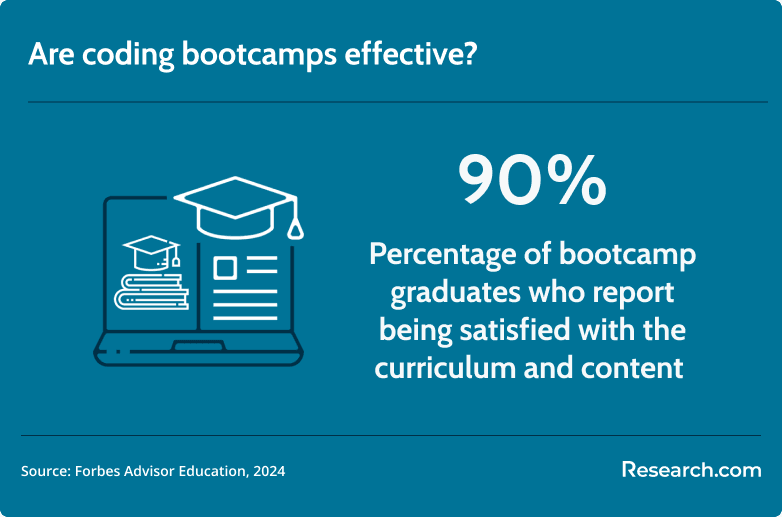
According to Forbes Advisor Education (2024), more than 90% of students who completed coding bootcamps are satisfied with their experience. Satisfaction, however, does not guarantee employment, so prospective students should still review outcomes, student support, and refund or financing terms.
What is the average cost of an online Software Engineering Bootcamp?
Online software engineering bootcamp tuition commonly ranges from $1,800 to $20,000. Lower-cost programs such as The Tech Academy or Qwasar often fall between $1,800 and $4,000. Mid-priced options, including TrueCoders, Coding Temple, and Thinkful, range from $6,000 to $10,000. Higher-priced programs such as App Academy, Galvanize, and Fullstack Academy charge between $14,000 and $20,000.
Tuition can include more than course access. Depending on the provider, students may receive live classes or recorded lessons, assignments, code reviews, instructor feedback, one-on-one mentoring, group projects, career coaching, mock interviews, resume support, alumni access, and portfolio development.
Students should calculate the total cost of attendance, not just listed tuition. Important costs may include a laptop, upgraded internet, software tools, application fees, living expenses during full-time study, and loan or deferred-payment fees. A cheaper bootcamp can become expensive if it lacks support and forces you to pay for additional tutoring or job-prep help.
| Cost tier | Typical tuition range | What to check before enrolling |
| Low-cost | $1,800 to $4,000 | Confirm instructor access, project review, completion support, and whether career services are limited. |
| Mid-range | $6,000 to $10,000 | Compare curriculum depth, mentoring, job-search support, and student outcomes. |
| Premium | $14,000 to $20,000 | Evaluate whether the higher price is justified by stronger support, brand recognition, employer network, or structured coaching. |
Salary potential is one reason students consider bootcamps, but return on investment varies. According to ZipRecruiter (2025), the highest-paying cities for software engineers are mainly in California, with Soledad offering average salaries of $220,681, followed by Portola Valley at $205,618, and Scotts Valley at $190,909. These figures show how strongly location can affect pay, but they should not be treated as typical outcomes for every bootcamp graduate.
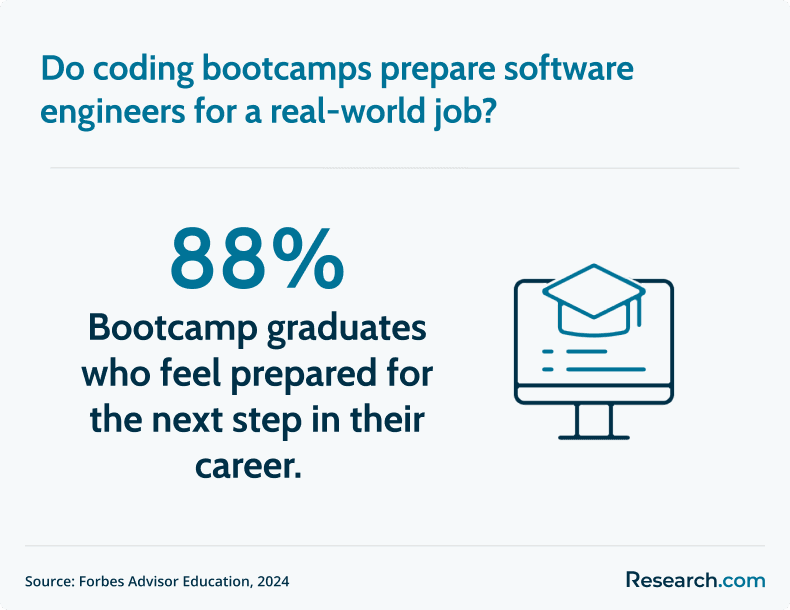
Forbes Advisor Education (2024) reported that 88% of bootcamp graduates felt prepared for their next career step. Preparation is valuable, but students should still review each program’s job placement definitions, reporting methods, and eligibility rules for any advertised job guarantee.
What are the financial aid options for students enrolling in an online Software Engineering Bootcamp?
Most bootcamps do not qualify for traditional federal financial aid in the same way accredited colleges and universities do. However, many providers offer alternative funding arrangements that can reduce upfront costs or spread payments over time.
| Funding option | How it works | What to verify |
| Scholarships | Bootcamps may offer awards for women, minorities, veterans, career changers, or other underrepresented groups in technology. | Eligibility rules, deadlines, award amount, and whether the scholarship reduces tuition or only applies to specific formats. |
| Tuition discounts | Some providers reduce tuition for early enrollment, upfront payment, promotions, or partner programs. | Whether the discount changes refund rights, financing eligibility, or access to career services. |
| Veteran benefits | Eligible U.S. military veterans may be able to use benefits such as the GI Bill® or VET TEC at approved programs. | Program approval status, benefit coverage, out-of-pocket costs, and enrollment requirements. |
| Employer sponsorship | An employer may reimburse or pay for training that improves job-related technical skills. | Reimbursement limits, grade or completion requirements, repayment obligations, and whether the course must be preapproved. |
| Payment plans | Students pay tuition in installments rather than all at once. | Total cost, fees, due dates, and consequences of withdrawal or missed payments. |
| Deferred tuition or income share agreements | Students pay later, sometimes after employment, often under specific income or timing conditions. | Total repayment cap, income threshold, payment term, job definition, and what happens if you do not find qualifying work. |
| Private loans | Some bootcamps partner with lenders that offer education loans. | Interest rate, origination fees, repayment schedule, deferment rules, and whether the loan is dischargeable or refundable. |
Students comparing lower-cost career training options may notice similar affordability issues in healthcare and allied health programs, such as the cheapest PCT certification programs online. In both cases, the smartest choice is not simply the lowest sticker price, but the program that offers credible training, transparent costs, and clear workforce preparation.
Before signing an enrollment agreement, ask for the full payment schedule, cancellation policy, refund policy, financing terms, and job guarantee conditions in writing. If a provider advertises “no upfront tuition,” confirm the maximum amount you may repay later.
What are the prerequisites for enrolling in an online Software Engineering Bootcamp?
Many software engineering bootcamps accept beginners, but beginner-friendly does not mean effortless. Applicants usually need basic computer skills, time availability, and the motivation to work through frustrating coding problems. More selective programs may require assessments, prework, or evidence of technical aptitude.
- Basic computer literacy. Students should know how to use a computer, manage files, navigate the web, install tools, and troubleshoot simple technical issues.
- High school diploma or equivalent. Many bootcamps require applicants to have completed high school or hold an equivalent credential.
- Logical problem-solving ability. Coding requires breaking large tasks into smaller steps, testing assumptions, and debugging errors methodically.
- Technical readiness. Some programs ask students to complete pre-course modules, coding challenges, or admissions assessments before starting.
- Time and consistency. Students must be able to attend sessions, complete assignments, build projects, and practice outside scheduled class time.
Education backgrounds in software engineering vary. The chart below shows that most software engineers hold a bachelor’s degree, accounting for 73% of the field, while master’s degrees represent another 20%. A bootcamp can add practical skills to an existing degree or help a non-degree learner build a portfolio, but students should understand that some employers may still prefer or require a degree for certain roles.
What topics are covered in a Software Engineering Bootcamp?
Software engineering bootcamps typically teach the skills needed to build, test, and maintain applications. The exact curriculum differs by provider, but most programs combine programming fundamentals, web development, databases, collaboration tools, and portfolio projects.
- Programming languages. Students may learn JavaScript, Python, Java, C#, or another language depending on the bootcamp’s technical focus.
- Front-end development. Learners build user-facing interfaces with HTML, CSS, JavaScript, React, or related frameworks.
- Back-end development. Coursework may cover server logic, APIs, databases, authentication, and frameworks such as Node.js or Django.
- Version control and collaboration. Students practice Git, GitHub, code review, Agile workflows, and team-based development habits.
- Software engineering practices. Programs may introduce object-oriented programming, design patterns, testing, debugging, maintainable code, and development workflows.
- Capstone projects. Many bootcamps end with a portfolio project that demonstrates full-stack application skills, similar to project expectations found in the top coding bootcamps for full-stack web development.
Bootcamps usually emphasize applied development more than academic theory. By contrast, broader technology programs such as the cheapest online applied sciences degree programs may combine hands-on technical learning with more general coursework and foundational study.
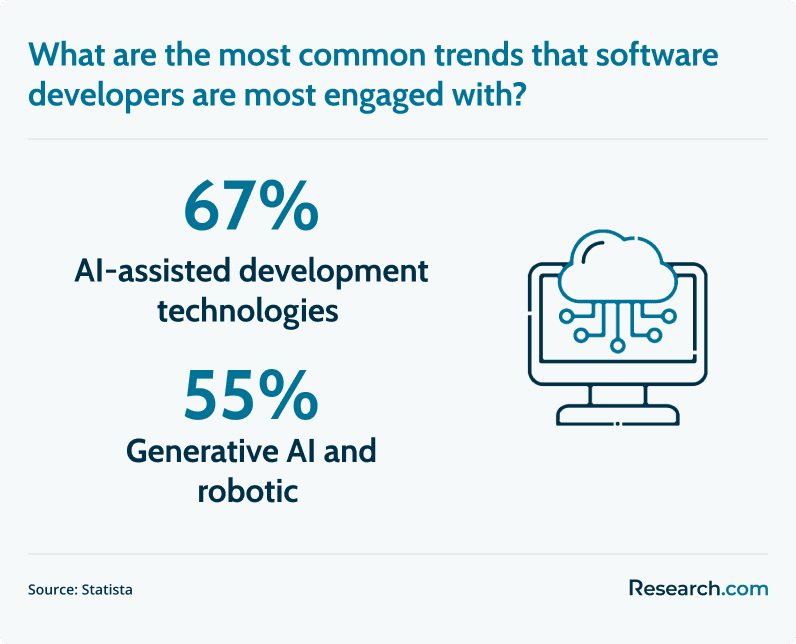
Current software engineering training is also being shaped by AI-assisted development. According to Statista (2024), about 63% of global software developers are actively engaged with AI-assisted development technologies, while generative AI and robotics also attracted significant attention, with over 55% engagement in 2023. For bootcamp students, this means it is increasingly important to learn not only how to code, but also how to use AI tools responsibly for debugging, documentation, code generation, and productivity without becoming dependent on them.
What tracks or specializations are offered in Software Engineering Bootcamps?
Some bootcamps teach general software engineering, while others let students focus on a specific technical path. Choosing a specialization can help you align your portfolio with the roles you want, but it can also narrow your training if selected too early.
| Specialization | What it emphasizes | Good fit if you want to become a |
| Full-Stack Development | Front-end interfaces, back-end logic, databases, APIs, and complete web applications. | Full-stack developer, junior software engineer, web application developer. |
| Front-End Development | HTML, CSS, JavaScript, React, Vue.js, Angular, responsive design, accessibility, and user experience. | Front-end developer, UI developer, web developer. |
| Back-End Development | Server-side programming, databases, APIs, authentication, security basics, and scalable architecture. | Back-end developer, API developer, software engineer. |
| Data Science and Machine Learning | Python, data analysis, statistics, visualization, machine learning models, and data-driven applications. | Data analyst, machine learning junior developer, analytics engineer. |
| DevOps and Cloud Engineering | Cloud platforms, Docker, Kubernetes, CI/CD, automation, monitoring, and infrastructure workflows. | DevOps engineer, cloud support engineer, site reliability associate. |
| Cybersecurity | Network security, secure coding, ethical hacking concepts, vulnerability assessment, and risk reduction. | Cybersecurity analyst, application security associate, security-focused developer. |
| Mobile App Development | iOS, Android, React Native, Flutter, mobile UI, device integration, and performance optimization. | Mobile app developer, cross-platform app developer. |
If you are unsure which track to choose, full-stack development is often the broadest starting point because it introduces both client-side and server-side work. A more specialized track can make sense if you already know your target role or have adjacent experience in design, analytics, IT operations, or cybersecurity.
Are online Software Engineering Bootcamps accredited and industry-recognized?
Most software engineering bootcamps are not traditionally accredited like colleges and universities. Some are licensed by state agencies or accredited by continuing education organizations, but many operate outside the standard academic accreditation system.
This does not automatically mean a bootcamp lacks value. Employers often evaluate bootcamp graduates based on demonstrated skills, portfolios, technical interviews, GitHub activity, internships, work samples, and prior experience. However, students should be cautious about any program that implies its certificate is equivalent to a college degree unless that claim is clearly documented.
To evaluate recognition, ask whether employers recruit from the program, whether alumni work in relevant roles, whether outcomes are independently reported, and whether the curriculum reflects current hiring expectations. Students comparing bootcamps with accelerated degree alternatives may also want to review online tech fast track programs.
Can bootcamp education serve as a stepping stone to advanced academic opportunities?
A bootcamp can support later academic study by helping students build practical programming experience before pursuing a degree or graduate program. This can be especially useful for learners who want to test their interest in software development before committing to a longer academic path.
Bootcamp training may also help students prepare for technical coursework in fields that combine programming with science, analytics, or healthcare data. For example, learners interested in computational biology or health data may later compare options such as the cheapest bioinformatics master's programs online.
Still, bootcamp credits often do not transfer into degree programs unless a specific school has an articulation agreement or credit policy. If your long-term goal includes a degree, ask the institution directly whether bootcamp completion provides admissions advantages, transfer credit, prerequisites, or portfolio consideration.
What are the potential challenges of online Software Engineering Bootcamps?
Online software engineering bootcamps can be effective, but they are demanding. The pace is fast, the workload can be heavy, and students often need to learn unfamiliar concepts while building projects under deadline pressure.
- Limited theory depth. Bootcamps may not cover computer architecture, operating systems, advanced algorithms, or math-heavy theory as thoroughly as a degree program.
- High self-discipline requirement. Online learners must manage time, avoid distractions, ask for help, and stay consistent without a physical classroom.
- Variable mentorship quality. Instructor access, code review, and career coaching differ significantly by provider.
- Job-search competition. Bootcamp graduates may compete with degree holders, experienced developers, and other career changers for entry-level roles.
- Financing risk. Deferred tuition, private loans, and income share agreements can create obligations even if career outcomes take longer than expected.
Comparing different educational models can clarify what you need. A structured academic program, such as an online degree in geology, may provide broader theory and formal credentials in its field, while a bootcamp is usually built for faster applied skill development.
Do employers value bootcamp credentials over traditional degrees?
Employers generally do not value bootcamp credentials “over” traditional degrees in a universal way. Hiring preferences differ by company, role, industry, and hiring manager. Many employers are open to bootcamp graduates when candidates can prove they can code, communicate, collaborate, and solve real problems.
For many software roles, a strong portfolio, technical interview performance, relevant projects, internships, freelance work, and practical experience can carry significant weight. At the same time, some employers still use degree requirements as screening criteria, especially for highly competitive, specialized, or research-heavy roles.
The most competitive candidates often combine credentials with evidence. A bootcamp certificate alone is usually less persuasive than a portfolio of deployed projects, readable code, test coverage, documentation, and a clear explanation of technical decisions. Learners who want deeper academic preparation after a bootcamp may consider programs such as a data scientist masters program online.
How to choose the best online Software Engineering Bootcamp?
The best online software engineering bootcamp is the one that fits your target role, budget, learning style, schedule, and support needs. A program that works for a full-time career changer may not work for a working parent, a recent graduate, or someone who already has coding experience.
| Factor | Why it matters | Question to ask |
| Curriculum relevance | You need training in languages, frameworks, and workflows used in current entry-level roles. | What technologies will I learn, and what jobs are they aligned with? |
| Hands-on projects | Employers need proof that you can build, debug, and explain software. | How many portfolio projects will I complete, and will instructors review my code? |
| Instructor and mentor support | Feedback can make the difference between watching lessons and actually improving. | How often can I meet with instructors or mentors, and what is the response time for help? |
| Career services | Technical ability alone may not be enough; you also need interview and job-search preparation. | Do you provide resume reviews, mock interviews, job-search coaching, and employer connections? |
| Outcomes transparency | Placement claims can be defined differently across providers. | How do you calculate job placement rates, and are outcomes independently verified? |
| Cost and financing | Payment plans can reduce upfront cost but may increase total repayment. | What is the total cost under each payment option, including fees and repayment caps? |
| Schedule fit | A great curriculum will not help if the schedule is unrealistic. | How many hours per week do successful students actually spend? |
| Accreditation or licensure | Formal recognition varies and may affect financing, transfer credit, or employer perception. | Are you accredited, state licensed, or otherwise approved, and what does that status mean? |
Some online software engineering programs can prepare learners for web development, software testing, junior engineering, and adjacent technical roles, including pathways related to entry-level cybersecurity jobs no experience. The right choice depends on whether the bootcamp’s curriculum aligns with your target job.
If you are comparing more specialized technology training, review whether a program includes certifications or cloud credentials. For example, the most affordable online Microsoft Azure dual certification bootcamps show how bundled credentials may support readiness for cloud-related roles.
Students interested in front-end roles should compare curriculum depth in JavaScript, accessibility, responsive design, and modern frameworks. Research.com’s guide to which coding bootcamp is best for front-end developers can help narrow programs for that specific path.
Common mistakes to avoid when choosing a bootcamp
- Choosing only by tuition. The cheapest program may cost more in the long run if it lacks feedback, career support, or credible projects.
- Ignoring total repayment terms. Deferred tuition and income share agreements can be useful, but students must understand caps, income thresholds, payment periods, and obligations.
- Assuming every “job guarantee” is simple. Guarantees often include strict requirements for applications, networking, location, documentation, and eligible roles.
- Overlooking accreditation or licensure. Many bootcamps are not academically accredited, so confirm what the credential does and does not provide.
- Underestimating the workload. A bootcamp can be shorter than a degree, but it is still intensive and requires significant practice outside class.
- Relying only on rankings. Rankings are a starting point. You still need to compare curriculum, schedule, financing, support, and outcomes for your situation.
- Skipping portfolio review. Ask to see examples of graduate projects so you can judge whether the program’s work resembles what employers expect.
What career paths are available for those who have completed Online Software Engineering Bootcamps?
Online software engineering bootcamp graduates can pursue several entry-level or early-career technical roles. The best fit depends on the curriculum completed, the graduate’s project portfolio, and whether they have prior professional experience in another field.
- Software Developer/Engineer. Employers sometimes use these titles differently, and Research.com explains the distinction in its software developer and software engineer career comparisons. In general, these professionals design, build, test, maintain, and improve applications or systems.
- Front-End Developer. Front-end developers create the user-facing side of websites and applications using HTML, CSS, JavaScript, and frameworks such as React or Angular.
- Back-End Developer. Back-end developers build the server-side logic, APIs, databases, authentication features, and infrastructure connections that power applications.
- Full-Stack Developer. A bootcamp can be one of the steps to become a full-stack developer, especially when it includes both front-end and back-end projects. Full-stack developers work across the application stack.
- DevOps Engineer. DevOps professionals support deployment automation, cloud infrastructure, CI/CD pipelines, monitoring, and system reliability.
- Quality Assurance/Test Engineer. QA engineers test software, document defects, create automated or manual test plans, and help ensure applications meet quality expectations.
- Mobile App Developer. Mobile developers build applications for iOS, Android, or cross-platform environments using native or hybrid frameworks.
- Cybersecurity Analyst. Security-focused graduates may move into roles that involve identifying vulnerabilities, improving secure coding practices, and helping protect systems and data.
Some graduates also move into technical support analyst, implementation specialist, junior data role, or product-adjacent positions before transitioning into software engineering. Students who want a broader academic alternative can compare bootcamps with the most affordable online web development degree options.
What is the job market like for graduates in software engineering?
The software engineering job market remains broad because organizations across many sectors rely on applications, data systems, cloud platforms, and digital products. According to the U.S. Bureau of Labor Statistics (BLS), overall employment in computer and information technology occupations is projected to grow much faster than the average for all occupations from 2023 to 2033.
For software developers, quality assurance analysts, and testers, employment is expected to grow by 17% over the decade. In 2023, software developers held about 1.7 million jobs, and approximately 140,100 openings are projected each year. These openings reflect both new job creation and replacement needs as workers retire, change roles, or leave the labor force.
The field is not limited to technology companies. The chart below shows that 32% of software developers work in computer systems design and related services, 10% work in software publishing, and another 10% work in finance and insurance. Manufacturing and corporate management also employ software developers, showing that software skills are useful across many industries.
For bootcamp graduates, the strongest strategy is to target realistic entry points, build a focused portfolio, practice technical interviews, and apply broadly. Graduates may need to start in junior developer, QA, support engineering, or technical analyst roles before moving into more specialized software engineering positions.
Current trends affecting software engineering bootcamps
- AI-assisted coding is changing expectations. Developers increasingly use AI tools for code suggestions, documentation, debugging, and productivity. Bootcamp students should learn how to use these tools critically rather than relying on them without understanding the code.
- Employers expect portfolios, not just certificates. A bootcamp credential is more persuasive when paired with deployed projects, clean repositories, tests, documentation, and clear explanations of trade-offs.
- Remote learning has expanded access. Online bootcamps make training available to students who cannot relocate, but they also require more self-management and discipline.
- Entry-level competition remains real. Demand for software talent does not mean every graduate gets hired quickly. Students should prepare for a sustained job search and continue building skills after graduation.
- Specialized skills can improve positioning. Cloud, cybersecurity, data, DevOps, and AI-related skills may help candidates stand out when aligned with real job requirements.
Practical steps before enrolling
- Define your target role. Decide whether you are aiming for front-end, back-end, full-stack, QA, DevOps, cybersecurity, or another path.
- Match the curriculum to job postings. Review entry-level postings in your region or preferred remote market and compare required tools with the bootcamp syllabus.
- Calculate total cost. Include tuition, financing fees, hardware, software, time away from work, and living expenses.
- Verify support. Ask about instructor access, code review, mentoring, tutoring, career coaching, and alumni networks.
- Review outcomes carefully. Look for how the provider defines placement, salary, graduation, and qualifying employment.
- Read the enrollment contract. Confirm refund rules, withdrawal policies, job guarantee conditions, and repayment obligations.
- Prepare before day one. Complete free beginner tutorials, practice typing code, set up GitHub, and build a basic project before classes begin.
- Plan your job search early. Start documenting projects, networking, updating your resume, and practicing interviews before graduation.
References:
- Business Research Insights. (2024). Software development service market size, share, growth, and industry analysis by type, application, regional forecast 2024–2033. https://www.businessresearchinsights.com/market-reports/software-development-service-market-102761
- Bureau of Labor Statistics. (2024). Software developers. U.S. Department of Labor. https://www.bls.gov/ooh/computer-and-information-technology/software-developers.htm
- Payscale. (2024). Software engineer salary. https://www.payscale.com/research/US/Job=Software_Engineer/Salary
- Statista. (2024). Most popular technologies used by software developers worldwide in 2023. https://www.statista.com/statistics/1241926/worldwide-software-developers-technologies-engagement/
Key Insights
- Affordable does not always mean best value. Compare tuition with mentorship, project review, curriculum depth, career services, and financing terms.
- Most online software engineering bootcamps take 8 weeks to 12 months. Full-time formats are faster but more intense; part-time and self-paced options work better for students balancing work or family responsibilities.
- Bootcamps are usually not equivalent to degrees. Many are not traditionally accredited, so students should verify licensure, recognition, and transfer-credit limitations before enrolling.
- Career outcomes depend on proof of skill. A strong portfolio, readable code, technical interview preparation, and consistent job-search effort matter more than the certificate alone.
- AI is becoming part of software development. Students should learn how to use AI-assisted tools responsibly while still understanding programming fundamentals.
- Read financing agreements carefully. Deferred tuition, income share agreements, and private loans can be useful, but repayment rules may be complex.
- The best bootcamp is the one aligned with your target role. Choose based on your career goal, schedule, budget, learning style, and the level of support you need to finish and compete for jobs.
Other Things You Need to Know About Online Software Engineering Bootcamps
Many of the most affordable online software engineering bootcamps in 2027 offer flexible payment plans. These can include options such as monthly installments, income share agreements, or deferred payment plans, enabling students to manage their financial commitment more effectively.
When selecting an affordable software engineering bootcamp in 2027, consider factors such as tuition cost, curriculum relevancy to current industry needs, payment options, job placement support, alumni reviews, program duration, and flexibility in learning schedules. Evaluating these elements ensures a bootcamp aligns with both educational goals and budget constraints.
In 2027, notable budget-friendly online software engineering bootcamps include Tech Academy, Springboard, and Le Wagon. These programs offer comprehensive curricula at affordable rates, often below $10,000, making them accessible options for aspiring software engineers.