2027 Software Developer vs Software Engineer: Explaining The Difference

Co-Founder and Chief Data Scientist
Choosing between software developer and software engineer is not just a wording issue. The titles often overlap in job postings, but they can point to different expectations: one role may emphasize building features and applications, while the other may require broader system design, architecture, scalability, and engineering discipline.
This guide is for students, career changers, early-career programmers, and professionals comparing software career paths for 2026 and beyond. You will learn how the roles differ, what skills and education each path usually requires, how salaries and job demand compare, what tools are common, and how to decide which path fits your strengths, learning style, and long-term goals.
Quick answer: software developer vs. software engineer
A software developer usually focuses on creating, testing, improving, and maintaining applications or features. A software engineer often applies engineering principles to design larger software systems, improve reliability, plan architecture, and solve complex technical problems across platforms, infrastructure, and teams. Both roles involve programming, but software engineering is typically broader in scope and more system-focused.
In practice, employers do not always use the titles consistently. Some companies call all programmers “software engineers,” while others reserve that title for roles involving architecture, distributed systems, infrastructure, or advanced design responsibilities. The best way to compare jobs is to read the responsibilities, required skills, tools, and reporting structure—not just the title.
Key things to know before choosing a path
- The market is large and still expanding: The software development market is forecasted to reach $858.10 billion by 2028, which points to continued demand for people who can build, improve, secure, and maintain software products.
- Both roles can pay well: Software engineers earn an average salary of $161,000, while software developers average $138,110 annually. The median wage for software developers is $110,140, and experienced professionals in specialized or high-demand areas may earn over $200,000.
- Demand is strong for both career paths: There are over 1.65 million software developers in the U.S., with projected growth of 22% from 2020 to 2030. There are over 325,000 software engineers, with employment expected to grow by 17% between 2023 and 2033.
- Technology expectations are changing: Approximately 65.82% of developers use JavaScript, and 78% already use or plan to use AI in software development within the next two years.
- The main difference is scope: Developers are commonly closer to application features, coding, testing, and maintenance. Engineers are more likely to design systems, plan architecture, address scalability, and coordinate technical decisions across multiple components.
- What is the difference between a software developer and a software engineer?
- What skills are required for a software developer vs. a software engineer?
- What are the education and training requirements?
- How do salaries compare for software developers vs. software engineers?
- Which career has better job prospects and demand for 2027?
- What tools and technologies do software developers vs. software engineers use?
- How will emerging technologies shape the future of software careers?
- Are non-salary benefits and compensation packages a significant factor in career satisfaction?
- What additional certifications or advanced degrees can enhance your career?
- What impact does interdisciplinary education have on tech careers?
- How does educational investment influence long-term career outcomes?
- What challenges might you encounter as a software developer or software engineer?
- How do work environments differ between software developers and software engineers?
- What are the career advancement opportunities?
- How do job responsibilities change based on company size?
- What soft skills are crucial for success in tech roles?
- Which career is the best fit for your interests and goals?
What is the difference between a software developer and a software engineer?
The simplest distinction is this: software developers are usually responsible for building software products and features, while software engineers are usually responsible for designing software systems that are reliable, scalable, maintainable, and integrated with a larger technical environment.
That distinction is useful, but it is not absolute. A developer at a small startup may design databases, deploy infrastructure, and handle testing. A software engineer at a large company may spend weeks improving one service or feature. Titles vary by employer, so the real difference is found in the job description.
| Comparison point | Software developer | Software engineer |
| Primary focus | Applications, features, user-facing functionality, and code implementation | System architecture, scalability, reliability, integrations, and engineering design |
| Typical work | Writing code, debugging, testing, maintaining apps, and improving product features | Designing systems, reviewing architecture, optimizing infrastructure, and solving system-level problems |
| Common collaboration partners | Product managers, designers, QA testers, and other developers | Developers, security teams, DevOps teams, infrastructure teams, architects, and technical leaders |
| Best fit for | People who enjoy hands-on coding, product building, and visible feature work | People who enjoy architecture, complex systems, technical trade-offs, and long-term reliability |
Job responsibilities
Software developers usually translate product requirements into working applications. Their work can include writing code, building interfaces, connecting databases, fixing bugs, writing tests, and maintaining existing software. They often work closely with designers and product managers because their output directly affects the user experience.
Software engineers often work one level broader. They may design technical frameworks, choose architecture patterns, define how services communicate, evaluate performance risks, improve reliability, and make sure software fits into a larger system. Their work may be less visible to end users but critical to keeping products secure, scalable, and maintainable.
Scope of work
Developers often specialize in front-end development, back-end development, mobile development, game development, or full-stack development. Engineers may also specialize, but their responsibilities commonly extend into databases, distributed systems, cloud infrastructure, API design, networking, security, and performance optimization.
If you want to understand how engineering thinking extends beyond software alone, this guide to what computer engineers do explains how hardware, systems, and software can work together in technical design.
Industry demographics
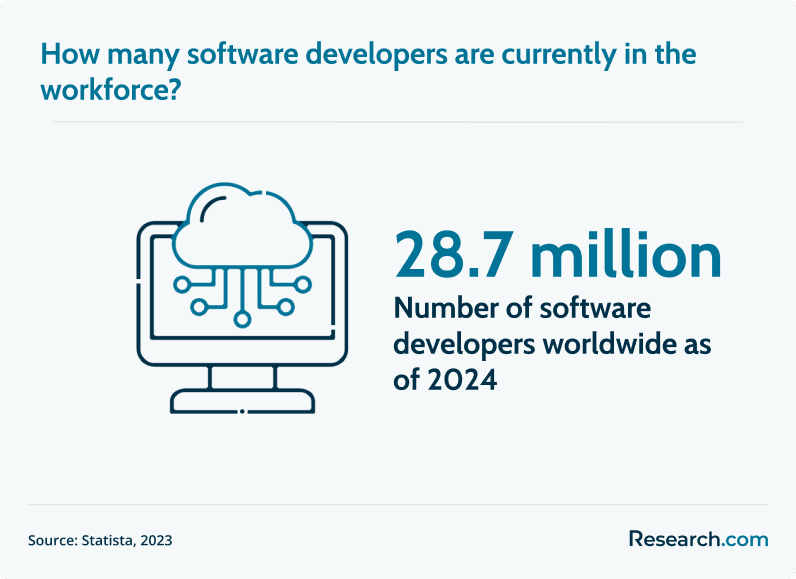
The software field remains heavily male. Nearly 92% of professionals are men, women make up just over 5%, and non-binary and genderqueer individuals represent about 1.67%. The largest age group is 25 to 34, accounting for nearly 35% of the workforce.
These figures matter because career decisions are not made in a vacuum. Mentorship, inclusive workplaces, hiring practices, and team culture can all affect whether a person stays and grows in tech over time.
What skills are required for a software developer vs. a software engineer?
Both software developers and software engineers need programming ability, analytical thinking, debugging skill, and comfort learning new technologies. The difference is emphasis. Developers are often evaluated on how effectively they build and improve applications. Engineers are more often evaluated on whether their technical decisions hold up as systems become larger, more complex, and more expensive to maintain.
Technical skills for software developers
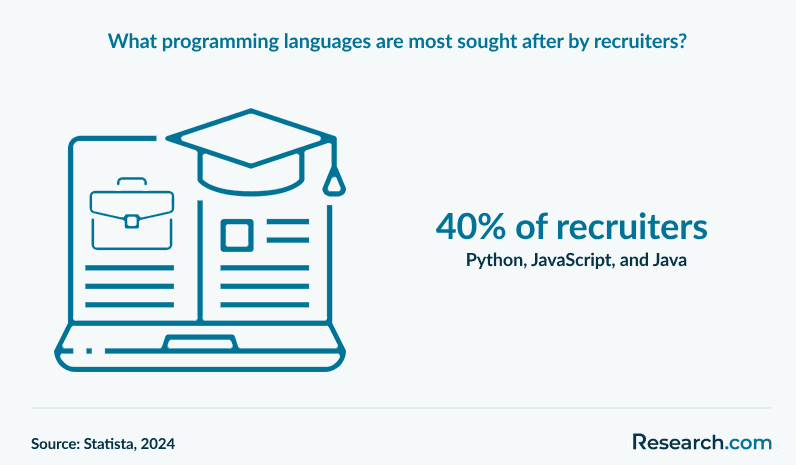
- Programming languages: JavaScript is the most widely used language, with 65.82% of developers using it. Other common languages include HTML/CSS at 55.08%, SQL at 49.43%, and Python at 48.07%.
- Application development: Developers need to understand how to create usable, stable, and maintainable software for web, mobile, desktop, or cloud environments.
- Front-end and back-end frameworks: Depending on the role, this can include UI frameworks, server-side frameworks, APIs, and libraries.
- Databases: Developers should know how to store, retrieve, validate, and protect data using relational or non-relational databases.
- Testing and debugging: Good developers do more than write code; they verify that it works, identify defects, and improve reliability over time.
Technical skills for software engineers
- Data structures and algorithms: Engineers often need strong fundamentals to solve performance, scaling, and optimization problems.
- System design: This includes architecture, service boundaries, distributed systems, APIs, caching, queues, reliability, and failure planning.
- Cloud and infrastructure knowledge: Many engineering roles require comfort with cloud platforms, deployment models, containers, monitoring, and automation.
- Security awareness: Engineers increasingly need to design systems with security, privacy, access control, and compliance in mind.
- Technical decision-making: Engineers are often expected to compare trade-offs, document decisions, and guide teams toward sustainable solutions.
Emerging technology skills
- AI and machine learning: 78% of developers already use or plan to use AI for software development within the next two years. This does not remove the need for fundamentals; it raises the value of people who can verify, adapt, and safely integrate AI-assisted output.
- Internet of Things: With over 75 billion devices expected by 2025, software professionals who understand connected devices, APIs, edge computing, and security can pursue specialized opportunities.
- Automation and DevOps: Modern teams increasingly expect software professionals to understand testing pipelines, deployment automation, observability, and operational reliability.
If machine learning is the direction you want to pursue, Research.com’s machine learning engineer career guide explains the skills, pathway options, and career considerations for that specialization.
Students who want a formal but cost-conscious route into engineering-oriented work can compare options in this guide to the most affordable online software engineering degrees.
What are the education and training requirements?
Most software developer and software engineer jobs prefer applicants with formal education in computer science, software engineering, information technology, or a related field. However, the field also includes bootcamp graduates, self-taught programmers, certificate holders, and professionals who entered through adjacent technical roles.
| Training path | Best for | Limitations to consider |
| Bachelor’s degree | Students who want broad fundamentals, internship access, and eligibility for many entry-level roles | Usually takes more time and costs more than short-term training options |
| Master’s degree | Professionals targeting advanced engineering, research, AI, cybersecurity, architecture, or leadership roles | Best value depends on cost, employer expectations, and whether the curriculum matches your career goal |
| Coding bootcamp | Career changers who want intensive, job-focused training in a shorter format | Quality varies, and graduates may need extra work to strengthen computer science fundamentals |
| Certificates and online courses | People filling specific skill gaps in programming, cloud, cybersecurity, DevOps, or data tools | Usually strongest when paired with projects, experience, or a degree |
| Self-study and projects | Motivated learners who can build a portfolio, contribute to open source, and demonstrate practical ability | Requires discipline and may make initial job screening harder without credentials or referrals |
Degree options
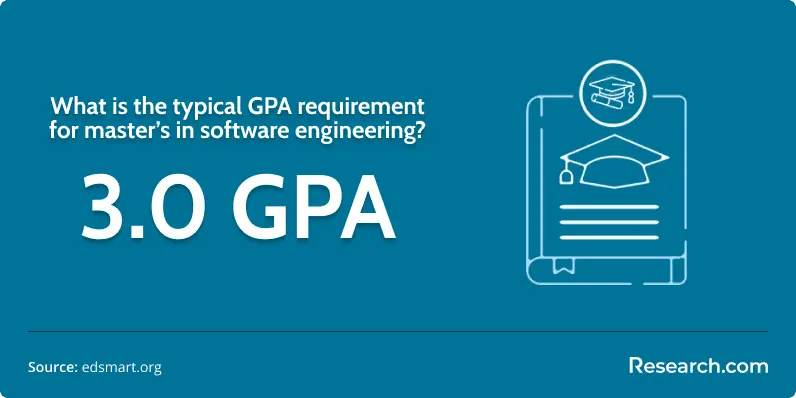
- A bachelor’s degree in computer science, software engineering, or IT is the common baseline for many software roles.
- Some software engineers pursue graduate study when they want deeper preparation in architecture, AI, distributed systems, cybersecurity, or technical leadership.
- Professionals interested in security-focused careers may compare programs such as a cyber security master’s degree online.
Alternative learning paths
- Coding bootcamps can help learners build practical skills quickly, especially for web development or full-stack roles.
- Online courses and professional certificates can help with targeted skills such as programming languages, cloud platforms, DevOps, databases, or security.
- Internships, open-source contributions, freelance projects, hackathons, and personal software projects can strengthen a portfolio and make skills easier to verify.
If you want a role that combines front-end and back-end work, this full stack developer career guide explains how that pathway differs from more specialized software roles.
How do salaries compare for software developers vs. software engineers?
Software engineers generally report higher average pay than software developers, largely because engineering roles may involve broader systems responsibility, architecture decisions, infrastructure knowledge, and higher accountability for reliability and scale. Still, the title alone does not determine pay. A highly skilled developer in a specialized area can earn as much as, or more than, an engineer in a less specialized role.
| Role | Salary information cited | What can affect earnings |
| Software developer | Average annual salary of $138,110; median wage of $110,140; experienced professionals may earn over $200,000 | Specialization, location, portfolio strength, product domain, seniority, industry, and employer size |
| Software engineer | Average salary of $161,000; additional compensation may range from $33,000 to $62,000 | System design expertise, cloud and infrastructure skills, security knowledge, leadership scope, company stage, and equity structure |
Software developer salaries
The average annual salary for software developers is $138,110, with a median wage of $110,140. Developers with experience in high-demand technologies, complex products, or specialized industries can earn over $200,000.
Software engineer salaries
Software engineers have an average salary of $161,000. Many roles also include bonuses, equity, or other compensation, with additional compensation ranging from $33,000 to $62,000.
Factors that influence pay
- Location: Tech hubs such as San Francisco and New York often offer higher wages, though cost of living can also be higher.
- Remote work policy: Remote roles may offer flexibility, but some employers adjust pay based on location.
- Company type: Startups may offer equity, while larger firms may provide structured bonuses and broader benefits.
- Specialization: AI, cybersecurity, DevOps, cloud computing, data engineering, and systems architecture can change earning potential.
- Seniority: Senior, staff, principal, lead, and architect roles usually require deeper judgment and broader business impact.
Salary should be part of the decision, not the whole decision. A role with better mentorship, cleaner technical practices, and stronger advancement opportunities can be more valuable long term than a slightly higher starting salary.
Which career has better job prospects and demand for 2027?
Both software developers and software engineers have strong job prospects. Developers show a slightly higher cited growth rate, while engineers often compete for roles requiring deeper technical breadth, architecture judgment, and system-level responsibility.
Software developer demand
There are over 1.65 million software developers in the U.S. as of May 2022. Demand is projected to grow 22% from 2020 to 2030, which is much faster than average for many occupations. Mobile applications, cloud platforms, enterprise software, AI-enabled products, and digital services continue to create work for developers.
Software engineer demand
The U.S. has over 325,000 software engineers, with employment expected to grow 17% between 2023 and 2033. Engineers are especially important when organizations need scalable architecture, reliable infrastructure, secure systems, and technical leadership across complex products.
Job outlook comparison
| Career path | Demand signal | Practical interpretation |
| Software developer | Over 1.65 million software developers in the U.S.; projected growth of 22% from 2020 to 2030 | Strong option for people who want to build applications, features, websites, mobile apps, or full-stack products |
| Software engineer | Over 325,000 software engineers; expected growth of 17% between 2023 and 2033 | Strong option for people who want to design systems, improve infrastructure, scale platforms, and solve architecture problems |
If you are trying to maximize employability, focus less on the title and more on building a portfolio that proves you can solve real problems. Employers want evidence: working projects, clean code, tests, documentation, collaboration, and the ability to explain technical decisions.
What tools and technologies do software developers vs. software engineers use?
Developers and engineers use many of the same tools, but the emphasis differs. Developers often spend more time in application frameworks, editors, databases, and product repositories. Engineers may spend more time on architecture tools, infrastructure automation, deployment pipelines, monitoring, security tools, and system design documentation.
Common tools for software developers
- Programming languages: JavaScript, Python, Java, C++, and C#
- Development environments: Visual Studio Code, IntelliJ IDEA, and Eclipse
- Version control: Git, GitHub, and GitLab
- Databases: MySQL, PostgreSQL, and MongoDB
- Cloud platforms: With 69% of businesses adopting cloud computing, developers often work with AWS, Google Cloud, and Microsoft Azure
Common tools for software engineers
- Infrastructure management: Docker, Kubernetes, and Terraform
- CI/CD pipelines: Jenkins, GitHub Actions, and CircleCI
- Security integration: As DevSecOps becomes a priority, engineers may use tools such as SonarQube, Snyk, and OWASP ZAP
- System design and architecture: UML diagrams, microservices frameworks, API management tools, and architecture documentation
Because security is now part of many software roles, students and career changers may also want to review the information security analyst career guide to understand how secure systems, risk management, and software practices overlap.
How will emerging technologies shape the future of software careers?
AI, machine learning, cloud computing, cybersecurity, automation, and connected devices are changing what employers expect from software professionals. The strongest candidates will not simply know how to write code; they will know how to evaluate tools, protect systems, work with data, automate workflows, and make software reliable in production.
AI-assisted coding tools can speed up routine work, but they also increase the need for judgment. Developers and engineers must still review output, understand requirements, test edge cases, protect data, and make design decisions. People who rely on tools without understanding the underlying system risk producing fragile or insecure software.
Students who want structured preparation in computer science fundamentals and emerging technologies may compare options such as a fast-track computer science degree, especially if they need a more efficient route into the field.
Are non-salary benefits and compensation packages a significant factor in career satisfaction?
Yes. Base salary is important, but total compensation and work conditions often determine whether a role is sustainable. Bonuses, health benefits, retirement plans, equity, remote work policies, paid time off, learning budgets, and schedule flexibility can meaningfully change the value of an offer.
Large companies may offer more structured benefits, clearer promotion ladders, and predictable bonus programs. Startups may provide equity and broader responsibilities but can also bring higher uncertainty. Remote-first companies may improve flexibility, while in-office teams may offer more direct mentorship for early-career professionals.
When comparing offers, ask for the full compensation picture. A higher salary with weak benefits, limited mentorship, or chronic overtime may not be better than a slightly lower-paying role with strong growth support and a healthier team culture. For a broader look at how compensation varies across technology-adjacent fields, this guide to health information technology careers salary can provide useful context.
What additional certifications or advanced degrees can enhance your career?
Certifications and graduate degrees can help when they align with a specific career goal. They are less useful when chosen only to decorate a resume. The best credential is one that closes a real gap: cloud architecture, cybersecurity, AI, data analytics, DevOps, project leadership, or domain expertise.
| Credential type | When it can help | What to check first |
| Cloud certification | You want roles involving deployment, architecture, infrastructure, or platform engineering | Whether employers in your target market request the specific cloud platform |
| Cybersecurity certification | You want to build secure applications, work in DevSecOps, or move toward security roles | Whether you already have enough networking, systems, or programming background |
| Data or AI credential | You want to work with machine learning, analytics, recommendation systems, or automation | Whether the program teaches practical projects, math foundations, and responsible AI practices |
| Advanced degree | You are targeting research, leadership, specialized engineering, or interdisciplinary technical work | Accreditation, cost, curriculum quality, flexibility, and employer recognition |
Interdisciplinary credentials can also make sense for professionals who want to apply software skills in scientific, medical, or research-heavy fields. For example, a bioinformatics master’s online pathway may be relevant for people interested in computational biology, data analysis, and health-related technology.
What impact does interdisciplinary education have on tech careers?
Interdisciplinary education can strengthen a software career when it adds domain knowledge that employers value. Software used in finance, healthcare, biology, cybersecurity, education, logistics, or manufacturing often requires more than general programming skill. Professionals who understand both software and the domain can ask better questions, design more useful systems, and communicate more effectively with nontechnical stakeholders.
This is especially relevant for engineers who design systems in regulated or data-intensive environments. A developer who understands healthcare workflows, for example, may build better user-facing tools. An engineer who understands biological data may design more effective pipelines for research applications. Programs such as online bioinformatics master’s options may support this kind of cross-disciplinary path.
How does educational investment influence long-term career outcomes?
Education can improve long-term outcomes when it gives you marketable skills, stronger fundamentals, better credentials, access to internships, or a path into higher-responsibility roles. But not every program is worth the cost. Before enrolling, compare tuition, time commitment, accreditation, curriculum, faculty experience, employer connections, career services, and whether the program supports your target role.
For engineering-minded students who want a more affordable route, comparing affordable engineering online colleges can help balance cost and credential value. The right program should make you more employable without creating a financial burden that outweighs the expected benefits.
Questions to ask before choosing a degree, bootcamp, or certificate
- Is the institution or program properly accredited?
- Does the curriculum teach fundamentals, or only short-term tools?
- Will I graduate with portfolio projects that demonstrate real ability?
- Does the program offer career support, employer connections, or internship access?
- Can I transfer credits or continue into a higher degree later?
- What is the total cost, including fees, software, hardware, books, and lost work time?
- Do graduates enter roles similar to the one I want?
- Will the schedule work with my job, family, and financial responsibilities?
What challenges might you encounter as a software developer or software engineer?
Both careers can be rewarding, but neither is easy. Software professionals must keep learning as tools, frameworks, security threats, and employer expectations change. They also face deadlines, ambiguous requirements, legacy code, production incidents, and the pressure to deliver reliable work quickly.
Role confusion is another challenge. In smaller companies, one person may be expected to write code, manage deployments, debug production issues, support customers, and make architecture decisions. In larger organizations, the challenge may be the opposite: responsibilities can be narrow, communication can be complex, and progress may depend on many teams.
Burnout is also a real risk when teams normalize constant urgency, unclear priorities, or insufficient staffing. Building sustainable habits matters: documentation, testing, realistic planning, clear communication, and the ability to say when a deadline is technically risky.
Professionals who want to stay competitive in fast-changing areas may consider deeper study in artificial intelligence. Research.com’s guide to an AI online degree can help readers compare education options in that field.
How do work environments differ between software developers and software engineers?
Software developers and software engineers often work in the same industries, but their day-to-day environment may differ based on product complexity, company size, team structure, and technical maturity.
Industries and employment settings
- More than 50% of developers and engineers work in professional and business services, including software companies, consulting firms, and financial institutions.
- Around 16% work in the information sector, including telecommunications, media, and cloud services.
- Private companies employ many software professionals because startups, software vendors, and enterprise technology teams continue to build digital products and services.
Work dynamics
- Software developers: Often work in agile teams with designers, product managers, QA specialists, and other developers. Their work commonly centers on features, user stories, debugging, and iterative product improvement.
- Software engineers: Often coordinate with infrastructure, security, operations, data, and architecture teams. Their work may involve system reliability, scalability, integration, performance, and technical standards.
As software teams place more emphasis on secure design, professionals can strengthen their preparation through cyber security courses online, especially if they want to work in DevSecOps, cloud systems, or security-conscious engineering environments.
What are the career advancement opportunities?
Both software developers and software engineers can advance through technical specialization, leadership, architecture, product ownership, consulting, or entrepreneurship. The best path depends on whether you want to stay deeply technical, manage people, build products, or work independently.
| Advancement route | Typical direction | Best for |
| Senior individual contributor | Developer to senior developer, or engineer to senior/staff/principal engineer | People who want deeper technical impact without becoming full-time managers |
| Architecture | Software engineer to systems architect, solutions architect, or platform architect | People who enjoy high-level design, trade-offs, standards, and long-term technical planning |
| Management | Team lead, engineering manager, director, or CTO | People who want to guide teams, manage priorities, mentor staff, and connect technology to business strategy |
| Specialization | AI, cybersecurity, cloud, DevOps, data engineering, mobile, gaming, or full-stack development | People who want expertise in a high-demand niche |
| Consulting or entrepreneurship | Freelance consultant, agency founder, startup founder, or independent product creator | People who want autonomy and are willing to handle business development, client work, and financial risk |
Advancement paths
Entry-level professionals can move into senior roles by improving code quality, learning system design, taking ownership of larger projects, mentoring others, and developing stronger product judgment. Developers may transition into engineering roles as their work expands beyond features into architecture, infrastructure, and technical planning.
Leadership roles
Experienced developers and engineers can become team leads, engineering managers, directors, or CTOs. These roles require communication, planning, prioritization, budgeting, hiring, coaching, and business awareness in addition to technical credibility.
Specialization opportunities
AI, cybersecurity, DevOps, cloud computing, data engineering, and systems architecture can all support advancement. Specialization is most valuable when paired with practical project experience and the ability to explain technical decisions clearly.
Entrepreneurship and consulting
Some professionals launch software products, start agencies, consult for businesses, or work independently. This can create flexibility and upside, but it also requires sales, contracts, client management, pricing, and financial planning.
How do job responsibilities change based on company size?
Company size can change the role more than the title does. A “software developer” at a startup may perform work that looks like engineering, DevOps, QA, and support combined. A “software engineer” at a large enterprise may work within a highly specialized area with narrow ownership.
| Company size | Software developer responsibilities | Software engineer responsibilities |
| Startup or small company | Build features, fix bugs, test releases, support production issues, and sometimes help with deployment or maintenance | Design systems, solve infrastructure problems, set technical patterns, troubleshoot failures, and often cover several technical areas |
| Mid-sized company | Focus more on product areas, application development, feature quality, and team-based delivery | Own architecture decisions, scaling plans, integrations, platform reliability, and technical standards |
| Large enterprise | Work on defined modules, services, internal tools, or product features within structured teams | Work on large systems, platform design, distributed services, enterprise integrations, performance, and cross-team technical coordination |
Students interested in specialized software fields can also explore an online game programming college pathway, especially if they want to build skills for gaming, simulation, interactive media, or graphics-heavy applications.
What soft skills are crucial for success in tech roles?
Technical ability gets you into software work, but soft skills often determine how far you advance. Developers and engineers need to explain trade-offs, ask good questions, communicate blockers, document decisions, review code respectfully, and work with people who may not share their technical background.
- Communication: You need to explain complex ideas clearly to teammates, managers, clients, and nontechnical stakeholders.
- Problem framing: Strong professionals clarify the actual problem before jumping into code.
- Adaptability: Tools, priorities, and requirements change quickly, so flexibility is essential.
- Collaboration: Most software is built by teams, not isolated individuals.
- Critical thinking: Good engineers and developers question assumptions, evaluate trade-offs, and consider long-term consequences.
- Conflict resolution: Technical disagreements are common; the best professionals keep discussions focused on evidence and project goals.
Professionals who want to combine technical, analytical, and domain-specific skills may find value in fields such as health informatics. Research.com’s guide to the best online health informatics programs explains education options in that interdisciplinary area.
Common mistakes when choosing between software developer and software engineer
| Mistake | Why it can hurt your career decision | Better approach |
| Choosing based only on the title | Employers use “developer” and “engineer” differently, so titles can be misleading | Read the job duties, tools, team structure, and required experience carefully |
| Focusing only on salary | A higher salary may come with weaker mentorship, burnout risk, or limited growth | Compare total compensation, learning opportunities, manager quality, and career path |
| Ignoring fundamentals | Framework knowledge can become outdated quickly | Build a foundation in programming, data structures, algorithms, databases, testing, and system design |
| Assuming a bootcamp or degree guarantees a job | Credentials help, but employers still want proof of ability | Create projects, document your work, practice interviews, and build professional connections |
| Overlooking accreditation and program quality | Poor program choice can waste money and limit transfer or graduate options | Check accreditation, curriculum, outcomes, faculty, support services, and total cost |
| Chasing every new technology | Scattered learning can prevent depth | Choose a target role and build a focused skill plan around it |
Practical steps to choose the right path
- Study real job postings. Compare software developer and software engineer listings in your target location or remote market. Note repeated skills, tools, degree expectations, and responsibilities.
- Identify your preferred work style. If you enjoy building visible features and applications, developer roles may fit well. If you enjoy architecture, systems, performance, and technical planning, engineering roles may be more appealing.
- Build a portfolio around your goal. Developers should show working applications, clean interfaces, APIs, tests, and documentation. Engineers should also show system design thinking, deployment, scalability, monitoring, and architecture decisions.
- Strengthen fundamentals. Learn programming, databases, version control, testing, debugging, data structures, algorithms, and basic security practices.
- Choose education carefully. Compare degree, bootcamp, certificate, and self-study options based on cost, time, accreditation, curriculum, and career support.
- Get practical experience early. Internships, open-source contributions, freelance work, student projects, and volunteer technical projects can make your skills easier to evaluate.
- Prepare for interviews by role type. Developer interviews may emphasize coding, product work, debugging, and frameworks. Engineering interviews may add system design, architecture, scalability, and technical trade-offs.
- Reassess after your first role. Many professionals start as developers, then move toward engineering as they gain experience with systems, infrastructure, and architecture.
Which career is the best fit for your interests and goals?
The better choice depends on what kind of problems you want to solve every day. Choose software development if you are excited by building applications, turning ideas into features, improving user experiences, and writing code that people interact with directly. Choose software engineering if you want to design technical systems, plan architecture, improve scalability, and make software dependable at larger scale.
| You may prefer software development if... | You may prefer software engineering if... |
| You enjoy hands-on coding and product features | You enjoy architecture, reliability, and system-level decisions |
| You want to work closely with design and product teams | You want to coordinate with infrastructure, security, and platform teams |
| You like seeing direct user-facing results | You like solving performance, integration, and scalability problems |
| You are interested in web, mobile, full-stack, or application development | You are interested in distributed systems, cloud platforms, DevOps, or technical leadership |
| You want a practical entry route through projects, bootcamps, or applied coursework | You are willing to invest heavily in fundamentals, systems thinking, and architecture skills |
Your academic comfort level also matters. Some students want a gentler transition into college before moving into a demanding technical specialization. If you are still comparing academic options, this guide to the easiest major in college can help you think through fit, workload, and long-term planning.
Ultimately, the two paths are connected rather than completely separate. Many professionals begin as developers and grow into engineering responsibilities. Others remain application-focused and build successful careers as senior developers, mobile specialists, full-stack developers, or technical leads. The best path is the one that matches your strengths and gives you room to keep learning.
Here’s what people say about being a software developer or software engineer
Software development has given me a career where I keep learning and solving new problems. I like working on projects that matter and seeing how much room there is to grow over time. – Gerard
As a software engineer, I spend a lot of time thinking through complex systems and working with different teams. The role can be challenging, but each project pushes me to become more precise and more technically capable. – Neil
My software development work lets me use different languages, tools, and problem-solving approaches. I enjoy the balance between focused independent work and team collaboration. – Ronald
Key Insights
- Software developers usually focus on building applications and features; software engineers usually take a broader role in system design, architecture, scalability, and reliability.
- The titles overlap, so job descriptions are more reliable than job titles when comparing opportunities.
- Software engineers have a higher cited average salary of $161,000, while software developers average $138,110 with a median wage of $110,140.
- Both paths show strong demand: software developers are projected to grow 22% from 2020 to 2030, while software engineers are expected to grow 17% between 2023 and 2033.
- AI, cloud computing, cybersecurity, DevOps, and system design skills are becoming more important for both roles.
- A degree is common, but bootcamps, certificates, self-study, internships, and portfolio projects can also support entry into the field.
- Choose software development if you want hands-on product building; choose software engineering if you want larger-scale technical design and systems responsibility.
- The strongest career strategy is to build fundamentals, create proof of skill, compare education costs carefully, and keep learning as employer expectations evolve.
References:
- 5 Software development Trends in 2025: AI, ML, and Big Data Solutions | Turing. (n.d.). https://www.turing.com/blog/software-development-statistics
- Hanowell, B. (2024, June 17). The rise—and fall—of the software developer. ADP Research. https://www.adpresearch.com/the-rise-and-fall-of-the-software-developer/
- Here’s what the job outlook and desired skills for software engineers look like in the coming years. (2024, October 2). Baylor University. https://onlinecs.baylor.edu/news/heres-what-job-outlook-and-desired-skills-software-engineers-look-coming-years
- Hryshchenko, M., & Hryshchenko, M. (2024, November 11). 17 Key software development Trends (2025-2026). SpdLoad. https://spdload.com/blog/software-development-trends/
- Jessup. (2024, April 18). Software Engineer Career outlook: 2024 and beyond. Jessup University. https://jessup.edu/blog/engineering-technology/software-engineer-career-outlook/
- Manalo, S. (2024, December 20). Software developer statistics you should know in 2025. Outsource Accelerator. https://www.outsourceaccelerator.com/articles/software-developer-statistics/
- Software developers. (2023, April 25). Bureau of Labor Statistics. https://www.bls.gov/oes/current/oes151252.htm
- Software Engineer Demographics and Statistics [2025]: Number of software engineers in the US. (2025, January 8). https://www.zippia.com/software-engineer-jobs/demographics/
- Staff, C. (2025, January 15). Software Engineer Salary: Your 2025 guide. Coursera. https://www.coursera.org/articles/software-engineer-salary
- Uspenskyi, S. (2025, February 10). How many software engineers are there in 2025? Springs. https://springsapps.com/knowledge/how-many-software-engineers-are-there-in-2024
- Wald, B. (2025, January 17). Five trends that will drive software development in 2025. DevOps.com. https://devops.com/five-trends-that-will-drive-software-development-in-2025/
Other Things You Should Know About the Difference Between a Software Developer and Software Engineer
In 2027, software developers typically need a bachelor's degree in computer science or a related field. Software engineers often require a degree in software engineering or computer engineering. Some roles might need certification from bodies like IEEE or ACM.
Hiring standards are set by the employer, not by a government licensing board. Many job postings require a bachelor’s degree in computer science, software engineering, or a related field, plus 2 to 5 years of experience and evidence of coding ability through portfolio projects or technical interviews.