2027 Student’s Guide to Jump-Starting a Software QA Engineer Career

Co-Founder and Chief Data Scientist
Choosing a software quality assurance career means deciding whether you want to be the person who prevents broken releases, missed requirements, security gaps, and poor user experiences from reaching customers. Software QA engineers test applications before and after launch, design testing processes, document defects, and help development teams deliver more reliable software. The role is especially relevant in 2026 because software teams are releasing faster, employers expect more automation skills, and AI-assisted development has increased the need for disciplined validation.
This guide explains how to become a quality assurance engineer, what the job involves, which degrees and certifications can help, how long the path usually takes, what salary and job outlook data suggest, and how to decide whether QA is the right computer science career path for your goals.
Software QA Engineer Table of Contents
- What does a software QA engineer do?
- How long does it take to become a quality assurance engineer?
- Career advancement opportunities for software QA engineers
- Skills and certifications that matter in software QA
- What challenges do QA engineers face?
- How can QA professionals keep their skills current?
- How can cybersecurity skills strengthen a QA career?
- Software quality assurance trends for 2026
- Affordable education options for future QA engineers
- How can interdisciplinary knowledge improve QA work?
- How can remote QA teams work more effectively?
- How can data analytics support software testing?
- Educational resources for aspiring software QA engineers
- How emerging technologies are changing QA outcomes
Quick Answer: How do you become a quality assurance engineer?
Most aspiring software QA engineers build a foundation in computer science, software engineering, information technology, computer engineering, electrical engineering, or a closely related field; learn manual and automated testing; practice common testing models; gain hands-on experience through internships or entry-level QA roles; and strengthen their resume with relevant certifications. A bachelor’s degree is common, but some candidates enter through coding bootcamps, associate degrees, technical experience, or certificate programs if they can demonstrate strong testing, programming, and documentation skills.
| Step | What to focus on | Why it matters |
| Build a technical foundation | Programming, databases, software development basics, version control | QA engineers must understand how software is built before they can test it well. |
| Learn testing methods | Unit, integration, system, regression, performance, mobile, and user acceptance testing | Different software risks require different testing approaches. |
| Practice with tools | Bug tracking, automation frameworks, CI/CD workflows, test documentation | Employers often expect QA candidates to work inside modern development pipelines. |
| Gain experience | Internships, freelance testing, open-source projects, junior QA roles | Real defect reports and test cases are stronger than coursework alone. |
| Consider certification | ISTQB, CSTE, CAST, CSQA, CMSQ, automation or DevOps credentials | Credentials can validate knowledge, especially for career changers or early-career applicants. |
What is a software QA engineer?
A software quality assurance engineer evaluates software to confirm that it works correctly, meets requirements, performs reliably, and provides an acceptable user experience. QA engineers participate in the software development lifecycle by identifying bugs, verifying fixes, improving testing processes, and helping teams reduce the risk of defective releases.
The job is closely connected to development, product management, cybersecurity, operations, and user experience. Unlike a general tester who may focus mainly on executing test cases, a QA engineer often helps design the testing strategy itself, selects tools, reviews requirements, writes automated scripts, and communicates risk to stakeholders. Professionals on a software engineering career path may also work closely with QA teams because modern development often blends coding, testing, and deployment responsibilities.
Quality assurance also supports compliance. In regulated industries, QA engineers may help verify that software satisfies internal policies, industry rules, security expectations, accessibility requirements, or audit documentation standards.
What does a software QA engineer do every day?
Daily responsibilities vary by employer, product type, release schedule, and industry. A QA engineer in a financial institution may spend more time on compliance and security testing, while a QA engineer at a mobile app company may focus more on device compatibility and user experience. Common duties include:
- Planning tests: QA engineers define what needs to be tested, which risks matter most, what success looks like, and how testing will fit into the release timeline.
- Designing and running test cases: They create scenarios that verify software functionality, including functional tests, regression checks, performance tests, security checks, and usability reviews.
- Finding and reporting defects: QA engineers document bugs in tracking systems, explain how to reproduce issues, prioritize severity, and confirm whether fixes actually work.
- Automating repeatable tests: Many QA roles require scripting automated tests so teams can quickly verify common workflows during frequent releases.
- Documenting results: Clear records of test cases, test data, scripts, outcomes, and unresolved risks help teams make informed release decisions.
- Collaborating across teams: QA engineers work with developers, product managers, business analysts, designers, security staff, and project leaders to clarify requirements and resolve quality concerns.
- Improving QA processes: Senior QA professionals may define standards, evaluate tools, update testing frameworks, and train teams on better quality practices.
How to Become a Quality Assurance Engineer: Education, Training, and Experience
The most direct route to becoming a software QA engineer is to combine formal technical education with practical testing experience. Compared with some advanced technology careers, such as the path to becoming a computer network architect, QA may not require a graduate degree. Still, the strongest candidates usually understand programming, software architecture, databases, development workflows, and testing strategy.
Step 1: Complete the right education
Zippia reports that 69% of software quality engineers have a bachelor’s degree. Common majors include computer science, electrical engineering, computer engineering, software engineering, information technology, and related programs with substantial programming coursework. Students should look for courses in software development, algorithms, databases, operating systems, web development, cloud computing, cybersecurity, and systems analysis.
Online programs can also be relevant for students who need flexibility. One survey found that 48% of online college students were enrolled in programs connected to computers and information technology. Whether studying online or on campus, students should confirm that a program provides enough hands-on coding, project work, and access to career support.
| Education route | Best for | Important considerations |
| Bachelor’s degree | Students seeking broad access to QA, software, IT, and technology roles | Look for programming depth, internships, software projects, and career services. |
| Associate degree plus transfer | Cost-conscious students who want to reduce the price of a bachelor’s degree | Confirm transfer agreements before enrolling so credits apply toward the intended major. |
| Coding bootcamp | Career changers who need practical programming and testing skills quickly | Review outcomes carefully and build a QA-focused portfolio, not just coding exercises. |
| Certificate program | Working professionals adding QA skills to an existing technical background | Choose training that includes test design, automation, defect reporting, and real tools. |
| Graduate degree | QA professionals targeting senior, research, architecture, or management roles | Consider cost, time, employer tuition support, and whether the degree is required for your target role. |
Step 2: Learn the major types of software testing
QA engineers need more than general programming knowledge. They must know which testing method fits which risk. A strong QA portfolio should show that you can design tests for small code units, full systems, performance limits, mobile environments, regression risks, and user acceptance.
- Unit testing: This checks small pieces of code independently to confirm that a specific function, method, or component behaves as expected.
- Integration testing: This verifies whether separate modules, services, APIs, or components work correctly when connected.
- System testing: This evaluates the complete software product against stated requirements, expected behavior, and overall performance standards.
- Performance testing: This measures responsiveness, scalability, stability, throughput, resource use, and behavior under different workload conditions.
- Regression testing: This confirms that new code changes, bug fixes, or feature updates have not broken existing functionality.
- Mobile testing: This examines mobile apps across devices, operating systems, screen sizes, touch interactions, connectivity conditions, and battery-related constraints.
- User acceptance testing: This asks whether the software meets the needs of actual users or business stakeholders before release.
Step 3: Understand testing models and development workflows
Testing does not happen in isolation. QA engineers must adapt their approach to the way a software team builds and ships products. A team using a waterfall process may test after major development stages, while an agile or DevOps team may require continuous testing throughout short development cycles.
- Waterfall: Work moves through defined stages such as requirements, design, implementation, testing, and deployment, usually with limited overlap between phases.
- Iterative development: Teams build and test the product in repeated cycles, using feedback from each round to improve the next version.
- Agile: Agile teams emphasize collaboration, adaptability, short delivery cycles, frequent feedback, and continuous refinement of requirements.
- Extreme programming: This approach integrates testing deeply into development through practices such as automated unit tests, continuous integration, customer feedback, and user acceptance checks.
Step 4: Build experience before applying for full-time QA roles
Employers want evidence that you can test real software, communicate defects clearly, and work with developers. Students can gain that evidence through internships, class projects, open-source contributions, freelance testing assignments, capstone projects, hackathons, or entry-level technical support roles that involve troubleshooting software issues.
BLS data cited in the original research identify the industries with the highest employment for quality assurance engineers as computer systems design services (65,310), software publishers (19,070), business and enterprise management (11,350), employment services (10,780), and computer infrastructure and data processing providers (8,440). These sectors are logical places to search for internships, junior QA analyst roles, software tester positions, and automation testing openings.
Step 5: Add certifications when they support your goals
Certifications are not always mandatory, but they can help early-career applicants, career changers, and working testers prove knowledge of QA terminology, testing processes, automation practices, or quality management. They are most useful when paired with hands-on projects and tool experience.
- Certified Test Engineer (CSTE): Offered by the Quality Assurance Institute, this credential addresses software testing knowledge, including planning, design, execution, management, and quality assurance principles.
- Certified Associate in Software Testing (CAST): Also offered by QAI, this entry-level certification validates foundational testing concepts for people beginning a software quality assurance career.
- International Software Testing Qualification Board (ISTQB) Tester: The ISTQB certification pathway is widely recognized and covers testing principles, methods, processes, and practices across different domains.
- Certified Software Quality Analyst (CSQA): This QAI credential focuses on quality management, process improvement, metrics, audits, and quality assurance across the development lifecycle.
- Certified Manager of Software Quality (CMSQ): Also from QAI, this certification is designed for professionals involved in quality leadership, planning, resource management, measurement, and organizational quality programs.
- Google IT Automation with Python Professional Certificate: This Google IT automation certificate, offered with Coursera, introduces Python automation, IT tools, and data manipulation for learners preparing for entry-level technical roles.
How Long It Takes to Become a Quality Assurance Engineer
For many students, the standard timeline is about four years because a bachelor’s degree is the most common preparation route. The timeline can be shorter for people who already have technical experience and only need QA-specific training, or longer for those who pursue graduate study, switch careers from a nontechnical field, or prepare for multiple certification exams.
Students who want related technical specialization may also consider programs such as a computer forensics online degree. Advanced study in computer science, software engineering, cybersecurity, data science, or information technology can add two to three more years, depending on enrollment status and program format.
| Path | Approximate timeline | When it makes sense |
| Bachelor’s degree to entry-level QA role | Around four years | Best for students starting college and seeking broad technology career options. |
| Associate degree plus bachelor’s transfer | Varies by transfer plan | Useful for lowering upfront costs while still pursuing a four-year credential. |
| Bootcamp or certificate after prior technical experience | Varies by program | Best for career changers who already understand coding, IT systems, or software workflows. |
| Bachelor’s plus graduate degree | Four years plus two to three more years | More relevant for advanced technical, research, leadership, or specialized QA roles. |
Alternative degrees for software QA engineers
Students often ask, “What can you do with a computer science degree?” Software QA is one practical answer. Zippia data cited in the original research show that 30% of software quality engineers majored in computer science, 13% studied electrical engineering, 10% completed computer engineering, and 9% majored in business. For quality assurance engineers overall, 24% graduated with a computer science degree.
Computer science is popular because it builds the programming and systems knowledge needed to understand defects. Another direct option is an online bachelor’s degree in software engineering, especially for students who want coursework tied closely to application development, testing, and the software lifecycle.
Career Advancement Opportunities for Software QA Engineers
Software QA can lead to several career directions. Some professionals become technical specialists in automation, performance, security, or mobile testing. Others move into management, software development, DevOps, consulting, or product quality leadership. The best path depends on whether you prefer coding, people management, architecture, compliance, or independent consulting.
QA leadership and management
Experienced QA engineers can move into roles such as QA team lead, QA manager, or director of quality assurance. These positions require more than testing knowledge. Managers define quality strategy, assign resources, evaluate risks, improve processes, mentor testers, and communicate release readiness to executives and product leaders.
Technical specialization
QA professionals who enjoy deep technical work may specialize in automation engineering, performance testing, mobile application testing, accessibility testing, API testing, or security testing. These roles often require strong scripting skills, tool fluency, and the ability to design reusable frameworks.
Software development and SDET roles
QA engineers with strong programming skills may transition into software development or become software development engineers in test. SDETs write code, create test infrastructure, build automation frameworks, and often operate between QA and development teams.
Consulting, freelancing, and entrepreneurship
Experienced QA professionals may offer independent testing, QA process audits, automation setup, compliance readiness, or release quality consulting. This route requires technical credibility, client communication, pricing discipline, and a network of potential customers.
Advanced education for senior opportunities
A graduate degree is not required for every QA role, but it may help professionals targeting senior engineering, research, architecture, or leadership positions. Cost matters, so comparing options such as the most affordable online software engineering degrees can help professionals expand their credentials without taking on unnecessary debt.
Key Skills and Certifications for Success as a Software QA Engineer
Strong QA engineers combine technical ability with disciplined communication. They must understand how software behaves, how users interact with it, how systems fail, and how to describe defects so developers can resolve them quickly.
Core technical skills
- Programming: Languages such as Java, Python, or C# are commonly useful for automation, scripting, and understanding application logic.
- Testing tools: Tools such as Selenium, JUnit, TestNG, Appium, and similar frameworks help automate and execute tests efficiently.
- Defect tracking: Familiarity with JIRA, Bugzilla, or comparable systems helps QA teams record, prioritize, and follow issues through resolution.
- Databases: SQL and relational database knowledge allow QA engineers to verify data integrity and backend behavior.
- Version control: Git experience helps testers collaborate with developers, understand code changes, and work inside modern release pipelines.
- CI/CD awareness: Continuous integration and continuous delivery practices affect how automated tests are triggered, monitored, and improved.
Soft skills employers look for
- Attention to detail: QA engineers must detect subtle inconsistencies that could become serious user or business problems.
- Clear communication: A useful bug report explains what happened, what should have happened, how to reproduce the issue, and why it matters.
- Critical thinking: Effective testers do not only follow scripts; they question assumptions, explore edge cases, and evaluate risk.
- Collaboration: QA work requires constant coordination with developers, product managers, designers, security teams, and business stakeholders.
Certification options to compare
| Certification | Best suited for | Primary value |
| ISTQB | Entry-level and experienced testers seeking a recognized testing credential | Validates structured knowledge of software testing principles and practices. |
| Certified Software Quality Engineer (CSQE) | Professionals focused on quality assurance methods and quality systems | Signals knowledge of quality engineering concepts and processes. |
| Certified Agile Tester (CAT) | QA engineers working in agile development environments | Connects testing practices with agile collaboration and delivery cycles. |
| Automation testing certifications | Testers who want automation-focused roles | Demonstrates tool-specific or framework-specific automation competence. |
| AWS Certified DevOps Engineer | QA professionals involved in cloud testing, CI/CD, and DevOps workflows | Supports roles that combine infrastructure, deployment pipelines, and continuous testing. |
Students who need a technical base before pursuing QA credentials can compare affordable IT programs. Reviewing the cheapest online IT degree options may be a practical starting point for learners who want flexibility and cost control.
What critical challenges do QA engineers face in dynamic work environments?
Modern QA teams often work under compressed release schedules while software systems become more complex. The main challenge is deciding what to test deeply, what to automate, and what risk remains acceptable before launch. QA engineers must also integrate new tools into older workflows, coordinate across product and engineering teams, and address compliance or security expectations that may change over time.
Professionals who need flexible learning options while working may consider programs from online colleges with open enrollment, but they should still evaluate accreditation, curriculum depth, transfer policies, and career support before enrolling.
How can I continuously upskill to stay competitive in Software QA?
QA professionals stay competitive by treating learning as part of the job. Useful activities include studying new testing frameworks, practicing automation, learning CI/CD tools, joining QA communities, attending webinars, reviewing post-release defect patterns, and asking senior engineers to review test plans.
A broader technical credential can also help. For learners who want deeper software and computing foundations, an accelerated college degree in computer science may support a faster move into QA, automation, or software engineering roles.
How Can Integrating Cybersecurity Skills Enhance a QA Engineer’s Career?
Cybersecurity knowledge can make a QA engineer more valuable because many software failures involve unsafe data handling, weak authentication, insecure integrations, or poor access controls. QA professionals who understand security concepts can write better negative test cases, flag risky design decisions earlier, and collaborate more effectively with security and development teams.
Those who want to pair QA with security testing may explore affordable cybersecurity education, including the cheapest online cybersecurity degree options. Before enrolling, confirm that coursework includes secure coding, vulnerability assessment, networking, cloud security, and practical labs.
Software Quality Assurance Trends for 2026
Software QA is changing because development cycles are faster, AI tools are more common, and employers increasingly expect testers to understand automation, security, and data. The following trends affect how aspiring QA engineers should prepare:
- AI-assisted testing: Artificial intelligence is being used to support test case generation, bug prediction, defect classification, prioritization, and analysis of historical test results. QA engineers still need judgment to validate AI outputs and avoid false confidence.
- Shift-left testing: Teams are moving testing earlier in the development process so defects can be found before they become expensive release problems.
- DevOps and continuous testing: CI/CD pipelines require automated checks, rapid feedback, and testing practices that run throughout development rather than only at the end.
- Security testing: More QA roles now include vulnerability awareness, privacy checks, compliance support, and collaboration with cybersecurity teams.
- Data-informed QA: Test results, defect histories, user behavior, and production incidents can help teams prioritize test coverage more intelligently.
Software QA Engineer Jobs, Salary, and Outlook
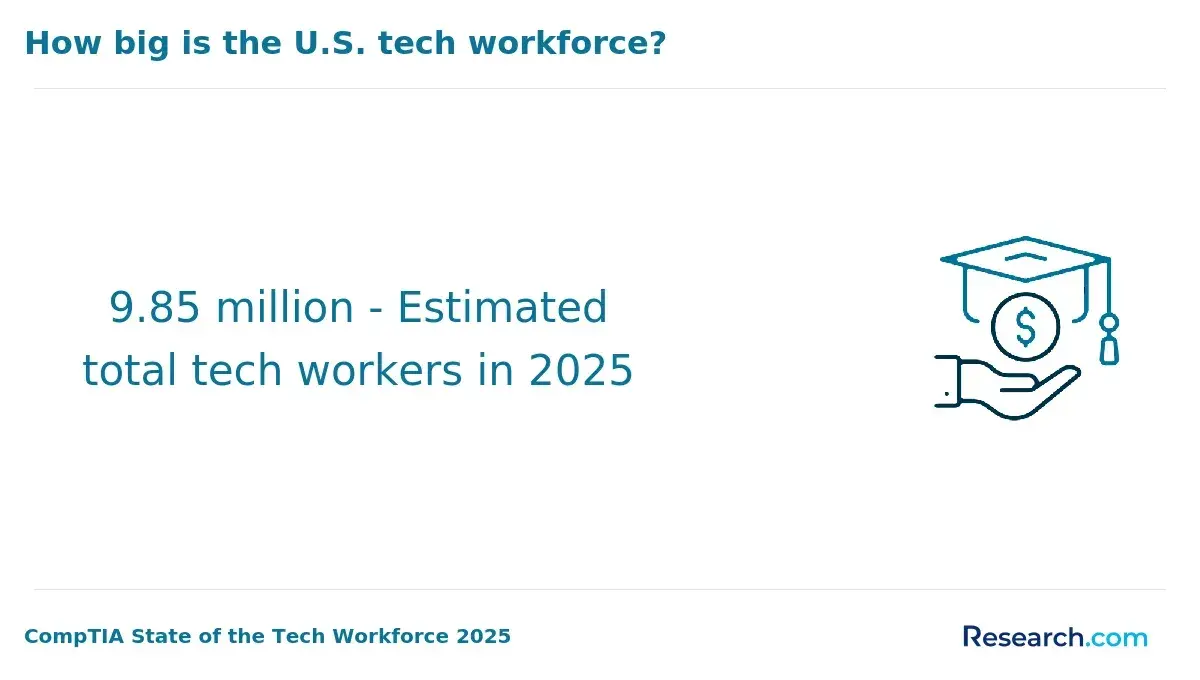
Software QA engineers work in technology companies, IT services firms, software publishers, financial institutions, healthcare organizations, manufacturers, government agencies, and other employers that depend on reliable software. Zippia reports that over 269,584 quality assurance engineers are employed in the US today.
Highest-paying industries cited for software QA engineers
According to the United States Bureau of Labor Statistics data cited in the original research, the highest-paying industries for software QA engineers include automobile dealerships, with an average annual salary of $160,600; manufacturing, at $147,040; general merchandise retailers, at $140,600; semiconductor and electronic parts manufacturing, at $129,470; and banks and financial institutions, at $129,290.
| Industry | Average annual salary cited |
| Automobile dealerships | $160,600 |
| Manufacturing | $147,040 |
| General merchandise retailers | $140,600 |
| Semiconductor and electronic parts manufacturing | $129,470 |
| Banks and financial institutions | $129,290 |
Job outlook for software QA engineers
Despite large layoffs at several technology firms, software quality roles remain tied to the broader demand for reliable applications, secure systems, and frequent software releases. The cited research projects 10% employment growth for these professionals from 2024 to 2034, compared with 3% for all US occupations. It also cites 162,900 openings for software and quality assurance engineers over the decade in the US and a change in employment by 411,400 during that period.
Software QA engineer salary
The cited BLS salary figures list a median annual salary of $102,610 and an average annual salary of $110,260 for software QA professionals. Those figures are above the median annual salary of all US occupations, listed as $49,500. Pay can vary widely by industry, location, experience, technical specialization, and whether the role is manual QA, automation engineering, SDET, performance testing, security testing, or QA leadership.
Students comparing technology careers may also review related salary guides, including the entry-level computer hardware engineer salary, a computer science vs. computer engineering salary comparison, and information on software developer salary. These comparisons help clarify whether QA, development, hardware engineering, or research roles better match your interests and income goals.
Alternative jobs for software QA engineers
A QA background can support movement into related technology roles, especially for professionals who strengthen programming, systems design, networking, or research skills. Three high-paying alternatives cited in the original research are:
Computer scientist
Computer scientists study computational problems, design algorithms, build systems, and advance fields such as artificial intelligence, data science, graphics, and cryptography. They may work in universities, research organizations, technology companies, or government agencies.
Median Annual Salary: $131,490
Computer hardware engineer
Computer hardware engineers design and test physical computing components, including processors, circuit boards, memory devices, and peripherals. Their work often requires collaboration with software developers and electrical engineers so hardware and software function together.
Median Annual Salary: $128,170
Computer network architect
Computer network architects design communication networks that move data efficiently and securely. They evaluate organizational needs, plan network capacity, consider scalability, address security, and help maintain reliable infrastructure.
Median Annual Salary: $120,520
Affordable Educational Pathways to Becoming a Software QA Engineer
Cost should be part of your QA career plan. A higher-priced program is not automatically better, and a cheaper program is not automatically a bargain if it lacks accreditation, hands-on projects, career support, or transferable credits. Compare the full cost of attendance, not tuition alone.
Lower-cost degree strategies
- Start at a community college: Completing general education and introductory computing courses at a community college can reduce the total cost of a bachelor’s degree if credits transfer cleanly.
- Choose an accredited online program: Online study may reduce commuting or relocation expenses, but students should verify accreditation, faculty support, project requirements, and career services.
- Use transfer credits wisely: Ask schools for a written transfer evaluation before enrolling so you know how many credits will apply.
- Compare financial aid packages: Grants, scholarships, work-study, employer tuition benefits, and payment plans can change the true cost of a program.
- Consider graduate study only when it fits your goal: If you plan to pursue advanced roles, compare options such as the cheapest masters degree online, but do not assume a master’s degree is necessary for every QA position.
Bootcamps and certifications as lower-cost supplements
Coding bootcamps and QA-focused certificate programs can be useful for people who need job-ready skills in test automation, scripting, web development, or agile workflows. However, learners should review placement claims carefully, ask whether projects are QA-specific, and confirm that the curriculum covers defect reporting, test design, automation, and real development tools.
- Certified Test Engineer (CSTE)
- International Software Testing Qualification Board (ISTQB)
- Certified Associate in Software Testing (CAST)
Questions to ask before choosing a QA education program
| Question | Why it matters |
| Is the institution properly accredited? | Accreditation affects transfer credit, employer recognition, and financial aid eligibility. |
| Does the curriculum include programming and automation? | Many QA roles require more than manual test execution. |
| Are there internships, capstones, or portfolio projects? | Employers want proof that you can test real software. |
| What tools will I learn? | Exposure to bug tracking, version control, automation, and CI/CD tools improves job readiness. |
| How many credits will transfer? | Transfer policies can significantly change cost and completion time. |
| Does the program publish career outcomes carefully? | Outcomes should be transparent and not framed as guaranteed salaries or job placement. |
How Can Interdisciplinary Expertise Boost Software QA Innovation?
QA engineers who understand another field can test software more intelligently in specialized industries. For example, finance, healthcare, biotechnology, manufacturing, logistics, and education technology all have domain-specific risks, workflows, user expectations, and compliance concerns. Interdisciplinary knowledge helps testers recognize unrealistic requirements, missing edge cases, and user scenarios that a generalist might overlook.
Professionals interested in combining technical quality assurance with life science knowledge can review career possibilities connected to masters in biotechnology jobs. The broader lesson is that domain expertise can make QA work more valuable when software supports complex professional environments.
How Can Remote and Distributed Teams Optimize Software QA?
Remote QA teams need clear systems because testing depends on shared context. Time zone gaps, unclear defect reports, inconsistent environments, and delayed feedback can slow releases. Strong distributed teams document test plans carefully, define severity levels, standardize bug reporting, maintain reliable test environments, and use shared dashboards so everyone can see release risk.
Advanced technical training can also help remote teams adopt smarter testing practices. Programs such as artificial intelligence degrees may be relevant for professionals who want to work with AI-enabled test automation, predictive analytics, or intelligent quality monitoring.
How Can Data Analytics Improve Software QA?
Data analytics can help QA teams decide where to test more deeply. By studying defect frequency, failed test patterns, customer support tickets, production incidents, and release histories, teams can identify risky features, unstable components, and gaps in test coverage. This supports better prioritization than relying only on intuition.
QA engineers who want stronger analytical skills may consider an affordable online masters in data science, especially if their target roles involve quality metrics, test optimization, machine learning validation, or analytics-driven product quality.
What Educational Resources Are Available for Aspiring Software QA Engineers?
Aspiring QA engineers can learn through college degrees, online courses, coding bootcamps, vendor training, certification programs, open-source projects, internships, and self-directed testing practice. A good learning plan should include programming, databases, web applications, test case design, automation, defect documentation, and collaboration tools.
Students who want intensive practical training can compare the best programming bootcamps. When evaluating bootcamps, ask whether QA-related projects are included, whether students learn automation frameworks, how career support works, and whether reported outcomes are recent and transparent.
How Can Emerging Technologies Enhance Software QA Outcomes?
Artificial intelligence and machine learning can improve QA by helping teams prioritize tests, identify likely defect areas, generate test cases, detect anomalies, and analyze patterns across large volumes of test data. These tools can speed up repetitive work, but they do not replace the need for human judgment, domain knowledge, and careful validation.
Professionals who want to expand into AI-supported QA may explore one of the most affordable artificial intelligence degree online options. The strongest preparation combines AI literacy with practical software testing, data analysis, and automation experience.
Is it worth it to become a software QA engineer?
Becoming a software QA engineer can be worth it for people who enjoy problem-solving, structured investigation, collaboration, and technical work that directly affects product reliability. The role offers entry points across many industries, a path into automation or SDET work for those who enjoy coding, and advancement opportunities in leadership, security, DevOps, and quality strategy.
It may not be the best fit for someone who dislikes documentation, repeated verification, ambiguity, or difficult conversations about defects and release risk. QA engineers often have to explain problems clearly, challenge assumptions diplomatically, and work under deadline pressure when a release is close.
If you want a technical career with strong links to software development but prefer testing, risk analysis, and product quality over building features all day, QA is a practical option. A computer science degree, IT degree, bootcamp, certification, or online software engineering bachelor’s degree program can all support the path if they help you build demonstrable testing and programming skills.
Common Mistakes to Avoid When Preparing for a QA Career
- Choosing a program without checking accreditation: Accreditation can affect transfer credits, financial aid, and employer confidence.
- Learning only manual testing: Manual testing still matters, but automation, scripting, and CI/CD awareness are increasingly important.
- Ignoring communication skills: A technically correct bug report is less useful if developers cannot reproduce or understand it.
- Focusing only on salary averages: Pay depends on role type, industry, region, experience, and specialization. No degree or certification guarantees a specific salary.
- Skipping portfolio work: Test plans, automation scripts, defect reports, and project writeups help employers see what you can actually do.
- Relying only on rankings or brand names: A program should be judged by curriculum quality, outcomes transparency, support services, cost, and fit with your schedule.
- Assuming all online programs are equivalent: Online programs differ significantly in rigor, faculty access, project work, career services, and transfer policies.
Key Insights
- QA is a software reliability career, not just bug hunting: Software QA engineers design testing strategies, verify requirements, document risk, automate checks, and help teams release better products.
- A bachelor’s degree is common but not the only route: Zippia reports that 69% of software quality engineers have a bachelor’s degree, yet bootcamps, certificates, associate-to-bachelor transfer paths, and prior technical experience can also support entry into the field.
- Programming and automation improve career mobility: Candidates who understand coding, databases, version control, test automation, and CI/CD workflows are better positioned for automation engineer and SDET roles.
- Salary and outlook are attractive but not guaranteed: The cited BLS figures include a median annual salary of $102,610 and an average annual salary of $110,260, while the projected growth cited is 10% from 2024 to 2034. Actual outcomes depend on experience, location, industry, and specialization.
- Certifications are most valuable when paired with evidence: Credentials such as CSTE, CAST, ISTQB, CSQA, CMSQ, and automation-related certificates can help, but employers also want projects, test cases, defect reports, and tool experience.
- Security, AI, and analytics are reshaping QA: QA engineers who understand cybersecurity, AI-assisted testing, data analysis, and continuous testing will be better prepared for modern software environments.
- Program choice should be practical: Before enrolling, compare accreditation, total cost, transfer credit, programming depth, hands-on projects, career support, and whether the program matches your target QA role.
References:
- BLS (2025, August 28). Computer Hardware Engineers. BLS
- BLS (2024, April 3). 15-1253 Software Quality Assurance Analysts and Testers. BLS
- BLS (2025, August 28). Software Developers, Quality Assurance Analysts, and Testers. BLS
- BLS (2025, August 28). Computer and Information Research Scientists. BLS Additional cited source link
- Zippia (2025, January 8). Best Colleges and Majors for Quality Assurance Engineers. Zippia
- Zippia (2025, January 8). Best Colleges and Majors for Software Quality Engineers. Zippia
Other Things You Should Know About Software QA Engineer Career
To become a software QA engineer, you typically need a bachelor's degree in computer science, software engineering, or a related field. Strong programming skills and knowledge of various testing methodologies are essential.
It usually takes around four years to become a software QA engineer, equivalent to the time required to complete a bachelor's degree. Additional time may be needed for certifications or advanced degrees.
The key responsibilities of a software QA engineer include test planning, test design and execution, bug tracking, test automation, documentation and collaboration, and ensuring overall software quality.
Some of the most common certifications for software QA engineers include Certified Test Engineer (CSTE), Certified Associate in Software Testing (CAST), International Software Testing Qualification Board (ISTQB) Tester, Certified Software Quality Analyst (CSQA), and Certified Manager of Software Quality (CMSQ).
Certifications are not mandatory for a career in software QA engineering in 2027, but they can enhance your employability by showcasing your commitment and expertise. Common certifications include ISTQB and CSTE, which can provide a competitive edge and validate your skills to potential employers.
Essential skills for a software QA engineer in 2027 include proficiency in programming languages like Python or Java, understanding of testing frameworks, and strong analytical problem-solving abilities. Familiarity with automation tools and effective communication skills are also vital to collaborate with development teams and ensure seamless software functionality.