2027 Industrial Engineering Careers: Guide to Career Paths, Options & Salary

Co-Founder and Chief Data Scientist
If you are considering an industrial engineering degree, you are probably trying to answer a practical question: will this path lead to a stable job, useful skills, and enough career flexibility to be worth the time and cost? Industrial engineering is built around improving systems, so it appeals to people who want to solve real operational problems instead of focusing on one machine, one product, or one narrow technical function.
This guide explains what industrial engineers do, where they work, what education you need, which roles are available at each level, how salaries and job growth compare, and how to choose the right program without making an expensive mistake. It is written for students, career changers, and working professionals who want a clearer decision before enrolling or advancing.
Industrial engineering is especially relevant in 2026 because employers are under pressure to do more with less: improve productivity, reduce waste, strengthen supply chains, use automation wisely, and adopt AI and analytics without disrupting quality or safety. That means industrial engineers are increasingly valued for turning business goals into measurable process improvements.
Quick Answer: Is Industrial Engineering a Good Career Choice?
Yes, for the right person. Industrial engineering offers broad career options, strong demand, and work that connects engineering, data, operations, and business decision-making. The field is projected to grow by 11% by 2034, with 25,200 annual new opportunities expected for aspiring industrial engineers.
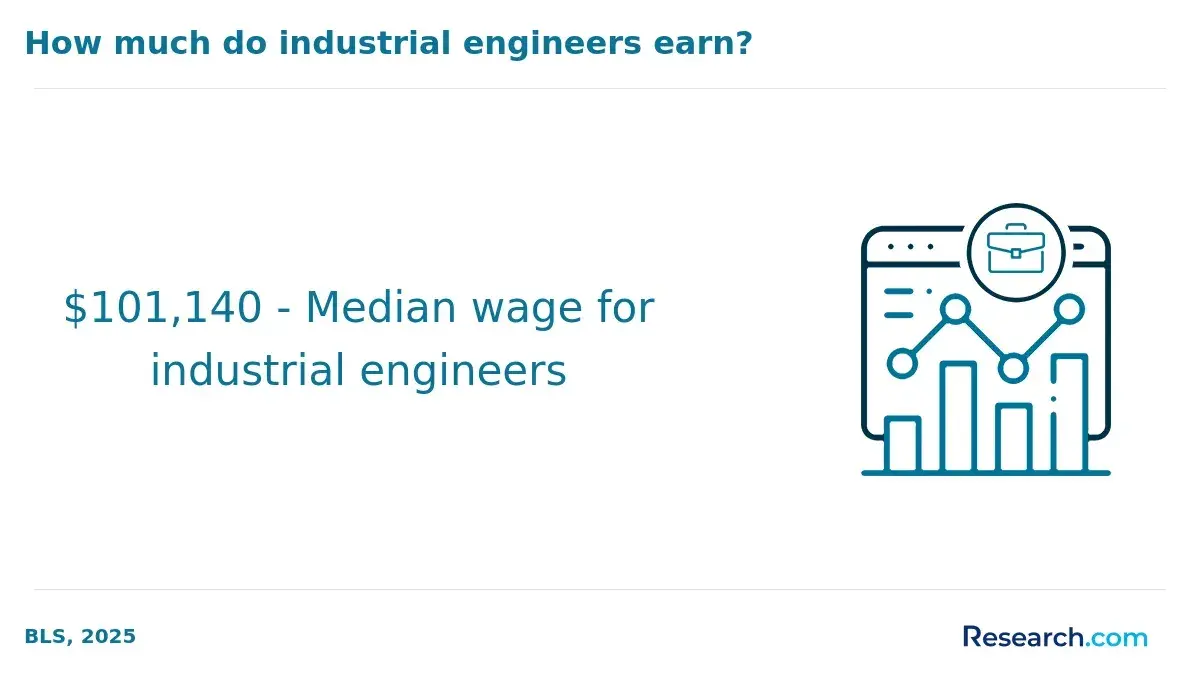
The median annual pay for industrial engineers is $101,140. That said, salary depends on location, industry, experience, education, and responsibilities, so no degree can promise a specific income. The value of the field comes from its flexibility: the same skill set can apply to manufacturing, logistics, healthcare, energy, consulting, technology operations, and quality improvement.
Industrial Engineering Careers: What This Guide Covers
- Why industrial engineering attracts students and professionals
- Salary and job outlook for industrial engineers
- Skills that matter most in the field
- How to start an industrial engineering career
- How to advance into higher-level roles
- How to choose a program that fits your goals
- Industries hiring industrial engineers now
- Challenges to expect in this career
- Why project management matters in industrial engineering
- Alternative career paths for industrial engineering graduates
- How to make the degree more affordable
- When a one-year master’s degree may make sense
- Where industrial engineering education is headed
- How interdisciplinary study can expand your options
- How AI is changing industrial engineering work
- How sustainability connects to the field
- How certifications and continuous learning support advancement
- How data science strengthens decision-making
Why Industrial Engineering Appeals to So Many Students
Industrial engineering is a strong fit for people who like making systems work better. Instead of focusing only on one component, industrial engineers look at the full operation: people, equipment, workflow, inventory, safety, quality, time, cost, and customer expectations. That broader view makes the degree valuable in a wide range of industries.
Many students choose the major for the following reasons:
- Career demand is broad. Job growth is projected at 11% by 2034, and the field is spread across many industries rather than tied to one market. While automation is changing the nature of the work, industrial engineers are still needed to design, supervise, evaluate, and improve automated systems. That makes the field less exposed to displacement than jobs built around repetitive tasks alone.
- The degree supports flexibility. Industrial engineers can move into quality, operations, logistics, systems analysis, ergonomics, supply chain work, healthcare systems, and consulting. If you want to add business training later, an online graduate certificate program can strengthen your profile in a specific area.
- The skills transfer beyond work. Process improvement, planning, analytics, and systems thinking can improve how you manage projects, time, and resources in everyday life as well.
- It blends technical and business thinking. This matters if you want a career path that connects engineering decisions to cost, safety, quality, and organizational goals.
- The field keeps evolving. Automation, robotics, connected devices, analytics, and AI continue to change industrial engineering. For people who like learning and adaptation, that makes the work more dynamic.
- The pay can be competitive. Industrial engineers belong to a broader engineering degree pathway and can earn strong compensation with the right specialization, location, and experience.
If your main interest is logistics, procurement, or supplier coordination, you may also want to compare this field with supply chain management. Research.com’s guide on whether supply chain management is a good major is a useful next step.
Who is industrial engineering best for?
| Industrial engineering is a good match if you... | You may want a different major if you... |
| Prefer improving systems, workflows, and performance over designing only one product. | Want to focus mostly on software, circuits, structures, or chemical processes. |
| Are comfortable combining math, statistics, and business judgment. | Do not want to work with numbers, metrics, or performance data. |
| Want options across manufacturing, healthcare, logistics, energy, and operations. | Prefer a narrow technical specialty with limited cross-functional work. |
| Like coordinating people, processes, equipment, and technology together. | Prefer highly independent technical work with little communication across departments. |
Industrial Engineering Salary and Job Outlook
The outlook for industrial engineers remains favorable. Employment is projected to grow by 11% through 2034, which is faster than the projected growth rate for all engineering occupations and all occupations overall, both of which are only at 6%.
Pay is also competitive. The median annual salary for industrial engineers is $101,140. In 2024, the highest-paying industry listed for this occupation was Web Search Portals, Libraries, Archives, and Other Information Services, where industrial engineers earned an average salary of $185,900.
Still, the numbers are only benchmarks. Real earnings depend on geography, employer size, specialization, credentials, and how much responsibility a role carries. Engineers who can show measurable results, such as shorter cycle times, lower costs, fewer defects, safer workflows, or better throughput, are often in a stronger position for raises and promotions.
Salary examples by role and education level
| Role | Typical education level in this guide | Salary figure stated | Main focus of the job |
| Quality Control Inspectors | Associate degree pathway | Median Annual Salary: $47,460 | Inspecting products, checking quality, testing outputs, and monitoring processes. |
| Industrial Engineering Technologists and Technicians | Associate degree pathway | Median Annual Salary: $64,790 | Supporting engineers with workflow review, data interpretation, and production analysis. |
| Manufacturing Engineers | Associate or bachelor’s preparation may support entry depending on employer requirements | Medial Annual Salary: $73,793 | Improving manufacturing processes, troubleshooting problems, and evaluating production systems. |
| Plant Engineers | Bachelor’s degree pathway | Average Median Salary: $84,700 | Managing plant operations, maintenance systems, and productivity. |
| Health and Safety Engineers | Bachelor’s degree pathway | Median Annual Salary: $109,660 | Reducing workplace and product risks, including safety and compliance concerns. |
| Sales Engineers | Bachelor’s degree pathway | Annual Median Salary: $121,520 | Explaining technical products, managing client communication, and linking products to market needs. |
| Senior Process Engineers | Master’s degree pathway | Annual Median Salary: $107,450 | Leading process improvement, productivity efforts, and cost control. |
| Director of Quality Assurance | Doctorate or advanced leadership pathway | Average Median Salary: $118,048 | Overseeing quality systems, compliance, standards, and staff qualifications. |
How to interpret university and ranking information
University profiles and rankings can help you start your research, but they should not replace a careful review of the actual program. For industrial engineering, the most important factors are accreditation, curriculum, faculty, internships, lab access, graduate outcomes, and cost.
The Research.com university profile links below are useful for exploring institutional research strength, but they should not be treated as industrial engineering rankings unless the methodology says so.
| Rank | University profile | Country |
| 1 | Massachusetts Institute of Technology profile | United States |
| 2 | Stanford University profile | United States |
| 3 | Carnegie Mellon University profile | United States |
| 4 | University of California, Berkeley profile | United States |
| 5 | University of Cambridge profile | United Kingdom |
| 6 | Harvard University profile | United States |
| 7 | University of Oxford profile | United Kingdom |
| 8 | Princeton University profile | United States |
| 9 | ETH Zurich profile | Switzerland |
| 10 | National University of Singapore profile | Singapore |
| 11 | University of Toronto profile | Canada |
Skills Industrial Engineers Need
Industrial engineers need more than strong math skills. The job also requires technical modeling, operations knowledge, communication, data interpretation, and the ability to help people adopt change. Good engineers can identify the real cause of a problem, compare options, explain trade-offs to non-engineers, and guide teams through implementation.
Research on Industry 4.0 continues to show how quickly the field is changing. A 2021 study in the Brazilian Journal of Education, Technology and Society reviewed 3,613 publications and found increasing use of augmented reality, the Internet of Things, cyber-physical systems, and cloud computing in industrial engineering. The study also noted that these tools support optimization, safety, and cost reduction, while forcing the profession to adapt to new market demands.
In other words, industrial engineers now need to understand both physical operations and digital systems. That is one reason the fourth industrial revolution matters so much for this career path.
Core technical skills
- Systems analysis. Industrial engineers study how work actually moves through an organization, then identify bottlenecks, constraints, and weak points.
- Production and process knowledge. They must understand workflow, staffing, equipment, materials, quality control, and production standards.
- Computer and electronics literacy. Modern operations rely on software, sensors, dashboards, and automated systems, so digital fluency matters.
- Automation awareness. Automation can improve consistency and reduce repetitive work, but it also needs planning, oversight, and risk evaluation.
- Data analysis. Industrial engineers use data to track throughput, downtime, defects, cycle time, safety incidents, and cost.
- Operations research and optimization. Many jobs involve balancing capacity, labor, time, quality, and customer demand.
Core professional skills
- Communication. O*NET OnLine reports that industrial engineers frequently use emails (93%), face-to-face discussions (88%), and telephone calls (73%) (O*NET OnLine, 2026). Clear communication matters because the work affects workers, managers, suppliers, and customers.
- Critical thinking. In a survey of industrial engineering professionals, 89% said problem-solving, decision-making, and systematic thinking are essential; 86% said data analytic skills are needed; and 70% said reasoning skills are required (Santiteerakul, et al. 2020).
- Creativity. Good process improvement often requires inventive thinking, especially when budgets, time, or equipment options are limited.
- Decision-making. Industrial engineers often recommend changes that affect staffing, safety, scheduling, or capital spending.
- Organization. The work includes data collection, stakeholder interviews, testing, documentation, and reporting, all of which require structure.
- Leadership. As engineers advance, they often mentor others, coordinate teams, and manage resistance to change.
Most Pressing Legislative and Regulatory Engineering Issues

How to Start an Industrial Engineering Career
The clearest path into the field is a bachelor’s degree in industrial engineering or a closely related engineering discipline. Some students start with an associate degree and move into technician, inspection, or manufacturing support roles before transferring to a bachelor’s program. An associate degree usually takes around two years, while a bachelor’s degree usually takes four years.
Online and hybrid programs can improve access for working students, but engineering applicants need to check details carefully. Lab work, accreditation, transfer rules, internship access, and licensure preparation can vary significantly from one school to another.
| Path | Typical duration stated | Best for | Main limitation |
| Associate degree | Around two years | Students who want to enter the workforce sooner in inspection, technical support, or manufacturing roles. | It may not open the same engineering roles or advancement options as a bachelor’s degree. |
| Bachelor’s degree | Four years | Students seeking the standard route into industrial engineering roles and possible licensure preparation. | It requires more time and money, so return on investment matters. |
| Master’s degree | Part of a two-to-seven-year advanced study range | Working engineers who want specialization, management, consulting, or analytics roles. | Its value depends on your goal, the tuition you pay, and employer demand. |
| Doctorate | Part of a two-to-seven-year advanced study range | Professionals aiming for research, teaching, executive, or highly specialized technical roles. | It is usually unnecessary for many entry-level and mid-level jobs. |
What can you do with an associate degree?
An associate degree can lead to technical and production-related jobs. It can also serve as a lower-cost starting point before transferring to a bachelor’s program.
Quality Control Inspectors
Quality control inspectors check manufactured products, test outputs, document defects, and help ensure products meet required standards. Related job titles include inspectors, testers, sorters, samplers, and weighers.
Median Annual Salary: $47,460
Industrial Engineering Technologists and Technicians
These professionals support engineers by reviewing workflows, layouts, production data, and diagrams. They may use tools such as calipers, microcontrollers, signal generators, and tension testers.
Median Annual Salary: $64,790
Manufacturing Engineers
Manufacturing engineers improve production systems, help solve technical problems, and support evaluation and troubleshooting in manufacturing settings.
Medial Annual Salary: $73,793
What can you do with a bachelor’s degree?
A bachelor’s degree is the standard academic foundation for industrial engineers and may also be needed for licensure pathways. It opens access to internships, engineering projects, graduate school, and many roles that require deeper technical preparation.
Plant Engineers
Plant engineers manage maintenance systems, operations, productivity, and technical oversight in industrial facilities.
Average Median Salary: $84,700
Health and Safety Engineers
Health and safety engineers design safer systems, investigate accidents, and help organizations reduce workplace and product risks. Many of these professionals work in manufacturing.
Median Annual Salary: $109,660
Sales Engineers
Sales engineers translate technical products for clients, respond to questions, gather feedback, and connect product features to market needs.
Annual Median Salary: $121,520
Can a certificate alone get you hired?
Usually not. Short certificates can strengthen a resume or help you build specialized knowledge, but they are not a substitute for a formal engineering degree in roles that expect one. Many industrial engineering certifications also require at least an associate degree.
How to Move Into Higher-Level Industrial Engineering Roles
Advancement usually depends on experience, measurable results, leadership ability, and the right credentials. A master’s or doctorate can help some professionals move into management, consulting, research, or technical specialization, but only if the degree matches a concrete career goal.
Before enrolling in graduate school, decide which area you want to strengthen: operations research, quality systems, supply chain analytics, human factors, manufacturing systems, energy management, healthcare systems, project management, or data-driven process improvement. Advanced study can take about two to seven years, and a higher degree may improve earning potential in some roles.
What can you do with a master’s degree?
A master’s degree can help engineers lead larger projects, specialize in analytics, consult with organizations, or move into management roles.
Corporate Real Estate Manager
Corporate real estate managers examine facilities strategy, leasing and purchasing decisions, and the cost structure tied to organizational property use.
Average Median Salary: $113,770
Senior Process Engineers
Senior process engineers combine science, mathematics, business judgment, and operations knowledge to improve manufacturing and plant performance.
Annual Median Salary: $107,450
Agile Project Managers
Agile project managers coordinate schedules, people, product changes, and implementation efforts. Industrial engineers with project management experience can be a good fit for these roles.
Annual Median Salary: $92,139
What can you do with a doctorate?
A doctorate is most useful for advanced research, teaching, executive leadership, or highly specialized systems work. It is not required for many everyday engineering jobs, but it can open doors in leadership and academia.
Director of Facilities Management
This leader oversees building systems, mechanical and electrical operations, fire safety, waste management, parking, elevators, bathrooms, and ICT infrastructure to keep the workplace functional and productive.
Annual Median Salary: $86,425
Director of Quality Assurance
This role protects product quality and organizational reputation by reviewing materials, equipment, procedures, standards, qualifications, and quality systems.
Average Median Salary: $118,048
Director of Operations
This position improves the organization’s operating model across processes, materials, budgets, training, employee engagement, customer experience, and supply chain relationships.
Average Median Salary: $97,018
Which certifications are worth considering?
Certifications can help industrial engineers signal expertise in quality, automation, technical management, engineering graphics, energy, and supply chain systems. The best choice depends on your target role, so it is usually smarter to pick one credential that supports your next step than to collect unrelated certificates.
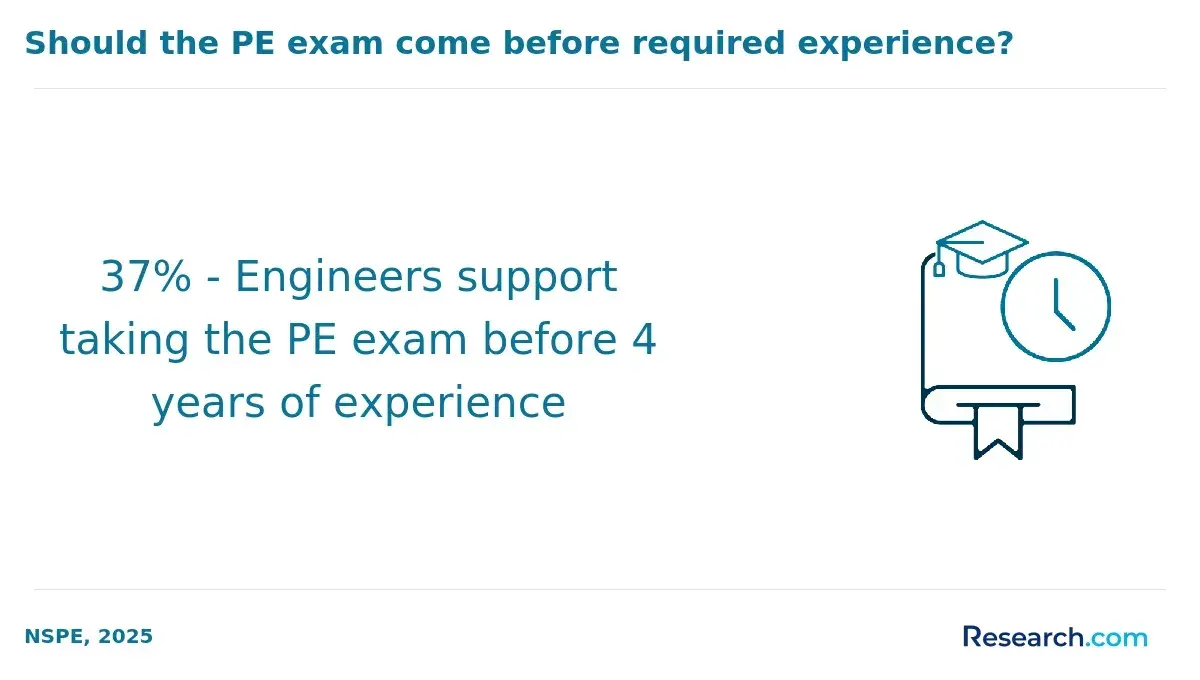
Industrial engineers may also consider Fundamentals of Engineering (FE) and Professional Engineering (PE) licensure exams when those align with state requirements and long-term goals.
| Certification | Provider | Best suited for |
| Certified Quality Engineer | American Society for Quality | Engineers working in quality systems, process control, testing, and improvement. The exam gives examinees 5 hours and 18 minutes to answer 175 questions. |
| Certified Technician-Supply Chain Automation | Manufacturing Skill Standards Council | Professionals focused on logistics and automation. It includes Certification in Equipment Maintenance, Certification in Equipment Repair, and Certification in Network Repair. |
| Certified Technical Professional | Association of Technology, Management, and Applied Engineering | Associate degree graduates who want to document applied technical knowledge. ATMAE provides a CTP and CSTP study guide. |
| Certified in Engineering Graphics | Association of Technology, Management, and Applied Engineering | Professionals with an associate or bachelor’s degree who want to demonstrate engineering graphics knowledge. A CEG and CSEG study guide is available. |
| Certified Industrial Energy Professional | Associate of Energy Engineers | Industrial engineers working in energy management who meet the required education and experience combination. |
How to Choose an Industrial Engineering Program
The best program is the one that prepares you for the job you actually want. Brand name alone is not enough, and neither is the cheapest tuition. Look at the full picture: accreditation, curriculum, schedule, hands-on learning, transfer policies, career support, and total cost.
- Accreditation: Check for recognized accreditation, especially ABET, if licensure may matter to you later. Accreditation is one of the clearest signals that a program meets accepted engineering education standards.
- Curriculum and specialization: Review whether the school teaches operations research, systems optimization, supply chain management, quality engineering, statistics, ergonomics, data analytics, and production systems. Specialized tracks in robotics, logistics, or healthcare systems can be useful if they match your goals.
- Faculty background: Professors with industry or research experience often bring better examples, mentoring, and exposure to current problems.
- Internships and employer connections: Co-ops, capstone projects, and employer partnerships can help you build experience before graduation.
- Format and flexibility: Online, hybrid, evening, and part-time programs can be useful, but make sure lab access, advising, and project support are still strong.
- Total cost: Compare tuition, fees, books, technology, commuting, housing, and lost income. If you want to reduce application costs, you can also explore online colleges with no application fee.
- Career services and alumni network: Good support can help with internships, interviewing, job searches, and employer introductions.
Questions to ask before enrolling
- Is the program accredited in a way that supports my career and licensure plans?
- How many students complete internships, co-ops, or employer-sponsored projects?
- What software, simulation tools, and analytics platforms will I use?
- Can I transfer prior coursework or credit from an associate degree?
- What are the full costs, not just tuition?
- Where do recent graduates work, and what roles do they get?
- Does the online or hybrid version offer the same quality of advising, labs, and project support as the campus version?
Industries Creating Opportunities for Industrial Engineers
Industrial engineers are no longer limited to factory floors. As organizations modernize, demand is growing for professionals who can connect process design, technology, cost control, and human performance.
- Renewable energy. Solar, wind, hydropower, and related systems need people who can improve production efficiency, safety, maintenance planning, logistics, and resource use.
- Healthcare systems engineering. Hospitals and health networks use industrial engineering to improve patient flow, reduce delays, manage supplies, and make care delivery more efficient.
- Robotics and automation. Manufacturing, warehousing, and service operations need engineers who can integrate robots into real workflows without creating new bottlenecks or safety risks.
- Artificial intelligence and analytics. Industrial engineers use data tools to improve forecasting, scheduling, quality monitoring, predictive maintenance, and resource allocation.
- Supply chain and logistics. Disruptions and cost pressure have made inventory planning, network design, and transportation efficiency more important in many sectors.
Career Challenges Industrial Engineers Should Expect
This is a promising field, but it is not simple. The same breadth that makes industrial engineering versatile also makes it demanding.
- Technology changes fast. Engineers need to keep up with automation, AI, robotics, connected systems, analytics platforms, and digital manufacturing tools.
- Efficiency can conflict with other priorities. Employers want lower cost and higher output, but engineers still have to protect safety, quality, compliance, and morale.
- Systems are interconnected. A change in one process can affect staffing, suppliers, equipment usage, delivery timing, and customer experience.
- Sustainability goals are rising. Engineers may be asked to reduce waste, energy use, emissions, and material consumption while keeping operations profitable.
- Different teams define success differently. Industrial engineers often work across operations, finance, IT, safety, procurement, and frontline staff, which can make alignment difficult.
If you need more flexibility while building new skills, accredited online colleges can be a practical option, but always verify that the curriculum and accreditation match your engineering goals.
Why Project Management Matters in Industrial Engineering
Industrial engineering and project management overlap heavily. Process improvements rarely happen with analysis alone; they require schedules, budgets, people, testing, and careful rollout. A great idea is not useful if the project behind it falls apart.
Project management skills are especially helpful for plant upgrades, automation projects, quality initiatives, supply chain redesigns, and broader organizational change. If you want to build that skill set formally, compare project management degree programs to see whether they fit your engineering background and goals.
Alternative Careers for Industrial Engineering Graduates
An industrial engineering degree does not lock you into one job title. It also builds useful strengths in systems thinking, analytics, cost control, quality, operations, and management, which can translate into other careers if your interests shift.
If you want a broader business-facing direction, you may also compare industrial engineering with international business careers.
Other paths industrial engineering graduates may pursue
- Logisticians. Supply chain, inventory, transportation, and product-flow knowledge can make this a natural transition.
- Cost estimators. Graduates with business and operations interests may enjoy analyzing the financial side of labor, materials, production, or services.
- Innovation engineers. Creative problem-solvers may move into roles focused on designing better systems and improving how organizations work.
- Operations analysts. Strong modelers and data users can analyze performance, resource use, and business processes across industries.
- Quality specialists. People who like standards, testing, compliance, and continuous improvement may gravitate toward quality systems work.
How to Make Industrial Engineering Education More Affordable
Lower cost should matter, but not at the expense of accreditation, quality, or career fit. A cheap program that slows graduation or fails to prepare you for your target role can cost more over time than a better-designed option.
When comparing schools, look at total cost, not just tuition. Include fees, books, software, lab expenses, commuting, housing, transfer credits, financial aid, employer tuition support, and how long it will take you to finish. Students looking for lower-cost options can start with accredited online programs, community college transfer routes, scholarships, and flexible schedules. Research.com’s guide to the cheapest online engineering degree options can help with early comparison.
Common mistakes to avoid when choosing a program
| Mistake | Better approach |
| Picking the lowest tuition without checking accreditation. | Confirm accreditation first, then compare net cost after aid and transfer credits. |
| Assuming every online engineering program supports licensure. | Ask how the program aligns with FE, PE, or state-specific requirements. |
| Ignoring internships and co-ops. | Prioritize programs with applied learning and employer connections. |
| Making the decision based only on rankings. | Review outcomes, curriculum, faculty, advising, and career services too. |
| Assuming the salary figures are guaranteed. | Use salary data as a reference point, then evaluate your own location, experience, and target industry. |
Can a One-Year Master’s Program Help Your Industrial Engineering Career?
It can, but only if you already have a strong foundation and a clear purpose. Accelerated master’s programs are often attractive to working professionals who want deeper training in leadership, analytics, process optimization, or a technical specialty without spending several years out of the workforce.
The trade-off is intensity. Shorter programs may leave less time for electives, research, internships, or a flexible schedule. Before enrolling, compare curriculum depth, applied project options, tuition, accreditation, and employer recognition. Research.com’s overview of one year masters programs can help you evaluate accelerated formats.
The Future of Industrial Engineering Education
Industrial engineering education is becoming more flexible and more connected to technology. Programs are increasingly expected to cover analytics, automation, sustainability, human-centered design, and systems resilience, not just traditional production methods.
Online and hybrid graduate study can be especially useful for working professionals who want to specialize without leaving their jobs. If you want broader advanced study, compare affordable masters in engineering options and look for concentrations that match your goals, such as operations research, quality engineering, data analytics, or systems engineering.
The strongest programs will not just mention new tools. They will teach students how to apply those tools to real operational problems, communicate results clearly, and manage organizational change responsibly.
How to Explore Industrial Engineering Opportunities
Industrial engineering has always stood out because it offers many possible directions. In Maynard’s Industrial Engineering Handbook, Martin-Vega described the field as appealing because it gives practitioners a broad range of career choices and continues to evolve as a contributor to social change (Zandin, 2001).
That remains true today. Industrial engineers can work on production, safety, quality, logistics, data, sustainability, automation, cost, and organizational performance. If you are still deciding between engineering fields, you may also want to review an aerospace engineering degree or compare other engineering majors before you commit.
How Interdisciplinary Study Can Strengthen Your Career
Industrial engineering becomes even more valuable when combined with another discipline. Healthcare, biotechnology, data science, AI, environmental systems, and business analytics all create opportunities for people who can apply systems thinking in nontraditional settings.
For example, pairing industrial engineering with bioinformatics can strengthen data interpretation, predictive modeling, and process optimization in healthcare, research, and life sciences. Professionals interested in that direction can compare options such as an online bioinformatics masters.
How Data Science Improves Industrial Engineering Decisions
Data science gives industrial engineers a more accurate way to study systems. Rather than relying only on observation or simple averages, engineers can use analytics to detect patterns, forecast demand, monitor equipment, improve quality control, and support real-time decisions.
If you want deeper analytical training, graduate study in data science can be a practical next step. A cost-conscious option to compare is the cheapest online master in data science, especially if you want to combine engineering judgment with more advanced analytics.
How Artificial Intelligence Is Changing Industrial Engineering
AI is changing industrial engineering by improving predictive maintenance, scheduling, quality monitoring, demand forecasting, and decision support. It is not replacing engineers so much as changing what employers expect engineers to do. The job is shifting toward choosing the right data, validating models, interpreting results, and making sure systems are safe and practical in the real world.
Professionals who want to lead AI-enabled operations may need more than basic familiarity with the tools. A relevant option to compare is affordable online master's programs in artificial intelligence, especially if they can be paired with hands-on operations experience.
How Sustainability Fits Into Industrial Engineering
Sustainability and industrial engineering now overlap more than ever. Waste reduction, energy use, material flow, equipment efficiency, and process design are all engineering problems with environmental consequences. When handled well, sustainable practices can reduce cost while also improving resilience.
Industrial engineers can contribute by reducing scrap, improving energy use, redesigning logistics, extending equipment life, and tracking environmental performance alongside productivity and quality. Students who want to combine sustainability with emerging technology may also compare degrees in AI online.
How Certifications and Continuous Learning Support Advancement
One degree is rarely enough for an entire career in industrial engineering. The field changes too quickly, especially in automation, analytics, quality systems, energy management, supply chain technology, and leadership practice. Ongoing learning helps you stay relevant and competitive.
The best development plan is targeted. Choose certifications, workshops, or graduate courses that support the role you want next. A quality engineer may prioritize quality credentials, a logistics professional may focus on automation and supply chain systems, and a process improvement leader may benefit from project management, analytics, or change management training.
If you are comparing the payoff of technical graduate study more broadly, Research.com’s guide to the salary of masters in biotechnology can help you think about how advanced degrees shape career direction.
Common Mistakes to Avoid Before Enrolling or Advancing
- Choosing a program without checking accreditation. Accreditation should be one of the first filters, not an afterthought.
- Assuming all online programs meet licensure expectations. Online convenience does not automatically mean licensure readiness.
- Ignoring the real total cost. Tuition is only part of the price; time, fees, and lost income matter too.
- Overvaluing rankings. A famous school is not always the best fit for your goals.
- Expecting a salary outcome without experience. Salary data is informative, but it is not a promise.
- Picking certifications that do not match your work. Credentials are most useful when they support a specific role or transition.
Key Questions to Ask Yourself Before Choosing This Path
- Do I want to improve systems, or do I prefer designing a single product or technology?
- Am I comfortable using data, models, and process metrics to make decisions?
- Do I want a career that can move across industries?
- Would I rather start with a technician role, or do I want a direct engineering pathway?
- Does the program I am considering match my licensure, internship, and career goals?
- Will this credential actually help me reach the role I want next?
Key Insights
- Industrial engineering is a strong option if you want flexibility. It applies to manufacturing, logistics, healthcare, energy, technology operations, consulting, and more.
- The job outlook is positive. Employment is projected to grow by 11% by 2034, with 25,200 annual new opportunities expected.
- Pay is competitive but not fixed. The median annual salary is $101,140, and actual earnings depend on experience, industry, location, and specialization.
- A bachelor’s degree is the most direct route. Associate degrees can lead to technician and inspection roles, while master’s and doctoral degrees are better for specialization, leadership, or research.
- Modern industrial engineers need digital fluency. Automation, AI, analytics, IoT, and cloud-based tools are increasingly part of the job.
- Program choice matters as much as the degree title. Check accreditation, internships, curriculum, cost, transfer rules, and licensure alignment before enrolling.
- Certificates can help, but only when they support a goal. The most useful credentials are tied to quality, automation, energy, graphics, or technical management.
- The degree also opens adjacent careers. Graduates can move into logistics, cost estimation, operations analysis, quality systems, and project management.
References:
- Costa R.A. et al., (2021). A bibliometric research of industry 4.0 opportunities in industrial engineering. Brazilian Journal of Education, Technology and Society 12(4), 299-310. Retrieved from https://dx.doi.org/10.14571/brajets.v12.n4.299-310
- National Society of Professional Engineers. (2025). Insights on Industry Issues and Opportunities. PE Magazine, Issue 1, 2025. https://www.nspe.org/career-growth/pe-magazine/issue-1-2025/insights-industry-issues-opportunities
- National Student Clearinghouse Research Center. (2026, January 15). Final Fall Enrollment Trends. https://nscresearchcenter.org/final-fall-enrollment-trends
- O*NET Online (2026). Industrial Engineers. Retrieved from https://www.onetonline.org/link/summary/17-2112.00
- Santiteerakul, S., Sopadang, A. & Sekhari, A. (2020). Skill Development for Industrial Engineers in Industry 4.0. Retrieved from http://shyfte.eu/wp-content/uploads/2020/02/CEISEE
- U.S. Bureau of Labor Statistics. (2025, August 28). Occupational projections and worker characteristics. Retrieved March 2026, from https://www.bls.gov/emp/tables/occupational-projections-and-characteristics.htm
- Zandin, KB. (ed) (2001). Maynard’s Industrial Engineering Handbook (5th ed.). The McGraw-Hill Companies, Inc. Retrieved from https://www.accessengineeringlibrary.com/content/book/9780070411029
- ZipRecruiter. (2026). Corporate Real Estate Manager Salary. https://www.ziprecruiter.com/Salaries/Corporate-Real-Estate-Manager-Salary
Other Things You Should Know About Industrial Engineering Careers
The job outlook for industrial engineers in 2027 is projected to be favorable, with a steady demand for professionals in industries like manufacturing, healthcare, and supply chain management. As technology and efficiency continue to drive industry changes, industrial engineers will be key in optimizing processes to enhance productivity.
In 2027, top industries hiring industrial engineers include manufacturing, healthcare, logistics, and technology. These sectors demand expertise in systems optimization and efficiency, allowing industrial engineers to implement improvements and innovate by leveraging data analysis and process management for improved productivity.
Certifications such as Six Sigma, Lean Manufacturing, and Project Management Professional (PMP) are valuable for industrial engineers. These credentials enhance career prospects by demonstrating expertise in process improvement, quality control, and project management, critical areas in the industrial engineering field in 2027.
Essential skills include systems analysis, production and processing knowledge, computer and electronics proficiency, and automation expertise. General skills like communication, critical thinking, creativity, decision-making, organization, and leadership are also important.
In 2027, emerging technologies like automation, artificial intelligence (AI), and the Internet of Things (IoT) significantly impact industrial engineering careers. These technologies drive new processes, enhance efficiency, and create demand for skills in robotics, data analysis, and IoT systems management.
Common career paths include quality control inspectors, industrial engineering technologists and technicians, and manufacturing engineers.
Career opportunities include roles such as plant engineers, health and safety engineers, and sales engineers.
Industrial engineers commonly use AutoCAD, MATLAB, Minitab, SAP, and Python for process modeling, quality analysis, and data-driven improvement. Employers also value familiarity with ERP systems, simulation tools, and Lean Six Sigma software, because these tools help track workflow, reduce waste, and support production decisions.
Securing an industrial engineering job with just a certificate is challenging in 2027. Most employers prefer candidates with a bachelor's degree. However, a certificate may qualify you for entry-level positions or technical roles, particularly if coupled with relevant experience or skills.