
2027 Mechanical Engineering Careers: Guide to Career Paths, Options & Salary

Co-Founder and Chief Data Scientist
Mechanical engineering is a broad career path, which makes the first planning step unusually important. A student may be weighing an associate degree against a bachelor’s program, a working engineer may be deciding whether graduate school is worth the cost, and a technician may be considering whether certification, licensure, or AI-related training will open better roles. This guide explains the main mechanical engineering education routes, common career outcomes, employer expectations, and the choices that can affect long-term advancement.
The field matters because mechanical systems still sit at the center of manufacturing, transportation, energy, medical devices, robotics, automation, infrastructure, and product development. The 2024 World Robotics report from the International Federation of Robotics identifies robotics, automation, and mechatronics as important knowledge areas for manufacturing engineers over the next 10 years. Rather than eliminating mechanical engineering work, modern tools are changing how engineers design, test, build, and improve systems; in many manufacturing settings, advanced manufacturing is more likely to gain strength from technology than be replaced by it.
Mechanical engineers work across the full life cycle of machines, products, and systems. They may research a problem, create design concepts, run calculations, build prototypes, test performance, support manufacturing, investigate failures, and improve existing equipment. Because so many industries depend on moving parts, heat transfer, engines, sensors, production equipment, tools, structures, and materials, mechanical engineering skills can transfer across automotive, aerospace, medical technology, construction, power generation, industrial manufacturing, and other technical fields.
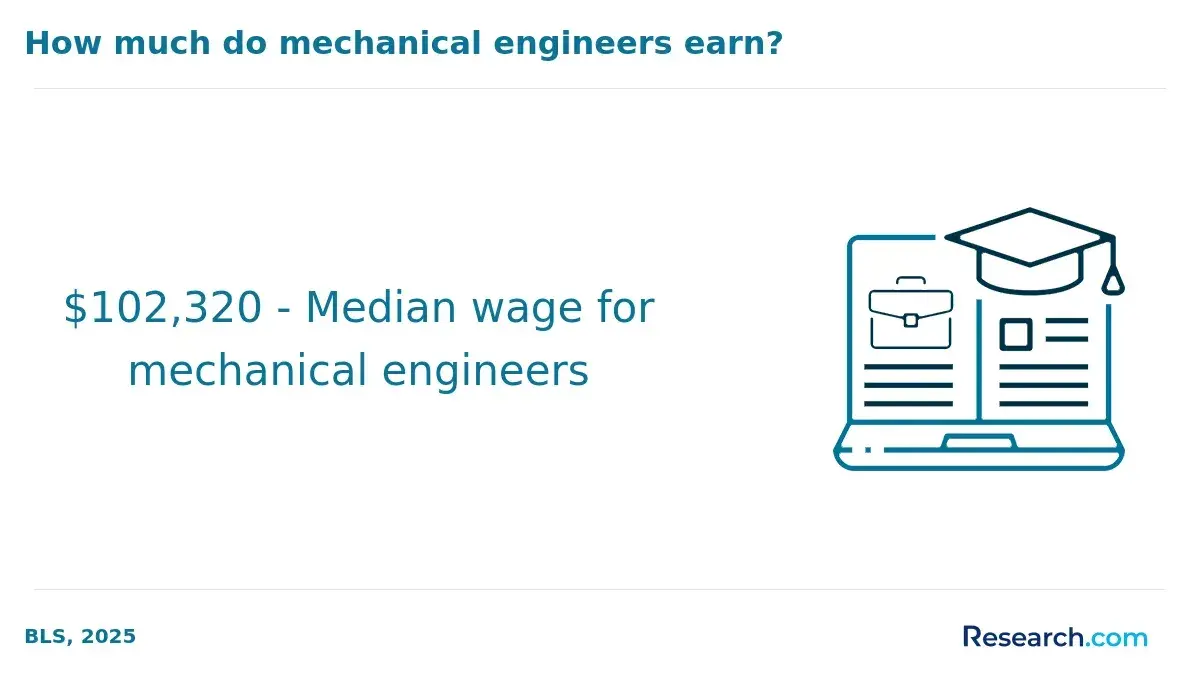
The Bureau of Labor Statistics projects mechanical engineering careers to grow by 9.1% through 2034, and the median annual salary for mechanical engineers in the United States is $102,320. Mechanical engineers commonly work in automotive and general-purpose manufacturing, architectural and engineering services, scientific research, and other technical organizations.
For most entry-level mechanical engineer positions, employers expect a four-year bachelor’s degree in mechanical engineering or mechanical engineering technology. A two-year pre-engineering or mechanical engineering technology program can lead to technician, drafting, machining, maintenance, or production support roles, and some students later transfer into bachelor’s programs. When a role may involve professional licensure, many employers prefer graduates from programs accredited by the Accreditation Board for Engineering and Technology (ABET).
Use this guide as a practical career exploration tool for mechanical engineering. It covers degree levels, job options, technical skills, licensure, certifications, graduate study, online learning, and the impact of robotics, artificial intelligence, data science, additive manufacturing, and automation on the profession.
Quick Answer: Is Mechanical Engineering a Good Career Choice?
Mechanical engineering can be a strong fit for people who enjoy applied math, physics, design, testing, troubleshooting, and building real-world systems. The field offers several entry points: associate-level technician roles, bachelor’s-level engineering jobs, and graduate-level research, management, or teaching paths. Candidates are usually more competitive when they combine accredited education, CAD and simulation experience, hands-on projects, communication skills, and ongoing training in digital manufacturing and automation tools.
| Path | Best Fit | Main Caution |
| Associate degree | Works well for technician, technologist, drafting, maintenance, equipment, and production support roles | Often does not satisfy requirements for full mechanical engineer jobs that require a bachelor’s degree |
| Bachelor’s degree | Typical route for mechanical engineer, manufacturing engineer, design engineer, and biomedical equipment positions | ABET accreditation can matter for employer screening and later licensure |
| Master’s degree | Useful for advanced manufacturing, specialized design, automation, research, and engineering management goals | Usually pays off best when tied to a defined technical or leadership objective |
| Doctorate | Appropriate for university teaching, advanced R&D, research leadership, or high-level technical direction | Not normally required for most standard engineering positions in industry |
| Certifications | Helpful for adding skills in manufacturing, HVAC, quality, human factors, project management, automation, or related areas | Generally strengthen a degree rather than replace formal degree requirements |
Mechanical Engineering Career Guide: What This Article Covers
- Why mechanical engineering can be a practical long-term career
- Employment outlook and salary expectations
- Technical and professional skills mechanical engineers use
- How to start preparing for mechanical engineering jobs
- How engineers advance into higher-responsibility roles
- When an advanced mechanical engineering degree is useful
- Certifications and focused credentials to consider
- How online learning fits mechanical engineering careers
- Questions to ask before choosing a program
- Why cross-disciplinary teamwork is increasingly important
- How data science is used in mechanical engineering
- What AI changes for mechanical engineers
- How to keep engineering skills current
- Technologies influencing the field’s future
- Strategies for managing school, work, and engineering coursework
- How to build a more resilient mechanical engineering career
Why Mechanical Engineering Is Worth Considering
Mechanical engineering attracts students because it combines rigorous technical training with broad career flexibility. Graduates may work on vehicles, engines, robots, medical devices, HVAC systems, manufacturing equipment, energy systems, aerospace components, consumer products, or industrial machinery. That range can be valuable if your interests change, you relocate, or one industry becomes more competitive than another.
The discipline is also tied closely to production strategy and supply chain resilience. In the United States, domestic manufacturing has received renewed attention after the COVID-19 pandemic revealed weaknesses in global supply chains. When organizations move prototyping, production, or advanced manufacturing work closer to home, engineers who understand machinery, automation, process improvement, and quality systems can become especially useful.
Mechanical engineers rely on computer-aided design, analysis, testing, documentation, and engineering judgment to convert ideas into dependable products and processes. They use principles involving force, motion, energy, heat, materials, manufacturing, and system performance to decide whether a design can operate safely, efficiently, and consistently.
The work can also be highly visible. Mechanical engineers contribute to healthcare devices, transportation systems, energy technologies, water systems, food production equipment, climate-related tools, and space systems. Any product or process involving motion, heat, structural loads, equipment reliability, or manufacturing may require mechanical engineering expertise.
A bachelor’s degree in mechanical engineering can also serve as a platform for specialization. Graduates may move toward robotics, aerospace, biomedical devices, renewable energy, automotive systems, industrial automation, product design, research, or development. Some enter industry after graduation, while others add graduate study, licensure, or specialized credentials after gaining experience.
Mechanical Engineering Job Outlook and Salary
The Bureau of Labor Statistics projects 9.1% growth for mechanical engineering career paths through 2034. The median mechanical engineering salary in the U.S. is $102,320. Frequent employers include architectural, engineering, and related services companies, machinery manufacturers, and scientific research and development organizations.
Career prospects are often stronger for engineers who pair core engineering fundamentals with current digital tools. Employers increasingly value experience with computational design, simulation, automation, digital manufacturing, and advanced materials. Engineers who can reduce prototype cycles, improve product quality, and shorten development timelines can be especially valuable in competitive design and production environments.
Specialized opportunities also appear in nanotechnology, biomedical engineering, additive manufacturing, and automation. These areas usually require more than basic design skills. Engineers may need to work with software, test data, rapid iteration, cross-functional teams, and simulation platforms. Experience with three-dimensional printing and virtual simulation can help engineers move more efficiently from concept to production.
| Industry Area | Common Work | Why It Matters to Employers |
| Manufacturing | Improve equipment, tooling, workflows, production methods, and quality systems | Automation and reshoring trends increase demand for efficient and reliable production systems |
| Automotive and transportation | Design, test, analyze, and refine vehicle systems and mechanical components | Mechanical systems remain essential for mobility, safety, performance, reliability, and production |
| Biomedical devices | Develop or improve prosthetics, implants, surgical tools, and medical equipment | Mechanical design supports patient care, usability, and medical technology development |
| Energy and power | Work on turbines, thermal systems, renewable energy equipment, and storage-related systems | Energy systems require knowledge of heat, materials, motion, durability, and efficiency |
| Research and development | Create, test, evaluate, and refine new products, processes, or technologies | Advanced industries need engineers who can validate ideas and solve unfamiliar technical problems |
Skills Mechanical Engineers Need to Build
Mechanical engineers need technical accuracy, clear reasoning, and practical judgment. Their work may involve building 3D models, selecting materials, analyzing loads, preparing drawings, developing prototypes, reviewing test results, diagnosing failures, or coordinating with manufacturing teams. A central part of the role is turning a concept into something that can be made, tested, maintained, and improved.
Strong preparation combines engineering fundamentals, software ability, hands-on practice, and communication. Mechanical engineers rarely work alone. They often coordinate with technicians, designers, suppliers, manufacturing teams, quality specialists, managers, customers, and engineers from other disciplines.
Technical Skills Employers Commonly Expect
| Skill Area | How Engineers Use It | Typical Tools or Concepts |
| CAD and modeling | Create parts, assemblies, technical drawings, and design documentation | SolidWorks, Unigraphics NX, CATIA, Autodesk Inventor |
| Engineering analysis | Evaluate stress, motion, heat transfer, manufacturability, and reliability | Finite Element Analysis software, MATLAB, Mathcad |
| Manufacturing knowledge | Design products that can be produced accurately, safely, and efficiently | Machine design principles, manufacturing processes, GD&T |
| Testing and troubleshooting | Verify performance, compare prototypes, and identify failure causes | Test plans, data comparisons, equipment evaluation |
| Documentation | Record specifications, tolerances, calculations, procedures, and results | Technical reports, drawings, calculations, and process instructions |
Core Abilities for Mechanical Engineering Work
CAD and engineering software. Design-focused engineers should be comfortable using 3D CAD tools for part modeling, assemblies, drawings, and revisions. Common examples include SolidWorks, Unigraphics NX, CATIA, and Autodesk Inventor. Many jobs also use Excel, MATLAB for numerical analysis, Finite Element Analysis tools for structural evaluation, and Mathcad for calculation documentation.
Science and engineering fundamentals. Software can speed up analysis, but engineers still need first-principles reasoning. Machine design, thermodynamics, materials, mechanics, manufacturing processes, and Geometric Dimensioning & Tolerancing (GD&T) help engineers recognize whether a result is realistic.
Organization and precision. A small mistake in a tolerance, material choice, part specification, or assembly instruction can create safety, cost, or quality problems. Strong workplace organization habits help engineers manage drawings, revisions, suppliers, tests, deadlines, and project records.
Professional Skills Employers Notice
Communication. Mechanical engineers must explain design choices, test results, constraints, risks, and trade-offs to technical and nontechnical audiences. Clear communication reduces rework, prevents misunderstandings, and helps teams make decisions faster.
Analytical thinking. Mechanical engineering is one of the more applied math-centered career paths. Engineers weigh strength, weight, size, reliability, power requirements, manufacturability, and cost before recommending a solution.
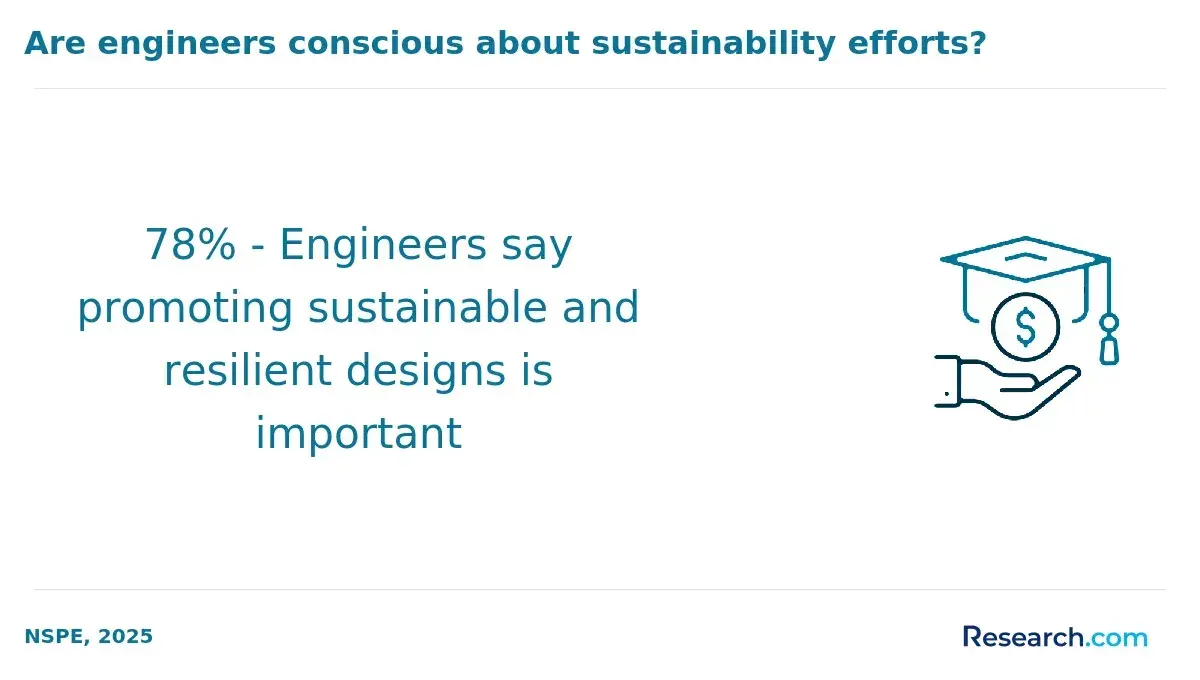
Critical judgment. Engineers must test assumptions, anticipate failure points, and decide whether a product or process is safe, efficient, reliable, and worth building. This is especially important in transportation, healthcare, energy, manufacturing, and workplace safety settings.
How to Begin a Mechanical Engineering Career
Starting a mechanical engineering career usually requires choosing the right education level, gaining applied experience, and understanding whether professional licensure matters for your plans. The American Society of Mechanical Engineers (ASME) has pointed to future-oriented roles such as robot creators, space engineers, living tissue builders, drone builders, and water extractors for global water challenges. Those examples show how the field changes over time, but the foundation still rests on mechanics, materials, manufacturing, design, and problem-solving.
A four-year bachelor’s degree in mechanical engineering or mechanical engineering technology is the standard starting credential for many entry-level engineering jobs. Some institutions offer five-year formats that combine a bachelor’s program with a master’s degree. Other five-year or six-year options combine classroom learning with cooperative work experience, giving students more exposure to engineering practice before graduation.
ABET accreditation should be checked before you commit to a program. The Accreditation Board for Engineering and Technology accredits engineering and engineering technology programs, and an ABET-accredited degree is typically required for the licensed professional engineer pathway. Many employers also view ABET accreditation as an important quality signal.
Students who may pursue professional licensure should learn about the FE and PE exams early. The Fundamentals of Engineering (FE) exam is often taken near the end of an undergraduate program. Passing the FE exam may not be required for every entry-level role, but it keeps the licensure option open. To become a PE, candidates must pass both the FE exam and the Principles and Practice of Engineering (PE) exam and complete at least four years of work experience. A PE license can matter for engineers who want to approve work, lead major projects, supervise engineering staff, or assume higher-responsibility roles.
| Step | What to Do | Why It Matters |
| Connect the degree to the job target | Compare associate, bachelor’s, master’s, and doctoral options based on the role you want | Helps you avoid being underqualified or paying for credentials that do not support your goal |
| Confirm ABET accreditation | Verify accreditation status before enrolling | Supports employer recognition and protects future PE licensure options |
| Build software fluency | Practice CAD, simulation, numerical analysis, and technical documentation tools | Provides evidence of job-ready technical ability |
| Get applied experience | Pursue internships, co-ops, labs, research, or project-based work | Connects classroom learning to design, testing, and manufacturing constraints |
| Plan for licensure if needed | Consider the FE exam near graduation | Keeps the PE pathway available for later career growth |
Jobs You Can Pursue With an Associate Degree in Mechanical Engineering
An associate degree can prepare students for technical roles in drafting, testing, maintenance, manufacturing, design support, and equipment troubleshooting. This path can make sense for students who want to work sooner, manage education costs, or eventually transfer into a bachelor’s program. Before assuming credits will transfer, students should confirm policies with both the sending and receiving institutions.
Mechanical Engineering Technician
Mechanical engineering technicians assist engineers with installation, testing, maintenance, and troubleshooting of mechanical systems. They may interpret blueprints, follow test procedures, collect measurements, and check whether equipment or processes meet specifications.
Median Salary: $68,730
Mechanical Engineering Technologist
Mechanical engineering technologists help engineers improve designs, apply new technologies, and coordinate technician work during installation or testing. They may support vehicle crash test setups, production equipment, or systems that require close coordination between engineering and operations. This path can also connect to automotive technology and design-related training.
Median Salary: $68,730
Associate Mechanical Engineer
Associate mechanical engineers support product design and development using CAD, engineering design principles, and knowledge of mechanical or electrical systems. They may help develop test methods, review equipment, and assist engineering teams during product development.
Median Salary $65,116
Jobs You Can Pursue With a Bachelor’s Degree in Mechanical Engineering
A bachelor’s degree is the usual credential for many entry-level mechanical engineer roles. It can also lead to work in product design, manufacturing, biomedical equipment, energy, HVAC, automotive systems, aerospace, and industrial automation.
Mechanical Engineer
Mechanical engineers research, design, build, test, and improve mechanical and thermal sensors, machines, tools, engines, and related systems. They may also investigate breakdowns, diagnose malfunctions, and recommend design or process improvements.
Median Salary: $102,320
Biomedical Engineer
Biomedical engineers often work for organizations that develop medical devices and equipment. Their projects may include robotic surgery systems, prosthetic limbs, joint replacements, and other healthcare technologies.
Median Salary: $106,950
Manufacturing Engineer
Manufacturing engineers design and improve methods for producing and shipping products efficiently. Their work centers on aligning people, machines, materials, processes, and quality systems.
Median Salary: $65,654
Can a Certificate Alone Lead to a Mechanical Engineering Job?
A certificate alone usually does not qualify someone for a mechanical engineering role with engineering responsibility. In this field, certificates most often help degree holders specialize or help technicians add targeted technical skills. Entry-level technical roles often require at least an associate degree, while engineer roles usually require a bachelor’s degree.
Some policy discussions have considered expanding Pell Grant access for shorter technical programs, including proposals for workers affected by pandemic-related job disruption (Sutherland, 2021). Even so, students should not treat a short certificate as a substitute for an accredited engineering degree.
For students trying to demonstrate workplace readiness, internships and co-ops may be more persuasive than a standalone certificate. Employers often use these experiences to evaluate practical ability, reliability, teamwork, and whether a student can apply classroom knowledge. Strong interns may later be considered for full-time associate engineer or entry-level roles after graduation.
How to Move Forward in Mechanical Engineering
Advancement in mechanical engineering usually comes from experience, specialization, leadership ability, licensure, and continuous technical development. Some engineers become senior technical experts, while others move into project management, engineering management, consulting, research, or higher education.
Advanced education can be valuable for faculty positions and some research-intensive roles in nanotechnology, biomedical devices, advanced manufacturing, alternative energy, or related specialties. Mechanical engineers may also complete graduate certificates in aerospace, machine intelligence, advanced manufacturing, computing, or information science. Some add business administration training to prepare for management responsibilities.
The right advancement path depends on the job you want next. A PE license may be most important for engineers who take public responsibility for engineering work, while a master’s degree may be more useful for specialized technical design, research, or R&D roles. Certifications can help when they address a specific skills gap in manufacturing, quality, HVAC, automation, project management, or data-driven engineering.
How Advanced Mechanical Engineering Degrees Can Help
An advanced degree can help mechanical engineers qualify for specialized, research-focused, or leadership-oriented positions. Master’s and doctoral programs can deepen expertise in robotics, sustainable energy, biomedical devices, advanced materials, automation, computational design, manufacturing systems, and related areas.
Graduate study is most useful when it supports a specific outcome. For example, an engineer who wants to lead complex design work, enter R&D, teach at the college level, or move into a technical specialty may benefit from a graduate program. Working engineers may prefer flexible online options that allow them to keep earning while studying. Cost-conscious students can compare affordable online master’s in engineering programs before enrolling.
Graduate programs may also provide access to faculty mentors, research facilities, industry-sponsored projects, and professional networks. However, graduate school is not automatically the best next step. Before applying, compare tuition, time commitment, employer tuition assistance, expected career changes, and whether a PE license or targeted certification would better serve your goal.
Mechanical Engineering Certifications and Specialized Training
Certifications can strengthen a mechanical engineer’s profile when they build skills employers actually use. Examples include Certified Manufacturing Engineer (CMfgE), HVAC design training, robotics, 3D printing, human-computer interaction, project management, and Lean Six Sigma. These options may be relevant in manufacturing, energy systems, automation, consulting, engineering management, and technical operations.
Professionals who want faster skill development can use targeted online credentials to supplement a degree. Research.com’s guide to online certifications linked to higher-paying career paths can help learners compare nondegree options.
Fit matters more than collecting credentials. A valuable certification should connect to a target role, a tool your employer uses, or a skill you need to prove. One focused specialization is usually more effective than several unrelated certificates.
Career Options With a Master’s in Mechanical Engineering
Senior Mechanical Engineer
Senior mechanical engineers lead planning, design, development, and production work. They may improve mechanical and electrical systems, review junior engineers’ work, and guide design choices that improve reliability and efficiency.
Median salary: $130,290
Mechanical Engineering Manager
Mechanical engineering managers oversee teams, design groups, project schedules, technical standards, budgets, and staff performance. The position requires technical judgment, leadership, communication, and the ability to coordinate complex engineering work.
Median salary: $161,240
Senior Applications Engineer
Senior applications engineers provide advanced technical support for automation, system protection, product applications, and machine performance. They may help design, test, and troubleshoot solutions that match customer or product requirements.
Median Salary: $103,832
Career Options With a Doctorate in Mechanical Engineering
Research and Development Director
Research and development directors manage R&D teams, set research priorities, guide product improvement, and help organizations reach innovation or technical performance goals.
Median salary: $135,518
Senior Applications Engineer
In advanced technical settings, senior applications engineers may oversee front-end engineering, system build work, technology validation, on-site service, and remote technical support.
Median salary: $106,163
Professor, Postsecondary Education
Engineering professors teach courses, publish research, mentor students, supervise thesis or dissertation work, and contribute to academic or industry research. A doctorate is typically central to this pathway.
Median salary: $145,120
How to Choose the Right Mechanical Engineering Certification
The right certification depends on the specialty you want to enter. A manufacturing engineer may benefit from a manufacturing credential, while someone targeting HVAC, robotics, medical devices, human factors, or project management should choose training that directly supports that field. ASME and the Society of Value Engineering (SVE) are examples of organizations connected to certification or professional development opportunities.
Many certificate programs are designed for applicants who already hold a bachelor’s degree. In some cases, certificate credits may apply toward a master’s degree in mechanical engineering, but students should verify transfer rules and credit policies before enrolling.
- Manufacturing Engineering
- Assistive Design
- Human-Computer Interaction
- Human Factors in Data Science
- Human Factors in Medical Devices and Systems
Certifications can also support reskilling for Industry 4.0. Li et al. (2021), writing in the Journal of Manufacturing Systems, identified gaps between current manufacturing workforce skills and the multidisciplinary knowledge needed for digital transformation. Their study, “Data science skills and domain knowledge requirements in the manufacturing industry: A gap analysis,” found that many Industry 4.0 jobs require both domain knowledge and data or computer science skills. The analysis also emphasized programming as one way to close the gap between workforce capabilities and modern job requirements.
| Career Goal | Training or Credential to Consider | Potential Value |
| Manufacturing leadership | Certified Manufacturing Engineer, Lean Six Sigma, process improvement training | Supports production efficiency, quality improvement, and operations-focused advancement |
| Building systems or energy work | HVAC design training | Develops applied knowledge for mechanical systems used in facilities and infrastructure |
| Automation and robotics | Robotics, mechatronics, controls, and programming training | Connects to automated manufacturing and intelligent mechanical systems |
| Medical device engineering | Human factors in medical devices and systems | Builds knowledge of usability, safety, and regulated product environments |
| Engineering management | Project management, business, or leadership training | Helps engineers manage people, schedules, budgets, risks, and stakeholders |
Can Online Education Help Mechanical Engineers Advance?
Online education can help mechanical engineers add skills without leaving full-time work. It can be useful for CAD refreshers, software training, data analytics, AI fundamentals, project management, manufacturing systems, and graduate-level engineering coursework. Flexible formats may also help nontraditional students balancing work, family, and school; Research.com compares online degree options for stay-at-home moms and other learners who need adaptable schedules.
Online learning is most effective when the program includes rigorous technical content, accessible faculty, project-based assignments, and clear requirements for labs or hands-on work. Mechanical engineering students should ask how a program manages design projects, laboratory requirements, simulation tools, team assignments, and access to industry-standard software.
How to Select a Mechanical Engineering Program
The best mechanical engineering program is not automatically the one with the highest price or most familiar name. A strong choice should match your career goal, budget, schedule, transfer situation, and licensure plans. ABET accreditation should be one of the first details you confirm, especially if you may pursue the PE license later.
Students should also compare faculty expertise, internship access, lab facilities, industry partnerships, senior design opportunities, employer relationships, and graduate outcomes. If cost or flexibility is important, review accredited online engineering degree options carefully, but do not assume every online program offers the same level of hands-on preparation.
| Question to Ask | Why It Matters |
| Is the program ABET-accredited? | Accreditation can affect PE licensure eligibility and employer confidence |
| Which software, labs, and tools will I use? | Employers often expect practical experience with CAD, analysis, and testing tools |
| Does the program include internships, co-ops, or senior design work? | Applied experience can help graduates compete for entry-level roles |
| What is the transfer credit policy? | Transfer rules affect total cost, time to completion, and academic planning |
| Does the program support FE exam preparation? | FE preparation is important for students considering the PE pathway |
| What support exists for online or working students? | Advising, tutoring, scheduling, and technical help can influence completion |
Why Interdisciplinary Collaboration Matters in Mechanical Engineering
Mechanical engineering increasingly overlaps with computer science, materials engineering, biomedical science, environmental systems, and data analytics. This crossover helps engineers create smarter products, improve simulations, reduce waste, and solve problems that one discipline cannot address well alone.
Biomedical device development, for example, may require mechanical design, human factors, materials science, regulatory awareness, and data analysis. Sustainable manufacturing may involve energy systems, automation, sensors, and process optimization. Engineers who can collaborate across specialties are often better prepared to contribute to complex product and process innovation. Students interested in life science and computational crossover fields can also explore a master’s in bioinformatics pathway as one example of interdisciplinary study.
How Data Science Supports Mechanical Engineering
Data science helps mechanical engineers make stronger decisions from testing, maintenance, manufacturing, and performance information. Engineers can use data-driven methods to improve predictive maintenance, refine simulations, detect defects, optimize production settings, and compare design trade-offs.
Not every mechanical engineer needs to become a data scientist, but many benefit from statistics, programming basics, visualization, and model validation. These skills make it easier to collaborate with analytics teams and turn sensor or production data into engineering action. Professionals who want deeper analytics preparation can compare affordable online master’s in data science programs to decide whether formal study fits their goals.
How Artificial Intelligence Is Changing Mechanical Engineering
Artificial intelligence can support mechanical engineering through design exploration, simulation workflows, predictive maintenance, quality control, and production planning. Machine learning can help engineers identify patterns in equipment performance, anticipate failures, and analyze large amounts of design or manufacturing data.
AI does not remove the need for engineering judgment. Mechanical engineers still need to understand physics, safety, materials, constraints, manufacturability, testing, and reliability. AI is most useful when domain expertise guides tool selection, application, and review. Engineers who want structured preparation can review affordable online artificial intelligence master’s programs to decide whether AI training supports their next step.
How to Keep Growing as a Mechanical Engineer
Professional growth in mechanical engineering requires regular updates to both technical and workplace skills. Engineers should follow changes in automation, simulation tools, manufacturing software, data analytics, safety standards, design practices, and materials. Conferences, vendor training, workshops, graduate coursework, certifications, and professional societies can all support continued development.
AI, automation, and predictive analytics are becoming more common in design and production environments. Professionals who want stronger digital skills may compare an online AI degree with shorter certificates or employer-sponsored training. The right option depends on whether the goal is general awareness, applied workplace capability, or a major career change.
Emerging Technologies Mechanical Engineers Should Watch
Mechanical engineers should prioritize emerging technologies that match their industry, role, and long-term goals. A product design engineer may need stronger additive manufacturing and simulation skills, while a plant engineer may gain more from automation, IoT, robotics, and maintenance analytics.
- Artificial intelligence and machine learning. AI can assist with design exploration, predictive maintenance, quality control, and process automation. Engineers should understand both its advantages and the points where human review remains essential.
- Additive manufacturing and 3D printing. 3D printing can accelerate prototyping, support complex geometries, and reduce material waste in some applications. It is especially relevant in product development and advanced manufacturing.
- Sustainable energy systems. Mechanical engineers contribute to wind, solar, thermal systems, energy storage, and efficiency-focused technologies as organizations respond to energy and sustainability needs.
- Internet of Things. IoT-enabled sensors can monitor mechanical systems in real time, providing data for maintenance, optimization, and failure prevention.
- Robotics and automation. Robotics knowledge is increasingly useful in manufacturing, logistics, medical technology, and advanced production environments.
Alternative Career Paths for Mechanical Engineering Graduates
Mechanical engineering graduates are not limited to traditional design positions. Their training in systems thinking, math, manufacturing, analysis, and project execution can transfer to consulting, sales engineering, product management, operations, industrial engineering, and project management. Students comparing nearby fields can also review Research.com’s information on industrial engineering salary and degree pathways.
Other Roles Mechanical Engineers Can Consider
Sales engineer. Technical sales roles need professionals who can explain complex equipment, understand customer requirements, and connect product features to actual engineering problems. Mechanical engineers may sell industrial systems, medical devices, manufacturing equipment, or specialized technical products.
Management consultant. Engineers with knowledge of production systems and process improvement can advise organizations on workflow, productivity, operations, and technical decisions.
Project manager. Mechanical engineers often build project management ability through design reviews, testing, vendor coordination, scheduling, and implementation. These skills can apply to HVAC installations, product launches, equipment manufacturing, and technical infrastructure projects.
How to Balance Work and Mechanical Engineering Study
Working while completing mechanical engineering coursework requires realistic planning. These programs can be demanding because they often include math, physics, labs, design projects, software assignments, and team-based work. Students who are employed should choose a format that fits their weekly schedule and support needs.
- Choose a format you can maintain. Online or hybrid programs may fit adults working full time, especially when courses are designed for working learners. Research.com’s guide to the best online degree programs for working adults can help with comparison.
- Set a consistent study schedule. Block time for reading, problem sets, design assignments, software practice, and exam preparation. Engineering courses are difficult to cram for because concepts build week by week.
- Talk with your employer. Some employers may provide flexible scheduling, tuition reimbursement, mentoring, or project opportunities when the degree supports your role.
- Use support services early. Tutoring, office hours, study groups, online forums, and instructor feedback can prevent small gaps from becoming major obstacles.
- Protect recovery time. Burnout can hurt both grades and job performance. Plan rest, exercise, family time, and breaks as intentionally as study sessions.
Skills Needed for the Shift to Industry 4.0
Industry 4.0 requires mechanical engineers to combine engineering fundamentals with digital capability. Valuable skills include automation, robotics, simulation, programming awareness, data analysis, systems thinking, problem-solving, communication, and cross-disciplinary collaboration.
Project management is also useful because modern engineering work often involves vendors, software teams, quality specialists, operations staff, and business stakeholders. Engineers who want formal preparation can review accessible project management degree programs and compare them with shorter certificates or employer-based training.
How to Future-Proof a Mechanical Engineering Career
Future-proofing a mechanical engineering career means keeping durable fundamentals strong while adding skills linked to industry change. Mechanical engineers should continue building knowledge in mechanics, thermodynamics, materials, design, manufacturing, and testing while learning tools related to automation, data analytics, AI, digital twins, additive manufacturing, and robotics.
Cross-disciplinary learning can also widen career options. Engineers interested in biotechnology, medical devices, or life science applications can explore related paths such as careers connected to a master’s in biotechnology. Professional networks, technical societies, continuing education, and conferences can help engineers notice changes before their skills fall behind.
Common Mistakes in Mechanical Engineering Career Planning
| Mistake | Why It Is Risky | Better Choice |
| Enrolling before checking ABET accreditation | It can limit licensure options and reduce employer confidence | Confirm accreditation before applying or committing |
| Comparing only tuition | A low-cost program can become expensive if credits do not transfer or support is weak | Compare total cost, transfer rules, labs, outcomes, and student support |
| Assuming all online programs are equal | Mechanical engineering often requires labs, software, design projects, and technical mentoring | Ask how hands-on work, labs, and design requirements are delivered |
| Skipping internships and co-ops | Graduating without applied experience can make the first job search harder | Prioritize internships, co-ops, lab work, research, or portfolio-ready projects |
| Adding unrelated certifications | Random credentials may not improve job prospects | Choose credentials tied to a target role, tool, or skill gap |
| Treating salary data as guaranteed income | Pay varies by role, employer, location, industry, and experience | Use salary figures as benchmarks, not promises |
Preparing for Mechanical Engineering in the Fourth Industrial Revolution
A mechanical engineering degree can provide a durable foundation in math, science, design, materials, manufacturing, and systems thinking. That foundation supports work with traditional machinery as well as newer technologies such as robotics, biomedical devices, energy systems, automation, and advanced manufacturing.
New technologies do not make mechanical engineering irrelevant. They change what successful engineers need to learn next. Students and professionals who combine accredited education, applied experience, software fluency, interdisciplinary awareness, and continuous upskilling will be better positioned as industries move deeper into the fourth industrial revolution. If you are comparing engineering paths, Research.com’s broader guide to an engineering degree and related careers can help you evaluate alternatives.
If you are currently studying or preparing for licensing or technical exams, these exam preparation and study strategies may also help.
Key Insights
- Mechanical engineering is broad, so direction matters. The field covers design, testing, manufacturing, energy, transportation, biomedical devices, robotics, automation, and thermal systems. Students should build experience around a target area rather than staying too general.
- A bachelor’s degree is the usual route into engineer roles. Associate degrees can support technician or technologist employment, but most mechanical engineer positions require a four-year degree.
- ABET accreditation is a major checkpoint. It can affect employer screening and is typically necessary for the professional engineer licensure pathway.
- The outlook is positive, but outcomes vary. BLS data cited here projects 9.1% growth through 2034, and the U.S. median annual salary for mechanical engineers is $102,320.
- Applied experience can make a candidate stand out. Internships, co-ops, senior design projects, lab work, and CAD or simulation portfolios help show that a student can apply engineering knowledge.
- Technology is reshaping the required skill set. Robotics, mechatronics, automation, data science, AI, additive manufacturing, and IoT are increasingly useful in advanced manufacturing and product development.
- Advanced credentials should have a clear purpose. A master’s degree, doctorate, PE license, or certification is most valuable when it supports a specific technical, research, licensure, or leadership goal.
References:
- Accreditation Board for Engineering and Technology. (n.d.). Accreditation. ABET
- American Society of Mechanical Engineers. (n.d.). Certification and Accreditation. ASME
- International Federation of Robotics. (2024). World robotics 2024: Industrial robots. https://www.ifr.org/img/worldrobotics/Executive_Summary_WR_2024_Industrial_Robots.pdf
- Li, G., Yuan, C., Kamarthi, S., Moghaddam, M., & Jin, X. (2021). Data science skills and domain knowledge requirements in the manufacturing industry: A gap analysis, Journal of Manufacturing Systems. DOI
- National Society of Professional Engineers. (2025). Insights on Industry Issues and Opportunities. PE Magazine, Issue 1, 2025. NSPE
- National Student Clearinghouse Research Center. (2026, January 15). Final Fall Enrollment Trends. National Student Clearinghouse Research Center
- Sutherland, B. (2021). Three Big Ideas for Fixing America’s Factory Labor Crunch. Bloomberg
- U.S. Bureau of Labor Statistics. (2025, August 28). Occupational projections and worker characteristics. Retrieved March 2026, from BLS
Other Things You Should Know About Mechanical Engineering Careers
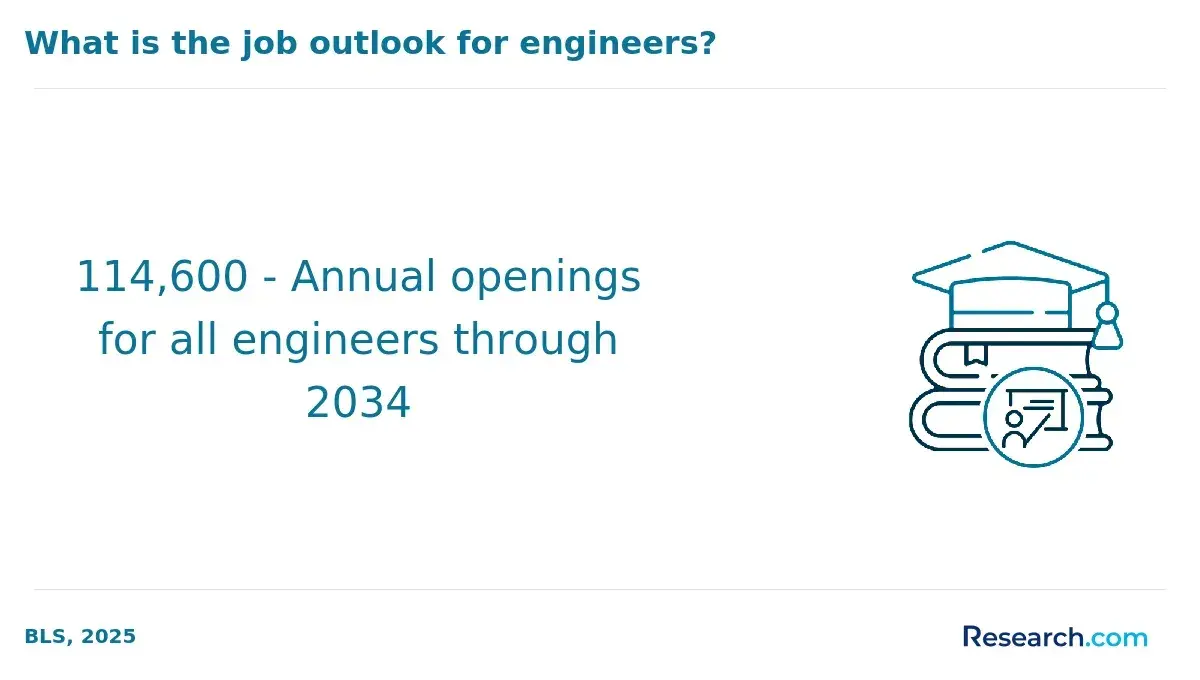
The expected job growth rate for mechanical engineers in 2027 is approximately 4% according to the U.S. Bureau of Labor Statistics. This growth reflects ongoing demand in fields such as manufacturing, research and development, and emerging technologies like automation and AI.
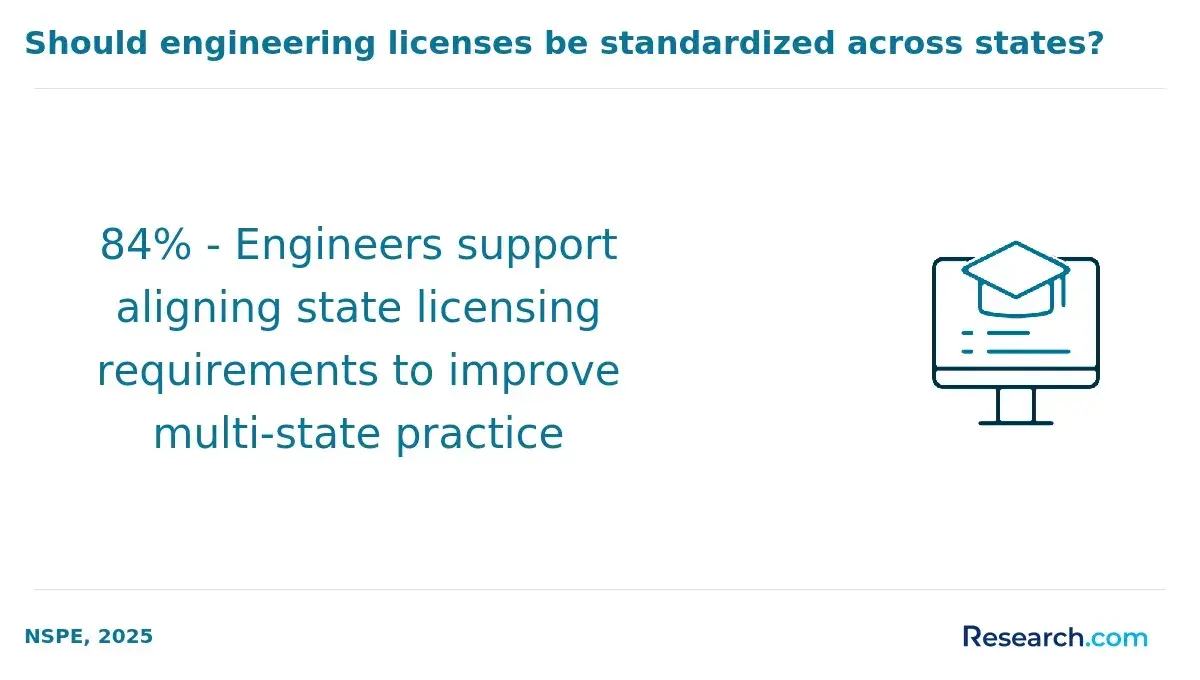
Mechanical engineers who sign and seal public-facing plans usually need a Professional Engineer license. The FE exam is the first step, followed by the PE exam after about four years of supervised experience. State licensing boards set the exact rules, and public projects often require PE approval.
In 2027, mechanical engineers with advanced degrees can pursue high-paying roles such as a Robotics Engineer, Aerospace Engineer, or Engineering Manager. These positions offer leadership opportunities and often require specialized skills, providing potential for substantial salaries and career growth.
In 2027, essential skills for a successful mechanical engineering career include strong analytical and problem-solving abilities, proficiency in computer-aided design (CAD) software, a solid grasp of fundamental engineering principles, and good project management and communication skills. Adaptability and knowledge of emerging technologies also provide a competitive edge.
Alternative careers for mechanical engineers include roles as sales engineers, management consultants, and project managers. These positions leverage the technical expertise and analytical skills of mechanical engineers in different contexts, such as selling technical products, optimizing business processes, and managing projects.


