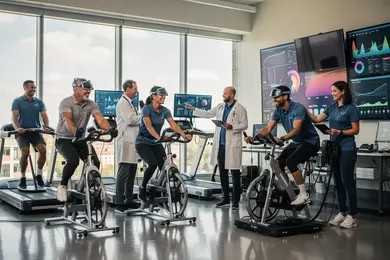
2027 Best Value Online Exercise Science Master's Degrees: Affordable Accredited Programs with the Highest ROI

Co-Founder and Chief Data Scientist
Choosing an online master's degree in exercise science involves balancing cost, credibility, and career impact. For many adult learners and working professionals, affordability alone is not enough; program accreditation and proven return on investment shape long-term outcomes. Recent data from the National Student Clearinghouse Research Center shows a steady rise in enrollment in online graduate programs, reflecting a shift toward flexible learning formats that accommodate diverse schedules and responsibilities. This trend underscores the importance of identifying accredited programs that not only fit budget constraints but also enhance employability and career mobility in a competitive field.
Key Things to Know About the Best Value Online Exercise Science Master's Degrees
- Accreditation by recognized bodies ensures curriculum rigor but often limits enrollment to students meeting specific prerequisites, creating access tradeoffs that disproportionately impact career-changers with nontraditional backgrounds.
- Employers increasingly value specialized certifications alongside degrees, so programs integrating applied skills and internships enhance workforce relevance and long-term professional mobility in exercise science roles.
- The 15% surge in adult learners in online graduate programs (National Center for Education Statistics, 2024) signals growing timing flexibility, yet rising tuition necessitates careful cost-benefit analysis to avoid overleveraging debt against uncertain ROI.
What Are the Best Value Online Exercise Science Master's Programs in the U.S.?
Best value in an online exercise science master's degree requires balancing cost with rigorous accreditation, solid graduation outcomes, and demonstrable salary gains post-completion. For working adults and career-changers, this means prioritizing programs that deliver recognized credentials without excessive debt, support through completion, and tangible improvements in marketability and earnings. For example, a mid-career fitness professional considering a return to school must weigh how much tuition they can afford against how quickly a program's credential will boost their employability and income. Programs offering asynchronous delivery offer flexibility but may lack real-time cohort engagement valued by employers, while synchronous models may demand stricter scheduling but foster deeper connections and practicum experiences, directly impacting job readiness.
Here are five fully online exercise science master's programs from accredited U.S. institutions organized by ascending tuition range, providing a clear starting point for prospective students focused on affordability aligned with strong outcomes:
- University of West Georgia: Estimated total tuition approximately $13,000; fully asynchronous delivery; known for streamlined admissions catering to working professionals seeking a flexible, affordable credential.
- Eastern Illinois University: Estimated total tuition around $17,500; mostly asynchronous with optional synchronous sessions; emphasizes individualized career advising integrated into the curriculum.
- Kennesaw State University: Estimated total tuition near $21,000; asynchronous with periodic live seminars; offers specialized tracks that align with emerging fitness and rehabilitation fields.
- California University of Pennsylvania: Estimated total tuition about $23,500; hybrid asynchronous/synchronous model; distinguished by strong faculty-led research opportunities accessible to remote learners.
- University of Northern Colorado: Slightly above $25,000 total tuition; synchronous format emphasizing cohort engagement; integrates applied practicum components designed for career advancement in clinical and athletic settings.
- Accreditation: All programs hold regional accreditation and meet exercise science-related credentialing standards, ensuring employer and licensure recognition.
- Delivery Format: Varied to accommodate different learning styles and professional schedules, from fully asynchronous to mixed synchronous engagements.
- Graduation Rates: Reporting 70% or higher within typical program lengths, underscoring student retention and support effectiveness.
- Post-Degree Salary Lift: Average increases range from 15% to 30%, reflecting rising demand for exercise science expertise in health, sports, and wellness sectors.
- Data Sources: Tuition and outcome estimates derive from institutional reporting and IPEDS datasets for the current academic year to ensure accuracy and relevance.
Working professionals seeking the fastest way to become a medical assistant can draw parallels to selecting an exercise science program that balances speed, cost, and quality to maximize workforce outcomes.
What Accreditations Should an Online Exercise Science Master's Program Have?
Choosing an online exercise science master's program without carefully weighing its accreditation risks limiting future academic and professional opportunities. Employers and licensing boards frequently prioritize graduates from regionally accredited institutions, making this a critical consideration for anyone investing tens of thousands of dollars.
Accreditation for such programs operates on two levels. Regional institutional accreditation is the foundational standard that verifies an institution's overall educational quality and establishes eligibility for federal financial aid. A degree from a school accredited by one of the seven regional accreditors-such as the Higher Learning Commission (HLC), the Southern Association of Colleges and Schools Commission on Colleges (SACSCOC), or the Middle States Commission on Higher Education (MSCHE)-is more likely to be recognized by employers and accepted for credit transfer if you pursue further education.
Programmatic accreditation complements this by confirming that the exercise science curriculum meets discipline-specific standards and industry expectations. While there isn't a universally dominant accreditor like ABET in engineering, candidates should look for endorsements from established health, kinesiology, or allied health education organizations. These can influence eligibility for professional certifications and enhance career readiness within specialized areas of exercise science.
Programs offering only national accreditation or accreditation from unrecognized bodies often fall short on academic rigor and may complicate licensure, certification, or employment prospects. Transparency in accreditation documentation is an important red flag; programs unable or unwilling to provide proof should be approached with caution.
Checklist for Prospective Students:
- Regional Accreditation: Is the institution accredited by one of the recognized regional bodies (e.g., HLC, SACSCOC)?
- Programmatic Accreditation: Does the exercise science master's program hold relevant field-specific accreditation or certification alignment?
- Verification: Can the school supply official documentation confirming both accreditations?
- Impact Assessment: How does accreditation affect eligibility for licensure, certification, and federal financial aid?
How Much Does an Online Exercise Science Master's Degree Cost on Average?
Estimating the average cost of an online exercise science master's degree reveals significant variation shaped by institutional type and pricing structure. Total program costs based on IPEDS data show public universities generally offer lower tuition rates, with total expenses often substantially less than private or nonprofit institutions, which tend to bundle fees but come with higher base prices. Prospective students should weigh these differences carefully since the choice affects not only upfront financial commitment but also long-term return on investment, especially for those balancing work and study.
- Program Cost Range: Accredited online exercise science master's programs at public universities usually have lower cumulative costs owing to state subsidies, while private institutions consistently have higher sticker prices.
- Credit-Hour Pricing: Public universities often set distinct in-state and out-of-state rates, though many online programs adopt flat tuition regardless of residency to simplify budgeting.
- Mandatory Fees: Beyond tuition, compulsory expenses such as technology fees, student service fees, and library access add several hundred to over a thousand dollars depending on the institution.
- Thesis/Capstone Fees: Programs with research components may impose additional charges for project supervision and submission requirements.
- Proctoring and Residency: Some programs incorporate mandatory online proctoring or occasional in-person residencies, which introduce travel, lodging, or extra service fees often overlooked in initial estimates.
- Cost Comparison Snapshot: Public university averages tend toward affordability but might require residencies; private/nonprofit averages are higher yet sometimes include bundled fees offering cost predictability.
Choosing an online exercise science master's degree thus involves balancing these cost elements against professional goals and financial capacity. Those seeking measurable affordability might prioritize public institutions, especially when in-state tuition is available. Conversely, students valuing comprehensive fee structures and potentially greater flexibility might consider private options despite higher prices. These cost dynamics intersect directly with workforce realities, as employers in health and fitness sectors increasingly expect not only credentials but also relevant practicum experience, which some programs require through residencies or capstones.
For students also exploring related areas, programs like the masters healthcare administration offer a different tuition landscape, reinforcing the need to assess cost against broader career outcomes. Ultimately, transparent evaluation of all pricing components-tuition, fees, and potential travel costs-is essential when comparing the average price of accredited exercise science master's programs online to ensure informed investment decisions.
What Is the Return on Investment (ROI) of an Online Exercise Science Master's Degree?
Evaluating the return on investment (ROI) for an online exercise science master's degree requires looking beyond tuition fees to the tangible salary gains graduates realize and how quickly those costs are offset. ROI here is defined as the salary bump after graduation minus the total expenses of the program, divided by those expenses, commonly expressed as a percentage or a payback period in years. In practice, median starting salaries for roles such as exercise physiologists or health promotion specialists often begin near $50,000. Post-master's, salaries typically rise to a range between $65,000 and $75,000 depending on the graduate's specialization and prior experience. Given that program costs usually vary from $15,000 to $40,000, candidates can expect to recoup their investment within 3 to 7 years under typical conditions.
Several factors influence how quickly this payoff happens and how substantial it might be:
- Work Experience: Candidates with relevant background often secure higher post-degree salaries sooner, compressing the ROI timeframe.
- Institution Prestige: Degrees from well-regarded programs can unlock better-paying opportunities, noticeably improving financial outcomes.
- Regional Demand: Labor markets with strong wellness and healthcare sectors tend to offer superior compensation, enhancing overall ROI.
- Specialization: Focused credentials, such as in clinical exercise physiology, may lead to premium salaries over more generalist tracks.
- Non-Monetary Benefits: The degree can also enable career shifts, improved job stability, and access to leadership roles, which provide value beyond direct income.
A former online master's student recounted feeling uncertain during the application phase because their program used rolling admissions with variable response times. They carefully prepared their materials early but initially hesitated to submit, weighing financial and time commitments. Once accepted, the clarity around costs and expected salary improvements helped them overcome doubts. This gradual decision-making underscored how important transparent ROI data was for managing risk and timing when balancing work and study obligations.
What Are the Admission Requirements for an Online Exercise Science Master's Program?
Admission to online exercise science master's programs demands a strategic balance between academic credentials and practical experience, reflecting the profession's diverse entry points. Applicants with a bachelor's GPA around 3.0 are typically competitive, but some programs weigh professional background heavily, allowing flexibility in GPA expectations. For instance, a career-changer with extensive fitness industry experience might offset a lower GPA when applying.
- Letters of Recommendation: These should ideally come from academic mentors or supervisors who can validate an applicant's analytical skills, work discipline, or relevant industry contributions, which is crucial for those pivoting careers or entering from allied health roles.
- Statement of Purpose: Beyond reiterating interests, this essay must convincingly link career objectives with the program's offerings, demonstrating clarity about how graduate study integrates into long-term workforce goals.
- Resume or CV: A current and detailed document is vital. It provides committees insight into an applicant's readiness for graduate-level demands, especially clinical or research-related experiences pertinent to exercise science.
- Prerequisites: Programs often require foundational courses in biology, anatomy, or kinesiology. Without them, prospective students may face the burden of additional bridge coursework, extending time and cost.
- GRE/GMAT Requirements: Increasingly, programs waive standardized testing, favoring holistic evaluations; however, some still require scores, which can influence application strategy and timeline.
Quantitative Competency: Given exercise science's technical nature, evidence of skills in statistics or research methodology can be decisive in admission decisions.
Due to varied standards, candidates should diversify applications across competitive reach, suitable match, and accessible safety schools to maximize acceptance odds and manage financial and academic risks effectively.
What Is the Minimum GPA Requirement for a Exercise Science Master's Program?
The minimum GPA requirement for an online exercise science master's program typically ranges from 2.75 to 3.0, serving as the eligibility floor rather than a target for admitted students. In practice, many accredited programs distinguish between this baseline and the competitive GPA, which often exceeds 3.2, reflecting the reality that stronger academic records improve admission chances. For example, a working professional with a 2.8 GPA might meet minimum requirements but face tougher competition compared to candidates presenting a GPA closer to the average admitted profile, influencing their likelihood to secure a spot or funding.
- Minimum Eligibility: Most programs set a minimum undergraduate GPA around 2.75 to 3.0 as the baseline for consideration in online exercise science master's admission.
- Competitive GPA: The average GPA of admitted students typically surpasses 3.2, indicating the advantage conferred by stronger academic credentials in this field.
- GPA Waivers: Some programs allow applicants to offset a lower GPA by submitting relevant professional experience, portfolios, or standardized test scores instead.
- Conditional Admission: Candidates below the threshold may be admitted provisionally, expected to fulfill prerequisites or meet performance benchmarks early in the program.
- Holistic Review: Admissions committees evaluate the full applicant profile-including work experience, motivation, recommendations, and practical skills-which is critical in the applied context of exercise science careers.
Recognizing the distinction between minimum and competitive GPA requirements is essential when evaluating accredited exercise science graduate degrees in the US. Applicants should consider the tradeoffs between strict academic cutoffs and alternative qualifications, especially given how employers in healthcare and fitness sectors value hands-on competencies alongside academic performance. Prospective students can also investigate programs ranked among the best kinesiology programs for a clearer view of admissions standards and outcomes.
What Financial Aid Options Are Available for Online Exercise Science Master's Students?
Securing financial aid for an online exercise science master's demands more than just knowing what's available-it requires strategic planning to balance cost against future employment opportunities. Many first-generation and career-changing students find themselves unprepared for the reality that federal grants like Pell Grants are unavailable at the graduate level, leaving loans and scholarships as primary funding sources. Leveraging multiple aid types can minimize reliance on debt while aligning with one's professional goals.
- Federal Loans: Direct Unsubsidized Loans offer a baseline with fixed interest rates, while Graduate PLUS Loans fill remaining gaps but require credit checks and often have higher rates, increasing repayment risks if income growth post-degree is uncertain.
- Institutional Scholarships and Fellowships: Programs may reserve funding for candidates demonstrating academic merit or financial need, sometimes specifically for online learners; early application and strong credentials are critical to compete effectively.
- Employer Tuition Reimbursement: Professionals should investigate workplace programs, though coverage varies and often carries stipulations such as service commitments that might affect career mobility.
- Graduate Assistantships: Occasionally available to online students, these roles can provide tuition relief plus stipends but are limited in number and accessibility compared to on-campus formats.
- External Scholarships: Associations linked to exercise science frequently offer targeted scholarships that can reduce loan dependence but require proactive research to uncover and apply on time.
Completing the FAFSA remains essential-even for graduate applicants-because it determines eligibility for federal loans and institutional aid, with the Student Aid Index replacing the traditional Expected Family Contribution for assessment. Students benefit from early application, thorough exploration of discipline-specific funding, confident negotiation of aid packages, and consideration of state grant programs tied to residency.
One online exercise science graduate recalled repeatedly checking admission and aid status during rolling admissions, feeling anxiety as available scholarships dwindled. They initially hesitated on submitting required documents, resulting in delayed award notifications and a narrower selection of institutional scholarships. This experience highlighted the importance of prompt, organized applications and proactive follow-up to maximize aid opportunities in competitive, time-sensitive processes.
How Long Does It Take to Complete an Online Exercise Science Master's Degree?
Completion time for an online exercise science master's degree critically shapes how working professionals and career-changers manage education alongside job demands. Full-time enrollment typically leads to finishing within 18 months to 2 years, but because most online students balance employment and personal responsibilities, part-time study extending from 2.5 to 4 years is far more common. This longer timeline impacts workforce re-entry and salary progression, especially in fields with increasing demand across healthcare systems. Students must weigh faster completion against the risk of academic burnout or compromised specialization depth, as employer expectations emphasize accredited program quality over raw speed.
When examining how long does it take to complete an online Exercise Science master's degree in the United States, consider these practical factors:
- Credit Hour Requirements: Programs usually require 30 to 45 credit hours, directly influencing duration depending on semester course load and pacing.
- Course Load: Heavier course loads accelerate completion but increase stress, a key consideration for working professionals seeking sustainable progress.
- Transfer Credits: Transfer policies vary; acceptance of prior graduate coursework can reduce time and cost but is not guaranteed.
- Program Structure: Cohort-based models offer a fixed schedule fostering peer support, while self-paced tracks provide flexibility to align study with work and life.
- Accelerated Options: Some accelerated programs allow completion in as few as 12 months, targeting motivated students with fewer outside obligations; however, speed does not substitute for recognized accreditation or market reputation.
- Thesis or Capstone: Research or project requirements can extend time by one to two semesters, contingent on individual pace and faculty availability.
Given these variables, prospective students should align their program choice with realistic capacity for workload and career timing. Detailed knowledge of program demands also aids in anticipating how degree attainment may influence job prospects, including sports analyst salary trajectories in related fields.
What Specializations or Concentrations Are Available in Online Exercise Science Master's Programs?
Specializations within online exercise science master's programs critically shape graduate employability and earnings by aligning academic focus with employer demand. For example, a candidate pursuing a clinical exercise physiology specialization may find more direct pathways into rehabilitation centers and healthcare systems due to the growing emphasis on therapeutic exercise interventions. Conversely, those concentrating in sports performance might target roles in athletic training or conditioning that require advanced knowledge of athlete development. These choices carry meaningful labor market consequences: some specializations, such as accredited clinical exercise physiology specializations US online programs offer, may yield stronger certification eligibility and higher salary potential, while others provide broader but less focused skill sets.
Students should note that some programs offer a general exercise science track with significant elective flexibility, permitting adaptation to emerging interests or shifting career goals. Others require concentration declaration at admission, which can increase expertise depth but reduce curricular adaptability. Common concentrations include Clinical Exercise Physiology, Sports Performance, Health and Wellness Promotion, Biomechanics, Exercise Physiology, Strength and Conditioning, Adaptive Physical Activity, and Nutrition and Metabolism. Each targets different workforce segments, affecting job availability and advancement likelihood.
To make an informed decision, prospective students should review job postings within their intended career paths to identify frequently requested specializations, a practical step that links academic investment to marketplace realities. Consulting with alumni or program advisors further clarifies how specific tracks perform in actual employment contexts, recognizing that not all concentrations carry equal demand or compensation. This is especially relevant for working professionals or career changers seeking maximum return on education dollars.
Those exploring allied health opportunities may also consider complementary fields; for example, veterans interested in health sciences can find targeted information on related speech pathology degree online for veterans.
- Accrediting Bodies: The Commission on Accreditation of Allied Health Education Programs (CAAHEP), the National Strength and Conditioning Association (NSCA), and regional university accreditors maintain program standards essential to employer recognition and certification eligibility.
- Program Flexibility: Varies from broad, generalist curricula to highly specialized tracks; this affects time to graduation and access to industry certifications.
- Career Outcomes: Selecting a specialization impacts eligibility for clinical credentials, research positions, and leadership roles, highlighting the importance of aligning education with labor market demands.
Online sports performance concentrations in exercise science master's degrees US represent a notable option for those targeting the athletic training sector, reflecting sustained employer interest in these focused skills.
How Do Online Exercise Science Master's Programs Compare to On-Campus Programs in Quality and Recognition?
Employer research from SHRM and other HR firms consistently indicates that hiring managers generally do not distinguish between online and on-campus master's degrees in exercise science from the same regionally accredited institution, provided that the diploma does not specify an online format. Accreditation remains the most critical factor in ensuring degree equivalency and acceptance across recruitment channels. This means that choosing an online program from a reputable, regionally accredited university can yield comparable credential recognition to traditional campus-based programs, especially important for working professionals or career-changers seeking flexibility.
That said, on-campus programs still hold tangible advantages tied to the discipline's hands-on nature. Direct access to well-equipped labs, clinical practicum sites, and face-to-face mentorship fosters immersive learning experiences crucial for applied practice and employer pipelines. Conversely, many online programs are innovating through virtual networking events, employer partnerships that arrange localized practicums, and hybrid residency weekends, though the quality and accessibility of these offerings vary widely.
Prospective students should approach the modality question pragmatically, emphasizing institutional reputation and graduate outcomes over delivery format alone. A practical strategy is reviewing alumni career paths on LinkedIn or similar platforms to assess real employment success and industry integration. Considering that median salaries for exercise science roles can range broadly based on specialization and location, detailed outcome data is vital for judging long-term return on investment.
- Accreditation: Regional accreditation ensures the degree's legitimacy and broad employer acceptance across formats.
- Employer Perception: Surveys indicate most hiring managers view degrees equivalently if they come from the same accredited institution without "online" noted on the diploma.
- Networking: On-campus programs offer richer, organic connections and recruiting events; some online degrees supplement with virtual platforms and hybrid in-person residencies.
- Practicum Access: Hands-on experience is essential; on-campus students enjoy on-site labs while online students rely on employer collaborations for local practicum placements.
- Evaluation Focus: Assess the institution's graduate outcomes and employer engagement rather than delivery mode to determine the program's career impact.
What Graduates Say About the Best Value Online Exercise Science Master's Degrees
- Shmuel: "Balancing a full-time job and family meant I needed a program flexible enough to fit into late nights and weekends. I chose this affordable accredited master's in exercise science because it offered asynchronous classes and a strong emphasis on practical skills rather than purely theoretical work. While I didn't pursue licensure, the internship I completed through the program directly led to a remote coaching position, though I learned firsthand that some roles in clinical settings still require additional certifications."
- Shlomo: "After spending years in sales, affordability and ROI were my main concerns when switching careers, so I opted for an accredited online master's in exercise science with a reasonable tuition. The program's workload was challenging, particularly with balancing study and upskilling for my new career, but the portfolio I developed opened doors for me in corporate wellness consulting. However, I quickly realized that advancement within hospital-based roles remains restricted without licensure, which I'm now weighing for the next step."
- Santiago: "Time was a huge constraint as I was eager to enter the workforce quickly after undergrad. I picked this program for its accelerated structure and emphasis on applied knowledge, which allowed me to secure a competitive internship that highlighted my practical experience. Though salary growth can be modest without certification, the flexibility and option to work remotely have been valuable, making the trade-offs around not pursuing licensure right away more manageable for my personal career goals."
Other Things You Should Know About Exercise Science Degrees
Graduates typically enter roles in clinical rehabilitation, fitness management, research, or sports performance enhancement. However, the return on investment varies significantly depending on program specialization and regional job markets. Programs emphasizing applied skills with internship or practicum components consistently yield higher employment rates and salaries, so prospective students should prioritize those with strong employer connections and hands-on training rather than purely theoretical curricula.
Many programs rely on advanced software for virtual labs, motion analysis, or data collection, requiring up-to-date computers and reliable high-speed internet. Some also schedule synchronous sessions that demand real-time participation, which can conflict with full-time work or different time zones. When comparing programs, consider whether their technology demands fit your current resources and schedule flexibility, as failure to meet these can hinder learning and delay graduation.
Selecting the right program means weighing curriculum focus, accreditation, and network opportunities against your desired career path. For instance, if your goal is clinical practice, prioritize programs with accredited clinical placements and strong licensure outcomes. If research is your aim, seek programs with faculty engaged in current studies and publication opportunities. In every case, affordability alone shouldn't dominate; instead, target programs that align closely with industry expectations and offer clear pathways to employment in your intended niche.
References
- Online Masters in Kinesiology, Sport & Recreation in Texas - HSU https://www.hsutx.edu/academics/graduate-programs/kspr/
- 50 Best Sports Science Masters Degree Programs (Campus) - Sports Management Degree Guide https://www.sports-management-degrees.com/best-masters-sports-science/
- Is Grad School Worth It? A Comprehensive Return on Investment Analysis - FREOPP https://freopp.org/whitepapers/is-grad-school-worth-it-a-comprehensive-return-on-investment-analysis/
- Master's Degree in Kinesiology | UT San Antonio | Master's Program in Kinesiology | Earn Your Degree (MS) in Kinesiology https://future.utsa.edu/programs/master/kinesiology/
- Kinesiology Online Master's: See & Compare Top Programs https://www.edumed.org/online-schools/kinesiology-degrees/masters/
- Master of Science (MS) in Exercise Science | Calvin University https://calvin.edu/majors-programs/ms-exercise-science
- Online Master's in Exercise Science and Health Promotion https://online.pennwest.edu/programs/exercise-science-health-promotion/index.php
- Earning an Online Exercise Degree - IDEA Health & Fitness Association https://www.ideafit.com/earning-online-exercise-degree-0/
- Best Online Master's Programs in Exercise Science https://www.onlineu.com/degrees/masters-exercise-science
- Master of Science in Exercise Science https://www.kennesaw.edu/degrees-programs/master-degrees/exercise-science.php