2027 AI, Automation, and the Future of Exercise Science Degree Careers

Co-Founder and Chief Data Scientist
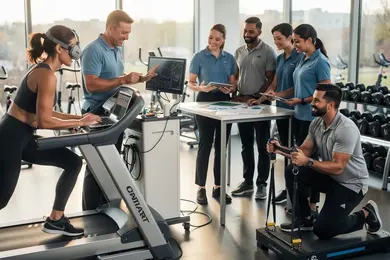
Students choosing an exercise science degree now face a different question than previous cohorts: how do you prepare for a field where coaching, rehabilitation, performance testing, and wellness programming are increasingly supported by AI tools?
Automation is not replacing the discipline of exercise science. It is changing which tasks are valuable, which entry-level duties may shrink, and which graduates stand out. A personal trainer, strength and conditioning coach, rehabilitation aide, or wellness specialist who can interpret wearable data, explain AI-generated insights, and apply human judgment will be better positioned than someone who relies only on routine assessment or generic programming.
Recent studies reveal that over 45% of exercise science professionals anticipate AI significantly reshaping their daily workflows within the next five years. This guide explains where AI is moving fastest, which roles are most exposed to automation, which human skills remain hard to replace, and how students can plan degree choices, certifications, and career moves for long-term relevance.
Key Things to Know About AI, Automation, and the Future of Exercise Science Degree Careers
- Emerging AI tools automate routine assessments, shifting exercise science roles toward personalized program design and client engagement.
- Employers increasingly value data analytics, AI literacy, and interdisciplinary knowledge alongside traditional exercise science competencies.
- Automation enhances career stability for specialists in AI-augmented areas, offering advancement in tech-integrated health and fitness fields.
What exercise science industries are adopting AI the fastest?
AI is being adopted fastest in exercise science settings that already collect large amounts of performance, health, or movement data. The strongest opportunities are in industries where technology can improve measurement, personalization, monitoring, or decision-making.
- Healthcare and rehabilitation: Hospitals, rehabilitation centers, and clinical wellness programs use AI-supported systems to review patient data, track recovery, and help personalize therapy plans. Exercise science graduates in these environments need to understand clinical boundaries, patient safety, and how to interpret technology-assisted recommendations without treating the software as a substitute for professional judgment.
- Sports performance: Professional teams, collegiate athletic departments, and high-performance training facilities use AI to analyze workload, biomechanics, fatigue, and injury risk. These settings value graduates who can connect movement science with data interpretation and communicate findings clearly to coaches, athletes, athletic trainers, and medical staff.
- Fitness technology: Wearables, connected exercise equipment, and digital fitness platforms use AI for real-time tracking, adaptive workout suggestions, and progress feedback. This sector favors professionals who understand both human physiology and user behavior, especially when translating raw metrics into practical, safe training guidance.
The common thread is not that AI replaces exercise science expertise. It raises the value of professionals who can evaluate the quality of data, identify when an algorithmic recommendation is inappropriate, and tailor guidance to a real person’s goals, limitations, and motivation.
Students comparing adjacent health science paths may also review options such as a PharmD degree, particularly if they are interested in broader healthcare training and interdisciplinary patient care.
Which exercise science roles are most likely to be automated?
The exercise science roles most exposed to automation are those built around repeatable data collection, standardized instructions, or routine plan adjustments. A 2023 Brookings Institution report estimates that about 25% of tasks in health-related professions are highly vulnerable to automation within the next decade. In exercise science, the risk is usually task-level automation, not the instant disappearance of entire careers.
- Fitness assessment technicians: Body composition tracking, heart-rate monitoring, movement screens, and other biometric measurements can increasingly be captured by wearables, cameras, sensors, and software. Technicians who only collect numbers may face pressure, while those who can explain results, identify red flags, and recommend next steps will remain more valuable.
- Exercise program supervisors: AI-driven platforms can adjust workout variables based on user history, performance, sleep, and recovery metrics. This reduces demand for professionals who make only basic program changes, but it increases demand for those who can review automated plans for safety, appropriateness, and long-term progression.
- Rehabilitation assistants: Robotics, remote monitoring tools, and AI-assisted exercise platforms can guide patients through standardized therapeutic exercises. Roles focused only on repetition counting or basic supervision may be affected, while assistants with strong patient communication, observation skills, and knowledge of clinical protocols will be better positioned.
The safest career strategy is to move beyond routine execution. Students should build skills in assessment interpretation, client education, motivational coaching, documentation, privacy-aware technology use, and collaboration with licensed healthcare professionals.
Graduates considering broader clinical education can compare pathways such as online DNP programs, while recognizing that advanced nursing and exercise science careers have different admission requirements, scopes of practice, and licensing expectations.
What parts of exercise science work cannot be replaced by AI?
AI can process data quickly, but it does not fully understand a person’s fear, hesitation, pain history, motivation, family obligations, sport culture, or trust in a practitioner. A 2023 World Economic Forum report found that 71% of employers value human abilities such as creativity and interpersonal communication, which is why the human side of exercise science remains central.
- Personalized client assessment: A qualified professional notices how a client moves, responds, communicates discomfort, and reacts emotionally to feedback. AI may flag patterns, but humans judge context, safety, and readiness.
- Individualized program development: Effective programming is not just exercise selection. It requires adapting intensity, progression, recovery, preferences, equipment access, and medical or performance goals into a plan the client can actually follow.
- Real-time intervention adjustments: Clients may report unexpected pain, anxiety, fatigue, dizziness, or frustration during a session. Human professionals must decide when to modify, pause, refer out, or change coaching strategy.
- Empathetic communication: Adherence often depends on trust. Encouragement, accountability, reassurance, and difficult conversations about barriers or setbacks require emotional intelligence that automated systems cannot authentically provide.
- Interdisciplinary collaboration: Exercise science professionals often coordinate with physical therapists, physicians, athletic trainers, dietitians, psychologists, or coaches. This work requires professional communication, documentation, and respect for scope of practice.
The most durable exercise science careers will combine technical fluency with human judgment. AI may recommend a training adjustment, but a professional must decide whether that adjustment is safe, ethical, realistic, and aligned with the client’s broader needs.
Students who want administrative or leadership roles in healthcare-adjacent settings may also evaluate online medical programs that focus on management, operations, or healthcare systems.
How is AI creating new career paths in exercise science fields?
AI is creating new career paths by turning exercise science data into a larger part of decision-making. Demand for AI-related expertise in health and fitness is projected to increase by approximately 30% in the coming decade. Graduates who can bridge movement science, technology, and client communication may qualify for roles that did not exist in the same form a generation ago.
- AI exercise data analyst: This role focuses on interpreting biometric, biomechanical, workload, and performance data from AI-enabled systems. The strongest candidates understand physiology and can explain what the numbers mean for training, recovery, or risk management.
- Digital health coach: Digital health coaches use platforms, apps, and AI-supported dashboards to guide clients remotely. The role requires coaching ability, comfort with technology, and strong communication because clients still need accountability and clear explanations.
- Human-AI interaction designer: Fitness and rehabilitation technologies need interfaces that real people can understand and use safely. Exercise science graduates with knowledge of biomechanics, ergonomics, behavior change, and user experience can contribute to better product design.
- Rehabilitation technologist: These professionals help integrate AI-supported tools, robotics, sensors, or remote monitoring into recovery plans. They may work alongside licensed clinicians and must understand both the capabilities and limits of technology in patient care.
These roles reward professionals who are not intimidated by data but also do not overtrust it. The best opportunities sit at the intersection of evidence-based movement science, ethical technology use, and clear client or patient communication.
What skills do exercise science graduates need to work with AI?
Exercise science graduates do not need to become software engineers to benefit from AI. They do, however, need enough technical literacy to use AI tools responsibly, question outputs, and translate data into safe recommendations. Industry forecasts suggest that over 60% of wellness organizations will implement AI technologies in the next five years, making these skills increasingly relevant.
- Data analysis: Graduates should be able to read trends in heart rate, workload, movement quality, recovery, adherence, and performance metrics. The key skill is not just seeing a dashboard, but deciding what information is meaningful and what may be misleading.
- Programming fundamentals: Basic exposure to coding, especially in languages like Python, can help professionals understand how tools process information and collaborate with developers, researchers, or product teams.
- Machine learning understanding: Exercise science professionals should know the basics of how algorithms learn from data, where bias can enter, and why AI predictions are not the same as clinical or coaching decisions.
- Cross-disciplinary communication: Graduates must explain AI-generated insights to clients, coaches, clinicians, and managers in language each audience can use. This includes knowing when to simplify and when to document details carefully.
- Ethical sensitivity: AI tools often depend on sensitive health and performance data. Professionals need to understand privacy, consent, transparency, data security, and the risks of making recommendations beyond their training or legal scope.
- : "“Initially, the volume of data and AI tools felt overwhelming. I spent extra time learning the software and trying not to get lost in statistical jargon. The bigger lesson was learning how to explain complicated AI outputs to clients who were skeptical or unfamiliar with the systems. Privacy also became a major concern. Adapting to AI has been challenging, but it has improved how I approach training and recovery.”"
The practical goal is balance. Technical skills help graduates use AI efficiently; human skills help them apply it safely and persuasively.
Are exercise science degree programs teaching AI-relevant skills?
Some exercise science programs are beginning to teach AI-relevant skills, but coverage varies widely. Approximately 30% of exercise science curricula have adopted data analytics or AI-focused content within the past five years. Students should not assume every program prepares them equally for a technology-heavy workplace.
- Data analysis training: Stronger programs teach students to interpret physiological, biomechanical, and performance data rather than simply memorize testing procedures. Look for coursework that includes applied labs, statistics, research methods, or performance analytics.
- Wearable technology integration: Programs that use sensors, wearables, motion analysis tools, or digital monitoring platforms give students practical experience with the technologies now common in fitness, sport, and rehabilitation settings.
- Machine learning foundations: Some curricula introduce the basics of algorithms, predictive modeling, or AI-supported decision tools. Students do not need advanced computer science in every role, but a basic conceptual foundation helps them question outputs and avoid blind reliance on software.
- Interdisciplinary collaboration: Projects that combine kinesiology, health science, computer science, statistics, or product design can prepare students for workplaces where exercise professionals collaborate with technical teams.
- AI knowledge gaps: Many programs still provide limited exposure to automation workflows, advanced analytics, or ethical issues in AI. Students may need electives, certificates, internships, or independent projects to fill those gaps.
When comparing programs, ask direct questions: Which courses use wearable data? Are students trained on current assessment software? Is there instruction in privacy and responsible data use? Are internships available with sports technology, rehabilitation technology, corporate wellness, or digital health organizations?
Students who need flexibility can also compare whether a sports science degree online offers hands-on labs, internship support, and analytics-focused coursework comparable to campus-based options.
What certifications or training help exercise science graduates adapt to AI?
Certifications and short-form training can help exercise science graduates close skill gaps faster than a full degree. The best options depend on the target role: coaching, rehabilitation support, sports performance, health technology, research, or operations.
- Certified Artificial Intelligence Practitioner (CAIP): This credential can help graduates build a general foundation in AI concepts, machine learning, and data analysis. It is most useful for professionals who want to understand AI-enabled tools rather than simply operate them.
- Data Science for Healthcare Professionals: Training in health data analysis can help exercise science graduates work with physiological, biomechanical, and patient-related datasets. This is valuable for research, clinical support, performance analytics, and population health roles.
- Health Informatics Certification: Informatics training covers electronic health records, telehealth platforms, interoperability, and digital health systems. It can be useful for exercise science professionals working near clinical teams or remote monitoring programs.
- AI Ethics and Responsible Use in Healthcare: Workshops or micro-credentials in this area help professionals understand consent, transparency, bias, and data privacy. This training is especially important when working with health information or vulnerable populations.
Choose training based on evidence of skill, not just the name of the credential. A useful course should include applied projects, real datasets or case examples, assessment of learning, and clear relevance to the setting where you plan to work.
- : "“At first, I was overwhelmed by the technical language and the amount of data we had to analyze. Targeted courses helped me become more confident interpreting AI-generated insights, and that now improves how I tailor training programs. The ethics training also changed how I think about client privacy and transparency. Integrating AI is not just about technology; it is about maintaining trust.”"
For many graduates, the strongest combination is an exercise science foundation, a respected fitness or clinical-adjacent credential relevant to the intended role, and focused training in data, AI tools, and privacy.
How does AI affect salaries in exercise science careers?
AI can affect salaries by shifting pay toward professionals who add judgment, technical fluency, and strategic value. Studies show that professionals applying AI and data analytics can earn up to 15% more than peers using conventional practices. That premium is not automatic; it depends on the employer, role, location, credential strength, and whether the worker can use technology to improve outcomes.
- Specialized skill demand: Employers may pay more for professionals who can interpret data from wearables, performance systems, or rehabilitation platforms and turn it into safe, actionable recommendations.
- Automation effects: Routine tasks may become less valuable when software can perform them faster. This can reduce the bargaining power of roles centered on basic testing or generic programming.
- Emerging roles: Positions in AI-enhanced fitness coaching, performance analytics, digital health, and customized rehabilitation may command stronger pay because they require a less common mix of exercise science and technology skills.
- Certification premiums: Relevant continuing education can support higher compensation when it demonstrates job-ready ability. Credentials are most valuable when paired with practical experience and measurable results.
- Interdisciplinary expertise: Graduates who combine exercise science with computer science, statistics, informatics, or product knowledge may qualify for roles beyond traditional gym or wellness settings.
The salary lesson is straightforward: AI knowledge can improve earning potential when it helps a professional solve higher-value problems. Simply listing AI tools on a resume is less persuasive than showing how those tools improved client adherence, athlete readiness, patient monitoring, program efficiency, or decision-making.
Where is AI creating the most demand for exercise science graduates?
AI is creating the most demand in settings where movement, health, performance, and behavior data are used to guide decisions. Industry reports show AI integration in sports technology is growing by over 25% annually, which signals expanding opportunities for graduates who can work confidently with data-rich tools.
- Sports performance and injury prevention: AI tools help analyze movement, workload, recovery, and training response. Graduates who understand biomechanics and can communicate risk-related findings to coaches and athletes may find opportunities in performance settings.
- Rehabilitation and physical therapy: AI-powered systems can adapt recovery plans and monitor patient progress. Exercise science graduates may support these workflows, but they must understand scope-of-practice limits and work appropriately with licensed clinicians.
- Wearable technology and fitness apps: Fitness platforms need professionals who can evaluate whether recommendations are physiologically sound, understandable, and useful for real users. This creates opportunities in product testing, coaching, content development, and user education.
- Regional innovation hubs: Areas like California and the Northeast U.S. see high demand due to startups and established firms investing in AI wellness solutions. Graduates targeting these markets may benefit from internships, networking, and portfolios that show comfort with technology.
- Population health and chronic disease management: AI can support large-scale monitoring and intervention programs. Exercise science graduates can contribute by designing practical movement programs, interpreting behavior trends, and helping teams promote adherence.
Students interested in broader healthcare practice may also compare options such as affordable nurse practitioner programs, while remembering that nursing pathways involve separate clinical preparation, licensing requirements, and professional responsibilities.
How should students plan an exercise science career in the age of AI?
Students should plan for a career where AI handles more measurement and routine personalization, while humans remain responsible for judgment, communication, safety, and trust. The best strategy is to build a profile that is both technically current and deeply grounded in exercise science fundamentals.
- Choose programs with applied technology exposure: Look for coursework or labs involving wearables, motion analysis, digital assessment tools, statistics, research methods, or performance monitoring. Ask how often students use current tools, not just whether the catalog mentions technology.
- Protect the core science foundation: Anatomy, physiology, biomechanics, motor learning, exercise prescription, and behavior change remain essential. AI outputs are only useful if you understand the body well enough to evaluate them.
- Develop human-centered coaching skills: Practice motivational interviewing, client education, cueing, behavior-change strategies, and difficult conversations. These skills help turn data into action.
- Build evidence of technical ability: Create projects using anonymized sample data, complete analytics assignments, assist with research, or intern in sports performance, rehabilitation technology, corporate wellness, or digital health settings.
- Understand ethics and privacy: Learn how client data should be collected, stored, explained, and protected. Be transparent about what AI tools can and cannot do.
- Plan for continuous education: AI tools will keep changing. Short courses, certifications, workshops, and employer training can help graduates stay current without pausing their careers.
- Network across disciplines: Connect with exercise scientists, clinicians, data analysts, product managers, coaches, and researchers. Many AI-related opportunities emerge through interdisciplinary teams.
A practical career plan might pair an exercise science degree with internships that use technology, a data or informatics credential, and supervised experience in the student’s target setting. Students comparing healthcare advancement options can also review affordable RN to BSN pathways, especially if they are evaluating broader allied health and nursing-related education routes.
What Graduates Say About AI, Automation, and the Future of Exercise Science Degree Careers
- : "“Thanks to my background in exercise science, I have been able to integrate AI tools into my daily workflow in a practical way. Automation helps with data analysis, but the real value comes from using that information to improve client assessments and program customization. It gives me more time to focus on coaching.” — Maia"
- : "“My exercise science degree gave me the physiology and biomechanics foundation I needed to understand AI-driven rehabilitation technologies. Automation has changed some traditional duties, but it has also created opportunities for people who can interpret complex data and guide patients appropriately. Staying current is now part of the job.” — Amelia"
- : "“In AI-enhanced exercise science work, the core concepts still matter. Understanding human movement and health metrics helped me adapt quickly to automated systems. AI streamlines routine tasks, but clients still rely on professionals for judgment, context, and nuanced decisions.” — Noelle"
Other Things You Should Know About Exercise Science Degrees
Professionals should stay informed about evolving regulations relating to AI in healthcare and fitness, including data protection laws and AI usage guidelines. Joining professional organizations and subscribing to industry updates can help exercise science specialists adapt to legal changes and ensure compliance in their use of AI technologies.
Key challenges include gaining proficiency with complex AI systems, overcoming resistance to technology among clients or colleagues, and ensuring AI tools complement rather than replace human judgment. Graduates must develop both technical skills and communication abilities to integrate AI effectively while maintaining client trust.
References
- AI in Fitness: The Future of Personalized Workouts and Nutrition Plans | Australian Institute of Fitness https://fitness.edu.au/the-fitness-zone/ai-in-fitness-the-future-of-personalized-workouts-and-nutrition-plans/
- AI in Sports: Astounding Transforming the Game & Future 2025 https://www.lastingdynamics.com/blog/ai-in-sports/
- AI use in sports science https://www.essa.org.au/web/Web/Resources/Articles/2025/ai-use-in-sports-science.aspx
- Career opportunities in AI applied to sport: where can you work? | LaLiga Business School https://business-school.laliga.com/en/news/career-opportunities-in-ai-applied-to-sport-where-can-you-work-s
- 19 AI-Proof Jobs That Are Safe From Automation https://www.origym.co.uk/blog/ai-proof-jobs/
- "Advanced Certificate in AI-Powered Adaptive Fitness Implementation" (59 characters) https://www.lsba.es/en/advanced-certificate-in-data-security-advancements-with-ai/Course/Details/361103
- AI in Sports: Use Cases, Trends, Examples, and Challenges https://www.itransition.com/ai/sports
- AI in Fitness: The Next Frontier for Coaches https://www.acefitness.org/continuing-education/course/4a5ywx2x8/ai-in-fitness-the-next-frontier-for-coaches/
- Top AI Trends Shaping The Fitness Industry in 2025 https://3dlook.ai/content-hub/ai-in-fitness-industry/
- Top 10 Industries Seeing the Fastest AI Adoption Rates in 2026 | Second Talent https://www.secondtalent.com/resources/industries-seeing-the-fastest-ai-adoption-rates/