2027 Exercise Science Degree Coursework Explained: What Classes Can You Expect to Take?

Co-Founder and Chief Data Scientist
Choosing an exercise science degree means committing to a science-heavy curriculum that connects human movement, health, fitness, and performance. The classes matter because they determine whether you are prepared for roles in fitness, wellness, rehabilitation support, strength and conditioning, clinical exercise settings, or graduate study. Approximately 68% of exercise science occupations require knowledge in both biomechanics and physiology, so students should expect more than general fitness courses.
This guide explains what students typically study in an exercise science program, how core and elective courses differ, where internships and capstones fit, and how coursework can affect career readiness and salary potential. It is designed for prospective students comparing programs, current students planning electives, and career changers who want a realistic view of what the degree requires.
Key Benefits of Exercise Science Degree Coursework
- Exercise science coursework builds a strong foundation in anatomy and physiology, essential for developing practical skills in fitness assessment and rehabilitation.
- Students gain expertise in biomechanics and kinesiology, enhancing their ability to design effective training programs tailored to diverse populations.
- Comprehensive training in exercise prescription and nutrition improves employability, with median salaries for related roles growing by over 8% in recent years.
What Types of Class Do You Take in a Exercise Science Degree?
An exercise science degree usually combines classroom science, applied movement analysis, research training, and supervised field experience. The goal is to help students understand how the body moves, adapts to exercise, and responds to training or rehabilitation-related interventions.
Most programs include the following types of classes:
- Core science and movement courses: These courses cover anatomy, physiology, kinesiology, biomechanics, and exercise physiology. They build the technical foundation students need to understand movement, energy systems, injury risk, and physical adaptation.
- Applied assessment and prescription courses: Students learn how to assess fitness, interpret basic performance measures, and design exercise programs for different goals and populations. These classes are especially important for students interested in fitness coaching, wellness programming, or clinical exercise roles.
- Specialization and elective courses: Electives may focus on sports nutrition, strength and conditioning, rehabilitation, athletic training concepts, health promotion, or sport psychology. Strong elective choices can help students align the degree with a specific career path.
- Research and methods coursework: These classes teach students how to read scientific literature, evaluate evidence, understand statistics, and apply research findings responsibly. This matters in a field where recommendations should be based on data rather than trends.
- Practicum, internship, or capstone experiences: Many programs require hands-on learning in fitness centers, wellness programs, clinical environments, athletic settings, or community health organizations. These experiences help students test career interests before graduation.
Students comparing exercise science with other healthcare routes should pay close attention to curriculum differences. For example, resources on the best online pharmacy programs may be useful for students considering a more medication-focused healthcare path rather than a movement and performance-focused degree.
What Are the Core Courses in a Exercise Science Degree Program?
Core courses are the required classes that give every exercise science student a shared foundation. They are usually more science-based than many students expect, and they often include both lecture and lab components. These courses prepare students to understand the body, evaluate movement, communicate with clients or patients, and make evidence-informed decisions.
Common core courses include:
- Anatomy and Physiology: Students study the structure and function of major body systems, including muscles, bones, joints, nerves, cardiovascular structures, and respiratory function. This course supports nearly every later class in the major.
- Exercise Physiology: This course examines how the body responds to acute exercise and adapts to regular training. Students typically study cardiovascular, respiratory, metabolic, and muscular responses to physical activity.
- Biomechanics: Biomechanics applies mechanical principles to human movement. Students learn how force, motion, posture, leverage, and joint mechanics affect performance and injury risk.
- Kinesiology: Kinesiology focuses on movement patterns, muscle actions, and functional motion. It helps students connect anatomy with real-world movement, exercise technique, and performance analysis.
- Research Methods and Statistics: Students learn how studies are designed, how data are interpreted, and how to evaluate the quality of research. This training is essential for avoiding unsupported claims and applying evidence-based practice.
- Professional Practice and Ethics: This course covers legal, ethical, communication, and organizational issues in health, fitness, and wellness settings. It may also address scope of practice, referral decisions, documentation, and professional conduct.
- Exercise Testing and Prescription: Students practice assessing fitness and designing exercise programs based on individual needs, goals, limitations, and safety considerations.
- Nutrition: Nutrition coursework introduces how diet affects health, performance, recovery, and body composition. Students should understand that nutrition courses in exercise science do not automatically qualify graduates to practice as licensed dietitians.
Students who want healthcare-related work but prefer administrative or revenue-cycle roles may also compare exercise science with online medical billing and coding with financial aid to see which path better fits their strengths.

What Elective Classes Can You Take in a Exercise Science Degree?
Electives allow students to shape an exercise science degree around a specific career goal. Recent data shows that more than 70% of students select electives to gain expertise in targeted areas. The best choices depend on whether a student wants to work in fitness, sports performance, wellness, rehabilitation support, research, or graduate school preparation.
Common elective options include:
- Sports Nutrition: This elective explores how food, hydration, and nutrient timing can affect training, performance, and recovery. It is useful for students interested in coaching or performance settings, though it does not replace dietetics licensure requirements where those apply.
- Advanced Exercise Physiology: Students go deeper into adaptation, fatigue, metabolism, and physiological testing. This can be useful for clinical exercise testing, personal training, wellness programming, or graduate study.
- Advanced Biomechanics: This course may focus on movement analysis, gait, sport technique, force production, or injury mechanics. It is a strong choice for students interested in rehabilitation support, performance analysis, or biomechanics research.
- Health Promotion and Wellness: Students learn how to design programs that encourage healthier behavior in workplaces, communities, schools, or fitness organizations. This elective fits students who want broader public health or wellness roles.
- Strength and Conditioning: This course covers resistance training, periodization, athletic development, testing, and program design. It is especially relevant for students pursuing coaching or athletic performance roles.
- Motor Learning or Motor Development: Students study how people acquire, refine, and retain movement skills across the lifespan. This can support careers involving coaching, rehabilitation support, youth fitness, or older adult programming.
- Sport Psychology: This elective introduces motivation, confidence, focus, stress, and behavior change in sport and exercise settings. It can be valuable for coaching and wellness work.
Students should avoid choosing electives only because they sound easy or popular. A better approach is to identify the role they want after graduation, review job postings, and choose courses that build the required skills. Students planning graduate study should also check whether specific electives satisfy prerequisite expectations.
A professional who completed an exercise science degree described feeling overwhelmed by elective choices at first. After speaking with mentors and considering his interest in rehabilitation, he chose biomechanics and exercise physiology electives. "It was a challenging process balancing interest and career potential," he said, "but choosing electives that aligned with what I enjoyed helped me stay motivated and confident."
His experience shows why elective planning should be intentional. The right electives can make coursework more engaging, strengthen internship applications, and help students explain their career direction to employers.
Are Internships or Practicums Required in Exercise Science Programs?
Many exercise science programs require an internship or practicum because the field depends on applied skills. Current data shows around 70% of exercise science programs mandate an internship or practicum. These experiences give students supervised practice in settings where they may later work, such as fitness centers, wellness programs, sports performance facilities, community health organizations, or clinical exercise environments.
Important features of internships and practicums include:
- Program requirements: Some programs require field experience for graduation, while others offer it as an elective or capstone option. Students should confirm requirements before enrolling because internship availability, site approval, and supervision rules can vary.
- Typical duration: These experiences usually involve 120 to 400 hours of supervised work. The exact number of hours affects scheduling, transportation, work availability, and graduation planning.
- Types of settings: Students may work with athletes, recreational exercisers, older adults, workplace wellness participants, or individuals with chronic conditions, depending on the placement and the student’s preparation.
- Skills developed: Internships help students practice communication, fitness assessment, exercise instruction, documentation, professional conduct, and problem-solving in real environments.
- Career value: A strong internship can lead to references, networking contacts, job leads, and clearer career direction. A weak placement may still be useful if it helps a student rule out a path before committing to it.
Students should ask each program how placements are arranged. Some schools assign sites, while others expect students to find approved placements. Online students should also ask whether the school helps secure local sites or requires students to identify options independently.
Is a Capstone or Thesis Required in a Exercise Science Degree?
Some exercise science programs end with a capstone, thesis, or similar culminating project. Nearly 60% of bachelor's programs in exercise science require students to complete one of these experiences to connect coursework with real-world applications. The requirement matters because it can affect workload, graduation timeline, and preparation for employment or graduate school.
A capstone and a thesis are not the same:
- Purpose and focus: A capstone usually applies existing knowledge to a practical problem, such as designing a wellness program, completing a field-based project, presenting a case analysis, or developing an exercise intervention. A thesis focuses more on research and formal academic inquiry.
- Time and effort: Capstones often fit within a semester and emphasize applied work. Theses may require several months or a full academic year because students must develop a question, review literature, collect or analyze data, and write a formal paper.
- Collaboration vs. independence: Capstones may be completed individually or in teams and may involve an outside partner. Theses are usually individual projects completed under close faculty supervision.
- Skills developed: Capstones build presentation, project management, applied problem-solving, and workplace communication skills. Theses place stronger emphasis on research design, data interpretation, academic writing, and independent inquiry.
- Best fit: A capstone is often better for students who want to enter the workforce soon after graduation. A thesis may be a better choice for students planning graduate study, research roles, or academic pathways.
Students should not choose between a capstone and thesis based only on difficulty. The better question is what the project should help them prove. A student applying for fitness or wellness jobs may benefit from an applied capstone portfolio. A student applying to graduate programs may benefit from a thesis that demonstrates research readiness.
When asked about her capstone experience, one exercise science graduate said, "It was challenging to balance the project alongside other classes and part-time work, but working with a local fitness center helped me see how theory translates to practice."
She said the deadlines and teamwork were demanding, but the project clarified her career goals. "Looking back, I wouldn't have traded that project for anything-it was the moment where everything clicked," she shared.
Is Exercise Science Coursework Different Online vs On Campus?
Exercise science coursework is often similar online and on campus in terms of required topics, learning outcomes, and academic expectations. Accredited programs generally expect students to study anatomy, physiology, kinesiology, biomechanics, exercise testing, nutrition, research methods, and applied practice regardless of delivery format.
The main differences are how students complete labs, interact with faculty, and arrange hands-on experiences. Online programs can work well for disciplined students who need flexibility, while campus programs may be better for students who want regular in-person labs, direct access to equipment, and more spontaneous interaction with classmates and instructors.
- Online coursework: Students may complete lectures, discussions, readings, quizzes, and written assignments remotely. Labs may use virtual simulations, take-home activities, recorded demonstrations, or local site arrangements.
- On-campus coursework: Students usually have more direct access to anatomy labs, exercise testing equipment, movement analysis tools, campus fitness facilities, and face-to-face coaching from instructors.
- Internships and practicums: Online students often complete fieldwork locally, but they should verify site approval procedures before enrolling. Campus students may have established local partnerships, though placement is not always guaranteed.
- Student support: Online students should look for tutoring, library access, advising, technical support, and internship coordination. Campus students should evaluate lab access, faculty availability, and career services.
If flexibility is the deciding factor, researching an exercise physiologist online degree can help students compare programs that offer remote coursework while still addressing practical training expectations.
The best format depends on learning style and career goals. Students who need frequent hands-on demonstrations may prefer campus study. Students who are working, caregiving, or living far from campus may prefer online study, provided the program clearly explains how labs and fieldwork are completed.
How Many Hours Per Week Do Exercise Science Classes Require?
Exercise science classes typically require between 12 and 20 hours per week for most full-time students. This estimate includes scheduled lectures, labs, readings, assignments, test preparation, group work, and applied learning. Students can expect about 3 to 6 hours of lectures weekly, with additional time spent outside class.
The workload depends on several factors:
- Enrollment status: Full-time students usually spend more total hours each week than part-time students. Part-time study can reduce weekly pressure but may extend the time needed to finish the degree.
- Course level: Introductory courses may focus on foundational reading and exams. Advanced courses often require lab reports, research analysis, case studies, program design, or field-based assignments.
- Learning format: Online students have more scheduling flexibility, but they must be disciplined about weekly study blocks. Without a set class routine, it is easy to fall behind.
- Credit load: A heavier credit load increases reading, assignments, labs, and exam preparation. Students working significant hours should plan course loads carefully.
- Labs and practicums: Anatomy labs, exercise testing sessions, internships, and capstone projects can add time beyond normal coursework. Travel to field sites may also affect weekly schedules.
Students should treat exercise science as a science degree, not simply a fitness major. The most time-consuming courses often involve anatomy memorization, physiology concepts, biomechanics problem-solving, and applied testing procedures.
Students comparing workload across healthcare-related majors may also review healthcare administration degree online programs, which typically emphasize management, policy, and operations rather than movement science and lab-based learning.
How Many Credit Hours Are Required to Complete a Exercise Science Degree?
Credit hour requirements affect graduation timeline, tuition planning, semester workload, and eligibility for financial aid. Exercise science programs vary by school, degree level, transfer credit policy, and whether the program includes internships, labs, a capstone, or a thesis.
Most undergraduate exercise science degree credit hour requirements range between 120 and 130 hours, which aligns with approximately four years of full-time study. Graduate programs, including master's degrees, often require between 30 and 60 credits depending on their structure.
Common credit categories include:
- Core coursework: Undergraduate programs generally require 60 to 80 credit hours in foundational subjects such as anatomy, physiology, kinesiology, and exercise physiology. Graduate programs usually focus on advanced theory, research, clinical application, or specialized practice.
- Electives: Electives usually account for 20 to 30 credit hours at the undergraduate level. These courses let students explore areas such as sports psychology, nutrition, strength and conditioning, wellness, or rehabilitation-related topics.
- Experiential learning: Internships, lab practicums, clinical placements, capstone projects, or theses make up the remaining credits. Undergraduates may dedicate 10 to 20 credits to these experiences, while graduate students may complete more intensive research or clinical work.
Before enrolling, students should ask how transfer credits apply, whether prerequisite science courses count toward the major, and whether internship or capstone credits carry additional fees. These details can change the true time and cost of completion.
Students considering advanced healthcare education may also compare credit requirements with options such as the cheapest online nurse practitioner programs, especially if they are weighing exercise science against nursing-related pathways.
How Does Exercise Science Coursework Prepare Students for Careers?
Exercise science coursework prepares students for careers by combining scientific knowledge with applied skills. With the employment of exercise physiologists projected to grow 11% from 2022 to 2032 according to the U.S. Bureau of Labor Statistics, students should understand how coursework connects to actual job expectations.
- Human movement expertise: Anatomy, physiology, biomechanics, and kinesiology help students understand how people move, how exercise affects the body, and how to identify factors that may influence performance or injury risk.
- Exercise assessment and program design: Courses in testing and prescription help students learn how to evaluate fitness, set goals, select exercises, adjust intensity, and monitor progress.
- Evidence-based decision-making: Research methods and statistics teach students how to evaluate claims, interpret studies, and avoid relying only on trends or anecdotal advice.
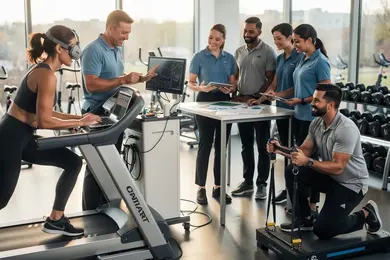
- Technology and equipment familiarity: Students may work with tools used for performance testing, movement observation, fitness assessment, and wellness planning. This can make the transition into internships and entry-level roles smoother.
- Communication and coaching: Many roles require explaining complex concepts in plain language, motivating clients, documenting progress, and working with other professionals.
- Professional readiness: Internships, practicums, and capstones help students practice workplace expectations, build references, and clarify which settings fit their goals.
Students should also understand the limits of the degree. An exercise science bachelor's degree can support many health, fitness, wellness, and performance-related roles, but some careers require additional certification, graduate education, supervised clinical experience, or licensure. Requirements vary by role, employer, and state.
For students drawn to advanced clinical nursing rather than exercise-focused careers, the cheapest DNP program online options may be worth comparing as a different long-term pathway.
How Does Exercise Science Coursework Affect Salary Potential After Graduation?
Exercise science coursework can affect salary potential by shaping the roles a graduate can pursue, the skills they can demonstrate, and the certifications or graduate programs they are prepared to enter. However, coursework alone does not guarantee a specific salary. Pay depends on job title, employer, location, experience, credentials, and whether the role is clinical, fitness-based, administrative, research-oriented, or performance-focused.
For instance, exercise physiologists had a median annual pay of approximately $50,280, with job growth expected to rise 11% through 2032.
Coursework can influence earning potential in several ways:
- Development of in-demand technical skills: Courses in kinesiology, biomechanics, physiology, testing, and prescription help graduates qualify for roles that require more than general fitness knowledge.
- Specialized elective preparation: Advanced electives in strength and conditioning, wellness, rehabilitation-related topics, or sports performance can help students target specific job markets.
- Preparation for certifications: Some programs align coursework with professional certification expectations. Certifications may improve employability, though requirements and value vary by employer and role.
- Applied experience: Internships, practicums, and capstones give students examples of real work they can discuss in interviews. Employers often value evidence that a graduate can apply classroom knowledge safely and professionally.
- Leadership and management exposure: Courses involving program planning, wellness administration, ethics, or professional practice can support advancement into supervisory or coordinator roles over time.
- Graduate school readiness: Strong coursework in science and research can help students prepare for advanced study, which may be required for certain higher-responsibility healthcare or rehabilitation careers.
Students who want stronger salary outcomes should choose courses strategically, seek quality internships, build relevant certifications where appropriate, and research job requirements early. The most useful coursework is the coursework that matches a real career target.
What Graduates Say About Their Exercise Science Degree Coursework
- : "I was genuinely surprised by how affordable the coursework for the exercise science degree was compared to other programs, especially considering the depth of material covered. Taking the classes online allowed me to balance work and study effectively, which was crucial for my lifestyle. This degree has opened numerous doors in my fitness coaching career, providing me with the knowledge and confidence to develop personalized training plans. — Olivia"
- : "The cost of attendance for the exercise science program was definitely a considerable investment, but I believe it paid off in spades. Attending on-campus gave me hands-on experience I wouldn't have gotten any other way, especially with the lab work and face-to-face interactions with professors. These experiences have profoundly shaped my approach as a physical therapist, enhancing my understanding of human movement. — David"
- : "Reflecting on my online coursework in exercise science, the affordability and flexibility were pivotal factors in my decision to enroll. The program's curriculum was challenging yet rewarding, pushing me to apply scientific concepts to real-world health scenarios. This foundation has been invaluable in my role as a wellness consultant, helping me design more effective health programs tailored to clients' needs. — Tony"
Other Things You Should Know About Exercise Science Degrees
A 2027 exercise science degree typically requires completion of around 120 credit hours. This includes core courses, electives, and specialized classes in anatomy, physiology, kinesiology, and biomechanics, preparing students for various careers in health and fitness fields.
In 2027, foundational courses for a bachelor's in exercise science typically include anatomy and physiology, kinesiology, exercise physiology, biomechanics, and nutrition. These courses equip students with essential knowledge for understanding human movement and promoting health and fitness.
References
- Exercise Science, BS https://catalog.uccs.edu/preview_program.php
- Future Careers for Exercise Science Students https://blog.jcu.edu/2023/12/18/future-careers-for-exercise-science-students/
- Practicum in Exercise Science or Health Science | Rockhurst University https://www.rockhurst.edu/career-services/co-ops-internships/EHS-practicum-internship-guide
- What can you do with an exercise science degree? https://www.cmich.edu/blog/all-things-higher-ed/what-can-you-do-with-an-exercise-science-degree
- What Can You Do with an Exercise Science Degree? https://www.cune.edu/news/what-can-you-do-exercise-science-degree
- Degrees & Requirements https://www.emoryhenry.edu/academics/exercise-science/degrees-requirements/
- Exercise Science (BS) https://www.webster.edu/catalog/current/undergraduate-catalog/majors/exercise-science-bs.html
- What Can I Do with an Exercise Science Degree? https://online.maryville.edu/online-bachelors-degrees/exercise-science/careers/what-can-i-do-with-an-exercise-science-degree/
- Sport and Exercise Science BSc (Hons) https://www.bath.ac.uk/courses/undergraduate-2026/sport-exercise-and-health/bsc-sport-and-exercise-science/
- Curriculum: Exercise Science, B.S. https://www.gvsu.edu/exercisescience/curriculum-exercise-science-bs-109.htm