
2027 10 Best Nationally Accredited Online Colleges & Universities

Co-Founder and Chief Data Scientist
Choosing an online college is not just a question of convenience. The bigger decision is whether the school is properly accredited, whether employers and graduate schools will recognize the credential, whether the program fits your schedule, and whether the total cost makes sense for your goals. This guide is for students comparing nationally accredited online colleges and universities for 2027, including working adults, transfer students, military learners, career changers, and students who want flexible degree options without giving up academic quality.
Below, you will find a decision-focused guide to accreditation, cost, transfer credits, residency requirements, student support, career services, and fast online degree options. You will also see a ranked list of nationally accredited online colleges and universities, plus practical questions to ask before enrolling.
Quick Answer: What Should You Look for in a Nationally Accredited Online College?
The best nationally accredited online college is one that is recognized by a legitimate accreditor, offers the degree format you need, publishes clear tuition and outcome information, supports online learners with academic and mental health services, and has transfer and career policies that match your long-term plan. Accreditation matters because only accredited institutions can participate in federal and state financial aid programs.
- In 2021, 61% of all undergraduates took at least one distance education course, according to NCES, showing that online learning is now a mainstream college pathway.
- 76% of academic leaders believe accredited online degrees are as valuable as traditional degrees, and that figure rises to 89% when the online college also has a physical campus.
- Online degrees can cost less than campus-based degrees: an online degree from a public university costs about $54,183, compared with $85,348 for the same in-person degree. At private institutions, online degrees average $60,593, compared with $185,252 in person.
- Some online programs still require in-person components, especially for orientations, exams, labs, clinical training, or doctoral residencies.
- Many online colleges now provide virtual counseling, telehealth, tutoring, writing help, academic advising, and online career services.
Fast and Affordable Online Degree Options With High Acceptance Rates for 2027
If your goal is to finish a bachelor’s degree quickly and affordably, program choice matters as much as school choice. Some majors are more widely available online, have flexible course sequencing, and may accept more transfer credit. The options below are common online degree pathways for students who want career-relevant training without committing to a highly specialized campus-based program.
1. Business Administration
Business administration is one of the most flexible online bachelor’s options because it covers core areas such as marketing, accounting, finance, human resources, operations, and management. It can fit students who want broad career mobility rather than training for one narrow occupation. Graduates may pursue roles connected to supervision, consulting, entrepreneurship, project coordination, or organizational leadership.
2. Psychology
An online psychology degree helps students understand behavior, motivation, development, mental health, cognition, and research methods. It is not the same as becoming a licensed psychologist, which requires graduate education, but it can support entry-level work in human services, case support, healthcare administration, human resources, community programs, and research-related settings. It is also a practical undergraduate foundation for students considering counseling, social work, education, or graduate psychology programs.
3. Counseling
Counseling-related undergraduate programs introduce students to communication skills, ethical practice, helping relationships, mental health concepts, and social service systems. A bachelor’s degree alone may not qualify graduates for licensed counseling roles, but it can prepare students for support positions in social services, behavioral health organizations, human resources, and community agencies. Students who want clinical licensure should verify graduate school requirements before choosing a program.
4. Computer Science
Computer science programs focus on programming, algorithms, software design, databases, systems, and problem-solving. This path can be a strong fit for students interested in software development, application design, cybersecurity, data analysis, artificial intelligence, or technical problem-solving. Students should review technology requirements carefully because computer science coursework may require more powerful hardware or specialized software than many other online majors.
5. Healthcare Administration
A healthcare administration bachelor’s degree prepares students for the business side of healthcare. Coursework commonly covers health policy, finance, operations, compliance, human resources, quality improvement, and healthcare systems. This major may fit students who want to work in hospitals, clinics, medical offices, insurance organizations, public health agencies, or healthcare operations without pursuing a direct patient-care license.
6. Nursing
An online nursing degree can support advancement for current nurses or provide academic preparation connected to registered nursing, depending on the program type. Because nursing requires hands-on clinical learning and state licensure, students should never assume that a fully online format meets all local requirements. Before enrolling, confirm clinical placement rules, state authorization, licensure alignment, and whether the program fits your intended nursing pathway.
7. Social Work
Social work programs combine coursework in human behavior, social welfare policy, practice methods, ethics, diversity, and field education. Graduates may pursue roles in community organizations, schools, healthcare settings, public agencies, or social service programs. Students who want licensed clinical social work should verify whether the program meets the academic foundation required for later graduate study and licensure.
8. Accounting
An accounting bachelor’s degree teaches students how to prepare and analyze financial records, understand taxation, apply cost accounting methods, and support business decision-making. Graduates may work in public accounting, corporate accounting, payroll, auditing support, forensic accounting, or financial reporting. Students planning to become CPAs should check state-specific education requirements before choosing a program.
9. Finance
Finance programs prepare students to evaluate investments, manage funds, understand markets, analyze risk, and make financial decisions for organizations or individuals. This degree can support careers in banking, investment analysis, corporate finance, financial planning support, and related business roles. Students should look for programs that include analytical tools, applied projects, and career support for competitive finance positions.
10. Marketing
Marketing degrees focus on consumer behavior, branding, campaign strategy, digital marketing, market research, analytics, and communication. This path can lead to roles in social media marketing, content strategy, product marketing, advertising, sales support, market research, or brand management. Students should prioritize programs that include portfolio-building projects and current digital tools.
- 2027 best nationally accredited online colleges and universities
- What national accreditation means for online colleges
- Whether employers respect nationally accredited online degrees
- Residency requirements in online programs
- Cost of nationally accredited online colleges
- Mental health resources for online students
- Technology requirements for online degree programs
- How online courses maintain academic rigor
- Transferring credits to nationally accredited online colleges
- Graduate success rates for nationally accredited online colleges
- Whether an associate degree can help you enter the workforce sooner
- How an online doctoral degree may support advancement
- Employment outcomes for graduates and doctoral pathway considerations
- Career advancement support for adult learners
- Using a low-cost online associate degree as a career foundation
- Short-duration online associate degree programs
- Academic support services for online students
- Career support and placement services
- Networking opportunities in online colleges and adult learner career support
- Online master’s degrees for career advancement
- How to choose an affordable online bachelor’s degree and career-focused support
- Fast-track online degree options and program formats to compare
2027 Best Nationally Accredited Online Colleges and Universities
The online colleges below were selected using institutional data and Research.com’s ranking process. In fall 2021, 61% of all undergraduate students, or about 9.4 million, enrolled in at least one distance education course, according to the National Center for Education Statistics. That level of participation makes it especially important to compare schools carefully rather than choosing only by name recognition, advertising, or tuition.
How Research.com Evaluates Schools
Our rankings are based on research and data analysis by our team of experts. You can review the process in the Research.com methodology section. Data used in the ranking process came from these sources:
- IPEDS database
- Peterson’s database
- Distance Learning Licensed Data Set, College Scorecard database
- National Center for Education Statistics
1. Liberty University
Liberty University Online offers bachelor’s, master’s, and doctoral programs designed for students who need flexible scheduling. With over 100 online bachelor’s degrees, the university gives learners many options across professional and academic fields. Its 8-week accelerated course model may appeal to working adults who want shorter terms and frequent start opportunities. Students comparing pace and completion time may also want to review Research.com’s guide to the fastest online degree programs.
- Average Net Price (Private): $28,561
- Graduation Rate: 62.12%
- Retention Rate: 78.59%
- Median Earnings: $45,115
2. Ottawa University
Ottawa University Online provides flexible online programs for students balancing college with employment, caregiving, or other responsibilities. Its online offerings emphasize career-connected learning in areas such as business, education, healthcare, and human services. Students should compare tuition, program format, advising access, and transfer policies before enrolling.
- Average Net Price (Private): $26,214
- Graduation Rate: 33.55%
- Retention Rate: 55.26%
- Median Earnings: $48,846
3. Stratford University
Stratford University offers online programs in fields such as business, technology, healthcare, and culinary arts. Its programs combine academic coursework with applied learning elements, and some degrees may include internship-related experiences. Students considering Stratford should verify program availability, accreditation details, transfer options, and career outcomes for their intended field.
- Average Net Price (Private): $24,282
- Graduation Rate: 100.00%
- Retention Rate: 77.78%
- Median Earnings: $42,446
4. LeTourneau University
LeTourneau University offers more than 120 online and campus-based degree programs. The university is a Christian institution and integrates faith into its academic environment. Students can pursue areas such as aviation, education, engineering, business, health sciences, and related fields. Because some areas may include applied or technical components, students should confirm whether any in-person requirements apply.
- Average Net Price (Private): $23,991
- Graduation Rate: 63.74%
- Retention Rate: 76.65%
- Median Earnings: $55,560
5. American National University
American National University offers online programs in healthcare, information technology, cybersecurity, and related career fields. Students can pursue diplomas, certificates, associate degrees, bachelor’s degrees, and master’s degrees. ANU offers multiple delivery formats, including fully online and blended options, and it is accredited by the Distance Education Accrediting Commission (DEAC).
- Average Net Price (Private): $16,925
- Graduation Rate: 34.78%
- Retention Rate: 33.33%
- Median Earnings: $25,310
6. Bellevue University
Bellevue University Online serves a broad student population through online and campus-based programs. The university offers over 75 online bachelor’s and graduate degree options, with an emphasis on practical learning and adult-friendly scheduling. Bellevue may be especially relevant for working adults, military-affiliated students, and learners who want multiple start dates during the year.
- Average Net Price (Private): $15,794
- Graduation Rate: 22.64%
- Retention Rate: 72.00%
- Median Earnings: $60,600
7. Baker College
Baker College Online provides a virtual campus model for students who want to complete coursework remotely. Courses are structured with deadlines while giving students access to the virtual classroom at any time. The online format may fit learners who want flexibility but still need predictable assignments, instructor interaction, and regular course expectations.
- Average Net Price (Private): $14,160
- Graduation Rate: 20.91%
- Retention Rate: 62.69%
- Median Earnings: $33,440
8. Laurus College
Laurus College offers career-focused associate and bachelor’s degree programs online. Areas of study include information technology, business, cybersecurity, web development, medical billing, and healthcare administration. Students interested in applied online learning should compare the school’s project-based work, faculty support, program outcomes, and employer connections.
- Average Net Price (Private): $13,721
- Graduation Rate: 49.11%
- Retention Rate: 75.00%
- Median Earnings: $28,846
9. Columbia Southern University
Columbia Southern University offers online associate, bachelor’s, master’s, and doctorate programs for students in Alabama and beyond. Its programs cover areas such as business, criminal justice, emergency medical services, homeland security, psychology, and related fields. Students who need flexible study should review course pacing, transfer policies, financial aid eligibility, and student support availability.
- Average Net Price (Private): $12,474
- Graduation Rate: 33.44%
- Retention Rate: 40.40%
- Median Earnings: $64,977
10. University of Minnesota
The University of Minnesota Online offers over 100 accredited online degrees, including undergraduate, graduate, doctoral, and certificate programs. Online students can pursue fields such as business, healthcare, education, engineering, and other professional areas. This option may be attractive to students who want a large public university system with a wide range of online credentials.
- Average Net Price (Public): $17,419
- Graduation Rate: 84.21%
- Retention Rate: 91.52%
- Median Earnings: $65,087
Students comparing online options may also want to explore related Research.com resources, including the best higher education administration programs, online accredited psychology certificate programs, and the most affordable online doctorate in social work programs.
What Is National Accreditation, and Why Does It Matter for Online Colleges?
National accreditation is a quality review process used to evaluate whether a college, university, or program meets recognized academic and operational standards. For online students, accreditation is one of the first things to verify because it affects financial aid eligibility, transfer credit, employer recognition, and whether a degree can support further education or licensure.
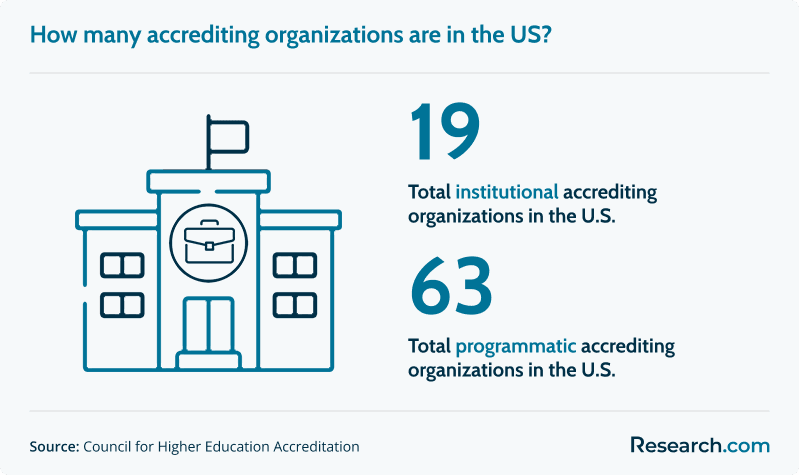
Only accredited institutions are eligible for federal and state funding for financial aid. Accreditation also gives students a way to distinguish legitimate institutions from low-quality or unrecognized providers. According to the Council for Higher Education Accreditation (CHEA), 19 institutional and 63 programmatic accrediting organizations in the U.S. help maintain academic standards. Inside Higher Ed has also reported on calls for accreditors to set benchmarks for student outcomes, reflecting growing attention to whether programs prepare students for employment and further study.
Students should also understand the difference between institutional accreditation and programmatic accreditation. Institutional accreditation applies to the school as a whole. Programmatic accreditation applies to a specific field, such as nursing, education, counseling, social work, or business. If your career requires licensure, programmatic accreditation may be just as important as institutional accreditation.
For students comparing online education options more broadly, Research.com’s guide to accredited online education degree programs can help clarify how accreditation connects to program quality.
Are Degrees From Nationally Accredited Online Colleges Respected by Employers?
Yes, many employers respect online degrees from accredited institutions, especially when the school is known, the program is relevant to the job, and the graduate can demonstrate practical skills. Employer perception depends on the field, the institution’s reputation, the degree level, and whether the role requires hands-on training or licensure.
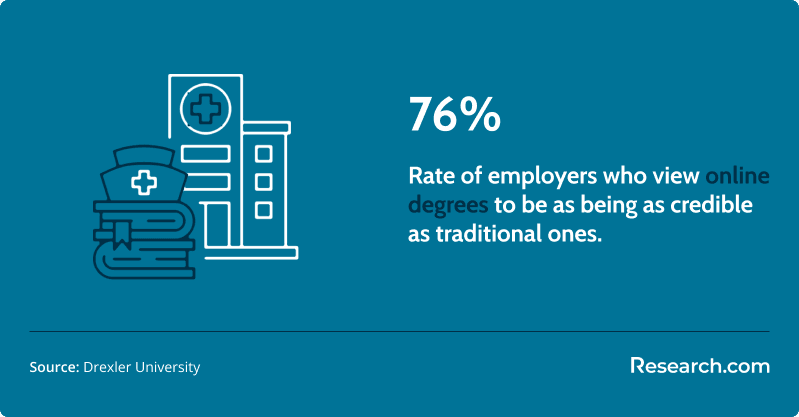
Drexel University found that 76% of academic leaders believe accredited online degrees carry the same value as traditional degrees. That perception rises to 89% when the online college also operates a traditional campus. This suggests that accreditation and institutional credibility matter more than the delivery format alone.
However, not every field treats online education the same way. The Online Journal of Distance Learning Administration found that recruiters viewed online programs positively for developing technology and critical thinking skills. At the same time, some recruiters expressed concerns about hands-on preparation in fields such as nursing. For students comparing online nursing degree programs, hybrid formats may offer a stronger balance because they combine online coursework with in-person clinical learning.
Do Online Programs Have Residency Requirements?
Some online programs require students to attend in-person sessions, even when most coursework is online. These residency requirements vary by school, degree level, and field. They may be used for orientation, clinical practice, laboratory work, exams, dissertation support, networking, or skills assessment.
Residencies are more common in programs that require supervised practice, intensive collaboration, or professional skill demonstration. Nursing, counseling, education, social work, and some STEM programs may include hands-on components. Students considering programs tied to nursing specialties should review these requirements carefully because clinical expectations can affect location, scheduling, and licensure planning.
According to a LinkedIn report, residency expectations for PhD and EdD programs can vary widely. Examples include:
- three four-day Dissertation Research Seminars,
- two mandatory residencies of about three and a half days each, and
- annual immersion weekends.
Some programs may require nine-day summer residencies, optional one-week intensives, or mandatory two-day on-site residencies each term. Before enrolling, ask whether travel is required, how often residencies occur, whether attendance is mandatory, and whether travel costs are included in the published cost of attendance.
How Much Does a Nationally Accredited Online College Cost?
Online education is often less expensive than campus-based education, but the real cost depends on tuition, fees, transfer credits, technology, books, residency travel, and how long it takes to finish. Students should compare the full cost of attendance, not just the advertised per-credit price.
According to the Education Data Initiative, an online degree at a public university costs about $54,183, compared with $85,348 for the same degree in person. At private institutions, an online degree averages $60,593, while an in-person degree can cost up to $185,252. Students comparing online schools can also review Research.com’s broader list of online universities and colleges.
Cost Comparison of Online and Traditional Education
| Cost Item | Online Education | Traditional Education |
| Tuition (Public Universities) | $54,183 | $85,348 |
| Tuition (Private Institutions) | $60,593 | $185,252 |
| Transportation | $1,360 per year | |
| Campus Meal Plan | $600 more per year | |
| On-campus Housing | $1,513 per month | |
| Books | $1,295 per year | $1,295 per year |
| Internet | $50 per month | Included |
| Electricity and Heat | $175 per month | Included |
| Online Learning Fee | $25-$100 per semester | |
| Parking Permit | $269 per semester | |
| Health Services Plan | $2,000 per year | |
| Room Furniture | $970 |
Source: Education Data Initiative
How to Compare Online College Costs
- Look beyond tuition. Fees, books, software, proctoring, clinical placement expenses, and travel can change the real price.
- Ask about transfer credit. A school with higher tuition but generous transfer policies may cost less overall than a cheaper school that accepts fewer credits.
- Check course pacing. Accelerated terms can shorten completion time, but only if you can handle the workload.
- Confirm financial aid eligibility. Accreditation is essential if you plan to use federal or state aid.
- Compare outcomes. Graduation rates, retention rates, and median earnings can help you evaluate whether the investment is reasonable.
What Mental Health Resources Are Available for Online Students?
Online students may experience isolation, stress, time-management pressure, and difficulty balancing school with work or family responsibilities. Mental health support is therefore an important part of evaluating an online college, not a bonus feature.
According to the CDC, 40.9% of adults reported at least one adverse mental or behavioral health condition during the COVID-19 pandemic. Many colleges now support online learners through virtual counseling, telehealth appointments, wellness programming, peer support, crisis resources, and referrals.
For example, the University of Oklahoma provides mental health counseling services that include 24/7, on-demand counseling. When comparing schools, ask whether counseling is available to fully online students, whether services are included in fees, whether appointments are available outside business hours, and whether support is offered across state lines.
What Technology Requirements Do Online Degree Programs Have?
Most online programs require a reliable computer, stable internet access, a webcam, a microphone, and the ability to use a learning management system. However, technology requirements are not the same across all majors. An online computer science degree may require more processing power, additional memory, and specialized software for programming, simulations, or development environments. Many online business degree programs can often be completed with standard productivity software and reliable internet access.
Minimum online course requirements commonly include:
- Computer less than 5 years old
- 1GB RAM, 2 GHz processor
- Reliable internet connection with 512 kbps minimum
- Adobe Reader/Acrobat
- Microsoft Word 2003 or newer
- Sound card, speakers, camera, and microphone
Before starting classes, confirm whether the program requires proctoring software, specific operating systems, clinical documentation platforms, statistical software, design tools, coding environments, or paid subscriptions.
How Do Online Courses Maintain Academic Rigor?
Strong online courses are not easier versions of campus classes. They are intentionally designed with clear learning outcomes, regular assessments, faculty feedback, peer interaction, structured deadlines, and academic integrity practices. Quality online programs often combine asynchronous work, such as readings and recorded lectures, with synchronous elements, such as live sessions, presentations, group discussions, or faculty meetings.
Academic rigor in online learning depends on course design and instructor engagement. Programs may use discussion boards, projects, case studies, labs, proctored exams, peer review, simulations, and capstone assignments. Faculty Focus has noted that consistent online quality requires ongoing oversight and improvement based on student feedback and academic outcomes.
Signs of a Strong Online Course
- Weekly expectations are clear and visible in the learning platform.
- Assignments require applied thinking rather than only multiple-choice recall.
- Faculty provide timely feedback and regular communication.
- Students interact with classmates through meaningful discussions or projects.
- Assessments align with stated learning outcomes.
- Academic support is easy to access before students fall behind.
Can You Transfer Credits to a Nationally Accredited Online College?
Yes, many nationally accredited online colleges accept transfer credits, but policies vary widely. Transfer credit can lower your total cost, shorten your time to graduation, and help you avoid repeating coursework. However, schools may limit how many credits you can transfer, which courses apply to your major, and whether credits from certain institutions qualify.
Before applying, request an official transfer evaluation. Ask whether the school accepts prior college credit, military training, professional certifications, exams, workplace learning, or portfolio-based credit. Also ask how transfer credits affect financial aid, graduation timeline, and major requirements.
Transfer Credit Questions to Ask
- What is the maximum number of credits I can transfer?
- Will my credits count toward the major, general education, or only electives?
- Do transfer credits expire for technical or science courses?
- Will prior learning, military experience, or certifications be reviewed?
- Can I receive a written degree plan before enrolling?
- Does the program have articulation agreements with community colleges?
What Are the Success Rates for Graduates of Nationally Accredited Online Colleges?
Graduate success rates vary by institution type, student population, academic support, program design, and student goals. Completion rates are especially important for online students because flexibility alone does not guarantee graduation.
According to a Brown University study, students attending public or private nonprofit four-year universities complete degrees within six years at much higher rates than students at for-profit four-year institutions. The six-year graduation rate for public or private nonprofit four-year university students ranges between 42.9% and 57.1%. For for-profit four-year institutions, the rate ranges from 14.2% to 28.1%.
The same study reported that students enrolled in exclusively online degree programs at for-profit four-year institutions are 11.9 percentage points less likely to graduate than those at other four-year institutions. By contrast, students enrolled exclusively online at selective 4-year institutions are 8.1 percentage points more likely to complete their degree.
To improve completion, researchers recommended stronger student engagement, better academic support, and more personalized interactions between faculty and students. For applicants, the practical lesson is clear: ask about retention, graduation, advising, tutoring, early-alert systems, faculty access, and online student engagement before enrolling.
Should You Consider an Associate Degree to Jumpstart Your Career?
An associate degree can be a practical first step if you want to enter the workforce sooner, reduce upfront education costs, or build credits that may later transfer into a bachelor’s program. It can be especially useful in technical, healthcare support, business support, criminal justice, information technology, and human services pathways.
Before choosing this route, compare program outcomes, transfer agreements, employer recognition, and total cost. Students who want a deeper explanation of degree structure and cost can review Research.com’s guide to how much an associate degree costs.
Can an Online Doctoral Degree Advance Your Career?
An online doctoral degree may support career advancement if your field rewards advanced expertise, research ability, leadership preparation, or terminal credentials. It can be relevant for professionals pursuing senior leadership, consulting, higher education, policy, research, or specialized practice roles.
However, a doctorate is a major commitment. Students should compare dissertation requirements, residency expectations, faculty mentorship, completion support, and career outcomes. If time to completion is a major concern, Research.com’s guide to the shortest doctoral programs online can help you compare accelerated options.
What Are the Employment Outcomes for Graduates of Nationally Accredited Online Colleges?
Employment outcomes depend on the school, program, field, labor market, student experience, and career support. A nationally accredited online degree can help students qualify for new roles or advancement, but no program can guarantee a specific salary or job offer.
When reviewing outcomes, look for program-specific data rather than schoolwide averages. Ask about job placement, internship access, licensure pass rates when relevant, graduate school acceptance, alumni earnings, employer partnerships, and whether career services are available to online students. Students who want a faster path to a bachelor’s credential can also compare accelerated online bachelor’s programs, but should make sure the shorter timeline does not reduce support or applied learning opportunities.
How Do Nationally Accredited Online Colleges Support Career Advancement for Adult Learners?
Adult learners often choose online college because they need to keep working while earning a credential. The best online programs recognize this and provide career services that fit students who may already have experience, family obligations, and limited time for campus activities.
- Career counseling: Advisors can help students connect degree choices to realistic job targets, promotion goals, or career-change plans.
- Resume and interview support: Online workshops, resume reviews, and mock interviews can help students translate coursework into employer-ready language.
- Flexible schedules: Asynchronous classes, multiple start dates, and accelerated terms may help working students continue their education without leaving employment.
- Networking access: Virtual events, alumni groups, employer sessions, and faculty connections can help online learners build professional relationships.
- Industry-aligned coursework: Programs in healthcare, IT, business, education, and human services should connect assignments to workplace expectations.
Can a Low-Cost Online Associate Degree Serve as a Foundation for Advanced Career Opportunities?
A low-cost online associate degree can be a strategic starting point if it helps you build transferable credits, gain job-ready skills, and avoid unnecessary debt. This path can work well for students who are unsure about committing to a four-year program immediately or who want to enter the workforce while continuing education later.
The strongest associate degree options have clear transfer pathways, career-focused coursework, transparent fees, and academic advising that helps students avoid taking credits that will not apply to future goals.
Can Short-Duration Online Associate Degree Programs Accelerate Career Entry?
Short-duration online associate degree programs are designed for students who want focused training in less time. They may be useful for career changers, working adults, or students seeking entry-level skills quickly. These programs can be intense, so students should consider whether they have enough time each week to keep up with compressed coursework.
Before enrolling, verify whether the program is accredited, whether credits will transfer, whether employers recognize the credential, and whether the timeline is realistic. Research.com’s guide to the top 6-month online associate degree programs can help students compare accelerated associate options.
What Academic Support Services Do Nationally Accredited Online Colleges Offer?
Academic support can make the difference between enrolling and finishing. Online students should look for services that are accessible remotely, available outside traditional office hours when possible, and integrated into the learning platform.
- Online tutoring in core subjects
- Writing center support
- Research and library assistance
- Academic advising
- Technology help desk support
- Disability accommodations
- Early-alert outreach for students falling behind
- Study skills and time-management resources
Support is especially important in compressed programs such as the top 6-month online associate degree programs, where students have less time to recover from missed assignments or unclear expectations.
What Career Support and Placement Services Are Available at Nationally Accredited Online Colleges?
Career services should be available to online students, not limited to campus learners. Strong programs offer resume reviews, interview preparation, job search coaching, internship guidance, employer events, virtual career fairs, alumni connections, and career portals.
Students seeking fast training for career mobility may also want to compare programs connected to quick education for high-paying jobs. However, it is important to evaluate each program’s outcomes carefully because salary depends on field, location, experience, credentials, and employer demand.
What Networking Opportunities Are Available in Nationally Accredited Online Colleges?
Online students can still build professional networks, but they may need to be more intentional than campus students. The best online colleges create structured opportunities for students to connect with classmates, faculty, alumni, and employers.
- Virtual alumni networks: Alumni directories, webinars, and online meetups can help students connect with graduates working in relevant fields.
- Industry-specific communities: Program discussion groups, online forums, and social media communities can support peer learning and professional exchange.
- Virtual career fairs: Employer events allow online students to meet recruiters and learn about internships, entry-level roles, or advancement opportunities.
- Mentorship programs: Faculty, alumni, or industry mentors can help students clarify goals, improve resumes, and understand career pathways.
- Collaborative coursework: Group projects, live seminars, and presentations can help students build relationships that continue after graduation.
Students comparing cost-conscious options can also review Research.com’s guide to affordable online courses and colleges.
Should You Consider an Online Master’s Degree to Advance Your Career?
An online master’s degree can be worthwhile if it helps you qualify for leadership roles, meet field expectations, specialize in a high-value area, or increase your competitiveness for advancement. It may be less useful if your target role values experience, certifications, portfolio work, or licensure more than a graduate degree.
Before enrolling, compare accreditation, faculty expertise, employer recognition, program outcomes, total cost, and flexibility. Students focused on price can review Research.com’s list of the most affordable online master’s degree programs.
How to Choose the Most Affordable Online Bachelor’s Degree Program
An affordable online bachelor’s degree should be both lower-cost and credible. The cheapest program is not a good deal if credits do not transfer, graduation support is weak, the school lacks proper accreditation, or the degree does not align with your career goal.
Compare Tuition and Required Fees
Public universities may offer lower tuition, especially for in-state students, while private institutions may use flat-rate or per-credit pricing. Always compare tuition, online learning fees, technology fees, proctoring fees, books, and any residency travel. Research.com’s guide to the cheapest online bachelor’s degree programs can help you identify lower-cost options.
Use Financial Aid Strategically
Ask whether the school participates in federal financial aid programs, whether scholarships are available to online students, and whether military, employer, transfer, or need-based aid applies. Completing the FAFSA can help eligible students access federal grants and low-interest loans.
Prioritize Transfer Credit Policies
Generous transfer policies can reduce both cost and time. If you have prior college credits, military training, professional certifications, or exam-based credit, request an evaluation before committing. A written degree plan is one of the best tools for avoiding surprise costs.
Check Accreditation and Licensure Alignment
Accreditation should be verified through recognized sources, not only the school’s marketing materials. If your field requires licensure, ask whether the program meets requirements in your state. This is especially important in nursing, counseling, education, social work, and other regulated fields.
Evaluate Student Support Before You Enroll
Ask about tutoring, advising, faculty response times, library access, technology support, disability accommodations, mental health services, and career coaching. A low-cost program with weak support can become expensive if students stop out or retake courses.
Are There Fast-Track Options for Earning a Degree Online?
Yes. Many nationally accredited online colleges offer fast-track or accelerated programs. These programs may use shorter terms, year-round enrollment, credit for prior learning, transfer-friendly policies, or heavier course loads. They can help motivated students finish sooner, but the pace can be demanding.
Fast-track options are common in fields such as business, healthcare administration, computer science, and related professional areas. Students comparing accelerated formats can review Research.com’s guide to the best fast-track college programs.
Common Mistakes to Avoid When Choosing an Online College
- Choosing a school without verifying accreditation. Accreditation affects financial aid, transfer credit, graduate school options, and employer recognition.
- Looking only at tuition. Fees, books, software, travel, and repeated courses can raise the actual cost.
- Assuming every online program is fully remote. Some programs require residencies, labs, clinicals, exams, or in-person intensives.
- Ignoring state licensure rules. Programs in nursing, teaching, counseling, and social work may not meet requirements in every state.
- Overestimating transfer credit. Credits may transfer as electives rather than major requirements, which can limit savings.
- Relying only on rankings. Rankings are useful starting points, but your best choice depends on cost, format, accreditation, support, and career fit.
- Assuming salary outcomes are guaranteed. Earnings vary by field, location, experience, employer, and economic conditions.
Questions to Ask Before Enrolling in a Nationally Accredited Online College
- Who accredits the institution, and is the accreditor recognized?
- Does my program need separate programmatic accreditation?
- Will this degree meet licensure requirements in my state?
- How many of my previous credits will transfer into the major?
- What is the total cost, including fees, books, technology, and travel?
- Are courses asynchronous, synchronous, or blended?
- Are residencies, clinicals, labs, or proctored exams required?
- What tutoring, advising, counseling, and disability services are available to online students?
- What are the graduation, retention, and employment outcomes for this specific program?
- Can career services help online students with internships, resumes, interviews, and employer connections?
Key Insights
- Accreditation should be your first filter. It affects financial aid, transfer credit, employer trust, graduate study, and licensure pathways.
- Online degrees are widely accepted when they come from accredited, credible institutions, but employer perception can vary by field and program type.
- Online learning is often less expensive than campus-based study, but the full cost includes fees, books, technology, possible residencies, and time to completion.
- Transfer credit can be one of the biggest cost-saving tools, but students should request a written evaluation before enrolling.
- Programs tied to licensure, clinical work, labs, or supervised practice require extra caution because online coursework may not satisfy every requirement.
- Student support matters. Tutoring, advising, mental health services, career coaching, and faculty access can strongly influence whether online students finish.
- Fast-track programs can shorten the timeline, but they are only a good choice if you can manage the pace and the program still provides adequate support.
References:
- Czeisler, M. É., Lane, R. I., Petrosky, E., Wiley, J. F., Christensen, A., Njai, R., Weaver, M. D., Robbins, R., Facer-Childs, E. R., Barger, L. K., Czeisler, C. A., Howard, M. E., & Rajaratnam, S. M. (2020). Mental health, substance use, and suicidal ideation during the COVID-19 pandemic — United States, June 24–30, 2020. Morbidity and Mortality Weekly Report, 69(32), 1049–1057.
- Ewalton. (2022, November 9). How our understanding of academic rigor impacts online learning - WCET. WCET.
- Garrett, J. (2018, February 22). Ensuring online course quality requires constant vigilance. Faculty Focus | Higher Ed Teaching & Learning.
- Hanson, M. (2023, August 23). Cost of online education vs. traditional education [2023]: Comparison. Education Data Initiative.
- Leatherwood, D. (2018, March 12). Understanding online degrees - residency requirements.
- Lederman, D. (2022, July 6). What have we learned about online learning? Inside Higher Ed | Higher Education News, Events and Jobs.
- Mental health implications of virtual learning on student engagement - IDRA. (2021, August 30). IDRA.
- Mowreader, A. (2024, February 27). Best practices in online course design for college students. Inside Higher Ed | Higher Education News, Events and Jobs.
- National Center for Education Statistics. (n.d.). Fast facts: Distance learning (79).
- National Center for Education Statistics. (n.d.-b). Fast facts: Distance learning (80).
- Online versus face-to-face nursing degrees: A study of recruiters’ perceptions - OJDLA. (n.d.). OJDLA.
- Ortagus, J. C., Hughes, R., & Allchin, H. (n.d.). The role and influence of exclusively online degree programs in higher education. EdWorkingPapers.
- Sharp, G. (2023, August 30). Addressing the mental health and wellness needs of online college students. TimelyCare.
- Shaw, A. (2020, January 31). Academic rigor in the online classroom - Center for Teaching and Learning | RisePoint. Center for Teaching and Learning | RisePoint.
- Smith, A., PhD. (2023, December 7). The need to better understand academic rigor. CAEL Pathways Blog.
- Tips and technical requirements for online courses - UNC extended campus. (n.d.). Tips to succeed in online courses.
Other Things You Should Know About Nationally Accredited Online Colleges and Universities
In 2027, California, Texas, and Florida host the most top nationally accredited online colleges. These states offer a variety of programs and resources, attracting both students and faculty, and provide robust support for online education initiatives.
In 2027, the top nationally accredited online colleges distinguish themselves by offering unique programs such as Data Science for Social Good, Green Technology Management, and Digital Health Systems. These programs address emerging industries and equip students with skills relevant to the evolving job market.
Admission requirements for top nationally accredited online colleges in 2027 typically include a completed application, high school transcripts or equivalency, standardized test scores (though some schools may be test-optional), and letters of recommendation. Many institutions also require a personal statement or essay to understand applicants better.
Yes, but only if the college is accredited by an agency recognized by the U.S. Department of Education and participates in Title IV aid. Eligible students may qualify for Pell Grants, Direct Loans, and FSEOG, using the FAFSA for 2027–28.


