
Best Online Colleges with No SAT or ACT Scores Requirement for 2027

Co-Founder and Chief Data Scientist
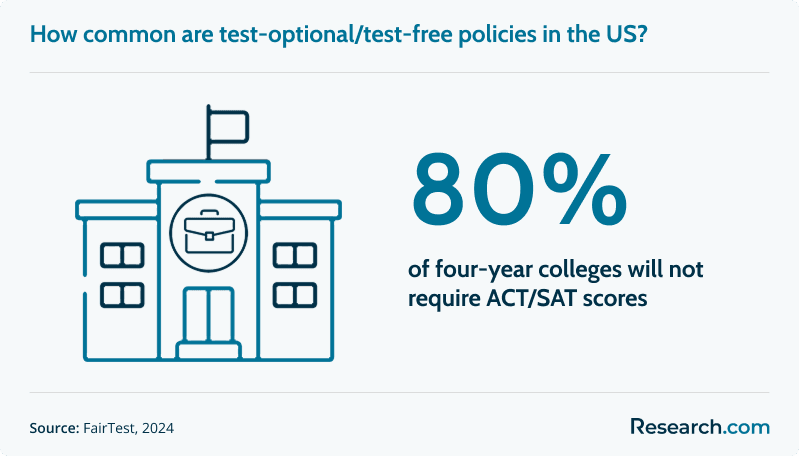
If you're worried that not having SAT or ACT scores will hold you back, you can take a deep breath. Standardized tests are no longer the barrier they once were, with over 80% of four-year colleges now being test-optional. This is the new normal for college admissions.
To help you move forward with confidence, our career planning experts, with more than 10 years of experience, built this guide. It not only lists the best online colleges no SAT or ACT 2025 but also shows you exactly how to build a strong application that highlights your true potential.
What are the benefits of attending an online college with no SAT or ACT requirement?
- Open doors to meaningful career paths in high-demand fields like education, healthcare, and technology, where you can make a direct impact.
- Secure your financial future with a bachelor’s degree, which correlates with a median annual salary of over $92,000.
- Gain the flexibility to learn on your own schedule, allowing you to balance your education with work or family commitments.
What can I expect from attending an online college with no SAT or ACT requirement?
You should expect a challenging and rigorous academic experience. A college's decision to go test-optional is about broadening how they measure potential, not about lowering their standards. The curriculum at the best online colleges no SAT or ACT 2025 is just as demanding as an on-campus program, and often taught by the same expert faculty.
You can also expect a learning environment designed specifically for online students. This means you’ll use interactive digital tools, work on collaborative projects with classmates from all over, and have access to dedicated support services. Things like virtual academic advising, online tutoring, and career counseling are key signs of a quality program that is invested in your success.
Where can I work with a degree from an online college with no SAT or ACT requirement?
You can work in any field you choose. When it comes to hiring, employers care about two things: the quality of your college, which is proven by its accreditation, and the skills you learned in your degree program. Your college’s SAT or ACT policy is not a factor in their decision.
Graduates from accredited, test-optional online colleges are hired every day in major industries like technology, business, healthcare, and education. The name on your diploma and the official accreditation behind it are what open doors to your career.
How much can I make with a degree from an online college with no SAT or ACT requirement?
Your earning potential is tied to your degree, not your college's admissions process. The U.S. Bureau of Labor Statistics reports that the median annual wage for someone with a bachelor's degree is over $92,000. This is significantly higher than wages for those with only a high school diploma.
Furthermore, the job market for college graduates is projected to grow, with nearly 2.4 million new jobs expected for bachelor's degree holders over the next decade. Earning this degree is a direct investment in your financial future.
Popular College Degrees Worth Considering for 2027
1. Business Administration
A business administration degree provides versatile skills in management, finance, and operations. It’s one of the most popular choices for students seeking leadership roles across industries.
2. Psychology
Psychology degrees explore human behavior, research, and mental processes. They prepare students for careers in counseling, research, and organizational development.
3. Counseling
Counseling programs train students to support individuals and communities with mental health and personal challenges. They often lead to careers in clinical settings, schools, or community organizations.
4. Nursing
Nursing degrees prepare students for essential roles in healthcare, blending clinical expertise with patient-centered care. This field offers strong job security and diverse career paths.
5. Social Work
Social work degrees focus on advocacy, community engagement, and direct service to individuals in need. Graduates often pursue roles in healthcare, education, and social service agencies.
- List of the Best Online Colleges with No SAT or ACT Scores Requirement for 2027 List of Colleges
- How long does it take to complete a degree program at an online college with no SAT or ACT requirement? Completion Time
- How does an online program at a test-optional or test-free college compare to an on-campus program? How does an online program at a test-optional or test-free college compare to an on-campus program?
- What is the average cost of attending an online college with no SAT or ACT requirement? Program Cost
- What are the financial aid options for students enrolling in an online college with no SAT or ACT requirement? Financial Aid
- What are the prerequisites for enrolling in an online college with no SAT or ACT requirement? What are the prerequisites for enrolling in an online college with no SAT or ACT requirement?
- What courses are typically offered at online colleges with no SAT or ACT requirement? What courses are typically offered at online colleges with no SAT or ACT requirement?
- What degree programs are typically available at online colleges with no SAT or ACT requirement? What degree programs are typically available at online colleges with no SAT or ACT requirement?
- How to Choose the Best Online College with No SAT or ACT Requirement How to Choose the Best Online College with No SAT or ACT Requirement
- What career paths are available for graduates of online colleges? Career Paths
- What is the job market outlook for online college graduates? Job Market
- Can a Graduate Certificate Enhance Your Career Prospects? Can a Graduate Certificate Enhance Your Career Prospects?
Best Online Colleges with No SAT or ACT Requirement for 2026
Applying to college without SAT or ACT scores is now a realistic option for many online students, especially adults, transfer students, military learners, first-generation applicants, and working professionals who need a flexible path to a degree. Test-optional and test-free admissions policies can reduce one barrier, but they do not make every school a good fit. You still need to compare accreditation, cost, transfer credit rules, degree options, student support, and career outcomes.
This guide explains how online colleges with no SAT or ACT requirement work, which ranked schools stand out, how much they cost, what admissions materials you may still need, and how to choose a program that supports your academic and career goals. If start-date flexibility is also important, you may want to compare these options with online colleges that start weekly.
Quick Answer: Are Online Colleges with No SAT or ACT Requirement Legitimate?
Yes, many accredited online colleges do not require SAT or ACT scores for admission. A test-optional or test-free policy does not automatically mean a school is easier, less credible, or lower quality. The most important factor is accreditation. If the institution is properly accredited, the online degree can carry the same academic value as a campus-based degree from that school.
The best choice depends on your situation. Adult learners and transfer students may benefit most from schools that accept prior college credits, professional training, military experience, or credit for prior learning. First-time college students should pay close attention to advising, tutoring, course structure, and graduation support.
Test-Optional vs. Test-Free: What Is the Difference?
| Admissions Policy | What It Means | What Applicants Should Do |
| Test-optional | You may submit SAT or ACT scores, but the school does not require them. | Submit scores only if they strengthen your application or are needed for scholarships. |
| Test-free or test-blind | The school does not use SAT or ACT scores in admissions decisions. | Focus on transcripts, essays, recommendations, work history, and other evidence of readiness. |
| Open or broad-access admissions | The school may admit most applicants who meet basic education requirements. | Confirm placement policies, academic support, and whether your intended major has extra requirements. |
How We Rank These Programs
Because a degree is a major financial and time commitment, our ranking approach emphasizes data that helps students compare schools more clearly. Research.com uses trusted education datasets, including the IPEDS database, Peterson's database, the College Scorecard database, and The National Center for Education Statistics.
These sources help evaluate online colleges with no SAT or ACT requirement across factors such as affordability, institutional quality, student outcomes, and program availability. To understand the full ranking process, review Research.com's methodology page.
Ranked Schools at a Glance
| School | Program Length | Credits to Graduate | Cost per Credit | Accreditation |
| Charter Oak State College | Varies by transfer credits | 120 | $329 | New England Commission of Higher Education (NECHE) |
| Empire State University (SUNY Empire) | Varies by transfer credits | 120 | $295 (in-state); $353 (out-of-state) | Middle States Commission on Higher Education (MSCHE) |
| Excelsior University | Varies by transfer credits | 120 | $510 | Middle States Commission on Higher Education (MSCHE) |
| Franklin University | Varies by transfer credits | 120 | $398 | Higher Learning Commission (HLC) |
| Montana State University Billings | ~4 years | 120 | $592 | Northwest Commission on Colleges and Universities (NWCCU) |
| University of Massachusetts Global | Varies by program | 120 | $500 | WSCUC Senior College and University Commission (WSCUC) |
| University of Texas at El Paso | ~4 years | 120 | ~$420-$540 | Southern Association of Colleges and Schools Commission on Colleges (SACSCOC) |
| National University | Varies by program | 120 | $370 | WASC Senior College and University Commission (WSCUC) |
1. Charter Oak State College
Charter Oak State College is built for learners who may already have college credits, military training, workplace credentials, or professional experience. Its online degree pathways are especially relevant for adults who want to finish a bachelor's degree in practical fields such as business, healthcare, and public safety without starting over academically.
- Program Length: Varies by transfer credits
- Required Credits to Graduate: 120
- Cost per Credit: $329
- Accreditation: New England Commission of Higher Education (NECHE)
2. Empire State University (SUNY Empire)
Empire State University serves students who want an individualized online education rather than a one-size-fits-all program. As SUNY's major online university, it emphasizes mentoring, flexible degree planning, and credit for prior learning, making it a strong option for students with professional or life experience that may apply toward a degree.
- Program Length: Varies by transfer credits
- Required Credits to Graduate: 120
- Cost per Credit: $295 (in-state); $353 (out-of-state)
- Accreditation: Middle States Commission on Higher Education (MSCHE)
3. Excelsior University
Excelsior University is a not-for-profit online institution focused on access for adult learners. It offers career-aligned academic programs and may be a good fit for students who want a school experienced in evaluating transfer credits from colleges, military service, professional credentials, and workplace learning.
- Program Length: Varies by transfer credits
- Required Credits to Graduate: 120
- Cost per Credit: $510
- Accreditation: Middle States Commission on Higher Education (MSCHE)
4. Franklin University
Franklin University is a private, nonprofit university designed around the needs of working adults. Its online format, transfer-friendly policies, and career-focused bachelor's programs can be useful for students who want coursework that connects directly to professional advancement or career change.
- Program Length: Varies by transfer credits
- Required Credits to Graduate: 120
- Cost per Credit: $398
- Accreditation: Higher Learning Commission (HLC)
5. Montana State University Billings
Montana State University Billings offers online students access to a public university environment with a broad academic catalog and a community-oriented learning model. Students looking for smaller online class settings, applied learning, internships, or research opportunities may find this school worth comparing closely.
- Program Length: ~4 years
- Required Credits to Graduate: 120
- Cost per Credit: $592
- Accreditation: Northwest Commission on Colleges and Universities (NWCCU)
6. University of Massachusetts Global
University of Massachusetts Global is a private, nonprofit institution serving adult learners through flexible online programs. Its model is designed for students who need academic support, transfer options, and a schedule that can fit around employment, family responsibilities, or military obligations.
- Program Length: Varies by program
- Required Credits to Graduate: 120
- Cost per Credit: $500
- Accreditation: WSCUC Senior College and University Commission (WSCUC)
7. University of Texas at El Paso
The University of Texas at El Paso is America's leading Hispanic-serving research university and offers nearly 170 degree programs. Students considering UTEP should look at its combination of academic breadth, research activity, internship access, and relatively low out-of-pocket cost, especially in areas such as aerospace, cancer, and cybersecurity.
- Program Length: ~4 years
- Required Credits to Graduate: 120
- Cost per Credit: ~$420-$540
- Accreditation: Southern Association of Colleges and Schools Commission on Colleges (SACSCOC)
8. National University
National University offers over 150 career-focused programs and uses accelerated four- and eight-week courses for students who want a faster-paced online schedule. Its "Whole Human Education" approach combines academic, financial, and wellness support, which may appeal to working professionals balancing school with other responsibilities.
- Program Length: Varies by program
- Required Credits to Graduate: 120
- Cost per Credit: $370
- Accreditation: WASC Senior College and University Commission (WSCUC)
How Long Does It Take to Complete an Online Degree with No SAT or ACT Requirement?
A bachelor's degree commonly requires four years of full-time study, but online students often follow different timelines. Your completion date depends on how many credits you bring in, whether you study full time or part time, how often courses start, and whether the school offers accelerated terms or credit for prior learning.
Students with no transfer credits should expect the full degree path to take longer than students who already completed community college courses, military training, professional certifications, or another credential. Working adults may also choose a slower pace to avoid burnout, even if a faster schedule is technically available.
Common Degree Completion Timelines
| Student Type | Typical Timeline | Best Fit |
| First-time full-time student | About four years | Students who can take a full course load each term |
| Part-time working student | Longer than four years | Learners balancing school with work, caregiving, or military service |
| Transfer student | Varies by transfer credits | Students with previous college coursework or an associate degree |
| Accelerated online student | Varies by program | Motivated students who can manage shorter terms and heavier pacing |
Accelerated Pathways and Program Structures
Some online colleges use accelerated terms, rolling starts, or competency-based approaches to help students move more quickly. Transfer credit can also make a major difference. Similar principles apply in graduate education; for example, some of the shortest online elementary education programs are designed for students who can use previous coursework or professional experience to shorten the timeline. Before enrolling, ask the school for a written transfer evaluation and a projected graduation plan.
Online vs. On-Campus Programs at Test-Optional or Test-Free Colleges
If an online program is offered by an accredited institution and follows the same academic standards as its campus counterpart, the degree can be academically equivalent. Students often study similar material, complete comparable assignments, and learn from faculty who also teach or support campus programs. In many cases, the diploma does not identify the program as online.
The practical difference is the learning experience. Online programs offer more scheduling flexibility and remove commuting or relocation barriers. Campus programs provide face-to-face interaction, a set weekly rhythm, and access to physical facilities. The better choice depends on your schedule, learning preferences, support needs, and career goals. Students comparing broader admissions policies can also review the complete list of test-optional colleges for 2025.
Online vs. Campus: Which Format Fits You?
| Factor | Online Program | On-Campus Program |
| Schedule | More flexible, often with asynchronous coursework | More structured, with fixed class times |
| Location | No relocation or daily commute required | Requires access to campus facilities |
| Interaction | Uses discussion boards, video meetings, email, and learning platforms | Offers in-person class discussions, campus events, and direct office visits |
| Best for | Working adults, caregivers, military students, and remote learners | Students who want a traditional campus experience and more in-person structure |
| Potential challenge | Requires strong time management and self-direction | May be harder to fit around work, family, or transportation limits |
The Growth of Online Learning
Online education is now a mainstream part of higher education, with over 9.4 million students enrolled in online courses. Colleges have continued investing in learning platforms, virtual collaboration tools, online advising, and remote student support. A strong online program can also help students build workplace-relevant habits, including written communication, digital collaboration, independent planning, and self-discipline.
Test-optional online programs are part of a broader shift toward more accessible admissions models. Students who are worried about other academic barriers may also want to compare options similar to colleges with low GPA requirements, while still confirming that the school is accredited and academically credible.
What Is the Average Cost of an Online College with No SAT or ACT Requirement?
Among the schools listed in this ranking, the average cost is about $450 per credit, with an average total tuition of around $54,000 for a full bachelor's degree. These figures should be treated as a sample, not a national guarantee. Actual tuition varies by school, state residency, program, fees, transfer credits, and how long it takes you to finish.
Online students may reduce some costs that campus students often pay, such as housing, meal plans, parking, and commuting. However, tuition is only one part of the total price. You should also check technology fees, course materials, proctoring costs, graduation fees, and whether tuition differs for out-of-state students.
Cost Factors to Compare Before Enrolling
| Cost Factor | Why It Matters | Question to Ask |
| Tuition per credit | This determines the base cost of your courses. | Is the rate the same for online, in-state, and out-of-state students? |
| Transfer credits | Accepted credits can reduce both time and tuition. | How many of my prior credits will apply to my specific major? |
| Fees | Online programs may charge technology, assessment, or course fees. | What is the full cost per term after fees? |
| Books and materials | Digital textbooks and subscriptions can add up. | Are materials included, discounted, or available as open educational resources? |
| Time to completion | Taking longer can increase total costs. | What is my realistic graduation date if I study part time? |
How Online Costs Compare
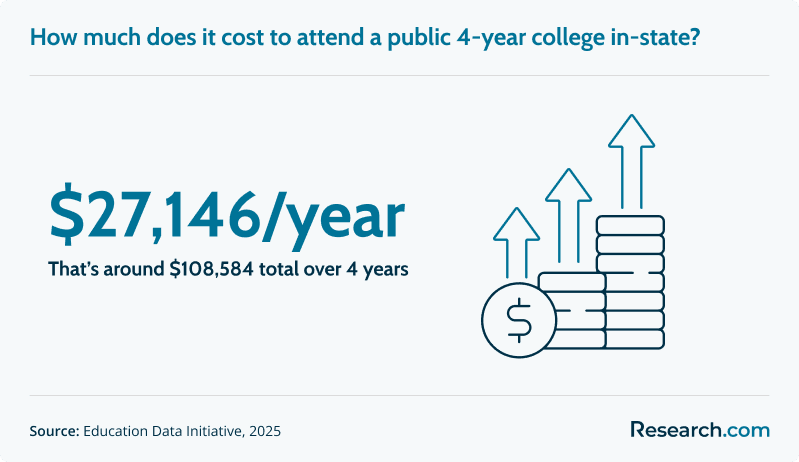
The total cost of attendance is where online programs may offer meaningful savings for some students. When the average total cost for a four-year, in-person public college can exceed $100,000, avoiding room, board, and commuting expenses can change the affordability calculation. Still, the least expensive option is not always the best value if graduation rates, support services, or transfer policies are weak.
Cost should be weighed against career goals. Some specialized areas, including healthcare and technology, may require higher-cost training but can also lead to stronger long-term opportunities. Students evaluating technology-focused pathways may want to compare tuition with outcomes in areas such as master's in cyber security jobs salary.
Financial Aid Options for Online Students at Colleges with No SAT or ACT Requirement
Online students at accredited colleges can generally access the same major types of financial aid as campus students. The essential first step is completing the Free Application for Federal Student Aid, known as the FAFSA. Schools use this form to determine eligibility for federal aid and may also use it when awarding institutional grants or scholarships.
Potential aid may include federal Pell Grants, federal student loans, work-study, state grants, institutional scholarships, private scholarships, employer tuition assistance, military education benefits, or payment plans. Grants and scholarships are especially valuable because they do not need to be repaid.
Financial Aid Checklist
- Confirm that the college is accredited and eligible for federal financial aid.
- Complete the FAFSA as early as possible.
- Ask the school for a full financial aid offer, not just a tuition estimate.
- Apply for institutional scholarships through the college.
- Search for external scholarships related to your major, background, employer, or community.
- Compare net price after grants and scholarships, not only the advertised tuition rate.
- Borrow only what you need, and review repayment terms before accepting loans.
The Reality of Student Debt
Student debt remains a serious concern, so reducing borrowing should be part of your school-selection strategy. Every scholarship, grant, transferred credit, or employer-funded course can lower your total loan balance. This matters whether you are pursuing a business degree, a technology credential, or a niche field such as animal care, where students may first need to understand the degree needed for working with animals.
Prerequisites for Online Colleges with No SAT or ACT Requirement
The basic requirement for most bachelor's programs is a high school diploma or GED. However, no-test admissions does not mean no standards. If a college does not require SAT or ACT scores, it may place more weight on your transcript, application materials, prior college work, work experience, or evidence that you can succeed in online courses.
Some majors may have additional requirements. Nursing, education, engineering, healthcare, and some technology programs may require prerequisite courses, a minimum GPA, background checks, clinical placements, portfolios, or professional licensure steps. Always check both general admission requirements and program-specific requirements.
What Holistic Review Usually Includes
- High school or college transcripts: Schools may review GPA, course difficulty, grade trends, and completed prerequisites.
- Personal statement or essay: This can explain your goals, challenges, work history, or readiness for college-level study.
- Letters of recommendation: Some programs use recommendations to evaluate maturity, persistence, and academic potential.
- Resume or work experience: Adult learners may be able to show readiness through professional responsibilities or training.
- Placement assessments: Even without SAT or ACT scores, some schools use placement tools for math, writing, or reading.
Courses Typically Offered in Online Colleges with No SAT or ACT Requirement
An accredited online bachelor's program usually combines broad general education with focused major coursework. The exact curriculum depends on your degree, but most programs are designed to build communication, reasoning, quantitative, technical, and field-specific skills.
- General education courses: These classes often include writing, mathematics, natural science, social science, humanities, and history.
- Major core courses: These required courses provide the central knowledge and methods of your chosen field.
- Major electives: Electives let you specialize in areas that match your professional interests.
- Capstone, internship, practicum, or project: Some programs require a final applied experience to demonstrate learning.
For example, an online education program may combine liberal arts requirements with specialized courses in child development, lesson planning, and assessment. Students seeking a faster route in that field can compare options such as the fastest online bachelor's in early childhood education. Whatever your major, ask for a degree map before enrolling so you know which courses are required and when they are offered.
Degree Programs Commonly Available at Online Colleges with No SAT or ACT Requirement
Test-optional online colleges offer far more than general studies programs. Students can find bachelor's degrees in business, healthcare, technology, education, criminal justice, psychology, communications, and creative fields. The best major is the one that matches your career goal, learning strengths, budget, and willingness to complete any required fieldwork or licensure steps.
- Business and management: Common options include business administration, marketing, accounting, human resources management, and project-focused programs.
- Healthcare and nursing: Online choices may include healthcare administration, health sciences, health informatics, and RN-to-BSN completion programs for registered nurses.
- Technology and computer science: Students may pursue information technology, cybersecurity, software development, data analytics, or related applied computing degrees.
- Social sciences and liberal arts: Popular paths include psychology, criminal justice, communications, sociology, and liberal studies.
- Education and human services: Some programs prepare students for non-licensure roles, while others may connect to teacher preparation requirements.
- Creative and design fields: Online study is also available in specialized areas, including programs similar to the fastest online game art and design degree programs.
How to Match a Major to Your Goal
| If Your Goal Is... | Consider Majors Such As... | Important Caution |
| Move into management | Business administration, management, human resources | Look for applied projects, internships, or leadership coursework. |
| Enter a technology role | Information technology, cybersecurity, software development, data analytics | Check whether the program includes hands-on tools, labs, or portfolio projects. |
| Work in healthcare operations | Healthcare administration, health sciences, health informatics | Clinical roles may require separate licensure or in-person training. |
| Prepare for graduate school | Psychology, education, liberal arts, social sciences | Confirm prerequisites for the graduate programs you may apply to later. |
How to Choose the Best Online College with No SAT or ACT Requirement
Start with accreditation. Accreditation means an outside accrediting body has reviewed the institution's academic quality, faculty standards, operations, and student support. For most students, regional accreditation is the standard to prioritize because it is widely recognized by employers, graduate schools, and other institutions evaluating transfer credits.
After accreditation, compare the program itself. A low-friction admissions process is helpful, but it should not be the reason you enroll. The right school should offer your major, accept your transfer credits fairly, provide strong online support, and show a realistic path to graduation.
Step-by-Step Selection Process
- Confirm accreditation: Verify the institution's accreditor and, when relevant, programmatic accreditation.
- Check admissions rules: Make sure the school is test-optional or test-free for your applicant type and program.
- Request a transfer review: Ask how many credits apply to your degree, not just how many the school accepts generally.
- Compare total cost: Include tuition, fees, books, technology costs, and expected time to completion.
- Review online support: Look for advising, tutoring, library access, writing help, career services, and technical support.
- Study the curriculum: Confirm that required courses align with your career goal or graduate school plan.
- Ask about outcomes: Review graduation rates, job placement data if available, alumni outcomes, and student satisfaction indicators.
- Test the learning format: Find out whether courses are asynchronous, synchronous, accelerated, self-paced, or cohort-based.
Common Mistakes to Avoid
| Mistake | Why It Can Hurt You | Better Approach |
| Choosing a school only because it does not require SAT or ACT scores | You may overlook poor fit, weak support, or high cost. | Use test policy as one factor, not the deciding factor. |
| Failing to verify accreditation | Credits may not transfer, and employers or graduate schools may question the degree. | Confirm institutional and program-specific accreditation before applying. |
| Looking only at tuition per credit | Fees, materials, and extra terms can raise the total price. | Compare net cost and total cost to graduation. |
| Assuming all credits will transfer | Some credits may count only as electives or may not apply to your major. | Get a written degree plan showing accepted credits. |
| Ignoring licensure requirements | Some careers require state approval, fieldwork, or exams. | Ask whether the program meets requirements in your state. |
| Relying only on rankings | A highly ranked school may not match your schedule, budget, or major. | Use rankings as a starting point, then compare personal fit. |
Questions to Ask an Admissions Advisor
- Is the SAT or ACT optional, not considered, or required for my specific program?
- What documents matter most if I do not submit test scores?
- How many of my transfer credits will apply directly to my major?
- Are courses asynchronous, live, accelerated, or self-paced?
- What student support services are available fully online?
- What is the total estimated cost after tuition, fees, books, and technology expenses?
- Does this program meet licensure or certification requirements in my state, if applicable?
- What percentage of online students complete the program?
- Can I speak with a current online student or recent graduate?
Career Paths for Graduates of Online Colleges
Your career options depend primarily on your major, skills, experience, internships, certifications, and local job market—not on whether your college required SAT or ACT scores. An accredited online bachelor's degree can support entry into many fields and can also help working adults qualify for promotion or graduate study.
- Business and finance: Graduates may pursue roles such as project manager, marketing specialist, financial analyst, or human resources manager.
- Technology: Relevant degrees can support pathways toward cybersecurity analyst, software developer, IT project manager, or data analyst roles.
- Healthcare: Non-clinical options may include medical services manager, healthcare administrator, or health informatics specialist.
- Education: Depending on the program and state requirements, graduates may move toward teaching, curriculum development, or instructional coordination.
A bachelor's degree can also prepare students for graduate programs. For example, education graduates who want advanced credentials may later compare options such as the fastest online master's in gifted education programs.
Job Market Outlook for Online College Graduates
Employers generally care more about whether your degree is accredited, relevant, and supported by real skills than whether you studied online or on campus. A bachelor's degree can strengthen access to jobs that require college-level communication, analysis, technical ability, leadership, and problem-solving.
The U.S. Bureau of Labor Statistics projects nearly 2.4 million new jobs for bachelor's degree holders over the next decade, with median weekly earnings for graduates reaching over $1,700. Technology and education-related roles continue to evolve as employers adopt new digital tools, which is one reason some students later pursue advanced study in areas such as the fastest online master's degree education technology.
Current Trends Affecting Online College Students in 2026
- Test-optional admissions remain common: FairTest reported that the overwhelming majority of U.S. colleges and universities remain ACT/SAT-optional or test-free for fall 2025.
- Employers are emphasizing skills: Degrees still matter, but students should also build portfolios, certifications, internships, projects, and software experience where relevant.
- AI is changing coursework and careers: Students should expect more attention to ethical technology use, data literacy, automation, and digital communication.
- Online support quality matters more than ever: Flexible courses are not enough. Strong advising, tutoring, career services, and mental health support can affect persistence.
- Cost transparency is essential: Rising education costs make it important to compare net price, transfer credit, and time to completion before enrolling.
What Graduates Say About Online Colleges with No SAT or ACT Requirement
- Jeffrey: "The admissions process felt less intimidating once I found schools that did not require test scores. Instead of worrying about one exam, I could focus on choosing a program that matched the career I actually wanted."
- Aisha: "I needed a degree to move into a technology role, but leaving my job was not an option. Studying online let me keep working while using class projects to build skills I could apply immediately. After graduation, I moved into the role I had been targeting."
- David: "My transcript had some rough spots, but the application gave me room to explain my growth and goals. I was surprised by how accessible my online professors were, and the courses felt more interactive than I expected."
Can a Graduate Certificate Improve Career Prospects After an Online Degree?
A graduate certificate can be a practical next step if you already have a bachelor's degree and want targeted skills without committing immediately to a full master's program. Certificates can help professionals explore a specialization, respond to changing employer expectations, or strengthen a resume in areas such as business analytics, education technology, cybersecurity, healthcare administration, or leadership.
They are not always necessary, and they do not guarantee a raise or promotion. Before enrolling, compare cost, employer recognition, transferability into a master's program, and whether the certificate teaches skills that appear in job postings. Students looking for lower-cost options can review the cheapest graduate certificate programs online.
References:
- EducationData.org. (2025). Average cost of college & tuition. Retrieved September 5, 2025, from https://educationdata.org/average-cost-of-college
- EducationData.org. (2025). Financial aid statistics. Retrieved September 5, 2025, from https://educationdata.org/financial-aid-statistics
- EducationData.org. (2025). Number of college graduates. Retrieved September 5, 2025, from https://educationdata.org/number-of-college-graduates
- EducationData.org. (2025). Student loan debt statistics. Retrieved September 5, 2025, from https://educationdata.org/student-loan-debt-statistics
- FairTest. (2025). Overwhelming majority of U.S. colleges and universities remain ACT/SAT-optional or test-free for fall 2025. Retrieved September 5, 2025, from https://fairtest.org/overwhelming-majority-of-u-s-colleges-and-universities-remain-act-sat-optional-or-test-blind-score-free-for-fall-2025/
- National Center for Education Statistics. (2025). Fast facts: College enrollment rates. Retrieved September 5, 2025, from https://nces.ed.gov/fastfacts/display.asp?id=80
- National Center for Education Statistics. (2025). Indicator CHA: College enrollment and graduation rates. Retrieved September 5, 2025, from https://nces.ed.gov/programs/coe/indicator/cha
- U.S. Bureau of Labor Statistics. (2024). Education pays. Retrieved September 5, 2025, from https://www.bls.gov/careeroutlook/2024/data-on-display/education-pays.htm
- U.S. Bureau of Labor Statistics. (2025). Usual weekly earnings of wage and salary workers: Second quarter 2025. Retrieved September 5, 2025, from https://www.bls.gov/news.release/pdf/wkyeng.pdf
- U.S. Bureau of Labor Statistics. (n.d.). Employment projections: Education pays. Retrieved September 5, 2025, from https://www.bls.gov/emp/tables/education-summary.htm
Key Insights
- Online colleges with no SAT or ACT requirement can be legitimate and worthwhile when they are properly accredited.
- Test-optional does not mean automatic admission. Transcripts, essays, recommendations, work history, and transfer credits may matter more when test scores are not used.
- The ranked schools in this guide average about $450 per credit and around $54,000 in total tuition for a full bachelor's degree, but your real cost depends on transfer credits, fees, residency, aid, and time to completion.
- Transfer-friendly schools can be especially valuable for adults, military students, and learners with previous college coursework or professional training.
- Online and campus degrees can be academically equivalent, but the learning experience is different. Choose online if flexibility is essential and you can manage your time independently.
- Before enrolling, verify accreditation, request a written transfer evaluation, compare total net cost, and ask whether the program meets any licensure requirements in your state.
- A no-test admissions policy should open the door, not make the decision for you. The best program is the one that fits your goals, budget, schedule, support needs, and long-term career plan.
Other Things You Should Know About Online Colleges with No SAT or ACT Scores Requirement
In 2027, many online colleges assess applications using factors like high school GPA, recommendation letters, personal statements, and extracurricular activities. These criteria provide a holistic view of a candidate's potential, focusing on skills and experiences rather than standardized test results.
Yes. Many online colleges without SAT or ACT requirements accept transfer applicants with 12 to 24 or more college credits, plus official transcripts and a minimum GPA, often 2.0 or higher. Some also review course equivalency and require a good academic standing from the last institution.
Yes, accreditation for online colleges without SAT or ACT requirements in 2027 follows the same standards as other institutions. They must be accredited by recognized agencies, such as the Distance Education Accrediting Commission, ensuring quality education and degree acceptance.


