2027 How To Become an Athletic Director: Salary & Career Paths

Co-Founder and Chief Data Scientist
Becoming an athletic director is not usually a first job in sports. It is a leadership career built through years of coaching, teaching, athletic operations, student support, budgeting, compliance work, or school administration. The challenge for many aspiring athletic directors is that the route is not standardized: some leaders come from sports management programs, others from education, business, kinesiology, counseling, or coaching backgrounds.
This guide explains how to become an athletic director in a practical, decision-focused way. You will learn what athletic directors actually do, which degrees and certifications matter, how long the path can take, what skills employers look for, how technology is changing the role, how salaries differ by setting, and what mistakes to avoid before investing in a degree or credential.
Quick Answer: How Do You Become an Athletic Director?
To become an athletic director, you typically need a bachelor’s degree, several years of relevant experience in coaching, teaching, sports administration, or school leadership, and strong skills in budgeting, compliance, communication, personnel management, and event operations. A sports management degree can help, but it is not the only route. Many candidates strengthen their résumés with a master’s degree, NIAAA certifications such as the CAA, and mentorship from experienced athletic administrators.
Key Things You Should Know About Becoming an Athletic Director
- With the global sports sponsorship market expected to surge by $160 billion by 2030, schools and colleges need athletic leaders who can manage partnerships, facilities, budgets, compliance, and community expectations.
- While 17,486 sports and fitness management degrees were awarded in 2025, athletic directors do not all follow the same academic path; many begin in education, business, kinesiology, coaching, or student services.
- The average high school athletic director is 47 years old, which reflects how often this position comes after years of professional experience rather than immediately after graduation.
- Credentials such as the CAA, or Certified Athletic Administrator, can improve advancement prospects, but hiring committees also weigh leadership record, professional reputation, crisis judgment, and institutional fit.
- What does an athletic director do?
- What degree do you need to become an athletic director?
- Can you become an athletic director without a sports management degree?
- Are there certifications to become an athletic director?
- How long does it take to become an athletic director?
- How can a post-graduate degree help in becoming an athletic director?
- What skills do athletic directors need to succeed?
- What tools and software should athletic directors know?
- How can additional educational opportunities enhance an athletic director's career?
- Can interdisciplinary healthcare education boost athletic director effectiveness?
- What are common pitfalls for aspiring athletic directors?
- What strategies help athletic directors mitigate crisis and risk?
- How can I find a mentor to become an athletic director?
- How much do athletic directors make?
- Is the demand for athletic directors growing?
What does an athletic director do?
An athletic director, often called an AD, manages the people, policies, money, facilities, schedules, and risk issues behind a school or college athletic program. The job is much broader than supervising games. Athletic directors are responsible for making sure sports programs operate safely, legally, financially, and in alignment with the school’s mission.
| Responsibility | What it means in practice | Why it matters |
| Program leadership | Supervising coaches, athletic staff, trainers, support personnel, and sometimes student workers. | Consistent leadership helps teams follow institutional standards instead of operating as disconnected programs. |
| Budget management | Planning spending for equipment, travel, officials, facility needs, uniforms, staffing, and fundraising priorities. | Every sport competes for resources, so the AD must make defensible and equitable decisions. |
| Compliance and safety | Monitoring eligibility rules, liability concerns, Title IX responsibilities, risk protocols, and league or conference requirements. | Mistakes can expose students to harm and institutions to legal, financial, or reputational damage. |
| Scheduling and operations | Coordinating contests, transportation, officials, facility use, weather changes, postseason logistics, and event staffing. | Smooth operations affect student-athlete experience, parent trust, and school reputation. |
| Community relations | Working with parents, alumni, boosters, school leaders, local media, vendors, and community partners. | Athletic programs often serve as a visible public face of the institution. |
Athletic directors may work in elementary schools, middle schools, high schools, colleges, universities, or other learning institutions with organized athletic programs. If you are comparing athletic leadership with classroom-based education careers, this overview of middle school teacher responsibilities can help you understand how school-based roles differ in daily duties and career expectations.
What degree do you need to become an athletic director?
Most athletic directors need at least a bachelor’s degree, but there is no single required major for every role. Common undergraduate fields include sports management, physical education, kinesiology, education, business administration, exercise science, and related areas. For larger high schools, school districts, colleges, and universities, a graduate degree can make a candidate more competitive, especially when the position includes complex budgeting, compliance, staff supervision, or fundraising responsibilities.
| Degree path | Best fit | How it helps future athletic directors |
| Sports management or athletic administration | Students who know early that they want to work in athletic operations or leadership. | Builds familiarity with sports business, facility management, compliance, marketing, and event operations. |
| Physical education or education leadership | Teachers, coaches, and school employees moving into administration. | Connects athletics to student development, school culture, curriculum, and district expectations. |
| Kinesiology or exercise science | Candidates interested in athlete performance, wellness, injury prevention, and human movement. | Provides a stronger foundation for understanding training environments and athlete support systems. |
| Business administration | Candidates focused on budgets, sponsorships, staffing, contracts, and operations. | Develops financial, managerial, and strategic planning skills that translate directly to athletic departments. |
| Sports psychology or counseling-related study | Professionals who want to support athlete development, team culture, motivation, and mental performance. | Can strengthen leadership around coach-athlete relationships, resilience, and performance environments. |
A sports psychology degree can be especially useful for candidates who want to understand motivation, team behavior, performance pressure, and athlete well-being. While this degree alone does not guarantee an athletic director role, it can support leadership in programs that emphasize both competitive performance and student development.
Can you become an athletic director without a sports management degree?
Yes. A sports management degree can be helpful, but it is not the only accepted route into athletic administration. Many athletic directors begin as coaches, teachers, physical education instructors, academic advisors, business managers, student affairs professionals, or assistant administrators. What matters most is whether you can prove that you understand athletics operations and can lead people, budgets, schedules, policies, and risk decisions.
Kevin White, the former athletic director at Duke University, is one example of a leader whose path did not depend on a traditional sports management undergraduate route. He started as a track coach and held a business degree, then built administrative experience through leadership roles in athletic departments before reaching one of the most visible positions in college sports.
If you are not pursuing sports management, a program such as one of the best online kinesiology degree options may still provide relevant preparation. Kinesiology programs often cover movement science, coaching concepts, exercise physiology, and sports psychology, all of which can support leadership in athlete-centered environments. Lisa Campos, athletic director at UTSA, also illustrates how nontraditional preparation can work; her advanced degrees in counseling and student affairs show that athlete development and student support experience can translate into athletic leadership.
The key is to close any gaps your degree does not cover. A business major may need more exposure to compliance and athletics culture. A coach may need stronger finance and HR training. An educator may need facility, scheduling, and fundraising experience. Career changers sometimes explore very different professions, such as how to become a forensic scientist, but the lesson for aspiring ADs is the same across fields: transferable skills matter only when you can connect them clearly to the target role.
Are there certifications to become an athletic director?
Certifications are not always required, but they can strengthen your candidacy, especially for school-based athletic administration. They show that you have studied the professional standards, legal duties, leadership expectations, and operational responsibilities of the role. They are particularly valuable for candidates who have experience but lack a degree specifically in athletic administration.
| Certification | Typical audience | Career value |
| Registered Athletic Administrator (RAA) | Early-career or aspiring athletic administrators. | Introduces core concepts in interscholastic athletic administration and can serve as a first formal credential. |
| Certified Athletic Administrator (CAA) | High school athletic directors and experienced school athletics professionals. | Widely recognized through the National Interscholastic Athletic Administrators Association and useful for advancement. |
| Certified Master Athletic Administrator (CMAA) | Seasoned athletic administrators seeking an advanced professional credential. | Signals deeper leadership development, professional contribution, and ongoing commitment to the field. |
| State-specific athletic administration credentials | Public school or district candidates in states with local requirements. | May be necessary or strongly preferred depending on state, district, or employer policy. |
| Administrative, HR, finance, or risk management credentials | Candidates managing complex departments or transitioning from non-sports roles. | Can supplement sports knowledge with practical management expertise. |
Certifications should not be viewed as a shortcut around experience. They work best when paired with concrete evidence: leading coaches, managing events, handling budgets, participating in compliance work, resolving conflicts, and contributing to department planning.
How long does it take to become an athletic director?
The path usually takes several years because most athletic director roles require both education and leadership experience. Many professionals spend between six to ten years preparing before becoming an AD, especially if they complete a bachelor’s degree, gain coaching or school experience, move into assistant athletic administration, and possibly finish a master’s degree.
| Career stage | Common activities | Goal of this stage |
| Undergraduate preparation | Study sports management, education, business, kinesiology, physical education, or a related field. | Build academic grounding and begin gaining sports or school-based experience. |
| Early professional experience | Coach, teach, work in athletics operations, assist with events, or support student-athlete services. | Learn how athletic programs function day to day. |
| Administrative growth | Take on scheduling, budgeting, compliance, facility, fundraising, or assistant AD duties. | Move from participation in sports to leadership of sports systems. |
| Credential and graduate development | Pursue certifications, a master’s degree, conferences, mentorship, or specialized training. | Strengthen qualifications for formal athletic director openings. |
| Athletic director candidacy | Apply for AD roles, often starting with smaller schools, assistant positions, or district-level opportunities. | Demonstrate readiness to lead the full department. |
Readers comparing this timeline with adjacent sports careers may also want to review how long does it take to become a sports psychologist. That field can require up to eight years or more because of graduate study and supervised practice. Athletic directors do not follow the same licensure model, but they still need sustained experience in leadership, policy, and operations.
The number of athletic directors in the US, Canada, and Mexico is estimated to be around 24,000 across over 2,300 institutions. That scope creates opportunity, but it also means employers can compare candidates with very different backgrounds. The strongest applicants are usually those who can document steady increases in responsibility.
How can a post-graduate degree help in becoming an athletic director?
A post-graduate degree is not mandatory for every athletic director job, but it can be a major advantage for competitive positions. Graduate programs in athletic administration, sports management, education leadership, business administration, student affairs, or related fields can help experienced coaches and school professionals transition into broader leadership roles.
- It builds leadership depth. Graduate coursework often covers strategic planning, personnel management, organizational leadership, budgeting, fundraising, and policy development.
- It can improve competitiveness for college roles. Intercollegiate athletics often involves larger staffs, more complex compliance issues, higher public visibility, and more demanding financial oversight.
- It strengthens legal and ethical judgment. Courses may address Title IX, liability, governance, equity, eligibility, and institutional accountability.
- It expands professional networks. Many programs connect students with internships, alumni, faculty, athletic departments, or professional associations.
- It helps career changers gain field-specific language. Candidates from business, counseling, education, or health sciences can use graduate study to translate their prior experience into athletic administration.
A graduate degree is most worthwhile when it solves a specific career problem. If you lack administrative credibility, it can help. If you already have strong experience but need a credential for district or college-level roles, it may be strategic. If you are choosing it only because you are unsure what to do next, first speak with working athletic directors and review job postings in your target market.
What skills do athletic directors need to succeed?
Athletic directors succeed when they can combine sports knowledge with executive judgment. The job requires a person who can support coaches and athletes while also answering to school leaders, boards, families, regulators, vendors, alumni, and the broader community.
| Skill | What strong performance looks like | How to develop it |
| Strategic leadership | Sets priorities, aligns athletics with institutional goals, and makes decisions that balance winning, equity, safety, and student development. | Lead committees, manage multi-sport initiatives, assist with department planning, and study athletic administration. |
| Communication and conflict management | Handles parent concerns, coach disagreements, student issues, media questions, and vendor negotiations calmly and clearly. | Practice difficult conversations, request feedback, and study leadership communication. Related leadership communication skills also appear in public-facing roles; this guide on PR manager salary can help compare communication-heavy career paths. |
| Budgeting and financial control | Tracks spending, plans purchases, supports fundraising, evaluates resource allocation, and explains financial decisions. | Volunteer for budget planning, work with finance staff, manage team accounts, or complete business coursework. |
| Compliance and legal awareness | Understands eligibility rules, Title IX responsibilities, safety protocols, documentation expectations, and liability concerns. | Attend NFHS, NIAAA, district, or state association training and learn from experienced administrators. |
| Athlete wellness literacy | Coordinates effectively with trainers, coaches, counselors, nutrition professionals, and medical staff without overstepping professional boundaries. | Study injury prevention, nutrition, mental health basics, and referral protocols. Some candidates explore a nutrition degree online to deepen this area. |
The most competitive candidates can show examples, not just list skills. For instance, “managed a seven-team transportation schedule during facility renovations” is stronger than “good organizational skills.” Build a portfolio of measurable responsibilities as your career progresses.
What tools and software should athletic directors know?
Modern athletic departments rely heavily on digital systems. Athletic directors do not need to be software engineers, but they should be comfortable selecting, using, and evaluating tools that support scheduling, communication, eligibility, budgeting, compliance documentation, and athlete performance oversight.
- Athletic department management platforms. Tools such as ArbiterSports, rSchoolToday, and FinalForms can support scheduling, forms, eligibility tracking, and administrative workflows.
- Finance and budgeting systems. QuickBooks, Oracle NetSuite, or district-specific budgeting tools can help track expenses, vendor payments, purchase approvals, and reporting.
- Communication platforms. TeamSnap, Remind, Slack, and similar tools can streamline updates among coaches, athletes, parents, and administrators.
- Performance and wellness technology. Hudl, Catapult, nutrition tracking tools, and related systems may support film review, performance monitoring, athlete workload discussions, or recovery planning. Candidates with a dietetics degree online or related preparation may be better equipped to collaborate with wellness professionals.
- Data tracking and reporting tools. DragonFly, spreadsheets, and dashboard-style systems can help monitor participation, injuries, equipment needs, facilities, and program trends.
Technology is also changing expectations for transparency. Athletic directors are increasingly expected to produce timely reports, communicate quickly during disruptions, and use data to justify staffing, safety, or budget decisions. If your department has limited technical support, working with IT staff can be essential. This overview of network administrator qualifications explains the type of expertise technology professionals may bring to school systems.
How can additional educational opportunities enhance an athletic director's career?
Continuing education helps athletic directors keep pace with legal expectations, athlete wellness concerns, technology, fundraising practices, emergency planning, and changing employer standards. Short courses, association workshops, graduate certificates, leadership institutes, and online modules can be more practical than another full degree when you need targeted training.
The best additional education depends on your current gap. If you struggle with budgets, choose finance or school business training. If you are moving from coaching into administration, look for compliance and personnel management coursework. If your school relies heavily on athletic trainers, nurses, or outside medical partners, basic health systems knowledge can improve collaboration. Some professionals may review programs such as affordable online medical assistant programs to better understand entry-level healthcare training, though this should supplement—not replace—athletic administration preparation.
Can interdisciplinary healthcare education boost athletic director effectiveness?
Healthcare knowledge can help athletic directors make better decisions about athlete safety, referral procedures, emergency response coordination, injury documentation, and communication with sports medicine professionals. However, athletic directors should not try to perform clinical duties unless they hold the proper professional license or credential. Their role is to create safe systems, hire or coordinate with qualified professionals, and ensure policies are followed.
Interdisciplinary education is most useful when it improves leadership judgment. For example, understanding how healthcare teams manage risk, medication issues, documentation, and patient safety may help an AD ask better questions during policy planning. Programs such as accelerated PharmD online programs are not typical athletic director preparation, but reviewing advanced healthcare education pathways can provide perspective on how regulated health professions approach safety and accountability.
What are common pitfalls for aspiring athletic directors?
Aspiring athletic directors often focus too narrowly on sports experience and overlook the administrative side of the role. Coaching success can help, but it does not automatically prove readiness to supervise other coaches, manage budgets, address compliance issues, or represent a department during conflict.
| Common mistake | Why it can hurt your candidacy | Better move |
| Assuming a sports background is enough | Employers need evidence that you can manage systems, not just teams. | Gain experience with budgets, scheduling, compliance, hiring, facilities, and event operations. |
| Choosing a degree without checking job postings | You may invest in a program that does not match requirements in your state, district, or target institution type. | Review current AD job descriptions before selecting a degree or certificate. |
| Ignoring accreditation and institutional reputation | A weak or poorly recognized program may not help with hiring or graduate admission. | Confirm institutional accreditation and ask how graduates use the credential. |
| Focusing only on tuition | A cheaper program may cost more in time, transfer problems, limited support, or poor networking. | Compare total cost, flexibility, faculty experience, internship access, and alumni outcomes. |
| Neglecting risk management | Athletic departments face legal, safety, reputational, and financial exposure. | Study emergency planning, liability basics, documentation, Title IX, and communication protocols. |
| Relying on unrelated credentials without a clear plan | Extra certificates can look scattered if they do not connect to athletic administration duties. | Choose credentials that directly support finance, compliance, HR, operations, leadership, or wellness coordination. An affordable medical billing and coding certification, for example, may only be relevant if your role involves health documentation systems or administrative healthcare coordination. |
What strategies help athletic directors mitigate crisis and risk?
Risk management is one of the most important parts of athletic leadership. Athletic directors must prepare for injuries, weather disruptions, transportation issues, eligibility disputes, misconduct reports, facility hazards, public criticism, and compliance failures. A strong crisis plan is written, practiced, communicated, and updated—not improvised during an emergency.
- Create clear emergency action plans. Each venue and sport should have defined steps for medical emergencies, severe weather, evacuation, communication, and documentation.
- Clarify roles before incidents occur. Coaches, trainers, administrators, security staff, transportation providers, and school leaders should know who makes which decisions.
- Maintain current documentation. Eligibility records, consent forms, incident reports, training logs, facility inspections, and communication records can be critical during reviews or disputes.
- Coordinate with qualified experts. Legal counsel, risk managers, athletic trainers, healthcare providers, school nurses, and emergency responders can help strengthen protocols.
- Run scenario reviews. Tabletop exercises for injuries, allegations, travel interruptions, facility failures, or public relations issues help leaders identify weak points before real events happen.
Health administration resources can also offer useful crisis-management perspective because healthcare leaders routinely deal with safety, compliance, staffing, documentation, and public accountability. Reviewing the master's in healthcare administration career outlook may help athletic leaders understand how high-stakes organizations prepare for operational risk.
How can I find a mentor to become an athletic director?
Mentorship is one of the most practical ways to learn athletic administration because much of the job involves judgment that is difficult to learn from coursework alone. A mentor can help you understand hiring expectations, district politics, compliance pressures, conference relationships, parent communication, and the unglamorous operational details that define the role.
- Start with professional associations. The National Interscholastic Athletic Administrators Association, state athletic director associations, and regional groups may offer mentorship, training, or networking opportunities.
- Attend conferences and clinics. Events hosted by groups such as the NIAAA, NFHS, or NACDA can help you meet experienced athletic administrators in a professional setting.
- Request informational interviews. Ask local athletic directors about their path, daily workload, hardest responsibilities, and recommendations for preparation.
- Use alumni connections. If you studied sports management, kinesiology, education, business, or administration, your school may be able to connect you with alumni working in athletics.
- Offer useful help first. Volunteering for tournaments, facility coordination, compliance projects, or event operations can turn a casual contact into a deeper professional relationship.
When approaching a mentor, be specific. Instead of asking, “Will you mentor me?” try, “Could I meet with you for 20 minutes to learn what experience I should build before applying for assistant AD roles?” Clear, respectful requests are easier for busy professionals to answer.
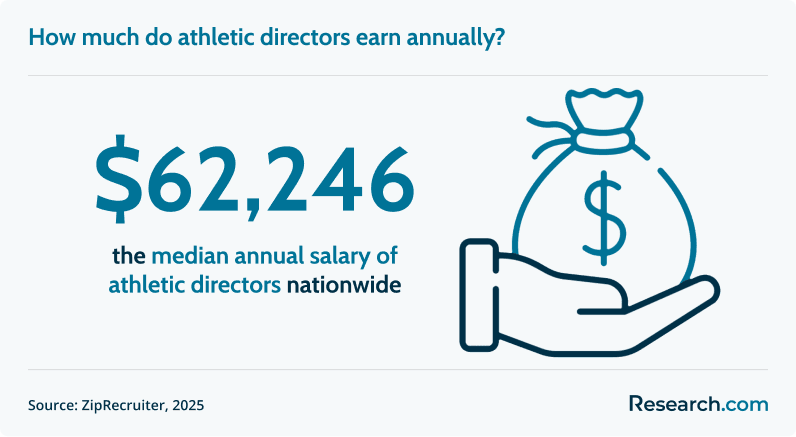
How much do athletic directors make?
Athletic director salaries vary by school level, geography, institution size, sports revenue, and years of experience. Recent figures show that high school athletic directors earn between $60,000 and $90,000 annually, with larger school districts generally offering pay near the upper end of that range. At the collegiate level, compensation can be much higher. Athletic directors at Division I universities can earn well into six figures and, in some cases, over $250,000, especially when they manage high-revenue athletic programs.
| Work setting | Salary pattern | What affects pay |
| High school athletics | Between $60,000 and $90,000 annually | District size, administrative responsibilities, coaching duties, local salary schedules, and school funding. |
| College and university athletics | Often higher than high school roles; Division I universities can pay well into six figures and sometimes over $250,000. | Conference level, revenue sports, media visibility, fundraising expectations, staff size, and institutional resources. |
| Smaller institutions or lower-division programs | Compensation can be more modest than high-profile college roles. | Budget size, number of sports, enrollment, local market, and whether the role includes other campus duties. |
Salary comparisons should be made carefully because athletic director jobs differ widely. A small-school AD may also teach or coach, while a university AD may oversee a large staff, fundraising operation, compliance office, facilities portfolio, and media obligations. If you are comparing leadership careers in athlete development, the average sports psychologist salary falls between $80,000 and $120,000, but the preparation, licensure expectations, and daily responsibilities differ significantly from athletic administration.
Is the demand for athletic directors growing?
Demand for athletic directors is supported by the continuing importance of school and college athletics, but competition can be strong—particularly for collegiate roles and high-profile districts. Athletic programs require leaders who can manage budgets, facilities, safety, compliance, scheduling, fundraising, staff performance, and public communication.
The expected growth of the global sports sponsorship market, which is projected to surge by $160 billion by 2030, also points to the broader business complexity surrounding sports. Even at the school level, athletic leaders increasingly need to understand partnerships, branding, community relations, data reporting, and revenue pressures.
That does not mean every aspiring AD will find an easy path. Openings can be limited in desirable regions, and many candidates have years of coaching or school leadership experience. The best strategy is to build a résumé that shows progressive responsibility: first assist with operations, then manage projects, then supervise people or budgets, then pursue roles with broader authority.
What Athletic Directors Think About the Profession
- "I coached high school football for ten years before administration was even on my radar. I did not study sports management, but I completed leadership coursework and earned the CAA. The adjustment was real, but I learned that many of the habits I built as a coach helped me lead coaches and manage a full program." - Andrew
- "My sports psychology degree initially made me think I would work in counseling. During an internship, I spent time with an assistant athletic director and saw the planning, strategy, and logistics behind the department. That experience changed my career direction." - Horace
- "My first AD let me sit in on budget conversations, policy reviews, and facility scheduling. Those chances showed me what the job really involved and gave me confidence. I try to lead the same way now by giving others room to learn." - Roman
How to Decide Whether the Athletic Director Path Is Right for You
Before committing to a degree, certification, or career pivot, evaluate whether the role matches how you actually want to spend your workday. Athletic directors stay connected to sports, but much of the work is administrative, political, financial, and compliance-driven.
| You may be a strong fit if... | You may want another path if... |
| You enjoy leading adults, not only working with athletes. | You mainly want to coach games or train athletes directly. |
| You can handle conflict with parents, coaches, students, and administrators. | You prefer roles with limited public scrutiny or fewer stakeholder demands. |
| You are comfortable with budgets, rules, documentation, and meetings. | You dislike paperwork, policy interpretation, or financial accountability. |
| You want to shape an entire athletic program over time. | You want a role focused on one team, one sport, or one performance specialty. |
| You can make unpopular decisions when safety, fairness, or compliance requires it. | You would rather avoid high-pressure decisions involving risk or institutional reputation. |
Practical Steps to Become an Athletic Director
- Study job postings in your target setting. Compare high school, district, college, and university requirements before choosing a degree or credential.
- Earn a relevant bachelor’s degree. Sports management, education, business, kinesiology, physical education, or related majors can all support the path.
- Gain direct athletics experience. Coach, teach, assist with operations, manage events, support compliance work, or volunteer for tournament administration.
- Build administrative proof. Seek responsibility for budgets, schedules, facilities, staff coordination, fundraising, eligibility checks, or transportation planning.
- Find a mentor. Ask experienced athletic directors what responsibilities helped them advance and what mistakes they would avoid.
- Consider certification. Explore RAA, CAA, CMAA, or state-specific credentials if they are valued in your target market.
- Evaluate graduate school strategically. Choose a master’s program only if it improves your competitiveness, fills a knowledge gap, or meets employer expectations.
- Apply first for stepping-stone roles. Assistant athletic director, activities director, department coordinator, athletic operations manager, or coach-administrator roles can lead to full AD positions.
Questions to Ask Before Choosing a Degree or Certification
- Do job postings in my target state or district require a specific degree, license, certification, or teaching background?
- Does the program include coursework in compliance, budgeting, leadership, facilities, and risk management?
- Can I complete internships, fieldwork, or projects with an athletic department?
- Are faculty members connected to school, college, or professional athletic administration?
- Will the credential help me qualify for the roles I actually want, or is it only broadly related to sports?
- How much will the program cost in total, including fees, books, travel, and lost work time?
- Can I transfer credits or apply prior graduate work if I change programs later?
- What support does the program offer for networking, mentoring, and job placement?
Key Insights About Becoming an Athletic Director
- Athletic director is usually a mid-career leadership role. The average high school athletic director is 47 years old, so candidates should expect to build experience before leading a full department.
- There is no single required major. Sports management is useful, but education, business, kinesiology, physical education, counseling, and sports psychology backgrounds can also lead to athletic administration when paired with relevant experience.
- Experience matters as much as credentials. Hiring committees want proof that you can manage coaches, budgets, schedules, compliance duties, facilities, conflict, and risk.
- Certifications can strengthen your profile. RAA, CAA, CMAA, and state-specific credentials can signal professional commitment, especially in school-based athletics.
- Graduate degrees are most valuable when they serve a clear purpose. A master’s degree can help with college-level roles, career transitions, or leadership development, but it should be chosen based on target job requirements.
- Technology and data skills are now part of the job. Athletic directors increasingly use scheduling platforms, finance tools, communication systems, performance technology, and reporting dashboards.
- Salary potential varies widely. High school athletic directors earn between $60,000 and $90,000 annually, while Division I universities can pay well into six figures and sometimes over $250,000.
- The strongest path is intentional. Build a career plan around job postings, mentorship, administrative responsibilities, compliance knowledge, and steady increases in leadership scope.
References:
- Data USA. (2025). Sport and fitness administration/management. datausa.io
- GlobeNewswire. (2024, November 21). Sports sponsorship market forecast 2025–2030: Advanced data analytics and virtual fan engagement drive agile strategies adopted by industry giants. globenewswire.com
- Indeed. (2025). What does an athletics director do? indeed.com
- Kansas University. (2024, April 14). Athletic director jobs: Responsibilities, qualifications, and career outlooks. ku.edu
- National Association of Collegiate Directors of Athletics. (2025, March 17). NACDA announces 2024–25 athletics directors of the year. nacda.com
- National Federation of State High School Associations. (2025). Essential legal duties for athletics directors and coaching staff. nfhs.org
- Yellowbrick. (n.d.). The path to success: Athletic director career tips. yellowbrick.co
- ZipRecruiter. (2025). Athletic director salary. ziprecruiter.com
Other Things You Should Know About Becoming an Athletic Director
The National Interscholastic Athletic Administrators Association (NIAAA) and state athletic administrators associations are the main professional groups. NIAAA offers leadership training, conferences, and certifications such as the CAA, while state groups provide job boards, policy updates, and local networking for school-based athletic administrators.
To become an athletic director in 2027, you typically need a bachelor's degree in sports management, education, or a related field. Some positions may require a master's degree. Additionally, coursework in business administration and relevant internships can enhance job prospects.