
2027 Most Affordable Online MFA Programs

Co-Founder and Chief Data Scientist
An online Master’s in Fine Arts (MFA) degree program empowers artists to hone their craft, build a robust portfolio, and establish a solid foundation for a successful career in the arts. Yet, it can be difficult for working professionals to fit into fixed schedules of traditional on-campus MFA programs. As a seasoned career planning expert with years of experience in guiding aspiring writers and artists toward fulfilling careers, I've meticulously curated a list of the 15 most affordable online MFA programs.
This article is a result of exhaustive research, analyzing program structures, faculty expertise, alumni achievements, and crucial financial considerations, offering valuable insights for those navigating this critical decision.
What are the benefits of getting an online MFA program?
- Online programs eliminate geographical barriers, enabling students to access top-tier MFA programs without relocating and to balance studies with other engagements.
- Students may experience increased earning potential in their chosen fields, with many graduates earning around $70,000 each year (Payscale, n.d.).
- Online MFA programs often have lower tuition fees than traditional programs. They also eliminate additional expenses like commuting and housing.
What can I expect from an affordable online MFA program?
In an affordable online MFA program, you can expect a dynamic and engaging learning experience tailored to suit your personal needs and schedule. A typical class usually features the following experiences:
- Logging into the virtual learning platform where you'll find a curated selection of course materials, lectures, and assignments.
- Engaging in real-time or asynchronous discussions through video conferencing and interactive discussion boards.
- Immersing yourself in coursework ranging from writing workshops to virtual studio sessions.
- Gaining personalized support and feedback from instructors to excel in your artistic endeavors.
Where can I work with an online MFA?
An online MFA degree opens doors to a wide range of professional pathways, empowering you to pursue your passion for the arts while building a fulfilling career. With this degree, you can work in the following settings or industries:
- Publishing and media production
- Theater and acting
- Colleges, universities, or community arts organizations
- Freelance and entrepreneurship
- Nonprofit arts organizations, museums, galleries, or cultural institutions
- Design and architecture firms or tech and game companies
- Advertising, marketing, corporate communications, or social media relations
How much can I make with an online MFA?
Based on collective data from the U.S. Bureau of Labor Statistics, the median annual wage of performing and fine arts workers in 2024 was $56,260. However, MFA graduates can work in several industries, thus affecting their salary potential. For instance, those who are in communications earn $57,000 on average, while those who work in architecture can make as much as $70,000 annually.
In addition, various PayScale reports indicate that different MFA specializations yield varying wages. In my in-depth exploration of MFA salaries, I gathered that students with a graphic design concentration can earn as much as $75,000. Furthermore, graduates who focused on theater, studio art, and creative writing gain incomes within the $60,000 range.
However, apart from these differences, keep in mind that compensation can also vary significantly based on one's level of experience in the field. Therefore, graduates of online MFA programs can enjoy competitive salaries across a spectrum of creative fields.
- List of Most Affordable Online MFA Programs for 2027 List of Programs
- How long does it take to complete an online MFA program? Program Length
- How does an online MFA compare to an on-campus program? How does an online MFA compare to an on-campus program?
- What is the average cost of an online MFA program? Program Cost
- What are the financial aid options for students enrolling in an online MFA program? What are the financial aid options for students enrolling in an online MFA program?
- What are the prerequisites for enrolling in an online MFA program? Admission Requirements
- What courses are typically in an online MFA program? What courses are typically in an online MFA program?
- What types of specializations are available in online MFA programs? What types of specializations are available in online MFA programs?
- How to choose the best online MFA program? How to choose the best online MFA program?
- How does an online MFA prepare you for evolving creative careers? How does an online MFA prepare you for evolving creative careers?
- How do online MFA programs support diverse student backgrounds? How do online MFA programs support diverse student backgrounds?
- What career paths are available for graduates of online MFA programs? Career Paths
- What is the job market for graduates with an online MFA? Job Outlook
- How can an online MFA program enhance your portfolio and creative skills? How can an online MFA program enhance your portfolio and creative skills?
- What skills do employers value most in online MFA graduates? What skills do employers value most in online MFA graduates?
- Tips for Succeeding in an Online MFA Program Tips for Succeeding in an Online MFA Program
- Can additional credentials enhance an online MFA career? Can additional credentials enhance an online MFA career?
- How can you verify the quality and accreditation of an online MFA program? How can you verify the quality and accreditation of an online MFA program?
- How can an online MFA program equip you to manage industry disruptions? How can an online MFA program equip you to manage industry disruptions?
- How can an online MFA program cultivate lasting industry connections? How can an online MFA program cultivate lasting industry connections?
- How can an online MFA program enhance your digital presence? How can an online MFA program enhance your digital presence?
- Who Can Benefit Most from an Online MFA Program? Who Can Benefit Most from an Online MFA Program?
Most Affordable Online MFA Programs for 2027: A Practical Guide
If you want a Master of Fine Arts without taking on unnecessary debt, the real question is not just which program is cheapest. It is which low-cost online MFA gives you the right training, format, faculty support, and career value for your goals. That matters even more in 2027, when students are comparing tuition, residency requirements, portfolio outcomes, and whether a program fits work and family responsibilities.
This guide breaks down how to evaluate affordable online MFA programs, what these degrees usually cost, how online study compares with campus-based learning, and which program features matter most before you apply. It also highlights common mistakes that can make an inexpensive program more costly in the long run.
Quick answer: what makes an online MFA affordable?
An online MFA is usually considered affordable when its tuition per credit is relatively low, its total credit requirement is manageable, and it does not add major hidden costs such as required residencies, travel, or expensive materials. But affordability should never be judged by tuition alone. The best value comes from a program that is accredited, matches your concentration, and supports your long-term creative or teaching goals.
How do we rank schools?
We know an MFA is a major commitment, so this ranking focuses on programs that offer a practical balance of cost, accessibility, and academic quality. Our team reviewed institutional data and compared programs using trusted sources so readers can make a more informed choice.
This list was built using data from the Integrated Postsecondary Education Data System, Peterson’s database (including its Distance Learning Licensed Data Set), College Scorecard, and the National Center for Education Statistics (NCES). You can review the full approach on our methodology page.
Top affordable online MFA programs
| School | Program | Format | Cost per Credit | Credits to Graduate | Accreditation |
| Savannah College of Art and Design | MFA in Painting | Online and on campus | $913 | 90–115 | Southern Association of Colleges and Schools Commission on Colleges (SACSCOC) |
| Lindenwood University | Online Master of Fine Arts in Writing | Fully online | $561 | 48 | Higher Learning Commission (HLC) |
| Regent University | MFA in Screenwriting | Online | $670 | 54 | SACSCOC |
| Bay Path University | MFA in Creative Nonfiction Writing | Fully online | $795 | 39 | New England Commission of Higher Education (NECHE) |
| Vermont College of Fine Arts | MFA in Visual Arts | Low-residency | $13,280 (six-month semester) or $59,322 (total program) | Not available | NECHE |
| Southern New Hampshire University | MFA in Creative Writing | Online | $637 | 48 | NECHE |
| Albert Magnus College | MFA in Writing | Online or in person | $849 | 36 | NECHE |
| University of Houston-Victoria | Creative Writing MFA | Online | $367.68 (resident), $787.68 (non-resident) | 36 | SACSCOC |
| Arcadia University | Creative Writing MFA | Low-residency | $825 | 39 | Middle States Commission on Higher Education (MSCHE) |
| Liberty Online University | MFA in Fine Arts in Graphics Design | Online | $565 | 60 | SACSCOC |
| Brenau University | MFA in Interior Design | Online | $824 | 36 | SACSCOC, Council for Interior Design Accreditation (CIDA) |
| Academy of Art University | MFA Degree | Online and campus-based options | $1,279 | 63 | WASC Senior College and University Commission (WSCUC) |
| Seton Hill University | Writing Popular Fiction MFA | Hybrid/low-residency style | $917 | 63 | MSCHE |
| Radford University | MFA in Design Thinking | Fully online | $394 (resident), $770 (non-resident) | 60 | SACSCOC |
| Asbury University | Online MFA in Film/TV Production | Online | $475–$595 | 42 | SACSCOC |
1. Savannah College of Art and Design
Savannah College of Art and Design’s MFA in Painting is a strong choice for students who want a studio-focused art degree with both online and on-campus options. The program emphasizes portfolio development, exhibition readiness, and interdisciplinary exploration through related areas such as photography, sculpture, and art history. Students enrolled on campus can also use studio spaces, printmaking facilities, ceramics spaces, and museum resources.
- Program Length: Two years
- Tracks/Concentrations: Painting
- Cost per Credit: $913
- Required Credits to Graduate: 90–115
- Accreditation: Southern Association of Colleges and Schools Commission on Colleges (SACSCOC)
2. Lindenwood University
Lindenwood University’s Online Master of Fine Arts in Writing is one of the lowest-cost options in this list and is available fully online. The program uses workshops, literature study, and craft courses to help students build original creative work in a small-group setting. Students can choose from several focus areas, and no residency is required for fully online learners. Campus coursework is also available for those who want a blended experience. Lindenwood also offers MFA programs in Cinema and Media Arts and Interdisciplinary Media Arts.
- Program Length: Two years
- Tracks/Concentrations: Fiction, Poetry, Creative Nonfiction, Young Adult Writing, Middle Grade Writing
- Cost per Credit: $561
- Required Credits to Graduate: 48
- Accreditation: Higher Learning Commission (HLC)
3. Regent University
Regent University’s MFA in Screenwriting is designed for students who want faith-based instruction in film and television writing. Coursework covers short film writing, episodic drama, visual storytelling, and screenwriting as a vocation. By the end of the program, students produce at least three full-length scripts, which can strengthen a professional portfolio.
- Program Length: Two years
- Tracks/Concentrations: Screenwriting
- Cost per Credit: $670
- Required Credits to Graduate: 54
- Accreditation: SACSCOC
4. Bay Path University
Bay Path University’s MFA in Creative Nonfiction Writing is built for writers who want to deepen their craft and publish work in nonfiction. Students participate in workshops where they submit writing and receive feedback from the class under faculty facilitation. The capstone requires a 100- to 120-page thesis. The program is fully online with no residency requirement, though students may choose an optional week-long immersion in Dingle, Ireland.
- Program Length: Two years
- Tracks/Concentrations: Publishing, Narrative Medicine, Teaching
- Cost per Credit: $795
- Required Credits to Graduate: 39
- Accreditation: New England Commission of Higher Education (NECHE)
5. Vermont College of Fine Arts
Vermont College of Fine Arts’ MFA in Visual Arts centers on studio practice, reflection, and artistic development across multiple media. Students work with artist-mentors during a semester-long studio project and take part in residencies that include exhibitions, critiques, lectures, and symposia. The college has also adapted parts of the residency model through remote delivery.
- Program Length: Two years
- Tracks/Concentrations: Visual Arts
- Estimated Cost: $13,280 (six-month semester) or $59,322 (total program)
- Required Credits to Graduate: Not available
- Accreditation: NECHE
6. Southern New Hampshire University
Southern New Hampshire University’s online MFA in Creative Writing emphasizes fiction while also addressing the professional side of writing. Students study publishing, audience building, book promotion, and collaboration with agents and editors. The program also includes certificates in either online teaching of writing or professional writing, which may appeal to students who want to broaden their career options.
- Program Length: Two years
- Tracks/Concentrations: Contemporary Writing, Young Adult Writing, Romance Writing, Speculative Writing
- Cost per Credit: $637
- Required Credits to Graduate: 48
- Accreditation: NECHE
7. Albert Magnus College
Albert Magnus College’s MFA in Writing is designed for students who need a flexible creative writing path with no residency requirement. The program is available online or in person and uses workshops to support writing in the student’s chosen genre. Faculty include published poets, fiction writers, nonfiction writers, and scholars. Courses also focus on outlining, synopsis building, and completing a structured writing project.
- Program Length: Two years
- Tracks/Concentrations: Poetry, Fiction Writing, Nonfiction Writing
- Cost per Credit: $849
- Required Credits to Graduate: 36
- Accreditation: NECHE
8. University of Houston-Victoria
The University of Houston-Victoria’s Creative Writing MFA is a highly regarded option for students who want a balance of quality and affordability. The curriculum includes workshops, literary theory, style and editing, genre studies, and a master’s thesis. Students are expected to complete a book-length work in poetry, short stories, creative fiction, or a novel.
- Program Length: Two years
- Tracks/Concentrations: Publishing or English (elective courses)
- Cost per Credit: $367.68 (resident), $787.68 (non-resident)
- Required Credits to Graduate: 36
- Accreditation: SACSCOC
9. Arcadia University
Arcadia University’s low-residency creative writing program prepares students for work in writing and higher education. The program includes weekly online workshops, peer review, and a final thesis project such as a novel, a short fiction collection, or a poetry manuscript. Students may also participate in a study-abroad residency in Edinburgh, Scotland. Through the university’s 4+2 option, eligible B.A. Creative Writing students can apply during their junior year.
- Program Length: Two years
- Tracks/Concentrations: Fiction, Poetry
- Cost per Credit: $825
- Required Credits to Graduate: 39
- Accreditation: Middle States Commission on Higher Education (MSCHE)
10. Liberty Online University
Liberty Online University’s MFA in Fine Arts in Graphics Design covers digital art areas such as 3D art, publication design, game design, vector illustration, and digital photography. The curriculum is taught online from a Christian perspective and includes an internship, practicum, and portfolio project. Students also gain experience with digital tools such as Creative Cloud Site.
- Program Length: Two years
- Tracks/Concentrations: Graphic Design
- Cost per Credit: $565
- Required Credits to Graduate: 60
- Accreditation: SACSCOC
11. Brenau University
Brenau University’s MFA in Interior Design focuses on evidence-based design, research, and teaching. Students address current issues in the field, create a research topic, write a thesis, and develop a course they can teach. The program ends with a student exhibit that features design and teaching portfolios.
- Program Length: Two years
- Tracks/Concentrations: By proposal
- Cost per Credit: $824
- Required Credits to Graduate: 36
- Accreditation: SACSCOC, Council for Interior Design Accreditation (CIDA)
12. Academy of Art University
Academy of Art University’s MFA Degree is intended for students who want to strengthen visual communication in drawing or painting. The program guides students through research, concept development, materials selection, and critique. It also requires a thesis project and a professional gallery exhibit at the end of the degree.
- Program Length: Two years
- Tracks/Concentrations: Drawing and Painting, Sculpture
- Cost per Credit: $1,279
- Required Credits to Graduate: 63
- Accreditation: WASC Senior College and University Commission (WSCUC)
13. Seton Hill University
Seton Hill University’s Writing Popular Fiction MFA serves writers who want to work in genre fiction such as horror, fantasy, mystery, romance, young adult, and science fiction. Students join a writing community that includes workshops, one-on-one mentoring, and an on-campus residency. The degree culminates in a novel-length project and can support careers in writing, editing, bookselling, marketing, and teaching.
- Program Length: Two years
- Tracks/Concentrations: Popular Fiction
- Cost per Credit: $917
- Required Credits to Graduate: 63
- Accreditation: MSCHE
14. Radford University
Radford University’s MFA in Design Thinking gives students a structured way to approach complex challenges in both local and global settings. The curriculum covers design thinking, history, research, and management, and the fully online format includes collaborative virtual studio work. Graduates may pursue opportunities in design, business, or higher education.
- Program Length: Two years
- Tracks/Concentrations: Design Thinking, History, Research, Management, Doing
- Cost per Credit: $394 (resident), $770 (non-resident)
- Required Credits to Graduate: 60
- Accreditation: SACSCOC
15. Asbury University
Asbury University’s online MFA in Film/TV Production is aimed at students who want to build careers in filmmaking and production. Coursework includes cinematography, editing, film scoring, sound for picture, and media ethics. Students also complete an apprenticeship and attend a two-week summer session in an LA Media Workshop. The university offers an Undergraduate + 1 option for students who want to move faster through their studies.
- Program Length: Two years
- Tracks/Concentrations: Film/TV Production
- Cost per Credit: $475–$595
- Required Credits to Graduate: 42
- Accreditation: SACSCOC
How long does an online MFA usually take?
Most online MFA programs take about two to three years to complete, although the exact timeline depends on the school, the concentration, and whether you study full time or part time. A structured full-time plan may shorten the path to graduation, while a part-time schedule can make the degree more manageable for working adults but usually extends completion time.
For students considering art and design careers, timeline matters because many MFA programs are designed around studio development, critiques, and thesis work rather than simple credit accumulation. Some schools also offer accelerated formats, while others expect students to move through the curriculum at a steadier pace, similar to options found in the cheapest online education leadership degrees.
Online MFA vs. on-campus MFA: which is better for you?
The better choice depends on your schedule, learning style, and need for studio access. An online MFA is usually best for students who need flexibility, while an on-campus program is often better for those who want direct access to equipment, in-person critique, and a more immersive campus experience.
| Factor | Online MFA | On-campus MFA |
| Schedule flexibility | Usually higher, with synchronous and asynchronous options | Usually lower, with fixed class times |
| Interaction | Virtual critiques, discussion boards, online collaboration | Face-to-face seminars, studio visits, and classroom discussion |
| Resources | Digital libraries, online tools, virtual advising | Physical studios, workshops, labs, and campus facilities |
| Networking | Accessible through alumni networks, online events, and virtual mentoring | Often stronger for local, in-person relationship building |
| Immersion | Less campus life, more location freedom | More immersive, with direct access to campus culture and events |
If you need to keep working, care for family members, or live far from a strong art school, online delivery can be the smarter fit. If you want a highly tactile studio experience every week, an on-campus MFA may serve you better.
Programs in fields like graphic design online and affordable online exercise science degree programs show how flexible study formats can work well for students who need structure without relocation.
What does an online MFA cost?
Online MFA costs vary widely because tuition depends on the institution type, residency status, credit load, and whether the program includes residencies or studio materials. Public schools often cost less than private universities, but that is not always true after fees and program structure are included.
According to the National Center for Education Statistics, 2023a, tuition and fees for graduate study at public institutions can range from $9,292 to $14,814, while private schools can charge $14,520 to $45,684. Some MFA programs sit well below those figures, while prestigious or highly specialized programs may cost considerably more.
Cost should be viewed in context. A lower tuition rate can still be expensive if the program requires travel, extra supplies, or a longer time to finish. On the other hand, a slightly pricier program may offer better mentorship, stronger facilities, or a concentration that leads to better career alignment. A 1 year DBA program online can be a useful comparison point for how tuition models differ across graduate education.
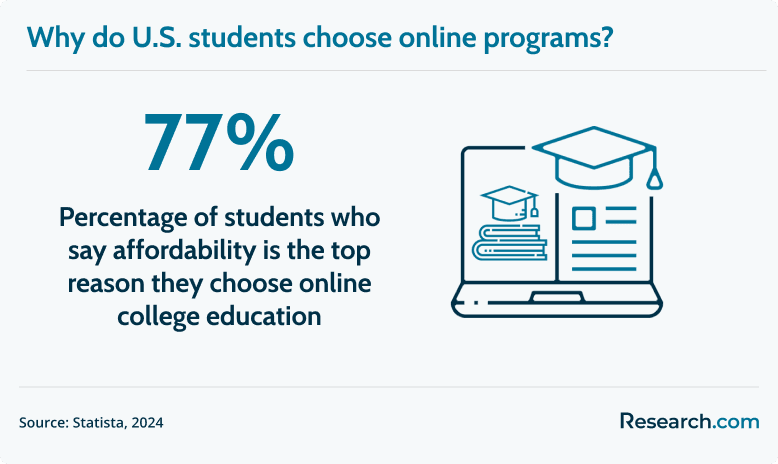
Affordability also matters to prospective students. In a survey, 77% of students considered affordability their top factor when looking into an online program (Statista, 2024). Online study may reduce costs tied to housing, commuting, and meal plans, but it can still include technology, platform, or materials fees. Always ask the school for a full cost estimate before deciding.
What financial aid can help pay for an online MFA?
Even the most affordable MFA can become more manageable when you combine tuition planning with grants, scholarships, and other aid. Before applying, review the school’s aid office, external scholarship databases, and any concentration-specific funding that may apply to your field.
- Federal Student Aid (FAFSA): This may open the door to loans, work-study, and Federal Supplemental Educational Opportunity Grants (FSEOG).
- Scholarships: Many schools award scholarships based on merit, financial need, leadership, alumni status, or artistic achievement.
- Military benefits: Eligible students may use GI Bill benefits, Yellow Ribbon support, Department of Defense Tuition Assistance, or related programs.
- Fellowships, grants, and assistantships: Some MFA programs provide support in exchange for research, teaching, or program service.
You may also find outside scholarships that are open to MFA students, including:
- Cyndy and Al Baran Fine Arts and Music Scholarship - For full- or part-time MFA students concentrating in painting, drawing, sculpture, ceramics, photography, or printmaking.
- Support Creativity World Scholarship - For New York graduate students pursuing a major in graphic design, illustration, motion graphics, videography, or web design.
- Against The Grain Artistic Scholarship - For Asian-American graduate students pursuing a master’s degree in visual/performing arts (film, theatre, fashion, photography, graphic design, dance, music, journalism, mass communications, etc.).
What are the usual admission requirements for an online MFA?
Most online MFA programs ask for evidence of prior academic preparation and creative potential. Exact requirements vary, but applicants commonly need the following:
- Bachelor's degree in fine arts or related
- Official transcripts
- Minimum GPA of 3.0
- Portfolio or writing samples
- Letters of recommendation
- Statement of purpose
- GRE or GMAT scores (if applicable)
- Application form and paid fees
Some schools may also ask students to complete foundational coursework before enrolling, especially if the applicant’s undergraduate background is outside the arts. This can include art history, drawing fundamentals, or literary theory, depending on the concentration.
International students may need to submit English proficiency scores. Applicants with professional experience may also be asked for a résumé, and some programs include interviews as part of the selection process. The main goal is to show that you can handle graduate-level creative work and benefit from critique-based instruction.
What classes are common in an online MFA?
Coursework depends on your concentration, but many online MFA programs include a mix of theory, critique, production, and portfolio development. These classes help students connect artistic practice with analysis and professional presentation.
- Film Theory. Students study the history, language, and cultural meaning of cinema while analyzing narrative structure, genre, and visual style.
- Publication Design. This course focuses on designing books, magazines, and digital publications through layout, typography, and user experience.
- Art Criticism. Students learn to evaluate artwork, write clearly about creative work, and place art in historical and cultural context.
- Film Scoring. Learners practice composing music for visual media and explore how sound supports storytelling and emotion.
- Color Theory. This class examines how color works in art and design, including mood, perception, symbolism, and composition.
In many MFA pathways, the final result is not just a degree but a polished body of work. That portfolio can matter as much as the transcript, especially in fields where employers or clients want to see what you can actually produce.
What specializations can you pursue in an online MFA?
Online master’s degree options in fine arts usually allow students to focus on a single creative discipline. The right specialization should match both your interests and the kind of work you want to do after graduation.
| Specialization | What it focuses on | Best for |
| Creative Writing | Fiction, nonfiction, poetry, screenwriting, playwriting, and related genres | Writers who want advanced workshop training and a finished manuscript or portfolio |
| Visual Arts | Painting, drawing, sculpture, photography, printmaking, and digital media | Artists building a studio practice and exhibition-ready body of work |
| Performing Arts | Theater, dance, music, and performance-based work | Students seeking rigorous practice, rehearsals, and live performance experience |
| Fashion | Design, textiles, garment construction, and fashion theory | Students interested in experimental design and industry-facing creative work |
| Architecture | Advanced design studios, theory, sustainable design, and professional practice | Students who want a creative-technical graduate path in the built environment |
| Game Art and Design | Game creation, 3D modeling, digital art, storytelling, and production | Students targeting interactive media and entertainment roles |
Creative writing students who want a broader communication skill set may also look at a cheap online master's degree in communications. The right choice depends on whether your goal is artistic authorship, teaching, or a hybrid creative-professional career.
How do you choose the best online MFA program?
The best online MFA is not always the cheapest one. It is the program that gives you the strongest combination of academic quality, affordability, flexibility, and career fit. Before applying, compare programs using the following factors.
- Accreditation. Confirm that the school is institutionally accredited and, when relevant, that the program meets any specialized standards.
- Curriculum and specialization. Make sure the courses, thesis requirements, and concentration match your artistic goals.
- Format. Check whether the program is fully online, low-residency, or hybrid, and find out whether any travel is required.
- Faculty expertise. Look for instructors with active professional experience, strong exhibition or publication records, or teaching credentials.
- Student support. Review tutoring, career services, technical support, advising, and library access for online learners.
- Alumni outcomes. Look for examples of graduates who have published, exhibited, taught, or advanced in the field.
It also helps to ask a few practical questions before you commit: How many credits will I really need? Are there hidden residency costs? What kind of thesis or portfolio will I leave with? Will the degree help me teach, publish, exhibit, or move into a related role?
How does an online MFA prepare you for changing creative careers?
Creative fields are changing quickly because employers now expect artists, designers, and writers to work across digital platforms as well as traditional media. A strong online MFA can help students build both craft and technical fluency, especially in areas like digital design, interactive media, UX/UI, branding, and online publishing.
This is especially relevant in fields such as graphic design, where career paths may include motion graphics, digital advertising, user experience work, and corporate communications. Students who want a deeper look at role options can review our graphic design career path guide.
Online MFA students also tend to practice remote collaboration, digital critique, and portfolio presentation, which are now normal parts of creative work. That makes the degree useful not only for artistic growth, but also for adapting to modern hiring expectations.
How do online MFA programs support students from different backgrounds?
Many online MFA programs are designed to serve working adults, international students, and applicants with nontraditional educational or professional backgrounds. The best schools offer flexible scheduling, recorded lectures, virtual critique groups, writing support, and accessible advising.
For students whose first language is not English, schools may provide language support or referrals to academic resources. If you are strengthening your language foundation before graduate study, an ESL masters programs online option may be worth exploring alongside your MFA search.
Programs with inclusive communities often do better at supporting creative growth because students bring different perspectives into critique sessions, workshops, and projects. That variety can improve the quality of the work and the learning experience.
What careers can you pursue with an online MFA?
An online MFA can support careers in creative industries, higher education, publishing, design, and media. Actual earnings depend on location, experience, specialization, and employer type, so salary figures should be treated as examples rather than guarantees.
Based on industry and BLS data, some common career paths include:
- Special Effects Artists and Animators ($111,130)
- Postsecondary Art, Drama, and Music Teachers ($93,440)
- Writers and Authors ($91,560)
- Graphic Designers ($64,500)
- Choreographers ($58,740)
These roles are not the only possibilities. Many MFA graduates also work as freelancers, content creators, creative directors, editors, arts administrators, exhibit designers, or instructors in community and private settings.
What is the job outlook for online MFA graduates?
Job prospects vary by specialization, but many creative occupations are expected to remain active over the next decade. According to the U.S. Bureau of Labor Statistics, arts and design occupations are projected to grow about as fast as the average for all jobs, with about 84,900 opportunities yearly from 2024 to 2034. Entertainment and sports occupations are projected to have 99,700 yearly job openings (BLS, 2023b).
Some of the strongest projected growth areas include web and digital interface designers at 15%, followed by film and video editors at 9%, special effects artists and animators at 8%, producers and directors at 7%, and art directors at 6%. Other MFA-related occupations show slower growth, but openings still exist through replacement demand and freelance work.
The key takeaway is simple: the degree can help, but outcomes depend heavily on the field, your portfolio, and your ability to use digital tools and market yourself effectively.
How does an online MFA improve your portfolio and creative skill set?
A well-designed online MFA does more than deliver coursework. It gives you repeated opportunities to produce, revise, and present work that can become the core of your professional portfolio.
Flexibility can improve creative output
Because online students often work on a more flexible schedule, they can spend longer blocks of time developing a piece rather than rushing to meet a narrow class window. That can be especially valuable for writers, visual artists, and designers who need uninterrupted creative time.
Portfolio development is built into the degree
Most MFA programs are structured around critique, iteration, and a final thesis or capstone. That means you should leave with more than practice work. You should leave with a body of polished material that shows your voice, technique, and professional focus.
Online collaboration still matters
Virtual workshops, peer reviews, and faculty critiques can expose you to new approaches and help you sharpen your work. In many programs, these exchanges are where students make the biggest creative gains.
The business side of creativity matters too
Many MFA students also need to understand branding, marketing, publication, and client communication. If you want to pair creative work with business knowledge, you might also compare accelerated marketing degree programs accredited to see whether a complementary credential makes sense for your goals.
What skills do employers value most in MFA graduates?
Employers in creative fields usually care about more than talent alone. They want proof that you can take feedback, deliver work consistently, and use current tools to solve creative problems.
- Strong storytelling and concept development
- Visual communication and composition
- Writing and revision skills
- Digital production tools and creative software fluency
- Project planning and deadline management
- Ability to adapt to changing trends and client needs
- Portfolio quality and professional presentation
Students in programs such as the most affordable online degree in creative writing often develop these strengths through repeated workshops, critiques, and final portfolio work rather than lectures alone.
Tips for succeeding in an online MFA program
Online MFA study is flexible, but it still requires discipline. These habits can help you get more value from the degree:
- Create a dedicated workspace. A consistent place to work can improve focus and reduce distractions.
- Use a weekly schedule. Block out time for writing, studio practice, reading, critique responses, and rest.
- Participate actively. Strong programs rely on discussion, feedback, and revision, so engagement matters.
- Take advantage of school resources. Use libraries, career services, software access, and advising instead of working alone.
- Build relationships early. Faculty, mentors, and classmates can become future collaborators, references, or professional contacts.
- Stay open to critique. Constructive feedback is one of the biggest benefits of graduate creative study.
- Protect your energy. Creative work improves when you build in recovery time, sleep, and realistic deadlines.
Students who want a broader list of reputable institutions can also compare options on our accredited online schools page.
Can extra credentials strengthen an MFA career path?
Additional credentials can be useful when they add a skill your MFA does not fully cover. For example, a student in visual arts may benefit from business, teaching, marketing, or digital production coursework. The best add-on credentials are the ones that solve a real gap in your resume, not the ones that simply add more tuition.
In some cases, a smaller credential can also help you test a new field before committing to a full graduate path. For students who want foundational hands-on training, an easiest associates degree may support a broader learning plan, though it is not a substitute for a graduate MFA.
How do you verify the quality and accreditation of an online MFA?
Before applying, confirm that the institution is properly accredited and that the accreditation is recognized by legitimate education authorities. This matters for credit transfer, employer recognition, and, in some fields, licensure or certification eligibility.
Here is a simple checklist:
- Verify institutional accreditation on the school’s official website and on the accreditor’s site.
- Check whether the MFA has any programmatic accreditation or field-specific recognition.
- Review faculty credentials and whether instructors are active professionals.
- Read recent alumni outcomes, not just marketing claims.
- Look for transparent tuition, fee, and residency information.
- Confirm that the program format fits your state, schedule, and career goals.
Some students also expand their digital profile with additional training, such as a social media marketing online degree, especially when they want to market a portfolio-based career more effectively.
How can an online MFA help you handle industry changes?
The creative field changes quickly, and online MFA programs increasingly respond by teaching students how to adapt. That may include media ethics, digital publishing, strategic communication, and flexible production workflows. These skills matter when technologies, platforms, or audience expectations shift.
For students interested in communication-heavy roles, understanding crisis response, messaging, and audience management can add value in leadership or content strategy settings. If that direction appeals to you, review our communications careers guide for a broader look at related opportunities.
How can an online MFA help you build industry connections?
Networking still matters in creative work, even when classes are online. Strong programs make that easier through live critiques, mentorship, guest speakers, alumni events, and collaborative projects. These experiences can lead to referrals, publication opportunities, collaborations, or teaching contacts.
If you want to expand your professional network beyond the arts, pairing your MFA with an accelerated communications degree online may help you connect creative practice with broader career paths in media and branding.
How can an online MFA strengthen your digital presence?
For many artists and writers, digital visibility is part of professional survival. A good MFA program can help you build a stronger portfolio website, refine your personal brand, and present your work clearly across online platforms.
Courses or workshops that cover branding, content strategy, and social media can help you reach new audiences and employers. If digital promotion is a major part of your career plan, you may also want to compare fast track online social media marketing programs.
Who benefits most from an online MFA?
An online MFA is usually a strong fit for students who need flexibility, already have creative direction, and want graduate-level critique without relocating. It is especially useful for working adults, parents, distance learners, and professionals who need to keep their current jobs while building a portfolio.
It can also help students who want to teach, publish, exhibit, or transition into a creative leadership role. That said, students who want daily access to studio equipment or a fully immersive campus environment may be better served by an on-campus option.
Writers who want a faster route into graduate-level training may also compare an accelerated creative writing degree as part of their planning process.
What do graduates say about online MFA programs?
- Grace: "“Choosing to pursue my MFA online was one of the best decisions I've made for my artistic development. The convenience of online learning allowed me to delve deeper into my craft while balancing family commitments and a demanding work schedule. The sense of community among my online peers and instructors made the journey all the more enriching.”"
- Charlie: ""My online MFA experience was nothing short of transformative. The program's innovative approach to virtual instruction not only facilitated my growth as an artist but also instilled in me a sense of discipline and resilience. From virtual studio sessions to engaging critiques, every aspect of the program pushed me to explore new creative frontiers and evolve as a professional artist.”"
- Teo: "“Studying for my MFA online provided me with unparalleled flexibility and autonomy in pursuing my passion for visual arts. The virtual learning environment fostered a sense of inclusivity and collaboration, enabling me to connect with fellow artists from diverse backgrounds and perspectives. Through online exhibitions and portfolio reviews, I've gained valuable exposure and recognition for my work, paving the way for a fulfilling career in the arts.”"
Common mistakes to avoid when choosing an online MFA
- Ignoring accreditation. A low tuition price does not matter if the degree lacks proper recognition.
- Overlooking residency costs. Travel and lodging can change the real price of a “cheap” program.
- Choosing a program that does not match your goal. A writing MFA is not the best fit if you need advanced training in visual arts or design.
- Assuming every online program has the same level of support. Some schools provide strong mentorship; others are more self-directed.
- Focusing only on rankings. Rankings can help, but they should not replace a close look at curriculum, cost, and outcomes.
- Forgetting to compare total credits. A lower cost per credit can still mean a more expensive degree if the program requires many credits.
Questions to ask before you enroll
- Is the school properly accredited?
- How many credits will I need to finish?
- Are there required residencies, internships, or travel expenses?
- What kind of thesis, portfolio, or capstone will I complete?
- How much direct feedback will I receive from faculty?
- What have recent graduates done after finishing the program?
- Can I use this degree for teaching, publishing, exhibition, or advancement in my field?
Key Insights
An affordable online MFA can be a smart investment, but only if the program matches your creative goals and fits your real budget. The lowest tuition is not always the best value once you account for credits, fees, residencies, and time to completion.
Online MFAs work best for students who need flexibility, want to keep working, or prefer to build a portfolio in a structured but remote setting. On-campus programs may be better if you need constant studio access or a highly immersive environment.
Accreditation, faculty quality, thesis requirements, and career alignment matter as much as cost. If a program does not support your preferred field, portfolio goals, or post-graduation path, it is probably not the right fit no matter how inexpensive it looks.
Before enrolling, compare total cost, format, admission requirements, and alumni outcomes. The best online MFA is the one that helps you finish with stronger work, a clearer professional direction, and less financial pressure than you would otherwise face.
References:
- Ma, J., & Pender, M. (n.d.). Trends in college pricing and student aid 2023. College Board. https://research.collegeboard.org/media/pdf/Trends%20Report%202023%20Updated.pdf
- National Center for Education Statistics. (n.d.). Average and percentiles of graduate tuition and required fees in degree-granting postsecondary institutions, by control of institution: Academic year 1989-90 through 2021-22. Digest of Education Statistics. https://nces.ed.gov/programs/digest/d22/tables/dt22_330.50.asp
- National Center for Education Statistics. (n.d.). Master's degrees conferred by postsecondary institutions, by field of study: Selected academic years, 1970-71 through 2021-22. Digest of Education Statistics. https://nces.ed.gov/programs/digest/d23/tables/dt23_323.10.asp
- PayScale. (n.d.). Master of fine arts (MFA) degree. Retrieved March 6, 2024, from https://www.payscale.com/research/US/Degree=Master_of_Fine_Arts_(MFA)/Salary
- U.S. Bureau of Labor Statistics. (2025). Arts and design occupations. Occupational Outlook Handbook. https://www.bls.gov/ooh/arts-and-design/home.htm
- U.S. Bureau of Labor Statistics. (2025). Entertainment and sports occupations. Occupational Outlook Handbook. https://www.bls.gov/ooh/entertainment-and-sports/home.htm
Other Things You Should Know About Affordable Online MFA Programs
Yes. Most online MFA programs in creative writing, visual arts, and design require a portfolio or writing sample for admission. Common requests include 10–20 pages of creative work, a statement of purpose, and two to three recommendation letters. Some programs also ask for transcripts and a résumé.
Financial aid options for 2027's most affordable online MFA programs often include scholarships, federal student loans, and grants. Some schools may also offer payment plans or program-specific aid. Check each program’s financial aid office for specific offerings and eligibility criteria.
Yes, application deadlines for affordable online MFA programs can vary by institution, but typically fall between November 2026 and March 2027. Applicants should verify with each program, as some may have rolling admissions or extended deadlines.


