
2027 Fastest Online Cinematography Degree Programs

Co-Founder and Chief Data Scientist
If you want to build a cinematography career but cannot pause work, relocate, or spend four years on campus, a fast online program can be a practical way to develop camera, lighting, editing, and visual storytelling skills. The key is choosing carefully: some options are short certificates designed for portfolio building, while others are full online degrees with broader coursework, higher costs, and more time commitment.
This guide explains how the fastest online cinematography degree programs work, what they cost, how long they take, what employers may look for, and how to compare programs without being distracted by marketing claims. It is designed for aspiring cinematographers, video creators, career changers, freelancers, and creative professionals who want structured training without giving up schedule flexibility.
Quick Answer: Are Fast Online Cinematography Programs Worth Considering?
Fast online cinematography programs can be worth considering if you need flexible training, want to build a portfolio quickly, and are comfortable learning production skills outside a traditional studio environment. They are strongest for students who can practice consistently, access basic camera and editing tools, and use assignments to create a professional reel. They are less ideal for students who need extensive in-person equipment access, set-based networking, or highly specialized production facilities.
- According to the Bureau of Labor Statistics (2024), around 7,100 openings for film editors and cinematographers are projected each year throughout the decade.
- The average salary for cinematography-related roles is $82,968 per year, though income depends heavily on location, experience, portfolio quality, and project type.
- Some accelerated online programs are designed to be completed in 12–18 months, helping students move from coursework to production work faster than many traditional formats.
What can I expect from getting an online cinematography degree?
An online cinematography degree is not only about watching lectures on film history or submitting written assignments. A strong program should teach you how to make deliberate visual choices: where to place the camera, how to shape light, how movement affects emotion, and how footage moves from capture to edit. Because the format is online, students usually complete practical projects from home, local locations, or small production setups rather than relying only on campus studios.
Most programs combine creative development with technical training. You can expect coursework and projects that help you:
- Develop visual storytelling skills: Learn how framing, lens choice, camera movement, lighting, and composition support character, mood, and narrative.
- Use common production and editing tools: Practice with platforms such as Adobe Premiere Pro, DaVinci Resolve, and After Effects when they are included in the curriculum.
- Build a portfolio or reel: Create short scenes, lighting exercises, documentary clips, branded videos, or edited sequences that show your actual abilities.
- Participate in critique-based learning: Share work with instructors and classmates, receive feedback, and revise projects in ways that resemble professional creative review cycles.
- Learn from working creatives: Some programs include guest sessions, instructor mentorship, or feedback from filmmakers, editors, producers, or cinematographers active in the field.
- Study around existing commitments: Online delivery can make it easier to balance coursework with employment, freelance projects, family responsibilities, or independent film work.
Where can I work with an online degree in cinematography?
Cinematography training can apply to more than feature films. Employers, agencies, creators, nonprofits, educators, streamers, and brands all use video to communicate ideas. A degree or certificate can help, but the most important career asset is usually a strong portfolio that proves you can capture polished, intentional footage under real constraints.
Graduates and certificate holders may pursue opportunities in settings such as:
- Film and television production: Work on scripted projects, documentaries, independent films, short films, or series in production assistant, camera, lighting, or editorial roles.
- Digital media agencies: Shoot and edit promotional videos, brand stories, social clips, product campaigns, and client-facing content.
- Streaming and online content networks: Support video production for YouTube channels, digital studios, and platforms producing original or serialized content.
- Education and nonprofit media: Create training videos, public awareness campaigns, fundraising films, instructional content, or community storytelling projects.
- Broadcast and news organizations: Capture interviews, field footage, live segments, and packaged stories for television stations or digital newsrooms.
- Marketing and advertising firms: Produce campaign visuals, launch videos, social media assets, commercials, and event coverage.
How much can I make with an online degree in cinematography?
Income in cinematography-related work varies widely because the field includes salaried jobs, union and nonunion production work, agency roles, in-house media teams, and freelance contracts. A degree alone does not guarantee a specific salary. Employers and clients usually weigh your reel, technical range, reliability, collaboration skills, and experience with real productions.
As of June 2025, the reported earnings breakdown for cinematography-related roles is:
- Top earners – $137,000/year: Professionals in this range often have substantial experience, strong credits, repeat clients, specialized skills, or access to higher-budget work.
- 75th percentile – $118,500/year: These workers may hold senior creative roles, maintain steady freelance pipelines, or work with established studios, agencies, or production teams.
- Average – $82,968/year: This figure reflects a broad mix of professionals across different experience levels, markets, and employment models.
- 25th percentile – $70,000/year: Early-career professionals, creators in smaller markets, or those still building a reel may fall closer to this level before advancing.
- Best universities for fast online cinematography programs in 2027
- How long online cinematography programs take
- Online vs. on-campus cinematography programs
- Average cost of an online cinematography program
- Financial aid options for online cinematography students
- Common admissions requirements
- Typical online cinematography courses
- Popular cinematography specializations
- How to choose the right online cinematography program
- Accreditation standards to check
- Career paths after an online cinematography program
- How interdisciplinary study can strengthen cinematography skills
- Job outlook for cinematography graduates
- Employer views of online cinematography credentials
List of the Best Universities for the Fastest Online Cinematography Degree Programs for 2027
How do we rank schools?
Choosing a fast online cinematography program should involve more than comparing tuition and program length. Students also need to look at institutional quality, distance learning support, completion expectations, accreditation, and whether the curriculum helps them create usable portfolio work. Research.com evaluates programs with these decision points in mind.
Our review uses information from trusted education data sources, including the IPEDS database, Peterson’s database and its Distance Learning Licensed Data Set, the College Scorecard database, and the National Center for Education Statistics.
To understand the broader ranking process, evaluation criteria, and limitations of the data, review the Research.com methodology page.
1. Savannah College of Art and Design
Savannah College of Art and Design offers an online Motion Media Design program connected to professional creative outcomes. Past students have produced visuals for the Super Bowl, worked on campaigns for BMW, and created content for Adult Swim. The program may appeal to students interested in motion graphics, design-driven visual storytelling, and brand-facing media work.
- Program Length: 1-2 years
- Tracks/Concentrations: Motion Media Design
- Estimated Total Cost: $42,120
- Accreditation: Southern Association of Colleges and Schools Commission on Colleges
2. University of Southern California - School of Cinematic Arts
The University of Southern California - School of Cinematic Arts offers a Certificate in Directing that introduces students to the filmmaking process from planning through final edit, with cinematography treated as a key part of directing visual stories. The program emphasizes practical production using accessible tools and short-form filmmaking approaches.
- Program Length: 4 weeks
- Tracks/Concentrations: Directing
- Estimated Total Cost: $3,880
- Accreditation: Western Association of Schools and Colleges
3. Full Sail University
Full Sail University offers a Digital Cinematography program focused on modern production workflows, digital storytelling, and media creation across platforms. The program may fit students who want a structured online bachelor’s experience built around production practice and digital content skills.
- Program Length: 108 weeks
- Tracks/Concentrations: Digital Cinematography
- Estimated Total Cost: $71,000
- Accreditation: Accrediting Commission of Career Schools and Colleges
4. Los Angeles Film School
The Los Angeles Film School offers an online Digital Filmmaking program with coursework that introduces cinematography through digital camera operation, framing, composition, and scene-building. Students who want a production-oriented curriculum with a digital delivery model may find this format relevant.
- Program Length: 29 months
- Tracks/Concentrations: Digital Filmmaking
- Estimated Total Cost: $76,500
- Accreditation: Accrediting Commission of Career Schools and Colleges
5. New York Film Academy
The New York Film Academy offers a 15-Week Part-Time Online Cinematography program built for students who need a shorter, flexible option. The course covers lighting, camera work, and visual storytelling through live online lectures and assignments that can be completed with accessible equipment, including smartphones.
- Program Length: 15 weeks
- Tracks/Concentrations: Cinematography
- Estimated Total Cost: $2,200
- Accreditation: Accrediting Commission of Career Schools and Colleges
How long does it take to complete an online cinematography degree program?
The completion time depends on the credential. A short certificate can help you improve a targeted skill quickly, while a bachelor’s degree usually includes broader production, general education, and portfolio requirements. Before enrolling, make sure you know whether the program is a certificate, associate degree, bachelor’s degree, or graduate-level credential.
According to the New York Film Academy (n.d.) and LA Film School (n.d.), students may encounter options ranging from brief intensive study to multi-year degree pathways.
| Program Type | Typical Length | Best Fit | Trade-Off |
| Certificate Program | As little as 4 weeks | Students who want focused training in directing, lighting, camera operation, or portfolio improvement | Usually narrower than a full degree and may not include general education or extensive career support |
| Associate’s Degree | Typically 2 years | Learners who want a foundation in production plus general studies | May not provide the depth of a bachelor’s program for advanced roles |
| Bachelor’s Degree | Usually 4 years | Students seeking a comprehensive undergraduate education in film, digital production, theory, and technical practice | Higher time and cost commitment |
| Master’s Degree | Generally 2 years | Experienced creatives pursuing advanced specialization, teaching, leadership, or high-level creative development | Often expects a prior degree, portfolio, or professional experience |
If you are comparing nearby creative fields, the fastest online animation degree programs may also be worth reviewing. Animation and cinematography can overlap in composition, movement, lighting concepts, storyboarding, and visual pacing.
The fastest option is not automatically the best one. Choose the shortest program only if it still gives you enough time to practice, receive feedback, and produce work strong enough to include in a reel.
How does an online cinematography degree compare to an on-campus program?
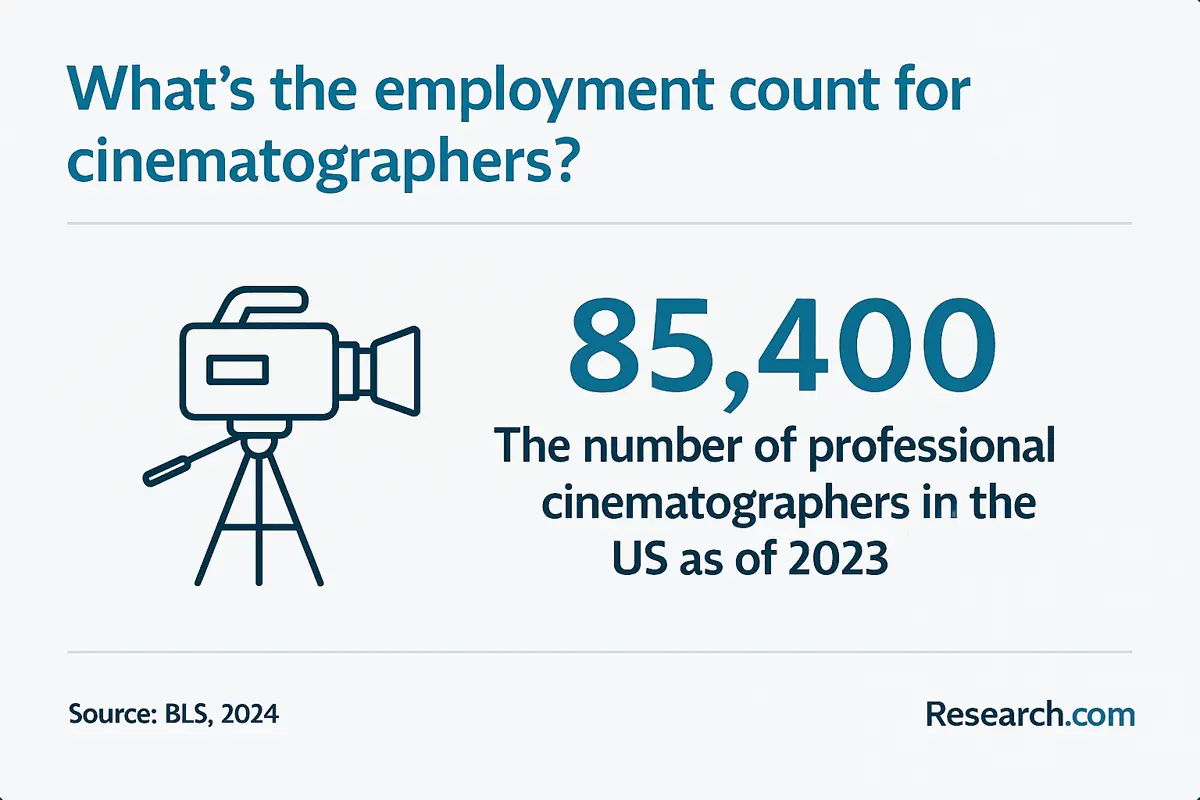
Online and campus programs can both teach cinematography, but the learning experience is different. Online programs usually offer more flexibility and may be better for students with jobs or family obligations. Campus programs may provide more direct access to studios, lighting equipment, classmates, crews, and in-person production environments. With over 85,400 cinematographers currently in the workforce, students should focus less on format alone and more on whether the program helps them build practical, employable skills.
Use the comparison below to decide which format better matches your learning style and career goals.
| Factor | Online Program | On-Campus Program | Decision Tip |
| Schedule | Often more flexible for working adults and freelancers | Usually follows set class and production schedules | Choose online if time flexibility is essential |
| Equipment Access | May require students to use or purchase their own gear | May include access to school cameras, studios, lights, and labs | Ask online programs exactly what equipment you must provide |
| Collaboration | Often remote, critique-based, or locally self-arranged | Often includes in-person crews and set-based collaboration | Choose campus if crew experience is a top priority |
| Portfolio Building | Possible through home, local, and independent assignments | Possible through school productions and peer projects | Look for programs with frequent project-based assignments |
| Networking | Depends on virtual events, alumni access, instructors, and student initiative | May offer more frequent face-to-face networking | Ask about mentorship, alumni groups, and internship support |
What is the average cost of an online cinematography degree program?
Costs vary by credential level, school type, program length, required technology, and whether the program charges additional production or software fees. Short certificate programs are usually the lowest-cost route, while full undergraduate programs require a larger investment.
Fast-tracked certificate programs average around $3,880. Associate degrees typically land at $46,650, while bachelor’s programs can climb to about $73,500 for a full four-year experience.
Students planning careers in digital distribution or creator-led businesses sometimes combine film training with skills from a fast-track online social media marketing degree. That combination can be useful for cinematographers who want to promote their own work, manage campaigns, or create branded content.
The following cost breakdown can help you compare program types before committing.
| Cost Item | Why It Matters | Question to Ask |
| Tuition | This is the largest published expense, but it may not include all program-related costs | Is the quoted cost total program tuition or cost per term? |
| Camera and audio gear | Online students may need personal access to equipment for assignments | What camera, microphone, tripod, lighting, and storage requirements apply? |
| Software | Editing, color, motion graphics, and post-production tools may require subscriptions | Are Adobe Premiere Pro, DaVinci Resolve, After Effects, or similar tools included? |
| Production expenses | Even small projects can involve props, locations, travel, talent, or permits | How many original productions will I need to complete? |
| Portfolio and career support | Career services, reviews, and demo reel support can affect job readiness | Does the school help students assemble a professional reel? |
What are the financial aid options for students enrolling in an online cinematography degree program?
Financial aid can make an online cinematography program more manageable, but eligibility depends on the school, credential type, enrollment status, accreditation, and the specific award. Degree-seeking students may have more options than students in nondegree certificate programs, so confirm aid eligibility before enrolling.
Scholarships and grants relevant to film, visual arts, media, and online study include:
- James Alan Cox Foundation for Student Photojournalists: Created in memory of James Alan Cox, this scholarship provides $2,500 to high school and college students pursuing visual storytelling careers (James Alan Cox Foundation, n.d.).
- Betty Harlan Memorial Art Scholarship: This award supports visual arts students. Award amounts vary, and applicants must submit an essay describing their qualifications, creative involvement, and participation in visual arts activities or organizations (CFNIL, n.d.).
- Jack G. Shaheen Mass Communications Scholarship Award: Sponsored by the American-Arab Anti-Discrimination Committee, this $5,000 scholarship is available to Arab-American juniors, seniors, and graduate students studying journalism, radio, television, or film (ADC, n.d.).
- Momentum Scholarship: This scholarship supports students in online degree programs and offers up to $30,000 for bachelor’s degrees and up to $15,000 for associate degrees. Awards depend on financial need, fund availability, and applicant volume (Los Angeles Film School, n.d.).
- USC School of Cinematic Arts Scholarships: The School of Cinematic Arts offers scholarship opportunities for undergraduate and graduate students, with awards ranging from $1,000 to $25,000 (University of Southern California, n.d.).
Creative students who plan to build production companies, freelance businesses, or media startups may also compare accelerated entrepreneurship MBA programs online as a later-stage option for learning finance, business development, and venture strategy.
If cost is your top concern, compare this guide with the most affordable online cinematography degree programs before applying.
What are the prerequisites for enrolling in an online cinematography degree program?
Admissions requirements vary by school and credential level. A short online workshop may have minimal entry requirements, while a bachelor’s or graduate program may ask for transcripts, essays, portfolios, or previous creative work. Technical readiness also matters because online cinematography students must upload large files, use editing platforms, and complete production assignments away from campus.
Common prerequisites include:
- High school diploma or equivalent: Most undergraduate programs require proof of high school completion or a GED.
- Comfort with technology: Students should be able to manage digital files, use online learning systems, troubleshoot basic software issues, and work with media platforms.
- Portfolio or creative samples: Selective programs, graduate options, and some certificates may request a reel, video project, photo series, or other creative sample.
- Access to production tools: Some programs expect students to have or obtain a camera, microphone, tripod, basic lighting, storage, and editing access.
- Communication skills: Film work depends on collaboration, critique, and clear direction, even when assignments happen remotely.
- Statement of purpose or personal essay: Advanced programs may ask applicants to explain their creative goals, influences, and reasons for studying cinematography.
Students entering from design backgrounds may already have useful visual skills. For example, graduates of fast-track online graphic design degrees may bring strengths in composition, color, layout, and digital workflows that translate well into cinematography.
What courses are typically in an online cinematography degree program?
Online cinematography curricula usually combine camera technique, lighting, editing, production planning, sound awareness, film analysis, and portfolio projects. The best programs do not separate theory from practice; they ask students to apply visual concepts through actual shot exercises, short scenes, and edited sequences.
Typical courses may include:
- Introduction to Cinematography: Learn camera operation, shot composition, exposure, visual language, and the connection between image design and story.
- Photography: Study still-image composition, lighting, framing, and visual attention. Students who want a focused foundation before film training can also review an accelerated digital photography online degree.
- Lighting for Film and TV: Practice shaping mood, contrast, color temperature, depth, and continuity through lighting setups.
- Digital Media: Explore how visual content is created, edited, formatted, and distributed across digital platforms.
- Film Theory and Aesthetics: Analyze how cinematography has developed across genres, cultures, periods, and visual traditions.
- Production Planning and Management: Learn how to organize shoots, schedules, budgets, crews, locations, and production documents.
- Advanced Camera Techniques: Study lens choices, specialty movement, camera support systems, filters, and complex visual setups.
- Sound and Visual Integration: Understand how audio supports image, rhythm, atmosphere, and narrative meaning.
- Communication Studies: Examine how messages reach audiences across media formats and how visual choices influence interpretation.
Students who want to strengthen the audio side of film production may compare cinematography coursework with the fastest online audio and music degree programs. Sound design, music, and audio post-production can significantly affect how cinematic images are perceived.
If your long-term goal includes screenwriting, directing, or producing original films, a creative writing online degree may also support narrative development and script-based storytelling.
The following overview shows how common courses connect to practical skills.
| Course Area | Skill Developed | Portfolio Outcome |
| Camera operation | Exposure, focus, movement, shot selection, and lens use | Scene exercises, camera tests, or short visual sequences |
| Lighting | Mood, contrast, color temperature, depth, and continuity | Lighting breakdowns, interviews, narrative scenes, or product shots |
| Editing and color | Pacing, continuity, color correction, and visual polish | Edited short films, reels, or before-and-after color samples |
| Production planning | Scheduling, budgeting, shot lists, and crew coordination | Production packets, call sheets, and completed projects |
| Film analysis | Visual interpretation, genre awareness, and cinematic vocabulary | Director or cinematographer studies that inform original work |
What types of specializations are available in online cinematography degree programs?
Cinematography is a broad field. Some students want to shoot narrative films, while others are drawn to documentaries, commercials, music videos, sports, live events, or post-production color work. Whether you pursue a bachelor’s program, certificate, or MFA online, a specialization can help you focus your reel and signal your creative direction to employers or clients.
Common specialization areas include:
- Narrative filmmaking: Focus on scripted scenes, visual continuity, coverage, blocking, shot design, and emotional tone.
- Documentary production: Learn to work with real subjects, available light, handheld shooting, interviews, and vérité-style visual approaches. This path may interest students from journalism backgrounds, including those comparing the shortest online journalism programs.
- Lighting design: Study how light direction, softness, contrast, and color shape atmosphere and character.
- Post-production cinematography: Work with color grading, visual consistency, image finishing, and the relationship between capture and edit.
- Live event and broadcast shooting: Prepare for fast-moving productions such as concerts, sports, ceremonies, and live-streamed events.
- Commercial and branded content: Learn visual strategies for advertisements, product videos, social campaigns, and promotional storytelling.
- Aerial and drone cinematography: Explore camera movement, landscape perspective, and elevated shots when programs include this training.
- Experimental and art film: Develop nontraditional visual approaches, abstract imagery, mixed media, and nonlinear storytelling.
How to choose the best online cinematography degree program?
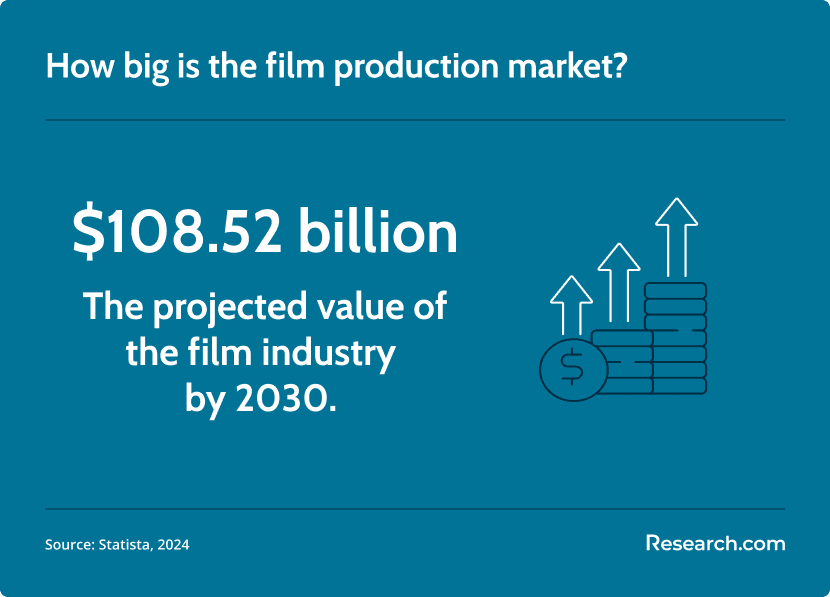
The best online cinematography program is the one that fits your career goal, budget, schedule, equipment access, and learning style. With the film and video production market projected to reach $108.52 billion by 2030, students should look for programs that teach adaptable production skills rather than narrow software tricks that may become outdated.
Use these criteria when comparing programs:
- Curriculum depth: Look for a balance of camera, lighting, editing, visual theory, directing fundamentals, and project-based work.
- Faculty and industry access: Give preference to programs with instructors who have relevant production experience and can provide practical critique.
- Technology expectations: Confirm which software, camera systems, storage tools, and editing platforms you will use or need to purchase.
- Specialization options: Choose a program that supports your intended niche, such as documentary, narrative, commercial, digital filmmaking, or motion media.
- Schedule structure: Check whether courses are self-paced, cohort-based, live, asynchronous, full-time, or part-time.
- Accreditation and outcomes: Verify institutional accreditation, completion data, student work examples, alumni results, and career support.
- Total cost and aid: Compare tuition, fees, software, gear, travel, production costs, scholarships, and payment options.
| Common Mistake | Why It Can Hurt You | Better Approach |
| Choosing only the fastest program | A short timeline may not provide enough practice or portfolio development | Review assignments, project requirements, and critique opportunities |
| Ignoring accreditation | Unaccredited study can limit transfer credit, aid eligibility, or employer confidence | Verify accreditation before applying |
| Looking only at tuition | Gear, software, storage, and production expenses can raise the real cost | Calculate the full cost of attendance and required tools |
| Assuming online means easier | Production assignments require planning, discipline, and technical troubleshooting | Set weekly shooting, editing, and review time |
| Not checking portfolio outcomes | A credential without strong work samples may not help in hiring or freelance markets | Ask to see student reels, capstone examples, and project expectations |
| Relying only on rankings | A highly ranked program may not fit your equipment access, budget, or career niche | Use rankings as one input, not the final decision |
What accreditation standards should online cinematography degrees meet?
Accreditation helps students confirm that an institution has been reviewed for academic quality, governance, faculty standards, student services, and financial practices. For online cinematography programs, accreditation can also affect federal financial aid eligibility, credit transfer, graduate school options, and employer trust.
When reviewing a program, confirm the accrediting body named by the school and check whether it is recognized by appropriate education authorities. Also review whether the program publishes transparent information about curriculum, faculty, student support, equipment expectations, and outcomes. If you are comparing online creative programs across disciplines, Research.com’s guide to the cheapest online creative writing degree programs can provide another example of how to weigh cost against academic quality.
| Accreditation Question | Why It Matters |
| Is the institution accredited by a recognized agency? | Accreditation can affect financial aid, transfer credits, and academic credibility |
| Does the program clearly identify its credential type? | A certificate, associate degree, bachelor’s degree, and master’s degree serve different goals |
| Are online students eligible for the same support services? | Career advising, library access, technical support, and portfolio review can improve student outcomes |
| Are equipment and software requirements disclosed? | Hidden production costs can make an affordable program less affordable |
| Does the school show examples of student work? | Portfolio evidence helps you judge whether the curriculum produces practical results |
What career paths are available for graduates of online cinematography degree programs?
Cinematography training can lead to roles across production, post-production, marketing, education, documentary media, and independent content creation. Some jobs focus directly on camera work, while others use cinematography skills as part of a broader media production role.
Students who want to write, develop, and pitch their own screen projects may pair visual training with a fast-track professional writing degree online. Strong writing skills can help cinematographers communicate visual concepts, develop treatments, and collaborate with directors and producers.
Possible career paths include:
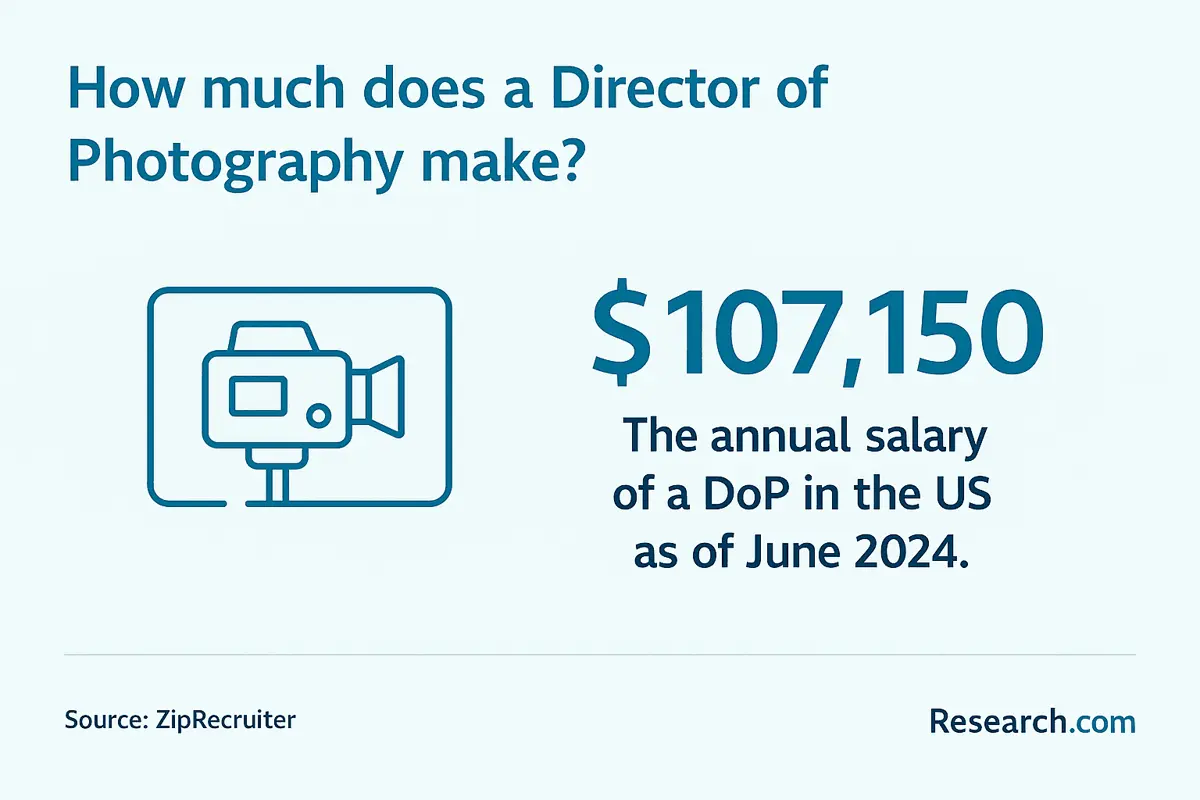
- Director of Photography (DP): Oversee the visual design of films, series, commercials, or branded projects and earn up to $107,150 annually (ZipRecruiter, n.d.).
- Video Content Marketer: Create video assets for brands, campaigns, and digital channels. Students interested in this direction can review content marketing specialist requirements.
- Camera Operator: Capture footage for film, television, live events, corporate media, sports, or digital productions.
- Video Editor: Turn raw footage into finished stories using editing tools such as Adobe Premiere Pro or DaVinci Resolve.
- Colorist: Refine image tone, contrast, palette, and visual consistency during post-production.
- Lighting Technician: Support the design and execution of lighting plans for sets, interviews, events, or studio shoots.
- Documentary Filmmaker: Develop nonfiction stories, often combining shooting, directing, interviewing, producing, and editing.
- Commercial Producer: Coordinate and create advertising or promotional video projects from concept through delivery.
- Independent Filmmaker: Build original projects, short films, music videos, web series, or features outside traditional employment structures.
- Film Teacher: Teach media production or cinematography when education, experience, and credential requirements are met. If teaching is the goal, review what types of certifications are there for teachers.
How can interdisciplinary studies enhance my cinematography career?
Cinematographers do not work only with cameras. They make decisions about space, light, design, movement, color, sound, story, and audience perception. Studying adjacent disciplines can help you develop a sharper visual language and collaborate more effectively with directors, production designers, editors, writers, sound teams, and clients.
Useful complementary areas include graphic design, photography, architecture, creative writing, marketing, audio production, animation, theater design, and artificial intelligence. For example, students who explore NAAB-accredited online architecture degrees may gain a stronger understanding of space, structure, scale, and environment, all of which can influence shot composition and production design.
What is the job outlook for graduates with an online cinematography degree?
The job market for cinematography-related work is shaped by streaming content, digital advertising, social video, corporate media, independent production, and changes in production technology. At the same time, competition can be strong because many people enter the field through freelance work, self-teaching, certificates, or adjacent creative careers.
According to the Bureau of Labor Statistics (2024):
- Employment growth: Film and video editors and camera operators are projected to grow 3% from 2023 to 2033, which is about as fast as the average for all US occupations.
- Annual openings: Roughly 7,100 new positions are expected to open each year over the next decade, largely because workers retire or move into other careers.
- Editing demand: More visual content and greater use of visual effects are expected to support opportunities for editors in film, television, and online media.
- Skill flexibility: Professionals who understand both production and post-production may be better positioned as workflows continue to change.
Technology is also changing how visual media is produced. Robotic cameras, crowdsourced footage, virtual production, and AI-assisted tools may reduce demand for some traditional camera tasks while creating new needs in editing, visual effects, workflow management, and digital production. Cinematographers who want to understand this shift can compare creative training with affordable AI degree programs online.
Are online cinematography degrees valued by employers?
Many employers care less about whether a cinematography program was online or on campus and more about what the applicant can demonstrate. A strong reel, reliable technical skills, production experience, collaboration ability, and familiarity with current workflows often carry significant weight. That said, accreditation, school reputation, instructor quality, and career support can still influence how a credential is perceived.
An online degree is most likely to be useful when it results in visible work: short films, lighting tests, documentary pieces, commercials, branded videos, edited scenes, or a polished demo reel. Students comparing online creative credentials in other fields, such as the cheapest online masters degree in architecture, should use a similar standard: verify quality, cost, outcomes, and whether the program produces work that employers can evaluate.
Questions to Ask Before Enrolling
- Is this a degree, certificate, or noncredit program?
- Is the institution accredited, and by which agency?
- How many original film or video projects will I complete?
- Will I receive instructor feedback on camera work, lighting, editing, and story?
- What equipment and software must I already own or purchase?
- Can I complete assignments with local resources, or are specific production environments required?
- Does the program help students create a demo reel or portfolio?
- Are career services, internships, alumni networks, or mentorship opportunities available to online students?
- What is the total cost after tuition, fees, gear, software, and production expenses?
- Can credits transfer if I later pursue another degree?
Key Insights
- Fast online cinematography programs are best for self-directed students who can practice consistently and turn assignments into portfolio-ready work.
- There are over 85,400 cinematographers currently in the workforce, but hiring decisions often depend on skill evidence, not the learning format alone.
- The film and video production market is projected to reach $108.52 billion by 2030, making adaptable digital production skills increasingly important.
- A Director of Photography (DP) can earn up to $107,150 annually, but salaries vary by market, credits, role, and project budget.
- Roughly 7,100 new positions are expected to open each year over the next decade, driven largely by retirements and career changes.
- Fast-tracked certificate programs are the lowest-cost option on average at around $3,880, while associate degrees typically land at $46,650 and bachelor’s programs can reach about $73,500.
- Before choosing a program, verify accreditation, total cost, equipment requirements, portfolio outcomes, and whether online students receive meaningful feedback and career support.
References:
- ADC. (n.d.). Jack G. Shaheen Mass Communications Scholarship Award. American-Arab Anti-Discrimination Committee. Adc.org. Retrieved 18 June 2025.
- Bureau of Labor Statistics. (n.d.). Film and video editors and camera operators. U.S. Department of Labor. Bls.gov. Retrieved 18 June 2025.
- CFNIL. (n.d.). Betty Harlan Memorial Art Scholarship. Community Foundation of Northern Illinois. Cfnil.org. 2025.
- Full Sail University. (n.d.). Digital Cinematography Bachelor’s Degree Program. Fullsail.edu. Retrieved 18 June 2025.
- James Alan Cox Foundation. (n.d.). Apply for a scholarship. Jamesalancoxfoundation.org. Retrieved 18 June 2025.
- Los Angeles Film School. (n.d.). Digital Filmmaking Online Program. Lafilm.edu. Retrieved 18 June 2025.
- Los Angeles Film School. (n.d.). Scholarships and Grants. Lafilm.edu. Retrieved 18 June 2025.
- Savannah College of Art and Design. (n.d.). Motion Media Design. Scad.edu. Retrieved 18 June 2025.
- Statista. (n.d.). Cinema – Worldwide. Statista.com. Retrieved 18 June 2025.
- University of Southern California. (n.d.). Directing Program – School of Cinematic Arts. Online.usc.edu. Retrieved 18 June 2025.
- University of Southern California. (n.d.). SCA Scholarships. Cinema.usc.edu. Retrieved 18 June 2025.
- Zippia. (n.d.). Cinematographer education requirements. Zippia.com. Retrieved 26 June 2025.
- ZipRecruiter. (n.d.). Cinematography Salary. Ziprecruiter.com. Retrieved 18 June 2025.
- ZipRecruiter. (n.d.). Director of Photography Salary. Ziprecruiter.com. Retrieved 18 June 2025.
Other Things You Need to Know About Online Cinematography Degree Programs
In 2027, institutions like Full Sail University and New York Film Academy offer fast-track online cinematography degree programs, allowing completion in as little as 12 months. These programs focus on intensive coursework and accelerated learning to help students quickly transition into the industry.
When selecting a program for 2027, prioritize accredited schools with experienced faculty, comprehensive curriculum covering essential aspects of cinematography, and state-of-the-art technology access. Look for programs offering flexibility in course scheduling and accelerated options to complete your degree swiftly while maintaining a quality education.
Many accelerated online cinematography programs require students to own a digital cinema or mirrorless camera, tripod, external microphone, and editing software before the first production course. Some schools also require a laptop capable of running Adobe Premiere Pro or DaVinci Resolve and may ask for proof of equipment access before enrollment.


