2027 Fastest Online Animation Degree Programs

Co-Founder and Chief Data Scientist
An online animation degree can be a practical route into 2D animation, 3D animation, visual effects, motion graphics, game art, digital media, and post-production. The decision is not only whether you enjoy drawing or storytelling. You also need to compare software access, portfolio support, accreditation, total cost, internship opportunities, and how well a program prepares you for a competitive creative job market.
This guide is for students who want to study animation online, working adults who need a flexible program, and career changers deciding whether a degree is worth the investment. It explains what online animation programs teach, how long they take, what they cost, which schools offer them, what careers they can lead to, and how to choose a program that supports your portfolio and employment goals.
Quick answer: Is an online animation degree worth it?
An online animation degree can be worth it if the program is accredited, teaches current animation tools, includes portfolio-building projects, and fits your budget. Animation hiring is highly portfolio-driven, so the strongest programs combine art fundamentals, technical software training, critiques, professional projects, and career support.
| Best fit | Why it may work | What to check before enrolling |
| Students seeking creative media careers | Programs can prepare students for animation, visual effects, editing, design, and related digital production roles. | Review student portfolios, course projects, software training, and faculty experience. |
| Working adults who need flexibility | Many online programs offer asynchronous coursework, making it easier to balance school with work or family responsibilities. | Confirm weekly workload, critique schedules, project deadlines, and technical requirements. |
| Students focused on ROI | In May 2024, special effects artists and animators in the US had a median annual wage of $99,800, compared with $49,500 for all US occupations (US BLS, 2025). | Compare total program cost, transfer credit policies, graduation requirements, and career outcomes. |
What are the benefits of getting an online animation degree?
- An online animation degree can help students build skills for roles such as animator, video editor, graphic designer, producer, and art director.
- According to the US BLS, special effects artists and animators employed in the US earned a median annual wage of $99,800 in May 2024 (US BLS, 2025).
- Online programs can offer flexible pacing, remote access to instructors, structured feedback, and portfolio-focused assignments without requiring students to relocate.
What can I expect from online animation degree programs?
Online animation degree programs typically combine visual art, storytelling, digital production, and technical software training. Students often study 2D animation, 3D animation, character development, storyboarding, visual effects, motion graphics, lighting, rendering, compositing, and editing. Many courses require students to produce finished creative work rather than only complete exams or written assignments.
Because animation is a portfolio-centered field, the best online programs emphasize repeated project development. Students may create character walk cycles, short animated sequences, concept art, 3D models, storyboards, animatics, effects shots, and final demo reel materials. Virtual critiques, instructor feedback, peer reviews, and group projects can help students improve their technical execution and storytelling choices.
Online delivery varies by school. Some programs use asynchronous courses, while others require live class sessions, scheduled critiques, or collaborative production meetings. Before enrolling, students should ask whether the program provides access to required software, remote labs, tutoring, portfolio reviews, and career services.
Where can I work with an online animation degree?
Animation graduates are not limited to film studios. They may work in entertainment, advertising, software, game development, digital marketing, education, corporate media, architecture visualization, training simulation, social media content, and freelance production. The right workplace depends on the student's specialization, portfolio, software skills, and professional network.
In 2023, around 73,300 special effects artists and animators were employed in the US. According to the US BLS, the largest employer groups were:
- Self-employed Workers: 59%
- Motion Picture and Video Industries: 16%
- Software Publishers: 6%
- Computer Systems Design and Related Services: 5%
- Advertising, Public Relations, and Related Services: 1%
The large share of self-employed workers matters for students. It means graduates may need business skills in addition to animation skills, especially if they plan to freelance, contract with studios, or build an independent creative practice.
Film and video editing is another related path. In 2023, around 47,200 film and video editors worked in the US. Their largest employer groups were:
- Self-employed Workers: 35%
- Motion Picture and Video Industries: 31%
- Professional, Scientific, and Technical Services: 11%
How much can I make with an online animation degree?
Salary depends on job title, industry, location, experience, technical specialization, and portfolio quality. A degree can help students build foundational skills, but earnings are not guaranteed. Employers commonly evaluate demo reels, project experience, software proficiency, and artistic judgment.
In May 2024, special effects artists and animators employed in the US had a median annual wage of $99,800. This was higher than the $49,500 median annual wage for all US occupations during the same period (US BLS, 2025).
Related creative and media roles also reported the following median annual wages in May 2024: art directors earned $111,040; producers and directors earned $83,480; film and video editors earned $70,980; and graphic designers earned $61,300 (US BLS, 2025).
| Career path | Median annual wage, May 2024 | What employers usually look for |
| Art Directors | $111,040 | Leadership experience, visual direction, strong portfolio, and production judgment. |
| Special Effects Artists and Animators | $99,800 | Demo reel, animation principles, software fluency, and finished production work. |
| Producers and Directors | $83,480 | Project management, creative decision-making, budgeting, and team coordination. |
| Film and Video Editors | $70,980 | Editing software skills, pacing, storytelling, and post-production experience. |
| Graphic Designers | $61,300 | Design fundamentals, branding, layout, typography, and digital media samples. |
- List of Online Animation Degree Programs for 2027
- How long does it take to complete an online animation degree program?
- How does an online animation degree program compare to an on-campus program?
- What is the average cost of an online animation degree program?
- What are the financial aid options for students enrolling in an online animation degree program?
- What are the prerequisites for enrolling in an online animation degree program?
- What courses are typically in an online animation degree program?
- Why Is Accreditation Essential for Online Animation Degree Programs?
- How do industry projects and internships boost career readiness in online animation programs?
- What are the technical requirements for online animation degree programs?
- What types of specializations are available in online animation degree programs?
- How do you choose the best online animation degree program?
- What career paths are available to graduates of online animation degree programs?
- What is the job market like for graduates of online animation degree programs?
List of Online Animation Degree Programs for 2027
The following online animation degree programs can help students begin comparing format, curriculum, cost, credit requirements, and accreditation. This list was developed using the Research.com methodology and data from the IPEDS database, Peterson's database, the College Scorecard database, and the National Center for Education Statistics.
| School | Program | Program length | Cost information | Accreditation |
| Wilmington University | BS in Animation and 3D | 4 years | $1,257 per course | Middle States Commission on Higher Education (MSCHE) |
| Arkansas State University | BS in Digital Technology and Design, Animation and Motion Graphics concentration | 4 years | $282 per credit | Higher Learning Commission (HLC) |
| Rocky Mountain College of Art + Design | BFA programs in 2D Animation and 3D Animation | 4 years | $740 per credit | HLC; National Association of Schools of Art & Design (NASAD) |
| Academy of Art University | Online Animation and Visual Effects degree program | 4 years | $1,301 per credit (2025–2026) | WASC Senior College and University Commission (WSCUC) |
| Los Angeles Film School | Online bachelor’s degree in Animation | 4 years | $5,250 per semester | Accrediting Commission of Career Schools and Colleges (ACCSC) |
1. Wilmington University
Wilmington University offers an online Bachelor of Science (BS) in animation and 3D. The curriculum introduces students to animation, drawing, character development, morphing, lighting, hand-drawn animation, digital 2D animation, 3D sculpting, and 3D animation.
- Program Length: 4 years
- Areas of Concentration: Animation; 3D
- Cost per Course: $1,257
- Required Credits to Graduate: 120 credits
- Accreditation: Middle States Commission on Higher Education (MSCHE)
2. Arkansas State University
Arkansas State University offers an online BS in digital technology and design with a concentration in animation and motion graphics. Students take courses such as creative writing, digital technology and design portfolio, digital illustration, 2D animation and graphics, and 3D digital and game design.
- Program Length: 4 years
- Areas of Concentration: Animation; Motion Graphics
- Cost per Credit: $282
- Required Credits to Graduate: 120 credits
- Accreditation: Higher Learning Commission (HLC)
3. Rocky Mountain College of Art + Design
Rocky Mountain College of Art + Design offers online Bachelor of Fine Arts (BFA) programs in 2D animation and 3D animation. Coursework includes motion studies, character design and turnarounds, visual storytelling, storyboarding and animatics, drawing, and acting for animation.
- Program Length: 4 years
- Areas of Concentration: 2D Animation; 3D Animation
- Cost per Credit: $740
- Required Credits to Graduate: 120 credits
- Accreditation: HLC; National Association of Schools of Art & Design (NASAD)
4. Academy of Art University
Academy of Art University, founded in 1929 by artist Richard S. Stephens, provides an online animation and visual effects degree program. Students can access faculty guidance, learning resources, and the school’s Virtual Remote Lab.
- Program Length: 4 years
- Areas of Concentration: Animation; Visual Effects
- Cost per Credit (2025–2026): $1,301
- Required Credits to Graduate: Contact the university for information on credit requirements.
- Accreditation: WASC Senior College and University Commission (WSCUC)
5. Los Angeles Film School
The Los Angeles Film School offers an online bachelor’s degree in animation with three concentration options. In the character animation concentration, students study animation production, digital sculpting, storyboarding, story-driven animation, and character visual effects.
- Program Length: 4 years
- Areas of Concentration: Character Animation; Environment & Character Design; Visual Effects
- Cost per Semester: $5,250
- Required Credits to Graduate: 120 credits
- Accreditation: Accrediting Commission of Career Schools and Colleges (ACCSC)
How long does it take to complete an online animation degree program?
Completion time depends on the credential level, course load, transfer credits, and whether the student studies full time or part time. An associate degree in animation generally takes about 2 years for full-time students, while a bachelor’s degree usually takes 4 years.
| Degree level | Typical completion time | Best for |
| Associate degree | About 2 years for full-time students | Students seeking entry-level creative skills or a lower-cost path before transferring. |
| Bachelor’s degree | Usually 4 years | Students who want broader training, general education, portfolio development, and stronger access to career services. |
| Master’s degree | May generally take 1 to 2 years | Professionals seeking advanced skills, teaching preparation, specialization, or leadership roles. |
Some students finish faster by transferring previous college credits or choosing accelerated course formats. Part-time students often need longer because animation courses can be project-heavy and time-intensive. Students comparing creative programs with quicker timelines may also want to review the fastest online cinematography degree programs, especially if they are interested in visual storytelling, camera work, and production.
Working adults often prefer online graduate or bachelor’s programs because remote delivery can make it easier to continue earning income while completing assignments. However, flexibility should not be confused with low workload. Animation projects can require many hours of revision, rendering, and critique preparation.
How does an online animation degree program compare to an on-campus program?
The main difference is not academic quality by itself. A strong online animation program can be rigorous, but students must be comfortable learning software remotely, managing deadlines independently, and building professional connections through virtual channels. On-campus programs may provide easier access to studio spaces and spontaneous networking, while online programs can reduce relocation and commuting barriers.
| Factor | Online animation degree | On-campus animation degree |
| Schedule | Often more flexible, especially when courses are asynchronous. | Usually follows fixed class times, studio sessions, and campus calendars. |
| Studio access | May rely on home equipment, remote labs, and cloud-based tools. | May provide physical studios, labs, equipment checkout, and in-person production spaces. |
| Feedback | Delivered through recorded reviews, live video critiques, discussion boards, and uploaded project files. | Often happens in classrooms, labs, studio critiques, and informal peer interactions. |
| Networking | Requires intentional participation in virtual events, online communities, portfolio reviews, and internships. | Can include campus clubs, screenings, local studio visits, in-person events, and peer groups. |
| Best fit | Students who need location flexibility and can stay organized without daily campus structure. | Students who want face-to-face studio culture and direct access to campus facilities. |
Students who value self-paced or accelerated formats may also compare similar creative options, such as a fast-track online creative writing degree, to understand how online creative programs structure deadlines, workshops, and portfolio development.
What is the average cost of an online animation degree program?
Online animation tuition varies widely by school, degree level, technology resources, and fee structure. Based on the featured programs, published costs include $282 per credit at Arkansas State University, $740 per credit at Rocky Mountain College of Art + Design, $1,301 per credit for Academy of Art University in 2025–2026, $1,257 per course at Wilmington University, and $5,250 per semester at Los Angeles Film School.
| School | Published cost | Budget question to ask |
| Arkansas State University | $282 per credit | Are fees and software access included, and how many credits can transfer? |
| Rocky Mountain College of Art + Design | $740 per credit | Which software licenses, library services, and technical support resources are covered? |
| Academy of Art University | $1,301 per credit (2025–2026) | What technology, remote lab access, and program resources are included in tuition? |
| Wilmington University | $1,257 per course | How many courses are required, and what additional fees apply? |
| Los Angeles Film School | $5,250 per semester | What is the full program cost across all semesters, and are materials included? |
Students should compare total cost, not only tuition. Animation students may also need software subscriptions, a capable computer, storage drives, a drawing tablet, internet service, books, portfolio hosting, and possible travel for internships or events. Transfer credits, grants, scholarships, employer tuition assistance, and part-time enrollment can affect out-of-pocket cost.
Cost comparison is useful across many online degree decisions. For example, students comparing public safety and security programs may evaluate tuition in a similar way when reviewing an accelerated homeland security degree online.
The chart below visualizes the cost of online animation degree programs using current tuition data from the featured academic institutions.
What are the financial aid options for students enrolling in an online animation degree program?
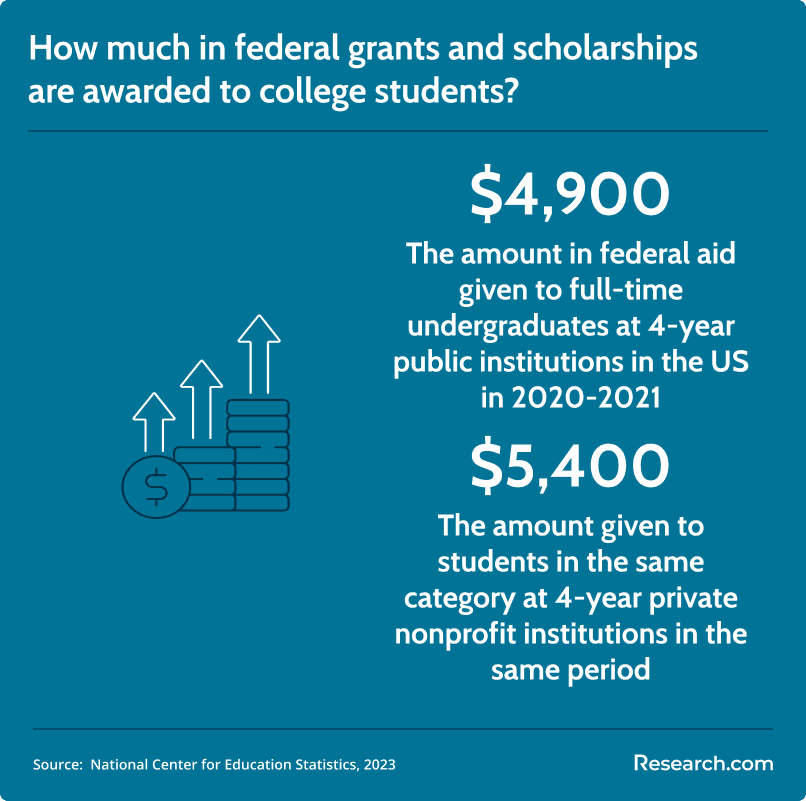
Online animation students may be able to use federal student aid, institutional aid, grants, private scholarships, employer education benefits, payment plans, and outside awards. Availability depends on the school, accreditation status, enrollment level, financial need, academic record, and scholarship rules. Students should complete required financial aid forms early and ask each school whether online learners qualify for the same aid as campus students.
SCAD Challenge Animation Scholarship Competition
Savannah College of Art and Design (SCAD) offers scholarship opportunities through the SCAD Challenge competition. Categories include 2D design, 3D design, and animation, motion, and technology. Awards include the $2,000 silver award, the $3,000 gold award, and the $4,000 platinum award.
Doodle for Google Scholarship
Doodle for Google offers a college scholarship connected to Google’s student art competition. One national winner receives a $55,000 scholarship, a supplies and tech package for the winner’s school or nonprofit organization worth $50,000, and a Google hardware package, among other prizes. Five national finalists receive a $5,000 college scholarship, a Google hardware package, and a feature of their Doodles on the Doodle for Google gallery. Additional awards are available for other participants who do not become finalists.
The Design Circle Scholarship Initiative
Adobe’s Design Circle Scholarship Initiative provides 10 annual college scholarships of up to $25,000 yearly per recipient. The award is intended for students pursuing product design or experience design-related careers, with emphasis on applicants who have been historically underrepresented in design.
How to reduce the cost of an online animation degree
- Ask about transfer credits: Previously completed general education courses may reduce the number of credits you need to pay for.
- Confirm software coverage: Some programs include access to software or remote labs, while others expect students to buy their own tools.
- Compare net price: The lowest sticker tuition is not always the lowest final cost after aid, fees, and required equipment.
- Apply for creative scholarships: Animation, design, digital media, and visual arts scholarships can help reduce borrowing.
- Check employer benefits: Working students should ask whether their employer offers tuition assistance or reimbursement.
What are the prerequisites for enrolling in an online animation degree program?
Admission requirements vary by school, but most undergraduate online animation programs require proof of high school completion or an equivalent credential. Some programs also request transcripts, a minimum GPA, a portfolio, an application essay, or evidence that the student can meet the technical requirements for online coursework.
| Requirement | Why it matters | How to prepare |
| High school diploma or equivalent | Schools need proof that applicants meet undergraduate admission standards. | Request official transcripts early and confirm whether a GED is accepted. |
| Portfolio, if required | Some programs assess drawing ability, creativity, design thinking, and potential. | Include your strongest work, not every project. Show variety, process, and improvement. |
| Technology readiness | Animation coursework depends on reliable hardware, software, internet access, and file storage. | Review each program’s computer specifications before buying equipment. |
| Writing or personal statement, if required | Schools may want to understand your goals, creative interests, and readiness for online study. | Explain your career direction and why the program fits your goals. |
Preparation matters in animation just as it does in other career-focused fields. Students researching how to become a content marketing specialist, for example, also need to understand required skills, application expectations, and portfolio-style evidence before choosing a path.
What courses are typically in an online animation degree program?
Online animation degree programs usually combine art foundations, digital production, storytelling, and technical courses. A strong curriculum should help students understand motion, design, narrative structure, production workflows, and industry-standard software.
- Introduction to Animation: Students learn core animation principles such as timing, spacing, movement, and visual storytelling, often by creating short animation exercises.
- Character Design: This course focuses on building original characters through anatomy, shape language, personality, pose consistency, and expression sheets.
- 3D Modeling and Animation: Students create and animate three-dimensional assets while studying modeling, texturing, lighting, rigging, and rendering.
- Storyboarding and Visual Narrative: Students learn to plan sequences through shot design, pacing, composition, and animatics. Students who want to strengthen writing, story development, and project documentation may also compare an accelerated professional writing online degree.
- Digital Illustration: Students build drawing and image-making skills with digital tools such as Adobe Photoshop or Illustrator, often for concept art, backgrounds, or visual development.
Creative writing and game art programs may overlap with animation in storytelling, worldbuilding, visual development, and audience engagement. Students comparing adjacent options may want to review an online creative writing degree or the shortest online game art and design programs.
Why Is Accreditation Essential for Online Animation Degree Programs?
Accreditation helps students verify that a school or program has been reviewed by a recognized accrediting body. For online animation students, accreditation can affect credit transfer, financial aid eligibility, graduate school options, and employer confidence. It does not guarantee a job, but it reduces the risk of investing in a program that lacks recognized academic oversight.
Students should check both institutional accreditation and any specialized accreditation when available. For example, some art and design schools may hold recognition from organizations such as the National Association of Schools of Art & Design (NASAD), while institutions may also hold regional or national accreditation from agencies listed by the school.
Before enrolling, ask the admissions office to identify the accreditor, then verify that information through the accreditor or official government-recognized sources. Students comparing creative degree options with budget in mind may also find it useful to review affordable online creative writing degree programs.
How do industry projects and internships boost career readiness in online animation programs?
Industry-style projects and internships matter because animation employers often judge candidates by what they can produce. A transcript alone rarely shows whether a graduate can animate believable motion, follow a production brief, revise after feedback, collaborate with a team, and deliver files on schedule.
Effective online programs may include client-style briefs, team productions, short films, motion graphics packages, game assets, effects shots, or capstone projects. Internships can expose students to studio workflows, production timelines, feedback cycles, asset management, and professional communication. These experiences also help students decide whether they prefer character animation, visual effects, editing, design, production coordination, or freelance work.
Some animation students also explore adjacent creative and spatial design fields. For example, those interested in visualization, environments, or digital design may compare an affordable online architecture master's degree to understand how other disciplines use visual storytelling and digital modeling.
What are the technical requirements for online animation degree programs?
Online animation students need more than basic access to a laptop. Animation files are large, rendering can be demanding, and software may require a powerful processor, sufficient memory, a capable graphics card, updated operating systems, and reliable storage. Students should not buy equipment until they review the exact specifications published by the school.
- Computer: Coursework may require a system capable of running design, modeling, rendering, and compositing software.
- Software: Programs may use tools such as Adobe After Effects, Autodesk Maya, Blender, Adobe Photoshop, Adobe Illustrator, and other production applications.
- Internet: A stable high-speed connection is important for uploading projects, joining critiques, accessing remote labs, and downloading large files.
- Peripherals: Some students may need a graphics tablet, external monitor, headphones, webcam, microphone, or external storage.
- Backup and storage: Cloud storage and external drives can help protect large project files and prevent lost work.
Programs with similarly demanding digital production needs may also require careful technology planning. Students comparing design-heavy disciplines can review architecture online degree options for another example of software-intensive online study.
What types of specializations are available in online animation degree programs?
Specializations help students tailor their portfolio toward specific roles. The best choice depends on whether you want to draw, animate characters, model assets, create effects, edit video, design motion graphics, or work in games and interactive media.
| Specialization | What students learn | Possible career direction |
| 2D Animation | Frame-by-frame animation, character movement, digital drawing, story development, and tools such as Adobe Animate. | 2D animator, storyboard artist, visual development artist, motion designer. |
| 3D Animation | Modeling, rigging, character animation, lighting, rendering, and tools such as Autodesk Maya and Blender. | 3D animator, character animator, environment artist, game animation artist. |
| Visual Effects | Compositing, motion tracking, simulations, and effects such as fire, water, explosions, and other screen elements. | VFX artist, compositor, effects animator, post-production specialist. |
| Motion Graphics | Animated typography, branding, title design, digital advertising assets, and short-form media. | Motion graphics designer, digital content creator, advertising production artist. |
Students interested in sound, music, and post-production may also compare an affordable audio and music degree online, especially if they want to combine animation with sound design, editing, or multimedia production.
How do you choose the best online animation degree program?
The best online animation degree program is the one that matches your career goal, budget, learning style, and technical needs. A program that is excellent for visual effects may not be the best fit for a student focused on hand-drawn 2D animation, and a low-cost program may not be the best value if it lacks portfolio support or software access.
| Selection factor | What to look for | Red flag |
| Accreditation | Recognized institutional accreditation and, when relevant, specialized art and design accreditation. | The school cannot clearly identify its accreditor or makes vague claims about recognition. |
| Portfolio development | Multiple critique-based projects, capstone work, demo reel support, and examples of student work. | The curriculum lists software but shows little evidence of finished student projects. |
| Software and technology | Training in current tools such as Adobe Creative Suite, Autodesk Maya, Blender, or comparable applications. | Students are expected to buy expensive tools without clear guidance or support. |
| Faculty and feedback | Instructors with relevant creative or industry experience and regular critique opportunities. | Limited instructor interaction or vague information about who teaches the courses. |
| Career support | Portfolio reviews, internship guidance, job search support, networking events, and alumni examples. | No clear pathway from coursework to a professional demo reel or career plan. |
| Total cost | Transparent tuition, fees, software costs, equipment needs, transfer policies, and aid options. | The program promotes affordability but does not explain total expenses. |
Questions to ask before enrolling
- Is the institution accredited, and by which accrediting agency?
- Are online students eligible for the same financial aid and career services as campus students?
- What software is required, and is access included in tuition?
- What computer specifications are required for animation coursework?
- How often will students receive critique from instructors?
- Can I see examples of student portfolios, demo reels, or capstone projects?
- Are internships, industry projects, or portfolio reviews built into the program?
- How many transfer credits can I apply toward the degree?
- What is the expected weekly workload for each course?
- What jobs have recent graduates pursued?
Some animation students later add business, marketing, or entrepreneurship training to support freelance work or studio management. For that purpose, comparing options such as the shortest MBA programs in marketing online can make sense after or alongside creative training.
Common mistakes to avoid when choosing an online animation degree
- Choosing based only on tuition: A lower published price may not include software, equipment, fees, or portfolio support.
- Ignoring accreditation: Lack of recognized accreditation can affect financial aid, transfer credits, and future education options.
- Assuming all online programs are self-paced: Many courses have strict deadlines, scheduled critiques, and production milestones.
- Underestimating hardware needs: Animation coursework can strain basic computers, especially for 3D modeling and rendering.
- Skipping portfolio research: Student work is one of the clearest indicators of what a program helps learners produce.
- Relying only on rankings: Rankings can be useful, but students should also compare curriculum, faculty feedback, cost, software access, and outcomes.
- Waiting too long to seek feedback: Animation improves through critique. Students should use office hours, peer reviews, and portfolio checks early.
Current trends affecting animation students
Animation education is being shaped by remote production workflows, growing use of digital collaboration tools, increased demand for short-form visual content, and ongoing changes in software used for 2D, 3D, visual effects, and motion graphics work. Students should expect to keep learning after graduation because tools, pipelines, and employer expectations change quickly.
AI-assisted tools are also affecting parts of creative production. They may help with ideation, reference, workflow automation, editing, or production support, but they do not replace the need for animation fundamentals, storytelling, visual judgment, ethical decision-making, and a strong portfolio. Students should choose programs that teach durable creative principles alongside current tools.
What career paths are available to graduates of online animation degree programs?
Graduates of online animation degree programs can pursue creative, technical, and production-focused jobs. The exact path depends on specialization, portfolio, internship experience, and software skills.
- Graphic Designers: These professionals create visual concepts for branding, marketing, web content, and print or digital media. Animation graduates with strong layout, typography, and visual communication skills may be well suited for this path. Students who also want to strengthen image capture and editing skills may compare fast-track online digital photography degrees.
- Film and Video Editors: Editors shape footage into coherent stories by managing pacing, transitions, continuity, audio timing, and visual flow for film, television, social media, or online video.
- Producers: Producers coordinate creative work, budgets, schedules, teams, and deliverables. Animation graduates with organizational skills and leadership experience may move into production roles.
- Animators: Animators create movement for characters, objects, effects, and environments using 2D or 3D techniques. Students interested in games may also research the video game designer salary landscape to compare related career expectations.
- Art Directors: Experienced creative professionals may advance into art direction, where they guide visual style, supervise teams, and maintain consistency across multimedia projects.
The chart below shows median annual wages for animation-related professionals in the US as of May 2024, based on 2025 data from the US BLS.
What is the job market like for graduates of online animation degree programs?
The job market for animation graduates is competitive and portfolio-driven. A degree may help students build skills and credentials, but employers typically want proof of creative ability, technical fluency, collaboration, and production readiness. Students should begin building a portfolio early rather than waiting until the final semester.
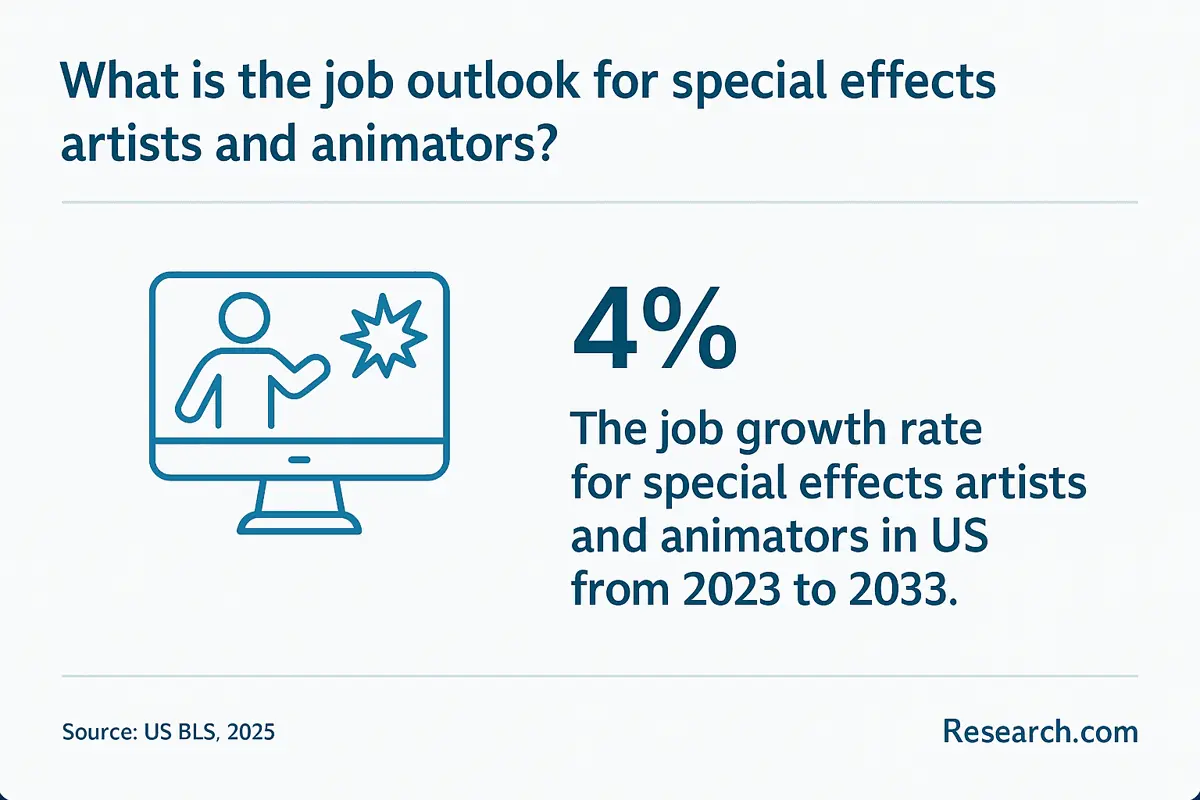
- Special Effects Artists and Animators: Employment for special effects artists and animators in the US is projected to grow by 4% from 2023 to 2033, which matches the average growth rate for all US occupations (US BLS, 2025).
- Graphic Designers: Employment for graphic designers is projected to grow by 2% from 2023 to 2033, which is slower than average. However, the US BLS projects about 21,100 job openings each year on average during the period (US BLS, 2025). Students interested in a faster design-focused route may compare the fastest online graphic design degree programs.
- Film and Video Editors and Camera Operators: Employment in these roles is projected to grow by 3% from 2023 to 2033, with about 7,100 openings each year on average over the decade (US BLS, 2025).
Career planning should be role-specific. For example, students comparing creative and digital roles may also look at the digital marketing specialist salary to understand how creative media skills can connect to marketing, branding, and online content careers.
Practical next steps for future animation students
- Choose a target role first: Decide whether you are aiming for 2D animation, 3D animation, visual effects, motion graphics, editing, game art, or design.
- Review portfolios before brochures: Student work shows what the program actually helps learners produce.
- Verify accreditation: Confirm the school’s accreditor and understand how accreditation affects aid and transfer credits.
- Calculate total cost: Include tuition, fees, equipment, software, internet, storage, and portfolio expenses.
- Check technical requirements: Make sure your computer can run required software before classes begin.
- Ask about critique and career support: Strong feedback and portfolio review can be more valuable than a long list of course titles.
- Start building a reel early: Save polished assignments, revise them after critique, and organize work by specialization.
- Look for internships or client-style projects: Real production experience can help you understand deadlines, teamwork, and revision cycles.
Key Insights
- An online animation degree can be valuable when it combines accredited coursework, current software training, critique-based projects, and portfolio development.
- Animation is a portfolio-centered field. Students should judge programs by the quality of student work, demo reel support, faculty feedback, and industry-style assignments.
- Costs vary widely among featured programs, from $282 per credit to $1,301 per credit, as well as other pricing models such as $1,257 per course and $5,250 per semester.
- Specialization matters. Students should choose 2D animation, 3D animation, visual effects, motion graphics, or another focus based on the type of work they want to produce professionally.
- Online study can be flexible, but animation coursework is demanding. Students need reliable technology, strong time management, and consistent willingness to revise their work.
- Accreditation, transfer credit policies, software access, and career support should be checked before enrolling—not after classes start.
- US BLS data shows strong median wages for several animation-related roles, but earnings vary by role, industry, experience, location, and portfolio strength.
References:
- National Center for Education Statistics. (2023, August). Sources of Financial Aid. https://nces.ed.gov/programs/coe/indicator/cuc/financial-aid-sources
- US Bureau of Labor Statistics. (2025, April 18). Art Directors. Occupational Outlook Handbook. https://www.bls.gov/ooh/arts-and-design/art-directors.htm
- US Bureau of Labor Statistics. (2025, April 18). Film and Video Editors and Camera Operators. Occupational Outlook Handbook. https://www.bls.gov/ooh/media-and-communication/film-and-video-editors-and-camera-operators.htm
- US Bureau of Labor Statistics. (2025). Occupational Employment and Wage Statistics, Industry: Cross-industry, Private, Federal, State, Local Government, Period: May 2024. Occupation Employment and Wage Statistics Query System. https://data.bls.gov/oes/#/industry/000000
- US Bureau of Labor Statistics. (2025, April 18). Producers and Directors. Occupational Outlook Handbook. https://www.bls.gov/ooh/entertainment-and-sports/producers-and-directors.htm
- US Bureau of Labor Statistics. (2025, April 18). Special Effects Artists and Animators. Occupational Outlook Handbook. https://www.bls.gov/ooh/arts-and-design/multimedia-artists-and-animators.htm
Other Things You Need to Know about Online Animation Degree Programs
Accelerated online animation bachelor’s programs usually require about 120 semester credits, while some completion tracks accept up to 90 transfer credits and finish the remaining 30 credits online. Master’s programs often require 30 to 36 credits.
The fastest online animation degree programs in 2027 typically include courses in digital art, 3D modeling, character animation, and multimedia storytelling. Students also learn software like Adobe Creative Suite, Unity, and Blender, equipping them with practical skills for animation careers.
Admission requirements often include a high school diploma or GED, transcripts, and a digital portfolio showcasing animation skills. Some programs might also require letters of recommendation or personal statements to assess applicants' fit for advanced coursework.