2027 Fastest Online Urban Planning Degree Programs You Can Finish in Under 2 Years

Co-Founder and Chief Data Scientist
The key question for many planning students is not simply whether an online urban planning degree is convenient, but whether it can be completed quickly enough to justify the cost, workload, and career disruption. Accelerated online urban planning programs are designed for students who want to move into planning roles, qualify for advancement, or build stronger credentials without spending several years in a traditional campus program.
Demand for flexible planning education has increased. According to the American Planning Association, online urban planning programs have grown by 35% in enrollment over the past five years. Still, speed varies widely by school. Some programs advertise online flexibility but follow standard semester timelines, while others use shorter terms, year-round enrollment, transfer credit, and intensive course sequencing to help students finish in under two years.
This guide explains what makes an online urban planning program accelerated, what formats support faster completion, how admissions and transfer credits affect your timeline, what employers may look for, and how to compare cost, technology requirements, and career outcomes before enrolling.
Key Benefits of Online Urban Planning Degree Programs You Can Finish in Under 2 Years
- Completing an urban planning degree in under 2 years enables faster entry into a growing workforce, with employment for urban planners projected to increase by 7% through 2031.
- Accelerated online programs often reduce tuition costs by cutting time enrolled, making education more affordable amid average student debt of $30,000 for planning graduates.
- Online formats offer flexibility for working adults, with a 21% annual growth in remote learners within urban planning specialties, supporting skill advancement without career interruptions.
What Features Make an Online Urban Planning Program Accelerated?
An online urban planning program is accelerated when its structure helps students complete required credits faster than a conventional academic calendar allows. The degree is not necessarily easier; in many cases, it is more demanding because students cover the same core planning concepts in less time. These programs have demonstrated a 30% faster completion rate compared to conventional timelines, which makes them appealing to motivated students who can maintain a steady pace.
The most important accelerated features include:
- Compressed course terms: Instead of long semesters, courses may run in shorter blocks. This lets students complete more courses across the year, but it also means readings, projects, discussions, and exams arrive quickly.
- Higher credit loads per term: Some programs allow or expect students to take more credits at once. This can shorten the path to graduation, but it requires strong time management and fewer scheduling conflicts outside school.
- Flexible online scheduling: Asynchronous coursework can help working adults study outside normal business hours. However, students should still check whether group projects, critiques, labs, or presentations require live attendance.
- Year-round course availability: Programs that offer summer, winter, or multiple start dates reduce downtime between terms and help students stay on track.
- Clear course sequencing: A fast program should show exactly when required courses are offered. Poor sequencing can delay graduation even when the advertised timeline looks short.
Students should look beyond the word “accelerated” and ask how the program actually saves time. A fast format works best when it combines shorter terms, predictable course availability, strong advising, and realistic workload expectations. For learners comparing accelerated education in other career fields, an online MBA degree can offer a useful point of comparison for speed, flexibility, and professional return on investment.
What Are the Online Urban Planning Degree Formats You Can Finish in Under 2 Years?
The format of an online urban planning degree determines how quickly students can move through the curriculum. A program that is online but locked into a traditional semester schedule may still take longer than expected. Fast track urban planning programs under two years usually rely on compressed calendars, continuous enrollment, or intensive full-time study models. According to the National Center for Education Statistics, these flexible formats can reduce degree completion time by up to 33%.
Common formats include:
- Accelerated term-based programs: These programs divide the academic year into shorter sessions, often eight weeks or less. Students may take one or two focused courses at a time while completing more total courses across the year.
- Competency-based education: Students advance by demonstrating mastery rather than waiting for a fixed term to end. This format can benefit students with prior experience in planning, GIS, public policy, transportation, environmental studies, or community development.
- Full-time intensive tracks: These tracks require a heavier course load and are best suited for students who can prioritize school. They can be difficult for students with unpredictable work schedules or major caregiving responsibilities.
- Year-round enrollment: Programs that operate through summer or multiple start dates help students avoid long academic breaks. This format is especially useful when required courses are offered in a strict sequence.
- Cohort-based accelerated programs: Students move through courses with the same group. This can improve accountability and networking, but it may offer less flexibility if a student needs to pause or reduce course load.
Before choosing a format, students should ask whether “under two years” assumes full-time enrollment, accepted transfer credits, summer study, or no interruptions. The fastest option on paper is not always the best option for a working student. Students comparing fast, professionally focused online programs may also want to review the structure of the best online CACREP counseling programs, which use similar flexibility and accreditation considerations in a different field.
What Are the Admission Requirements for Accelerated Online Urban Planning Degrees?
Accelerated online urban planning programs often look for applicants who can handle graduate-level or upper-division work without a long adjustment period. Because the pace is compressed, admissions teams may pay close attention to academic readiness, writing ability, professional focus, and familiarity with planning-related subjects.
Common admission requirements include:
- Minimum GPA: Programs typically expect a GPA around 3.0 on a 4.0 scale. A lower GPA may not automatically disqualify an applicant, but the student may need stronger recommendations, relevant work history, or a clear statement explaining readiness.
- Relevant coursework: Prior study in geography, environmental science, public policy, urban studies, economics, statistics, or related areas can reduce the learning curve in fast-paced courses.
- Work experience: Experience in planning departments, nonprofit organizations, transportation agencies, housing programs, environmental work, GIS, public administration, or community engagement can strengthen an application.
- Statement of purpose: A strong statement should explain career goals, why the accelerated format is appropriate, and how the applicant plans to manage the workload.
- Letters of recommendation: Recommenders should be able to speak to the applicant’s analytical ability, writing skills, reliability, and readiness for intensive online study.
- Technology readiness: Since coursework is online, students need reliable internet access, basic comfort with digital learning tools, and the ability to manage files, video meetings, mapping tools, and online collaboration platforms.
- Standardized tests: While less common, some programs may request test scores or placement exams to evaluate preparedness.
Applicants should also confirm whether the program requires prerequisites before admission or allows students to complete them during the degree. Prerequisites can affect the real timeline, especially for students trying to finish in less than two years. Students considering other specialized online programs, such as a master’s in library science online, will find similar emphasis on preparation, writing ability, and fit with the program’s professional focus.
Transfer credits can make the difference between a program that is merely online and one that can realistically be completed on an accelerated timeline. On average, online programs allow students to transfer roughly 30 to 45 semester credits, which can cover nearly half the curriculum. Policies vary, so students should verify transfer limits before enrolling rather than assuming all prior coursework will count.
Key transfer credit factors include:
- Maximum transferable credits: Most programs cap transfer credits at about 50% to 60% of total degree requirements. This allows students to benefit from prior learning while ensuring they complete enough coursework through the degree-granting institution.
- Accreditation of prior institutions: Schools usually require transfer coursework to come from accredited institutions. Credits from unaccredited providers may not be accepted.
- Course equivalency: Prior classes must usually match the content, level, and credit value of required or elective courses in the urban planning curriculum.
- Documentation: Students may need transcripts, syllabi, course descriptions, assignments, or portfolios. Gathering these materials early can prevent delays.
- Grade requirements: Some schools accept only courses completed with a minimum grade. Students should check whether older coursework expires or needs faculty review.
The transfer process can feel tedious, but it is often worth the effort. One graduate of an accelerated online urban planning degree described the experience this way: “It was challenging to gather all the course descriptions and prove their relevance.” Still, the review “saved me countless hours of redundant study.” For students with substantial prior college credit, a careful transfer evaluation can reduce cost, shorten the schedule, and make a sub-two-year timeline more realistic.
Most students in accelerated online programs take a focused but steady course load rather than overloading every term. According to a 2023 Online Learning Consortium report, 65% of students in fast-paced online degree programs enroll in three or fewer courses per term. That pattern makes sense: accelerated classes often move quickly, and urban planning assignments may involve writing, data analysis, mapping, community research, policy review, or team projects.
The right number of classes depends on several factors:
- Term length: In 5 to 8 week terms, one or two courses can feel like a full workload because assignments are condensed. In longer terms, students may be able to manage more courses at once.
- Work schedule: A student working full time may need a different pace than a student who can study full time. Evening and weekend study may be enough for some courses, but group projects and live sessions can complicate scheduling.
- Course type: A reading-heavy planning theory course may require different time commitments than a GIS, studio, statistics, or capstone course.
- Prerequisites: Course sequencing can limit how many classes a student can take at once. If one required class unlocks several others, missing it can delay graduation.
- Personal support and bandwidth: Family responsibilities, commute time, health, and job demands matter. An accelerated program rewards consistency more than occasional bursts of work.
A practical approach is to ask the program for a sample plan showing the exact number of courses per term for students finishing in under two years. Students should also ask what happens if they need to drop to part time, pause for a term, or retake a prerequisite.
Employers are less concerned with whether a degree was completed online or quickly than with whether it came from a credible institution and produced job-ready planning skills. Recent data indicates that 76% of employers consider online degrees comparable to traditional ones when they come from accredited programs and graduates exhibit relevant skills. For urban planning roles, the credibility of the curriculum, applied experience, and portfolio evidence matter heavily.
Employer perception is shaped by several factors:
- Accreditation: Regional accreditation and relevant planning accreditation signal that the program meets recognized academic standards. Students should verify accreditation directly rather than relying only on marketing language.
- Curriculum relevance: Employers value coursework connected to land use, zoning, transportation, environmental planning, housing, community development, public engagement, planning law, data analysis, and GIS.
- Applied work: Internships, capstones, studio projects, consulting-style assignments, and portfolios help graduates show what they can do, not just what they studied.
- Program rigor: A compressed timeline should not mean a reduced curriculum. Employers may look for evidence that the program required meaningful analysis, writing, collaboration, and problem-solving.
- Professional communication: Planning work often involves public meetings, reports, presentations, and coordination with agencies. Graduates should be able to demonstrate clear writing and stakeholder communication skills.
Students can strengthen the value of an accelerated online degree by building a portfolio while enrolled. Strong samples might include a land-use analysis, GIS map, transportation memo, community engagement plan, zoning review, environmental assessment, or final capstone project. The degree opens the door; evidence of practical competence helps keep it open.
The cost of a fast online urban planning degree depends on tuition structure, credit requirements, transfer credit, fees, and how long the student remains enrolled. Accelerated programs may reduce total expenses by shortening time in school, but the tuition per credit may be similar to or higher than traditional options. Students should compare total program cost, not just per-credit price.
Main cost factors include:
- Per-credit tuition: Most accelerated urban planning degrees charge by the credit hour, with rates usually ranging from $300 to $1,200 per credit.
- Total program credits: These programs often require between 30 and 40 credits. A lower tuition rate can become expensive if the program requires more credits, while a higher per-credit rate may be offset by fewer required credits or strong transfer policies.
- Additional fees: Technology fees, course materials, administrative charges, and other costs typically add 10-15% more to the total. Students should ask for a full cost estimate before enrolling.
- Transfer credits: Accepted transfer credits can reduce the number of courses a student must pay for, making the degree faster and less expensive.
- Financial aid and employer support: Scholarships, employer tuition reimbursement, and qualifying for in-state tuition rates can reduce out-of-pocket costs. Students should confirm whether accelerated enrollment affects aid eligibility.
- Opportunity cost: Finishing faster may allow students to pursue planning work or advancement sooner, but the heavier workload can also limit current work hours for some students.
One graduate described the trade-off clearly: “Balancing a full-time job and intense coursework was tough, but finishing faster meant paying less overall in tuition and fees.” She also emphasized applying for scholarships early and using employer education benefits. “The accelerated pace wasn’t easy, but it saved me money and got me into the workforce sooner,” she said. The lesson is straightforward: a fast program can be cost-effective, but only when the student understands the full price, aid options, and workload before committing.
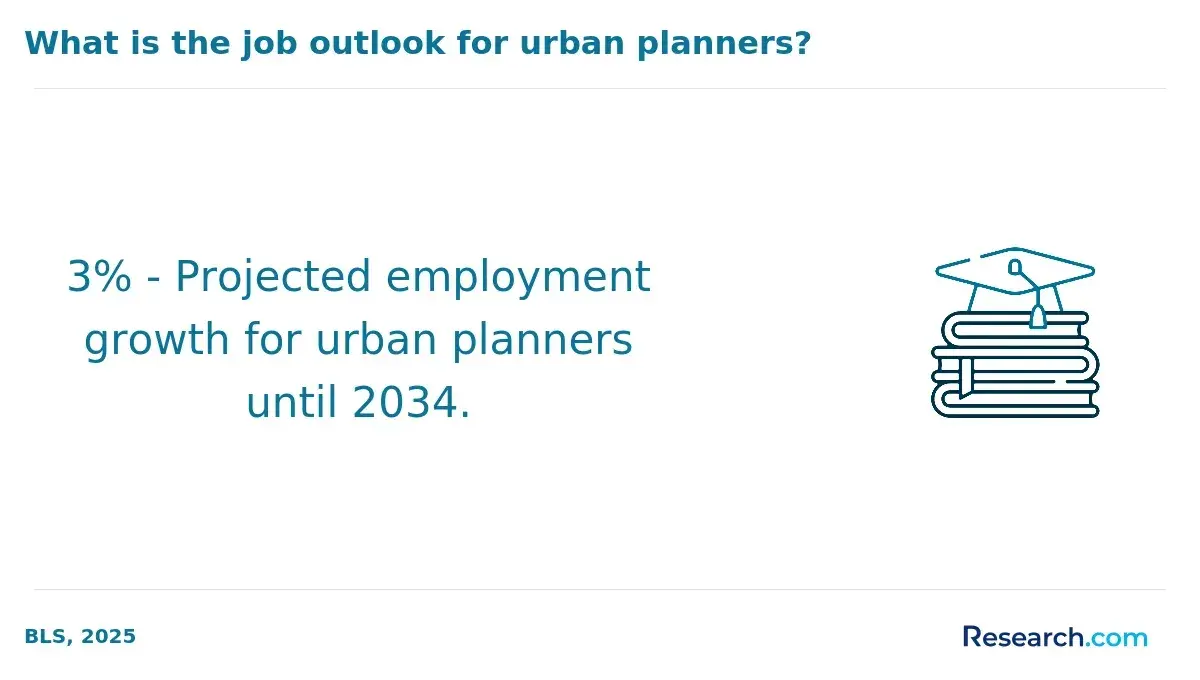
A fast online urban planning degree can prepare graduates for planning, policy, transportation, environmental, and community development roles, depending on the degree level, curriculum, experience, and local employer expectations. Employment for urban and regional planners is projected to grow 3% from 2024 to 2034, faster than the average for all occupations.
Common career paths include:
- Urban Planner: Urban planners evaluate land use, review development proposals, support zoning decisions, analyze data, and coordinate with public agencies. Salaries typically range from $55,000 to $90,000 annually depending on experience and location.
- City Planner: City planners work on municipal development, revitalization, growth management, and long-term community plans. They often collaborate with local officials, residents, developers, and planning boards. Salaries are comparable to urban planners, generally within the $55,000 to $90,000 range.
- Community Development Specialist: These professionals design and support programs related to housing, neighborhood improvement, infrastructure, economic development, and public services. The role often requires public engagement, grant knowledge, and policy analysis.
- Transportation Planner: Transportation planners analyze mobility needs, transit systems, traffic patterns, pedestrian and bicycle access, and environmental impacts. Typical earnings fall between $60,000 and $95,000 annually.
- Environmental Planner: Environmental planners evaluate how development affects natural resources, sustainability goals, permitting, and regulatory compliance. Salaries vary based on location and experience.
Students should match electives and projects to the roles they want. A student targeting transportation planning should prioritize transportation policy, data analysis, and GIS. A student interested in environmental planning should look for sustainability, environmental regulation, and land-use coursework. Those comparing affordable, career-focused online education in other fields may also review cheapest online EdD programs, which similarly emphasize time to completion and professional outcomes.
Technology problems can quickly derail an accelerated program because missed lectures, slow uploads, corrupted files, or incompatible software leave little time to recover. Students should confirm hardware, software, and internet expectations before classes begin, especially if the curriculum includes GIS, mapping, visualization, statistics, or collaborative studio work.
Typical technology requirements include:
- Reliable high-speed internet access: Stable broadband with at least 25 Mbps download speed is important for video lectures, live discussions, file uploads, and collaboration.
- Learning management system access: Students must be comfortable using the program’s LMS to find readings, submit assignments, track deadlines, view grades, and communicate with instructors.
- Video conferencing tools: Live classes, advising sessions, team meetings, presentations, and critiques may require working audio, video, screen sharing, and a quiet location.
- Productivity software: Word processing, spreadsheets, presentation tools, PDF editing, and cloud storage are commonly needed for reports, memos, data tables, and group work.
- Planning-related software: Depending on the curriculum, students may use data visualization tools, GIS mapping, or urban modeling software. Requirements may vary by course, so students should ask whether licenses are included in tuition or must be purchased separately.
- Backup plan: Students should have access to cloud backups, an alternate internet option, and technical support contacts. In a compressed course, losing several days to a preventable tech issue can affect grades.
Technology readiness is part of academic readiness in a fast online program. Students comparing cost and access should also consider whether schools on lists of the most affordable online colleges provide adequate technical support, software access, and online student services.
The fastest online urban planning degree is not automatically the best one. A good choice balances speed, credibility, cost, workload, transfer policy, curriculum fit, and career support. Students should evaluate whether the program can realistically be completed on the advertised timeline based on their own schedule and academic background.
Use these criteria when comparing programs:
- Confirmed program length: Ask for a term-by-term plan showing how students finish in under two years. Confirm whether that timeline assumes full-time enrollment, transfer credits, summer study, or no breaks.
- Accreditation: Prioritize institutions with recognized accreditation and, where relevant, planning-focused accreditation such as the Planning Accreditation Board. Accreditation can affect employer confidence, transferability, and eligibility for some forms of aid.
- Curriculum quality: Look for core coursework in land use, planning law, GIS, transportation, housing, environmental planning, public policy, research methods, and community engagement.
- Applied learning: Strong programs include capstones, studio-style projects, internships, simulations, or portfolio-building assignments that help students show practical skills to employers.
- Transfer credit policy: Students with prior coursework should request an unofficial transfer estimate before enrolling. Transfer approval can significantly affect both cost and timeline.
- Total cost: Compare tuition, fees, materials, software, travel requirements, and any residency or in-person components. A slightly longer program with better aid may cost less than the fastest option.
- Faculty and advising access: Accelerated students need responsive advising because a missed prerequisite or delayed registration can extend the degree.
- Career outcomes: Review employment support, alumni roles, employer partnerships, portfolio requirements, and whether the program helps students prepare for planning-related career goals.
Before applying, students should contact admissions, ask direct questions about timelines and costs, and request documentation rather than relying only on promotional claims. The right program should make its acceleration model clear, credible, and manageable.
What Graduates Say About Their Fastest Online Urban Planning Degree Programs
- Andre: "Choosing a fast online urban planning degree allowed me to finish in less than two years without sacrificing quality, which was crucial since I had a full-time job. The total cost was surprisingly affordable, much less than traditional programs, making it a smart investment. Since graduating, I've rapidly advanced in my career, leading several innovative city development projects."
- Beryl: "I opted for an accelerated online urban planning program primarily because I wanted to pivot my career quickly without accumulating excessive debt. The cost was manageable compared to on-campus alternatives, and finishing early gave me a real edge in job interviews. Reflecting on my journey, this decision has transformed my professional outlook and opportunities profoundly."
- Zita: "The structure of the fast-paced online urban planning degree fit perfectly into my busy schedule, and completing it under two years saved me time and money, roughly half the typical cost. Professionally, it has enhanced my credentials and allowed me to contribute more effectively to urban design initiatives in my firm, gaining respect as a well-prepared expert."
Other Things You Should Know About Urban Planning Degrees
Look for programs accredited by the Planning Accreditation Board (PAB) to ensure quality education and industry recognition. Accreditation by PAB is crucial for career advancement and may be required for certification in urban planning practices. Always verify the program's accreditation status before enrolling.
Typically, you need a high school diploma or equivalent for entry into 2027's fastest online urban planning degree programs. Some programs may require prerequisite courses in geography or environmental science. Check specific program details for any additional requirements such as essays or recommendation letters.
- Making sure you're not a bot! https://mostwiedzy.pl/pl/publication/download/1/students-soft-urban-planning-skills-and-local-development-are-the-benefits-from-the-fair-of-good-pra_47438.pdf
- MS Planning and Development - Geography https://geography.ecu.edu/prospective-students/graduate-programs/ms-planning-and-development/
- PLAN 4+1 - Community and Regional Planning Program https://planning.ecu.edu/academic-programs/plan-41/
- Master of Planning https://www.uts.edu.au/courses/master-of-planning
- Top 25 Most Affordable Urban Planning Schools https://urbanplanningdegree.com/top-25-most-affordable-urban-planning-schools/
- One-year Accelerated Stream https://www.torontomu.ca/school-of-urban-and-regional-planning/graduate/one-year-accelerated-stream/
- Master of Urban and Regional Planning https://architectureandplanning.ucdenver.edu/academics/urban-and-regional-planning/murp
- MSc Urban Planning https://www.ube.ac.uk/postgraduate/urban-planning/
- Master of Urban Planning & Policy https://cuppa.uic.edu/academics/upp/upp-programs/mupp/
- Become a planner | Championing the power of planning https://www.rtpi.org.uk/become-a-planner/