2027 Are Online Urban Planning Degrees Respected by Employers?

Co-Founder and Chief Data Scientist
The popularity of online urban planning degrees has surged, reflecting broader growth in digital education. Recent studies show that nearly 70% of employers now view online degrees as credible, provided the programs come from accredited institutions.
This article explores employer perceptions of online urban planning qualifications and the factors that affect their acceptance. Understanding these perspectives is crucial for prospective students considering their career paths.
The analysis draws on current trends and expert insights to clarify how online credentials stand in the job market, offering a clear overview without delving into the specific criteria or outcomes that will be examined later.
Key Benefits of Online Urban Planning Degrees Respected by Employers
- Employers increasingly recognize online urban planning degrees from accredited institutions as equivalent to traditional degrees.
- Graduates develop practical skills in GIS, data analysis, and sustainable development, which are highly valued in 85% of urban planning job descriptions nationwide.
- Holding an online urban planning degree improves career prospects by enabling access to a broader job market and often results in a 15% higher likelihood of promotion within five years of graduation.
Which Accrediting Bodies Make an Online Urban Planning Degree Legitimate?
Accreditation is essential for ensuring the quality and employer recognition of online urban planning degrees, serving as a key indicator of a program's educational rigor and reliability. It assures students and employers alike that the curriculum, faculty, and institutional resources meet established standards.
Without appropriate accreditation, graduates may face challenges in credit transferability, professional licensure, and job competitiveness. The following outlines the primary accrediting bodies that contribute to legitimate online urban planning accreditation and how each enhances a degree's credibility.
Regional Accreditation
Regional accreditation is the broadest form of institutional review granted by agencies such as the Middle States Commission on Higher Education or the Western Association of Schools and Colleges.
For any online urban planning degree, regional accreditation ensures the institution's overall quality, improves credit transferability, and makes the degree recognizable by employers nationwide.
Lack of regional accreditation significantly diminishes the degree's value regardless of the program's content.
Programmatic Accreditation
Programmatic accreditation is critical for specialized recognition. The Planning Accreditation Board North America is the leading body accrediting urban planning programs specifically. Programs with PAB accreditation demonstrate adherence to profession-specific standards concerning curriculum and faculty expertise.
For example, universities with online offerings like the University of Florida, which hold PAB accreditation, provide graduates with credentials that employers view on par with traditional, in-person degrees.
Professional Body Recognition
Professional body recognition-although not formal accreditation-includes endorsements from organizations such as the American Planning Association (APA). These recognitions enhance program reputation and may support international opportunities or additional career advantages.
While rarer, international accreditations like those from the Royal Town Planning Institute (RTPI) can supplement a program's credibility for certain students.
Prospective students seeking a legitimate online urban planning accreditation should verify both institutional and program-specific credentials since accreditation status greatly influences career outcomes.
For those interested in accelerated training with strong job prospects, programs such as a 6 month course with high salary offer additional pathways into the profession.
Does University Reputation Affect Employer Views of Online Urban Planning Degrees?
University reputation plays a significant role in shaping employer perceptions of online degrees, particularly in fields like urban planning. Employers tend to favor degrees from institutions with strong standings, as the university's history and prestige often serve as indicators of quality and rigor.
This reputation helps establish initial trust in the credibility of an online urban planning degree. Several key factors influence how employer perception of online urban planning degrees from top ranked schools is formed:
- Institutional Prestige: Well-known universities with a legacy of academic excellence generally have their online programs viewed more positively, lending added credibility to their graduates.
- Alumni Success: The professional achievements of former students reflect the effectiveness of the program and can reassure employers of the candidate's capabilities.
- Accreditation Status: Accreditation offers formal recognition that the program meets certain educational standards, which employers often require when making hiring decisions.
- Partnerships with Industry: Collaborations with relevant organizations provide students with practical experience and networking opportunities, enhancing their job readiness.
While a strong reputation for their online urban planning degree enhances employer trust, it is important to remember that skills and experience remain pivotal in hiring outcomes.
Employers increasingly recognize the value of applied knowledge, with studies showing that over 70% of organizations hired applicants with online degrees in the past year, signaling growing acceptance.
For prospective students evaluating programs, resources on the best online degrees for seniors also provide insights into how reputation intersects with educational quality.
Do Employers Treat Online and On-Campus Urban Planning Degrees Equally?
Over the past decade, employer perceptions of online urban planning degrees have become significantly more positive. What was once viewed with skepticism is now commonly accepted, especially when the degree is from a reputable, accredited institution.
Many hiring managers today recognize that online urban planning graduates often possess the same foundational knowledge and skills as those who earned their degrees on campus.
This change reflects broader shifts in higher education, where a growing number of students are enrolling in online programs without diminishing the value seen by employers.
When evaluating online versus traditional urban planning credentials, employers focus less on the mode of delivery and more on factors such as accreditation, university reputation, and practical experience.
Degrees from accredited schools with strong urban planning programs are widely accepted regardless of whether earned online or in person. Employers tend to be cautious about credentials from for-profit institutions but prioritize evidence of rigorous coursework and hands-on learning opportunities like internships and capstone projects.
Practical experience remains a key differentiator, as it demonstrates real-world readiness. Importantly, most employers do not view the online format as a barrier if the program offers meaningful training and the institution is well-regarded.
Graduates can enhance their credibility by choosing accredited programs from respected universities, actively pursuing practical experiences, and clearly showcasing their coursework rigor and professional skills to potential employers.
Employers are increasingly recognizing that AI-powered virtual classrooms significantly enhance the quality and credibility of online urban planning education.
Advanced technologies like adaptive learning systems customize instructional content based on each student's strengths and weaknesses, enabling a more personalized and effective learning experience.
Virtual simulations immerse students in dynamic, interactive scenarios where they can practice real-world urban planning challenges, bridging the gap between theory and practical application. In addition, AI-driven tutors provide immediate feedback and tailored guidance, which supports deeper comprehension of complex topics crucial to the field.
Programs that combine these innovations with accredited curricula-such as those offered by reputable institutions-ensure online students receive education comparable to traditional, on-campus options.
This technological sophistication has contributed to a marked shift in employer perception of online urban planning degrees. Data shows graduates from accredited online programs obtain roles across both public and private sectors, working in areas like zoning, urban design, and sustainability without differentiation from campus-based diploma holders.
Moreover, industry certifications like AICP enhance professional credibility and can elevate earning potential substantially. Despite this progress, some skepticism remains, particularly among employers unacquainted with virtual learning or concerned about missing in-person networking and collaborative experiences.
Nonetheless, the growing acceptance of online degrees-backed by robust AI-driven learning environments and prestigious accreditation-indicates a developing consensus: employers increasingly view online urban planning graduates as well-prepared to meet contemporary professional demands.
Employers highly value online urban planning graduates for their combination of professional expertise and essential soft skills, such as communication and teamwork. These graduates are well-equipped to navigate the complexities of urban development, making them competitive candidates in a dynamic job market.
Below are some key employer valued urban planning skills that online degree programs specifically develop to prepare students for success in the field.
- Analytical and Research Abilities: Online programs enhance graduates' capacity to conduct in-depth research through virtual seminars, enabling them to analyze urban and socioeconomic challenges. Employers seek this skill for its importance in evidence-based policymaking and strategic problem-solving.
- Land Use, Zoning, and Regulation Knowledge: Students engage with case studies and simulations online to master municipal processes and zoning regulations, which are frequently highlighted in planning job listings. This technical expertise is critical for compliance and effective planning decisions.
- Project Management: Online coursework incorporates collaborative assignments and deadline-driven projects, fostering strong organizational and leadership abilities. These skills are essential for overseeing community development and coordinating multidisciplinary teams.
- Communication Skills: Writing and verbal communication are sharpened through digital presentations and policy drafting tasks, preparing graduates to effectively engage diverse stakeholders in both virtual and in-person settings.
- Data Analysis and GIS Proficiency: Mastery of Geographic Information Systems (GIS), statistical tools, and data visualization is integral to online curricula, helping students build the digital skills for urban planning jobs that employers demand in today's tech-driven environment.
- Collaboration and Teamwork: Virtual group projects simulate real-world planning contexts, enhancing negotiation and consensus-building abilities that are vital for successful community planning initiatives.
- Critical Thinking and Problem-Solving: Independent analysis and creative approaches to urban challenges are strongly emphasized, equipping graduates with the mindset employers recognize as crucial for innovative planning solutions.
The availability of programs, including the cheapest master's degree options, makes pursuing these valuable competencies through online urban planning degrees both accessible and practical for many prospective students.
Earning professional certifications can significantly enhance the credibility of an online urban planning degree by formally validating your expertise and demonstrating mastery of industry-specific competencies.
These certifications serve as trusted credentials that signal to employers your commitment to high standards and up-to-date skills. To understand how professional certifications strengthen the value of online urban planning degrees in the eyes of employers, consider the following key points:
- AICP Certification (American Institute of Certified Planners): Regarded as the gold standard in urban planning, the AICP credential represents rigorous assessment of planning knowledge, ethics, and professional experience. Employers view AICP-certified planners as highly skilled, and these individuals typically earn substantially more.
- LEED Accredited Professional: In an era where sustainability is central to urban planning, obtaining LEED AP demonstrates specialized expertise in green building and sustainable site development. This certification aligns candidates with the growing demand for environmental responsibility.
- GISP (Certified Geographic Information Systems Professional): GISP validates competencies in geographic information systems, an essential technical skillset for modern planners. Holding this credential shows employers that a candidate is proficient in data-driven spatial analysis and decision-making techniques vital for contemporary urban projects.
- Specialized Urban Planning Certificates: Certificates in areas like community engagement or sustainable development provide targeted skills and demonstrate a candidate's ability to address specific challenges. Such credentials allow graduates to customize their expertise and signal readiness for complex responsibilities.
- Career Advancement and Employer Trust: Beyond technical validation, professional certifications communicate ongoing professional growth and adherence to ethical standards. Many employers increasingly list these certifications-such as AICP, LEED AP, and GISP-as requirements or strong preferences.
Reflecting on these insights, a professional who completed his online urban planning degree shared how pursuing the AICP certification dramatically influenced his career trajectory.
Initially, he faced skepticism from some employers who doubted the rigor of online education, but the structured preparation and intensive examination process for the AICP helped him build confidence in his expertise.
He described the certification journey as challenging yet rewarding, noting that achieving it not only expanded his practical knowledge but also served as a tangible credential that opened doors in the job market.
He emphasized, "Having that recognized professional stamp of approval made a real difference when I applied for leadership roles, turning what was once a question mark about my online degree into a strength employers respected."
This experience reinforces how professional certifications can substantiate the value of online urban planning degrees and transform perceptions in the workforce.
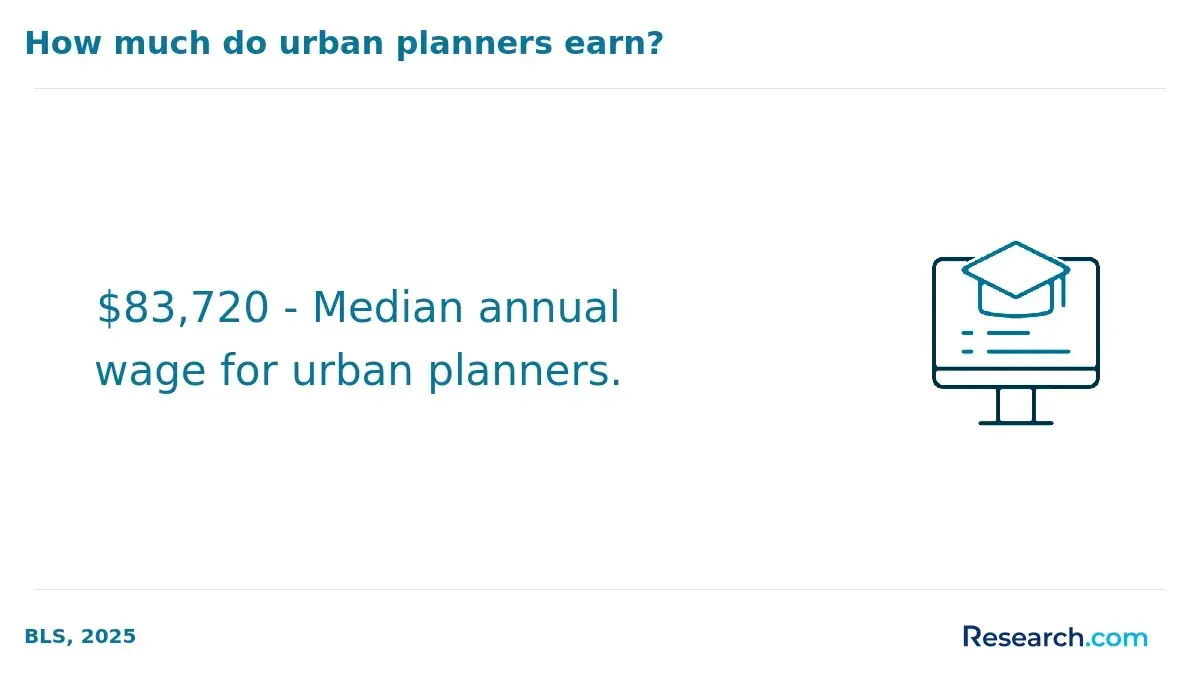
There is no significant salary difference between online and on-campus urban planning graduates, according to industry data. Employers assess candidates primarily based on degree level, accreditation, and professional qualifications rather than the mode of education delivery, reflecting a broader urban planning salary comparison trend across the field.
Various factors contribute to salary outcomes for graduates from online versus traditional urban planning programs, and understanding these key influences can help prospective students gauge career prospects more effectively:
- Degree Level and Accreditation: Holding a master's degree in urban planning, regardless of whether it is earned online or on-campus, is linked to higher salary prospects, with graduates typically earning around $78,500 annually compared to bachelor's holders.
- Geographic Location and Employer Type: Salary differences often arise based on where graduates are employed, with urban planners in areas like Washington, D.C. commanding higher wages. Additionally, salaries vary by employer sector, with non-governmental positions generally offering better compensation than public agencies.
- Professional Certification and Experience: Achieving certifications such as the AICP and accumulating relevant work experience significantly enhance career growth opportunities for both online and on-campus graduates. These credentials tend to overshadow education delivery method when impacting salary and promotion.
- Employer Perception and Program Reputation: Employers value the reputation of the academic institution and the quality of its accredited programs more than the learning environment. Graduates from well-regarded online programs demonstrate competitive skills, aiding in online urban planner career growth.
Prospective students seeking reputable degree options may consider exploring the top non profit accredited colleges for online urban planning programs.
Earning an online urban planning degree can significantly influence long-term career advancement and promotion opportunities across various industries such as government, private, and nonprofit sectors.
With growing urbanization and the increasing complexity of city planning, employers highly value professionals equipped with accredited online urban planning credentials. Building on this, several key ways show how online urban planning degrees support professional growth and career mobility.
- Flexible Skill Acquisition: Online urban planning programs offer flexibility that enables working professionals to continue their education without interrupting their careers. This immediate application of newly acquired planning, analytical, and leadership skills enhances their eligibility for promotions.
- Industry-Recognized Credentials: Accredited online degrees, particularly those approved by the Planning Accreditation Board (PAB), carry the same weight as traditional campus degrees. Graduates gain access to credentialing opportunities like the American Institute of Certified Planners (AICP) certification.
- Expanded Career Pathways: Completing an online urban planning degree opens doors to diverse roles including GIS analyst, community development coordinator, and transportation planning aide. This diversity allows graduates to enter or move upward in fields tied to local governments and regional planning agencies.
- Foundation for Advancement: An online bachelor's degree often serves as a prerequisite for graduate programs, which are necessary for specialized or senior planning roles. The steady job growth for those with advanced credentials underscores the degree's role in long-term professional development.
- Transferable Skills Development: Online urban planning curricula emphasize skills such as analysis, organization, and communication, which are valued across related sectors like public administration. These skills support broader career mobility and leadership opportunities beyond traditional planning positions.
When I spoke with a professional who pursued an online urban planning program, she reflected on how the flexible schedule allowed her to balance full-time work while deepening her expertise.
Initially facing challenges in managing coursework alongside job demands, she found that the program's emphasis on real-world problem solving gave her practical tools she quickly applied on the job.
As a result, within two years of completing her degree, she was promoted to a senior planning analyst role, where she leads community engagement projects. She shared, "The degree wasn't just a credential - it fundamentally changed how I approach planning challenges and made me visible as a resource in my department."
Her experience underscores how an online urban planning degree can be a decisive factor in career growth and expanded responsibilities.
Employers across various industries are increasingly open to hiring candidates who hold degrees in urban planning obtained through online programs. This shift reflects growing trust in the quality and relevance of remote education paired with the evolving needs of the workforce.
Here are some of the key types of companies and sectors that actively hire graduates from online urban planning programs, demonstrating the diversity of opportunities available to these candidates:
- Local and State Government Agencies: These organizations frequently employ online urban planning graduates for roles such as planning analysts, zoning permit specialists, and community development coordinators.
- Urban and Regional Planning Consulting Firms: Consulting firms seek professionals with online urban planning degrees to fill positions focused on transportation planning, land use analysis, and environmental impact assessments.
- Real Estate Development and Property Management Companies: Graduates with online urban planning education are hired to evaluate site feasibility, conduct market research, and navigate zoning laws. This sector favors candidates who blend planning expertise with business insight.
- Nonprofit and Advocacy Organizations: Nonprofits focused on housing, transportation, and community development recruit online-trained planners for their interdisciplinary skills and capacity to manage public outreach or support grant writing.
- Environmental and Sustainability Firms: These companies hire urban planning graduates educated online for positions related to climate resilience, sustainability program management, and environmental compliance.
For those exploring remote urban planning jobs in the United States, these industries represent some of the strongest avenues for employment.
Many prospective students consider universities with dual degree programs to boost their qualifications and adaptability in this competitive field, which often leads to higher salary ranges and diverse job opportunities.
The ongoing evolution of technology, accreditation standards, and employer attitudes is profoundly influencing how online urban planning degrees are perceived in the professional job market.
As these factors advance, the credibility and value of online programs continue to strengthen, encouraging more students and hiring managers to recognize their legitimacy and academic rigor.
This dynamic environment is paving the way for significant improvements in how online urban planning education is delivered and validated, ensuring graduates are well-equipped for career success.
Within this context, several key trends stand out as drivers of enhanced legitimacy and employer recognition in online urban planning programs.
- AI-Enhanced Learning Validation and Competency Assessment: AI tools are revolutionizing how student skills are measured and demonstrated. By integrating AI-driven assessment systems, online programs can provide transparent, data-backed evidence of students' mastery in critical areas like GIS analysis and data analytics.
- Global Accreditation Standardization: Institutions across the U.S., Europe, and Australia are increasingly adopting unified international accreditation frameworks. This alignment ensures consistent academic quality and fosters mutual recognition among employers worldwide.
- Industry Partnership Integration: Formal collaborations with planning firms, municipalities, and development organizations embed practical experience directly into online curricula. These partnerships offer mentorships and real-world projects that demonstrate graduates' applied skills.
Here's What Graduates of Respected Online Urban Planning Programs Have to Say About Their Degree
- Alexis: "Completing my online urban planning degree was a game-changer for my career. The flexibility of the program allowed me to balance work and family while gaining skills that immediately made me competitive in the job market. Within months of graduation, I secured a position with a city government agency focused on sustainable development, where I've been able to implement real-world solutions that benefit my community. The online program's network also connected me with mentors who continue to support my growth. This degree truly opened doors I hadn't imagined before."
- Darius: "As a professional already working in urban development, finishing my online urban planning degree helped me advance into leadership roles that demand a deeper understanding of policy and design. The curriculum's practical approach and case studies encouraged me to think critically about equitable urban spaces, which enriched my vision for community impact. I appreciate how the online setting allowed interaction with a diverse group of peers and professors, broadening my perspective beyond my local area. This degree empowered me to lead projects that promote inclusivity and long-term resilience."
- Mariah: "The online urban planning degree gave me the opportunity to pursue my passion from a remote area without sacrificing quality education. After graduation, I landed a planning consultant role that supports small towns and rural communities, where jobs are often scarce for planners. I love that my work directly contributes to shaping livable, thriving spaces that reflect local needs. This program's career services helped me navigate the job search remotely, boosting my confidence in professional settings. The experience has been both personally and professionally rewarding."
Other Things You Should Know About Respectable Online Urban Planning Degree Programs
Employers generally value accredited online urban planning degrees similarly to traditional ones if the school has a strong reputation. However, some firms may prefer candidates with in-person experience or internships. The key factor is the program's credibility and the applicant's demonstrable skills.
Yes. The American Institute of Certified Planners (AICP) requires a college degree, plus planning experience and passing the AICP Certification Exam. An online degree from a recognized program can count if the school is accredited and the coursework matches planning competencies.
In 2027, an online Urban Planning degree can effectively lead to job opportunities. Employers are increasingly recognizing the credibility of accredited online programs, especially those offering comprehensive curricula and practical experience. Ensuring the program is from a reputable institution and is accredited remains crucial for career prospects.
- All Master's in Urban Planning Programs - GISDegree.org https://www.gisdegree.org/programs/masters-in-urban-planning/
- Urban Planner https://online-distance.ncsu.edu/career/urban-planner/
- How Employers View Online Degrees and Distance Learning Programs https://londongatecollege.com/how-employers-view-online-degrees-and-distance-learning-programs/
- Master's in Urban & Regional Planning Career Outlook https://scs.georgetown.edu/programs/356/master-of-professional-studies-in-urban-regional-planning/career-outlook
- What Employers Really Think about Your Online Degree https://bachelors-completion.northeastern.edu/knowledge-hub/are-online-degrees-respected/
- 10 Top Online Learning Trends for 2025: Definitive Guide | Devlin Peck https://www.devlinpeck.com/content/online-learning-trends
- Full article: Employees’ perceptions of the fairness of AI-based performance prediction features https://www.tandfonline.com/doi/full/10.1080/23311975.2025.2456111