
2027 How to Become a School Nurse – Salary & Requirements

Co-Founder and Chief Data Scientist
Becoming a school nurse is a nursing career decision with more moving parts than many people expect. You need the right nursing education, RN licensure, clinical judgment, comfort working with children and families, and an understanding of school policies, public health, confidentiality, and emergency response. The role matters because student health affects attendance, learning, safety, and family trust in the school environment.
This 2026 guide explains how to become a school nurse, what the job involves, which degrees and credentials may be required, how salaries compare with related nursing paths, and when advanced education may be worth considering. It is designed for aspiring nurses, current RNs exploring a school-based role, nursing assistants planning their next step, and school nurses evaluating career advancement options such as online BSN programs, MSN pathways, and nurse practitioner tracks.
How to Become a School Nurse Careers Table of Contents
- Why school nursing can be a strong career choice
- School nurse career outlook and salary
- Skills school nurses need
- How to start a school nurse career
- How school nurses can advance their careers
- Why health promotion and preventive care matter in schools
- Online programs that can support school nurse advancement
- Legal and ethical issues school nurses must manage
- How ADN to MSN NP programs can expand career options
- Technology trends in school nursing
- Whether advanced education is cost-effective for school nurses
- How advanced education can improve leadership and income potential
- How affordable practical nursing programs can help beginners
- Challenges and rewards of school nursing
- Alternative careers for school nurses
- Continuing education for school nurses
- Professional organizations and resources
- How becoming a nurse practitioner can build on school nursing experience
Quick Answer: How Do You Become a School Nurse?
Most school nurses first become registered nurses by completing an accredited ADN or BSN program, passing the NCLEX-RN exam, and obtaining an RN license. Many schools prefer or require a BSN, and the National Association of School Nurses favors RNs with a BSN. Depending on the state or district, candidates may also need school nurse certification, state education department approval, pediatric or community health experience, CPR training, and background checks.
A practical route is: earn an ADN or BSN, become licensed as an RN, gain one to two years of clinical experience when possible, review state and district requirements, and apply for school nurse positions or certification. Nurses who want leadership, advanced practice, or higher-level roles can later consider online RN to MSN programs, DNP programs, or nurse practitioner education.
Why school nursing can be a strong career choice
School nursing appeals to nurses who want to combine pediatric care, public health, education, family communication, and community service. Instead of working only in a hospital or clinic, school nurses practice inside educational settings such as preschools, elementary schools, middle schools, high schools, colleges, vocational schools, and juvenile correction facilities. Their work directly affects whether students can safely attend class, manage chronic conditions, recover from illness, and participate in school life.
The job is broader than treating minor injuries. School nurses administer medications, monitor conditions such as asthma or diabetes, respond to emergencies, track immunization and health documentation, educate staff, support mental and social-emotional wellness, and coordinate with parents, physicians, public health agencies, and school administrators. Nurses comparing clinical environments may also want to understand adjacent healthcare roles, including where phlebotomists can work, because school nursing is only one of many patient-facing pathways.
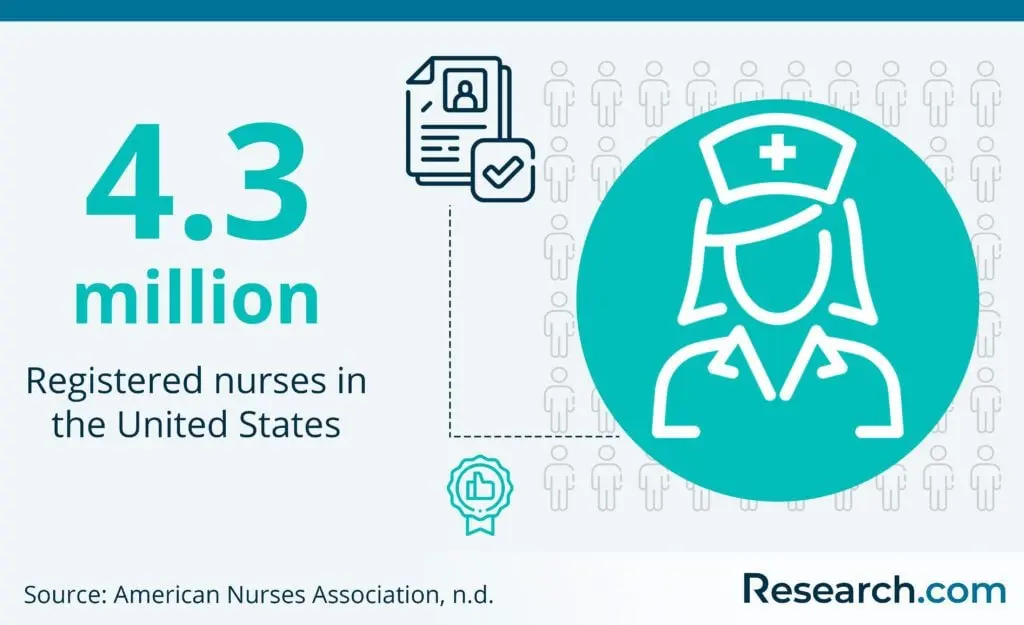
School nurses are part of the larger registered nursing workforce. As part of the 4.3 million registered nurses nationwide, they contribute to local and national health by delivering care, improving systems, addressing disparities, and supporting healthier communities (American Nurses Association, n.d.). For nurses who value prevention, child advocacy, consistent student relationships, and community impact, the school setting can be especially meaningful.
School nurse career outlook and salary
The outlook for registered nurses remains steady. Employment for registered nurses is projected to grow 5% from 2024 to 2034, which is about as fast as the average for all occupations (US BLS, 2024). School nurse hiring depends on district budgets, state requirements, student enrollment, public health needs, and whether a school employs a full-time nurse, shares nurses across campuses, or contracts services.
Compensation varies by employer, geographic area, union agreements, contract length, credentials, and years of experience. Registered nurses generally earn an average annual salary of $77,600, while the median yearly salary for school nurses is $50,587 (PayScale, n.d.). That school nurse figure falls in a similar range to the median medical billing and coding salary, but the work environment and licensure requirements are very different.
School nursing may not always offer the highest nursing pay, especially compared with advanced practice roles. However, many nurses weigh salary alongside work schedule, mission, stress level, benefits, school calendar, and the chance to build long-term relationships with students and families.
| Career role | Salary | Demand |
| Nursing Assistants | $30,310 | 5% |
| School Nurses | $50,587 | 6% |
| Registered Nurses | $77,600 | 6% |
| Nurse Anesthetists | $195,61 | 40% |
| Nurse Midwives | $112,830 | 40% |
| Nurse Practitioners | $120,680 | 40% |
| Healthcare and Social Assistance Top Executives | $154,650 | 6% |
Skills school nurses need
School nurses need both clinical competence and strong judgment because they often work with limited immediate backup. A school nurse may need to decide whether a student can return to class, needs a parent pickup, requires emergency services, or should be referred for follow-up care. That decision-making requires nursing knowledge, communication skill, careful documentation, and the ability to stay calm when families, staff, and students are worried.
Based on school nurse resumes on Zippia, the most common skills include CPR at 12.6%, School Health at 10.4%, and Health Education at 5.7% (Zippia, n.d). Those figures show that the role combines emergency readiness with population health education and routine student support.
Clinical and public health skills
- Cardiopulmonary Resuscitation (CPR). School nurses must be prepared for urgent events before emergency medical teams arrive. CPR training helps nurses respond to cardiac or breathing emergencies involving students, staff, or visitors.
- Assessment of health problems. A school nurse must recognize symptoms, document concerns, support care plans, and help students manage acute and chronic conditions. This includes knowing when a situation is routine, when it requires monitoring, and when it needs escalation.
- Health services coordination. School nurses often maintain health records, support immunization compliance, coordinate screenings, administer prescribed medications, and help implement district health protocols.
- Emergency care. School settings can involve injuries, allergic reactions, seizures, asthma attacks, medication issues, and mental health crises. Nurses need emergency care plans, fast triage skills, and the ability to coordinate with school staff and outside responders.
- Public health knowledge. School nurses help manage communicable disease reporting, health screenings, prevention campaigns, and communication with public health officials. Familiarity with records, documentation, and healthcare data concepts can be useful, though online medical coding courses are more directly aligned with billing and coding careers than school nursing practice.
Professional skills that matter in schools
- Communication. School nurses explain health issues to students, parents, teachers, administrators, and healthcare providers. They must translate clinical information into clear guidance while staying professional and sensitive.
- Attention to detail. Medication orders, allergies, immunization records, treatment plans, symptoms, and parent communications must be documented accurately. Small errors can create safety risks.
- Patience. Children may struggle to explain symptoms, families may be anxious, and staff may need coaching on health plans. Patience helps nurses build trust and reduce conflict.
- Organization. A school nurse may serve hundreds or thousands of students. Strong systems are needed for records, screenings, daily medications, emergency plans, supplies, and follow-up.
- Ethics and professionalism. School nurses handle private health information, student rights, mandated reporting concerns, and sensitive family situations. Professional boundaries and confidentiality are essential.
How to start a school nurse career
The standard path begins with nursing education. Candidates usually complete either an Associate Degree in Nursing or a Bachelor of Science in Nursing from an accredited college or university. If you are still comparing credentials, it helps to understand what a BSN degree is and how it differs from an ADN. Nurses who already hold an ADN can use RN-to-BSN programs to complete a bachelor’s degree, while people with a non-nursing bachelor’s degree may consider an accelerated BSN pathway. If you are planning your timeline, review how long different nursing pathways take in this guide to how long nursing school is.
After completing the degree, graduates must pass the NCLEX-RN exam to qualify for RN licensure. Many schools prefer candidates with one to two years of clinical experience, especially in pediatric, family health, emergency, community health, or public health settings. Requirements vary by state and district, so applicants should confirm rules with the state board of nursing, state education agency when applicable, and the school district.
Step-by-step path to becoming a school nurse
- Choose an accredited nursing program. Compare ADN, BSN, RN-to-BSN, and accelerated BSN options based on admission requirements, cost, clinical placements, schedule, and licensure outcomes.
- Complete nursing coursework and clinical training. Build a strong foundation in assessment, pharmacology, pediatrics, community health, mental health, and patient education.
- Pass the NCLEX-RN. RN licensure is the central credential for most school nurse positions.
- Gain relevant clinical experience. Pediatric, emergency, primary care, public health, or community-based nursing experience can strengthen your application.
- Check state and district requirements. Some employers require school nurse certification, education department credentials, CPR certification, background checks, or specific continuing education.
- Apply strategically. Look at public school districts, private schools, charter schools, colleges, vocational schools, and juvenile correction facilities.
| Career path | Educational institution path | Healthcare administration path | Private practice path |
| Primary focus | Evaluates student health needs, gives medications as ordered, responds to illness and injury, and supports wellness across the school community. | Coordinates healthcare operations, staffing, procedures, and administrative functions to support quality care delivery. | Assesses needs and coordinates support for older adults who require ongoing or comprehensive care. |
| Entry level jobs | Nursing Assistants ($30,310) | Healthcare Administrative Assistants ($36,980) | Home Health and Personal Care Aides ($29,430) |
| Junior management jobs | School Nurses ($50,587) | Medical Department Supervisors ($51,487) | Geriatric Care Managers ($57,379) |
| Middle management jobs | Senior School Nurses ($59,846) | Hospital Administrators ($90,652) | Geriatric Care Managers ($59,441) |
| Senior management jobs | Nursing Directors ($90,697) | Healthcare and Social Assistance Top Executives ($154,650) | Geriatric Care Directors ($67,501) |
| *Values are estimates. |
What can you do with an associate degree in a school health setting?
Nursing Assistants
A nursing assistant working in or near a school health environment may support students and staff under the direction of a licensed nurse. Duties can include basic first aid support, symptom documentation, help with routine care tasks, and assistance with approved medication procedures when allowed by policy and supervision rules.
Median Salary: $30,310
What can you do with a bachelor’s degree in nursing?
School Nurses
School nurses provide healthcare services within educational settings. They manage medication administration, respond to injuries and illness, monitor chronic conditions, support screenings, communicate with families, and lead prevention and health education activities.
Median Salary: $50,587
Registered Nurses
Registered nurses deliver patient care, educate patients and families, coordinate with physicians and other professionals, and help patients understand health conditions and treatment plans. Many RNs work in collaborative clinical teams.
Median Salary: $77,600
Can you become a school nurse with only a certificate?
A certificate alone is usually not enough for a full professional school nurse role if the position requires RN licensure. Some school health support positions may accept nursing assistant certification, but many districts require an RN license, a BSN, school nurse certification, or a set amount of RN experience. Because requirements are not uniform, candidates should verify school nurse requirements by state and by district before enrolling in a program or applying for jobs.
How school nurses can advance their careers
School nurses can move forward by adding education, certification, leadership experience, public health expertise, or advanced practice credentials. An MSN is not always required for school nursing, but it can support movement into supervisory, instructional, policy, or specialized roles. Some MSN programs include school nursing coursework alongside broader graduate nursing content, including leadership, evidence-based practice, population health, and advanced assessment. Nurses comparing graduate curricula can review common nursing course subjects to understand how undergraduate and graduate expectations differ.
A DNP may make sense for nurses who want advanced clinical leadership, nurse practitioner practice, faculty opportunities, research involvement, or high-level systems improvement work. However, advanced education should be evaluated carefully. Tuition, clinical placement requirements, state authorization, certification eligibility, employer tuition assistance, schedule flexibility, and likely career use all matter.
What can you do with a master’s degree in nursing?
Nurse Anesthetists
Nurse anesthetists, also known as CRNAs, provide anesthesia-related care before, during, and after procedures. They review medical histories, discuss allergies and medications, administer anesthesia, monitor vital signs, and adjust anesthesia levels as needed.
Median Salary: $195,610
Nurse Midwives
Nurse midwives provide reproductive and maternity care, including gynecological exams, family planning, prenatal care, birth support, and health education. They may manage labor emergencies, assist with surgical needs, and counsel patients on wellness and disease prevention.
Median Salary: $112,830
Nurse Practitioners
Nurse practitioners provide primary or specialized care, assess patients, create treatment plans, order or interpret tests depending on scope of practice, and educate patients and families. Common focus areas include adult and geriatric health, pediatric health, psychiatric care, and mental health.
Median Salary: $120,680
What roles can a doctorate support?
Healthcare and Social Assistance Top Executives
Top executives in healthcare and social assistance guide organizational strategy, oversee operations, develop policies, manage leadership teams, and report to boards or governing bodies. These roles usually require extensive leadership experience in addition to advanced education.
Median Salary: $154,650
Clinical Research Nurses
Clinical research nurses support studies, trials, and evidence-building projects that can improve care delivery and patient outcomes. They may coordinate protocols, collect data, monitor participant safety, collaborate with interdisciplinary teams, and help evaluate treatments or healthcare programs.
Median Salary: $74,775
Which certification is best for school nurses?
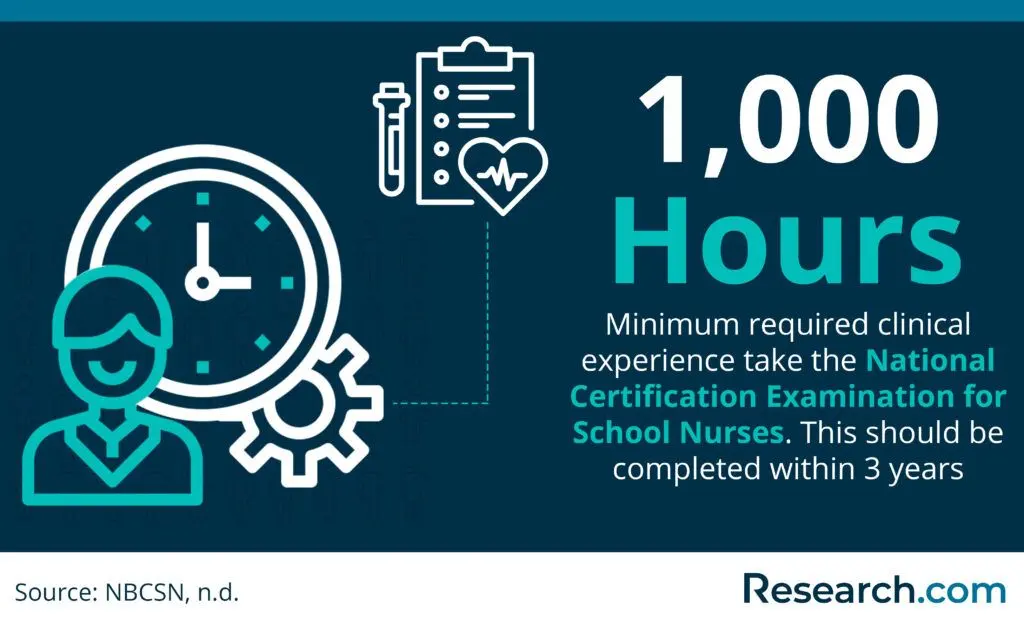
Certification is not universally required, but it can strengthen a school nurse’s professional credibility. The National Certification Examination for School Nurses from NBCSN is a widely recognized route to the Nationally Certified School Nurse credential. Eligibility requires a Bachelor’s degree, an RN license, and at least 1,000 hours of clinical experience within the past three years. Exam areas include health appraisal, nurse management, disease prevention, special health issues, health promotion, and professional issues. State-specific certification or licensure rules may still apply, so nurses should also check local requirements through the state board, education agency, district, and NASN affiliate resources.
Why health promotion and preventive care matter in schools
School nursing is preventive by design. A nurse who identifies a vision problem, hearing concern, medication issue, infectious disease pattern, mental health warning sign, or unmanaged chronic condition can help prevent a small problem from becoming a larger medical or academic barrier.
Preventive services may include vision and hearing screenings, immunization record review, medication management, chronic disease plans, injury prevention education, hygiene reminders, and referrals for follow-up care. These services support attendance, safety, and readiness to learn.
Health promotion also reaches beyond the nurse’s office. School nurses may educate students and staff about nutrition, physical activity, hygiene, mental wellness, vaping risks, communicable disease prevention, and management of chronic conditions. When done well, these efforts help students make informed decisions and help staff respond appropriately to health concerns.
For RNs who want to deepen their preparation for population health and school-based practice, flexible BSN completion options such as the top 10 RN to BSN online programs may support professional growth while allowing them to continue working.
Online programs that can support school nurse advancement
Online nursing programs can be useful for working nurses who need flexibility, but the right choice depends on current licensure, prior education, state rules, clinical requirements, and long-term goals. Common options include RN-to-BSN programs, RN-to-MSN programs, school nurse certification preparation, and advanced practice pathways. Nurses who are earlier in their careers may also compare bridge options such as a 6 month LPN to RN program online, though applicants should verify whether a specific program meets licensure and clinical requirements in their state.
School nurses considering certification can also review the National Certification Examination for School Nurses. Before enrolling in any online program, confirm accreditation, state authorization, clinical placement support, transfer credit policies, total cost, and whether the curriculum aligns with the school nursing or advanced practice role you want.
Legal and ethical issues school nurses must manage
School nurses operate at the intersection of healthcare, education, family rights, student safety, and public health law. They must protect student confidentiality while also following mandated reporting rules, district policy, state nursing regulations, and privacy requirements such as FERPA and HIPAA when applicable. Clear documentation is not optional; it is a core part of safe and defensible practice.
Common ethical challenges include balancing a student’s privacy with parent communication, responding to suspected abuse or neglect, managing infectious disease concerns, supporting students with disabilities, and advocating for a student’s health needs when resources are limited. Practical safeguards include written protocols, regular legal training, careful medication procedures, consultation with supervisors, and collaboration with interdisciplinary teams.
School nurses who move into specialized health education or counseling areas should also understand professional boundaries and compensation expectations. For example, nurses exploring nutrition-focused roles can compare duties and salary context in this guide to nurse nutritionist salary.
How ADN to MSN NP programs can expand career options
ADN-prepared nurses who want advanced clinical authority may consider bridge programs that lead toward an MSN with a nurse practitioner focus. These programs can shorten the academic route by connecting prior RN preparation with graduate-level study in assessment, evidence-based care, leadership, and specialty practice. For school nurses, this path can open opportunities in pediatric, family, community, or mental health care depending on the chosen track and state scope of practice.
Bridge programs are demanding. Before enrolling, compare admissions criteria, required bachelor’s-level bridge coursework, clinical hours, practicum placement support, certification eligibility, and whether the program fits your work schedule. Nurses comparing options can start with this overview of ADN to MSN NP programs.
Technology trends in school nursing
Digital tools are changing how school nurses document care, communicate with families, track health plans, and coordinate services. Telehealth platforms, electronic health records, wearable health monitors, and secure communication systems can help nurses respond more efficiently and support continuity of care. At the same time, technology raises important questions about privacy, data security, access, and staff training.
Technology does not replace nursing judgment. It supports better documentation, faster communication, and more organized follow-up when implemented responsibly. Nurses interested in broader holistic and evidence-informed care models may also explore related career development areas such as functional medicine nursing, while remembering that any advanced practice role must align with licensure and scope-of-practice rules.
Is advanced education cost-effective for school nurses?
Advanced education can be a smart investment when it connects clearly to a role you want and a credential you can use. An MSN, DNP, or nurse practitioner program may increase career flexibility, leadership eligibility, and access to higher-paying nursing roles. However, tuition alone does not determine value. Students should also consider fees, books, technology costs, commuting, lost work hours, clinical placement expenses, loan interest, employer tuition assistance, and expected salary change.
School nurses interested in advanced practice should compare affordable options carefully. Resources such as cheapest acute care NP programs can help identify lower-cost pathways, but affordability should be evaluated alongside accreditation, certification outcomes, clinical support, and fit with career goals.
How advanced education can improve leadership and income potential
Graduate nursing education can prepare school nurses for work beyond direct student care. Possible directions include district-level nursing leadership, school health program management, policy development, faculty roles, advanced clinical practice, research, or executive administration. These roles require more than a degree; they also require communication, budgeting awareness, staff development, data-informed decision-making, and the ability to advocate for health resources within educational systems.
Nurses considering doctoral study should compare quality and cost rather than assuming the most expensive program is the strongest. Reviewing options such as the most affordable MSN to DNP programs can help identify programs that balance academic depth with cost control.
How affordable practical nursing programs can help beginners
Practical nursing programs can be a lower-cost entry point for people exploring nursing, but they are not the same as RN preparation and may not qualify graduates for school nurse roles that require RN licensure. They can still help students build foundational patient care skills, confirm interest in healthcare, and prepare for later bridge programs.
If your long-term goal is school nursing, map the full path before enrolling. Ask whether credits transfer, whether the program leads to licensure, whether bridge options are available, and how much time and money the complete RN pathway will require. Prospective students can review cheapest online licensed practical nurse programs as a starting point for cost-conscious planning.
Challenges and rewards of school nursing
School nursing can be deeply rewarding, but it is not a low-responsibility job. Many school nurses work independently, manage broad caseloads, and make quick decisions with limited clinical backup. Understanding the trade-offs can help nurses decide whether the setting fits their strengths.
| Aspect | What it can look like | How to prepare |
| Limited resources | Budget constraints may affect supplies, staffing, equipment, and health office space. | Build strong organization systems and learn district procedures for requesting support. |
| High responsibility | The school nurse may be the main healthcare professional on campus during emergencies or complex health situations. | Maintain CPR skills, emergency plans, documentation habits, and referral protocols. |
| Communication demands | Nurses must coordinate with students, parents, teachers, administrators, and outside clinicians. | Use clear written communication, plain language, and consistent follow-up. |
| Emotional strain | Students may disclose mental health struggles, family stress, abuse concerns, or unmet healthcare needs. | Know mandated reporting rules, referral resources, and boundaries for your role. |
| Direct student impact | Nurses can help students stay in class, manage conditions, and feel safe at school. | Focus on prevention, trust-building, and student-centered care. |
| Schedule stability | Many school nurses work regular hours with weekends and school holidays off. | Compare contract length, benefits, summer expectations, and pay structure before accepting a job. |
Alternative careers for school nurses
A school nurse’s experience can transfer into other healthcare, education, communication, and administrative roles. Career changes are common in nursing. Registered nurses have a turnover rate of 18.3%, according to a comprehensive survey of over 3,000 hospitals in the United States (NSI Nursing Solutions, Inc., 2025). If school nursing does not fit your goals, your nursing background may still support several options.
Other roles to consider
- Medical journalists. Nurses with strong writing skills can explain health topics for news outlets, medical publications, research summaries, patient education materials, or public health communications.
- Health informaticists. Nurses interested in systems and data can help organize, analyze, and improve access to health records so clinicians can make better care decisions.
- Pharmaceutical sales representatives. Nurses with communication and clinical knowledge may educate healthcare providers about pharmaceutical products and support product adoption efforts.
Continuing education for school nurses
Continuing education helps school nurses keep pace with changes in pediatric health, mental health, emergency response, chronic disease management, public health guidance, and school policy. It also helps nurses maintain licensure and prepare for certifications or advanced roles.
Benefits of continuing education
- Staying current with student health needs. Courses on mental health, vaping, chronic illness, infectious disease, and emergency response can improve day-to-day readiness.
- Strengthening career mobility. Credentials such as the National Certified School Nurse designation can signal expertise and support movement into leadership roles.
- Preparing for advanced practice. School nurses considering broader clinical authority can study nurse practitioner requirements to understand education, certification, and licensure expectations.
- Serving students with complex needs. Training in special education collaboration, medication safety, diabetes care, asthma management, seizure plans, and behavioral health can improve student support.
Professional organizations and resources
School nurses benefit from professional communities because the role combines nursing, education, law, and public health. Organizations can provide practice guidance, continuing education, advocacy updates, networking, and state-specific information.
- National Association of School Nurses (NASN). NASN focuses on school nursing practice, education, research, and professional standards for managing student health needs.
- American Nurses Association (ANA). ANA serves the broader nursing profession through advocacy, continuing education, policy resources, and professional development.
- State nursing associations. State-level groups can help nurses track local regulations, school health rules, continuing education options, and networking opportunities.
- Online education and certifications. Nurses seeking affordable graduate routes can compare options such as the cheapest online nurse practitioner programs, while confirming accreditation and state eligibility.
- Conferences and workshops. Professional events allow school nurses to learn new practices, discuss shared challenges, and connect with peers who understand the school health setting.
How becoming a nurse practitioner can build on school nursing experience
Moving from school nurse to nurse practitioner can expand clinical authority, patient care responsibilities, leadership options, and earning potential. School nursing experience can be especially relevant for nurses who want to work in pediatric, family, community, or mental health practice because it develops assessment, education, prevention, and family communication skills.
The transition requires careful planning. Nurses should compare curriculum, clinical placements, certification eligibility, state scope of practice, cost, schedule, and long-term career fit. Those looking for flexible academic pathways can review easy NP programs, but program convenience should never replace accreditation, clinical quality, and licensure alignment.
Common mistakes to avoid when planning a school nurse career
- Choosing a nursing program without checking accreditation. Accreditation can affect licensure eligibility, transfer credits, graduate school admission, and employer acceptance.
- Assuming all online programs meet your state’s requirements. State authorization, clinical placement rules, and licensure requirements can differ.
- Looking only at tuition. Fees, books, background checks, uniforms, clinical travel, exam costs, and lost work time can change the real cost.
- Skipping district-specific research. One school district may require a BSN or school nurse certification while another may have different expectations.
- Assuming school nursing is easy because it is outside the hospital. The role can involve emergencies, mental health concerns, high caseloads, and complex family communication.
- Expecting salary outcomes to be guaranteed. Pay depends on location, employer, contract length, experience, degree level, and local funding.
- Ignoring clinical experience. Pediatric, emergency, community health, or public health experience can make the transition smoother and improve confidence.
Questions to ask before becoming a school nurse
- Does my state require school nurse certification, a BSN, an education department credential, or a specific number of RN experience hours?
- Will the nursing program I choose qualify me for RN licensure in the state where I plan to work?
- Does the district employ one nurse per school, shared nurses across campuses, or health aides supervised by nurses?
- What is the actual contract length, and how does that affect annual salary and benefits?
- Will I be responsible for medication administration, chronic care plans, screenings, emergency response, staff training, or public health reporting?
- What support exists for complex student needs, mental health concerns, special education collaboration, and mandated reporting?
- If I pursue an MSN, DNP, or NP program, what specific role will it help me obtain?
Learn how to become a school nurse for a mission-driven nursing career
The path to school nursing usually requires nursing school, RN licensure, relevant experience, and careful review of state and district requirements. Many employers prefer BSN-prepared nurses, and certification can strengthen qualifications. For nurses who want to grow further, online MSN programs with relevant concentrations may provide deeper preparation for leadership, advanced practice, or specialized school health roles.
School nursing is best suited for nurses who value prevention, student advocacy, family communication, and community-based care. It may not always offer the highest salary in nursing, but it can provide a meaningful blend of clinical work, education, public health, and long-term impact on young people’s lives.
Key Insights
- The core requirement is RN preparation. Most school nurse roles require an accredited nursing degree, NCLEX-RN success, and active RN licensure.
- A BSN is often the stronger route. The National Association of School Nurses favors RNs with a BSN, and many schools prefer bachelor’s-prepared nurses.
- Requirements vary by location. State boards, education agencies, and districts may set different rules for certification, experience, and credentials.
- School nurses do much more than first aid. They manage chronic conditions, medications, screenings, emergencies, prevention programs, documentation, family communication, and public health coordination.
- Salary should be evaluated in context. The median yearly salary for school nurses is $50,587, while registered nurses generally earn an average annual salary of $77,600; schedule, benefits, contract length, and work setting also matter.
- Advanced education can expand options. MSN, DNP, and nurse practitioner pathways can support leadership, specialized practice, and higher-level roles, but only when the cost and credential requirements align with career goals.
- Technology and legal knowledge are increasingly important. Digital records, telehealth, privacy rules, mandated reporting, and documentation standards are now central to safe school nursing practice.
- The best next step is local verification. Before enrolling or applying, check your state’s school nurse requirements and the hiring standards of the districts where you want to work.
References:
- American Nurses Association. (n.d.). Nurses in the Workforce. https://www.nursingworld.org/practice-policy/workforce/
- NBCSN. (n.d.). How do I become a Nationally Certified School Nurse (NCSN)? https://www.nbcsn.org/ncsn/eligibility/
- PayScale. (2025). Average Clinical Research Nurse Salary. https://www.payscale.com/research/US/Job=Clinical_Research_Nurse/Salary
- PayScale. (2025). Average Geriatric Care Manager Hourly Pay. https://www.payscale.com/research/US/Job=Geriatric_Care_Manager/Salary
- PayScale. (2025). Average Nursing Director Salary. https://www.payscale.com/research/US/Job=Nursing_Director/Salary
- PayScale. (2025). Average School Nurse Salary. https://www.payscale.com/research/US/Job=School_Nurse/Salary
- US BLS. (2025). Nursing Assistants and Orderlies. https://www.bls.gov/ooh/healthcare/nursing-assistants.htm
- US BLS. (2025). Nurse Anesthetists, Nurse Midwives, and Nurse Practitioners. https://www.bls.gov/ooh/healthcare/nurse-anesthetists-nurse-midwives-and-nurse-practitioners.htm
- US BLS. (2025). Registered Nurse. https://www.bls.gov/ooh/healthcare/registered-nurses.htm
- US BLS. (2025). Top Executives. https://www.bls.gov/ooh/management/top-executives.htm
- Zippia. (n.d.). What is a School Nurse? https://www.zippia.com/school-nurse-jobs
Other Things You Should Know About How to Become a School Nurse
To become a school nurse, you typically need a Bachelor of Science in Nursing (BSN) from an accredited institution. An Associate Degree in Nursing (ADN) can be a starting point, but a BSN is preferred. After completing the degree, passing the NCLEX-RN exam is essential for obtaining a nursing license.
While certification is not mandatory, obtaining the National Certification Examination for School Nurses from the National Board for Certification of School Nurses (NBCSN) can enhance job prospects. This certification requires a BSN, an RN license, and a minimum of 1,000 hours of clinical experience within the past three years.
The time to become a school nurse varies. Typically, it takes four years to complete a BSN program. If starting with an ADN, it can take two years for the ADN and an additional one to two years to complete an RN-to-BSN program. After completing the educational requirements, passing the NCLEX-RN exam and gaining clinical experience can take additional time.
Yes. School nurses must hold an active registered nurse license in the state where they work, and many districts prefer a bachelor’s degree in nursing. Some states also require additional school health or certification credentials before a nurse can be assigned independently to a school.
In 2027, school nurses must undertake 20 hours of continuing education every two years to maintain licensure. These hours should include courses on child health, emergency care, and legal regulations, as mandated by the Board of Nursing in most states.
In 2027, states like California, Texas, and New York have independent nursing boards that set unique requirements for school nurses. These may include state-specific exams, additional certifications, or differing continuing education mandates, which can vary significantly from the national standards.





