2027 Tennessee Nursing License Requirements

Co-Founder and Chief Data Scientist
Getting a Tennessee nursing license is the step that turns nursing education into legal authority to practice. Whether you are preparing for the NCLEX, moving to Tennessee with an out-of-state license, comparing RN and LPN pathways, or planning an advanced practice career, the key is understanding what the Tennessee Board of Nursing expects before you spend time and money on applications, programs, exams, or renewals.
This guide explains the Tennessee nursing license process in practical terms: which license fits your career goal, what education and exam requirements apply, how endorsement and compact licensure work, what renewal involves, and how to avoid delays. It is written for future nurses, current LPNs or RNs, nurses relocating to Tennessee, and working professionals deciding whether to pursue advanced nursing roles in the Volunteer State.
Quick answer: Tennessee nursing license requirements
To practice nursing in Tennessee, you must hold the appropriate license issued or recognized by the Tennessee Board of Nursing. Most candidates qualify by completing an approved nursing program, meeting clinical training expectations, passing the correct NCLEX exam, submitting an application through the Tennessee Online Licensing System, completing a criminal background check, and renewing the license every 2 years with required continuing education.
- Regulatory agency: The Tennessee Board of Nursing manages nursing licensure, education program oversight, and practice standards in the state.
- Required exam: Nursing graduates in the United States must pass the National Council Licensure Examination (NCLEX). RN candidates take the NCLEX-RN, while LPN candidates take the NCLEX-PN.
- Education requirement: Applicants need to complete an accredited nursing program, including a minimum of 1,000 hours of clinical practice.
- Application basics: Candidates apply through the Tennessee Online Licensing System and provide education verification, exam results, and a criminal background check.
- Renewal requirement: Tennessee nursing licenses are renewed every 2 years, and nurses must complete 30 hours of continuing education during that cycle.
- What nursing job market trends should Tennessee applicants understand?
- How should you begin a nursing career in Tennessee?
- What determines the price of LPN programs in Tennessee?
- Which mistakes can slow down Tennessee nursing licensure?
- How much can advanced nursing education cost in Tennessee?
- How should you choose a Tennessee nursing program?
- What should future nurse midwives know about Tennessee career options?
- Can an online nursing degree prepare you for Tennessee licensure?
- What does it take to become an LPN in Tennessee?
- Which added certifications can strengthen a Tennessee nursing career?
- How do mentoring and networking help Tennessee nurses advance?
- How can you start an LVN pathway in Tennessee?
- Where can Tennessee nurses find continuing education?
What is a Tennessee nursing license and why do you need one?
A Tennessee nursing license is the state credential that permits a qualified person to practice nursing within Tennessee. Without the proper license or compact privilege, a person cannot legally work as a nurse in the state. The license confirms that the nurse has met education, examination, background review, and practice standards designed to protect patients.
The Tennessee Board of Nursing, established in 1911, is the state authority responsible for nursing regulation. Its work centers on three connected responsibilities:
- Licensure: issuing credentials to applicants who meet Tennessee requirements
- Education oversight: reviewing nursing education programs for compliance with state standards
- Practice regulation: enforcing professional expectations and addressing conduct or competency concerns
The board also manages license renewal and may issue specialized credentials, including the Medication Aide Certificate, to individuals who complete additional training. For nurses, licensure is more than a paperwork requirement. It affects employment eligibility, patient trust, legal accountability, and professional mobility.
The financial value of nursing also helps explain why licensure matters. In 2023, RNs had a median annual wage of $86,070 [US Bureau of Labor Statistics (BLS), 2024]. That figure does not guarantee an individual salary, but it shows that registered nursing remains a regulated profession with substantial labor market value compared with many occupations.
Nurses considering advanced roles should also understand how future degrees affect scope of practice and career direction. For example, comparing FNP and DNP pathways can help an RN decide whether to focus on clinical family practice, doctoral-level leadership, or another advanced nursing route.
What types of nursing licenses are available in Tennessee?
Tennessee’s main nursing license options are the Registered Nurse (RN) license and the Licensed Practical Nurse (LPN) license. The right choice depends on how quickly you want to enter the workforce, the level of responsibility you want, and whether you plan to pursue advanced nursing education later.
| License type | Typical education route | Required exam | Common responsibilities | Best fit for |
| Registered Nurse (RN) | Associate Degree in Nursing (ADN) or Bachelor of Science in Nursing (BSN) from an accredited nursing program | NCLEX-RN | Assessing patients, administering medications, coordinating care plans, educating patients, and working with interdisciplinary teams | Students who want broader clinical responsibility, more advancement options, or a foundation for graduate nursing roles |
| Licensed Practical Nurse (LPN) | State-approved practical nursing program, generally lasting about 1 year | NCLEX-PN | Providing basic nursing care, monitoring vital signs, assisting with daily care, and working under RN or physician supervision | Students who want a faster entry point into nursing or plan to bridge into RN education later |
Both pathways require candidates to pass the corresponding NCLEX exam. Both also require ongoing renewal every 2 years. The practical difference is scope: RNs generally have broader assessment, care coordination, and leadership responsibilities, while LPNs provide essential bedside and practical care under supervision.
If you already have college credit or a non-nursing bachelor’s degree, an accelerated pathway may be worth reviewing. Research.com’s guide to accelerated BSN programs can help you compare routes that may shorten the time to RN preparation.

What are the requirements for a Tennessee nursing license?
Tennessee nursing licensure generally requires the right education, clinical preparation, exam passage, identity and background checks, and submission of required documents. Requirements differ somewhat by applicant type, so students should confirm whether they are applying by examination, endorsement, compact privilege, or as a foreign-educated nurse.
Core requirements for first-time Tennessee nursing applicants
- Approved nursing education: Candidates must graduate from an accredited nursing program. RN candidates usually complete an ADN or BSN, while LPN candidates complete an approved practical nursing program. Students comparing entry routes should review the difference between an LPN certificate and a nursing associate degree before enrolling.
- Clinical training: Nursing programs include supervised clinical experience in healthcare settings. This hands-on training helps students build judgment, communication skills, patient safety habits, and technical competence before independent practice.
- NCLEX passage: After completing the required program, applicants must pass the correct NCLEX exam for their license level. NCLEX preparation should begin before graduation, not after the application is submitted.
- Background review: Tennessee applicants must complete fingerprinting and a criminal background check as part of the licensure process.
- Application submission: Applicants use the Tennessee Online Licensing System and provide required documentation, including education verification and fees.
- Foreign-educated nurse review: Nurses educated outside the US must submit a Credentials Evaluation Service (CES) report and show English language proficiency through accepted testing methods.
Tennessee nursing license application checklist
| Step | What to prepare | Why it matters |
| Confirm the license type | Decide whether you are pursuing RN, LPN, endorsement, compact practice, or advanced practice preparation | The correct path determines your exam, documents, and timeline |
| Verify program approval | Check that your nursing program is accredited or state-approved and meets Tennessee expectations | An unapproved program can make you ineligible or delay licensure |
| Request transcripts | Have official transcripts sent directly as required | The board needs proof that you completed the required nursing education |
| Schedule background requirements | Complete fingerprinting and the criminal background check | Missing background documentation is a common cause of delays |
| Prepare for NCLEX | Use a structured study plan, practice questions, and exam-readiness assessments | Passing the exam is required before licensure can be finalized |
| Pay required fees | Review the current fee schedule for RN or LPN licensure | Applications are not complete until required payments are submitted |
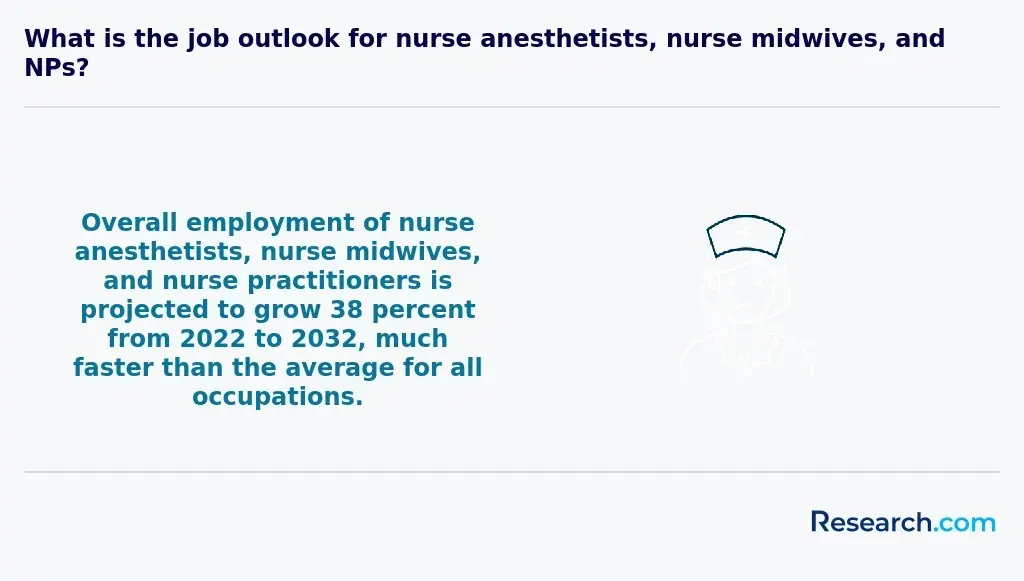
Demand for advanced nursing roles is another reason to plan carefully. The projected employment growth rate for nurse anesthetists, nurse midwives, and nurse practitioners is 38% from 2022 to 2032 (US BLS, 2024). Nurses interested in graduate study can compare lower-cost options through Research.com’s guide to the cheapest online NP programs.
How often do you need to renew your nursing license in Tennessee?
Tennessee nursing licenses must be renewed every 2 years. Renewal keeps your license active and shows that you continue to meet state expectations for professional practice. Compared with initial licensure, renewal is usually simpler, but it still requires attention to deadlines, fees, and continuing education.
- Continuing education: Nurses must complete required continuing education within the renewal period. Tennessee requires 30 hours of continuing education during that period.
- Renewal fee: Nurses should review the current fee schedule and submit the correct payment before the deadline.
- License status review: Renewal generally does not repeat every initial application requirement, but nurses must remain eligible and disclose required information.
Letting a license expire can disrupt employment, delay onboarding for a new role, or require additional steps to return to active status. Set reminders well before the renewal date, keep continuing education certificates in one place, and confirm that completed courses meet Tennessee requirements.
If you are using renewal as a time to reassess your long-term path, specialized graduate programs may be relevant. Nurses interested in mental health care, for example, can explore affordable psychiatric nurse practitioner programs as one possible advanced practice route.
Can a Compact nurse practice in Tennessee?
Yes. Tennessee participates in the Nurse Licensure Compact (NLC), which allows eligible RNs, LPNs, and licensed vocational nurses (LVNs) to practice in compact states using one multistate license. The NLC was enacted in 2000 to support cross-state nurse mobility. As of October 2023, 39 states have joined the NLC.
Tennessee became part of the NLC on July 1, 2020. A nurse whose primary state of residence is another compact state may be able to practice in Tennessee under a valid multistate license. A nurse who lives in Tennessee and wants multistate privileges generally needs to hold a Tennessee multistate license, if eligible.
| Scenario | What it means for Tennessee practice |
| You live in Tennessee and want to work in multiple compact states | You generally need a Tennessee multistate license if you meet compact eligibility rules |
| You live in another compact state and hold a multistate license | You may be able to practice in Tennessee under compact privilege |
| You live in a noncompact state | You typically need to apply for a Tennessee license if you want to practice in Tennessee |
| You move your primary residence to Tennessee | You should review Tennessee Board of Nursing requirements for changing your home state license |
What nursing job market trends should Tennessee applicants understand?
Tennessee’s nursing labor market rewards candidates who combine licensure with adaptable clinical skills. Hospitals, outpatient clinics, long-term care facilities, telehealth providers, public health organizations, and community-based care settings all rely on licensed nurses, but the strongest path depends on your license level and specialty interests.
Several trends are especially important for 2026 planning. Employers increasingly value nurses who are comfortable with electronic health records, virtual patient communication, care coordination, quality improvement, and interprofessional teamwork. Specialized preparation can also help experienced RNs move into advanced practice, leadership, or population health roles. Nurses considering this route can compare nurse practitioner programs in Tennessee to evaluate education options aligned with in-state practice goals.
How can nurses licensed in other states obtain a license in Tennessee?
Nurses who already hold a license in another state may qualify for Tennessee licensure by endorsement. This route is intended for nurses who have already met another state’s licensing standards and now need Tennessee authorization to practice.
Licensure by endorsement checklist
- Confirm that your current nursing license is active and in good standing.
- Submit an endorsement application to the Tennessee Board of Nursing with the required fee.
- Provide documentation of nursing education, including official transcripts from an accredited nursing program.
- Complete the required criminal background check.
- Verify whether compact licensure applies before submitting a separate Tennessee application.
Foreign-educated nurses have additional steps. They must have education credentials evaluated by a recognized credential evaluation service, pass the NCLEX if required, and demonstrate English proficiency through standardized tests such as the TOEFL when applicable.
How should you begin a nursing career in Tennessee?
The best starting point is to match your career goal with the correct nursing pathway. If you want to enter the workforce quickly, an LPN program may be appropriate. If you want broader clinical responsibility or graduate school options, an RN pathway through an ADN or BSN may be a better fit. If you already hold a degree, an accelerated route may shorten the timeline.
- Choose the role first. Decide whether you want to become an LPN, RN, nurse practitioner, nurse midwife, nurse educator, or another type of nurse.
- Check program approval. Confirm that the program meets Tennessee licensure expectations before enrolling.
- Ask about clinical placement. Make sure the school can help you complete required clinical hours in appropriate healthcare settings.
- Plan for NCLEX early. Review pass-rate support, tutoring, practice exams, and remediation policies.
- Budget beyond tuition. Include fees, books, uniforms, background checks, exam costs, commuting, and lost work time.
- Use state-specific guidance. Review Research.com’s roadmap on how to become a nurse in Tennessee for a broader career planning sequence.
What determines the price of LPN programs in Tennessee?
The cost of an LPN program depends on more than published tuition. Students should compare the full cost of attendance because shorter programs can still include substantial fees and required supplies.
| Cost factor | What to check before enrolling |
| Tuition | Compare in-district, in-state, and private school rates where applicable |
| Fees | Ask about application, lab, technology, graduation, testing, and clinical placement charges |
| Books and supplies | Include textbooks, software, uniforms, equipment, immunizations, and transportation |
| Exam and licensure costs | Budget for NCLEX registration, background checks, and state application fees |
| Financial aid | Ask whether the program qualifies for federal aid, scholarships, grants, or employer support |
| Schedule format | Consider how full-time, part-time, evening, or weekend study affects work income |
Before choosing the lowest advertised tuition, compare total program cost, completion support, NCLEX preparation, and clinical access. Research.com’s overview of LPN program costs can help you build a more realistic budget.
Which mistakes can slow down Tennessee nursing licensure?
Licensure delays are often preventable. Most problems come from choosing the wrong program, submitting incomplete documents, waiting too long to schedule required steps, or misunderstanding whether compact privilege applies.
| Common mistake | Better approach |
| Enrolling before confirming program approval | Verify accreditation or state approval before paying deposits or signing enrollment documents |
| Assuming online coursework automatically qualifies for Tennessee licensure | Confirm clinical placement, state authorization, and Tennessee Board of Nursing eligibility |
| Waiting until graduation to study for NCLEX | Use NCLEX-style questions throughout the final terms of the program |
| Submitting unofficial or incomplete records | Request official transcripts and follow board instructions exactly |
| Ignoring renewal deadlines | Track the 2-year renewal cycle and save proof of continuing education |
| Choosing a school based only on tuition | Compare completion rates, clinical support, student services, and exam preparation |
Some students exploring healthcare careers may also compare nursing with other licensed roles. If you are considering pharmacy instead, Research.com’s guide on how to become a licensed pharmacist in Tennessee can help you evaluate a different regulated healthcare path.
What tips and resources can help you through the licensing exam in Tennessee?
NCLEX preparation should be treated as a structured project. The exam measures whether a candidate can apply nursing judgment safely, not simply recall facts. Build a plan that includes content review, question practice, test-taking strategy, and rest.
- Use exam-focused study tools. NCLEX review books and practice tests can help identify weak areas. Platforms such as UWorld and Kaplan offer large question banks that mirror the exam experience.
- Join professional groups. Membership in organizations such as the Tennessee Nurses Association (TNA) can provide networking, professional education, and peer support.
- Study with peers strategically. A small study group can help with accountability, but it should focus on rationales, prioritization, and clinical judgment rather than passive review.
- Attend workshops or webinars. Nursing schools, employers, and professional associations may offer sessions on exam readiness, anxiety management, and test strategy.
- Simulate test conditions. Practice timed question blocks so the exam format feels familiar before test day.
How much can advanced nursing education cost in Tennessee?
Advanced nursing roles can increase responsibility and open new career options, but they also require careful financial planning. Program cost varies by degree level, school type, residency status, delivery format, and clinical placement structure.
Tuition for advanced nursing degrees typically spans from $15,000 to $50,000 per year, depending on whether the program is at a public or private institution. Students should also plan for textbooks, clinical placement fees, lab materials, certification exam fees, technology costs, travel to clinical sites, and possible reductions in work hours. Scholarships, grants, work-study, and employer tuition reimbursement may reduce out-of-pocket costs.
Nurses considering this investment should compare total cost with realistic career goals, not just possible salary growth. Research.com’s guide on how much it costs to become a nurse practitioner in Tennessee can help you review expenses, financial aid considerations, and planning strategies for advanced practice preparation.
How should you choose a Tennessee nursing program?
The best nursing program is not always the most famous or the cheapest. It is the program that is approved for your licensure goal, fits your schedule and budget, provides strong clinical training, and supports you through completion and NCLEX preparation.
Questions to ask before enrolling
- Is the program accredited or approved for Tennessee nursing licensure?
- Which license does the program prepare students for: LPN, RN, or advanced practice?
- Where are clinical placements located, and who arranges them?
- What academic support is available if students struggle?
- How does the program prepare students for the NCLEX?
- What is included in tuition, and what costs are billed separately?
- Are transfer credits accepted, and how are prior courses evaluated?
- Can online students complete clinical requirements in Tennessee?
Students comparing schools can start with Research.com’s list of the best nursing schools in Tennessee, then verify accreditation, clinical placement policies, total cost, and licensure alignment directly with each institution.
What should future nurse midwives know about Tennessee career options?
Nurse midwives provide care related to pregnancy, childbirth, postpartum health, reproductive health, and patient education. In Tennessee, this is an advanced nursing pathway, so candidates should expect graduate-level preparation, clinical specialization, and additional credentialing beyond basic RN licensure.
This route may appeal to RNs who want a focused role in maternal and reproductive health, especially in clinical, community, or women’s health settings. Before committing, review scope-of-practice expectations, program accreditation, clinical placement availability, and certification requirements. Research.com’s guide to the educational requirements for a nurse midwife in Tennessee explains the path in more detail.
Can an online nursing degree prepare you for Tennessee licensure?
An online nursing degree can be credible if it is properly accredited, authorized to serve students in Tennessee, and able to provide approved clinical experiences. However, nursing cannot be completed entirely through coursework alone. Licensure requires clinical preparation, so students must verify how in-person requirements are arranged.
| Online nursing program factor | Why it matters for Tennessee students |
| Accreditation | Accreditation helps confirm that the program meets academic and professional standards |
| State authorization | The school must be allowed to enroll students in Tennessee when applicable |
| Clinical placement support | Students need approved clinical sites and qualified supervision |
| Licensure alignment | The program should prepare graduates for Tennessee Board of Nursing requirements |
| Student services | Advising, tutoring, simulation support, and NCLEX preparation can affect success |
Before enrolling, ask the school to state in writing whether its program meets Tennessee licensure requirements. For a broader evaluation framework, review Research.com’s article Is an online nursing degree credible?.
What does it take to become an LPN in Tennessee?
To become an LPN in Tennessee, candidates must complete a state-approved practical nursing program, satisfy clinical and documentation requirements, and pass the NCLEX-PN. Applicants should also expect background checks, immunization documentation, and other program or licensing requirements.
The LPN pathway is often a good fit for students who want to enter nursing faster than a traditional RN route allows. It can also serve as a bridge toward future RN education. For a full step-by-step overview, see Research.com’s guide: What are the requirements to become a LPN in Tennessee?
Which added certifications can strengthen a Tennessee nursing career?
Supplemental certifications can help nurses move toward specialized units, leadership tracks, technology-focused roles, or administrative work. The best credential depends on your current license, employer expectations, patient population, and long-term goal.
- Clinical specialty certifications: Credentials in areas such as critical care, geriatrics, wound care, or emergency nursing may support advancement in specific practice settings.
- Technology and informatics training: Skills in health informatics, telehealth workflows, and data-supported care can be useful as healthcare systems rely more on digital tools.
- Quality and compliance education: Training in patient safety, quality assurance, or risk management may help nurses move into coordinator or leadership roles.
- Revenue cycle knowledge: Nurses who want to shift toward administrative work may consider credentials connected to coding, documentation, or billing. Research.com’s guide to medical billing and coding certification in Tennessee explains one related option.
Before paying for a certification, ask whether employers in your target setting recognize it, whether it requires renewal, and whether it leads to a clear job benefit.
How do mentoring and networking help Tennessee nurses advance?
Mentoring can shorten the learning curve for new nurses and help experienced nurses make smarter career moves. A mentor may help you understand unit culture, prepare for interviews, choose certifications, manage burnout, or decide whether graduate school is worthwhile.
Networking also matters because many nursing opportunities are shaped by clinical reputation, referrals, specialty associations, and employer relationships. Tennessee nurses can build connections through local nursing associations, conferences, alumni groups, workplace committees, and online professional communities. Students comparing flexible education options can also review top online nursing programs in Tennessee, especially if they need programs that support working adults.
How can you start an LVN pathway in Tennessee?
In many states, the term LVN means Licensed Vocational Nurse; Tennessee commonly uses the LPN title for this level of nursing practice. If you are searching for an LVN pathway in Tennessee, you should confirm whether the program or employer is referring to practical nursing and whether it leads to NCLEX-PN eligibility.
Look for state-approved training, supervised clinical experience, preparation for the NCLEX-PN, and clear guidance on Tennessee application requirements. For additional pathway details, review Research.com’s resource on how to become an LVN in Tennessee.
Where can Tennessee nurses find continuing education?
Continuing education helps Tennessee nurses renew licensure, update clinical knowledge, and stay prepared for changing patient care expectations. The most useful option depends on your specialty, schedule, employer requirements, and renewal deadline.
- Online courses: Flexible courses from accredited providers can cover patient safety, ethics, technology, medication updates, and specialty topics.
- Workshops and seminars: Hospitals, universities, and nursing groups may offer hands-on sessions that support skill development and practice updates.
- Professional organizations: Groups such as the Tennessee Nurses Association (TNA) and the American Nurses Association (ANA) may provide webinars, journals, education modules, and networking.
- Certifications and advanced degrees: Specialty credentials and graduate programs can help nurses deepen expertise while supporting broader career goals.
Keep documentation for every completed course. Do not wait until the end of the 2-year renewal cycle to search for credits, because rushed choices may not match your practice needs or renewal requirements.
Key Insights
- A Tennessee nursing license is required to practice legally unless you qualify to work under compact privilege.
- The two main entry-level license options are RN and LPN; RNs usually have broader clinical responsibilities, while LPNs can enter the workforce faster through a practical nursing program.
- First-time applicants must complete approved education, meet clinical requirements, pass the correct NCLEX exam, submit documentation, and complete a criminal background check.
- Tennessee nursing licenses renew every 2 years, and nurses must complete 30 hours of continuing education during that period.
- Compact licensure can make cross-state practice easier, but your primary state of residence and multistate eligibility determine how it applies.
- Program choice is one of the biggest licensing decisions. Verify accreditation, clinical placement support, state authorization, total cost, and NCLEX preparation before enrolling.
- Advanced nursing roles can offer broader opportunities, but tuition for advanced nursing degrees typically spans from $15,000 to $50,000 per year, so ROI planning matters.
- The most common licensure delays come from incomplete documents, unverified program approval, missed deadlines, and assumptions about online or compact eligibility.
Related Articles for Nearby States
- 2027 Kentucky Nursing License Requirements
- 2027 Mississippi Nursing License Requirements
- 2027 Alabama Nursing License Requirements
- 2027 Georgia Nursing License Requirements
- 2027 North Carolina Nursing License Requirements
- 2027 Missouri Nursing License Requirements
- 2027 Arkansas Nursing License Requirements
- 2027 Virginia Nursing License Requirements
- 2027 Indiana Nursing License Requirements
- 2027 South Carolina Nursing License Requirements
References
- Nazareno, J., Yoshioka, E., Adia, A., Restar, A., Operario, D., & Choy, C. (2021). From Imperialism to Inpatient Care: Work Differences in Characteristics and Experiences of Filipino and White Registered Nurses in the United States and Implications for COVID-19. Gender, Work and Organization. https://onlinelibrary.wiley.com/doi/10.1111/gwao.12657
- tn.gov. (n.d.). About. https://www.tn.gov/health/health-program-areas/health-professional-boards/nursing-board/nursing-board/about.html
- trustedhealth.com. (n.d.). Tennessee Nurse Licensing Guide. https://www.trustedhealth.com/nurse-licensure-guide/tennessee
- US Bureau of Labor Statistics. (2024, April 3). May 2023 State Occupational Employment and Wage Estimates, Tennessee. Occupational Employment and Wage Statistics. https://www.bls.gov/oes/2023/may/oes_tn.htm
- US Bureau of Labor Statistics. (2024, April 17). Nurse Anesthetists, Nurse Midwives, and Nurse Practitioners. Occupational Outlook Handbook. https://www.bls.gov/ooh/healthcare/nurse-anesthetists-nurse-midwives-and-nurse-practitioners.htm
- US Bureau of Labor Statistics. (2024, April 17). Registered Nurses. Occupational Outlook Handbook. https://www.bls.gov/ooh/healthcare/registered-nurses.htm
Other Things You Should Know about Nursing Licenses in Tennessee
To become a licensed RN in Tennessee in 2027, complete an approved nursing program, pass the NCLEX-RN exam, submit a licensure application to the Tennessee Board of Nursing, and undergo a background check. Ensure all credentials meet state guidelines before practicing.
Yes. Tennessee nurses can apply by endorsement through the Tennessee Board of Nursing if they hold an active, unencumbered license in another state. Applicants must submit verification of licensure, complete the application, and meet Tennessee’s criminal background and jurisprudence requirements.