
2027 How to Become a Nurse in Rhode Island

Co-Founder and Chief Data Scientist
Becoming a nurse in Rhode Island requires more than choosing a school and passing an exam. You need to understand which nursing license fits your goals, whether your program is approved for licensure, how clinical training works, what continuing education is required, and how Rhode Island’s participation in the Nurse License Compact may affect where you can practice. This guide is written for future LPNs, RNs, APRNs, career changers, and working healthcare professionals who want a clear path into nursing in Rhode Island without getting lost in licensing rules or program options.
You will learn the required education paths, licensing steps, types of nursing roles, renewal rules, salary and job outlook information already reported for the state, how to compare nursing programs, and what questions to ask before enrolling.
Quick Answer: How Do You Become a Nurse in Rhode Island?
To become a nurse in Rhode Island, you generally need to complete a state-approved or accredited nursing program, pass the correct NCLEX exam, apply for licensure through the Rhode Island Department of Health, complete required background checks, and meet continuing education requirements after licensure. RNs typically complete an ADN or BSN and pass the NCLEX-RN, while LPNs complete an approved practical nursing program and pass the NCLEX-PN. APRNs need graduate-level nursing education, national certification, and additional state approval for advanced practice.
Key Things You Should Know About Becoming a Nurse in Rhode Island
- Rhode Island has reported a nursing shortage, with projections indicating a need for over 1,000 new nurses by 2025. For students, this means nursing can offer strong employment relevance, but program quality and licensure readiness still matter.
- Average salaries for registered nurses in Rhode Island have been reported at around $82,000 annually, which makes compensation an important part of the career decision. Actual earnings vary by role, employer, specialty, shift, experience, and location.
- The employment outlook for nurses in Rhode Island has been described as strong, with the Bureau of Labor Statistics forecasting a 9% growth rate for registered nursing positions through 2030. Demand is connected to healthcare needs, an aging population, and expanded care delivery models.
- Future nurses must complete an accredited nursing program, such as an Associate Degree in Nursing or Bachelor of Science in Nursing, and then pass the NCLEX-RN to qualify for RN licensure in Rhode Island.
- Students should look for scholarships, grants, employer tuition assistance, and loan forgiveness options early. Financial planning can determine whether a program is affordable, especially for students balancing school, work, and family responsibilities.
- Allied healthcare careers that can strengthen a nursing path
- Financial aid options for nursing students in Rhode Island
- How to choose a Rhode Island nursing program
- LVN and LPN pathways in Rhode Island
- How Rhode Island nurses renew and maintain licensure
- How to become a nurse midwife in Rhode Island
- Trends changing nursing roles in Rhode Island
- Nurse practitioner education requirements in Rhode Island
- Advanced certifications and career development for nurses
- Moving from bedside nursing into administrative roles
- How to evaluate online nursing programs in Rhode Island
What are the steps to becoming a nurse in Rhode Island?
The Rhode Island nursing pathway depends on the license you want, but the basic sequence is consistent: choose the right role, complete an approved education program, pass the licensing exam, submit a state application, and keep your license active through renewal requirements.
- Choose the nursing role you want. Decide whether you are aiming for LPN, RN, APRN, nurse midwife, nurse practitioner, or another advanced role. This decision affects the degree level, clinical training, cost, and timeline.
- Complete the correct nursing education program. Future RNs may complete a diploma, ADN, or BSN program. A BSN can support broader long-term options, including leadership, specialty practice, and graduate study. Students who already hold an RN license may compare flexible bridge routes, including the most accessible online RN-to-BSN options.
- Graduate from an approved or accredited program. Before enrolling, verify that the school prepares graduates for Rhode Island licensure. Accreditation and state approval are not details to check later; they should be confirmed before paying tuition or accepting admission.
- Pass the required NCLEX exam. RN candidates take the NCLEX-RN. LPN candidates take the NCLEX-PN. The exam is designed to evaluate whether a graduate can practice safely at the entry level.
- Apply for licensure through the Rhode Island Department of Health. After meeting education and exam requirements, applicants submit the required application materials and fees. As of January 1, 2024, Rhode Island will rejoin the Nurse License Compact, which can benefit nurses seeking multi-state practice privileges if they meet compact eligibility rules.
- Complete continuing education after licensure. Rhode Island nurses must complete 10 hours of continuing education every two years, including two hours focused on substance abuse. A one-hour training on Alzheimer’s disease is also required for all nurses.
- Follow reinstatement rules if your license lapses or you leave practice. Nurses who have not practiced for two to five years must pass a competency test. Nurses away from practice for more than five years must complete a Board-approved refresher course.
If you are still exploring whether nursing is the right entry point into healthcare, comparing nursing with related roles can help. For example, future students may review the CNA salary by state to understand how nursing assistant work can serve as a lower-cost first step into patient care.
| Step | What to verify | Why it matters |
| Pick a license path | LPN, RN, APRN, CNM, NP, CRNA, CNS, or CNA | Each role has different education, authority, cost, and career outcomes. |
| Choose a program | State approval, accreditation, clinical placements, NCLEX preparation | An unapproved program may delay or block licensure. |
| Prepare for NCLEX | Program pass-rate support, review resources, testing timeline | Passing the correct NCLEX is required for LPN or RN licensure. |
| Apply for a license | Application documents, background check, fees, compact eligibility | Graduation alone does not authorize nursing practice. |
| Maintain the license | Renewal dates and continuing education hours | Missing renewal requirements can interrupt your ability to work. |
What are the educational requirements for becoming a nurse in Rhode Island?
Nursing education in Rhode Island is role-specific. An LPN does not need the same degree as an RN, and an APRN must complete graduate-level preparation. The right program is the one that qualifies you for your intended license and supports the kind of work you want to do.
| Education option | Typical purpose | Best fit | Key consideration |
| Practical nursing program | Prepares students for LPN licensure and the NCLEX-PN | Students who want a shorter route into bedside support and basic nursing care | Confirm Rhode Island approval before enrolling. |
| Associate Degree in Nursing | Prepares graduates for RN licensure and the NCLEX-RN | Students seeking a direct RN path, often through a community college setting | May be faster and less expensive than a BSN, but some employers prefer BSN-prepared nurses. |
| Bachelor of Science in Nursing | Prepares graduates for RN licensure with broader coursework in leadership, research, and population health | Students who want stronger long-term mobility, graduate school options, or hospital-based roles | Usually requires a longer academic commitment than an ADN. |
| Master of Science in Nursing | Supports advanced roles such as nurse practitioner, nurse educator, or leadership positions | Licensed RNs seeking specialization or advanced practice | Admission usually requires prior nursing education and clinical experience. |
| DNP or PhD in Nursing | Prepares nurses for high-level clinical leadership, systems improvement, research, or academic work | Nurses pursuing terminal preparation in practice or scholarship | DNP programs are practice-focused, while PhD programs are research-focused. Students comparing flexible options may review accelerated online DNP programs. |
Students should also understand the difference between program approval and convenience. A flexible format is useful, but it should not outweigh licensure eligibility, clinical quality, faculty support, or NCLEX preparation. Working adults sometimes compare healthcare programs with online or hybrid formats, including flexible healthcare degree options, but nursing programs still require clinical training that cannot be completed entirely through coursework alone.
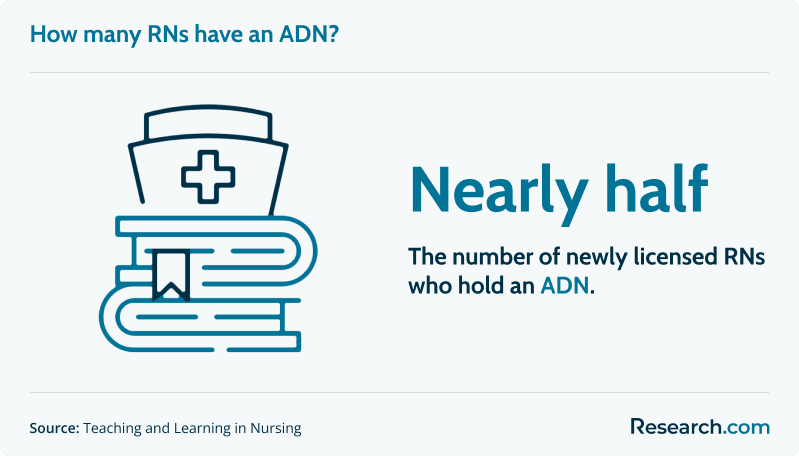
For students deciding between ADN and BSN routes, the trade-off is usually speed and cost versus long-term flexibility. An ADN can help students reach RN eligibility sooner, while a BSN may be preferred by many employers and can make future graduate study more straightforward.
The chart below shows how baccalaureate nursing degree enrollment changed from 2019 to 2022.
What types of nurses can legally practice in Rhode Island?
Rhode Island recognizes several levels of nursing and nursing-related practice. The role you choose determines what you can do legally, who supervises your work, and what education or certification you must hold.
- Registered Nurses. RNs deliver and coordinate patient care, assess health conditions, administer treatments, educate patients, and collaborate with physicians and other healthcare professionals. They must complete an approved nursing program and pass the NCLEX-RN.
- Licensed Practical Nurses. LPNs provide basic nursing care, often under the supervision of an RN, APRN, or physician. Students researching how to become an LPN should focus on state-approved practical nursing programs and NCLEX-PN preparation.
- Advanced Practice Registered Nurses. APRNs include nurse practitioners, clinical nurse specialists, certified registered nurse anesthetists, and certified nurse midwives. These nurses need graduate-level education, national certification, and state authorization for advanced practice.
- Certified Nursing Assistants. CNAs are not licensed nurses, but they are important members of the care team. They assist patients with daily care tasks and work under nursing supervision after completing approved training and competency requirements.
Rhode Island nursing practice is regulated by the Rhode Island Board of Nursing. Before choosing a role, read the scope of practice carefully so you understand what duties are allowed and what additional credentials may be required.
RNs have the highest salary compared with other types of nurses, per BLS.
What are the licensing requirements for nurses in Rhode Island?
Licensure is the legal permission to practice nursing in Rhode Island. Completing a degree is not enough on its own. You must also satisfy examination, background check, application, and renewal rules set by the state.
- Approved education. RN and LPN candidates must graduate from a nursing program that meets Rhode Island requirements. RN candidates commonly complete an ADN or BSN.
- NCLEX examination. RN applicants take the NCLEX-RN, while LPN applicants take the NCLEX-PN. Passing the correct exam is required before licensure can be granted.
- Background check and fingerprinting. Rhode Island requires background review, including fingerprinting through the Rhode Island State Police and the FBI. Applicants should budget for processing time and related fees.
- State application. Candidates apply through the Rhode Island Department of Health. The application fee is approximately $150.
- Continuing education. Licensed nurses must complete the required continuing education to renew and continue practicing legally.
The most common licensing mistake is waiting until graduation to check whether a program meets state requirements. Instead, confirm approval, accreditation, clinical placement expectations, and NCLEX eligibility before enrolling.
| Requirement | RN | LPN |
| Education | Approved diploma, ADN, or BSN pathway | Approved practical nursing program |
| Licensing exam | NCLEX-RN | NCLEX-PN |
| State application | Required through Rhode Island Department of Health | Required through Rhode Island Department of Health |
| Background check | Required | Required |
| Continuing education | Required for renewal | Required for renewal |
What types of nursing licenses are available in Rhode Island?
Rhode Island’s nursing licenses reflect different levels of responsibility. Students should match the license to the kind of care they want to provide, the level of autonomy they want, and the amount of education they are ready to complete.
- Registered Nurse license. The RN license allows nurses to provide comprehensive patient care, coordinate care plans, administer medications, educate patients, and use clinical judgment in a wide range of settings. Some healthcare workers use bridge programs, including paramedic-to-RN bridge programs, to move into registered nursing.
- Licensed Practical Nurse license. LPNs provide essential bedside care, monitor patient status, help with daily living needs, and carry out nursing tasks under appropriate supervision. This path may appeal to students who want to enter the workforce sooner before deciding whether to pursue RN education later.
- Advanced Practice Registered Nurse license. APRN roles include nurse practitioner, clinical nurse specialist, certified registered nurse anesthetist, and certified nurse midwife. APRNs complete advanced nursing education and national certification, and their work may include diagnosis, prescribing, and specialized patient management.
- Nurse APRN CSR. This credential applies to APRNs who seek authority to prescribe controlled substances and must meet additional regulatory requirements.
Rhode Island nurses must complete a minimum of 10 continuing education hours every two years, including required education in substance abuse and Alzheimer’s disease. Nurses returning after an extended time away from practice may need competency testing or a Board-approved refresher course.
Can you practice as a nurse without a license in Rhode Island?
No. You cannot legally practice as a nurse in Rhode Island without the appropriate license. Nursing licensure protects patients by verifying that a person has completed required education, passed the required examination, and met state practice standards.
- Unlicensed practice can lead to penalties. Presenting yourself as a nurse or performing licensed nursing functions without authorization can create legal and professional consequences.
- Patient safety is the core reason for licensure. Nursing involves medication administration, assessment, documentation, patient education, and clinical decision-making. These responsibilities require verified competency.
- Unlicensed healthcare experience is not the same as nursing practice. CNA, medical assistant, or technician experience can be valuable, but it does not replace an LPN or RN license.
If you want patient care experience before becoming a nurse, consider roles that are legally available with shorter training, such as CNA or medical assistant. These roles can help you confirm your interest in healthcare while you work toward nursing school.
What is the state of nursing in Rhode Island?
Rhode Island’s nursing workforce is shaped by the same pressures affecting healthcare across the country: demand for bedside care, an aging population, expanded outpatient services, telehealth, and a need for nurses who can work across interdisciplinary teams. For future nurses, this creates opportunity, but it also makes preparation important. Employers increasingly value clinical readiness, communication skills, technology comfort, and the ability to adapt across care settings.
How can exploring allied healthcare careers complement a nursing career in Rhode Island?
Allied healthcare experience can strengthen a nursing career by helping students understand how patient care teams work. Pharmacy, diagnostic services, rehabilitation, public health, health informatics, billing, and coding all intersect with nursing. A nurse who understands these related fields may communicate more effectively with colleagues, support safer care transitions, and identify future leadership interests.
Students considering broader healthcare options can also research how to become a pharmacist in Rhode Island. Pharmacy is a separate professional path, but understanding medication management can be valuable for nurses who work in acute care, primary care, long-term care, or advanced practice.
What financial assistance opportunities can help offset the cost of nursing education in Rhode Island?
Nursing education costs can include tuition, fees, uniforms, books, testing fees, background checks, transportation to clinical sites, and reduced work hours while completing clinical rotations. Students should build a funding plan before enrolling, not after the first tuition bill arrives.
- Federal financial aid. Eligible students should complete the FAFSA to determine access to federal grants, loans, and work-study opportunities.
- Institutional scholarships. Colleges and nursing departments may offer awards based on need, academic performance, service commitment, or enrollment in a high-demand field.
- State or workforce funding. Students should check Rhode Island workforce and health-related funding options, especially if they are pursuing an in-demand credential.
- Employer tuition assistance. Hospitals, long-term care facilities, and health systems may offer tuition reimbursement or education benefits, sometimes tied to work commitments.
- Loan forgiveness or service programs. Some programs reduce repayment obligations for graduates who work in qualifying roles or underserved areas.
Students who want a faster and potentially lower-cost entry point may compare practical nursing routes, including fast-track LPN program options. However, faster is not always better. Confirm program approval, clinical quality, exam preparation, and total cost before enrolling.
What resources are available for nursing students in Rhode Island?
Nursing school is demanding, and students who use support services early are often better positioned to manage coursework, clinical expectations, and exam preparation. Useful resources include:
- Academic advising. Advisors can help students sequence prerequisites, avoid registration mistakes, and understand progression requirements.
- Tutoring and skills support. Nursing courses build quickly. Tutoring can help with anatomy, pharmacology, dosage calculation, pathophysiology, and care planning.
- Clinical simulation labs. Simulation gives students a safer place to practice assessment, communication, documentation, and emergency response before working with patients.
- Student nursing organizations. Professional groups can provide peer support, networking, leadership practice, and exposure to nursing specialties.
- Financial aid offices. Students should ask about scholarships, emergency grants, payment plans, and deadlines for nursing-specific awards.
- Career services. Resume preparation, interview coaching, job fairs, and employer connections can help students transition from school to practice.
- Official licensing resources. The Rhode Island Department of Health and Board of Nursing provide current information on licensing, renewal, and regulatory requirements.
What is the job outlook for nursing in Rhode Island?
The nursing job outlook in Rhode Island has been described as favorable, with the U.S. Bureau of Labor Statistics projecting demand for registered nurses in Rhode Island to grow by 7% from 2020 to 2030. This reported growth reflects continued need for healthcare services, especially as patient needs become more complex.
Compensation is another important factor. The average annual wage for registered nurses in Rhode Island has been reported at around $80,000, slightly above the national average. In the Providence-Warwick area, salaries have been reported as reaching upwards of $85,000 annually. These figures should be used as reference points, not guarantees, because wages vary by employer, specialty, experience, shift differentials, and setting.
Higher-paying nursing employment settings in Rhode Island have included:
- Outpatient care centers. These settings may pay competitively because they often require specialized assessment, procedural, or chronic care management skills.
- Colleges, universities, and professional schools. Nursing education roles can offer a path for experienced nurses who want to teach, mentor, or support clinical training.
- Government positions. Public-sector roles may include structured benefits and stable employment conditions.
Advanced nursing roles can command higher pay. Nurse anesthetists and nurse practitioners have been reported as typically earning more than $120,000 annually, while licensed practical nurses have been reported at an average of around $50,000. The gap reflects differences in education, autonomy, responsibility, and scope of practice.
How to Choose the Right Nursing Program in Rhode Island
The best nursing program is not automatically the cheapest, fastest, closest, or highest ranked. It is the program that meets Rhode Island licensure requirements, fits your schedule and budget, provides strong clinical training, and supports your target role.
- Confirm accreditation and state approval. Look for recognized nursing accreditation, such as ACEN or CCNE when applicable, and verify that the program is acceptable for Rhode Island licensure.
- Match the program to your career goal. Choose practical nursing for LPN preparation, ADN or BSN for RN preparation, and graduate nursing education for APRN roles.
- Review clinical placement arrangements. Ask whether the school places students in clinical sites or whether students must find placements themselves.
- Compare NCLEX preparation and outcomes. Graduation rates, NCLEX pass rates, and student support services can reveal whether the program prepares students effectively.
- Calculate total cost. Include tuition, fees, supplies, exams, transportation, lost work time, and possible retake costs.
- Check schedule realism. Evening, weekend, hybrid, and online coursework can help working students, but clinical rotations may still require weekday availability.
- Ask about transfer and bridge options. If you may pursue a BSN, MSN, or NP credential later, choose a program with clear pathways and transferable credits.
Students planning for advanced practice should compare programs aligned with their specialty goals. Rhode Island students exploring nurse practitioner training can review the best nurse practitioner programs in Rhode Island as part of a broader program search.
| Question to ask | Why it matters |
| Is the program approved for Rhode Island licensure? | Approval affects whether you can sit for licensing exams and apply for a state license. |
| Who arranges clinical placements? | Clinical placement problems can delay graduation or licensure readiness. |
| What are the NCLEX pass rates? | Pass rates can indicate how well the program prepares graduates for entry-level practice. |
| What is the total cost, not just tuition? | Fees, supplies, transportation, and exam costs can significantly change affordability. |
| Can credits transfer into a BSN or graduate program? | Transfer policies affect long-term education costs and career mobility. |
What are the pathways for becoming an LVN in Rhode Island?
Rhode Island commonly uses the Licensed Practical Nurse title rather than Licensed Vocational Nurse, but students may encounter the LVN term when researching nursing careers in other states. If your goal is practical nursing in Rhode Island, focus on LPN requirements: complete an approved practical nursing program, prepare for the NCLEX-PN, and apply for state licensure.
Prospective students should verify that any program marketed as vocational nursing, practical nursing, or a fast-track route meets Rhode Island Board of Nursing standards. For a role-specific overview, review how to become an LVN in Rhode Island and compare the terminology with current Rhode Island licensing language.
What options do I have for accelerated nursing education in Rhode Island?
Accelerated nursing programs can help students with a prior non-nursing bachelor’s degree move into nursing more quickly. These programs are often intensive and may allow students to earn a BSN in a condensed format, typically within 12 to 18 months. Rhode Island options have included programs such as those offered by the University of Rhode Island and Rhode Island College.
Accelerated programs can be effective for disciplined students who can manage a heavy course and clinical schedule. They are not ideal for everyone. Before applying, ask whether you can realistically reduce work hours, commute to clinical sites, complete prerequisites on time, and absorb the pace of the curriculum. Students comparing flexible formats can also research online ABSN programs, while remembering that clinical requirements still require supervised hands-on training.
How Can I Maintain and Renew My Nursing License in Rhode Island?
Maintaining a Rhode Island nursing license requires attention to deadlines, continuing education, and documentation. Nurses must complete 10 hours of continuing education every two years, including two hours in substance abuse education and a one-hour Alzheimer’s disease training requirement.
To avoid a lapse, track your renewal date, keep proof of completed continuing education, and review state instructions before the deadline. Nurses who have been away from practice should check reinstatement rules before applying to return. For a detailed licensure guide, see the Rhode Island nursing license requirements.
How can I become a nurse midwife in Rhode Island?
Nurse midwifery is an advanced practice nursing specialty focused on reproductive health, pregnancy, labor, birth, postpartum care, and related patient education. To become a nurse midwife in Rhode Island, you generally need an active nursing license, graduate-level nurse-midwifery education from an accredited program, supervised clinical experience, national certification, and state authorization for advanced practice.
This path is best for nurses who want advanced clinical responsibility and are prepared for graduate study, intensive clinical training, and ongoing certification requirements. For a step-by-step specialty guide, review how to become a nurse midwife in Rhode Island.
How are emerging trends reshaping nursing roles in Rhode Island?
Nursing roles in Rhode Island are being influenced by technology, new care models, and changing patient needs. Telehealth, remote monitoring, electronic health records, interdisciplinary care teams, and outpatient care expansion all require nurses to combine clinical judgment with digital documentation, patient education, and care coordination skills.
These changes make lifelong learning more important. Nurses who understand data, communication technology, chronic disease management, and community-based care may be better prepared for evolving roles. Students still deciding on a practical nursing route can compare requirements through how to become an LPN in Rhode Island.
What are the nurse practitioner education requirements in Rhode Island?
Nurse practitioners in Rhode Island are advanced practice registered nurses. The pathway typically includes RN licensure, graduate nursing education, supervised clinical training, national certification in a population or specialty area, and state approval for advanced practice.
NP programs usually include advanced health assessment, pharmacology, pathophysiology, diagnosis, clinical decision-making, and specialty practicum experiences. Students should choose a program that matches their intended population focus, such as family, adult-gerontology, psychiatric-mental health, pediatric, or women’s health practice. For more detail, see nurse practitioner education requirements in Rhode Island.
What advanced certifications and career development opportunities exist for nurses in Rhode Island?
Advanced certifications can help Rhode Island nurses demonstrate expertise in specialty areas such as critical care, emergency nursing, perioperative nursing, geriatrics, oncology, nursing education, informatics, or leadership. Certifications are not always required for every job, but they can support advancement, specialty mobility, and professional credibility.
Career development may also include preceptor roles, charge nurse duties, nurse management, quality improvement, case management, clinical education, or graduate study. Entry-level healthcare workers comparing career ladders can review the differences between licensed practical nurses and medical assistants to understand how responsibilities, training, and advancement options differ.
Is a Transition to Administrative Roles Beneficial for Nurses in Rhode Island?
A move into administration can be beneficial for nurses who want to use clinical knowledge without remaining in full-time bedside care. Administrative roles may involve staffing, compliance, quality improvement, patient safety, case management, utilization review, informatics, revenue cycle operations, or practice management.
This path can make sense for nurses who enjoy systems, documentation, regulations, and operational problem-solving. It may not be the best fit for nurses who prefer direct patient care and hands-on clinical work. Nurses exploring non-clinical healthcare roles can also learn about how to become a medical biller and coder in Rhode Island.
What factors should I consider when choosing an online nursing program in Rhode Island?
Online nursing programs can be convenient, but students should be cautious. Nursing is not purely academic; it requires supervised clinical practice. A legitimate online or hybrid nursing program must still provide a path to required clinical training and state licensure.
- Accreditation and approval. Confirm the program is recognized for Rhode Island licensure.
- Clinical placement support. Ask whether the school secures placements in Rhode Island or expects students to find their own sites.
- NCLEX outcomes. Review pass rates and exam preparation support.
- Student support. Online students need advising, tutoring, faculty access, technology help, and clinical coordination.
- Total cost. Compare tuition, fees, travel, equipment, background checks, testing, and potential residency requirements.
- Licensure portability. If you plan to work outside Rhode Island, ask whether the program meets other states’ requirements.
For program comparisons, students can review the best nursing schools in Rhode Island, but rankings should be only one part of the decision. Licensure fit, clinical quality, affordability, and student outcomes are more important than a school’s name alone.
Common Mistakes to Avoid When Becoming a Nurse in Rhode Island
- Choosing a program before checking licensure eligibility. Always verify state approval and accreditation before enrolling.
- Comparing only tuition. Fees, supplies, transportation, testing, uniforms, and lost wages can change the true cost.
- Assuming online means fully remote. Nursing programs require clinical practice, even when coursework is online.
- Ignoring NCLEX preparation. A program should clearly explain how it prepares students for the licensing exam.
- Waiting too long to plan clinical schedules. Clinical rotations can conflict with work, childcare, or transportation limits.
- Assuming salaries are guaranteed. Reported averages are useful, but actual pay depends on employer, specialty, experience, shift, and location.
- Overlooking renewal rules. Continuing education and renewal deadlines are part of professional responsibility.
What do nurses say about becoming a nurse in Rhode Island?
- Working as a nurse in Rhode Island can feel highly connected because the healthcare community is relatively close-knit. You often build strong relationships with colleagues, patients, and families, and that sense of connection can make difficult shifts feel more meaningful. Sandy
- One of the strengths of nursing in Rhode Island is the range of patients and communities you can serve. The work can be demanding, but caring for people from different backgrounds keeps the profession engaging and reminds you why access to healthcare matters. Marcus
- Rhode Island offers room to keep growing as a nurse. Continuing education, specialty workshops, and professional networks can help nurses sharpen their skills and explore new directions without leaving the state. Korina
Related Articles for Nearby States
- 2027 How to Become a Nurse in Massachusetts
- 2027 How to Become a Nurse in Connecticut
- 2027 How to Become a Nurse in New York
- 2027 How to Become a Nurse in New Jersey
- 2027 How to Become a Nurse in Vermont
- 2027 How to Become a Nurse in New Hampshire
- 2027 How to Become a Nurse in Pennsylvania
- 2027 How to Become a Nurse in Delaware
- 2027 How to Become a Nurse in Maine
- 2027 How to Become a Nurse in Maryland
Key Insights
- Rhode Island nursing candidates must complete an approved education pathway, pass the correct NCLEX exam, and apply through the state before practicing.
- LPN, RN, APRN, nurse practitioner, and nurse midwife roles have different education levels, scopes of practice, and career outcomes. Choose the license before choosing the school.
- Program approval, accreditation, clinical placement support, NCLEX outcomes, and total cost are the most important factors when comparing nursing programs.
- Rhode Island nurses must complete 10 continuing education hours every two years, including required substance abuse and Alzheimer’s disease training.
- Reported Rhode Island nursing salaries are competitive, but salary should be evaluated alongside debt, schedule, specialty, employer type, and advancement potential.
- Online and accelerated programs can be useful, but they require careful review because nursing licensure depends on hands-on clinical training and state eligibility.
- Students who want long-term flexibility should consider how today’s choice—LPN, ADN, BSN, or graduate nursing—will affect future options in advanced practice, leadership, education, or administration.
References:
- health.ri.gov (17 Dec 2019). Retrieved from Department of Health.
- U.S. Bureau of Labor Statistics. (2023, September 6). Occupational outlook handbook - Nursing assistants and orderlies. Retrieved February 16, 2024, from BLS.
Other Things You Should Know About Becoming a Nurse in Rhode Island
In 2027, prospective nurses in Rhode Island must complete an accredited nursing program, which could be a Diploma, Associate Degree, or Bachelor's Degree in Nursing. After graduation, passing the NCLEX-RN exam is mandatory to obtain a license from the Rhode Island Board of Nursing.
It typically takes 3 to 4 years to become a registered nurse in Rhode Island in 2026, depending on the educational path chosen. An Associate Degree in Nursing (ADN) takes about two years, while a Bachelor of Science in Nursing (BSN) generally requires four years of study.


