
2027 What Can You Do With a Gerontology Degree?

Co-Founder and Chief Data Scientist
Choosing a gerontology degree is really a decision about how you want to work with an aging population: directly with older adults, behind the scenes in programs and policy, in healthcare leadership, or in research and technology. The need is clear. Nearly 58 million Americans are 65 or older today, and that population share, 17.3% in 2022, is expected to rise to about 22% by 2040.
That demographic shift is creating demand for professionals who understand aging from more than one angle: health, independence, housing, caregiving, social support, chronic conditions, public benefits, and family decision-making. A gerontology degree can prepare you for that work, but the right path depends on whether you want a clinical, administrative, research, policy, or community-focused career.
This guide explains what gerontology is, what jobs it can lead to in 2027, how salaries and education paths differ, what certifications may help, and how to choose a program without overpaying or enrolling in a degree that does not match your goals.
Quick answer: Is a gerontology degree worth it?
A gerontology degree can be worth it if you want to build a career around aging services, elder care, senior housing, healthcare coordination, public policy, research, or long-term care administration. It is especially useful when paired with a practical credential such as nursing, social work, healthcare administration, public health, counseling, or long-term care management.
It may not be the best standalone degree if your target job requires a specific license, such as registered nurse, nurse practitioner, physical therapist, occupational therapist, social worker, or nursing home administrator. In those cases, gerontology is valuable as a specialization, but you still need to complete the required professional pathway for that role.
What are the main benefits of a gerontology degree?
- Career relevance: The aging population is increasing, which means more organizations need workers who understand older adults’ medical, social, financial, and family needs.
- Multiple career directions: Graduates can work in healthcare, senior services, nonprofits, public agencies, research centers, assisted living, long-term care, advocacy, and aging-related technology.
- Income potential improves with specialization: Aging services professionals earn solid incomes, around $62,000 median annually, while advanced clinical and management roles can pay substantially more.
- Strong demand in related roles: Home health aide roles are projected to grow 21% from 2023–2033, and nurse practitioner employment is projected to grow 46.3% by 2033.
- What is gerontology, and why does it matter in 2027?
- What jobs can you get with a gerontology degree?
- Which gerontology-related jobs are most in demand?
- How does gerontology connect to healthcare careers?
- What roles are available in research, policy, and academia?
- How can gerontology be combined with other fields?
- What degree levels and education paths are available?
- How can you pay for a gerontology degree more affordably?
- How much can you earn in gerontology careers?
- Which certifications can strengthen a gerontology career?
- What challenges should you expect in gerontology work?
- How should you choose a gerontology degree program?
- What skills do gerontology employers look for?
- How can you start a gerontology career?
- What trends are changing gerontology careers?
- What are the key insights for students?
- Compare education pathways before applying
- Use the career-start checklist
What is gerontology, and why does it matter in 2027?
Gerontology is the study of aging across the lifespan, with a focus on later adulthood. It looks at how aging affects the body, mind, relationships, communities, work, housing, independence, caregiving, and public systems.
Unlike geriatrics, which is a medical specialty focused on health care for older adults, gerontology is broader. A gerontologist may work in health education, case management, senior center programming, aging policy, research, long-term care administration, elder advocacy, or community planning. Some work closely with clinicians; others work in agencies, universities, nonprofits, or private companies.
The field matters now because the U.S. population is aging quickly. In 2022, 17.3% of Americans were 65 or older, and that share is expected to reach 22% by 2040. More older adults means greater need for professionals who understand chronic illness, dementia care, caregiver stress, Medicare and Medicaid systems, social isolation, elder abuse prevention, mobility, housing, and end-of-life planning.
This is also why some clinicians are expanding into aging-focused roles. For example, registered nurses who want to move beyond traditional bedside work often explore alternative careers for registered nurses, including geriatric care coordination, adult-gerontology advanced practice, care management, and aging services leadership.
| Term | What it means | Why it matters for career planning |
| Gerontology | The interdisciplinary study of aging and older adulthood. | Useful for careers in aging services, policy, research, administration, and support programs. |
| Geriatrics | Medical care focused on older adults. | Usually requires a clinical license or advanced healthcare credential. |
| Aging services | Programs and organizations that support older adults and caregivers. | Includes senior centers, community agencies, long-term care, nonprofits, and government programs. |
| Adult-gerontology specialization | A clinical or professional focus on adult and older adult populations. | Common in nursing, primary care, acute care, social work, and health administration. |
What jobs can you get with a gerontology degree?
A gerontology degree can lead to many roles, but the exact job title depends on your degree level, work experience, and whether you hold a separate license. Some positions are open to bachelor’s graduates, while others require graduate training, clinical licensure, or management experience.
Common options include senior program coordinator, aging services specialist, activities director, geriatric care manager, case management assistant, caregiver support coordinator, long-term care administrator, health educator, dementia care specialist, policy analyst, and research assistant. Graduates may work in hospitals, assisted living communities, senior centers, hospice programs, Area Agencies on Aging, nonprofit organizations, universities, consulting firms, or public health departments.
The field is also large enough to support both direct-service and leadership tracks. Nearly 200,000 people worked as social and community service managers in 2023, a category that includes leaders of community programs, senior services agencies, and related organizations.
If you want a clinical career, gerontology can be a powerful specialization, but it usually does not replace the required clinical credential. For instance, a student who wants to become a geriatric nurse still needs nursing education and licensure. Some professionals also consider geriatric travel roles after meeting travel nursing requirements, especially when communities face shortages in elder care staffing.
| Career direction | Possible roles | Best fit for students who want to... | Additional requirements to check |
| Direct aging services | Senior program coordinator, activities director, caregiver support specialist | Work closely with older adults and families in community or residential settings | Employer training, background checks, CPR, dementia care training |
| Care coordination | Geriatric care manager, discharge planning assistant, care transitions coordinator | Help older adults navigate services, appointments, benefits, and family decisions | Experience in healthcare or social services may be preferred |
| Healthcare | Geriatric nurse, adult-gerontology nurse practitioner, health educator | Combine aging expertise with clinical care | Nursing or other healthcare licensure is usually required |
| Administration | Assisted living manager, senior services director, long-term care administrator | Lead programs, staff, budgets, and operations | State-specific administrator requirements may apply |
| Research and policy | Research assistant, policy analyst, program evaluator | Study aging trends or improve systems that serve older adults | Graduate education may be needed for higher-level roles |
Which gerontology-related jobs are most in demand?
The strongest demand is concentrated in healthcare, home-based support, care coordination, and management roles that serve older adults. Employers need people who can help older adults remain safe, independent, healthy, and connected to services.
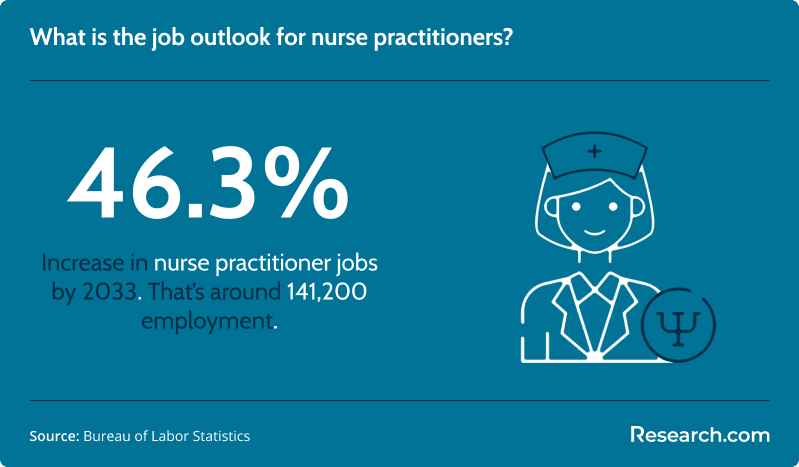
One of the clearest examples is advanced nursing. The U.S. Bureau of Labor Statistics projects a 46.3% increase in nurse practitioner jobs by 2033, and adult-gerontology nurse practitioners are part of that broader advanced practice workforce. These clinicians may work in primary care, acute care, long-term care, rehabilitation, and specialty practices.
Support roles are also expanding. Home health and personal care aides, who often help older adults with daily activities, are projected to grow 21% from 2023–2033. These jobs are essential, although they generally pay less than licensed clinical or management roles.
Other aging-related roles with strong relevance include geriatric social workers, occupational therapists, physical therapists, medical and health services managers, nursing home administrators, hospice coordinators, and community health nurses. Some community health nurse jobs focus heavily on older adults, especially in home visiting, chronic disease prevention, vaccination programs, and public health outreach.
Students who want to enter the workforce quickly often compare certificates, entry-level healthcare jobs, and nursing pathways. If nursing is the goal, it is important to understand the quickest way to become a nurse while still meeting licensure and program quality requirements.
| Role or occupation group | Demand indicator mentioned | How gerontology fits |
| Nurse practitioners | 46.3% projected job growth by 2033 | Adult-gerontology NPs provide advanced care to adult and older adult patients. |
| Home health and personal care aides | 21% projected growth from 2023–2033 | Many clients are older adults who need support with daily living. |
| Social and community service managers | Nearly 200,000 employed in 2023 | Many manage senior centers, caregiver programs, and aging services agencies. |
| Medical and health services managers | 29% projected growth from 2023–2033 | Older adult care drives demand in hospitals, long-term care, hospice, and senior living. |
To emphasize just how strong the demand is for gerontology-related healthcare roles, consider the outlook shown below for nurse practitioners, many of whom serve aging populations.
How does gerontology connect to healthcare careers?
Gerontology is one of the most useful nonclinical foundations for healthcare work with older adults. Students learn how aging affects mobility, cognition, medication use, chronic disease, mental health, communication, caregiving, nutrition, and end-of-life decisions.
That background can support many roles on the broader list of healthcare professions, especially those involving older adults. However, gerontology alone does not qualify you for licensed patient care. If your goal is to become an RN, nurse practitioner, physician assistant, occupational therapist, physical therapist, or social worker, you must complete the required accredited program, supervised hours, exams, and state licensure steps for that profession.
For nursing students, gerontology can lead to roles such as geriatric nurse, adult-gerontology acute care nurse practitioner, adult-gerontology primary care nurse practitioner, hospice nurse, care transitions nurse, or dementia care nurse. Geriatric NPs often practice in clinics, nursing homes, hospitals, and community settings, similar to the range of environments described in guides about where family nurse practitioners work.
Gerontology graduates also work in non-bedside healthcare roles. A hospital may hire care transitions coordinators to help older patients move safely from hospital to home. A hospice organization may need family support specialists. An assisted living community may need managers who understand dementia care, staffing, resident rights, and regulatory expectations.
Management is another major healthcare route. Employment of medical and health services managers is projected to grow 29% from 2023–2033, and older adult care is one reason demand is rising. For students who want healthcare leadership rather than direct clinical work, pairing gerontology with healthcare administration can be especially practical.
What roles are available in research, policy, and academia?
Gerontology is not limited to caregiving or senior living operations. It also supports careers that shape how society understands aging, funds services, designs programs, and trains future professionals.
- Research: Aging researchers may study dementia, chronic disease, caregiver burden, fall prevention, healthy aging, long-term care quality, geriatric nutrition, social isolation, or health disparities. Employers can include universities, health systems, government agencies, pharmaceutical companies, policy institutes, and nonprofit research organizations. Approximately 146,600 medical scientists, including aging-related researchers, were employed in 2023, and the occupation is projected to grow about 11% by 2033.
- Policy: Aging policy work focuses on issues such as Social Security, Medicare, Medicaid, elder justice, caregiver support, age-friendly communities, housing, transportation, and healthcare access. Gerontology professionals may work with advocacy organizations, local governments, public health agencies, or national groups. This path can appeal to clinicians and social service professionals who want to move from individual cases to system-level change.
- Academia: Colleges and universities need instructors and researchers who can teach aging studies, conduct funded research, supervise students, and evaluate programs. Faculty roles typically require advanced graduate education, often a Ph.D., especially for tenure-track research positions.
Research, policy, and academic careers usually reward strong writing, data interpretation, grant experience, public speaking, and the ability to explain aging issues to people outside the field.
How can gerontology be combined with other fields?
Gerontology becomes more marketable when combined with another discipline. Aging affects healthcare, housing, finance, technology, law, design, transportation, public health, and workforce planning, so professionals who can connect gerontology with a second skill set often have clearer career options.
One common pairing is gerontology plus healthcare administration. Students who want to manage programs, clinics, senior housing, or long-term care facilities may compare options such as an affordable online masters in healthcare administration. This combination can prepare graduates for roles involving staffing, budgets, compliance, resident services, quality improvement, and operations.
Technology is another growing area. AgeTech focuses on tools that help older adults live safely, stay connected, monitor health, and age at home. The market for technology that supports aging well is projected to be a $120 billion industry by 2030. Gerontology professionals can help technology teams design products that are usable, ethical, accessible, and realistic for older adults and caregivers.
Other useful combinations include gerontology and elder law, retirement planning, public health, social work, counseling, architecture, human-centered design, data analytics, and nonprofit management. For example, a professional with design and gerontology training may work on dementia-friendly housing, while someone with finance and gerontology expertise may advise families on retirement and long-term care planning.
| Gerontology plus... | Possible career outcome | When this combination makes sense |
| Healthcare administration | Assisted living manager, senior services director, long-term care operations leader | You want leadership roles but not necessarily direct clinical practice. |
| Nursing | Geriatric RN, adult-gerontology NP, hospice or care transitions nurse | You want licensed patient care with an older adult focus. |
| Public health | Aging program planner, chronic disease prevention coordinator, community health analyst | You want to improve outcomes at the population level. |
| Technology | AgeTech product specialist, usability researcher, digital health program coordinator | You want to help design tools for aging in place, monitoring, or caregiver support. |
| Law or policy | Elder advocate, policy analyst, benefits program specialist | You want to work on rights, regulations, public programs, or legal protections. |
What degree levels and education paths are available?
Gerontology education ranges from short certificates to doctoral programs. The best level depends on your current background and target job.
A certificate can be a smart choice if you already work in nursing, social work, counseling, public health, therapy, senior housing, or human services and want to add aging expertise without completing another full degree. A bachelor’s degree can prepare students for entry-level roles in aging services, case support, program coordination, and nonprofit work. A master’s degree is often more useful for administration, policy, research support, program leadership, or specialized practice. A Ph.D. is usually the strongest fit for research-intensive and university teaching careers.
Gerontology programs are still relatively specialized. U.S. colleges conferred roughly 1,234 gerontology degrees and certificates in the 2020–2021 academic year. Data also shows that the most common highest degree held by workers in interdisciplinary studies, which includes gerontology, is a master’s.
Students with a clinical goal should map the degree carefully. If you are asking what can you do with a DNP in nursing, adult-gerontology practice, nursing leadership, population health, and long-term care quality improvement may all be relevant directions. But a DNP is a nursing degree; a gerontology degree by itself does not replace nursing licensure.
| Education option | Typical purpose | Best for | Important caution |
| Gerontology certificate | Adds focused aging coursework | Working professionals or students in another major | May not be enough for roles requiring a degree or license |
| Bachelor’s degree in gerontology or aging studies | Provides broad preparation in aging, services, policy, and human development | Entry-level aging services, nonprofit, and program roles | Some higher-paying jobs may require graduate training |
| Master’s degree in gerontology | Builds advanced knowledge for leadership, policy, research, or specialized practice | Program managers, policy staff, research coordinators, aging services leaders | Check whether internships and employer partnerships are strong |
| Clinical degree with gerontology focus | Combines licensure preparation with aging specialization | Future nurses, social workers, therapists, or advanced practice clinicians | Accreditation and state licensure requirements matter more than the gerontology label |
| Ph.D. or research doctorate | Prepares students for research, teaching, and high-level scholarship | Future professors, researchers, and policy scholars | Time commitment and research fit should be evaluated carefully |
To give you a clearer picture of academic preparation in the field, the chart below shows the most common degrees held by gerontologists.
How can you pay for a gerontology degree more affordably?
The most affordable gerontology degree is not always the program with the lowest tuition. Students should compare total cost, transfer credit policies, online fees, internship requirements, commuting or relocation costs, financial aid eligibility, and whether the program leads to the jobs they actually want.
Start with federal and state aid, then look for institutional scholarships, aging-services scholarships, employer tuition assistance, nonprofit workforce grants, and graduate assistantships if you are applying to a master’s or doctoral program. Working professionals should also ask whether their employer will pay for a gerontology certificate, dementia care training, leadership coursework, or continuing education.
If you are combining gerontology with nursing or healthcare, compare costs across related pathways. For example, reviewing RN to BSN cost information can help nurses understand how tuition, online format, transfer credits, and program length affect affordability.
| Cost factor | Why it matters | Question to ask before enrolling |
| Accreditation | Financial aid, transfer credits, graduate admission, and employer recognition may depend on it. | Is the institution properly accredited, and does my target profession require programmatic accreditation? |
| Transfer credits | Accepted credits can reduce time and cost. | How many of my previous credits will count toward the degree? |
| Internship or practicum expenses | Fieldwork may require travel, background checks, health records, or unpaid hours. | Where are placements located, and are there extra costs? |
| Online fees | Online programs may still charge technology, proctoring, or course fees. | What is the full program cost, not just tuition per credit? |
| Career alignment | A low-cost degree can still be a poor investment if it does not support your target job. | What jobs have recent graduates entered, and what support does the program provide? |
How much can you earn in gerontology careers?
Gerontology salaries vary widely because the field includes low-wage support roles, mid-level community and program jobs, licensed clinical roles, and higher-paying management positions. Your income will depend on your job title, location, degree level, license, employer type, and experience.
Frontline support jobs tend to pay less. Home health and personal care aides, who often assist older adults with daily tasks, earn a median wage of around $35,000 per year. Roles requiring a college degree or management responsibility typically pay more. Social and community service managers, including leaders in nonprofit senior services and related organizations, have a median annual salary of about $78,000.
Advanced healthcare roles can pay significantly more. Nurse practitioners, including those who focus on geriatric and adult-gerontology care, have median salaries of roughly $129,000 per year as of 2024. For comparison, a neonatal nurse salary can also be high, showing that advanced nursing roles may offer strong income potential across different patient populations.
Healthcare leadership can also be financially strong. Medical and health services managers, a category that can include nursing home administrators and other healthcare leaders, had median pay of around $118,000 in 2024.
| Role or occupation group | Median pay or salary mentioned | Education or credential pattern |
| Home health and personal care aides | Around $35,000 per year | Entry-level training varies by employer and setting |
| Aging services professionals overall | Around $62,000 median annually | Varies by role, degree, and experience |
| Social and community service managers | About $78,000 annually | Often requires a degree and management experience |
| Medical and health services managers | Around $118,000 in 2024 | Usually requires healthcare management experience and often a degree |
| Nurse practitioners | Roughly $129,000 per year as of 2024 | Requires advanced nursing education and licensure |
Salary outcomes are not guaranteed. A gerontology bachelor’s degree may lead to modest entry-level pay, while graduate education, licensure, leadership experience, and specialized credentials can increase earning potential over time.
To further illustrate the outlook for gerontology-related careers, the chart below highlights the top 10 fastest-growing occupations during this period in the next decade.
Which certifications can strengthen a gerontology career?
Certifications can help when they match your role, but they should not be chosen randomly. The most useful credential is the one that employers in your target setting actually recognize.
Common options include university gerontology certificates, dementia care credentials, geriatric care management training, aging services leadership certificates, long-term care administration preparation, social work continuing education in aging, and nursing credentials related to gerontological practice. Requirements vary by issuer, employer, and state, so students should confirm eligibility before paying for any exam or training program.
For clinicians, certification decisions are usually tied to a larger degree and licensure plan. For example, nurses considering advanced practice should compare tuition, clinical placement support, accreditation, and expected role outcomes. A nurse practitioner program cost comparison can help students evaluate whether advanced clinical training is financially realistic.
| Certification type | Who may benefit | What to verify first |
| Gerontology certificate | Students or professionals adding aging specialization | Whether employers value the issuing institution |
| Dementia care training | Care coordinators, senior living staff, nurses, social workers, family support professionals | Whether it includes practical care planning and communication skills |
| Care management credential | Professionals coordinating services for older adults and families | Experience requirements and employer recognition |
| Long-term care administration preparation | Future nursing home or senior living administrators | State-specific licensure or administrator requirements |
| Clinical gerontology credential | Nurses, social workers, therapists, and other licensed professionals | Whether you already meet the license and practice requirements |
What challenges should you expect in gerontology work?
Gerontology careers can be meaningful, but they are not easy. Professionals often support people during health decline, cognitive changes, grief, family conflict, financial stress, and transitions into higher levels of care.
Workloads can be demanding, especially in settings with staffing shortages or limited funding. Care plans may involve multiple professionals, including physicians, nurses, social workers, therapists, family caregivers, insurers, and public agencies. Documentation, privacy rules, safety regulations, and ethical issues are part of the job.
Communication can also be complex. Some older adults may have hearing loss, vision changes, dementia, depression, or limited English proficiency. Families may disagree about care decisions. Professionals need patience, cultural humility, strong boundaries, and the ability to explain options clearly.
Healthcare professionals who want to broaden their scope should choose training that truly supports their goals. For instance, quickest online MSN WHNP programs may be relevant for nurses focused on women’s health across the lifespan, but they are not the same as adult-gerontology nurse practitioner pathways. Always match the program specialty to the population and role you want to serve.
Common mistakes to avoid
| Mistake | Why it can hurt you | Better approach |
| Assuming a gerontology degree qualifies you for clinical work | Clinical roles usually require licensure in nursing, social work, therapy, medicine, or another regulated field. | Identify the exact license required for your target job before choosing a program. |
| Choosing a program based only on tuition | Low tuition does not guarantee internships, employer connections, or career support. | Compare total cost, placement support, curriculum, outcomes, and flexibility. |
| Ignoring accreditation | Credits may not transfer, financial aid may be affected, and employers may not recognize the degree. | Confirm institutional accreditation and any profession-specific accreditation requirements. |
| Relying only on rankings | A highly ranked program may not fit your location, schedule, budget, or career plan. | Use rankings as one data point, not the whole decision. |
| Skipping hands-on experience | Employers often value experience with older adults as much as coursework. | Seek internships, volunteering, part-time work, or field placements in aging services. |
How should you choose a gerontology degree program?
The right gerontology program should match your career target, budget, schedule, and need for hands-on experience. Before applying, decide whether you want a direct-service job, a clinical pathway, a management role, a research career, or a policy position. Each requires a different academic plan.
Accreditation should be the first filter. Then review the curriculum. Strong programs usually cover biology of aging, psychology of aging, social policy, diversity and aging, ethics, long-term care, dementia, caregiving, program planning, research methods, and aging services systems. If the program is online, ask how internships or practicums work in your area.
Students interested in advanced clinical or leadership roles should compare related pathways carefully. For example, nurses who want doctoral-level preparation may review fastest online DNP degree programs, but speed should not outweigh accreditation, clinical placement quality, faculty support, and state authorization.
Questions to ask before enrolling
- Is the institution accredited by a recognized accreditor?
- Does the degree meet requirements for the job I want, or will I need a separate license?
- Are internships, practicums, or field placements required?
- Does the program have partnerships with senior centers, hospitals, long-term care facilities, public agencies, or research centers?
- Can online students complete local fieldwork?
- How many transfer credits will the school accept?
- What is the full cost, including fees, books, travel, and placement requirements?
- What career services are available for aging-related jobs?
- What roles have recent graduates entered?
- Does the curriculum include current issues such as dementia care, health equity, technology, caregiver support, and aging in place?
What skills do gerontology employers look for?
Successful gerontology professionals combine compassion with practical problem-solving. They need to understand aging, but they also need to communicate clearly, document accurately, coordinate services, and respond calmly when families are under stress.
Empathy is essential, but empathy alone is not enough. Older adults may be managing pain, memory loss, sensory changes, grief, mobility limitations, depression, or multiple chronic conditions. Nearly 80% of older adults have two or more chronic conditions, so professionals must be able to observe changes, recognize risks, and coordinate with other providers.
Teamwork matters because gerontology is rarely a solo field. A single care plan may involve physicians, nurses, social workers, therapists, pharmacists, family members, transportation providers, and benefits specialists. Professionals who can translate between systems are especially valuable.
Organization is another core skill. Case notes, care plans, discharge instructions, benefits paperwork, safety concerns, and regulatory documentation all require accuracy. Flexibility can also help, especially in roles that involve home visits, facility coverage, community outreach, or travel-related healthcare assignments similar in some ways to meeting travel nursing requirements.
| Skill | Why it matters in gerontology | How to build it |
| Clear communication | Older adults and families need understandable explanations during stressful decisions. | Practice plain-language writing, active listening, and teach-back methods. |
| Assessment and observation | Small changes in behavior, mood, mobility, or cognition can signal larger problems. | Gain supervised experience in senior centers, clinics, home care, or long-term care. |
| Care coordination | Older adults often use multiple services and providers. | Learn benefits systems, referral processes, and interdisciplinary teamwork. |
| Cultural competence | Aging experiences differ by culture, language, income, disability, race, family structure, and community. | Choose coursework and fieldwork that expose you to diverse older adults. |
| Ethical judgment | Autonomy, safety, capacity, family conflict, and end-of-life issues can be difficult. | Study ethics, elder rights, mandated reporting, and person-centered care. |
To help you better understand what employers are looking for, the chart below shows which skills consistently appear in job postings for geriatric nursing assistants.
How can you start a gerontology career?
You can start a gerontology career by combining education, exposure to older adults, and a realistic job target. The field is broad, so your first step is to choose a direction rather than simply searching for “gerontology jobs.”
- Choose your target setting. Decide whether you are most interested in healthcare, senior centers, home care, assisted living, hospice, public policy, research, technology, or nonprofit services.
- Match the education to the role. A certificate may be enough to supplement an existing credential. A bachelor’s degree may support entry-level aging services roles. A master’s degree may be better for leadership, policy, or research. Licensed clinical roles require the appropriate clinical degree and license.
- Get direct experience with older adults. Volunteer at a senior center, work part time in home care, support activities in a residential community, assist with caregiver programs, or complete a field placement through your school.
- Build a focused resume. Highlight aging-related coursework, dementia training, care coordination, documentation, communication, crisis response, program planning, and any experience supporting families.
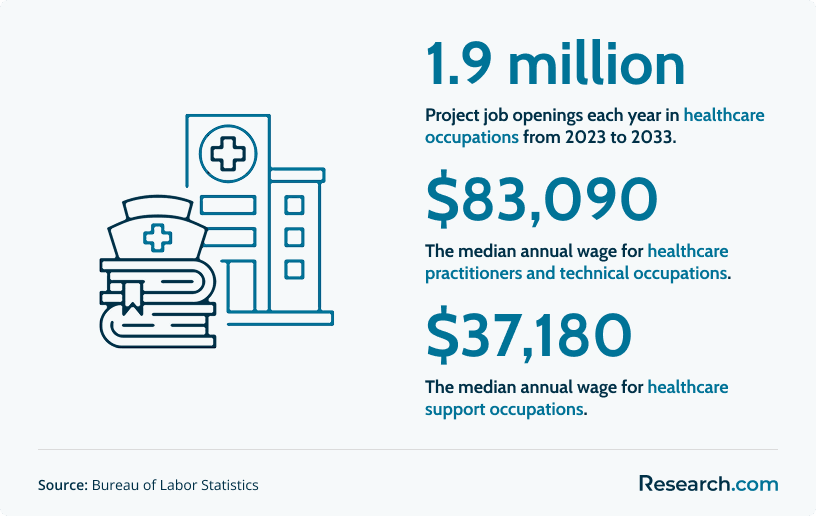
- Network in aging services. Connect with local aging coalitions, senior service agencies, professors, internship supervisors, and professional associations. In healthcare occupations, there are about 1.9 million job openings each year, and relationships can help you find roles that are not obvious from job boards alone.
- Keep specializing. After your first role, consider whether you need a master’s degree, clinical license, dementia credential, care management training, or healthcare administration coursework to move up.
If nursing is your intended path, research accredited nursing options first, then add gerontology through electives, clinical placements, certificates, or adult-gerontology advanced practice education. If you are exploring broader advising or student-support roles, a career education specialist path is a different direction and should be compared separately from aging services work.
The image below highlights how promising the job market can be for people entering healthcare-related fields, using projected demand and salary data for healthcare roles.
What trends are changing gerontology careers?
Several trends are reshaping how gerontology professionals work. The most important is the shift from institution-centered care to more home- and community-based support. Many older adults want to age in place, which increases demand for care coordination, caregiver training, home safety planning, telehealth support, and community-based services.
Digital health is also changing the field. Remote monitoring, medication tools, telehealth visits, fall detection systems, and caregiver apps can improve access, but they also raise questions about usability, privacy, equity, and whether older adults and families receive enough training. Gerontology professionals can help bridge the gap between technology design and real-world aging needs.
Interdisciplinary care is becoming more important as older adults often live with multiple chronic conditions, social needs, and family support challenges. Employers increasingly value workers who can coordinate across healthcare, social services, housing, transportation, and benefits systems.
Nursing and gerontology are also becoming more connected. Students comparing healthcare entry points may look at resources such as easiest nursing programs to get into in California, but admission ease should not be the only factor. Accreditation, licensure outcomes, clinical placements, and geriatric training opportunities are more important for long-term career readiness.
What graduates say about their gerontology degree
- “The most meaningful part of gerontology work is seeing how the right support can improve an older adult’s daily life. Helping families make difficult decisions has been challenging, but deeply rewarding.” Renata
- “I finished my program online while working full time. The flexibility helped me move into healthcare administration, and I now manage operations in an assisted living setting.” Maurice
- “Studying aging gave me a way to connect research with local policy. The work is intellectually serious, but it also has a direct public purpose.” Horace
Key insights
- A gerontology degree is most valuable when it is connected to a clear career target, such as aging services, care coordination, healthcare administration, research, policy, nursing, social work, or long-term care leadership.
- The aging population is driving demand: nearly 58 million Americans are 65+ as of 2022, and the 65+ population share is expected to rise from 17.3% in 2022 to about 22% by 2040.
- Gerontology is not the same as a clinical license. If you want to become a nurse, nurse practitioner, therapist, social worker, or administrator in a regulated setting, verify the exact licensure pathway before enrolling.
- Career outcomes vary widely. Median salary figures mentioned for gerontology-related roles range from around $35,000 to roughly $129,000, depending on role, credential, and training level.
- Demand is especially strong in healthcare and support roles, including 21% projected growth for home health aide roles from 2023 to 2033 and 46.3% projected growth for nurse practitioners by 2033.
- Education level matters. 47% of gerontologists hold a master’s degree, and 40% have a bachelor’s, making graduate education worth considering for leadership, research, policy, and specialized roles.
- The best programs offer more than coursework. Look for accreditation, field placements, employer partnerships, aging-focused curriculum, transfer credit flexibility, career support, and transparent total cost.
- Gerontology pairs well with other fields, including healthcare, policy, technology, law, finance, public health, social work, and design.
References:
- ACL. Profile of Older Americans 2023.
- BLS. Fastest Growing Occupations.
- BLS. Healthcare Occupations.
- BLS. Home Health and Personal Care Aides.
- BLS. Medical Scientists.
- BLS. Nurse Anesthetists, Nurse Midwives, and Nurse Practitioners.
- BLS. Social and Community Service Managers.
- Chain Drug Review. New Report Finds Growing Interest in Tech for Aging Well at Home.
- Data USA. Gerontology Profile.
- John A. Hartford Foundation. ACL 2023 Profile of Older Americans.
- National Council on Aging. Get the Facts on Healthy Aging.
- ZipRecruiter. Geriatric Nursing Assistant Resume Keywords and Skills.
- Zippia. Gerontologist Education Requirements.
- Zippia. Gerontology Major Salary.
Other Things You Should Know About What You Can Do With a Gerontology Degree
Most states require a Nursing Home Administrator license, not just a gerontology degree. Candidates usually need a bachelor’s degree, a state-approved administrator-in-training program, and a passing score on the NAB Residential Care/Assisted Living Administrator exam or the NAB NHA exam, depending on the state.
A gerontology degree in 2027 can be enhanced with certifications like the Gerontological Nursing Certification from the American Nurses Credentialing Center (ANCC) or the Certified Aging-in-Place Specialist (CAPS) from the National Association of Home Builders, boosting employability in specialized fields.
To enroll in a gerontology degree program, applicants typically need a high school diploma or equivalent. Some programs may require prerequisite courses like biology or psychology. Specific requirements vary by institution, so checking individual program listings for 2027 is essential.


