2027 How to Become a Criminal Psychologist in Texas

Co-Founder and Chief Data Scientist
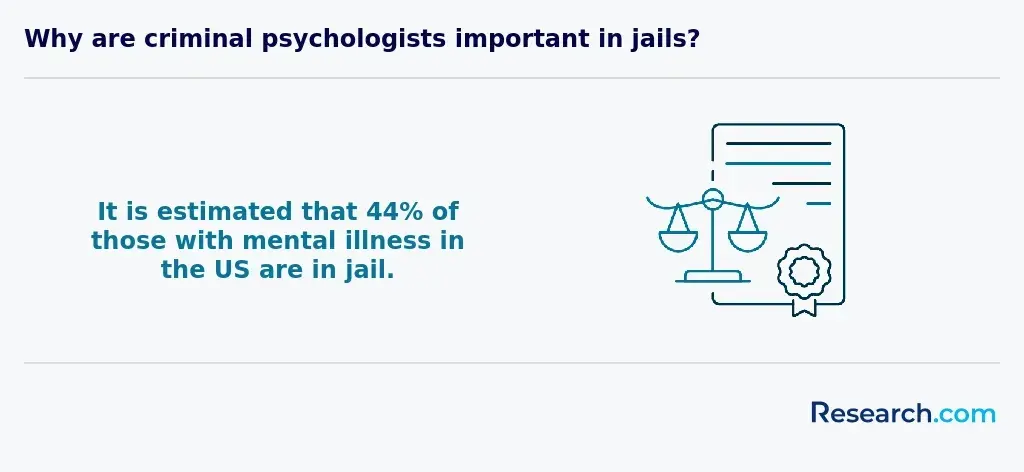
Becoming a criminal psychologist in Texas is a long but purposeful path for students who want to apply psychology inside courts, correctional systems, law enforcement, rehabilitation programs, and public safety settings. The need is serious: nearly two in five incarcerated individuals in the U.S. have a history of mental illness, and Texas imprisons 452 residents per 100,000, making mental health expertise in justice settings especially important (National Alliance on Mental Illness, n.d.; The Sentencing Project, n.d.).
This guide explains how to become a criminal psychologist in Texas, including the education pathway, licensure steps, internships, salary expectations, work settings, ethical issues, and long-term career options. It is designed for high school students, college students, psychology majors, career changers, and graduate students comparing forensic, clinical, counseling, and criminal justice-related psychology paths.
Criminal psychology is not a shortcut career. In most professional roles, you will need graduate education, supervised clinical experience, state licensure, and strong judgment in legally sensitive situations. The payoff is the opportunity to work on problems that affect public safety, rehabilitation, victim services, correctional mental health, and court decision-making.
Quick Answer: Becoming a Criminal Psychologist in Texas
- To practice independently as a psychologist in Texas, you generally need a doctoral degree, supervised experience, licensing exams, and approval from the Texas State Board of Examiners of Psychologists.
- Texas requires the Examination for Professional Practice in Psychology (EPPP), a Jurisprudence Exam, 3,500 supervised practice hours, and an oral exam for psychologist licensure.
- Criminal psychologists usually build expertise through psychology, criminology, social work, clinical training, forensic assessment experience, correctional work, or legal-system internships.
- The state’s projected outlook is favorable, with clinical and counseling psychologists expected to grow by approximately 20% through 2032 and other psychologists by 16%, according to Texas Labor Market Information.
- Average salaries for psychologists in Texas fall between $82,420 and $86,470 annually, while experienced professionals and those in certain locations or specialties may earn more.
- Strong Texas options for psychology study include the University of Texas at Austin, Texas A&M University, the University of Houston, and Baylor University, along with other accredited institutions offering relevant psychology, criminal justice, and counseling pathways.
- Education needed to become a criminal psychologist in Texas
- Best undergraduate majors for future criminal psychologists
- How to choose a criminal psychology program in Texas
- Texas psychologist licensure steps
- Internship and fieldwork options in Texas
- Job outlook for criminal psychologists in Texas
- Criminal psychologist salary expectations in Texas
- Common workplaces for criminal psychologists
- Advanced career paths in criminal psychology
- How business skills can strengthen criminal psychology practice
- Forensic technology trends affecting the field
- Burnout prevention and resilience strategies
- Advanced certifications and specialized training
- Professional resources for Texas criminal psychologists
- Licensing and regulatory compliance challenges
- Substance abuse and criminal behavior considerations
- Policy influence and justice-system reform
- Role of evidence-based research
- Ethical issues in Texas criminal psychology
- Continuing professional development in Texas
- Interdisciplinary collaboration in criminal psychology
What are the academic requirements to become a criminal psychologist in Texas?
The academic path usually begins with broad psychology training and becomes more specialized through graduate study, clinical placements, research, and forensic or correctional experience. Texas does not issue a separate “criminal psychologist” license; professionals typically become licensed psychologists and then develop expertise in criminal behavior, forensic assessment, correctional mental health, court evaluations, or related practice areas.
| Stage | What you study or complete | Why it matters for criminal psychology |
| Bachelor’s degree | Psychology, criminology, social work, criminal justice, statistics, research methods, abnormal psychology, and legal-system electives | Builds the foundation for understanding behavior, mental illness, crime, trauma, and social systems. In 2023, 140,711 bachelor’s degrees in psychology were awarded nationwide, including 9,049 in Texas (American Psychological Association, 2024). |
| Master’s degree | Graduate psychology coursework, often around 30-50 credits in Texas programs, with possible electives in criminal justice or forensic topics | Can strengthen preparation for doctoral study, supervised work, research, or related mental health roles, depending on the program and licensure goal. |
| Clinical experience | Practicums, internships, supervised assessment work, correctional mental health exposure, or community-based placements | Helps students move from theory to real cases involving risk, trauma, diagnosis, treatment planning, and ethical decision-making. |
| Doctorate | Advanced clinical, counseling, or psychology training; dissertation or applied research; assessment and intervention coursework | Usually required for independent psychologist licensure and for higher-level forensic, criminal, and court-related psychology work. |
A practical way to plan the route is to work backward from the role you want. If your goal is expert testimony, competency evaluations, risk assessment, or independent forensic practice, doctoral-level training and licensure are typically essential. If you are more interested in case management, victim services, correctional programming, or rehabilitation support, related counseling, social work, or criminal justice roles may also be worth comparing.
One Texas-based practitioner described the education path as demanding but clarifying: the bachelor’s degree introduced core behavior theory, graduate study narrowed the focus to criminal behavior, and doctoral research helped connect psychological science with legal questions. That progression is common because criminal psychology requires both clinical depth and comfort with justice-system complexity.
What undergraduate majors are recommended for aspiring criminal psychologists in Texas?
The best undergraduate major is usually the one that prepares you for competitive graduate admission while giving you exposure to human behavior, research, ethics, and the justice system. Psychology is the most direct choice, but it is not the only useful starting point.
| Major | Best for students who want to... | Useful preparation |
| Psychology | Continue into graduate psychology, clinical psychology, counseling psychology, forensic psychology, or research | Human development, abnormal psychology, cognition, personality, psychological testing, statistics, and research methods |
| Criminology or Criminal Justice | Understand law enforcement, courts, corrections, crime patterns, and justice policy before adding psychology training | Criminal law, policing, corrections, juvenile justice, victimology, and theories of crime |
| Social Work | Work with individuals, families, trauma, reentry, rehabilitation, and community systems | Case management, social systems, crisis intervention, advocacy, substance abuse, and community services |
- Psychology: This is the clearest undergraduate route for students who plan to apply to psychology graduate programs. Schools such as the University of North Texas offer psychology coursework that can help students build research and behavior-analysis skills.
- Criminology: A criminology or criminal justice major can be valuable if you want to understand courts, corrections, policing, and public policy. Texas State University’s BS in Criminal Justice is one example of a program that can support future study in criminal psychology.
- Social Work: Social work helps students understand trauma, families, communities, poverty, addiction, reentry barriers, and rehabilitation. Programs such as those at Texas A&M University-Central or Austin Community College may be relevant for students considering human services or justice-adjacent careers.
Students should not choose a major based only on the title. Graduate programs often care more about grades, research experience, statistics preparation, recommendation letters, writing ability, and relevant field exposure than whether the bachelor’s degree says “criminal psychology.”
This chart shows common specialty areas among psychologists.
What should students look for in a criminal psychology program in Texas?
A strong program should do more than offer interesting course names. It should help you qualify for the next credential, gain supervised experience, understand legal and ethical boundaries, and build a record that supports graduate admission or employment.
- Accreditation: Confirm that the institution or program has appropriate accreditation, such as recognition from the Southern Association of Colleges and Schools Commission on Colleges (SACSCOC), the Masters in Psychology and Counseling Accreditation Council (MPCAC), or the American Psychological Association (APA), depending on degree level and professional goal. Accreditation can affect licensure eligibility, transfer credit, graduate admission, and employer confidence.
- Total cost: Compare more than tuition. Texas students may pay between $11,260 and $60,000 per year depending on residency, degree level, institution, and program type. Add fees, books, transportation, technology, clinical-placement costs, and lost work time.
- Relevant specialization options: Look for coursework or tracks in forensic psychology, legal psychology, juvenile justice, trauma, assessment, correctional mental health, rehabilitation, or criminal behavior.
- Research access: Faculty research, labs, independent study, and thesis options can help students explore criminal behavior, risk assessment, victimization, trauma, or legal decision-making.
- Fieldwork and networking: Programs with connections to courts, community agencies, correctional facilities, law enforcement, clinics, or legal organizations may make it easier to gain relevant experience.
| Question to ask before enrolling | Why it matters |
| Is the program accredited in a way that supports my licensure or graduate-school goal? | An unrecognized program can create problems later, especially for psychology licensure or doctoral admission. |
| Does the curriculum include assessment, ethics, statistics, and research methods? | Criminal psychology relies on defensible evaluations, documentation, and evidence-based practice. |
| Are internships or practicum placements available in justice-related settings? | Relevant experience helps clarify career fit and strengthens applications. |
| Do graduates enter doctoral programs, clinical roles, correctional settings, or related jobs? | Outcome patterns can reveal whether the program actually supports your intended path. |
| Will online coursework meet the same requirements as campus-based study? | Online flexibility is useful, but licensure, fieldwork, and internship rules still matter. |
Specialization is uncommon. Nationwide, about 7% of psychologists hold board certification in forensic psychology, while 4% specialize in rehabilitation and 2% focus on police and public safety, according to the APA (Page et al., 2024). That makes program choice important: students who want this niche should actively seek forensic coursework, supervised placements, and mentors with relevant experience.
What are the steps for obtaining licensure as a criminal psychologist in Texas?
Texas licensure is the central requirement for anyone who wants to practice independently as a psychologist. Because criminal psychology often involves courts, public agencies, incarcerated individuals, victims, and high-stakes evaluations, the licensing process emphasizes education, examination, supervision, and regulatory review.
- Complete the required graduate education. Most independent psychologist roles require doctoral training in psychology. Students should confirm that their degree path aligns with Texas licensing rules before enrolling.
- Pass the EPPP. The Examination for Professional Practice in Psychology measures broad psychology knowledge and requires a passing score of at least 70%.
- Pass the Texas Jurisprudence Exam. This exam focuses on Texas laws, rules, and professional responsibilities. The passing threshold is 90%.
- Apply for provisional licensure when eligible. A provisional license allows candidates to continue supervised practice while completing state requirements.
- Complete supervised experience. Texas requires 3,500 supervised practice hours, typically completed across two years. One year may be completed during doctoral training, but the remaining year must be post-doctoral.
- Complete the oral exam. Candidates must also satisfy the oral examination requirement.
- Submit materials for board review. The Texas State Board of Examiners of Psychologists reviews qualifications, verifies requirements, and conducts background checks before full licensure is granted.
Students comparing justice-related careers may also want to review forensic science degree options, especially if they are more interested in physical evidence, lab analysis, or crime-scene work than psychological evaluation.
Are there internship opportunities for criminal psychologists in Texas?
Yes. Texas students can find internships, practicums, volunteer roles, research placements, and supervised field experiences in settings connected to mental health, courts, corrections, victim services, substance abuse, juvenile justice, and law enforcement. The right placement depends on your degree level and whether you are seeking observation, research, direct service, assessment training, or clinical supervision.
- University psychology departments: Campus-based labs, clinics, and faculty projects may expose students to assessment, data collection, literature reviews, applied psychology, or community mental health work.
- Correctional facilities: Prisons, jails, and juvenile detention settings can help students understand mental health needs in incarcerated populations, although access and duties vary by credential level.
- Nonprofit organizations: Agencies focused on mental health, victim support, reentry, youth services, family violence, or criminal justice reform can provide valuable exposure to real community needs.
- Law enforcement agencies: Some agencies may offer internships or observation-based experiences that introduce students to investigations, crisis response, victim services, or behavioral analysis concepts.
| Placement type | What you may learn | Good fit for |
| University research lab | Study design, data analysis, literature review, and research ethics | Students planning for graduate or doctoral admission |
| Correctional or juvenile setting | Risk factors, rehabilitation needs, institutional mental health, and reentry challenges | Students interested in corrections, forensic assessment, or rehabilitation |
| Community nonprofit | Trauma-informed service, case coordination, advocacy, and client barriers | Students considering counseling, social work, victim services, or reentry work |
| Law enforcement-related placement | Public safety operations, crisis response, and the practical limits of behavioral evidence | Students interested in investigative support or police/public safety psychology |
If you want to combine psychology with forensic evidence or investigative knowledge, an affordable online forensic science master’s degree may be worth comparing with psychology-focused graduate routes.
What is the job outlook for criminal psychologists in Texas?
The outlook in Texas is favorable for psychologists in closely related categories. Texas Labor Market Information projects approximately 20% growth through 2032 for clinical and counseling psychologists, equal to about 248 new job openings annually. Other psychologists are projected to grow by 16%, with about 320 new openings each year.
Texas also has a large employment base for psychology professionals. As of 2023, the state employed approximately 4,240 clinical and counseling psychologists and 840 psychologists in other specialties (U.S. Bureau of Labor Statistics, 2023).
Several forces support demand for criminal psychology-related expertise:
- Greater attention to mental health in legal settings: Courts, correctional systems, and public agencies increasingly need qualified professionals who can evaluate mental illness, trauma, risk, and treatment needs.
- Support for law enforcement and public safety: Psychological expertise can assist with crisis response, officer wellness, behavioral threat assessment, and investigative consultation.
- Rehabilitation-focused justice work: Treatment planning, reentry support, and recidivism reduction efforts require professionals who understand both behavior and systems.
- More complex cases: Co-occurring substance abuse, trauma, developmental issues, and severe mental illness can make forensic and correctional evaluations more demanding.
The field can be competitive because “criminal psychologist” is a specialized identity rather than a broad entry-level job category. Students should build a focused record through supervised placements, assessment training, research, and professional networking.
How much do criminal psychologists in Texas make?
Reported earnings vary by source, title, degree level, licensure status, employer, city, and specialization. In Texas, average salaries for psychologists are generally between $82,420 and $86,470 annually. Entry-level criminal psychology-related roles may start around $50,000, while more experienced professionals can earn upwards of $97,000. Experienced psychologists in certain roles or locations may earn upwards of $120,040.
Location can make a major difference. In Dallas, other types of psychologists earn as much as $126,210, while clinical and counseling psychologists in San Antonio make $96,180 annually. Doctorate-holders, licensed professionals, expert witnesses, consultants, and psychologists with specialized forensic or correctional experience may have stronger earning potential than early-career workers.
| Factor | How it can affect salary |
| Licensure status | Independent psychologist licensure can open access to higher-responsibility roles and private practice options. |
| Degree level | Doctoral training is often tied to advanced assessment, supervision, expert testimony, and leadership work. |
| Work setting | Correctional systems, government agencies, private practice, consulting, academia, and hospitals may use different pay structures. |
| Geographic market | Urban areas may offer higher salaries because of demand, cost of living, and employer concentration. |
| Specialized expertise | Forensic assessment, risk evaluation, expert testimony, police psychology, and rehabilitation specialization can influence compensation. |
Because criminal psychology overlaps with forensic psychology, students should also compare the forensic psychologist career path to understand differences in training, duties, and work environments.
This visual summarizes average salaries for criminal psychologists by percentile.
Where do criminal psychologists in Texas typically work?
Criminal psychologists and closely related forensic psychology professionals work wherever mental health, behavior, law, and public safety intersect. Some roles focus on evaluation; others emphasize treatment, consultation, research, or policy.
- Law enforcement agencies: Psychologists may consult on behavior, crisis response, personnel issues, threat assessment, or investigative questions. Agencies such as the Texas Department of Public Safety may use behavioral expertise in public safety contexts.
- Correctional facilities: Facilities under systems such as the Texas Department of Criminal Justice may employ psychologists to assess mental health, support treatment planning, provide therapy, contribute to rehabilitation, or evaluate risk.
- Private practice: Licensed psychologists may conduct assessments, consult with attorneys, provide expert testimony, or work on legal matters such as criminal defense, custody disputes, or competency-related questions.
- Academic institutions: Colleges and universities hire psychology professionals to teach, conduct research, supervise students, and study criminal behavior, legal decision-making, or rehabilitation.
- Hospitals and community mental health organizations: Some professionals work with justice-involved clients who need treatment for trauma, serious mental illness, substance use, or crisis stabilization.
If you are still comparing justice-sector options, reviewing career paths with a criminal justice degree can help you decide whether psychology, law enforcement, corrections, policy, or legal support fits your goals best.
What types of advanced roles can criminal psychologists explore in Texas?
Advanced roles usually require a combination of doctoral education, licensure, supervised forensic experience, strong documentation skills, and the ability to communicate findings clearly to non-psychologists. Some roles are clinical; others are investigative, academic, administrative, or consultative.
| Advanced role | Typical focus | When this path makes sense |
| Forensic consultant | Case consultation, behavioral analysis, attorney support, risk-related questions, or expert input | Best for experienced professionals who can explain psychological findings in legal contexts. |
| Clinical forensic psychologist | Competency, mental health evaluations, risk assessment, treatment recommendations, and correctional care | Best for licensed psychologists with strong assessment and clinical training. |
| FBI Special Agent | Investigations that may benefit from psychology, behavioral analysis, interviewing, and motive assessment | Best for candidates who want a law enforcement career rather than a traditional clinical practice role. |
| Academic psychologist | Teaching, supervision, scholarship, and research on criminal behavior or forensic psychology | Best for doctoral-level professionals who enjoy research, writing, and student mentoring. |
| Researcher | Studying crime patterns, assessment tools, treatment outcomes, rehabilitation, or policy interventions | Best for professionals who want to influence practice through evidence and data. |
To compare overlapping duties, students can review what forensic psychologists do and how that career path differs from broader criminal psychology or clinical psychology roles.
How Can a Business Perspective Enhance Criminal Psychology Practice in Texas?
Business knowledge can help criminal psychologists manage programs, allocate limited resources, measure outcomes, supervise teams, and communicate with agency leaders. Skills often associated with a business psychology degree can be useful in correctional systems, private practice, consulting, grant-funded programs, and behavioral health administration. The value is not in replacing clinical expertise but in making services more sustainable, accountable, and easier to coordinate across agencies.
How Can Emerging Forensic Technologies Impact Criminal Psychology Practice in Texas?
Digital records, data analytics, biometric tools, digital evidence, telehealth systems, and structured assessment platforms are changing how forensic and criminal psychology work is documented and reviewed. These tools can support more consistent evaluations, but they also raise concerns about privacy, bias, data quality, and overreliance on technology. Professionals who understand both psychology and forensic evidence may benefit from comparing this work with a forensic science degree in Texas, especially if they want to collaborate closely with evidence specialists.
How Can Criminal Psychologists Manage Burnout and Foster Resilience in Texas?
Criminal psychology can involve exposure to violence, trauma, severe mental illness, family disruption, victimization, and high-stakes legal decisions. Burnout prevention should be treated as a professional responsibility, not an afterthought. Useful strategies include regular supervision, peer consultation, caseload boundaries, structured debriefing, documentation time, continuing education, and personal support systems. Students evaluating training options may also compare flexible programs, including an advanced psychology degree, while remembering that ease of access should never replace accreditation, quality supervision, or licensure fit.
How Can Advanced Certifications Elevate Your Criminal Psychology Practice in Texas?
Additional certifications can deepen a psychologist’s skill set in areas such as behavioral assessment, trauma, substance abuse, risk evaluation, juvenile work, or applied behavior analysis. They are most valuable when they complement, rather than substitute for, licensure and supervised practice. For example, professionals who want stronger behavioral intervention skills may explore how to become a board certified behavior analyst in Texas as a related training path.
What professional resources are available to criminal psychologists in Texas?
Professional organizations, conferences, workgroups, and continuing education events help criminal psychologists stay current, find mentors, meet referral partners, and understand changing legal and clinical expectations. These resources are especially useful in a niche field where job titles, duties, and qualifications vary widely.
- Texas Psychological Association (TPA) Annual Conference: Offers continuing education, networking, presentations, and practice updates for psychologists across specialties, including those interested in forensic and criminal justice work.
- American College of Forensic Psychology Events (ACFP): Provides learning opportunities related to forensic assessment, legal issues, expert testimony, and professional standards.
- North Texas Families in Transition (NTXFIT) Professionals Workgroup: Supports professionals working where mental health and legal decision-making intersect, including family and custody-related matters.
- Texas Juvenile Justice System Workshops: Can help professionals understand youth offending, adolescent development, trauma, rehabilitation, and juvenile-system needs.
Networking is not only about finding jobs. It helps students and professionals test assumptions, learn which credentials matter, identify ethical risks, and understand what day-to-day work looks like in courts, correctional facilities, community agencies, and consulting practice.
What Are the Licensing and Regulatory Compliance Challenges in Texas?
After licensure, psychologists must continue following Texas rules, ethical standards, documentation requirements, scope-of-practice boundaries, and continuing education expectations. Criminal psychology can be especially sensitive because work products may be used in court, correctional decisions, custody matters, or public safety actions. Missing regulatory updates, practicing outside one’s competence, or mishandling records can damage both clients and professional standing. For a deeper review, see Texas psychology license requirements.
How Can Criminal Psychologists Address Co-Occurring Substance Abuse and Criminal Behavior in Texas?
Many justice-involved clients present with both behavioral concerns and substance abuse challenges. Criminal psychologists may need to screen for substance use, evaluate how addiction affects risk and decision-making, coordinate with treatment providers, and recommend interventions that fit legal and clinical realities. Collaboration with addiction professionals is often essential. Students interested in this overlap can compare the training route to become a substance abuse counselor in Texas.
How Can Criminal Psychologists Influence Criminal Justice Policy in Texas?
Experienced criminal psychologists can contribute to policy by translating clinical findings and research into practical recommendations for courts, correctional programs, juvenile justice, reentry services, crisis response, and rehabilitation. Their influence may come through advisory boards, expert reports, legislative testimony, program evaluation, or collaboration with advocacy and legal organizations. Professionals considering broader counseling and policy roles may also review the fastest way to become a counselor in Texas to understand related mental health workforce pathways.
How Does Evidence-Based Research Influence Practice in Criminal Psychology in Texas?
Evidence-based practice helps psychologists avoid relying only on intuition, stereotypes, or unsupported assumptions about criminal behavior. Research can inform risk assessment, treatment planning, rehabilitation programs, trauma-informed care, and policy recommendations. Strong criminal psychology practice requires professionals to evaluate tools, understand limitations, document reasoning, and adjust methods as evidence changes. Those interested in assessment-heavy psychology careers may also compare how to become a school psychologist in Texas, since that path also emphasizes evaluation, ethics, and applied decision-making.
What ethical challenges do criminal psychologists face in Texas?
Criminal psychologists often work in settings where clinical care, legal consequences, public safety, and client rights intersect. The ethical stakes are high because an evaluation can affect sentencing, competency decisions, custody, confinement, treatment access, or release planning.
- Confidentiality limits: Clients must understand when information may be shared with courts, agencies, attorneys, or supervisors.
- Impartiality: Forensic opinions must be based on evidence, not pressure from attorneys, agencies, employers, or personal beliefs.
- Dual relationships: A psychologist should avoid confusing treatment roles with evaluator roles whenever possible.
- Competence: Professionals should not accept cases involving specialized forensic questions without proper training and consultation.
- Documentation: Records must be clear, accurate, secure, and appropriate for possible legal review.
Students who want stronger training in ethics, assessment, and legal-system practice can compare accredited psychology colleges in Texas before choosing a program.
How Can Criminal Psychologists Maintain Ongoing Professional Development in Texas?
Continuing development is essential because laws, diagnostic standards, assessment tools, treatment models, technology, and agency practices change. Criminal psychologists should use continuing education, supervision, peer consultation, conferences, journal reading, and interdisciplinary training to stay current. Professionals who work with families, reentry clients, trauma survivors, or community systems may also benefit from understanding social worker education requirements in Texas.
Common mistakes to avoid when planning this career
| Mistake | Why it creates problems | Better approach |
| Choosing a program because it sounds forensic without checking accreditation | The title may not support licensure, transfer credit, or doctoral admission. | Verify accreditation, licensure alignment, and graduate outcomes before enrolling. |
| Assuming a bachelor’s degree is enough to become a criminal psychologist | Independent psychologist roles usually require doctoral education and licensure. | Map the full route from undergraduate study to supervised practice and state licensure. |
| Focusing only on tuition | Total cost includes fees, books, commuting, technology, internships, application costs, and time away from work. | Compare full cost of attendance and financial aid, not sticker tuition alone. |
| Skipping research and statistics | Forensic opinions and assessments must be evidence-based and defensible. | Take research methods seriously and seek lab or thesis experience when possible. |
| Waiting too long to get field exposure | Students may invest years before realizing they dislike correctional, legal, or trauma-heavy work. | Seek volunteer, internship, research, or observation experience early. |
| Assuming salary outcomes are guaranteed | Pay varies by city, employer, licensure, degree level, specialization, and experience. | Review multiple sources and compare likely roles at each education level. |
What Criminal Psychologists in Texas Say About Their Careers
- "This work has taught me that empathy and accountability are not opposites. In Texas, I have worked with people affected by trauma, crime, and incarceration, and the most meaningful part has been helping them understand their behavior and consider a different future." - Ellen
- "Correctional settings showed me how much a careful behavioral assessment can matter. A good evaluation can shape treatment, safety planning, and a person’s next steps in ways that are both practical and humane." - Timothy
- "Research gave me a way to contribute beyond individual cases. Studying patterns in criminal behavior helped me support better local decision-making and connect psychological evidence to policy conversations." - Andrew
How Can Interdisciplinary Collaboration Enhance Criminal Psychology Practice in Texas?
Criminal psychologists rarely work in isolation. Effective practice often requires collaboration with attorneys, judges, probation officers, correctional staff, law enforcement, psychiatrists, social workers, family therapists, addiction counselors, victim advocates, and community agencies. This collaboration can improve risk assessments, treatment plans, reentry support, crisis response, and family-system interventions. For students interested in family dynamics and legal-system overlap, it may be useful to review how to become a marriage and family therapist in Texas.
Related Articles for Nearby States
- 2027 How to Become a Criminal Psychologist in Louisiana
- 2027 How to Become a Criminal Psychologist in Oklahoma
- 2027 How to Become a Criminal Psychologist in Arkansas
- 2027 How to Become a Criminal Psychologist in New Mexico
- 2027 How to Become a Criminal Psychologist in Kansas
- 2027 How to Become a Criminal Psychologist in Missouri
- 2027 How to Become a Criminal Psychologist in Colorado
- 2027 How to Become a Criminal Psychologist in Mississippi
- 2027 How to Become a Criminal Psychologist in Tennessee
- 2027 How to Become a Criminal Psychologist in Arizona
References:
- American Psychological Association. (2024). Degrees in Psychology [Interactive data tool]. Retrieved November 25, 2024, from https://www.apa.org/workforce/data-tools/degrees-psychology
- National Alliance on Mental Illness. (n.d.). Mental Health Treatment While Incarcerated. Retrieved November 25, 2024, from https://www.nami.org/advocacy/policy-priorities/improving-health/mental-health-treatment-while-incarcerated
- Page, C., Stamm, K., Assefa, M., & Khaddouma, A. (2024, March 1). Datapoint: The most and least common specialty areas for licensed psychologists. American Psychological Association. https://www.apa.org/monitor/2024/03/top-psychology-specialties
- Texas Labor Market Information. (n.d.). Projected Employment for the years 2022 - 2032 [Interactive data tool]. Retrieved November 25, 2024, from https://texaslmi.com/LMIbyCategory/Projections
- The Sentencing Project. (n.d.). Detailed Data Tool: Texas [Interactive data tool]. Retrieved November 25, 2024, from https://www.sentencingproject.org/research/detailed-state-data-tool
- U.S. Bureau of Labor Statistics. (2024, April 3). May 2023 state occupational employment and wage estimates - Texas. Occupational Employment and Wage Statistics. https://www.bls.gov/oes/current/oes_tx.htm
- ZipRecruiter. (2024, November 17). Criminal Psychologist Salary in Texas. Retrieved November 25, 2024, from https://www.ziprecruiter.com/Salaries/Criminal-Psychologist-Salary--in-Texas
Key Insights
- Criminal psychology in Texas is usually a specialization within licensed psychology, not a separate standalone license.
- The most direct route is bachelor’s study, graduate preparation, doctoral education, supervised practice, the EPPP, the Texas Jurisprudence Exam, an oral exam, and state board approval.
- Program choice matters. Accreditation, field placements, faculty expertise, research opportunities, and licensure alignment are more important than a program title that simply sounds forensic.
- Texas offers a favorable employment outlook for related psychology roles, but students should expect competition for specialized criminal, forensic, and correctional psychology positions.
- Salary potential depends heavily on licensure, degree level, location, employer, and specialization; no program can guarantee a specific income.
- The strongest candidates build both clinical competence and justice-system literacy through internships, research, supervision, and interdisciplinary collaboration.
- Ethics are central to the work. Confidentiality limits, impartiality, documentation, competence, and role clarity can affect legal outcomes and professional credibility.
- Students unsure about doctoral psychology should compare related paths in forensic science, criminal justice, counseling, social work, substance abuse counseling, and family therapy before committing to the longest route.
Other Things to Know About Being a Criminal Psychologist in Texas
In Texas, to practice as a criminal psychologist in 2027, you must obtain a Licensed Psychologist credential through the Texas State Board of Examiners of Psychologists, after earning a doctoral degree in psychology, completing 3,500 hours of supervised experience, and passing the EPPP exam.
In 2027, to become a criminal psychologist in Texas, you'll need a doctoral degree (Ph.D. or Psy.D.) in psychology with a focus on criminal or forensic psychology, completion of a supervised internship, and passing the Examination for Professional Practice in Psychology (EPPP). Additionally, it's essential to obtain state licensure to practice legally.
Criminal psychologists may work with the Texas Department of Criminal Justice, county jails, police departments, courts, and forensic hospitals. These roles usually involve competency evaluations, risk assessments, and offender treatment consultation, and some employers require a doctoral degree plus state licensure through the Texas State Board of Examiners of Psychologists.