2027 Michigan Psychology Licensure Requirements – How to Become a Psychologist in MI

Co-Founder and Chief Data Scientist
Becoming a licensed psychologist in Michigan is a long-term professional commitment, not just a degree choice. You need the right graduate training, supervised experience, examinations, ethical preparation, and a clear plan for the setting where you want to practice. This guide is for students, career changers, master’s-level psychology professionals, and doctoral candidates who want to understand what Michigan requires and whether the psychologist path fits their goals.
You will learn what licensed psychologists do, how Michigan licensure works, what exams and supervised hours to expect, which specialties are available, how salaries compare, and how trends such as telehealth, AI-assisted tools, cultural competency, and interdisciplinary care are changing the profession. The goal is to help you make a practical decision before investing years of education and training.
Quick answer: How do you become a licensed psychologist in Michigan?
To become a fully licensed psychologist in Michigan, you generally need a doctoral degree in psychology, supervised clinical experience, passing scores on the Examination for Professional Practice in Psychology (EPPP) and a state jurisprudence examination, a criminal background check, human trafficking training, and approval from the Michigan Board of Psychology. Michigan also has limited licensure options for doctoral trainees and master’s-level practitioners who work under supervision.
What should you know before choosing the licensed psychologist path?
- The Bureau of Labor Statistics projects 6% employment growth for psychologists from 2024 to 2034, with an estimated 12,900 new psychologist positions during the decade.
- Some of the highest paying psychology roles include industrial-organizational psychologists at $147,420, “all other psychologists” at $117,750, and clinical and counseling psychologists at $96,100.
- Median annual psychologist salaries in the U.S. differ by sector: government ($115,400), hospitals ($102,660), ambulatory healthcare ($98,380), and schools ($84,440).
- Public concern about mental health remains high: 90% of the public perceives a mental health crisis in the U.S., while 50% of young adults and 1/3 of all adults report frequent anxiety.
- Access barriers still shape demand and service delivery: 80% of people seeking help say cost is the biggest hurdle, and 60% say shame and stigma keep them from getting support.
- In Michigan, estimated monthly living costs for one person are $1,903 in total including rent, $769 excluding rent, $1,134 for rent and utilities, and $568 for food.
- Psychology can be a durable career path, but it is best suited for people prepared for advanced education, supervised practice, documentation responsibilities, ethical obligations, and ongoing professional development.
- What does a licensed psychologist do?
- What qualifications does Michigan require for psychologist licensure?
- What skills do licensed psychologists need?
- What should you expect from Michigan’s psychology licensure exam process?
- Which psychology specialties and career paths are available in Michigan?
- What continuing education does Michigan require?
- Which trends are changing psychologist jobs?
- What education path should aspiring psychologists choose in Michigan?
- How do internship and supervised experience requirements work?
- How much do psychologists earn in Michigan?
- Can combined master’s and PsyD programs shorten the training path?
- What ethical and legal responsibilities apply in Michigan?
- How can Michigan psychologists build a private practice?
- How can psychologists improve cultural competency and mental health equity?
- How is technology reshaping psychology practice?
- Is substance abuse counseling a useful specialization?
- How can psychologists move into forensic work?
- How can postdoctoral fellowships expand options?
- How can LPC licensure support a broader mental health career?
- What other mental health licenses exist in Michigan?
- Should psychologists add behavior analysis to their work?
- How can psychologists work with social workers?
- How can psychologists transition into school psychology?
- Are online PsyD programs a good fit for Michigan students?
What graduates say about becoming a licensed psychologist in Michigan
Practicing as a licensed psychologist in Michigan has allowed me to support people through difficult periods and see meaningful changes in their mental health. I also value the range of settings available, from private practice to hospitals, because it gave me room to shape my career around the populations I wanted to serve. -John
My training helped me develop the assessment, reasoning, and intervention skills I use every day with clients. The work is demanding, but it can also offer a sustainable professional rhythm when you build the right caseload, boundaries, and support system. -Newton
The field keeps me learning. Collaboration with physicians, social workers, educators, and other providers has strengthened my work, and the most rewarding part is watching clients make progress toward goals they once thought were unreachable. -Olivia
What does a licensed psychologist do?
A licensed psychologist is a doctoral-level mental health professional who is authorized by a state licensing board to provide psychological assessment, diagnosis, treatment, consultation, and other professional services within the scope of psychology. In Michigan, the title matters because licensure determines what services you may provide independently and what level of supervision is required.
Although responsibilities vary by specialty and workplace, most licensed psychologists perform some combination of the following functions:
- Assessment: They use interviews, behavioral observations, standardized tests, rating scales, and clinical histories to evaluate mental health, cognition, personality, functioning, or risk.
- Diagnosis: They interpret assessment results and clinical information to identify mental, emotional, developmental, or behavioral conditions using accepted diagnostic standards.
- Therapy and counseling: They provide individual, couples, family, or group treatment for concerns such as anxiety, depression, trauma, behavioral difficulties, relationship problems, and adjustment challenges.
- Research: Some psychologists design studies, evaluate interventions, publish findings, or work in academic and institutional research roles.
- Consultation: Psychologists may advise schools, courts, businesses, healthcare teams, public agencies, or community organizations on behavior, mental health, assessment, and program design.
| Practice area | Typical focus | Common settings |
| Clinical psychology | Diagnosis and treatment of mental, emotional, and behavioral disorders | Hospitals, clinics, private practice, community agencies |
| Counseling psychology | Life stress, relationships, career concerns, adjustment, emotional well-being | Private practice, colleges, outpatient centers, community clinics |
| School psychology | Student learning, behavior, assessment, and school-based interventions | Elementary and secondary schools, districts, educational agencies |
| Forensic psychology | Psychological issues connected to legal questions and justice settings | Courts, correctional systems, legal consulting, public agencies |
| Industrial-organizational psychology | Workplace behavior, selection, performance, leadership, employee well-being | Businesses, consulting firms, government, research organizations |
Industry also affects pay. Recent data show median annual wages of $126,990 for psychologists in the government sector, $96,960 in ambulatory care services, $96,060 in hospitals, and $85,920 for school psychologists in elementary and secondary institutions. The chart below compares these sectors.
What qualifications does Michigan require for psychologist licensure?
Michigan psychologist licensure is built around education, examination, supervised experience, background review, and professional fitness. The exact path depends on whether you are seeking full licensure, a doctoral temporary limited license, or a master’s-level limited psychologist credential.
| Requirement | What it means for applicants | Decision point |
| Doctoral education | A doctoral degree in psychology from an accredited institution is required for full psychologist licensure. | Choose a program that supports your intended specialty, internship goals, and licensure pathway. Some students compare accelerated PsyD programs when speed and clinical training structure are priorities. |
| Examinations | Applicants must pass the EPPP and a Michigan jurisprudence examination. | Plan exam preparation before you complete the final licensure steps so delays do not slow your application. |
| Postgraduate supervised experience | After completing 2,000 postgraduate hours of supervised clinical experience, applicants may become fully Licensed Psychologists (LPs) in Michigan. | Confirm that your supervisor, setting, documentation, and hours meet state rules before you begin counting experience. |
| Background check | After submitting the application, applicants receive instructions for the criminal background check. This does not apply if relicensing within the past three years. | Address any documentation issues early if your record requires explanation. |
| Good moral character review | Applicants answer questions about past conduct and may need to provide documents showing they can practice ethically. | Be accurate and complete; omissions can create bigger licensing problems than the original issue. |
| Human trafficking training | Since March 2022, all applicants must complete training on identifying human trafficking victims. It is a one-time requirement. | Keep proof of completion for your application file. |
| Social Security number | Applicants generally provide a Social Security number, though exceptions may apply in certain cases. | Review the application instructions if you believe an exception applies. |
| License verification | If you hold or have ever held a psychology license in another state, verification must be sent directly from that licensing agency. | Request verification early because third-party processing can delay approval. |
Additional requirements for licensure by examination
- Official transcripts: Final transcripts must be sent directly from each school and must satisfy Michigan Board standards.
- Foreign education review: If your education was completed outside the U.S. or Canada, you need a credential evaluation from a NACES-accredited agency.
- English-language documentation: If your education was not in English, a minimum TOEFL iBT score of 80 is required.
- Certification of Education Form: Your school uses this form to verify completion of a qualifying program.
Doctoral TLLP licensure
The doctoral Temporary Limited Licensed Psychologist (TLLP) pathway allows a doctoral-level licensee to practice psychology under the supervision of a fully licensed psychologist while completing internship hours required for the doctoral educational limited license. Applicants use a Certification of Enrollment in a Doctoral Degree Program for Psychology to document enrollment in a qualifying doctoral program.
Master’s Limited Psychologist licensing
Michigan also recognizes master’s-level limited psychology practice. A Master’s Limited Psychologist may engage in the practice of psychology under supervision from a fully licensed psychologist. This route includes the EPPP and a Supervision Evaluation Form to document required supervised experience.
If cost is a major factor in your planning, compare accredited and licensure-aligned options rather than choosing only by tuition. Research.com’s guide to affordable online psychology degree programs can help you begin narrowing options, especially if you are still at the undergraduate or early graduate planning stage.
What skills do licensed psychologists need?
Psychology licensure confirms that you meet formal requirements, but strong practice depends on a broader skill set. The most effective psychologists combine clinical judgment, ethical discipline, communication skills, cultural humility, and the ability to document and evaluate care carefully.
- Assessment and diagnostic reasoning: Psychologists must know how to select tools, gather relevant history, interpret findings, and avoid overreaching beyond the available evidence.
- Active listening: Clients often share complex, painful, or contradictory information. Psychologists need to listen for both stated concerns and underlying patterns.
- Plain-language communication: Explaining diagnoses, test results, treatment plans, risks, and consent requires clarity without oversimplifying.
- Empathy with boundaries: Compassion builds trust, but ethical practice also requires professional limits and careful management of dual relationships.
- Crisis response: Psychologists must recognize risk, de-escalate distress, document decisions, and follow mandatory reporting and safety protocols when needed.
- Cultural competency: Effective care requires understanding how culture, identity, language, socioeconomic status, disability, and lived experience shape mental health and access to treatment.
- Ethical decision-making: Confidentiality, informed consent, scope of practice, recordkeeping, telehealth, billing, and mandated reporting all require disciplined judgment.
- Critical thinking: Psychologists analyze incomplete information, test hypotheses, adjust treatment plans, and recognize when referral or consultation is appropriate.
- Documentation: Accurate records protect continuity of care, support billing, and reduce legal risk.
- Research literacy: Evidence-based practice requires staying current with new findings, treatment models, assessment tools, and practice guidelines.
- Self-awareness: Psychologists must monitor bias, countertransference, burnout risk, and personal limitations that could affect client care.
What should you expect from Michigan’s psychology licensure exam process?
Michigan psychologist applicants take the Examination for Professional Practice in Psychology (EPPP), a national exam used to assess broad professional psychology knowledge. Applicants also complete a state jurisprudence examination focused on Michigan law and practice requirements.
| Exam feature | What to expect | How to prepare strategically |
| Content areas | The EPPP covers topics such as assessment and diagnosis, biological bases of behavior, ethics and law, professional issues, social and cultural influences, and treatment planning and intervention. | Create a study plan that covers weaker content areas first rather than only reviewing topics you already know well. |
| Format | The EPPP is a computer-based, multiple-choice examination. | Use timed practice questions to build stamina and reduce test-day pacing problems. |
| Length | The exam typically lasts four hours. | Practice in longer study blocks so the length of the exam does not become a surprise. |
| Scoring | The EPPP uses scaled scoring. Raw scores are converted, and applicants receive a pass/fail outcome rather than a simple percentage score. | Focus on consistent performance across domains instead of trying to calculate a raw-score target. |
| Eligibility and scheduling | Applicants must meet Michigan Board of Psychology eligibility rules before testing. | Confirm eligibility, fees, and scheduling steps directly with the Michigan Board and the exam administrator. |
Passing the EPPP is an important milestone, but it is not the only licensure step. Applicants still need to satisfy education, supervision, background, training, documentation, and state-law requirements before they can practice independently as licensed psychologists in Michigan.
Which psychology specialties and career paths are available in Michigan?
Michigan psychologists can work in healthcare, education, government, research, consulting, private practice, and organizational settings. The Bureau of Labor Statistics projects 6% job growth for psychologists from 2024 to 2034, with an estimated 12,900 new psychologist positions emerging each year on average during the decade. This outlook is one reason many students compare different psychology career paths before committing to graduate training.
| Career option | What the role emphasizes | Best fit for students who want to... |
| Clinical psychologist | Assessment, diagnosis, and treatment of mental, emotional, and behavioral disorders | Provide therapy, conduct evaluations, and work with complex clinical presentations |
| Counseling psychologist | Personal adjustment, relationships, stress, work issues, and well-being | Support clients through life transitions, identity development, and emotional challenges |
| Developmental psychologist | Human growth and change across the lifespan | Study or apply knowledge about children, adolescents, adults, or aging populations |
| Forensic psychologist | Psychological knowledge applied to legal questions | Work near the justice system, risk assessment, competency questions, or legal consultation; students can also compare forensic psychology programs |
| Health psychologist | Connections among behavior, biology, social factors, illness, and wellness | Help patients manage chronic illness, treatment adherence, pain, or lifestyle-related health concerns |
| Industrial-organizational psychologist | Workplace behavior, selection, leadership, productivity, and employee systems | Apply psychology in business, government, consulting, or organizational research |
| Neuropsychologist | Cognitive and behavioral effects of brain injury, disease, or developmental conditions | Conduct specialized assessments and work with neurological or medical populations |
| School psychologist | Student learning, social-emotional development, behavioral supports, and school systems | Collaborate with educators and families in K-12 environments |
| Sports psychologist | Performance, motivation, pressure management, and mental skills for athletes | Work with athletes, teams, coaches, and performance-focused clients |
If you are still deciding whether psychology is the right undergraduate major, start with the broader question: what can you do with a psychology major? The answer depends heavily on whether you stop at the bachelor’s level, pursue a master’s degree, or continue through doctoral training and licensure.
What continuing education does Michigan require?
Michigan psychologists must complete continuing education to keep their license active. These requirements help professionals stay current on ethics, pain and symptom management, bias, legal duties, and changes in practice standards.
| Requirement | Michigan rule described in the source material | Practical advice |
| Total CE hours | 30 hours of approved continuing education every two years | Do not wait until the end of the renewal cycle; keep a running CE file with certificates and course descriptions. |
| Ethics | Minimum of 3 hours in ethics | Choose ethics training that applies to your practice setting, such as telehealth, assessment, supervision, or private practice. |
| Pain and/or symptom management | Minimum of 2 hours | Relevant for psychologists in health, rehabilitation, trauma, aging, and integrated care settings. |
| Human trafficking | One-time training on identifying victims of human trafficking | Complete it early and retain proof for licensing records. |
| Implicit bias | Applicants need at least 2 hours within the 5 years before licensure. For renewals, complete 1 hour per year of the license or registration cycle. | Select training that goes beyond awareness and helps improve assessment, diagnosis, and treatment decisions. |
| Approved format | Instruction must be synchronous/interactive or asynchronous teleconference/webinar CE. | Check format approval before enrolling so the hours count. |
| Providers | Credits may be provided through co-sponsorship of the American Psychological Association (APA) Office of Continuing Education in Psychology (CEP). | Verify provider approval and keep documentation in case of audit. |
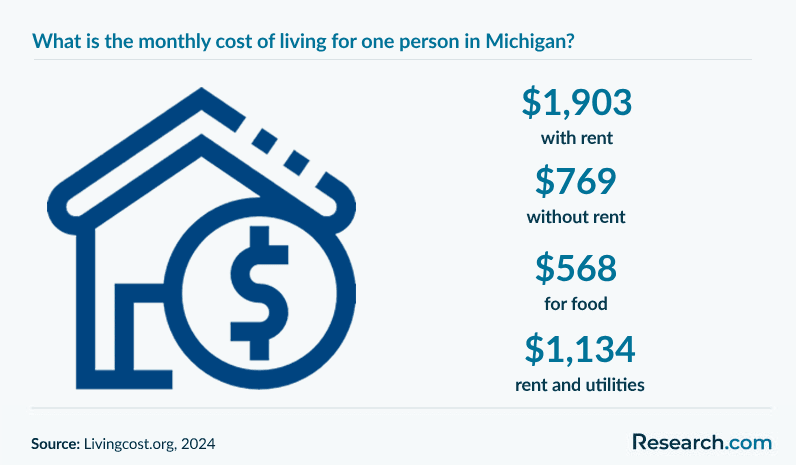
Cost of living also matters when deciding where to practice. Michigan’s estimated monthly living costs for one person are $1,903 including rent, $769 excluding rent, $1,134 for rent and utilities, and $568 for food. These figures can help early-career psychologists compare job offers, postdoctoral stipends, and private practice expenses.
Which trends are changing psychologist jobs?
Psychology practice is being shaped by higher mental health visibility, access challenges, telehealth, digital records, employer interest in well-being, and new technology. These changes create opportunities, but they also raise questions about privacy, quality, equity, supervision, and ethical use of tools.
- Greater demand for mental health services: Public awareness has increased, and more people are willing to seek support. At the same time, affordability and stigma remain major barriers.
- More specialized care: Psychologists with expertise in children, older adults, veterans, trauma, health psychology, neuropsychology, or culturally responsive care may find stronger alignment with community needs.
- Telehealth as a standard option: Remote therapy and consultation can improve access for rural clients, people with mobility limits, and clients with scheduling barriers. Psychologists still need to follow licensing, confidentiality, consent, and emergency planning rules.
- Digital assessment and electronic records: Software can streamline intake, scoring, documentation, and outcome tracking, but clinicians remain responsible for interpretation and clinical judgment.
- Wearables and biosensors: Devices such as smartwatches and fitness trackers may offer data on sleep, activity, or physiological patterns. Such data can support care when used carefully, but it should not replace validated assessment.
- Virtual reality and augmented reality: VR and AR may be useful in exposure therapy, skills practice, and simulated environments when supported by appropriate training and evidence.
- Artificial intelligence: AI tools may assist with screening, self-help support, administrative tasks, or triage. Psychologists must consider bias, confidentiality, informed consent, and limits of automation.
- Workplace mental health: Organizations are paying more attention to employee well-being, which may expand opportunities for consultation, training, assessment, and organizational psychology.
- Interdisciplinary care: Psychologists increasingly coordinate with psychiatrists, primary care providers, social workers, school teams, and community agencies to address complex client needs.
The need is substantial. In the U.S., 90% of the public perceives a mental health crisis, 50% of young adults and 1/3 of all adults report frequent anxiety, 80% of people seeking help cite cost as the largest barrier, and 60% say shame and stigma prevent them from getting care.
What education path should aspiring psychologists choose in Michigan?
The best path depends on your end goal. A bachelor’s degree can prepare you for entry-level human services, research assistant, case support, or graduate study roles, but it does not qualify you to practice independently as a psychologist. Full psychologist licensure generally requires doctoral training. Master’s-level routes can lead to limited psychology practice or other mental health credentials, depending on your program and state requirements.
| Education stage | Main purpose | Good choice if... | Watch out for... |
| Bachelor’s degree in psychology or related field | Build foundation in human behavior, research methods, statistics, development, abnormal psychology, and social science | You are exploring psychology, preparing for graduate school, or considering related human services work | A bachelor’s degree alone does not qualify you for independent psychologist practice. |
| Master’s degree | Develop advanced knowledge and, in some routes, qualify for limited or supervised practice | You want supervised psychology work, counseling-related options, or a bridge to doctoral study | Licensure title, scope, and supervision rules vary; confirm Michigan requirements before enrolling. |
| PsyD | Clinical doctoral training with a strong practice orientation | You want to provide psychological services and prefer a practitioner-focused doctoral model | Compare internship placement, supervision structure, total cost, and licensure outcomes. |
| PhD in psychology | Doctoral training often combining research, teaching, assessment, and clinical or applied work depending on program type | You want research, academia, clinical science, or highly specialized assessment and intervention training | Admissions can be competitive, and program fit matters more than name recognition alone. |
Students comparing Michigan options should examine faculty expertise, practicum access, research opportunities, graduate placement, accreditation status, and specialty strengths. Reviewing the best colleges for psychology in Michigan can help you identify programs that match your goals, but rankings should be only one part of the decision.
To strengthen graduate applications, seek research assistantships, relevant volunteer experience, crisis-line or community mental health exposure, strong letters of recommendation, and coursework in statistics and research methods. Graduate programs often look for evidence that you understand the field, not just that you are interested in helping people.
How do internship and supervised experience requirements work?
Supervised experience is where psychology training becomes professional practice. Michigan requires applicants to document qualifying supervised experience, and the rules differ by licensure level. Before accepting a placement, confirm that the setting, supervisor, hours, and documentation will count toward the credential you are pursuing.
- Supervised setting: Experience must be completed in an approved work setting under the supervision of a licensed psychologist.
- Master’s-level requirement: Applicants with a master’s degree need at least two years of full-time or equivalent part-time supervised experience totaling at least 3,000 hours.
- Direct supervision: At least 100 of the 3,000 hours must occur in the immediate physical presence of the supervisor.
- Remote supervision option: Supervision may also occur through 2-way real-time audiovisual technology that allows direct, simultaneous interaction by sight and sound.
- Limited license: A master’s-level applicant may qualify for a limited license, which permits a narrower scope of practice than full licensure.
- Important limitation: Supervised experience completed before obtaining a limited license cannot be counted toward the 3,000 hours required for full licensure.
- Rule changes: Licensing requirements can change, so applicants should use the most recent Michigan Board of Psychology guidance before making decisions.
| Question to ask before starting supervision | Why it matters |
| Is my supervisor fully licensed and approved for this type of supervision? | Hours may not count if supervision does not meet state standards. |
| Will my duties match the scope of the license I am pursuing? | Experience should build relevant competencies and satisfy documentation expectations. |
| How will direct supervision hours be tracked? | Incomplete records can delay licensure review. |
| Does the site provide enough clinical volume to complete hours on time? | Low caseloads may extend your timeline. |
| What happens if the supervisor leaves? | You need a contingency plan so your hours and documentation are protected. |
How much do psychologists earn in Michigan?
Psychologist pay in Michigan varies by specialty, employer, city, experience, licensure level, and whether the role is clinical, school-based, organizational, research-focused, or private practice. The figures below come from the sources cited in the original article and should be treated as reference points rather than guaranteed outcomes.
- BLS:
- Psychologists, all other $117,580
- Industrial-organizational psychologists $109,840
- Clinical and counseling psychologists $95,830
- School psychologists $86,930
- Indeed.com: Psychologist: $78,830
- Payscale.com: Psychologist in Ann Arbor, Michigan: $80,000
- Salary.com:
- Psychologist - M.A.: $97,369
- Clinical Psychologist: $98,572
The graph above reflects how pay differs by specialty and data source. According to the Bureau of Labor Statistics, some of the highest paying psychology jobs include industrial-organizational psychologists at $147,420, “all other psychologists” at $117,750, and clinical and counseling psychologists at $96,100.
School psychologists have a BLS median of $84,940. Salary.com reports $97,369 for psychologists with a master’s degree and $98,572 for clinical psychologists. Indeed.com lists the average psychologist salary in Michigan at $78,830, while PayScale reports an Ann Arbor average of $80,000.
When evaluating salary, compare the whole compensation picture: benefits, retirement contributions, supervision quality, administrative load, billing expectations, caseload size, malpractice coverage, paid documentation time, and career advancement. A higher salary may not be better if the role carries unsustainable caseloads or limited support.
Can combined master’s and PsyD programs shorten the training path?
Combined master’s and PsyD programs can be useful for students who already know they want doctoral-level clinical training and prefer a structured route that integrates graduate coursework, practicum preparation, and doctoral progression. These programs may reduce duplicated coursework and make planning more straightforward, but they are not automatically the best option for every student.
Before enrolling, compare accreditation, internship outcomes, licensure alignment, total tuition, transfer policies, faculty supervision, and whether the master’s portion creates a meaningful exit option if your plans change. Students who want a deeper comparison can review Research.com’s guide to combined masters and PsyD programs.
What ethical and legal responsibilities apply in Michigan?
Licensed psychologists in Michigan must practice within a legal and ethical framework that protects clients and the public. Key responsibilities include confidentiality, informed consent, accurate recordkeeping, mandatory reporting, appropriate supervision, competence, billing integrity, scope-of-practice limits, and professional boundaries.
Ethical risk often increases when psychologists expand into new methods, settings, or populations without adequate training. For example, psychologists interested in behavior-analytic services should understand the distinct training and credentialing involved. Research.com’s guide on how to become a BCBA in Michigan can help practitioners evaluate that pathway carefully.
How can Michigan psychologists build a private practice?
Private practice can offer autonomy, specialization, and schedule control, but it also requires business discipline. Psychologists who succeed in private practice usually plan for licensure compliance, referral sources, insurance decisions, privacy rules, documentation systems, marketing, and financial stability before opening their doors.
- Licensure and legal setup: Confirm that you are licensed for independent practice in Michigan. Choose an appropriate business structure, register as required, and secure professional liability insurance.
- Business planning: Estimate startup costs for office space, telehealth systems, furniture, testing materials, EHR software, billing support, legal review, and marketing.
- Location and service model: Decide whether you will work in person, by telehealth, or both. Consider accessibility, privacy, parking, client demographics, and local referral patterns.
- Client acquisition: Build referral relationships with physicians, psychiatrists, schools, attorneys, community agencies, and other therapists. A professional website and reputable directories can support visibility.
- Insurance and billing: Decide whether to accept insurance, private pay, or a mixed model. If you accept insurance, learn credentialing, coding, claims submission, documentation, and reimbursement timelines.
- Clinical niche: Specialization in areas such as trauma therapy, child psychology, assessment, CBT, health psychology, or couples work can help clients and referral sources understand your value.
- Ethics and boundaries: Create written policies for informed consent, telehealth, emergencies, cancellations, electronic communication, records, and client confidentiality.
| Private practice choice | Pros | Trade-offs |
| Insurance-based practice | May increase access for clients and create referral volume | Requires credentialing, billing administration, documentation compliance, and reimbursement management |
| Private-pay practice | More control over fees, scheduling, and administrative burden | Can limit access for clients who cannot afford out-of-pocket care |
| Group practice | Shared referrals, infrastructure, consultation, and administrative systems | Less independence and possible revenue sharing |
| Solo practice | High autonomy and control over specialty, schedule, and policies | Greater responsibility for marketing, billing, compliance, and isolation risk |
How can psychologists improve cultural competency and mental health equity?
Cultural competency is not a one-time training requirement; it is an ongoing practice standard. Michigan psychologists serve clients with diverse racial, ethnic, linguistic, socioeconomic, religious, disability, gender, sexual orientation, immigration, and community backgrounds. Effective care requires more than good intentions. It requires culturally informed assessment, humility, consultation, and awareness of access barriers.
- Use assessment tools carefully and consider whether norms, language, or cultural assumptions may affect interpretation.
- Ask about identity, family, community, stigma, discrimination, and help-seeking experiences without making assumptions.
- Build referral networks that include culturally responsive providers and community resources.
- Address cost, transportation, technology access, and scheduling barriers where possible.
- Seek supervision or consultation when working outside your strongest areas of cultural knowledge.
Professionals considering a broader counseling identity alongside psychology can also explore how to become an LPC in Michigan.
How is technology reshaping psychology practice?
Technology is changing how Michigan psychologists provide services, document care, administer assessments, and collaborate with other providers. Telehealth has made care more reachable for some clients, especially those in rural areas or with mobility and transportation barriers. Digital assessments and electronic health records can also improve workflow when used responsibly.
However, technology does not remove clinical responsibility. Psychologists must evaluate privacy protections, informed consent language, emergency protocols, cross-jurisdiction practice rules, accessibility, record security, and whether digital tools are appropriate for a client’s condition and setting.
AI-supported tools are likely to influence intake, screening, self-help resources, documentation assistance, and outcome monitoring. Psychologists should treat these tools as supports, not replacements for clinical judgment. Bias, confidentiality, transparency, and evidence quality must be considered before integrating AI into practice.
Students who are not yet pursuing doctoral licensure may want to compare broader graduate options and ask what can you do with a masters in psychology, especially if they are interested in technology-enabled mental health roles, research, program evaluation, or supervised services.
Is substance abuse counseling a useful specialization?
Substance abuse counseling can be a valuable specialization for psychologists who want to work with addiction, co-occurring disorders, trauma, family systems, relapse prevention, and integrated behavioral health. It can also improve collaboration with physicians, social workers, recovery programs, courts, and community agencies.
This specialty requires appropriate training and careful attention to scope of practice, evidence-based treatment, risk assessment, confidentiality, and referral needs. Psychologists exploring this direction can review Research.com’s guide on how to become a substance abuse counselor in Michigan.
How can psychologists move into forensic work?
Forensic psychology applies psychological knowledge to legal questions. Work may involve assessment, consultation, expert testimony support, correctional settings, risk evaluation, or treatment in justice-involved contexts. This path requires strong documentation, objectivity, knowledge of legal standards, and comfort working with attorneys, courts, law enforcement, or correctional professionals.
Psychologists interested in forensic roles should pursue targeted training, supervised experience, and consultation before accepting high-stakes legal work. For a focused overview, see Research.com’s guide on how to become a criminal psychologist in Michigan.
How can postdoctoral fellowships expand options?
Postdoctoral fellowships can help psychologists deepen specialty skills after doctoral training. They may provide advanced supervision, research exposure, assessment experience, integrated healthcare training, child and adolescent specialization, neuropsychology preparation, trauma work, or academic development.
A fellowship is most useful when it aligns with a specific career goal rather than simply adding another credential. Compare mentorship quality, patient population, supervision hours, salary or stipend, publication opportunities, licensing support, and future job placement. Professionals also considering counseling pathways can review the shortest path to become a counselor in Michigan.
How can LPC licensure support a broader mental health career?
Licensed Professional Counselor (LPC) licensure is a separate mental health pathway from psychologist licensure. It may appeal to people who want a counseling-focused career, a master’s-level route, or a complementary credential that supports interdisciplinary work. LPC training emphasizes counseling theories, clinical skills, ethics, human development, assessment, and supervised practice.
It is important not to confuse LPC licensure with psychologist licensure. The titles, education requirements, examinations, scope, and supervision rules differ. Students comparing these options can review Michigan LPC license requirements.
What other mental health licenses exist in Michigan?
Psychology is not the only way to build a mental health career in Michigan. Counseling, marriage and family therapy, social work, substance abuse counseling, school psychology, and behavior analysis may each fit different goals, education timelines, and client populations.
For example, earning an MFT license in Michigan generally involves a master’s degree in marriage and family therapy or a related field, supervised hours, and passing the Association of Marital and Family Therapy Regulatory Boards (AMFTRB) exam. Comparing these routes early can prevent you from pursuing a degree that does not match your intended license.
Should psychologists add behavior analysis to their work?
Behavior analysis can strengthen a psychologist’s toolkit when used within proper training, supervision, and ethical boundaries. It may be relevant for work involving developmental disabilities, autism services, behavioral assessment, organizational behavior, parent training, or skill acquisition. It should not be added casually; competence and credentialing matter.
Psychologists considering this direction should compare the clinical value, training requirements, supervision expectations, and market demand. Salary benchmarking in related behavior analysis roles, such as the PhD in ABA salary, may help with career planning, but compensation should not be the only reason to add a specialty.
How can psychologists work with social workers?
Psychologists and social workers often serve the same clients from different professional angles. Psychologists may focus on assessment, diagnosis, psychotherapy, testing, and treatment planning, while social workers often bring expertise in case management, systems navigation, community resources, advocacy, and environmental stressors.
Strong collaboration can improve continuity of care, especially for clients facing housing instability, family conflict, disability, school issues, trauma, medical complexity, or financial barriers. Useful collaboration practices include shared treatment goals, referral agreements, coordinated safety planning, case conferences, and clear consent for information sharing.
Psychologists who want to understand this partner profession can review what degree do you need to be a social worker in Michigan.
How can psychologists transition into school psychology?
School psychology focuses on student learning, behavior, mental health, assessment, consultation, and intervention within educational systems. Licensed psychologists who want to work in schools should not assume that clinical licensure automatically covers every school-based role. Education systems may have distinct credentialing, assessment, and practice expectations.
This transition can be a good fit for psychologists who enjoy multidisciplinary teamwork, child and adolescent development, psychoeducational assessment, prevention, and collaboration with teachers and families. For a more detailed path, see how to become a school psychologist in Michigan.
Are online PsyD programs a good fit for Michigan students?
Online PsyD programs can appeal to students who need flexibility, but they require careful evaluation. Psychology licensure is practice-based, so even programs with online coursework usually involve in-person practicums, internships, residencies, supervision, or clinical training requirements. Michigan students should confirm that any online PsyD aligns with Michigan licensure expectations before enrolling.
Advantages of online PsyD programs
- Flexibility: Online coursework may make doctoral study more manageable for students balancing work, caregiving, or location constraints.
- Accessibility: Remote learning can expand access to programs outside a student’s immediate area.
- Cost considerations: Online study may reduce commuting, relocation, or housing expenses, though total tuition and clinical placement costs still need careful review.
Questions to ask before choosing an online PsyD
- Is the program designed to meet psychologist licensure requirements in Michigan?
- How are practicum, internship, and supervision placements arranged?
- What are the total costs, including fees, travel, residencies, testing, and clinical placement expenses?
- What support does the program provide for EPPP preparation and internship matching?
- Are faculty accessible for mentorship, research, and clinical guidance?
Students comparing online options can use Research.com’s guide to PsyD online programs to evaluate fit, flexibility, and licensure planning.
Common mistakes to avoid when pursuing psychology licensure in Michigan
| Mistake | Why it can hurt you | Better approach |
| Choosing a program without checking licensure alignment | You may complete expensive coursework that does not satisfy Michigan requirements. | Verify requirements with the Michigan Board of Psychology before enrolling. |
| Focusing only on tuition | Low tuition may not offset weak internship support, poor fit, or limited clinical placement access. | Compare total cost, training quality, supervision, outcomes, and time to completion. |
| Assuming online programs are automatically easier | Doctoral psychology still requires intensive clinical training, supervision, and assessment competence. | Ask how the program handles in-person clinical requirements and local placements. |
| Waiting too long to plan for the EPPP | Exam delays can slow licensure and employment plans. | Build exam preparation into your final training timeline. |
| Poor supervision documentation | Missing or invalid records can prevent hours from counting. | Track hours, supervision format, supervisor credentials, and evaluations from the start. |
| Relying only on rankings | A highly ranked program may not match your specialty, location, cost, or licensure goals. | Use rankings as one input, then evaluate accreditation, faculty, placements, and outcomes. |
| Assuming salary averages are guaranteed | Pay varies by specialty, employer, city, experience, and practice model. | Compare multiple salary sources and evaluate benefits, workload, and advancement. |
Key Insights
- Michigan psychologist licensure generally requires doctoral education, supervised clinical experience, the EPPP, a jurisprudence exam, background review, human trafficking training, and board approval.
- The psychologist path is best for people prepared for years of advanced training, ethical responsibility, documentation, supervision, and continuing education.
- Master’s-level psychology routes exist in Michigan, but they are limited and supervised; they are not the same as full psychologist licensure.
- Specialty choice matters. Clinical, counseling, school, forensic, health, neuropsychology, and industrial-organizational roles differ in duties, settings, training needs, and salary potential.
- Salary data should be used for planning, not promises. Michigan figures vary across BLS, Indeed.com, PayScale, and Salary.com sources.
- Telehealth, digital assessments, AI tools, cultural competency, and interdisciplinary care are changing how psychologists work, but they also increase the need for ethical judgment and careful training.
- Before choosing a school or program, verify licensure alignment, accreditation, supervised experience rules, internship support, total cost, and career fit.
Related Articles for Nearby States
- 2027 Ohio Psychology Licensure Requirements – How to Become a Psychologist in Ohio
- 2027 Indiana Psychology Licensure Requirements – How to Become a Psychologist in Indiana
- 2027 Wisconsin Psychology Licensure Requirements – How to Become a Psychologist in Wisconsin
- 2027 Illinois Psychology Licensure Requirements – How to Become a Psychologist in Illinois
- 2027 Minnesota Psychology Licensure Requirements – How to Become a Psychologist in Minnesota
- 2027 Pennsylvania Psychology Licensure Requirements – How to Become a Psychologist in Pennsylvania
- 2027 Kentucky Psychology Licensure Requirements – How to Become a Psychologist in Kentucky
- 2027 West Virginia Psychology Licensure Requirements – How to Become a Psychologist in West Virginia
- 2027 Iowa Psychology Licensure Requirements – How to Become a Psychologist in Iowa
- 2027 Missouri Psychology Licensure Requirements – How to Become a Psychologist in Missouri
References:
- Bureau of Labor Statistics (2024). Occupational Employment and Wage Statistics: Area: Michigan. Bureau of Labor Statistics
- Bureau of Labor Statistics (2025). Psychologists. Bureau of Labor Statistics
- Indeed. (2026). Psychologist Salaries in Michigan. Indeed.
- LivingCost.org. (2024). Cost of Living in Michigan, United States. LivingCost.org.
- Payscale. (2026). Average Clinical Psychologist Salary in Detroit, Michigan. Payscale.
- Salary.com. (2026). Psychologist - M.A. Salary in Michigan. Salary.com.
- Salary.com. (2026). Clinical Psychologist Salary in Michigan. Salary.com.
- Salary.com. (2026). Entry Level Psychologist Salary in Michigan. Salary.com.
Other Things You Should Know About Licensed Psychologists in Michigan
To become a licensed psychologist in Michigan in 2027, you must earn a doctoral degree from an accredited program, complete a minimum of 2 years of supervised professional experience, and pass the Examination for Professional Practice in Psychology (EPPP) and the Michigan Jurisprudence Exam.
Michigan joined PSYPACT, allowing licensed psychologists from member states to practice in Michigan under specific circumstances. Here are some more details:
How to get credentialed for PSYPACT practice in other states (as a Michigan psychologist):
- Visit PSYPACT website and apply for an Authorization to Practice.
- PSYPACT verifies your Michigan license electronically (no need for certified verification).
Two options:
- Telepsychology Authorization (APIT)
- Temporary In-Person, Face-to-Face Authorization (TAP)
- Ability to Practice in Other States with PSYPACT Credentials:
Telepsychology (APIT):
- Must initiate client contact from your licensed state (Home State).
- Subject to the receiving state's scope of practice.
Temporary In-Person (TAP):
- Subject to the distant state's authority and scope of practice.
Limited to 30 days per calendar year per state.


![2027 Best Advanced Standing Online MSW Programs [CSWE Accredited] thumbnail](/uploads/Online_Advanced_Standing_MSW_301dbd5368.jpg)