2027 Best Accredited AI Master's Degrees in America

Co-Founder and Chief Data Scientist
Choosing an artificial intelligence master’s program is not just a rankings decision. For many applicants, especially working professionals and career changers, the harder questions are whether the degree is properly accredited, whether the curriculum is technical enough for AI roles, whether prerequisites are realistic, and whether the cost and schedule make sense. A strong program should give students rigorous training in machine learning, data systems, algorithms, and responsible AI while also providing enough flexibility to complete the degree without stepping away from work unnecessarily.
This guide explains how to evaluate accredited AI master’s degrees in America for 2026. It covers leading programs, accreditation checks, curriculum expectations, online versus campus formats, admissions requirements, completion timelines, tuition considerations, career paths, salary outlook, certifications, and practical comparison criteria. The goal is to help you identify programs that are respected, realistic for your background, and aligned with the kind of AI work you want to do after graduation.
Key Things You Should Know
- In 2026, over 120 accredited AI master's programs in America emphasize applied machine learning and ethical AI, reflecting a 25% enrollment growth since 2024.
- Top programs integrate interdisciplinary studies, blending computer science, data ethics, and business strategy to meet evolving industry demands and regulatory standards.
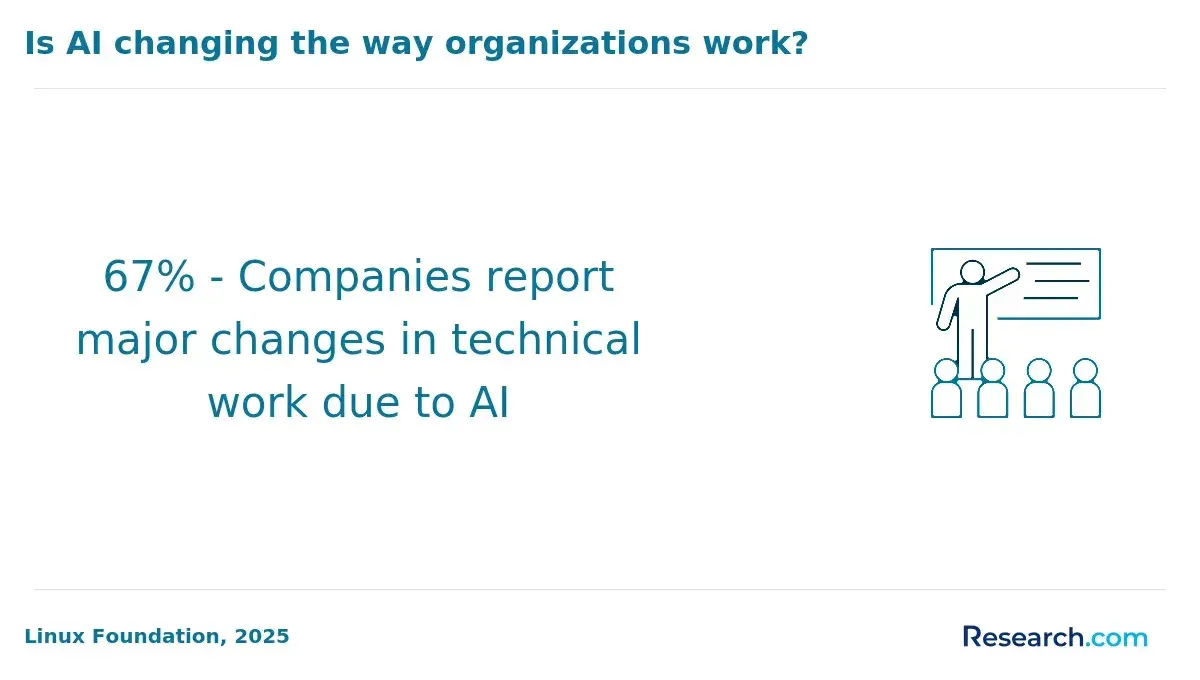
- Graduates from these accredited degrees report an average 30% higher starting salary than peers, with a strong job market driven by AI adoption across sectors.
What are the top accredited AI master's degree programs available in the United States?
Top accredited artificial intelligence master’s degree programs in the United States include options at Carnegie Mellon University, Stanford University, and the Massachusetts Institute of Technology (MIT). Carnegie Mellon’s School of Computer Science has held the number one position in graduate AI programs for five consecutive years, reflecting the strength of its curriculum, research activity, and employer connections.
Carnegie Mellon is especially strong for students who want a technically intensive program with direct application to machine learning, robotics, and data science. Stanford offers broad interdisciplinary access through computer science and engineering, with notable opportunities in natural language processing, computer vision, and AI research. MIT gives students exposure to major AI labs and industry collaboration, including work connected to reinforcement learning and autonomous systems.
Rankings can help you build an initial shortlist, but they should not be the only deciding factor. The best program for one student may be a poor fit for another if the format, prerequisites, research focus, or cost do not match the student’s goals. Prospective students should compare programs based on:
- Academic focus: Some programs emphasize AI theory and research, while others focus more on applied machine learning, data engineering, robotics, or product deployment.
- Faculty and lab access: Students interested in research should review faculty publications, active labs, and funded projects before applying.
- Industry alignment: Programs with capstones, internships, employer partnerships, or applied projects may be better for students targeting industry roles.
- Flexibility: Working professionals may need online, hybrid, evening, part-time, or asynchronous options.
- Prerequisite fit: Applicants without a computer science background should check whether the school offers bridge coursework or expects advanced programming and math before admission.
Students comparing AI programs may also want to consider adjacent pathways. For example, a 1 year computer science degree online can help some learners strengthen core computing preparation before moving into advanced AI study. The strongest choice is the one that combines accreditation, technical depth, faculty expertise, realistic admissions expectations, and a format you can complete successfully.
What accreditation standards and credentials should you verify when choosing an AI master's program?
The first accreditation check for any AI master’s program is institutional accreditation. In the United States, a university should hold recognized accreditation from an agency acknowledged by the U.S. Department of Education or the Council for Higher Education Accreditation (CHEA). This matters because institutional accreditation affects credit transfer, federal financial aid eligibility, employer recognition, and the credibility of the degree.
Programmatic accreditation is less common for AI master’s degrees. ABET accreditation can be valuable for computing and engineering specialties, but it is held by only about 15% of computer science and engineering graduate programs. Because AI is often offered as a concentration within computer science, data science, engineering, analytics, or information systems, applicants should confirm exactly what is accredited: the university, the school or department, the degree program, or a related engineering/computing program.
Use the following checks before applying or enrolling:
- Confirm institutional accreditation: Verify the university through the accreditor, not only the school’s marketing pages.
- Check whether the AI degree is standalone or a concentration: A master’s in computer science with an AI track may have different recognition than a dedicated AI degree.
- Review distance education authorization: Online AI master’s degrees should be authorized to enroll students in your state when applicable.
- Look for external curriculum alignment: Even when AI-specific accreditation is unavailable, alignment with IEEE or ACM frameworks can signal academic rigor.
- Evaluate faculty credentials: Faculty research areas should match the AI specialization you want, such as machine learning, NLP, computer vision, robotics, or responsible AI.
- Ask about outcomes: Placement into AI-focused roles, internship access, and performance on certifications such as the Certified Artificial Intelligence Engineer can provide practical evidence of program effectiveness.
Students planning a longer academic pathway should also think about undergraduate preparation. Reviewing resources such as data science undergraduate rankings can help future applicants choose earlier programs that build the quantitative and programming foundation needed for graduate AI admission.
What is the typical curriculum and core coursework in an accredited AI master's degree?
An accredited AI master’s degree usually combines advanced computing, applied mathematics, machine learning, and responsible AI. In many programs, 40-50% of the coursework is dedicated to core topics in machine learning and deep learning, consistent with ACM and IEEE 2024 Computing Curricula recommendations. This core is what separates a serious AI degree from a general technology or analytics program with only a few AI electives.
Students should expect rigorous coursework in algorithms, neural networks, reinforcement learning, probabilistic models, optimization, statistics, and linear algebra. These subjects provide the technical foundation needed to design, train, evaluate, and deploy AI systems. Programming is also central. Many programs use Python and common machine learning frameworks such as TensorFlow or PyTorch, along with assignments that require students to work directly with data, models, and performance metrics.
Common curriculum areas include:
- Machine learning: Supervised, unsupervised, and reinforcement learning methods, along with model evaluation and tuning.
- Deep learning: Neural networks, representation learning, convolutional models, sequence models, and modern architectures.
- Mathematical foundations: Linear algebra, probability, statistics, calculus, and optimization for AI modeling.
- Algorithms and data structures: Efficient computation, complexity, and scalable problem-solving.
- Natural language processing: Text analysis, language models, information extraction, and conversational systems.
- Computer vision: Image recognition, object detection, visual perception, and applied vision systems.
- Robotics and autonomous systems: Perception, planning, control, and real-world decision-making.
- AI ethics and governance: Fairness, accountability, transparency, bias, privacy, and responsible deployment.
- Capstone or thesis: A culminating research or applied project that demonstrates readiness for advanced AI work.
Programs vary in emphasis. Some are research-heavy and best suited for students considering doctoral study or AI lab roles. Others are more applied and designed for careers in software, analytics, product development, healthcare, finance, cybersecurity, or automation. Applicants should review required courses, elective depth, and capstone expectations rather than relying only on the degree title.
Learners comparing technical graduate pathways may also find it useful to review flexible engineering options such as online engineering degrees, especially if their AI interests connect to robotics, autonomous systems, embedded systems, or advanced computing infrastructure.
How do online AI master's programs compare to campus-based options in terms of flexibility and outcomes?
Online AI master’s programs usually offer greater scheduling flexibility than campus-based programs, while campus programs often provide stronger in-person access to labs, faculty, peers, and research communities. The right format depends on whether you need maximum flexibility, direct research access, structured classroom interaction, or proximity to employers and university facilities.
Many online programs use asynchronous coursework, which allows students to watch lectures, complete assignments, and participate in discussions around work and family commitments. This can be especially valuable for professionals who cannot relocate or attend classes at fixed times. Campus-based programs, by contrast, typically offer more immediate access to faculty, research groups, graduate seminars, career events, and on-site facilities, but they may require relocation, commuting, or a full-time schedule.
Outcomes for accredited online AI master’s degrees have become more competitive with campus-based options. According to LinkedIn’s 2024 Workplace Learning Report, 68% of employers view online AI master’s degrees as equally credible to on-campus degrees. Online graduates also experience similar job placement rates within six months, reducing the concern that an online format automatically limits career prospects.
Still, format matters most when it affects the experiences you need. Students interested in robotics hardware, lab-based research, or close faculty mentorship may benefit from campus access. Students targeting applied machine learning, data science, software deployment, or cloud-based AI may find that a well-designed online program with virtual labs, AI-driven simulations, live group projects, and strong employer ties provides enough practical training.
When comparing online and campus options, ask these questions:
- Are lectures asynchronous, live, or mixed? Asynchronous formats are more flexible, while live courses can provide more structure.
- How are projects completed? Look for real datasets, code reviews, team projects, capstones, and deployment experience.
- Can online students access faculty and career services? Advising, office hours, mentorship, and recruiting support should not be limited to campus students.
- Are internships or industry projects available? Practical experience is important in both formats.
- Does the diploma identify the format? Some students care whether the credential distinguishes online study from campus study.
Students seeking flexible and affordable adjacent programs can also compare options in online masters in data science, since many data science programs overlap with AI through machine learning, statistics, and large-scale data analysis.
What are the admission requirements and prerequisites for entering an accredited AI master's program?
Admission to an accredited AI master’s program is usually selective because the coursework depends on strong preparation in mathematics, programming, and analytical problem-solving. A bachelor’s degree in computer science, mathematics, engineering, or a closely related field is typically preferred. According to Graduate Record Examinations (GRE) Board data, 87% of admitted students came from these backgrounds, showing how important technical preparation can be in competitive admissions.
Applicants are commonly expected to show strength in quantitative work. Some programs use GRE scores as part of that evaluation, and the average GRE quantitative score for admitted students at top programs is 168 out of 170. However, some schools waive GRE requirements for applicants with significant professional experience, strong prior academic work, advanced degrees, or other evidence of quantitative readiness.
Typical prerequisites include:
- Calculus
- Linear algebra
- Probability
- Statistics
- Programming
- Algorithms
- Data structures
- Basic machine learning concepts
Applicants from non-STEM backgrounds are not automatically excluded, but they should expect extra preparation. Some programs offer bridge courses, conditional admission, or preparatory classes for students transitioning from other fields. Others expect applicants to complete prerequisites before enrollment. Career changers should read admissions pages carefully and contact admissions staff before applying, especially if they lack formal coursework in programming, data structures, or advanced math.
Strong application materials can also make a difference. Letters of recommendation should come from people who can speak directly to the applicant’s analytical ability, technical potential, research readiness, or professional performance. A statement of purpose should explain why the applicant wants to study AI, which areas of AI are most relevant to their goals, and how their prior experience has prepared them for graduate-level work.
Relevant work experience in software development, data science, analytics, engineering, AI product work, or technical research can strengthen an application. For applied programs, evidence of completed projects, coding ability, or experience with real-world data may be especially valuable. The strongest applicants present a clear match between their background, the program’s curriculum, and their intended AI career path.
How long does it take to complete an AI master's degree, and what is the average tuition cost?
A master’s degree in artificial intelligence generally takes 1.5 to 2 years for full-time students. Part-time and online students may take 3 years or more, depending on course load, sequencing, work obligations, and whether the program requires a thesis, capstone, or internship. Accelerated formats can shorten the calendar timeline, but they often require a heavier term-by-term workload and may increase annual costs.
Program length depends on several practical factors:
- Enrollment pace: Full-time students finish faster, while part-time students gain flexibility but extend the timeline.
- Credit requirements: Programs with more required credits or extensive electives may take longer.
- Thesis versus capstone: A thesis may be better for research-focused students, while a capstone may be more practical for industry preparation.
- Prerequisite gaps: Bridge courses can add time before or during the degree.
- Course availability: Some specialized electives are offered only in certain terms, which can affect planning.
Tuition varies widely. Full-time AI master’s programs typically range from $60,000 to $120,000 overall. Carnegie Mellon University’s program costs about $90,000, reflecting its research strengths and reputation. The University of California, Berkeley offers more affordable options, with in-state tuition near $48,000, which illustrates how public university residency rates can affect total cost.
Tuition is only one part of the financial decision. Students should also account for technology fees, lab access, books, software, travel for residencies if required, relocation for campus programs, and lost income if they reduce work hours. These expenses can add thousands to the total cost. Public universities may be less expensive for residents, while private universities may have higher listed tuition but sometimes offer scholarships, assistantships, or industry-supported funding.
Before enrolling, compare the total cost of attendance rather than tuition alone. Ask whether assistantships are available to master’s students, whether online students qualify for the same aid, whether employer tuition assistance can be used, and whether the program’s schedule allows you to keep working. The best financial choice is not always the cheapest program; it is the program whose cost, timeline, academic quality, and career outcomes fit your situation.
What career roles and job titles are available to graduates of accredited AI master's programs?
Graduates of accredited AI master’s programs commonly pursue roles such as machine learning engineer, AI research scientist, and data scientist. These roles represent 62% of job postings requiring a master’s in AI-related fields, according to Burning Glass Technologies’ 2024 labor market analysis. The best role for a graduate depends on whether they prefer building production systems, conducting research, analyzing data, developing AI products, or applying AI in a specific industry.
Machine learning engineers design, train, test, and deploy models that solve practical problems. They often work in technology, healthcare, finance, e-commerce, cybersecurity, logistics, or autonomous systems. These roles require strong programming, algorithms, software engineering, data pipeline, and model evaluation skills.
AI research scientists focus on developing new methods, improving model performance, and advancing theoretical or experimental AI work. They may work in universities, corporate research labs, government agencies, or startups. Research roles often favor students with thesis experience, publications, strong mathematics, and deep specialization in areas such as reinforcement learning, computer vision, or natural language processing.
Data scientists use statistical modeling, machine learning, and data analysis to support business decisions, product development, forecasting, personalization, or operations. Some data science roles are less engineering-heavy than machine learning engineering roles, but advanced AI programs can help graduates compete for roles involving predictive modeling, experimentation, and applied machine learning.
Other common job titles include:
- AI software developer
- Robotics engineer
- Natural language processing specialist
- Computer vision engineer
- AI product manager
- AI ethics officer
- Applied scientist
- Data engineer with machine learning focus
- Automation or intelligent systems engineer
Employers usually look for more than a degree title. Competitive candidates can show applied experience with real datasets, model deployment, version control, cloud platforms, scalable systems, and domain-specific problem-solving. Graduates who combine AI expertise with industry knowledge in healthcare, finance, manufacturing, education, defense, or government may have an advantage in roles that require both technical skill and contextual judgment.
What is the projected job outlook and salary potential for AI master's degree holders?
The job outlook for AI master’s degree holders is strong because organizations are investing in automation, predictive modeling, intelligent software, cybersecurity, robotics, and data-driven decision-making. According to the U.S. Bureau of Labor Statistics, AI and machine learning specialist roles are projected to grow 35% between 2024 and 2034, compared with 3.5% average growth across all occupations.
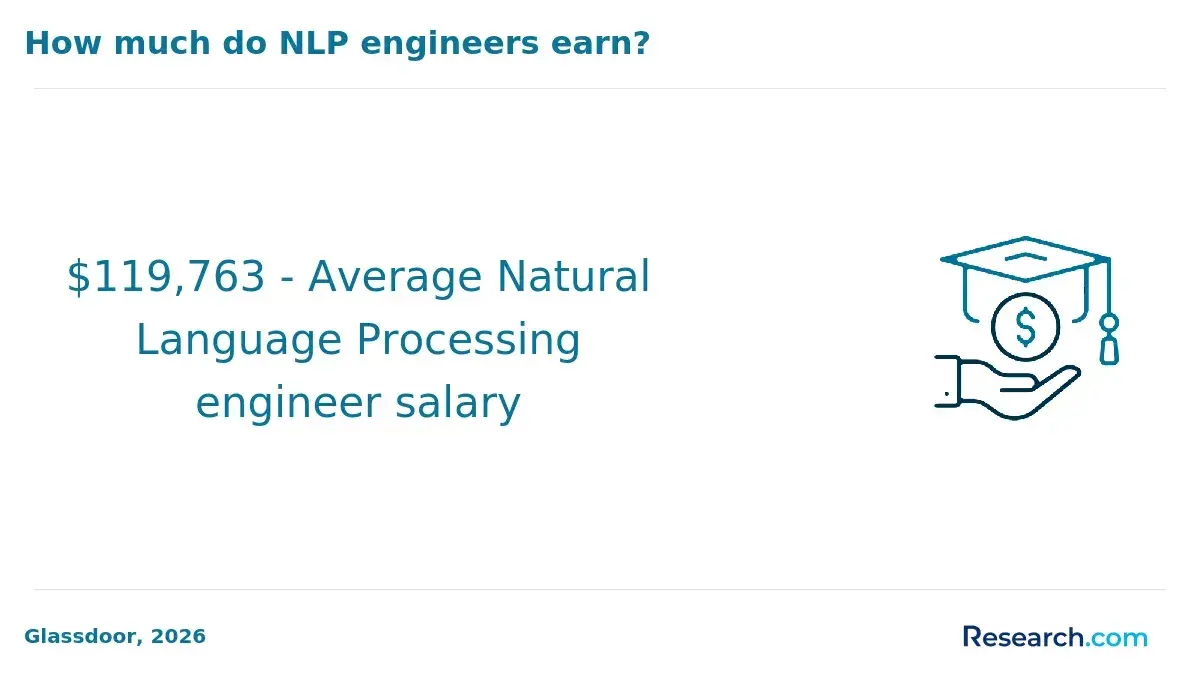
Salary potential is also high. As of May 2024, median annual pay for AI and machine learning specialists was $136,620. Actual compensation varies by location, employer type, specialization, experience, and technical depth. Graduates working in deep learning, natural language processing, robotics, or high-demand technical infrastructure may earn more, especially in major technology markets or companies competing heavily for AI talent. Entry-level roles typically start lower, but earnings can rise quickly as professionals gain experience building, deploying, and maintaining AI systems.
Several factors influence long-term earning potential:
- Technical specialization: Advanced skills in model architecture, deployment, optimization, NLP, computer vision, robotics, or data engineering can improve competitiveness.
- Portfolio and project quality: Employers value proof that candidates can solve real problems, not just complete coursework.
- Industry: Technology, finance, healthcare, autonomous systems, and cybersecurity may offer different compensation patterns and work environments.
- Location and work model: Salaries often vary by region and by whether roles are remote, hybrid, or located in major tech hubs.
- Research versus applied work: Research roles may emphasize publications and advanced theory, while applied roles may reward production experience and business impact.
AI careers also require continuous learning. Tools, model architectures, governance expectations, and deployment methods change quickly. Graduates who keep developing skills in data engineering, cloud platforms, model monitoring, ethical AI design, and secure deployment are better positioned for long-term job stability and salary growth. An accredited master’s degree can open doors, but sustained career value comes from keeping technical skills current and applying them effectively.
Are there professional certifications or licensing requirements associated with AI master's degrees?
There is no required professional licensure or mandatory certification for AI master’s degree holders in the United States. Unlike fields such as engineering or law, AI is not generally controlled by state licensing boards or a single national credentialing authority. Certifications are optional, but they can help graduates demonstrate applied skills in tools, platforms, and workflows that employers use.
According to the Computing Research Association’s 2024 survey, 42% of AI master’s graduates pursue additional certifications within two years. This does not mean every student needs a certification. It means many graduates use credentials strategically to show competence in cloud machine learning, data pipelines, deployment, cybersecurity, or specialized AI tools.
Commonly recognized certifications include AWS Certified Machine Learning and Google Cloud Professional ML Engineer. These credentials can be useful for roles that involve building, deploying, and managing AI models in cloud environments. They may be especially relevant in technology, healthcare, finance, and government settings where scalable infrastructure, data security, and production reliability matter.
Students and graduates may also consider related certifications in data science, cybersecurity, cloud computing, or specialized AI areas such as natural language processing or computer vision. The best certification depends on the target role. A machine learning engineer may benefit from cloud and deployment credentials, while a cybersecurity-focused AI professional may need security-oriented certifications. A student interested in AI product or governance work may prioritize responsible AI, privacy, or risk management training instead.
Certifications should complement, not replace, a strong degree, portfolio, and project experience. Before paying for any credential, compare it with job postings in your target market. If employers repeatedly list a platform or tool, a certification in that area may be worthwhile. If the credential is rarely mentioned or does not match your intended specialization, your time may be better spent on projects, research, internships, or advanced technical coursework.
How should prospective students evaluate and compare different AI master's programs to find the best fit?
Prospective students should compare AI master’s programs by fit, not prestige alone. According to the National Association of Graduate Admissions Professionals (NAGAP) 2024 report, 73% of prospective students value faculty research output and industry partnerships more than program reputation or cost. Those factors matter because they influence what students learn, who they learn from, the projects they complete, and the employers they can access.
Start by clarifying your career goal. A student aiming for AI research should prioritize faculty expertise, thesis options, lab access, publications, and preparation for doctoral study. A student targeting machine learning engineering should look for programming-heavy coursework, deployment projects, cloud tools, data engineering, and capstones. A student moving from another field may need a program with bridge courses, flexible pacing, and strong academic support.
When comparing programs, review these areas carefully:
- Accreditation: Confirm recognized institutional accreditation and check whether any relevant programmatic accreditation applies.
- Curriculum depth: Look for required coursework in machine learning, deep learning, algorithms, statistics, optimization, and responsible AI.
- Specializations: Match electives to your goals, such as NLP, computer vision, robotics, healthcare AI, finance AI, cybersecurity, or human-computer interaction.
- Faculty strength: Review recent publications, funded projects, lab activity, and whether faculty research aligns with your interests.
- Industry partnerships: Look for internships, employer-sponsored projects, advisory boards, startup connections, government collaborations, or capstones with real clients.
- Format: Decide whether full-time, part-time, online, hybrid, or campus study fits your schedule and learning style.
- Admissions fit: Check prerequisites before applying so you do not waste time on programs that require preparation you do not yet have.
- Student support: Compare advising, tutoring, career services, mentorship, technical support, and access for online students.
- Graduate outcomes: Review employment rates, common job titles, salary information, alumni networks, and employer recruiting activity when available.
- Total cost: Compare tuition, fees, living expenses, books, technology costs, travel, lost income, and available aid.
Avoid choosing a program based only on the lowest tuition or the most recognizable name. A low-cost program with limited AI coursework may not prepare you for the roles you want. A highly ranked program may not be worth the cost if it lacks flexibility, does not support your specialization, or requires relocation you cannot manage. The strongest choice is the program that offers accredited academic quality, realistic admissions expectations, relevant AI depth, meaningful practical experience, and a cost you can justify based on your career plans.
Other Things You Should Know About Artificial Intelligence
Most accredited AI master’s programs require 30 to 36 semester credits. Full-time students often finish in 12 to 24 months, while part-time formats take longer. Programs accredited by regional agencies, or housed within ABET-accredited computing departments, may also require a final project, thesis, or practicum.
Admission requirements typically include a bachelor's degree in a related field, letters of recommendation, a statement of purpose, and a minimum GPA. Some programs may also require GRE scores or relevant work experience. Always check specific school requirements for 2027 for precise details.
Many accredited AI master's programs require students to engage in research projects or a thesis focused on current AI challenges. This research component provides hands-on experience with experimental methods, data analysis, and the application of AI techniques. Collaborations with faculty or industry partners often enhance the research opportunities and outcomes.
Ethics is increasingly emphasized in AI curricula to address the societal impact of AI technologies. Students learn about issues such as bias in algorithms, data privacy, and the responsible use of AI applications. Understanding ethical frameworks prepares graduates to develop AI solutions that align with regulatory standards and public expectations.
Most AI master's programs in 2027 require a thesis or a capstone project to graduate. These projects typically involve applying AI techniques to solve real-world problems and consist of around 12 to 18 credit hours. Specific requirements vary by institution.
References
- How AI Certifications for Online MBA or MCA Degrees Add Value to Your Profile? | MBA Query https://mbaquery.com/blogs/43/how-ai-certifications-for-online-mba-or-mca-degrees-add-value-to-your-profile/
- AI Certifications: Accredited Programs, Vendor Credentials, and Emerging Standards - Total Seminars https://totalsem.com/ai-certifications-accredited-programs-vendor-credentials-and-emerging-standards/
- Are online electives different from on-campus options? https://online.seas.upenn.edu/faqs/are-online-electives-different-from-on-campus-options/
- Artificial Intelligence Certification | AI Certification | USAII® https://www.usaii.org/artificial-intelligence-certifications
- What Jobs Can I Get With a Master's in Artificial Intelligence? | CSU Global https://csuglobal.edu/blog/what-jobs-can-you-get-masters-artificial-intelligence
- 5 Benefits of an Online AI MS Degree | University of Bridgeport https://www.bridgeport.edu/news/benefits-of-online-ms-ai-degree/
- What Can I Do With a Master’s Degree in Artificial Intelligence (AI)? https://wp.wpi.edu/catalyst/2024/04/03/what-can-i-do-with-a-masters-degree-in-artificial-intelligence-ai/
- University Degree vs AI Bootcamp: Which is Best Career Path? https://agilefever.com/university-degree-vs-ai-bootcamp-which-is-best/
- Professional Certificate in Artificial Intelligence: Complete Guide https://www.teamland.com/post/ai-professional-certificate
- Client Challenge https://www.scribd.com/document/969494287/MSc-AI-Core-Courses-Short-Format