2027 AI Master's Degrees for UX Professionals

Co-Founder and Chief Data Scientist
Professionals with backgrounds outside technology often struggle to bridge the gap required to enter the AI field, especially when aiming to enhance user experience (UX) design. Traditional computer science programs may lack the tailored focus and flexibility needed for such career pivots. This creates a dilemma for those seeking advanced credentials without extensive prior technical training.
The article explores current AI master's degrees designed specifically for UX professionals, highlighting flexible, accredited programs that accommodate diverse academic histories. It aims to guide readers in finding suitable graduate options that align with career goals and industry demands in AI-driven UX roles.
Key Things You Should Know
- AI master's programs for UX professionals commonly integrate human-centered design with advanced machine learning to enhance user interaction and adaptive interfaces.
- By 2025, over 40% of AI-related UX roles require graduate-level education, reflecting a growing demand for specialized skills in AI-driven design.
- Top programs emphasize ethical AI, usability testing, and cross-disciplinary skills, preparing graduates for roles in tech firms, healthcare, and finance sectors.
What is an AI master's degree for UX professionals, and who is it for?
An AI master's degree program for UX designers blends advanced skills in artificial intelligence technologies with core user experience design principles. It prepares professionals to lead AI-enhanced design projects by integrating machine learning, natural language processing, human-computer interaction, and ethical AI considerations into digital products. Such programs help graduates create AI-powered applications with an emphasis on usability and accessibility, including conversational interfaces and personalized recommendation systems.
Those wondering who should pursue an AI master's degree in user experience typically include experienced UX designers wanting to deepen AI expertise without pivoting fully to data science, product managers managing AI products who require knowledge of both AI and UX, researchers analyzing user behavior with AI tools, and front-end developers shifting toward hybrid UX-AI roles.
- Experienced UX designers seeking to expand technical AI knowledge without moving fully into data science or engineering
- Product managers overseeing AI product development who need to understand both UX and AI components
- Researchers aiming to analyze user behavior with AI tools
- Front-end developers transitioning into hybrid UX-AI design roles
AI master's degrees address a growing skills gap, as the World Economic Forum projects 170 million jobs created by 2030, far outweighing jobs displaced. UX professionals reskill in AI to stay competitive and meet demand for AI-aware designers crafting seamless user experiences across healthcare, finance, business, and more. For insights on what jobs can you get with an AI degree, research.com offers valuable resources.
What careers can UX professionals pursue with a master's in artificial intelligence?
With a master's in artificial intelligence, UX professionals unlock advanced careers that merge design, technology, and intelligent systems. Job opportunities in artificial intelligence for UX experts include roles such as AI product managers who ensure user-centric products effectively integrate AI capabilities while maximizing usability and machine learning efficiencies. Conversational UX designers focus on creating natural language interfaces like chatbots and voice assistants, demanding expertise in AI-driven language models and human interaction.
Human-centered AI specialists design ethical, transparent AI systems that emphasize user needs and reduce biases by combining UX principles with AI interpretability techniques. UX researchers skilled in AI analyze complex datasets using machine learning to extract deeper user behavior insights that traditional approaches might miss, improving product relevance.
Growth in AI and big data skills is one of the fastest according to reports like the World Economic Forum's Future of Jobs 2025, fueling demand in AI product design, conversational UX, and human-centered AI domains. Companies building autonomous systems need UX experts who keep interfaces intuitive and trustworthy under changing conditions.
Careers for UX professionals with a master's in artificial intelligence typically involve collaboration with data scientists, engineers, and ethicists to tackle challenges such as algorithmic transparency and data privacy. Developing skills in natural language processing, AI model evaluation, and ethical AI frameworks boosts employability. Prospective students exploring technical career routes may also consider exploring mechanical engineering online degrees as complementary or alternative pathways.
What salary can AI-trained UX professionals expect in U.S. roles?
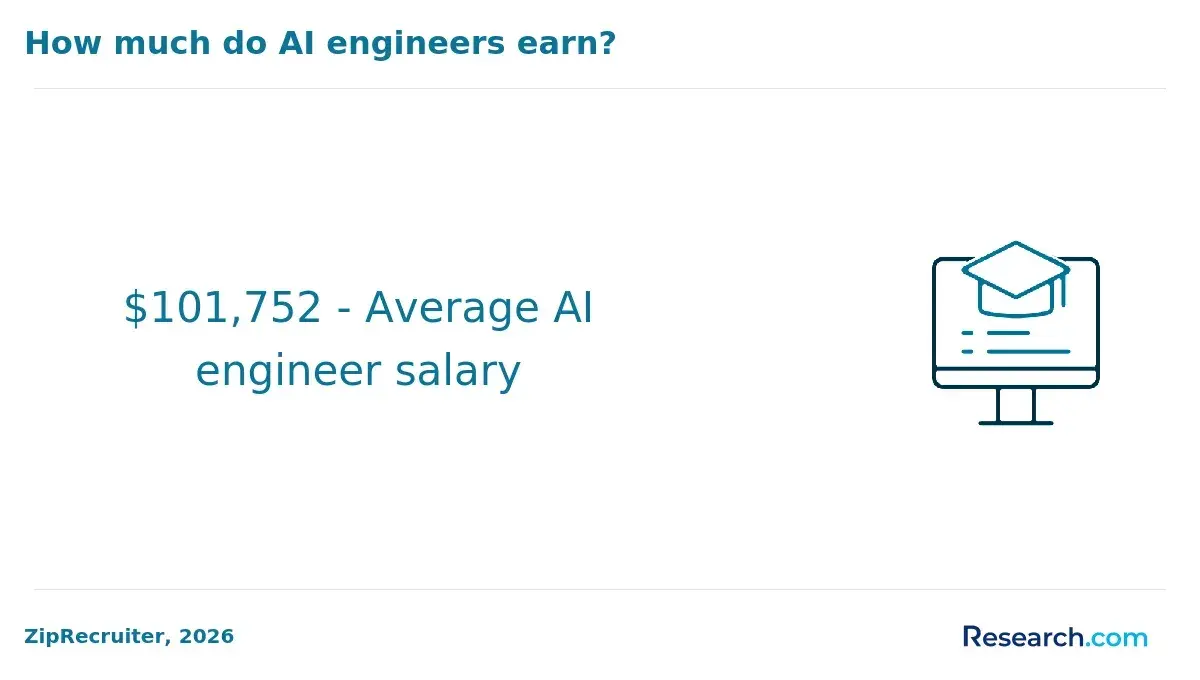
AI-trained UX professionals in the U.S. earn median salaries comparable to Computer and Information Research Scientists, who had a median annual wage of $145,080 as of May 2024, according to the U.S. Bureau of Labor Statistics. This figure reflects the growing value of professionals combining UX expertise with AI knowledge. Salaries for professionals with an AI master's degrees salary for UX professionals in the U.S. vary widely based on experience, industry, and location.
Entry-level roles typically offer between $85,000 and $110,000, especially at smaller firms or startups. Mid-career UX specialists with advanced AI degrees commonly command salaries ranging from $120,000 to $160,000, particularly in tech hubs like San Francisco, Seattle, and New York. Senior professionals focusing on AI-driven predictive behavior, personalized interfaces, or intelligent analytics may exceed $170,000 annually. Average compensation for UX professionals with AI expertise in United States companies developing AI-driven products tends to be highest.
Additional factors impacting compensation include:
- Skillsets that integrate machine learning models with UX research elevate employer demand.
- Collaborations across data science and software engineering teams typically yield higher pay.
- Contract and consultant positions can surpass salaried roles depending on project scope.
Prospective students should consider AI master's programs emphasizing applied UX analytics to maximize job placement and salary outcomes. For those exploring affordability, the cheapest online master's in artificial intelligence offer accessible pathways to build these valuable skills and meet career goals.
How do online AI master's programs compare with on-campus options for UX?
Online AI master's programs offer significant flexibility suited for UX professionals balancing work and study, enabling access to coursework anytime and anywhere. This advantage supports those employed full-time or living outside major tech hubs. However, on-campus programs provide richer face-to-face collaboration, hands-on lab experiences, and direct networking with faculty and peers-key elements for UX roles emphasizing teamwork and user-centered design processes. The comparative benefits of remote and traditional AI master's degrees in UX highlight these contrasting strengths.
Distance education now represents about 31% of all postsecondary enrollments, reflecting how online study has become a mainstream alternative with comprehensive curricula often matching their on-campus counterparts. Many online programs use virtual labs, synchronous sessions, and interactive projects, though students must actively seek mentorship and peer engagement to develop critical soft skills.
Online AI master's programs vs on-campus for UX professionals require evaluating learning style and career goals. Programs differ-some offer self-paced study, others require real-time collaboration. Employers increasingly recognize accredited online degrees from STEM-focused institutions, reducing previous stigma.
For those interested in cybersecurity as a related field, exploring a cybersecurity online degree can complement AI expertise and broaden career opportunities.
What core courses should an AI master's program include for UX-focused students?
An AI master's program designed for UX professionals should integrate technical skills with user-centered design principles. Core subjects typically include machine learning fundamentals, covering supervised and unsupervised algorithms that help students build predictive models to improve user interactions. Data engineering is also vital, focusing on data collection, cleaning, and storage to ensure AI-driven UX solutions are reliable and effective.
Evaluation metrics courses are essential for teaching how to measure AI system performance, including accuracy, precision, recall, as well as advanced UX metrics like user satisfaction and task success rates. Governance and ethics training addresses bias mitigation, transparency, and building user trust-critical topics given that over half of organizations have adopted AI, according to IEEE's 2024 Global Survey on AI.
Additional coursework often covers human-computer interaction for designing intuitive AI tools and natural language processing to create conversational agents. Practical labs simulate real-world challenges such as developing AI recommendations or adaptive interfaces based on user behavior.
What admission requirements do AI master's programs typically have for UX applicants?
Admission requirements for AI master's programs aimed at UX professionals typically focus on a solid technical foundation and analytical skills. Most programs expect applicants to hold a bachelor's degree in computer science, information technology, design, psychology, or a related field. UX candidates without formal STEM backgrounds often need to demonstrate proficiency in programming languages such as Python or Java, along with statistics, through coursework, work experience, or online certifications.
Common application materials include transcripts, letters of recommendation, and a statement of purpose emphasizing analytical abilities and UX expertise. Portfolios showcasing projects that merge UX research or design with AI or data analytics can boost applications by highlighting interdisciplinary skills. GRE scores are often optional; many graduate programs have dropped GRE requirements, easing entry for UX applicants without standardized test prep.
Prerequisites like linear algebra, calculus, and machine learning fundamentals may be required and are often fulfilled via certificate courses. Work experience blending UX with data analysis or machine learning skills strengthens the profile. Admissions committees look for candidates who can integrate human-centered design and technical AI approaches, mirroring industry needs.
Applicants should proactively address any technical gaps in essays and interviews, showing adaptability and relevant experience. Early communication with program advisors helps clarify specific requirements. Strong coding samples or completed AI-related projects notably enhance applications for UX professionals transitioning into AI-focused graduate study.
How long does an AI master's degree take, and what does it cost?
An AI master's degree usually requires one and a half to two years of full-time study, with part-time and online options extending the timeline to three years or more. Programs typically involve 30 to 36 credit hours covering core subjects like machine learning, data science, and human-computer interaction, which are vital for UX professionals integrating AI into their work. Some universities offer accelerated tracks that can be completed in 12 to 18 months, but these demand intensive study and prior experience in related fields.
Tuition costs vary widely depending on the type of institution. According to College Board's Trends in College Pricing 2024, full-time graduate tuition averages about $12,600 annually at public universities and $29,900 at private non-profit schools. This means total tuition for an AI master's can range between $18,900 and $59,800 or more, based on program length. Additional fees for technology, student services, and books may add several thousand dollars annually.
Financial aid, scholarships, and employer tuition assistance can reduce costs but vary by program and eligibility. For UX professionals balancing work and study, part-time programs offer flexibility but require a longer financial commitment. Accelerated or full-time study enables faster entry into advanced AI-UX roles but demands more upfront resources.
Evaluating program structure, financial support, and career timelines helps guide a well-informed decision on the duration and cost of an AI master's degree.
How do you evaluate accreditation and program quality for AI master's degrees?
Accreditation is a key factor when evaluating AI master's programs in the U.S. Regional accreditation from agencies like the Higher Learning Commission or the Middle States Commission on Higher Education ensures institutions meet broad educational standards. Additional programmatic accreditation in computer science or engineering fields can further confirm a program's AI specialization quality.
Review the curriculum for a balance between foundational theory and practical skills. Strong programs often include courses in machine learning, natural language processing, data ethics, and user experience design, which are especially relevant for UX professionals interested in AI.
Faculty expertise and active research collaborations with technology companies boost program credibility and can enhance networking opportunities critical for career advancement.
Financial outcomes matter: the U.S. Department of Education's Gainful Employment rule specifies that career programs risk losing federal aid if loan payments exceed 8% of earnings or 20% of discretionary income. This emphasizes the importance of comparing tuition costs with expected salaries after graduation.
Prospective students should also seek transparent data on graduate employment rates, starting salaries, and alumni career paths. Programs offering robust career services, internships, and industry partnerships tend to provide better long-term returns on investment.
Which AI skills matter most for UX work: ML, NLP, analytics, or human-centered AI?
The most critical AI skill for UX professionals is expertise in natural language processing (NLP) paired with large language model (LLM) interaction design. Data from Anthropic's 2024 Economic Index reveals that approximately 25% of tasks involving Claude, their AI assistant, focus on writing or editing. This underscores the importance of NLP in developing and refining conversational interfaces, chatbots, and automated content creation tools.
Machine learning (ML) remains important as a foundational skill, supporting algorithmic personalization and predicting user behavior. While UX professionals rarely build ML models, understanding ML workflows is vital for recognizing model biases, limitations, and impacts on users. Analytics contributes by enabling data-driven design improvements but is generally complementary rather than central to AI-focused UX skills.
Human-centered AI prioritizes aligning designs with ethics, transparency, and user trust. Embedding these principles into AI interfaces helps ensure fairness and usability, addressing genuine user concerns in AI-powered experiences.
- Develop NLP skills to craft and assess text-based AI interactions, including prompt engineering and user intent modeling.
- Grasp ML basics to collaborate with data scientists and anticipate model-related UX challenges.
- Use analytics to drive evidence-based design enhancements in AI systems.
- Apply human-centered AI principles to create ethical, trustworthy user interfaces.
A master's program emphasizing NLP, AI ethics, and human-centered design offers the best preparation for UX professionals adapting to AI advancements in user experience.
What certifications complement an AI master's degree for UX professionals?
Certifications that complement a master's degree in ai for UX professionals often bridge technical skills with user-centered design. Key credentials include Certified Usability Analyst (CUA), which validates expertise in usability testing and user research-important for integrating ai models with user needs. The Google UX Design Certificate offers practical training in UX tools and methods vital to designing ai-driven interfaces.
- Certified Usability Analyst (CUA): Validates skills in usability testing and user research, critical for integrating AI models with real-world user needs.
- Google UX Design Certificate: Offers practical training in UX design tools and methods, essential for designing AI-driven interfaces.
- TensorFlow Developer Certificate: Demonstrates proficiency in machine learning frameworks, enabling collaboration with ai engineers on user-focused applications.
- Human-Centered AI Certification: Focuses on ethical AI design and aligning solutions with user expectations.
These certifications build on the theoretical foundation of a master's program by providing applied skills and recognized credentials. Professionals managing ai-infused UX projects benefit from combining UX and AI-specific certificates to make complex algorithms accessible and trustworthy.
Demand for ai upskilling is strong, with over 20 million generative-ai course enrollments reported by Coursera's annual data, indicating high employer interest in credentialed expertise.
Additional relevant certificates include project management credentials like PMP for overseeing multidisciplinary AI projects, and data privacy certifications to ensure compliance with regulations protecting user data. Such credentials help UX professionals effectively navigate the intersection of AI technology, user experience, and regulatory standards in their careers.
Other Things You Should Know About Artificial Intelligence
Yes, scholarships specifically for AI Master's Degrees for UX professionals may be available in 2027. Prospective students should research offerings, as universities and professional bodies often provide financial aid options based on merit or need for specialized programs.
Most 2027 AI Master's programs for UX professionals require a bachelor's degree in design, computer science, or a related field. Applicants may also need relevant work experience and foundational skills in programming and human-centered design methodologies.
Yes. Many AI master’s programs for UX professionals require a capstone, often worth 3 to 6 credits, completed in the final term. It usually involves a faculty-supervised project using real user research, model evaluation, and design documentation, and some schools require a public presentation or defense.
An AI master's degree in 2027 can significantly enhance career prospects for UX professionals by equipping them with skill sets in AI tools, human-centered design technologies, and data analysis. This expertise can lead to roles in AI UX design, product management, and user experience research, among others.
References
- The 11 Best UX Design Certificates (2025) https://designlab.com/blog/best-ux-certificates
- Best UX graduate degree programs: A guide - Trymata https://trymata.com/blog/best-ux-graduate-degree-programs-a-guide/
- AI-Driven UX Design Courses in 2025 https://paulcapcan.com/my-list-of-top-courses-for-ai-driven-ux-design-in-2025/
- Are online electives different from on-campus options? https://online.seas.upenn.edu/faqs/are-online-electives-different-from-on-campus-options/
- AI Meets UX: 3 Emerging Jobs at the Intersection - CuriousCore | Seed Your Ambition https://curiouscore.com/resource/ai-meets-ux-3-emerging-jobs-at-the-intersection/
- University Master's degree in Artificial Intelligence https://web.ua.es/en/masteres/inteligencia-artificial/quality-standards.html
- The Future of UX Design: Empowered by AI and ML https://www.uxmatters.com/mt/archives/2023/10/the-future-of-ux-design-empowered-by-ai-and-ml.php
- Blogs https://www.leoglobaloverseas.com/blogdetails/ai-career-pathways-from-msc-to-industry-roles
- Top 10 Careers You Can Pursue With an Online Master’s in AI https://www.ucumberlands.edu/blog/careers-you-can-pursue-with-an-online-masters-in-ai
- Accreditation and AI: Ensuring Quality in an Era of Smart Learning https://www.qahe.org/article/accreditation-and-ai-ensuring-quality-in-an-era-of-smart-learning/