2027 Artificial Intelligence Degree Programs for Rural Learners

Co-Founder and Chief Data Scientist
Rural learners often face limited access to advanced degree programs, especially in rapidly evolving fields like Artificial Intelligence. Geographic isolation, lack of nearby accredited institutions, and conflicting work schedules create significant barriers to pursuing careers in this high-demand sector. Without flexible, quality educational options, many capable individuals cannot transition into Artificial Intelligence roles, stalling their professional growth.
This article explores accessible, accredited Artificial Intelligence degree programs designed for rural students seeking to overcome these challenges. It aims to guide prospective learners in finding suitable online and hybrid pathways that balance flexibility with rigor, enabling a successful career shift into the Artificial Intelligence industry.
Key Things You Should Know
- Rural learners benefit from growing online AI degree programs, with 68% of 2025 offerings featuring flexible, fully remote study options to overcome geographic barriers.
- Employment projections show a 35% increase in AI-related jobs in rural U.S. areas by 2030, making specialized degrees crucial for local workforce development.
- Many accredited institutions now provide targeted AI curricula incorporating ethics and data privacy, addressing unique challenges faced by rural communities in technology adoption.
What is an artificial intelligence degree program, and who is it for?
An artificial intelligence degree program equips students with essential skills in AI technologies such as machine learning, data analysis, natural language processing, and robotics. These programs blend computer science, mathematics, and statistics to prepare graduates for developing AI-driven solutions. They are offered in various formats, including bachelor's, master's, doctoral degrees, and specialized certificates.
Online artificial intelligence education options in rural areas offer flexible delivery modes, such as hybrid and fully online models, helping learners overcome geographic barriers. These programs serve diverse students, including recent high school graduates, working professionals seeking to upskill, and graduates from both STEM and non-STEM backgrounds wanting interdisciplinary AI expertise.
According to the World Economic Forum's Future of Jobs Report 2025, roles like AI and Machine Learning Specialists are among the fastest-growing globally through 2030. Rural students should assess program access to cloud computing resources, research labs, mentorship, and professional networks to enhance job placement prospects.
Curriculum focus areas often emphasize ethical AI development and applied AI in sectors like healthcare, finance, and manufacturing. Employment outcomes and internship opportunities are essential factors to consider. For those evaluating career paths, exploring artificial intelligence degree jobs can provide valuable insights into viable opportunities.
Which accredited colleges offer online AI degrees suitable for rural learners?
Several accredited colleges offer fully online artificial intelligence degrees designed to accommodate rural learners. Schools with established online platforms deliver scalable, asynchronous programs that address limited internet access and flexible schedules common in rural areas. For example, Arizona State University provides online Bachelor's and Master's degrees in AI and computer science with AI specializations.
The University of Illinois Urbana-Champaign offers a fully online Master of Computer Science in Data Science that incorporates AI coursework. Colorado State University Global Campus features a Bachelor of Science in Artificial Intelligence tailored to working adults and remote students.
Many of the best online AI degree programs for rural learners at accredited universities emphasize flexibility through asynchronous classes and multiple start dates. Additional support often includes remote tutoring, virtual labs, and partnerships with local libraries to improve technology access. These options allow students to balance professional or familial obligations while pursuing their studies.
According to the National Center for Education Statistics (NCES), IPEDS 2024 data shows millions enrolled in distance education, confirming the widespread availability of fully online degrees in AI and other fields. Verifying regional accreditation and availability of AI-specific resources, such as access to GPU cloud platforms, virtual research assistantships, and internship placement, is essential.
Those interested in technical fields might also explore affordable programs like the mechanical engineer degree offered online. Accredited universities with dedicated online AI degrees and strong digital support provide a solid pathway for rural learners without geographic constraints.
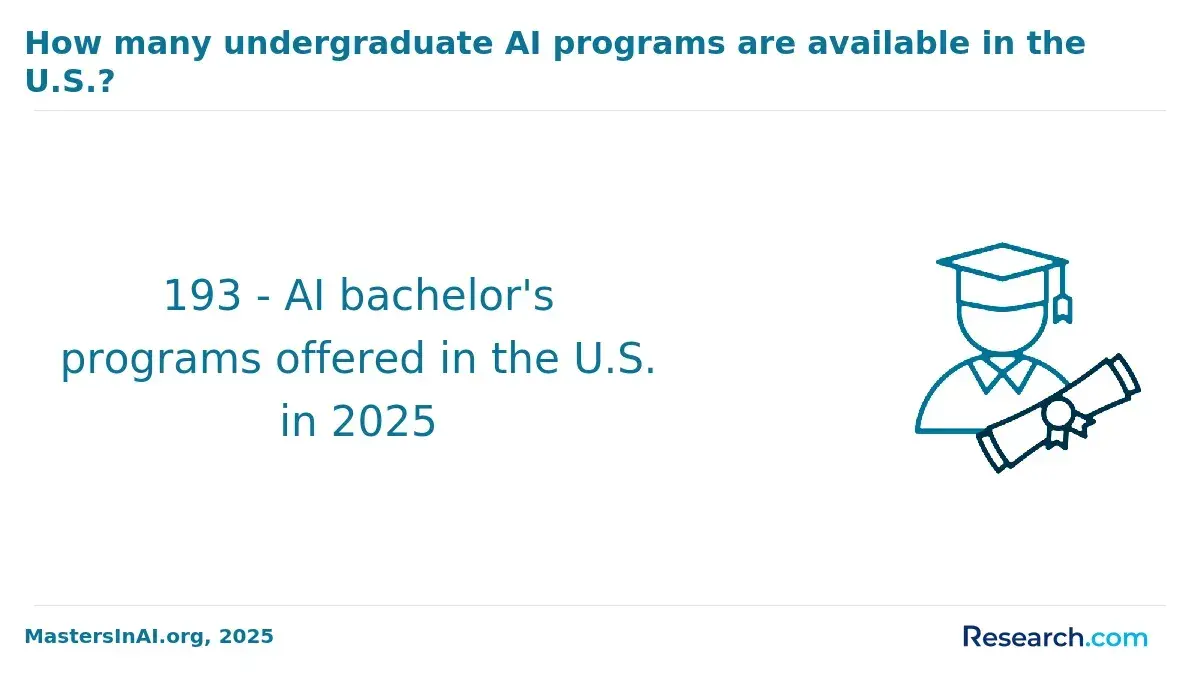
What degree level should you choose for an AI career path?
The bachelor's degree remains the baseline education for a career in artificial intelligence, according to the U.S. Bureau of Labor Statistics (BLS), Occupational Outlook Handbook for Data Scientists. This level is suitable for many entry-level roles, such as AI software developer or junior data analyst, providing foundational knowledge in programming, algorithms, and data structures.
However, advancement opportunities may be limited without higher qualifications. For rural students seeking the best artificial intelligence degree level, pursuing a master's degree is highly beneficial. This advanced training covers critical topics like neural networks, natural language processing, and big data analytics.
Employers often require or strongly prefer a master's degree for senior AI scientist or project lead roles. Professionals looking to pivot careers or boost credentials can also explore specialized master's or graduate certificates that target AI skills. These options offer flexibility and valuable expertise without the full commitment of a doctoral program.
While Ph.D. degrees open doors to academia and pioneering research, they remain optional for most industry jobs. Students in rural areas can find accessible degree programs in artificial intelligence in rural areas that provide quality education close to home. Many also benefit from online learning opportunities, making it easier to balance location and career goals.
Resources like online AI degree programs provide affordable, flexible options for these students. Choosing the right degree involves weighing personal career objectives, current education, and the specific AI roles desired to secure a competitive position in the job market.
How do online AI programs handle labs, projects, and hands-on experience?
Online AI degree programs with practical labs for rural students often leverage cloud-based platforms and virtual environments, giving remote access to tools like Python notebooks, TensorFlow, and cloud GPUs. Many programs incorporate project-based learning, where students develop real-world AI applications such as image recognition or natural language processing models.
Hands-on projects in rural AI education programs typically use scalable computing resources through platforms like Amazon Web Services Educate and Google Colab. Labs focus on step-by-step coding exercises and debugging to build practical expertise. Collaboration via GitHub is essential for portfolio development, enabling students to handle tasks just like in professional settings.
Challenges in rural areas, such as limited internet bandwidth, are addressed by asynchronous labs with downloadable datasets and scripts for local execution. Dedicated technical support helps ease setup and troubleshooting. Prospective students should ensure programs offer structured mentorship and active forums to aid problem-solving, along with portfolio-building assignments.
For related fields, consider exploring cybersecurity schools online, which also provide practical and affordable remote learning options.
What courses and skills are taught in AI and machine learning programs?
AI and machine learning programs concentrate on both foundational theories and practical skills vital for today's evolving job market. Core courses emphasize programming languages, especially Python, as a top skill for AI/ML roles. Students explore data structures, algorithms, and software engineering to create scalable AI applications.
Key topics include machine learning algorithms such as supervised and unsupervised learning, neural networks, and reinforcement learning, supported by statistical methods and probability theory for model validation. Hands-on projects often use frameworks like TensorFlow and PyTorch to build deep learning models.
Students develop expertise in data manipulation and analysis with tools like SQL and pandas, and gain experience in natural language processing (NLP), computer vision, and cloud platforms like AWS and Azure for deploying AI solutions.
Ethics and AI governance are integrated to address fairness, bias, and legal aspects of AI development. Practical training covers system design, testing, and optimization to enhance problem-solving skills related to model accuracy and deployment challenges.
Capstone projects and internships are common, fostering direct application of knowledge in real-world settings. This well-rounded curriculum prepares learners for diverse AI careers requiring strong programming, analytical ability, and ethical awareness.
What admissions requirements and prerequisites do AI degree programs expect?
Most AI degree programs require a strong foundation in mathematics, programming, and relevant sciences. Applicants typically submit official transcripts confirming high school completion or an equivalent credential. Programs expect proficiency in algebra, calculus, and linear algebra due to the mathematical demands of AI coursework.
The College Board's SAT Suite of Assessments Annual Report 2024 highlights national SAT math scores as a key benchmark. Many programs use these scores to gauge readiness for calculus- and linear-algebra-intensive classes. Common prerequisites include:
- High school courses in advanced math (pre-calculus, calculus) and sciences.
- Programming skills in languages such as Python, Java, or C++.
- Competitive SAT or ACT math scores, often above the 75th percentile.
Nontraditional applicants may complete bridge or foundational courses in math and coding before starting core AI classes. Some community colleges collaborate with universities to offer preparatory modules online or in hybrid formats, benefiting rural and working students. Letters of recommendation emphasizing analytical and problem-solving skills may also be required.
Graduate AI programs demand a bachelor's in STEM fields, coursework in linear algebra, probability, statistics, and solid programming experience. GRE quantitative scores above 160 are common benchmarks. Applicants without relevant backgrounds usually must take prerequisite courses.
Early review of specific program requirements and focus on math skills aligned with College Board 2024 SAT data improves admission chances.
How long do AI degrees take, and what do they cost?
AI degree programs vary in length, typically from two to four years, depending on the degree level and format. An associate degree usually takes about two years, while a bachelor's degree requires four years of full-time study. Part-time or online bachelor's programs can extend to five or six years. Master's degrees in AI or related fields generally take one to two years beyond a bachelor's.
Tuition costs differ widely by institution type and residency. Public four-year in-state colleges averaged $10,940 annually for tuition and fees according to the College Board's Trends in College Pricing 2024. Online programs may reduce expenses by removing relocation and commuting costs, but can charge higher per-credit rates.
Financial planning should include:
- Tuition differences between associate, bachelor's, and master's AI programs.
- Additional fees, such as technology, lab, and course materials, range from $500 to $2,000 annually.
- Savings from in-state tuition or scholarships designed for rural or non-traditional students.
Some schools offer accelerated bachelor's degrees or integrated master's programs, allowing faster completion and potentially reducing overall costs. For rural students, comparing in-state public institutions and online program expenses along with credit hour costs is key for efficient degree planning.
What AI jobs can rural learners pursue after earning an AI degree?
Rural learners with an artificial intelligence degree have access to a range of in-demand careers that often include remote work flexibility. Key roles include data scientist, machine learning engineer, AI software developer, and business intelligence analyst. These positions involve designing algorithms, developing AI models, and analyzing complex datasets to address challenges across industries.
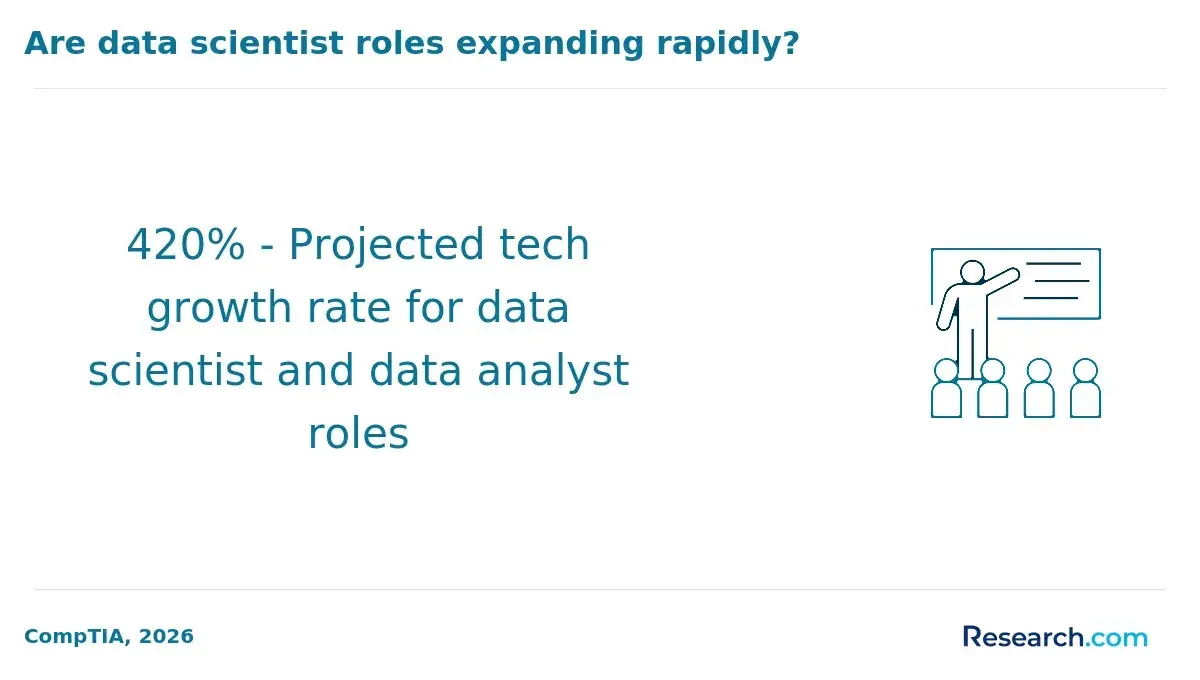
Data scientist roles, in particular, show strong employment growth according to projections from the U.S. Bureau of Labor Statistics. Remote work options allow rural professionals to engage with global teams without relocating, contributing to projects like predictive crop yield models, financial fraud detection, or supply chain optimization.
Job variations for graduates include:
- Natural language processing engineer building chatbots or virtual assistants
- Computer vision technician developing image recognition systems
- AI product manager coordinating AI solution deployment
- Data analyst interpreting business or scientific data using AI tools
To maximize career opportunities, rural learners should build strong programming skills, become proficient in cloud computing, and gain hands-on experience with AI frameworks such as TensorFlow or PyTorch. Certifications and internships-even virtual-can enhance practical knowledge and employability.
How much can AI graduates earn, and what affects AI salaries?
AI graduates in the United States enjoy salaries well above the national median wage due to strong demand and specialized expertise. The U.S. Bureau of Labor Statistics (BLS) reports an annual median wage of $100,390 for data scientists and related roles, compared to the overall U.S. median of about $58,000.
Salaries depend heavily on experience: entry-level professionals typically earn between $70,000 and $90,000, while senior roles like machine learning engineers or data scientists can command over $150,000 annually. Advanced degrees, such as master's or PhDs, often result in higher compensation.
Geography also affects pay. Tech hubs like Silicon Valley and New York offer some of the highest salaries, but remote work and regional demand are expanding prospects for candidates outside major cities. Additionally, specialization influences wages; roles focusing on natural language processing or computer vision may vary based on industry needs.
Industry sector plays a key role: finance, healthcare, and technology tend to offer better pay than academia or nonprofit sectors. Aspiring professionals should weigh these factors to align their education and career goals effectively.
What certifications complement an AI degree and improve job prospects?
Certifications that complement an artificial intelligence degree significantly boost career prospects by verifying practical skills and specialized knowledge valued by employers. Role-based credentials, particularly in cloud platforms, remain some of the most influential.
Microsoft's updates emphasize the ongoing importance of Azure AI certifications, such as the Azure AI Engineer certification. Other noteworthy certifications include:
- Google Cloud Professional Machine Learning Engineer: emphasizes deployment and optimization of models in cloud environments
- IBM AI Enterprise Workflow Certification: centers on managing AI project lifecycles and ethical deployment
- Certified Data Scientist: credentials from organizations like DASCA, covering data preprocessing, programming, and model validation, essential to AI workflows
- Certified TensorFlow Developer: focuses on practical machine learning model building and neural network expertise
- Specialized Cybersecurity: certifications CompTIA Security+ and CISSP, addressing growing AI security challenges
Complementing these technical credentials with project management qualifications like PMP and data engineering certificates broadens an AI professional's versatility. Employers value candidates who integrate AI theory with data handling, system integration, and operational management skills.
For rural learners, selecting certifications with remote exam options and affordable pricing is vital to overcome geographic and financial hurdles. Many vendors now offer fully remote proctoring for such certificates. Microsoft's report highlights that sustained employer recognition of role-based AI certifications enhances their value alongside academic degrees.
Other Things You Should Know About Artificial Intelligence
Python is the most widely used programming language in artificial intelligence due to its simplicity and extensive libraries such as TensorFlow and PyTorch. Other languages like R, Java, and C++ also play important roles, especially for specialized AI tasks and performance-critical applications.
Artificial intelligence programs, especially those delivered online, must adhere to strict data privacy regulations to protect student information. Institutions typically use encryption and anonymization techniques to safeguard personal data while enabling AI-driven personalized learning experiences.
Yes, some scholarships and financial aid programs target students from rural areas pursuing degrees in artificial intelligence and STEM fields. These opportunities may come from federal grants, nonprofit organizations, or institutions aiming to increase diversity and accessibility in technology education.
Many online artificial intelligence programs offer opportunities for remote research participation through virtual labs, collaboration platforms, and supervised projects. Rural learners can join research teams or contribute to AI studies without the need to relocate, though some programs may require occasional on-campus visits.
In 2027, AI programs increasingly leverage online platforms and AI-driven tools, raising concerns about data privacy. Students in rural areas may face unique challenges in protecting personal information due to limited access to secure digital infrastructure. Institutions are encouraged to implement robust data protection policies to safeguard student privacy.
References
- AI and the future of rural learning https://www.businessnews.ie/ai-for-business/ai-and-the-future-of-rural-learning/
- AI Tools for Everyone: A Hands-On Learning Lab (Online) FREE https://ctme.caltech.edu/artificial-intelligence-tools-for-everyone-online.html
- What to Study for a Career in AI https://www.savemyexams.com/learning-hub/careers/what-to-study-career-in-ai/
- Where does AI fit in the virtual lab lifecycle? https://www.skillable.com/resources/virtual-lab-development/where-does-ai-fit-in-the-virtual-lab-lifecycle/
- Online AI Training with Real Projects for Career Switchers: A Practical Roadmap https://www.h2kinfosys.com/blog/online-ai-training-with-real-projects-for-career-switchers-a-practical-roadmap/
- How Long Does It Take to Complete an AI Course https://www.epw.com/blog/courses/how-long-is-ai-course
- Understanding AI: AI tools, training, and skills https://ai.google/learn-ai-skills/
- How Long Do AI Courses Take? https://www.nobledesktop.com/learn/ai/how-long-do-ai-courses-take
- 10 Best AI/ML Certifications to Get Hired in 2026 https://www.aistaffingninja.com/blog/top-ai-ml-certifications-to-career-boost/
- Enhancing STEM Education with AI Lab Setups https://ednex.me/blog/how-artificial-intelligence-lab-setups-enhance-stem-education/