2027 Artificial Intelligence Degree Programs for Career Pivoters

Co-Founder and Chief Data Scientist
Many professionals with degrees in unrelated fields face challenges when seeking to enter the artificial intelligence industry. They often struggle to find accredited programs that offer flexibility while building essential skills from the ground up. Time constraints, financial commitments, and rapid technological advancements add to the difficulty of making a successful career pivot. Understanding the best educational pathways can be overwhelming without clear guidance tailored to career changers.
This article explores accessible artificial intelligence degree programs designed for those transitioning careers, highlighting flexible, accredited options that align with industry demands to support a smooth and informed shift into AI roles.
Key Things You Should Know
- AI degree programs in 2026 increasingly prioritize hands-on projects and interdisciplinary skills, reflecting industry demand for practical experience alongside theoretical knowledge.
- Over 55% of institutions now offer flexible online or hybrid AI degrees tailored for career pivoters seeking to reskill without pausing employment.
- Graduates with AI degrees report average salary increases of 25% within two years, illustrating strong ROI amid rapid AI adoption across U.S. industries.
What is an artificial intelligence degree program and who is it for?
An artificial intelligence degree program provides essential training in AI technologies such as machine learning, data analysis, natural language processing, and robotics. These programs blend theoretical foundations with practical skills, equipping graduates to design, implement, and manage AI systems for various industries. They are particularly valuable as some of the best artificial intelligence courses for professionals switching careers, helping career changers acquire relevant expertise.
Programs often vary by format to fit different needs, including full-time bachelor's or master's degrees, part-time and online options, and certificate courses focused on specialized areas like deep learning or AI ethics. This flexibility supports career changers balancing education with work and financial constraints. Prospective students should seek curricula that integrate programming languages like Python and R, statistical techniques, and real-world applications.
For those interested in artificial intelligence degree programs in the United States for career changers, opportunities with internships or industry collaborations are highly recommended, offering hands-on experience and networking advantages. The World Economic Forum's Future of Jobs Report 2025 highlights that 39% of workers' core skills will change by 2030, underscoring the importance of reskilling.
Additionally, those exploring options may consider a computer science degree accelerated pathway as a complementary or alternative route to advance in AI-related fields.
Which AI degree level best fits a career pivot: bachelor's, master's, or doctorate?
The best AI degree level for career changers depends on your educational background and goals. For those without a technical foundation, a bachelor's degree offers thorough training in computer science and foundational AI concepts. Although it requires a four-year commitment, it provides a solid entry point with median weekly earnings of $1,305 according to the U.S. Bureau of Labor Statistics (Current Population Survey, 2024).
Individuals with STEM or technical experience often find a master's degree to be the ideal option. Taking 1 to 2 years, it focuses on AI specialization, advanced algorithms, and hands-on applications. Master's degree holders earn a median of $1,493 weekly, a 14% increase over bachelor's degrees, making this a smart investment for those pivoting careers. Career pivoters can also explore the cheapest online master's mechanical engineering programs to complement their AI studies.
Doctorate programs suit those targeting research, academia, or specialized industry roles. These 3 to 5-year programs emphasize original research and advanced theory, ideal for AI scientists or professors. However, they are less suited for immediate career shifts due to their length and focus.
When considering ai degree options for career pivoters, balancing time commitment, prior knowledge, and financial factors is crucial to choosing the best path forward.
What jobs can you get with an artificial intelligence degree?
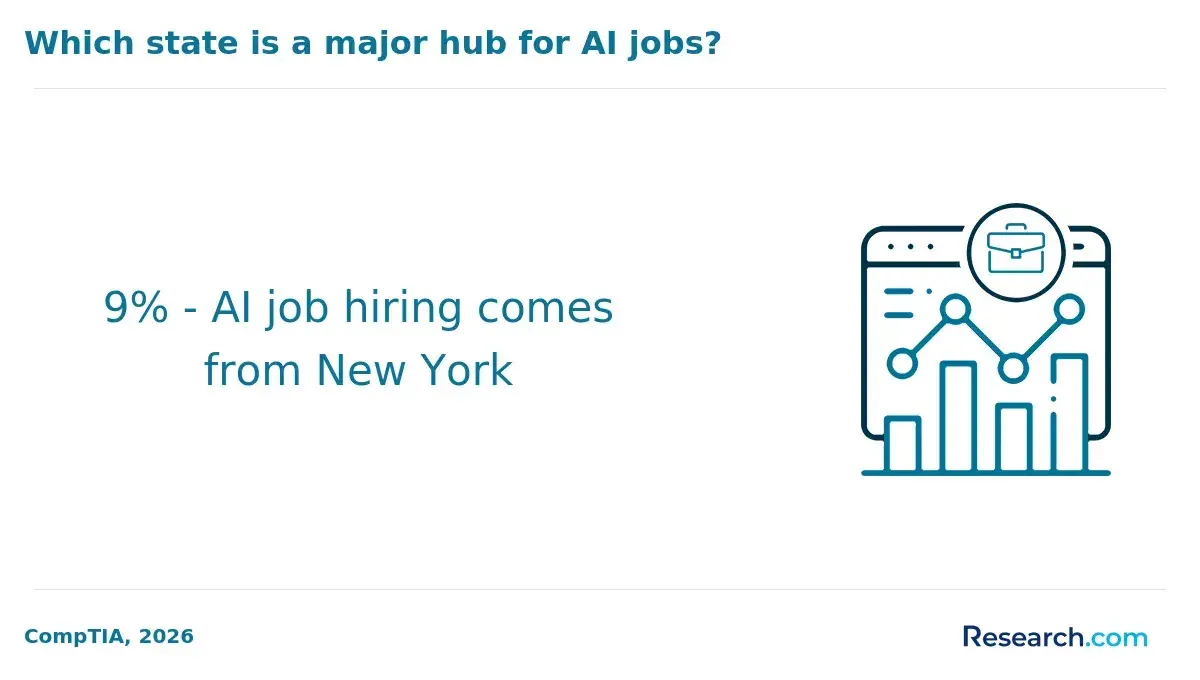
An artificial intelligence degree unlocks a wide range of career opportunities in the US, especially in industries that demand strong technical and analytical skills. Top jobs with an artificial intelligence degree often include AI engineer, machine learning engineer, data scientist, and research scientist. These roles focus on developing algorithms, building predictive models, and optimizing AI systems used in natural language processing, computer vision, and autonomous technologies.
Other valued positions are AI product manager and AI consultant, which emphasize managing AI projects and advising organizations on strategy rather than direct development. Growing attention on AI ethics and policy creates additional career pathways, reflecting the need for responsible AI use. The surge in generative AI has driven demand for specialists like generative AI specialists, prompt engineers, and AI content developers, whose work refines AI-generated outputs.
Relevant employers include tech companies, healthcare providers, financial institutions, and government agencies prioritizing automation and intelligent systems. Essential skills span programming languages such as Python and R, machine learning tools like TensorFlow and PyTorch, and advanced data management.
Career pivoters should build experience via internships, open-source projects, or certifications tailored to AI software development and subfields such as computer vision. Consider combining your background with AI through roles in AI-enabled robotics or AI-driven cybersecurity.
Those exploring specialized education might find a game design degree relevant in some AI applications related to interactive technologies and simulation.
How do you verify AI program accreditation and institutional legitimacy in the U.S.?
To verify artificial intelligence program accreditation in the U.S., start by consulting the U.S. Department of Education's Database of Accredited Postsecondary Institutions and Programs (DAPIP). This official resource lists all recognized accrediting bodies and the institutions they accredit. Confirm both the accrediting agency's recognition and that the specific AI degree program is included.
Always prioritize accreditation from agencies recognized by the Council for Higher Education Accreditation (CHEA) or the Department of Education. Regional accreditors, such as the Higher Learning Commission (HLC) or the WASC Senior College and University Commission, are highly regarded for ensuring legitimate degrees. National accreditors cover specialized or vocational schools but have varied recognition in employer acceptance and credit transfer.
When checking institutional legitimacy for artificial intelligence degrees in the United States, beware of unaccredited providers and diploma mills. The U.S. Government Accountability Office (GAO) reported that over $1 billion in federal student aid was misused by ineligible applicants involved in fraud schemes. Using official databases protects your financial aid eligibility and prevents falling victim to scams.
- Check institution websites for explicit accreditation statements and cross-reference with recognized databases.
- Contact accrediting agencies directly to confirm current status.
- Review program curriculum to ensure it aligns with industry AI competencies and standards.
Employers and licensing bodies often require degrees from regionally accredited institutions, so verifying accreditation safeguards your investment and supports career advancement in AI fields. For those interested in related fields like cybersecurity, explore the best online cyber security degrees to complement your AI education.
What's the difference between online and campus AI degree programs?
The core difference between online and campus artificial intelligence degree programs lies in delivery and experience. Online degrees offer full digital coursework, ideal for students needing flexibility due to work or personal commitments. These programs use video lectures, discussion boards, and virtual labs-for instance, cloud-based platforms replace physical computer labs in machine learning courses. This approach benefits career changers and those living remotely. According to the National Center for Education Statistics, 54% of U.S. undergraduates enrolled in at least one distance-learning course, highlighting online AI education's widespread acceptance.
Campus programs provide direct access to faculty, research labs, and hands-on collaboration. Students gain valuable face-to-face mentoring, group projects, and participate in cutting-edge research. Many campus degrees include mandatory internships through university partnerships, offering essential industry experience.
When choosing between these formats, consider:
- Your self-discipline and comfort with technology, as online programs require high motivation and proficiency.
- Willingness to commute and adhere to fixed schedules for campus programs, which often enhance engagement.
- The option of hybrid models that blend online theory with in-person labs, balancing flexibility and interaction.
What prerequisites and admissions requirements do AI degree programs commonly require?
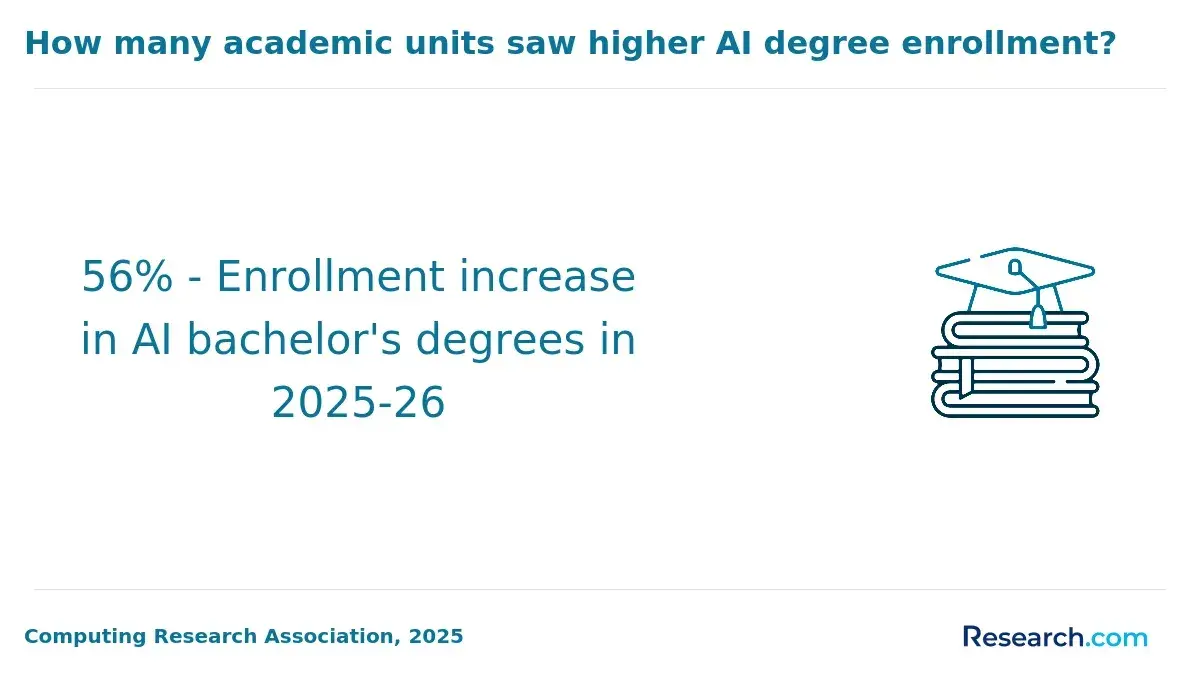
Most artificial intelligence degree programs expect strong skills in mathematics, programming, and computer science. Key prerequisites often include calculus, linear algebra, probability and statistics, and data structures. Proficiency in programming languages like Python, Java, or C++ is commonly required, with some programs emphasizing experience in machine learning frameworks and software engineering principles.
Applicants typically need a bachelor's degree in computer science, engineering, mathematics, or related fields. Those without this background may need qualifying coursework or must demonstrate equivalent expertise through work experience or certifications. While GRE scores are sometimes requested, many programs now prioritize holistic admissions processes focusing on research, projects, or professional accomplishments.
International students face more competitive admissions due to rising demand, as reported by the Council of Graduate Schools' Graduate Enrollment and Degrees 2024. This has led to stricter prerequisite checks and detailed evaluations of transcripts, recommendation letters, and personal statements.
Applicants should prepare to submit:
- Official transcripts showing math and programming coursework
- Letters of recommendation from academic or professional sources
- Personal statements describing motivation and experience
- Portfolios or project samples when requested
- Proof of English proficiency for non-native speakers
Some programs offer conditional admission or bridge courses for candidates missing requirements, helping them meet standards before full enrollment. Early awareness of these factors supports stronger applications to artificial intelligence degree programs.
What courses and skills are covered in an AI degree curriculum?
An AI degree curriculum in 2026 covers foundational and advanced courses designed to equip career pivoters with highly sought-after skills. Core subjects include machine learning algorithms, data structures, and software development specifically for AI applications. Programming languages such as Python, R, and Java are emphasized, alongside essential libraries like TensorFlow and PyTorch.
Data engineering and data science courses focus on practical skills involving data collection, cleaning, management, and visualization. These address a critical industry gap-only 21% of organizations report having sufficient data scientists, according to McKinsey. This highlights the importance of strong data-centric abilities for career changers.
Other key topics include neural networks, natural language processing, computer vision, reinforcement learning, and AI ethics, supporting responsible design and evaluation of intelligent systems. Coursework frequently integrates real-world projects, encouraging students to apply AI models to sectors like healthcare, finance, and autonomous systems.
Mathematics and statistics such as linear algebra, calculus, probability, and Bayesian inference are vital components, underpinning AI model development and refinement. Many programs also cover cloud computing and big data platforms, preparing students for scalable AI deployment.
Training in critical thinking and problem-solving within AI contexts often involves hands-on labs and internships. Practical experience with diverse datasets strengthens skills in model tuning and validation, essential for building robust AI solutions across industries.
How long do AI degree programs take, and what do they cost?
The duration of artificial intelligence degree programs varies by level and format, ranging from one year for graduate certificates to four years for bachelor's degrees. Certificates or diplomas typically take 6 to 18 months, designed for working professionals seeking a quick career pivot. Bachelor's degrees require about four years of full-time study. Master's degrees in AI or related fields like computer science generally take 1.5 to 2 years of full-time enrollment.
Costs reflect program length and institution type. According to College Board's Trends in College Pricing 2024 report, the average annual tuition and fees for private nonprofit four-year colleges is $43,350, totaling around $173,400 for a full bachelor's program before additional expenses. Master's programs usually cost between $20,000 and $50,000 in total tuition, while certificate programs range from $2,000 to $15,000, offering affordable options for many students.
Financial planning should consider potential lost income during full-time study and possible longer durations in part-time programs. Hybrid and online degrees may offer flexibility and cost savings but often have similar tuition to campus-based options.
Prospective students should explore credit transfer opportunities, employer tuition assistance, and scholarships focused on artificial intelligence to reduce expenses and shorten study time.
What certifications complement an AI degree for career changers?
Certifications complementing an Artificial Intelligence degree are essential for career changers seeking to strengthen their job prospects and showcase practical expertise. Vendor-specific certifications such as Google Cloud Certified - Professional Machine Learning Engineer and Microsoft Certified: Azure AI Engineer Associate verify skills in deploying AI models within cloud environments, meeting industry demands for comprehensive project management and integration.
Technical certifications in data science and machine learning frameworks further validate proficiency. Notable examples include the TensorFlow Developer Certificate and the Certified Data Scientist credential from the Data Science Council of America (DASCA). These highlight familiarity with key AI development tools beyond theoretical knowledge.
Security certifications like Certified Information Systems Security Professional (CISSP) and CompTIA Security+ are valuable for AI professionals, emphasizing an understanding of data privacy and ethical AI application-qualities increasingly required by employers.
The Pearson VUE report reveals that 82% of certified professionals saw improved job prospects, underlining the significance of pairing AI degrees with reputable certifications. Prospective students should consider certifications linked to their target roles-whether in AI development, deployment, or governance-and focus on those endorsed by leading technology companies and respected organizations.
What salary ranges and job outlook can AI graduates expect in the U.S.?
Graduates of artificial intelligence degree programs in the U.S. can expect strong salary prospects and a thriving job market. Data scientists, whose roles closely align with AI careers, had a median annual pay of $108,020 as of May 2023, according to the U.S. Bureau of Labor Statistics (Occupational Outlook Handbook, updated 2024). AI-related salaries typically start near $90,000 and can exceed $150,000 for specialized or senior roles.
The employment outlook for AI professionals is robust, with a projected growth rate of 35% from 2022 to 2032 for data scientist roles, outpacing most occupations. This is fueled by demand in sectors like technology, healthcare, finance, and manufacturing where AI is used for automation and predictive analytics.
Starting roles such as machine learning engineers or AI analysts usually earn between $80,000 and $110,000, depending on location and industry. Experienced AI experts, including those managing complex models or leading projects, often earn above $140,000. Related fields like robotics engineering and research science offer competitive salaries and similar job growth.
Location and industry greatly impact compensation, with tech hubs like Silicon Valley, Seattle, and Boston offering some of the highest salaries. Building skills in machine learning frameworks, data management, and software engineering enhances both employability and earning potential in this expanding field.
Other Things You Should Know About Artificial Intelligence
While many 2027 artificial intelligence degree programs encourage having a basic understanding of programming, they often offer foundational courses to help students without prior experience. This makes it feasible for career pivoters to enter the field, even without programming skills.
Yes, individuals with STEM backgrounds such as mathematics, computer science, engineering, or statistics often find it easier to pivot into artificial intelligence degree programs. These fields provide a strong quantitative and analytical foundation useful in AI studies. Some programs even offer tailored bridge courses to help non-computer science STEM majors transition smoothly into AI coursework.
Most artificial intelligence degree programs include hands-on projects, labs, and sometimes internships that allow students to apply algorithms, machine learning models, and data processing techniques. These experiences often involve working with real datasets and AI frameworks like TensorFlow or PyTorch. Practical training helps students develop skills relevant to solving complex AI problems in industry settings.
Yes, many artificial intelligence degree programs emphasize interdisciplinary approaches by integrating coursework from areas such as cognitive science, ethics, robotics, and data science. This broad perspective prepares students for diverse applications of AI across fields like healthcare, finance, and social sciences. Interdisciplinary training strengthens critical thinking about AI's societal impact and ethical considerations.
Industries like finance, healthcare, and automotive are actively recruiting AI graduates in 2027. These sectors need AI skills for data analysis, automation, and innovation. Explore an AI finance degree to transition into financial technology or quantitative analysis roles.
References
- A Complete 4-Year Course Plan for an Artificial Intelligence Undergraduate Degree https://www.mihaileric.com/posts/complete-artificial-intelligence-undergraduate-course-plan/
- Top Artificial Intelligence Courses: Fees and Duration https://collegevidya.com/blog/artificial-intelligence-course-fees-structure-duration/
- New Use of Artificial Intelligence Accreditation Policy and Procedures - Middle States Commission on Higher Education https://www.msche.org/2025/07/02/new-use-of-artificial-intelligence-accreditation-policy-and-procedures/
- Top College Degrees That Will Land You the Highest-Paying AI Jobs in 2026 https://www.investopedia.com/top-college-degrees-that-will-land-you-the-highest-paying-ai-careers-in-2026-11923863
- AI Prerequisites https://www.nobledesktop.com/learn/ai/prerequisites
- Should I Get a Bachelor’s Degree in AI? | Tiffin University https://www.tiffin.edu/news/should-i-get-a-bachelors-degree-in-ai/
- What is the Best Degree for an AI Career? | SNHU https://www.snhu.edu/about-us/newsroom/stem/best-degree-for-an-artificial-intelligence-career
- Finding Your Ideal AI Career Path: Which Field in Artificial Intelligence Suits You Best? https://dev.to/furqanahmadrao/finding-your-ideal-ai-career-path-which-field-in-artificial-intelligence-suits-you-best-an5
- Which Degree Is Best for a Career in Artificial Intelligence? | EU Business School https://www.euruni.edu/blog/which-degree-is-best-for-a-career-in-artificial-intelligence/
- What do you learn in a bachelor's in artificial intelligence? | edX https://www.edx.org/resources/what-do-you-learn-in-a-bachelors-in-artificial-intelligence