2027 Best States for AI Degree Graduates to Build a Career

Co-Founder and Chief Data Scientist
Graduates with degrees in AI often face the challenge of choosing where to launch their careers to maximize growth and opportunity. With varying state economies, tech industry clusters, and educational resources, deciding the ideal location can be overwhelming. Some states offer robust startup ecosystems, while others feature established companies investing heavily in AI talent.
Understanding these regional differences is vital for strategic career planning. This article analyzes key states to identify which offer the best environments for AI degree holders to thrive professionally, helping readers make informed decisions for a successful career transition.
Key Things You Should Know
Which states have the most AI jobs for new graduates?
California, Texas, and New York lead the nation in AI job availability for new graduates, making them the best states for AI degree holders to find entry-level jobs. California dominates the market, fueled by Silicon Valley and San Francisco's thriving tech scenes. These hubs actively seek talent skilled in machine learning, data science, and AI development.
Texas experiences rapid growth in AI roles, especially in Austin and Dallas, where tech companies, energy sectors, and financial institutions integrate AI to transform their operations. New York offers expansive opportunities in finance and healthcare, with a focus on AI applications in business analytics and natural language processing.
Graduates targeting states with the highest demand for artificial intelligence jobs for new graduates should note key regional specialties:
- California emphasizes software engineering expertise and familiarity with cloud platforms.
- Texas values interdisciplinary skills across AI-driven manufacturing, healthcare, and fintech.
- New York suits those interested in applied AI within enterprise environments.
To enhance job prospects, leveraging internships, networking, and local industry events is crucial. Geographic flexibility and tailored skill development aligned with each state's leading industries offer an advantage.
For students seeking to enter these competitive markets, pursuing an accelerated bachelor's degree computer science online can provide a fast track to relevant skills and credentials required by employers.
Which states offer the highest salaries for AI degree graduates?
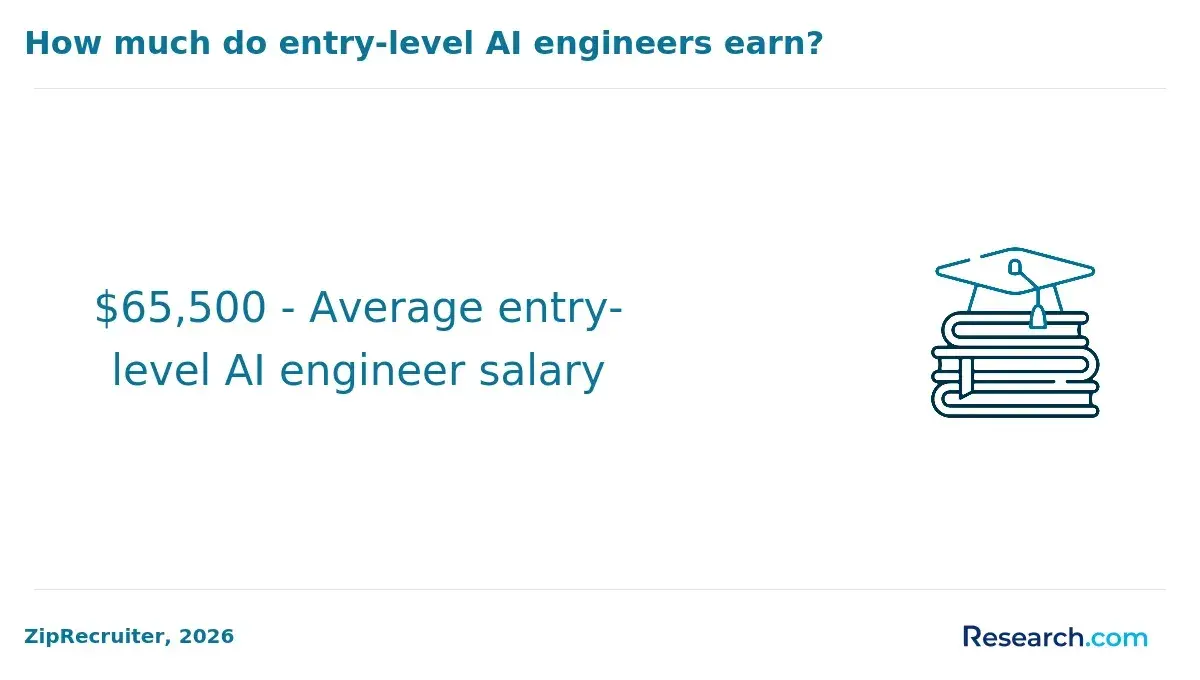
Washington and California lead the nation with the highest salaries for AI degree graduates, particularly for Computer and Information Research Scientists, whose annual mean wages surpass the mid-$170,000s. These states represent top paying states for artificial intelligence careers, largely due to major tech firms like Microsoft and Amazon in Washington, and Google and Apple in California offering competitive pay to attract skilled professionals.
Other states have varied salary ranges that are generally lower. For example, Texas and Massachusetts have growing AI job markets with mean salaries between $120,000 and $140,000. These locations offer strong opportunities but less concentrated tech ecosystems, which may benefit graduates seeking a balance between cost of living and salary.
Key factors for those pursuing careers in AI include acknowledging that while Washington and California offer the highest salaries for AI degree graduates by state, they also have higher living costs. Additionally, both states provide broader career growth possibilities thanks to dense networks of tech companies and research institutions.
Prospective students and graduates can also consult rankings such as the data science master us ranking to evaluate educational and career affordability in the AI field.
What industries hire AI graduates most by state?
The industries hiring AI graduates most by state reflect regional economic strengths and specialized sectors. For example, the Professional, Scientific, and Technical Services sector dominates tech employment in California and Washington, attracting AI talent into software development, consulting, research, and IT services. This concentration reveals state-based artificial intelligence career opportunities in key sectors.
California's tech industry demands AI expertise particularly in software engineering, autonomous systems, and cloud computing. Washington hosts employers like Microsoft and Amazon, where AI roles focus on machine learning, natural language processing, and data analytics. In Texas, sectors like healthcare technology and energy use AI for predictive analytics and automation.
Other states highlight different industries: New York's finance and media sectors employ AI for algorithmic trading, fraud detection, and personalized content. Massachusetts excels in biotechnology and healthcare AI applications, hiring graduates for medical diagnostics and drug discovery. Public sector organizations and educational institutions across states also frequently seek AI professionals for innovation and research.
Successful strategies for graduates involve targeting these top industries employing AI graduates by state and developing skills in machine learning frameworks and data engineering. Those interested may also explore the cheapest online electrical engineering degree programs to bolster their credentials and improve job prospects.
What AI degree level do employers prefer in top states?
Employers' preferred qualifications for AI graduates in leading states show a distinct advantage for candidates holding a master's degree over those with only a bachelor's degree. The Federal Reserve Bank of New York's 2025 labor market analysis highlights that underemployment rates are significantly lower for computer science and AI-related graduates with advanced degrees in competitive job markets such as California, Massachusetts, and Texas.
Professionals with a master's in AI or data science gain deeper technical expertise, enhanced research experience, and stronger problem-solving skills-qualities crucial for developing complex machine learning models, optimizing algorithms, and managing large-scale data systems. Examples include:
- AI research scientist roles demanding theoretical knowledge and advanced project experience.
- Positions in AI ethics, policy, and governance requiring a master's level understanding of societal impacts.
- Mid-level AI engineers with master's degrees accessing higher salaries and leadership opportunities.
Bachelor's degrees still offer value for entry-level jobs or general software development using AI tools. However, those aiming for long-term, specialized careers in AI-centric states must consider master's-level education to meet employer expectations and limit underemployment. Employers especially value interdisciplinary master's degrees that combine AI with business analytics, robotics, or cybersecurity.
Students interested in cybersecurity pathways tied to AI may explore affordable educational options, including some of the best online cyber security degrees, which reflect the interdisciplinary nature valued in the job market.
Preferred AI degree levels for employers in top states continue to emphasize advanced training, aligning educational choices with evolving industry demands.
Which college accreditations matter most for AI programs?
Institutional accreditation recognized by the U.S. Department of Education is essential for ai programs, as it qualifies students for federal aid and ensures degrees hold academic value.
Title IV eligibility, confirmed through institutional accreditation, affects financial aid availability-a crucial factor when financing an ai education. Without this accreditation, even specialized ai courses may lack funding options.
Programmatic accreditation, such as that from the Accreditation Board for Engineering and Technology (ABET), affirms that ai curriculums meet industry standards, enhancing employability and graduate study possibilities.
Regional accreditation is another key consideration, providing comprehensive quality assurance across academics, faculty, and resources. This type often carries more weight in the job market and supports credit transfers better than national accreditations.
- Recognized institutional accreditation is necessary for federal student aid and degree recognition.
- ABET or similar subject-specific accreditations confirm alignment with technical and professional standards.
- Regional accreditation enhances academic credibility and employer confidence.
Prioritizing accredited ai programs protects financial aid eligibility, validates educational quality, and strengthens career prospects for students and working professionals. For verified information on accredited programs, consult reliable sources like the U.S. Department of Education's College Scorecard.
How do online AI degrees compare with campus programs for job placement?
Campus-based AI degree programs often provide stronger job placement support compared to fully online options, largely due to structured access to internships and co-op opportunities. According to NACE's 2024 Outcomes Report, bachelor's graduates with at least one verified internship or co-op showed better full-time employment outcomes. These experiential learning components are easier to integrate and verify through campus career services.
Students on campus benefit from direct links to local employers, in-person career fairs, and tailored advising that improves networking and job search success. Many universities collaborate with tech companies to offer competitive internships that increase the likelihood of full-time employment after graduation. Conversely, online programs usually depend on digital job platforms and self-initiated internship pursuits, which often lack the employer engagement found in campus programs.
Employers tend to value internships and co-ops highly as indicators of practical skills, making campus graduates with this experience more attractive hires. Online degree seekers should proactively engage with verified internships, alumni connections, and virtual career services to improve their employability, though outcomes may differ depending on program support.
Both online and campus graduates must demonstrate relevant skills and work experience. Prospective students should assess the availability of structured experiential learning in online AI degrees while campus students should fully utilize career resources to secure internships that boost job placement success.
What core courses and skills should an AI degree program include?
Core courses in an AI degree program focus on foundational and applied knowledge crucial for today's job market. Key subjects include machine learning, deep learning, data structures, and algorithms. Mastery of programming languages like Python and frameworks such as TensorFlow or PyTorch is essential. Courses in statistics and probability strengthen the analytical skills needed for model evaluation and data interpretation.
Modern curricula emphasize generative AI and advanced natural language processing (NLP) modules. LinkedIn's 2024 Skills on the Rise report highlights generative AI as a rapidly growing expertise, making hands-on exposure to models like GPT or diffusion models a valuable part of training. This practical experience benefits students aiming for careers in content creation, healthcare, and automation.
Additional skills include data engineering and cloud computing fundamentals to handle large-scale AI systems. Ethical AI design and human-computer interaction are integrated to prepare students for real-world challenges. Capstone projects and internships in industries such as finance, robotics, and cybersecurity offer practical application of AI tools.
Graduates should also be proficient in debugging, hyperparameter tuning, and deployment pipelines. Familiarity with version control systems like Git supports collaboration and project management. Interdisciplinary knowledge from cognitive science or software engineering further enhances problem-solving capabilities, equipping AI degree holders to adapt and thrive in evolving roles.
What admissions requirements do AI bachelor's and master's programs typically have?
Admissions requirements for artificial intelligence bachelor's and master's programs generally emphasize strong foundations in mathematics, computer science, or related fields. Undergraduate applicants typically submit high school transcripts highlighting performance in calculus, statistics, and programming. While many schools still request SAT or ACT scores, an increasing number have adopted test-optional policies to widen access.
Master's applicants usually need a bachelor's degree in computer science, engineering, or a similar discipline with a minimum GPA close to 3.0. Common application components include letters of recommendation, a statement of purpose clarifying research interests or career goals, and a resume showcasing relevant experience. The Graduate Record Examination (GRE), once commonly required, is now optional or waived at many U.S. graduate programs, reflecting a trend toward reducing barriers, especially for diverse student populations.
Some competitive programs also request coding samples or technical writing examples to better evaluate skills. International candidates often provide TOEFL or IELTS scores to demonstrate English proficiency. Applicants without a formal computer science background can improve their eligibility by completing prerequisite courses or certifications in programming and data structures. Early preparation and careful review of each program's criteria will enhance admission prospects.
Which certifications help AI graduates stand out in competitive states?
Cloud certifications significantly boost salary prospects for graduates pursuing careers in artificial intelligence. According to Pearson VUE's IT Certification Candidate Report, employers prioritize credentials like AWS, Azure, or GCP certifications because AI roles increasingly require expertise in cloud infrastructure to effectively deploy and manage machine learning models.
Key cloud-related certifications include:
- AWS Certified Machine Learning - Specialty: Validates designing and implementing machine learning solutions on AWS.
- Microsoft Certified: Azure AI Engineer Associate: Demonstrates skills with Azure Cognitive Services and AI tools.
- Google Professional Machine Learning Engineer: Confirms ability to build and optimize ML models on Google Cloud Platform.
In addition to cloud certifications, foundational credentials like Certified Data Scientist and TensorFlow Developer Certificate enhance core AI skills. Cybersecurity certificates such as CompTIA Security+ are also valuable, as securing AI systems is critical in industries handling sensitive data.
Graduates targeting competitive markets like California, New York, and Massachusetts should combine cloud platform certifications with practical AI tool credentials to improve hiring opportunities and salary negotiations.
How can graduates evaluate cost of living versus pay in AI hubs?
Graduates evaluating pay in AI hubs must consider cost-of-living-adjusted salaries instead of nominal wages to understand real purchasing power. The Council for Community and Economic Research (C2ER) 2024 Cost of Living Index shows cities like San Francisco and New York significantly exceed the national average. For example, a $120,000 salary in San Francisco may equate to less buying power than $90,000 in a mid-cost city.
Key steps to compare effectively include:
- Identify nominal salary ranges for AI roles in target cities.
- Adjust salaries by reliable cost-of-living indexes, such as the C2ER, dividing nominal pay by the index ratio (e.g., divide by 1.8 for San Francisco if the national index is 100 and the city index is 180).
- Factor in major expenses like housing, transportation, and taxes that influence overall cost of living.
- Evaluate quality-of-life aspects, including commute times, access to networks, and local amenities.
Job seekers should also assess total compensation packages, especially benefits and stock options, common in tech hubs. Equity can help offset expenses but involves risk and delayed liquidity. Additionally, salary growth potential may be higher in large tech centers despite lower initial real income.
Utilizing cost-of-living-adjusted salary calculators alongside local economic data allows for accurate comparisons and better financial decisions in AI careers.
Other Things You Should Know About Artificial Intelligence
Virginia, Maryland, and the District of Columbia offer the strongest access to federal AI jobs because they concentrate agencies such as the Department of Defense, NIH, NSF, and federal contractors. Many roles require U.S. citizenship and a security clearance, and some positions need a public trust or Top Secret investigation.
In 2027, top industries employing AI degree graduates include technology, finance, healthcare, and automotive sectors. These industries are rapidly integrating AI to develop innovative solutions, optimize operations, and enhance customer experiences, offering robust career opportunities for graduates.
Yes, certain states have more established AI research hubs, often connected to major universities and technology companies. Graduates seeking research roles may find more opportunities in states with a strong presence of innovation centers and federally funded AI projects.
In 2027, California and Massachusetts provide the best networking opportunities for AI graduates, thanks to vibrant tech hubs like Silicon Valley and Boston. Additionally, Washington is noted for its evolving AI industry and regulatory landscape; an AI regulation and governance master’s degree could further enhance professional connections.
References
- Do AI courses with placement really help candidates get AI jobs faster? | H2K Infosys Blog https://www.h2kinfosys.com/blog/do-ai-courses-with-placement-really-help-candidates-get-ai-jobs-faster/
- Artificial Intelligence (AI) https://ai-master.org/requirements
- Peterson Technology Partners https://www.ptechpartners.com/2025/03/06/top-ai-certifications-to-stand-out-to-employers/
- New Report: AI is Fueling Jobs, Investment, and Growth Across All 50 States - American Edge Project https://americanedgeproject.org/new-report-ai-is-fueling-jobs-investment-and-growth-across-all-50-states/
- Best AI Certifications to Boost Your Career in 2026 – Dataquest https://www.dataquest.io/blog/best-ai-certifications/
- GitHub - UBC-MDS/Cost_of_living_py: Python-based dashboard that explores the cost of living of different cities for new college graduates. Types of graphs and widgets include bar graphs, maps, and drop down menus. https://github.com/UBC-MDS/Cost_of_living_py
- AI Paygrades https://aipaygrad.es/
- AI, online gig help students abroad beat rising living cost amid falling rupee https://education.economictimes.indiatimes.com/news/international/ai-online-gig-help-students-abroad-beat-rising-living-cost-amid-falling-rupee/129890112
- The Surprising States Hiring the Most AI Workers Right Now—and What You Need to Get Hired https://www.investopedia.com/the-surprising-states-hiring-the-most-ai-workers-right-now-and-what-you-need-to-get-hired-11844229
- Entry-Level AI Engineer Salary Calculator https://tripleten.com/tools/entry-level-ai-engineer-salary/