
2027 Fastest Growing Psychology Major Jobs

Co-Founder and Chief Data Scientist
Psychology is a popular major, but the career payoff depends heavily on the path you choose after graduation. The field includes licensed clinical roles, school-based positions, workplace consulting, research jobs, behavioral health careers, and newer opportunities in technology and business. Some roles are available with a bachelor’s degree, while many of the fastest-growing and better-paid psychology careers require a master’s, doctorate, supervised experience, and state licensure.
The demand for psychologists is projected to grow by 7% annually from 2024-2033, according to the BLS. At the same time, more students are entering the field: in 2023, 140,711 students earned bachelor’s degrees in psychology. This guide explains which psychology major jobs are growing, what they typically pay, which paths require graduate school, and how to choose a route that fits your goals, budget, and timeline.
Quick Answer: What Psychology Jobs Are Growing Fastest?
The fastest-growing psychology-related jobs are concentrated in mental health counseling, substance abuse and behavioral disorder counseling, marriage and family therapy, school psychology, applied behavior analysis, and workplace-focused roles such as industrial-organizational psychology. Healthcare and education are especially strong areas because employers, schools, and public agencies continue to need professionals who can address mental health, behavior, learning, and family systems.
For students who want the shortest route into the workforce, bachelor’s-level options include social and human service assistant, psychiatric technician or aide, research assistant, HR assistant, market research role, and registered behavior technician. For students who want independent clinical practice or the highest psychology-specific earning potential, graduate school is usually necessary.
Key Things to Know About the Fastest Growing Psychology Major Jobs
- Psychology graduates are not limited to therapy careers. Employers in healthcare, schools, government, human resources, UX research, market research, and behavioral services also hire people trained to understand human behavior.
- Bachelor’s-level jobs can be a useful entry point, but many licensed and higher-paying psychology careers require a master’s or doctoral degree.
- Mental health-related roles are among the strongest growth areas, especially substance abuse counseling, behavioral disorder counseling, marriage and family therapy, and school-based mental health services.
- Students with research, statistics, data analysis, interviewing, and program evaluation skills can compete for roles in market research, human factors, UX research, and organizational consulting.
- Licensure matters. Clinical psychology, counseling, marriage and family therapy, school psychology, and applied behavior analysis often have state-specific education, exam, and supervised experience requirements.
- What are the fastest growing psychology major jobs?
- What are the typical salaries for fastest growing psychology positions?
- What are the fastest growing psychology jobs by state?
- What’s the fastest growing psychology role in healthcare?
- Are psychology jobs more available in urban or rural areas?
- What are the fastest growing government jobs for psychology graduates?
- What are the highest paying psychology jobs in 2025?
- How does graduate school impact salary and job outlook for psychology majors?
- Is the Return on Investment Worth the Cost of an Advanced Psychology Degree?
- What Additional Certifications and Specialized Training Can Bolster Your Psychology Career?
- What Are the Key Qualities of Affordable Marriage and Family Therapy Programs?
- What is the fastest way to become a counselor?
- What are the benefits of earning board certification in ABA?
- How Can Online PsyD Programs Enhance Your Career Prospects?
- What psychology careers require a master’s or doctoral degree?
- Which growing fields hire psychology majors without a graduate degree?
What are the fastest growing psychology major jobs?
The fastest-growing psychology major jobs fall into three broad categories: mental health treatment, education and developmental support, and applied psychology in organizations or specialized settings. The right choice depends on whether you want to provide direct services, conduct assessments, work with children, support families, analyze workplaces, or apply behavioral science outside traditional therapy.
| Career path | Why demand is rising | Typical education route | Best fit for students who want to... |
| Mental health counselor | More people are seeking counseling, substance use treatment, and behavioral health support. | Usually a master’s degree plus state licensure. | Provide therapy, crisis support, and long-term client care. |
| Marriage and family therapist | Families, couples, and individuals increasingly seek relational and systems-based therapy. | Usually a master’s degree in marriage and family therapy or a related field plus licensure. | Work with couples, families, parenting concerns, and relationship issues. |
| School psychologist | Schools need more support for student mental health, learning challenges, and behavioral needs. | Commonly a specialist-level graduate degree, master’s route, or doctorate depending on state and role. | Support children and adolescents in educational settings. |
| Applied behavior analysis therapist | Demand continues for behavior support services, especially for autism spectrum disorder and developmental disabilities. | Entry roles may require certification; advanced practice commonly requires graduate training and BCBA certification. | Use structured behavior plans and measurable interventions. |
| Industrial-organizational psychologist | Employers are paying more attention to employee well-being, productivity, hiring, retention, and workplace culture. | Often a master’s or doctoral degree, depending on role seniority and research responsibilities. | Apply psychology to business, leadership, assessment, and workforce strategy. |
| Forensic psychologist | Legal, correctional, and court systems use psychological expertise for assessment, treatment, and expert consultation. | Usually a doctoral degree for psychologist roles; related justice or counseling roles may have other requirements. | Work at the intersection of psychology, law, public safety, and rehabilitation. |
Mental Health Counselors
Mental health counseling is one of the clearest growth areas for psychology majors who want to work directly with clients. Counselors may support people dealing with anxiety, depression, trauma, addiction, grief, relationship challenges, or major life transitions. Related roles include substance abuse counselors, behavioral disorder counselors, and other licensed counseling professionals.
Projected growth for mental health counselors is around 11-18% through 2032, which is much faster than the average for all occupations. Students asking can you be a clinical psychologist with a master's should understand the distinction: master’s-level counseling careers can lead to licensed practice in many states, but full clinical psychologist licensure usually requires a doctorate.
Industrial-Organizational Psychologists
Industrial-organizational psychologists apply behavioral science to the workplace. They may design employee surveys, improve hiring systems, evaluate training programs, study team performance, reduce turnover, or advise leaders on organizational change. This path can appeal to psychology majors who like data, consulting, business strategy, and workplace culture more than clinical practice.
Some sources place the broader “psychologists, all other” category, which includes I-O psychologists, at about 5-6% growth. Even where the overall growth percentage is lower than some counseling roles, I-O psychology remains relevant because employers continue to focus on workforce performance, employee experience, and evidence-based management.
School Psychologists
School psychologists help students succeed academically, socially, emotionally, and behaviorally. Their work may include assessments, crisis intervention, special education support, consultation with teachers, parent meetings, and schoolwide mental health initiatives.
Some reports cite around 10-11% growth for the broader category of clinical, counseling, and school psychologists. One source identifies 6% growth for school psychologists from 2021 to 2031, which is about as fast as the average for all occupations. The practical takeaway is that schools continue to need trained professionals who can address student mental health and learning needs, but hiring conditions vary by district, funding, and state credential rules.
Applied Behavior Analysis Therapists
Applied behavior analysis focuses on understanding behavior, measuring progress, and using evidence-based interventions to build skills or reduce harmful behaviors. Many ABA professionals work with children and adults with autism spectrum disorder or developmental disabilities, though behavioral principles can also apply in schools, clinics, homes, and community programs.
Specific national growth rates for ABA therapists alone are harder to isolate in general psychologist statistics. However, the field is widely described as expanding because families, schools, clinics, and healthcare organizations continue to seek trained behavior technicians, supervisors, and Board Certified Behavior Analysts.
Forensic Psychologists
Forensic psychology applies psychological knowledge to legal and criminal justice contexts. Professionals in this area may conduct competency evaluations, assess risk, consult with attorneys, work in correctional settings, provide expert testimony, or help design rehabilitation programs.
Growth figures vary by source and job title, but forensic psychology is often identified as a high-interest career area because courts, correctional systems, and public agencies increasingly recognize the value of psychological assessment and treatment in justice-related settings.
What are the typical salaries for fastest growing psychology positions?
Psychology salaries vary widely because the field includes bachelor’s-level support jobs, master’s-level licensed counseling roles, doctoral-level psychologists, medical doctors in psychiatry, and business-oriented applied psychology careers. Location, employer type, licensure status, years of experience, specialization, and private practice income can all change earnings substantially.
In 2023, 140,711 students earned bachelor’s degrees in psychology, showing how many graduates use the major as a foundation for work or graduate study. For students comparing career options, salary should be weighed alongside required education, debt, licensure time, and the type of work you want to do every day.
Typical salary ranges for several fast-growing psychology-related positions in the United States as of May 2025 include:
| Role | Typical salary range | Notes for psychology majors |
| Substance Abuse and Behavioral Disorder Counselors | $57,000 to $75,000 on average; entry-level positions may begin in the $40,000s to low $50,000s; experienced counselors may earn $88,000 to $101,000 or more in some regions. | Often requires graduate education and licensure for independent or higher-level roles. |
| Marriage and Family Therapists | Generally $63,000 to $85,000, with a broader range from the high $40,000s to over $118,000. | Pay depends heavily on location, employer, clinical hours, and whether the therapist works in private practice. |
| Clinical and Counseling Psychologists | Median annual wage is approximately $81,000 to $96,000, with a range from around $48,000 to over $168,000. | Usually requires doctoral education, supervised experience, and licensure. |
Psychology graduates may also work alongside other helping professionals. For example, speech language pathologist demand reflects a related need for specialists who support communication, learning, development, and functioning in schools and healthcare settings.
The chart below shows psychology degrees awarded in the United States during the 2023 academic year. It breaks out degree levels from bachelor’s through doctoral study, which helps illustrate how many students stop at the undergraduate level and how many continue into advanced preparation.
What are the fastest growing psychology jobs by state?
State-level demand for psychology jobs is not always reported by specialty. National sources often provide growth rates for broad occupations, while states may publish employment totals, regional shortages, or wage data. Because of that, students should treat state-by-state career claims carefully and verify details through state labor departments, licensure boards, school districts, health systems, and employer job postings.
Still, some states stand out because of population growth, mental health workforce shortages, strong healthcare systems, large public school systems, or growing business sectors. These conditions can create favorable opportunities for counselors, school psychologists, clinical psychologists, I-O psychologists, and behavioral health workers.
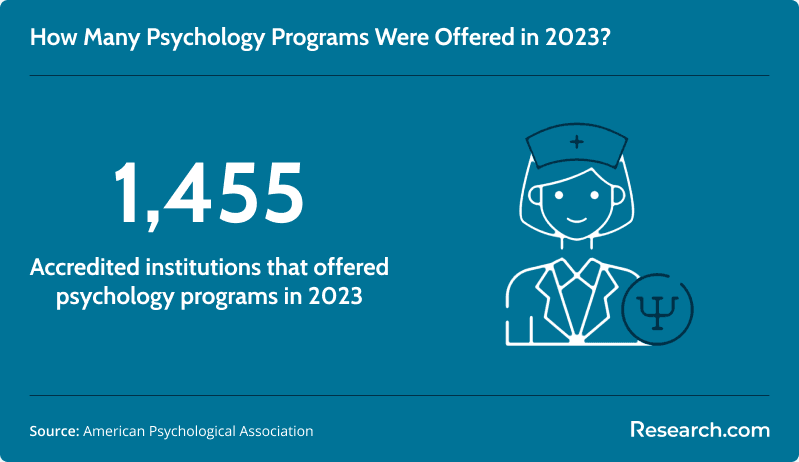
Across the nation, 1,455 accredited institutions offered psychology programs in 2023, including accelerated psychology programs online. That broad availability makes psychology accessible, but students should still compare programs carefully because licensure alignment, internship support, and graduate admissions preparation vary.
| State or region | Psychology roles likely to see demand | Why it may be a strong market |
| Utah | Mental health counselors, school psychologists, psychologists overall. | Frequently identified as having strong need for mental healthcare providers and favorable psychologist projections. |
| Oregon | Clinical psychologists, counseling psychologists, mental health counselors. | Reported high median salary adjusted for cost of living and over 10% projected job growth for psychologists overall. |
| Texas and Florida | School psychologists, mental health counselors, I-O psychologists, behavioral health workers. | Large and growing populations create broad demand, though local competition can vary by city and specialty. |
| Washington | Clinical, counseling, school, and I-O psychology roles. | Strong projected employment change for psychologists and a major technology sector that may support applied psychology roles. |
| Arizona and Georgia | Mental health counseling, school psychology, clinical psychology, I-O psychology. | Population and economic growth can increase demand across education, healthcare, and business settings. |
Before choosing a state for graduate school or employment, check three things: whether the program meets that state’s licensure requirements, whether supervised placements are available nearby, and whether local employers are hiring for the specialty you want.
What is the fastest growing psychology role in healthcare?
Mental health counseling is one of the fastest-growing psychology-related roles in healthcare. The U.S. Bureau of Labor Statistics projects that substance abuse, behavioral disorder, and mental health counselors will grow by 18% from 2022 to 2032, far faster than the average for all occupations.
This growth is tied to several practical changes: more people are seeking care, behavioral health is increasingly integrated into primary care and hospital systems, public stigma around treatment has declined, and substance use treatment remains a major public health need. As a result, healthcare employers need counselors who can assess clients, develop treatment plans, coordinate care, document progress, and work as part of interdisciplinary teams.
Demand for healthcare-oriented counseling also affects education planning. Students may look for flexible and lower-cost pathways, including the most affordable online psychology degree, but they should confirm whether an online program supports the prerequisites, practicum expectations, and graduate admissions preparation needed for counseling careers.
Are psychology jobs more available in urban or rural areas?
Urban areas usually have more total psychology jobs because they have more hospitals, schools, universities, clinics, courts, nonprofits, and private practices. Rural areas often have fewer openings overall but greater workforce shortages, especially in mental health care. For job seekers, that means the “best” market depends on whether you value specialization, employer variety, lower competition, community need, or potential incentive programs.
In 2023, 7,194 doctorate degrees in psychology were awarded by colleges for doctorate in psychology. Doctoral training remains central for clinical expertise, advanced assessment, research, and leadership roles, but geography can strongly shape where those skills are most needed.
| Location type | Advantages | Trade-offs | Best fit |
| Urban areas | More employers, more specialized roles, stronger professional networks, more training sites. | More competition, higher cost of living in many cities, and crowded private practice markets in some specialties. | Students who want specialty clinics, hospital systems, universities, research roles, or niche practice areas. |
| Rural areas | High community need, less competition in some locations, broader scope of practice, possible loan repayment incentives in designated Health Professional Shortage Areas. | Professional isolation, fewer specialized colleagues, recruitment and retention challenges, and sometimes lower salaries. | Professionals who value community impact, generalist practice, integrated care, and underserved populations. |
Urban Areas
- More total positions: Cities tend to have more clinics, hospitals, school districts, universities, research organizations, and private practices.
- More specialization: Larger populations can support niche services such as neuropsychology, forensic evaluation, child trauma therapy, health psychology, and specialized assessment.
- More competition: Popular metro areas often attract many qualified professionals, which can make entry-level hiring and private practice growth more competitive.
- Stronger networks: Urban markets usually offer more conferences, supervision options, referral networks, and continuing education opportunities.
Rural Areas
- Major service gaps: Rural communities often need more psychologists, counselors, and behavioral health providers.
- Potentially less competition: Some communities have difficulty recruiting mental health professionals, which may create opportunities for qualified candidates.
- Broader responsibilities: Rural psychologists and counselors may serve a wide range of ages, diagnoses, and concerns rather than focusing narrowly on one specialty.
- Retention challenges: Lower salaries, fewer amenities, travel demands, and limited professional peer groups can make rural practice difficult for some workers.
- Possible incentives: Some state and federal programs offer loan repayment or other benefits for service in designated Health Professional Shortage Areas.
What are the fastest growing government jobs for psychology graduates?
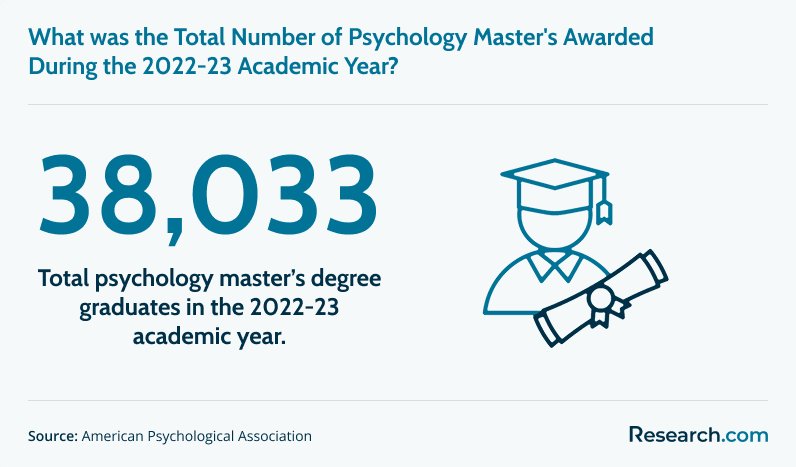
Government agencies hire psychology graduates for clinical services, public health, corrections, veterans’ care, education, research, policy, workforce support, and social services. In the 2022-23 academic year, 38,033 individuals completed master’s degrees in psychology, reflecting how many students pursue advanced preparation for more specialized and competitive roles.
Based on current trends, areas of high need in public service, and growth in several psychology-related occupations, the following government paths may be especially relevant.
- Mental health counselors in public agencies: Federal, state, and local agencies need counselors in public health departments, community clinics, crisis programs, correctional facilities, and veterans’ services.
- School psychologists in public education: Public schools need professionals who can evaluate students, support mental health, advise educators, and contribute to special education services. Students comparing education careers may also ask is a teaching degree worth it, but school psychology is a different pathway with its own graduate training and credentialing requirements.
- Correctional psychologists and counselors: Jails, prisons, probation systems, and reentry programs need behavioral health professionals who can assess risk, treat mental illness, support rehabilitation, and respond to substance use concerns.
- Social service roles for psychology graduates: Child welfare, family services, disability support, aging services, and community assistance programs value training in behavior, development, interviewing, and crisis response.
- Government human resources specialists: Psychology majors can apply communication, assessment, conflict resolution, and organizational behavior skills in recruitment, training, employee relations, and workforce planning.
Federal Government Agencies with Psychology-Related Roles
- Department of Veterans Affairs: Employs psychologists, counselors, and other mental health professionals serving veterans.
- Department of Health and Human Services: Includes agencies such as the National Institutes of Health and the Substance Abuse and Mental Health Services Administration, where psychology expertise may support research, policy, evaluation, and service delivery.
- Federal Bureau of Prisons: Uses psychologists and behavioral health professionals for assessment, treatment, counseling, and crisis management in federal correctional facilities.
- Department of Defense: Hires psychology professionals for clinical care, research, personnel programs, and military readiness support.
- Department of Homeland Security: May use psychology-related skills in emergency management, analysis, behavioral support, and workforce roles.
What are the highest paying psychology major jobs in 2025?
The highest-paying psychology-related jobs usually require advanced training, specialized expertise, licensure, or medical education. Counseling psychology stood out in 2023 by awarding 167,028 degrees, making up 31% of all psychology degrees granted. That figure signals strong student and employer interest in mental health, personal development, and counseling-related training.
The salary figures below are estimates and can vary by location, employer, experience, private practice revenue, specialization, and credential level.
| Career | Estimated average salary | Education and credential considerations |
| Psychiatrist | $208,000 - $335,000+ per year. | Requires medical school and an MD or DO; psychiatrists can prescribe medication. |
| Neuropsychologist | $103,000 - $140,000+ per year, with some sources citing averages closer to $120,000 - $130,000. | Requires a doctoral degree and often a post-doctoral fellowship. |
| Industrial-Organizational Psychologist | $110,000 - $147,000+ per year. | Advanced roles often prefer or require a graduate degree, especially for consulting, analytics, or leadership positions. |
| Engineering Psychologist | $90,000 - $146,000+ per year. | Usually requires a master’s or doctoral degree and expertise in human factors, usability, safety, or technology design. |
| Forensic Psychologist | $92,000 - $105,000+ per year, with potential for higher earnings depending on experience and setting. | Most psychologist-level forensic roles require doctoral training and licensure. |
Psychiatrist
Psychiatrists are physicians who specialize in mental health. Although psychiatry is not the same as psychology, it is closely connected to the field. Psychiatrists diagnose psychiatric conditions, prescribe medication, and may provide therapy or manage complex treatment plans.
Neuropsychologist
Neuropsychologists study the relationship between brain function and behavior. They often assess memory, attention, language, executive functioning, and cognitive changes related to neurological conditions, brain injury, or disease.
Industrial-Organizational Psychologist
I-O psychologists use psychological science to improve organizations. Their work may involve selection systems, leadership assessment, employee engagement, productivity, training, and workplace well-being.
Engineering Psychologist
Engineering psychologists apply human behavior research to product, system, and technology design. They may improve usability, reduce error, increase safety, or study how people interact with complex systems.
Forensic Psychologist
Forensic psychologists work with courts, attorneys, correctional systems, law enforcement, or public agencies. Their duties may include evaluation, treatment, expert testimony, risk assessment, and consultation.
The next chart shows the distribution of psychology master’s degrees across subfields in the United States in 2023, highlighting which graduate specializations were most common.
How does graduate school impact salary and job outlook for psychology majors?
Graduate school can significantly expand a psychology major’s options, but it is not automatically the right move for every student. A bachelor’s degree can lead to entry-level jobs in human services, research support, HR, marketing, and behavioral services. A master’s degree can open licensed counseling, marriage and family therapy, school psychology, behavior analysis, and advanced applied roles. A doctorate is often required for clinical psychologist licensure, neuropsychology, many forensic psychology roles, university teaching, and independent high-level assessment practice.
Graduate education, including a clinical psychology degree online, can provide advanced clinical training, supervised experience, research skills, and preparation for licensure. However, students should compare program cost, accreditation, internship placement, licensure outcomes, and expected salary before enrolling.
| Education level | Common opportunities | Main limitation |
| Bachelor’s degree in psychology | Human services, psychiatric technician or aide roles, research assistant positions, HR, market research, ABA technician roles. | Usually does not qualify graduates for independent clinical practice. |
| Master’s degree | Counseling, marriage and family therapy, school psychology, behavior analysis, applied research, some organizational roles. | Licensure rules vary by state and may require exams and supervised post-degree hours. |
| Doctoral degree | Clinical psychology, counseling psychology, neuropsychology, advanced forensic psychology, academia, independent assessment and practice. | Requires a longer time commitment and often a higher total education cost. |
Is the Return on Investment Worth the Cost of an Advanced Psychology Degree?
An advanced psychology degree can be worth the cost when it is required for the career you want, leads to licensure in your state, provides strong supervised training, and supports realistic earning potential. It may be a poor investment if the program is expensive, lacks proper accreditation, has weak practicum placement support, or does not meet your state’s licensing requirements.
When evaluating ROI, compare tuition, fees, books, technology costs, travel for residencies or practica, licensure exam fees, supervision costs, and the income you give up while studying. Also look at the program’s graduation rates, internship placement support, employment outcomes, and alumni licensure results. Students considering doctoral clinical training can compare lower-cost options such as the cheapest online PsyD programs, but affordability should never replace licensure alignment and training quality.
What Additional Certifications and Specialized Training Can Bolster Your Psychology Career?
Certifications and focused training can help psychology graduates move into specialized roles, especially when combined with supervised experience and strong technical skills. Useful areas may include applied behavior analysis, trauma-informed care, addiction counseling, psychological assessment support, digital mental health, UX research, data analytics, program evaluation, and forensic interviewing.
For students interested in legal and justice-related work, specialized forensic psychology study may strengthen preparation for correctional, court, victim services, or investigative support roles. Cost-conscious students can compare options such as the cheapest online master's in forensic psychology, while also checking whether the curriculum supports their intended credential or career setting.
What Are the Key Qualities of Affordable Marriage and Family Therapy Programs?
An affordable marriage and family therapy program should do more than charge lower tuition. It should prepare students for licensure, offer supervised clinical training, teach family systems theory and evidence-based therapy, and provide clear support for practicum placement. Accreditation, faculty experience, state approval, and licensure exam preparation are especially important.
Before enrolling, ask whether the program meets requirements in the state where you plan to practice, how placements are arranged, how many supervised hours are built into the curriculum, and what graduates do after completion. Students comparing budget-friendly options can review cheap MFT programs online, but the lowest-cost program is not always the best value if it delays licensure.
What is the fastest way to become a counselor?
The fastest route to becoming a counselor is usually to choose an accredited counseling master’s program that matches your state’s licensure requirements, complete required practicum and internship hours on schedule, pass the necessary exam, and begin supervised post-graduate hours as soon as you are eligible. Speed depends heavily on state rules and program structure.
Students should avoid shortcuts that create licensing problems later. An accelerated program only helps if it includes the required coursework, clinical hours, faculty oversight, and state-approved training. For a clearer look at timelines, see guidance on how many years of college to be a counselor.
What are the benefits of earning board certification in ABA?
Board certification in Applied Behavior Analysis can strengthen a psychology graduate’s credibility in behavioral health, autism services, developmental disability support, education, and clinical treatment settings. Certification signals that the professional has met defined training, supervision, and examination standards for behavior analysis practice.
For many advanced ABA roles, employers prefer or require BCBA preparation. Certification may also support career mobility, supervisory responsibilities, and access to specialized clinical roles. Students planning this path should compare coursework, supervised fieldwork support, exam preparation, and cost. One place to begin is an affordable BCBA masters degree online.
How Can Online PsyD Programs Enhance Your Career Prospects?
Online PsyD programs may help working adults pursue doctoral clinical training with more scheduling flexibility, but students must evaluate them carefully. A strong program should combine rigorous coursework, in-person or supervised clinical training, practicum and internship support, faculty mentoring, and clear alignment with state licensure rules.
The biggest question is not whether the coursework is online; it is whether the program can support the supervised clinical experiences required for practice. Prospective students should compare accreditation, internship match support, licensure outcomes, residency requirements, and total cost before applying. For program comparisons, review online PsyD programs.
Common Mistakes Psychology Majors Should Avoid
- Choosing a program without checking licensure rules: A degree that does not meet state requirements can delay or block your intended career.
- Focusing only on tuition: Lower tuition matters, but weak placement support, extra travel, long completion times, or poor exam preparation can increase total cost.
- Assuming a bachelor’s degree leads to therapist licensure: Most independent therapy roles require graduate education, supervised hours, and exams.
- Ignoring research and statistics skills: Data skills can make psychology graduates more competitive in UX research, market research, HR analytics, and program evaluation.
- Relying only on rankings: Rankings can be useful, but licensure alignment, accreditation, faculty fit, cost, placement quality, and outcomes matter more.
- Waiting too long to plan supervised experience: Counseling, school psychology, ABA, and clinical psychology all depend on fieldwork. Placement availability can affect graduation and licensing timelines.
What psychology careers require a master’s or doctoral degree?
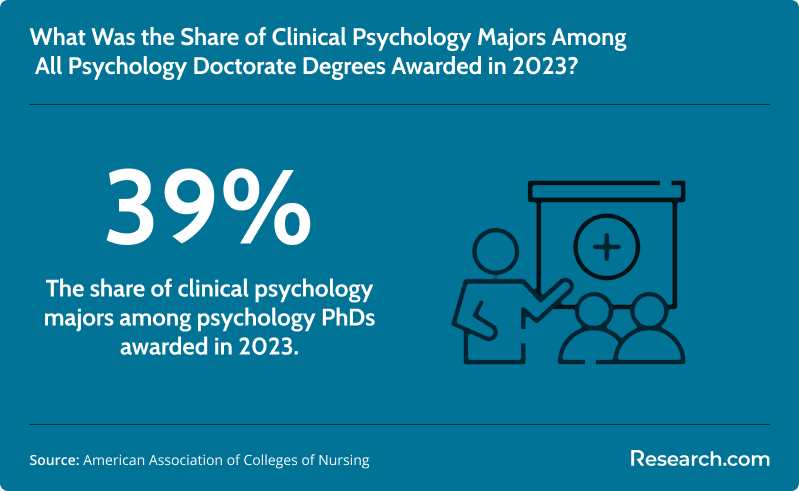
Many of the highest paying jobs with a psychology degree require graduate education because they involve diagnosis, treatment, assessment, independent practice, research leadership, or advanced consultation. In doctoral programs, clinical psychology represented 39% of all psychology PhDs awarded in 2023, showing its central role in preparing psychologists for hospitals, clinics, universities, and research settings.
Careers Requiring a Doctoral Degree
- Clinical Psychologist: Diagnoses and treats mental, emotional, and behavioral disorders in settings such as hospitals, clinics, private practices, and academic medical centers. Licensure typically requires a doctorate.
- Counseling Psychologist: Supports clients with emotional, interpersonal, educational, vocational, and life adjustment concerns. Doctoral training is generally required for psychologist licensure.
- Neuropsychologist: Evaluates and treats cognitive and behavioral issues related to brain function. This path usually requires a doctorate and post-doctoral specialization.
- Doctoral-Level School Psychologist: Some school roles use master’s or specialist-level preparation, but doctoral training can support advanced assessment, leadership, research, or private practice opportunities.
- Doctoral-Level Industrial-Organizational Psychologist: Master’s graduates may qualify for some roles, but research-heavy, senior consulting, and academic positions often favor doctoral training.
Students comparing psychology with adjacent health fields may also ask do you need a masters for speech pathology, since speech-language pathology also requires specialized graduate training for many clinical roles.
Careers Where a Master’s Degree Is Often the Minimum Requirement
- Mental Health Counselor: Provides therapy and support for individuals, groups, couples, or families. A master’s degree and state licensure are usually required.
- Marriage and Family Therapist: Focuses on relationship patterns, family systems, couples therapy, and family-based concerns. Licensure typically requires a relevant master’s degree.
- School Psychologist: Many entry-level school psychology positions require a master’s, specialist degree, or equivalent state-approved credential.
- Substance Abuse Counselor: Requirements vary, but graduate education is increasingly important for higher-level counseling and independent practice roles.
- Applied Behavior Analyst: Advanced ABA practice commonly requires a master’s degree and BCBA certification.
Which high growth sectors hire psychology majors without a graduate degree?
An doctorate in psychology can expand career options, but psychology majors do not have to wait for graduate school to begin building experience. Several growing sectors hire bachelor’s graduates for support, research, administrative, behavioral, and people-focused roles.
Mental Health and Social Services
This sector can provide valuable entry-level experience for students considering counseling, social work, public health, case management, or clinical psychology later.
- Social and Human Service Assistants: These workers help clients access services, complete intake processes, manage cases, and connect with community resources. The job outlook for social and human service assistants is projected to grow faster than average.
- Psychiatric Technicians and Aides: These workers support patients in hospitals, residential treatment centers, and mental health facilities under the supervision of licensed professionals. Demand is expected to grow at an average rate.
Applied Behavior Analysis
ABA can be a practical starting point for psychology majors who want direct service experience with children, families, schools, clinics, or developmental disability programs.
- Registered Behavior Technicians: RBTs implement behavior intervention plans under supervision from Board Certified Behavior Analysts. Certification is required, and a psychology background can be useful preparation.
Business and Human Resources
Psychology majors often bring strengths in communication, motivation, group behavior, interviewing, conflict resolution, and research methods to business settings.
- Human Resources Assistants and Specialists: Psychology graduates may support recruiting, onboarding, training, employee relations, engagement, and benefits administration.
- Market Research Analysts: Consumer behavior, survey design, data interpretation, and research methods make psychology a relevant foundation for market research roles.
Research
Bachelor’s-level psychology graduates can gain experience in research even if they are not leading studies independently.
- Research Assistants: Research assistants help with data collection, coding, participant communication, literature reviews, and analysis in universities, hospitals, government agencies, and private organizations.
Here’s What Professionals Have to Say About Their Psychology Major Jobs
-
: "
After finishing my psychology degree, I started working as a behavioral therapist with children on the autism spectrum. Watching clients build new skills over time is deeply rewarding, and the need for trained ABA professionals has given me steady opportunities to grow. Lena
"
-
: "
My psychology background helped me move into UX research, where I study how people use products and make decisions. The work combines interviews, data, design, and behavior, and companies value people who can explain what users actually need. Marcus
"
-
: "
Industrial-organizational psychology gave me a way to improve workplaces at scale. I work on culture, performance, and leadership projects, and the field lets me use research to solve real business problems. Priya
"
How to Choose the Right Psychology Career Path
- Decide whether you want direct clinical work. If you want to diagnose, treat, or provide therapy independently, plan for graduate school and licensure.
- Check state rules early. Counseling, school psychology, ABA, and psychologist licensure requirements differ by state.
- Compare education cost against realistic earnings. Look beyond advertised salary ranges and include debt, unpaid internships, supervision fees, and licensing exams.
- Build marketable skills while in school. Research methods, statistics, interviewing, documentation, crisis response, data analysis, and ethics can strengthen your options.
- Get relevant experience before graduate school. Work or volunteer in clinics, schools, labs, crisis lines, HR offices, or behavioral therapy settings to confirm your fit.
- Ask programs direct outcome questions. Request data on licensure pass rates, practicum placement, internship support, graduation timelines, and employment outcomes.
Key Insights
- The strongest growth areas for psychology majors include mental health counseling, substance abuse and behavioral disorder counseling, marriage and family therapy, school psychology, ABA, and applied workplace psychology.
- A bachelor’s degree in psychology can lead to entry-level work, but independent clinical practice usually requires graduate education, supervised experience, exams, and state licensure.
- Healthcare and education offer some of the clearest demand because communities need more behavioral health, student mental health, developmental, and family support services.
- High-paying psychology-related careers often require doctoral training or specialized graduate preparation, especially psychiatry, neuropsychology, I-O psychology, engineering psychology, and forensic psychology.
- Program choice matters. Accreditation, licensure alignment, clinical placement quality, affordability, and graduate outcomes are more important than name recognition alone.
- Students who are unsure about graduate school can start with bachelor’s-level roles in human services, ABA, research, HR, market research, or psychiatric support to gain experience before committing to an advanced degree.
References
- American Psychological Association. (2024). Degrees in Psychology [Interactive data tool].
- Bureau of Labor Statistics. (2023, May). Occupational Employment and Wage Statistics.
- Bureau of Labor Statistics. (2024). Marriage and Family Therapists.
- Bureau of Labor Statistics. (2024). Psychologists.
- Bureau of Labor Statistics. (2024). Substance Abuse, Behavioral Disorder, and Mental Health Counselors.
Other Things to Know About the Fastest Growing Psychology Major Jobs
Most child welfare employers require a criminal background check and a child abuse registry check before hiring. Many states also require fingerprinting through the state police or FBI, plus a valid driver’s license and 21 years of age for caseworker roles.
Degree specializations like Industrial-Organizational Psychology, Clinical Psychology, and Health Psychology are in demand for the fastest growing jobs in 2027. These areas prioritize understanding workplace dynamics, mental health services, and health behavior change, essential due to rising industry needs.
Certifications like Certified Clinical Trauma Professional (CCTP) and Applied Behavior Analysis (ABA) are valuable for psychology majors aiming for 2027's fastest growing jobs, enhancing skills needed in high-demand areas such as trauma care and behavioral analysis.


