2027 How to Become a Labor and Delivery Nurse: Salary and Requirements

Co-Founder and Chief Data Scientist
Becoming a labor and delivery nurse is a focused career decision, not just a general nursing path. You need the right nursing degree, RN licensure, hands-on obstetric experience, and the ability to stay calm when childbirth is joyful, unpredictable, or medically complex. For nurses who want direct patient care, family-centered practice, and a specialty that combines clinical skill with emotional support, labor and delivery nursing can be a strong fit.
This guide explains how to become a labor and delivery nurse in 2026, including education requirements, licensure, certifications, key skills, salary expectations, career advancement options, and alternatives if you decide bedside obstetric nursing is not the best long-term fit. It is also useful if you are comparing nursing specialties or asking what you can do with a BSN degree after graduation.
The nursing field remains a practical career option because the demand for registered nurses is expected to grow by 6% through 2034 (BLS, 2025). However, labor and delivery nursing has its own expectations, pressures, and growth routes. The sections below will help you decide whether this specialty matches your goals and what steps to take next.
How to Become a Labor and Delivery Nurse Table of Contents
- Why labor and delivery nursing may be worth pursuing
- Labor and delivery nursing salary and job outlook
- Skills labor and delivery nurses need
- Steps to become a labor and delivery nurse
- How to move into advanced labor and delivery nursing roles
- Regional opportunities and pay differences for labor and delivery nurses
- Managing the emotional demands of labor and delivery nursing
- Technology, informatics, and patient outcomes in labor and delivery
- Bridge programs for nurses who want faster advancement
- How labor and delivery nurses care for high-risk pregnancies
- Using online NP programs to move into advanced practice
- Whether a DNP makes sense for labor and delivery nurses
- Affordable education routes for future and current labor and delivery nurses
- Professional organizations, mentorship, and career development
- Alternative career paths for labor and delivery nurses
- Advanced degree options in labor and delivery nursing
- Ways to strengthen education and experience
- Functional medicine and labor and delivery nursing
Quick Answer: How do you become a labor and delivery nurse?
To become a labor and delivery nurse, you generally need to complete an associate or bachelor’s degree in nursing, pass the NCLEX-RN, obtain registered nurse licensure, gain clinical experience, and apply for labor and delivery or maternal-newborn nursing roles. Many nurses strengthen their qualifications with certifications in areas such as electronic fetal monitoring, inpatient obstetric nursing, neonatal resuscitation, or maternal-newborn care.
A certificate by itself is usually not enough to become a labor and delivery nurse. Certificates can help licensed RNs show specialized competency, but the foundation is nursing education, RN licensure, and clinical readiness for obstetric care.
| Career step | What it means | Why it matters |
| Complete a nursing degree | Earn an ADN or BSN through an accredited nursing program. | This is the academic foundation required before RN licensure. |
| Pass the NCLEX-RN | Take the national licensing exam for registered nurses. | You cannot practice as an RN without meeting licensure requirements. |
| Gain clinical experience | Build experience in maternal-newborn, postpartum, emergency, medical-surgical, or related units. | Labor and delivery units often prefer nurses who can handle fast-changing patient needs. |
| Pursue specialty certifications | Consider credentials such as RNC-OB, RNC-MNN, CNM, or C-EFM when eligible. | Certifications can support credibility and career mobility. |
| Continue education strategically | Consider a BSN, MSN, NP pathway, CNM route, or DNP depending on your goals. | Advanced education can open doors to teaching, leadership, advanced practice, or management. |
Why pursue a career in labor and delivery nursing?
Labor and delivery nursing is a strong option for nurses who want to work at the intersection of acute care, women’s health, newborn care, education, and family support. L&D nurses help patients through labor, delivery, and immediate postpartum recovery, but their role is not limited to assisting with birth. They monitor maternal and fetal status, communicate changes to providers, prepare patients for procedures, support birth preferences when clinically appropriate, and respond quickly when complications occur.
The specialty may appeal to nurses who value advocacy. Similar to faith community nursing, labor and delivery nursing requires patient education, trust-building, emotional presence, and respect for family values. Patients often make high-stakes decisions while experiencing pain, fear, excitement, or uncertainty, and nurses help translate clinical information into understandable choices.
Scheduling can also be a practical reason to consider this field. Hospitals may offer full-time, part-time, night-shift, weekend, or flexible shift arrangements depending on staffing needs. The CDC notes that the U.S. has a birth rate of 10.7% per 1,000 population, which points to the ongoing need for maternity care teams with specialized labor and delivery skills.
The rewards are real, but so are the pressures. Labor and delivery nurses may support uncomplicated births one hour and emergency interventions the next. Nurses who thrive in this specialty usually enjoy direct patient contact, teamwork, rapid assessment, and emotionally meaningful care. They also need resilience because not every delivery has the outcome families hope for.
Labor and Delivery Nursing Career Outlook
Labor and delivery nurses work in a field shaped by maternal health needs, hospital staffing patterns, medical technology, and the growing expectation that childbirth care should be safe, respectful, and evidence-based. Demand can vary by region, facility type, and experience level, but skilled RNs who understand maternal and newborn care remain important members of obstetric teams.
Salary depends on location, employer, shift differentials, credentials, education, and years of experience. The salary figures below reflect the stated data for common roles connected to labor and delivery nursing. They should be used as comparison points rather than guaranteed earnings.
| Role | Salary | Demand |
| Labor and Delivery Nurse | $114,415 | 5% |
| Postpartum Nurse | $101,675 | 5% |
| Triage Nurse | $67,974 | 5% |
| Nurse Midwives | $128,790 | 11% |
| Medical and Health Services Manager | $117,960 | 23% |
| Nurse Practitioners | $129,210 | 40% |
Several related roles show different earning and growth patterns. A labor and delivery RN earns an average salary of $114,415, while postpartum nurses earn approximately $101,675. Triage nurses, who assess symptoms and determine urgency, can expect around $67,974. Nurse practitioners specializing in women’s health and nurse midwives earn median wages of $129,210 and $128,790, respectively. Medical and health services managers earn a higher average salary of $117,960. For comparison, the average respiratory therapists salary, a role that requires only an associate degree, is $80,450.
These figures show why many nurses use labor and delivery as either a long-term specialty or a foundation for advanced practice, education, or leadership. Related healthcare careers, including roles connected to medical coding and billing salary, can offer different work environments, but they do not provide the same direct involvement in maternal and newborn care.
Required Skills for Labor and Delivery Nurses
Labor and delivery nursing requires more than completing nursing school. The specialty demands technical judgment, calm communication, cultural awareness, and the ability to respond quickly when a patient’s condition changes. The best preparation combines classroom learning, clinical practice, mentorship, and continued training after licensure.
Clinical skills that matter most
- Maternal and fetal assessment: L&D nurses monitor vital signs, contraction patterns, fetal status, pain level, bleeding, fluid status, and labor progression. They must recognize normal patterns and escalate concerns promptly.
- Electronic fetal monitoring: Understanding fetal heart rate patterns is central to labor and delivery care. Resources explaining why electronic fetal monitoring is vital can help students and new nurses understand how clinicians identify possible fetal distress and determine next steps.
- Medication and intervention support: L&D nurses may administer medications, assist with induction or augmentation, support epidural care, prepare for cesarean delivery, and participate in emergency response according to facility policy and scope of practice.
- Obstetric emergency readiness: Nurses need working knowledge of conditions such as preeclampsia, postpartum hemorrhage, shoulder dystocia, and fetal distress. Knowing warning signs is not enough; nurses must know whom to call, what equipment is needed, and how to support the care team.
- Neonatal transition awareness: After birth, nurses help assess the newborn’s immediate condition and support early interventions when needed. Training in neonatal resuscitation is often important in this specialty.
Patient-centered skills employers value
- Advocacy: L&D nurses help patients understand options, communicate preferences, and participate in decisions when clinically possible. Advocacy also means speaking up when patient safety is at risk.
- Clear communication: Labor can change quickly. Nurses must give concise updates to physicians, midwives, anesthesiologists, neonatal teams, patients, and family members.
- Emotional steadiness: Birth can be joyful, frightening, painful, or traumatic. Nurses need empathy without losing clinical focus.
- Cultural humility: Patients bring different beliefs, languages, support systems, and expectations into childbirth. Respectful care requires asking, listening, and avoiding assumptions.
- Documentation accuracy: Labor records, fetal monitoring notes, medication administration, patient education, and provider communication must be documented clearly. This supports continuity of care and patient safety.
- Time management: The unit may shift from quiet to urgent within minutes. Nurses must prioritize assessments, medication timing, charting, admissions, discharges, and emergencies.
Some of these skills overlap with other science and healthcare paths. For example, students pursuing a degree and career in biology also need organization, evidence-based thinking, and careful documentation, although labor and delivery nursing applies these abilities in direct patient care.
| Skill area | What it looks like in practice | Why it affects patient care |
| Clinical judgment | Recognizing changes in maternal or fetal status. | Early action can prevent delays in care. |
| Fetal monitoring | Interpreting heart rate patterns and reporting concerns. | It supports timely intervention when fetal distress is suspected. |
| Communication | Explaining procedures, updating providers, and documenting clearly. | Miscommunication can create safety risks. |
| Emotional support | Helping patients manage fear, pain, grief, or uncertainty. | Supportive care can improve the childbirth experience. |
| Cultural awareness | Respecting birth preferences and family practices when safe. | Patients are more likely to trust teams that respect their values. |
How to Become a Labor and Delivery Nurse and Start Your Career
The route into labor and delivery nursing usually begins with becoming a registered nurse. From there, you can apply to maternity units, build related experience, and pursue specialty training. Some nurses enter L&D soon after graduation, while others start in postpartum, medical-surgical, emergency, neonatal, or women’s health settings before moving into labor and delivery.
- Choose an accredited nursing program. You can start with an associate degree in nursing or a bachelor’s degree in nursing. A BSN may improve competitiveness for hospital positions, but ADN-prepared nurses can also become RNs after meeting licensure requirements.
- Complete clinical requirements. Nursing programs include supervised clinical rotations. If possible, seek maternal-newborn, postpartum, neonatal, or women’s health exposure.
- Pass the NCLEX-RN. The National Council Licensure Examination for Registered Nurses is required for RN licensure.
- Apply for RN licensure in your state. Requirements vary by state, so confirm rules through your state board of nursing.
- Build relevant experience. Apply for new graduate residencies, postpartum units, labor and delivery positions, or related clinical roles.
- Add specialty certifications when eligible. Certifications in fetal monitoring, obstetric nursing, maternal-newborn nursing, or neonatal care can strengthen your resume.
- Keep learning. Labor and delivery practice changes with new protocols, technologies, safety standards, and evidence-based care models.
| Labor and Delivery Path | Education and Research Path | Leadership and Management Path | |
| This route centers on bedside care for patients before, during, and immediately after birth. Nurses support labor, monitor fetal and maternal status, prepare for delivery, and respond to urgent changes. | This route focuses on teaching, curriculum, quality improvement, and research that can improve maternal and newborn outcomes. | This route moves nurses into supervision, unit operations, staffing, quality metrics, and strategic decision-making within healthcare organizations. | |
| Entry-level jobs | Certified Nursing Assistant ($39,530) | Clinical Research Assistant ($47,090) | Clinical Nurse Specialist ($141,310) |
| Junior Management Jobs | Labor and Delivery Nurse ($114,415) | Nurse Researcher ($123,959) | Nurse Manager ($103,364) |
| Middle Management Jobs | Charge Nurse ($90,404) | Nurse Instructor ($79,940) | Nursing Director ($115,502) |
| Senior Management Jobs | Nurse Supervisor ($103,364) | Clinical Scientist ($125,061) | Chief Nursing Officer ($183,844 ) |
Can an associate degree lead to labor and delivery nursing?
Possible starting role: Certified Nursing Assistant
A Certified Nursing Assistant (CNA) provides hands-on patient support under the supervision of licensed nurses. CNA work can help future nurses become comfortable with patient care, hospital routines, communication, and basic clinical tasks. However, CNA certification is not the same as RN licensure and does not qualify someone to work independently as a labor and delivery nurse.
Students who are still exploring healthcare but prefer administrative work may compare nursing with a healthcare administration associates degree online. That route can support healthcare office or operations roles, while labor and delivery nursing requires clinical nursing education and licensure.
Average salary: $39,530
What can you do with a bachelor’s degree in nursing?
Common role: Labor and Delivery Nurse
A BSN can prepare you to sit for the NCLEX-RN and seek registered nursing licensure. After becoming an RN, you can apply for labor and delivery positions, new graduate nurse residency programs, postpartum roles, or other maternal-child health opportunities. Nurses who later want advanced practice can compare traditional graduate pathways with online programs to become a nurse practitioner, especially if they need more scheduling flexibility.
Average salary: $114,415
Can you become a labor and delivery nurse with only a certificate?
Usually, no. A certificate alone does not replace an ADN or BSN, the NCLEX-RN, or RN licensure. Labor and delivery nurses are registered nurses, and employers expect them to meet the educational and licensing standards required for RN practice.
Certificates are still valuable, but they are typically add-ons for nurses who already hold a license. For example, a nurse may complete training in fetal monitoring, neonatal resuscitation, or maternal-newborn care to improve readiness for L&D practice.
Experienced RNs may also consider the Inpatient Obstetric Nursing (RNC-OB) certification. This competency-based examination is intended for RNs with at least two years of experience in the medical field, especially with hospitalized pregnant women and newborns.
How can I advance my career in labor and delivery nursing?
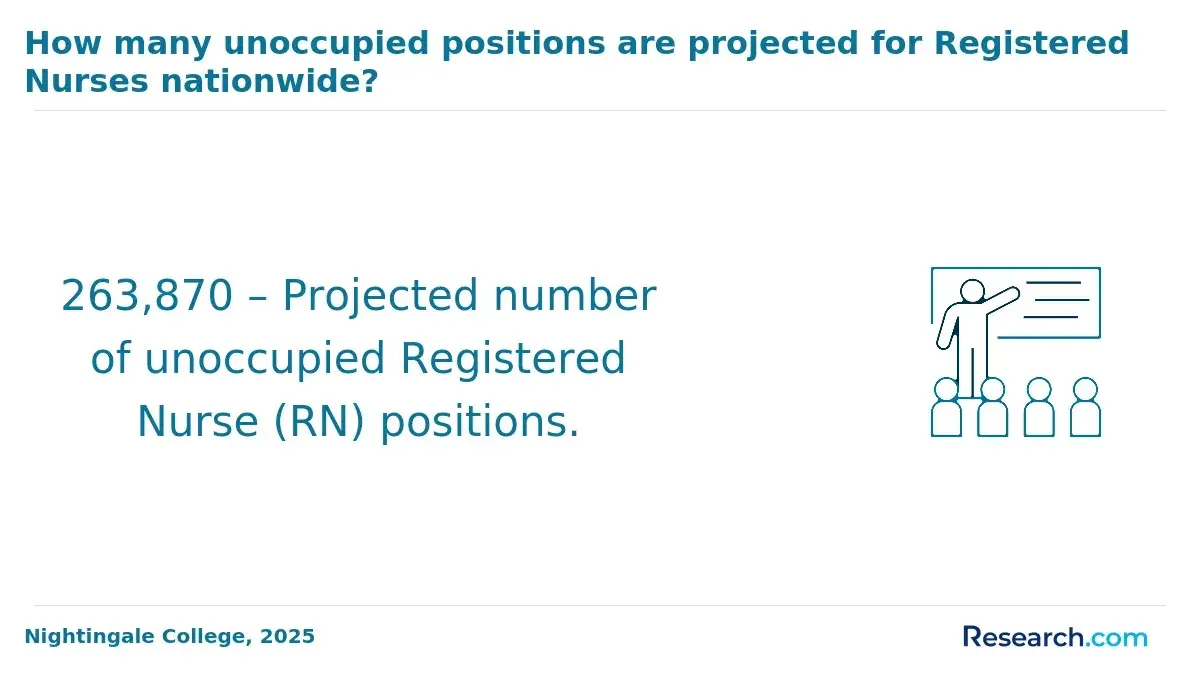
Career advancement in labor and delivery nursing usually comes from a mix of experience, credentials, education, leadership ability, and clinical reputation. The demand for nurses remains tied to ongoing childbirth care and the broader emphasis on promoting positive birth experiences. The U.S. BLS predicts about 189,100 average annual openings for RNs through 2034, which reflects the broader RN labor market rather than a guarantee for any individual specialty or location.
If your goal is to move beyond staff RN roles, higher education can be useful. An MSN can support teaching, clinical leadership, advanced practice, or informatics work. A DNP may fit nurses who want executive leadership, quality improvement, policy, or advanced clinical systems work. The best choice depends on whether you want more bedside expertise, prescribing authority, teaching responsibilities, or management influence.
What can I do with a master’s in labor and delivery nursing?
Example role: Nurse Instructor
Nurse instructors teach students and practicing nurses through lectures, simulations, clinical supervision, skills labs, and curriculum design. Labor and delivery experience can be especially useful for teaching maternal-newborn nursing, obstetric safety, patient communication, and clinical decision-making. Nurses can prepare for this route through campus-based study or online master in nursing programs.
Average salary: $79,940
What kind of job can I get with a doctorate in labor and delivery nursing?
Example role: Chief Nursing Officer
A Chief Nursing Officer is a senior executive who guides nursing strategy, staffing, quality standards, patient safety goals, leadership development, and nursing operations. A doctorate is not the only factor in reaching this level, but advanced education can support nurses who want system-wide influence rather than unit-level practice alone.
Average salary: $183,844
Which certifications are useful for labor and delivery nurses?
The right certification depends on your current license, experience, employer expectations, and future goals. Before enrolling in a nursing program, confirm institutional and programmatic accreditation. The Commission on Collegiate Nursing Education accredits many nursing education programs, including graduate and residency-related programs.
- Inpatient Obstetric Nursing (RNC-OB)
- Maternal Newborn Nursing Certification (RNC-MNN)
- Certified Nurse-Midwife (CNM)
- Electronic Fetal Monitoring (C-EFM)
These credentials do not replace RN licensure, but they can show focused competence in pregnancy, labor, delivery, postpartum care, fetal monitoring, or advanced maternal care.
What are the regional opportunities and salary variations in labor and delivery nursing?
Where you work can affect pay, job availability, patient volume, staffing ratios, and advancement opportunities. Large urban hospitals may offer high-acuity obstetric units, maternal-fetal medicine teams, and structured nurse residency programs. Rural or underserved areas may offer broader responsibilities and strong community impact, but they may also have fewer specialty resources.
Regional comparison should include more than salary. A higher wage may not improve your finances if housing, taxes, commuting costs, or childcare costs are also high. Nurses comparing locations can start by reviewing the highest paying states for nurses, then weigh cost of living, hospital quality, continuing education access, union presence, shift differentials, and maternal health priorities in the region.
| Factor to compare | Why it matters | Question to ask before relocating |
| Base salary and differentials | Night, weekend, and holiday shifts may change total compensation. | What is the full compensation package, not just the hourly rate? |
| Cost of living | High salaries can be offset by expensive housing and transportation. | Will take-home pay support my actual budget? |
| Birth volume and acuity | High-volume units may build skills faster but can be stressful. | What types of deliveries and complications does the unit handle? |
| Training support | New L&D nurses need strong orientation and mentorship. | How long is orientation, and who precepts new nurses? |
| Career ladder | Some employers offer clearer paths to charge nurse, educator, or manager roles. | What advancement options exist after one to three years? |
How can I manage the emotional challenges in labor and delivery nursing?
Labor and delivery nursing can be emotionally intense because nurses are present during major life moments. Many shifts involve joy, relief, and gratitude. Others involve fear, trauma, emergency surgery, fetal loss, maternal complications, or family conflict. Nurses need strategies to stay compassionate without becoming emotionally depleted.
- Build emotional resilience: Reflect after difficult cases, learn from debriefings, and seek support instead of carrying stress alone.
- Use grief resources when needed: Fetal loss, maternal health crises, and traumatic deliveries can affect clinicians deeply. Counseling, peer support, and employee assistance resources can help nurses process these events.
- Maintain professional boundaries: Compassion is essential, but over-identifying with every patient can increase burnout risk.
- Create recovery routines: Sleep, movement, nutrition, time outside work, and supportive relationships matter for long-term sustainability.
- Debrief after emergencies: Structured debriefing can improve both emotional processing and clinical learning.
Nurses should not view emotional fatigue as personal failure. It is a predictable risk in high-stakes clinical work. Healthy units normalize support, peer learning, and help-seeking.
How can labor and delivery nurses integrate technology and informatics to enhance patient outcomes?
Technology is now part of everyday labor and delivery nursing. Electronic health records, fetal monitoring systems, medication safety tools, telehealth platforms, and clinical decision support systems can improve documentation, communication, and patient monitoring when used correctly. They can also create new risks if nurses rely on screens without maintaining bedside assessment skills.
Nurses interested in data, workflow improvement, and digital health may benefit from studying informatics. Programs such as the easiest nursing informatics online programs to get into can help practicing nurses understand how data systems support safer maternity care, quality measurement, and evidence-based decision-making.
| Technology area | Use in labor and delivery | What nurses should watch for |
| Electronic health records | Charting assessments, medications, fetal monitoring notes, and provider communication. | Incomplete or delayed documentation can create care gaps. |
| Electronic fetal monitoring | Tracking fetal heart rate and contraction patterns. | Technology supports judgment but does not replace clinical assessment. |
| Telehealth | Supporting prenatal follow-up, education, or consultation in some care models. | Access, privacy, and escalation plans must be clear. |
| Data reporting | Identifying trends in outcomes, safety events, and quality improvement priorities. | Data must be interpreted in clinical context. |
How can bridging programs accelerate career growth for labor and delivery nurses?
Bridge programs can help nurses move from one education level to another without starting over. For example, an RN with an associate degree may use a bridge pathway to pursue advanced nursing education more efficiently. These programs can be useful for labor and delivery nurses who want to become nurse practitioners, educators, leaders, or specialists while building on existing clinical experience.
Options such as ADN to FNP programs may help nurses move toward advanced practice roles, but they require careful review. Students should check admission requirements, clinical placement expectations, state authorization, accreditation, total cost, and whether the program aligns with their desired specialty.
How does labor and delivery nursing support high-risk pregnancies?
High-risk pregnancies require closer monitoring, faster escalation, and stronger coordination among obstetric, anesthesia, maternal-fetal medicine, neonatal, and nursing teams. Labor and delivery nurses are often the clinicians who notice early changes at the bedside and communicate those changes to the broader team.
- Monitoring maternal and fetal status: Nurses track fetal heart rate patterns, contractions, blood pressure, oxygen status, pain, bleeding, and other warning signs.
- Supporting specialized treatments: Depending on orders and protocols, nurses may administer medications such as corticosteroids for preterm infant lung development or antihypertensive drugs for preeclampsia management.
- Coordinating multidisciplinary care: L&D nurses help align the work of obstetricians, nurse midwives, anesthesiologists, neonatal teams, and maternal-fetal medicine specialists.
- Educating patients and families: Patients with high-risk pregnancies often need clear explanations about monitoring, possible delivery scenarios, medications, and warning signs.
- Preparing for emergencies: Nurses help ensure equipment, supplies, documentation, and team communication are ready when rapid intervention is needed.
Nurses who want to specialize further in high-risk pregnancy care may pursue obstetric certifications or advanced practice pathways. If your long-term plan involves advanced practice, review nurse practitioner requirements early so you understand education, clinical hour, licensure, and documentation expectations.
How can labor and delivery nurses leverage online NP programs for career advancement?
Online nurse practitioner programs can give working labor and delivery nurses a flexible route into advanced practice, but flexibility does not mean the program is easy or automatically affordable. NP students still need rigorous coursework, supervised clinical experience, faculty support, and state-compliant training. Nurses should compare program format, clinical placement support, accreditation, tuition, fees, and specialty fit before enrolling.
If cost is a major factor, comparing the cheapest NP programs can be a useful starting point. However, the least expensive option is not always the best option if it lacks clinical support, has limited student services, or does not align with your state’s requirements.
Should Labor and Delivery Nurses Consider Earning a DNP?
A Doctor of Nursing Practice can make sense for labor and delivery nurses who want advanced clinical leadership, executive roles, quality improvement authority, policy involvement, or system-level influence. It may be less necessary for nurses who want to remain in bedside labor and delivery roles and do not need doctoral preparation for their goals.
DNP programs often emphasize evidence-based practice, leadership, systems thinking, policy, and quality improvement. Nurses evaluating the cheapest DNP program should still review accreditation, faculty expertise, project requirements, clinical expectations, employer recognition, and total program cost.
| A DNP may be a good fit if you want to... | A DNP may not be necessary if you... |
| Lead maternal health quality improvement projects. | Prefer direct bedside care and do not want an executive or advanced systems role. |
| Move into senior nursing leadership. | Need a faster or lower-cost credential for a narrower career goal. |
| Teach, influence policy, or redesign clinical processes. | Are not ready for doctoral-level time and financial commitments. |
| Strengthen advanced practice or organizational leadership credentials. | Can reach your target role with a BSN, MSN, or certification instead. |
Are there affordable educational options for labor and delivery nurses?
Affordable education matters because nursing advancement can become expensive when tuition, fees, books, clinical travel, lost work hours, and certification costs are added together. Future nurses should not choose a program based on tuition alone. Accreditation, licensure eligibility, clinical placement, graduation support, and employer reputation can affect the true value of a program.
Some students begin with practical nursing or associate-level pathways before advancing. Those comparing entry routes may review the cheapest licensed practical nurse online program, but it is important to understand that LPN preparation is not the same as becoming an RN labor and delivery nurse. If your goal is L&D RN practice, make sure each education step moves you toward RN licensure.
Common cost mistakes to avoid
- Looking only at tuition: Fees, uniforms, testing, background checks, travel, and lost work hours can change the total cost.
- Ignoring accreditation: Non-accredited programs may create problems with licensure, transfer credits, financial aid, or employer recognition.
- Assuming online means fully remote: Nursing programs still require clinical training, and clinical placements may not be available near every student.
- Skipping state authorization checks: Online programs may not meet requirements in every state.
- Borrowing without an ROI plan: Compare expected earnings, current debt, employer tuition support, and repayment obligations.
How can professional organizations and mentorship accelerate career development?
Mentorship can shorten the learning curve in labor and delivery nursing. A strong mentor can help a new nurse interpret unit culture, prepare for emergencies, improve communication with providers, handle difficult cases, and identify when to pursue certifications or graduate school. Professional organizations can also provide continuing education, practice updates, conferences, networking, and leadership opportunities.
Nurses aiming for advanced roles may combine mentorship with formal education. Programs such as the easiest online nurse practitioner programs may appeal to applicants looking for accessible admission pathways, but “easiest” should not be the only criterion. Program quality, accreditation, clinical placement, state eligibility, and graduate outcomes matter more than convenience alone.
Questions to ask a mentor or unit leader
- What skills should I master before applying to labor and delivery?
- Which certifications are most respected in this hospital or region?
- How long does it usually take a new nurse to feel confident in L&D?
- What are the most common reasons new L&D nurses struggle?
- Which graduate degree would fit my goals: MSN, NP, CNM, informatics, education, or DNP?
Alternative Career Options for Labor and Delivery Nurses
Labor and delivery experience can lead to several related careers. Some nurses remain in maternity care but leave bedside hospital shifts. Others move into education, lactation support, advanced practice, research, administration, or public health. This flexibility matters because bedside L&D work can be physically and emotionally demanding over time.
According to statistics, 16% of live births were born to women who had inadequate prenatal care in the U.S. (March of Dimes, 2025). This figure reinforces the need for skilled professionals who can support maternal health before, during, and after delivery.

Common alternatives for experienced labor and delivery nurses include:
- Lactation Consultant: Nurses who enjoy breastfeeding support may pursue lactation consulting. This role focuses on latch support, milk supply concerns, pumping education, feeding plans, and parent confidence.
- Childbirth Educator: Childbirth educators prepare families for labor, delivery, pain management choices, newborn care, and postpartum recovery through classes or individual sessions.
- Women’s Health Nurse Practitioner: With graduate education and advanced clinical preparation, nurses can provide reproductive, gynecologic, prenatal, and preventive care.
- Maternal-Child Health Educator: This path supports families through prenatal education, parenting guidance, breastfeeding education, newborn safety, and community-based maternal health programs.
What are the options for advanced degrees in labor and delivery nursing?
Advanced degrees can help labor and delivery nurses move into advanced practice, education, leadership, research, informatics, or specialized maternal health roles. The right degree depends on your desired scope of practice. An MSN may support nurse educator, clinical nurse specialist, nurse practitioner, or leadership tracks. A CNM pathway can prepare nurses for midwifery practice. A DNP can support advanced leadership and quality improvement work.
Before choosing a graduate route, compare the types of master degree in nursing so you understand how different MSN concentrations lead to different roles. A nurse who wants to teach maternal-newborn nursing needs a different pathway from one who wants to prescribe, deliver babies as a midwife, manage a unit, or lead informatics projects.
| Advanced path | Best for nurses who want to... | Important consideration |
| MSN in Nursing Education | Teach nursing students or train clinical staff. | May require teaching experience or clinical educator preparation. |
| Women’s Health NP or Family NP | Provide advanced reproductive, primary, or family care. | Scope of practice and clinical requirements vary by state and program. |
| Certified Nurse-Midwife pathway | Provide midwifery care and support childbirth in an advanced role. | Requires specialized graduate preparation and credentialing. |
| DNP | Lead quality improvement, policy, executive practice, or advanced clinical systems work. | Doctoral study requires a significant time and cost commitment. |
| Nursing informatics | Improve clinical systems, data use, and technology workflows. | Best for nurses interested in systems as much as direct bedside care. |
How can labor and delivery nurses enhance their education and experience?
Labor and delivery nurses can strengthen their careers through targeted learning rather than collecting credentials randomly. The best investments usually connect directly to a role you want: fetal monitoring for bedside L&D, lactation training for breastfeeding support, MSN education for teaching, NP preparation for advanced practice, or leadership training for management.
Nurses interested in advanced practice may compare cheapest online nurse practitioner programs to find flexible options, but affordability should be evaluated alongside accreditation, clinical placement, student support, and state eligibility.
Practical ways to become a stronger labor and delivery nurse
- Seek high-quality orientation: A supportive preceptor and structured transition period are essential for new L&D nurses.
- Develop fetal monitoring competence: This is one of the most important technical skills in labor and delivery.
- Volunteer for simulations: Emergency drills for hemorrhage, shoulder dystocia, neonatal resuscitation, and cesarean preparation build confidence.
- Learn from postpartum and neonatal teams: Strong L&D nurses understand the full maternal-newborn care continuum.
- Track your cases and skills: A professional portfolio can help with certifications, graduate applications, and promotions.
- Choose continuing education by goal: Avoid spending money on training that does not support your next career step.
Benefits of moving into a nurse practitioner pathway
- Broader clinical scope: Nurse practitioners may diagnose conditions, order tests, prescribe medications, and provide more comprehensive care within their authorized scope of practice.
- Flexible study formats: Online programs can help working nurses balance coursework with employment and family responsibilities, though clinical requirements still apply.
- More career options: Advanced credentials can support specialized practice, leadership, education, or outpatient women’s health roles.
Can labor and delivery nurses integrate functional medicine into their practice?
Some labor and delivery nurses become interested in broader wellness approaches, including nutrition, lifestyle, prevention, and postpartum recovery. Functional medicine concepts may complement patient education when used responsibly and within a nurse’s scope of practice. They should not replace evidence-based obstetric care, emergency protocols, or medical treatment for high-risk conditions.
Nurses considering this route should learn how functional medicine fits with licensure rules, employer policies, and patient safety expectations. To explore a related advanced practice path, review guidance on how to become a functional medicine practitioner.
Is learning how to become a labor and delivery nurse a good career choice?
Labor and delivery nursing can be a good career choice for nurses who want meaningful bedside work, maternal-newborn specialization, and a role that requires both technical skill and emotional intelligence. It is not the easiest nursing specialty. The work can include long shifts, emergencies, grief, high documentation demands, and fast-changing clinical situations.
This path is most suitable for people who can communicate clearly under pressure, work well in teams, respect patient preferences, and remain calm when plans change. It may not be ideal for someone who prefers predictable routines, minimal emotional intensity, or limited patient-family interaction.
Continuing education is also part of the job. Labor and delivery nurses need to keep up with obstetric practice changes, safety protocols, fetal monitoring standards, maternal health initiatives, and newborn care updates. Nurses with related academic interests, including those pursuing a nutrition masters, may find opportunities to connect maternal health, postpartum recovery, breastfeeding support, and preventive education.
Common mistakes when planning a labor and delivery nursing career
| Mistake | Why it can hurt you | Better approach |
| Assuming any nursing job automatically leads to L&D | Labor and delivery units may prefer relevant maternal-newborn experience. | Seek postpartum, women’s health, neonatal, emergency, or residency opportunities. |
| Choosing a program without checking accreditation | Accreditation can affect licensure, transfer credits, aid, and employer acceptance. | Verify accreditation and state board approval before enrolling. |
| Focusing only on salary | Shift demands, emotional stress, and cost of living affect career satisfaction. | Compare work environment, support, schedule, and advancement routes. |
| Collecting certifications too early | Some credentials require RN experience or may not fit your goals. | Choose certifications based on eligibility, employer value, and career direction. |
| Ignoring emotional resilience | Difficult deliveries and loss can contribute to burnout. | Use mentorship, debriefing, counseling resources, and self-care routines. |
Key Insights
- The basic path is clear: Complete an ADN or BSN, pass the NCLEX-RN, obtain RN licensure, and gain relevant clinical experience before or while moving into labor and delivery.
- A certificate alone is not enough: Certifications can strengthen an RN’s qualifications, but they do not replace nursing education or licensure.
- Labor and delivery nursing is both technical and emotional: Nurses need fetal monitoring knowledge, emergency readiness, patient advocacy, cultural sensitivity, and strong communication.
- Career growth can move in several directions: Experienced L&D nurses may advance into nurse education, nurse management, women’s health NP roles, midwifery, informatics, research, or executive leadership.
- Pay varies by role and location: The cited average salary for labor and delivery nurses is $114,415, while related advanced roles such as nurse practitioners and nurse midwives list $129,210 and $128,790, respectively.
- Program choice matters: Before enrolling, check accreditation, licensure alignment, clinical placement support, total cost, and whether the program fits your intended role.
- This specialty is worth considering if you want high-impact patient care: It can be rewarding for nurses who are comfortable with pressure, teamwork, family-centered communication, and lifelong learning.
References:
- AACN. (2025). 2024-2025 Enrollment and Graduations in Baccalaureate and Graduate Programs. https://www.aacnnursing.org
- CDC. (n.d.). Births and Natality. https://www.cdc.gov/nchs/fastats/births.htm
- Coherent Market Insights. (2025). Healthcare Staffing Market Size & YoY Growth Rate. https://www.coherentmarketinsights.com
- March of Dimes. (2025). Report Card for United States. March of Dimes Foundation. https://www.marchofdimes.org/peristats/reports/united-states/report-card
- National Certification Corporation. (n.d.). Certification Exams: Inpatient Obstetric Nursing. https://www.nccwebsite.org/certification-exams/details/2/inpatient-obstetric-nursing
- U.S. Bureau of Labor Statistics. (2025). Occupational Outlook Handbook: Registered Nurses. https://www.bls.gov/ooh/healthcare/registered-nurses.htm
- ZipRecruiter. (2026). Labor And Delivery Registered Nurse Salary. https://www.ziprecruiter.com/Salaries/Labor-And-Delivery-Registered-Nurse-Salary
- ZipRecruiter. (2026). Clinical Nurse Specialist Salary. https://www.ziprecruiter.com/Salaries/Clinical-Nurse-Specialist-Salary
Other Things You Should Know About How to Become a Labor and Delivery Nurse
To stay updated with advancements in labor and delivery nursing, regularly attend professional conferences, join relevant nursing associations, subscribe to industry journals, and participate in workshops and online courses. Engaging in these activities keeps you informed about the latest research, technologies, and best practices in the field.
Essential skills for labor and delivery nurses include clinical competence, fetal monitoring, patient advocacy, emotional and cultural sensitivity, knowledge of obstetric emergencies, communication, and empathy. These skills are crucial for providing high-quality care to mothers and newborns during the childbirth process.
Labor and delivery nurses can advance their careers by obtaining advanced certifications, pursuing higher education such as a master’s or doctorate degree, and exploring specialized roles like clinical nurse specialist, nurse educator, nurse manager, or leadership positions within the labor and delivery department.
Beneficial certifications for labor and delivery nurses include Inpatient Obstetric Nursing (RNC-OB), Maternal Newborn Nursing (RNC-MNN), Certified Nurse-Midwife (CNM), and Electronic Fetal Monitoring (C-EFM). These certifications validate your expertise and skills in providing care to women during pregnancy, labor, delivery, and the postpartum period.
To become a labor and delivery nurse in 2027, you need at least an Associate Degree in Nursing (ADN). However, many employers prefer a Bachelor of Science in Nursing (BSN). After graduating, you must pass the NCLEX-RN exam to become a Registered Nurse (RN).