
2027 How to Become a Nurse in Alaska

Co-Founder and Chief Data Scientist
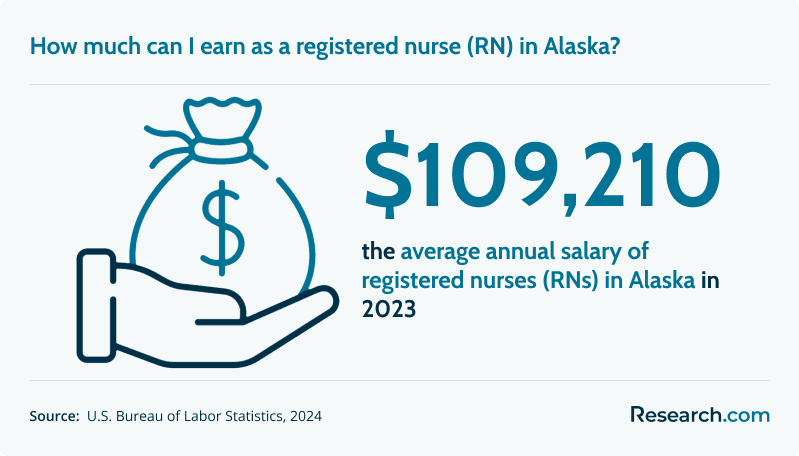
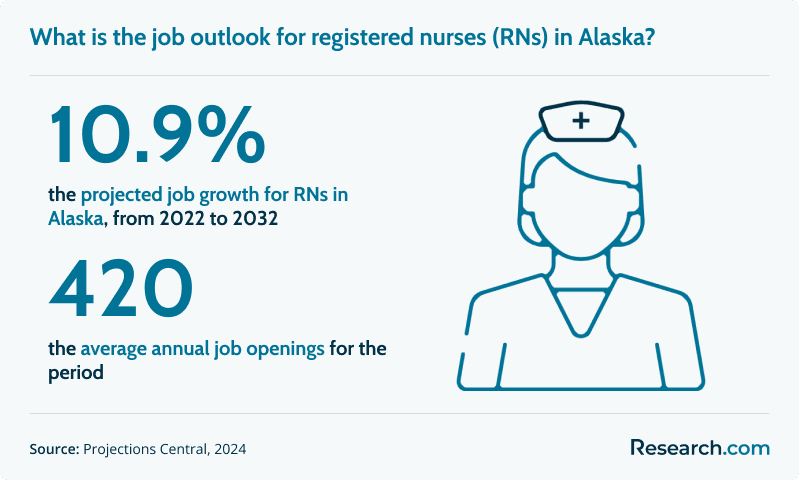
Becoming a nurse in Alaska is a different decision than becoming a nurse in many other states. The opportunity can be strong: registered nurses in Alaska earn an average annual salary of $109,210, and RN employment is projected to grow 10.9% from 2022 to 2032. But the path also requires careful planning because Alaska’s geography, rural healthcare needs, licensing rules, cost of living, and clinical placement options can affect where you study, how quickly you get licensed, and what kind of nursing work you can realistically pursue.
This guide explains how to become a nurse in Alaska, including education routes, licensing requirements, license types, compact practice considerations, job outlook, renewal rules, specialization options, financial aid, and practical factors to review before choosing a nursing program or accepting a job in the state.
Quick Answer: How do you become a nurse in Alaska?
To become a nurse in Alaska, you generally need to complete an accredited nursing program, pass the appropriate NCLEX exam, apply for licensure through the Alaska Board of Nursing, complete the required background check, and keep your license active through renewal and continuing education. LPNs take the NCLEX-PN, RNs take the NCLEX-RN, and APRNs must complete graduate education and national certification in an approved specialty.
Key Things You Need to Know About Becoming a Nurse in Alaska
- Alaska needs more nurses. The state has been projected to need over 1,000 additional registered nurses by 2025, with demand influenced by workforce turnover, an aging population, and access challenges in rural communities.
- RN pay is high compared with many occupations in the state. Registered nurses in Alaska average around $109,210 per year, compared with the state average annual salary of $69,880 for all occupations.
- The employment outlook is favorable. Registered nursing jobs in Alaska are projected to grow 10.9% from 2022 to 2032, with demand tied to healthcare access, facility staffing needs, and population health demands.
- Licensure is mandatory. Alaska nursing candidates must complete an approved or accredited nursing program, pass the NCLEX-RN or NCLEX-PN, apply to the Alaska Board of Nursing, and complete a criminal background check.
- Alaska nursing can be professionally distinctive. Nurses may work with remote communities, Indigenous populations, telehealth teams, emergency transport systems, and facilities that may offer relocation support, sign-on bonuses, or professional development incentives.
- Steps to becoming a nurse in Alaska
- Education requirements for Alaska nurses
- Types of nursing roles allowed in Alaska
- Alaska nursing licensing requirements
- Types of nursing licenses in Alaska
- Compact nursing practice in Alaska
- Practicing without a nursing license in Alaska
- Current state of nursing in Alaska
- LPN education options in Alaska
- Alternative healthcare careers in Alaska
- Geriatric nursing in Alaska
- Nurse practitioner careers in Alaska
- Nursing career advancement options
- Non-clinical healthcare roles in Alaska
- LVN career pathways in Alaska
- Online nursing programs in Alaska
- Continuing education and license renewal
- Specialized nursing roles in Alaska
- Financial assistance for nursing education
- Common challenges for Alaska nurses
- Nursing job outlook in Alaska
- How Alaska’s geography affects nursing practice
What are the steps to becoming a nurse in Alaska?
The Alaska nursing pathway depends on whether you want to become an LPN, RN, APRN, or CNA. For most prospective nurses, the central decision is whether to start with a practical nursing program, an associate degree in nursing, or a bachelor’s degree in nursing. Your choice affects cost, timeline, job options, and whether you can later move into advanced practice or leadership roles.
| Step | What to do | Why it matters |
| 1. Choose the nursing role | Decide whether you want to become a CNA, LPN, RN, or APRN. | Each role has different education, exam, supervision, and scope-of-practice requirements. |
| 2. Complete the required education | Enroll in an accredited or state-approved nursing program that matches your goal. | Your program must prepare you for licensure and clinical practice in Alaska. |
| 3. Pass the appropriate exam | LPN candidates take the NCLEX-PN, while RN candidates take the NCLEX-RN. | Passing the NCLEX is required before you can receive a nursing license. |
| 4. Apply to the Alaska Board of Nursing | Submit the application, education documentation, fees, and required background materials. | The Board determines whether you meet Alaska’s licensure standards. |
| 5. Begin supervised or licensed practice | Start work only within the authority granted by your license or temporary authorization. | Practicing beyond your legal authority can create disciplinary and legal consequences. |
| 6. Maintain your license | Renew your license every two years and complete continuing education requirements. | Renewal keeps your authority to practice active and demonstrates continuing competence. |
- Complete an approved education program. LPN candidates usually complete a practical nursing diploma or certificate program. RN candidates complete an Associate Degree in Nursing or Bachelor of Science in Nursing. Students planning long-term advancement often compare ADN-to-BSN, BSN, MSN, and doctoral pathways early.
- Pass the NCLEX. Nursing graduates must pass the applicable National Council Licensure Examination. LPNs take the NCLEX-PN, and RNs take the NCLEX-RN. The original source data notes that pass rates are approximately 90% for these exams.
- Apply for Alaska licensure. After passing the exam, candidates apply through the Alaska Board of Nursing and complete the required identity, education, and background review steps.
- Consider advanced education if you want a broader scope of practice. Nurses who want to become nurse practitioners, nurse midwives, clinical nurse specialists, or nurse anesthetists generally need graduate-level nursing education and national certification.
- Keep licenses and certifications current. Alaska nursing licenses must be renewed every two years. RNs must complete 30 hours of continuing education, including 20 hours from approved institutions.
The best first step is to choose the license level that fits your timeline, budget, and career goal. If you want to enter the workforce quickly, an LPN or ADN route may be attractive. If you want stronger long-term mobility, a BSN or graduate pathway may be more useful.
What are the educational requirements for becoming a nurse in Alaska?
Alaska nurses must complete education that matches the license they are seeking. The program should be accredited, state-approved, and able to provide the required clinical experiences. This is especially important for online students because nursing cannot be completed through coursework alone; clinical practice is still required.
Nursing degree and credential options
| Path | Typical length | Best for | Licensure or career result |
| CNA training | Short-term training | Students who want entry-level patient care experience before nursing school | Certified nursing assistant role after required competency testing |
| LPN diploma or certificate | About one year | Students seeking a faster practical nursing route | Eligibility for NCLEX-PN and LPN licensure |
| Associate Degree in Nursing | Typically two years | Students who want to become RNs with a shorter degree pathway | Eligibility for NCLEX-RN and RN licensure |
| Bachelor of Science in Nursing | Typically four years | Students who want broader preparation, leadership exposure, and stronger advancement options | Eligibility for NCLEX-RN and RN licensure |
| Master of Science in Nursing | Often about two years beyond the BSN | RNs pursuing advanced practice, education, administration, or specialization | Advanced nursing roles, depending on specialty and certification |
| DNP or PhD in Nursing | Several additional years | Nurses focused on advanced clinical leadership, research, teaching, or systems-level practice | Doctoral-level practice, research, academic, or leadership roles |
- Associate Degree in Nursing. An ADN is commonly offered through community colleges and prepares students for entry-level RN practice and the NCLEX-RN.
- Bachelor of Science in Nursing. A BSN provides a broader curriculum that may include leadership, community health, evidence-based practice, and management concepts. Many employers prefer BSN-prepared nurses for certain roles.
- Master of Science in Nursing. An MSN is commonly required for nurse practitioner, nurse educator, clinical leadership, and other advanced roles.
- DNP and PhD programs. A DNP is generally practice-focused, while a PhD is typically research-focused. Both require substantial additional study.
- Accreditation matters. Students should verify that the nursing program is appropriately accredited or approved before enrolling. Accreditation affects licensure eligibility, transfer options, graduate admission, and employer confidence.
Program formats to compare
- Traditional campus programs. These are often a good fit for students who want face-to-face instruction, structured lab work, and local clinical placements.
- Online and hybrid nursing programs. Online coursework can help students in remote areas, but clinical requirements must still be completed in approved healthcare settings.
- Accelerated nursing programs. Students who already have a degree in another field may be able to complete a nursing program in less time. Advanced nurses comparing doctoral options may also research flexible choices such as the shortest post master's DNP program.
- Bridge programs. LPN-to-RN, RN-to-BSN, and ADN-to-BSN options can help working nurses advance without starting over.
Before enrolling, ask the school how clinical placements are arranged in Alaska, whether graduates are eligible for the relevant NCLEX exam, and whether the program meets Alaska Board of Nursing expectations.
What types of nurses can legally practice in Alaska?
Alaska recognizes several nursing and nursing-adjacent roles. The right path depends on how much responsibility you want, how long you can study, and whether you want direct bedside care, advanced diagnosis and prescribing, community health, or healthcare leadership.
- Registered Nurses. RNs assess patients, administer medications, coordinate care plans, educate patients, and collaborate with physicians and interdisciplinary teams. RN candidates typically complete an ADN or BSN and pass the NCLEX-RN. Programs accredited by the Accreditation Commission for Education in Nursing or the Commission on Collegiate Nursing Education are recognized in Alaska.
- Licensed Practical Nurses. LPNs provide basic nursing care under the supervision of RNs, physicians, or other authorized providers. They usually complete a practical nursing program and pass the NCLEX-PN.
- Advanced Practice Registered Nurses. APRNs include nurse practitioners, clinical nurse specialists, certified registered nurse anesthetists, and certified nurse midwives. APRNs must hold a master’s or doctoral degree in nursing and national certification in their specialty. Alaska APRNs can be especially important in rural and underserved communities where access to providers may be limited. APRNs are often among the higher-earning nursing professionals, as reflected in nurse practitioner salary by state comparisons.
- Certified Nursing Assistants. CNAs are not licensed nurses, but they provide important hands-on support with daily care tasks. CNA work can also help students confirm whether they want to pursue nursing. Students seeking a quicker RN route can compare fast-track registered nurse programs, while healthcare workers changing roles may review best medical assistant to LPN programs online.
Each role has a different scope of practice. Do not choose solely based on salary or program length. Instead, compare the actual duties, supervision requirements, advancement options, and educational investment required.
What are the licensing requirements for nurses in Alaska?
Alaska nursing licensure is administered through the Alaska Board of Nursing. Requirements vary by role, but most applicants must document approved education, exam completion, identity verification, and background clearance.
- Education documentation. RN applicants generally need an ADN or BSN from an accredited nursing program. LPN applicants typically complete a diploma or certificate program.
- NCLEX exam completion. RN candidates take the NCLEX-RN, and LPN candidates take the NCLEX-PN. The exam is designed to assess whether graduates can provide safe entry-level nursing care.
- Application submission. Candidates apply to the Alaska Board of Nursing, often through an online process. The application fee is approximately $50, but applicants should confirm the current amount before submitting materials.
- Fingerprinting and background check. Applicants must complete fingerprinting and a criminal background check. Fingerprinting costs can range from $50 to $75.
- Proof of citizenship or legal residency. Applicants may need to provide documentation showing they are legally eligible to work and hold a professional license.
- Transcripts and supporting records. The Board may require official transcripts or other proof that the applicant completed the required nursing education.
- Renewal and continuing education. Once licensed, nurses must renew their licenses every two years and meet continuing education expectations. Nurses who later want administrative or systems-level roles may also compare programs such as accelerated healthcare administration degree online options.
Because licensing rules can change, applicants should verify requirements directly with the Alaska Board of Nursing before applying, especially if they were educated outside Alaska, previously held a license in another state, or have a disciplinary or criminal history to disclose.
What types of nursing licenses are available in Alaska?
Alaska offers nursing credentials for different levels of training and responsibility. Understanding these distinctions helps students avoid enrolling in a program that does not match their intended career.
| Credential | Education usually required | Exam or certification | Typical scope |
| Certified Nurse Aide | State-approved CNA training | Competency exam | Basic patient support and assistance with activities of daily living |
| Licensed Practical Nurse | Practical nursing diploma or certificate | NCLEX-PN | Basic nursing care under supervision |
| Registered Nurse | ADN or BSN | NCLEX-RN | Patient assessment, care planning, medication administration, education, and coordination |
| Advanced Practice Registered Nurse | Graduate nursing degree | National specialty certification | Advanced assessment, diagnosis, treatment, prescribing authority where permitted, and specialty care |
- RN license. Registered nurses handle a broad range of clinical responsibilities and often work in hospitals, clinics, community health, public health, and long-term care.
- LPN license. Licensed practical nurses provide essential nursing services but generally work under the direction of RNs or physicians.
- APRN authorization. APRNs include nurse practitioners, nurse midwives, nurse anesthetists, and clinical nurse specialists. This level requires graduate education and national certification.
- CNA certification. CNA work is an entry point into healthcare rather than a nursing license, but it can provide useful experience before applying to nursing school.
If you are comparing healthcare roles beyond nursing, it can also help to review adjacent career compensation such as radiology technician salary details by state.
In 2023, there were around 36,430 RNs and 8,550 LPNs in Alaska. See the chart below for more employment details.
Can a Compact nurse practice in Alaska?
Compact practice depends on Alaska’s status under the Nurse Licensure Compact and the nurse’s home-state license. The Nurse Licensure Compact allows eligible nurses with a multistate license from a participating state to practice in other compact states without obtaining a separate single-state license. Nurses should confirm current compact status and eligibility directly with the Alaska Board of Nursing before accepting work.
Based on the source information provided, Alaska is a member of the Nurse Licensure Compact, which means nurses with a valid compact license from another participating state can practice in Alaska without going through the traditional single-state licensing process. However, compact rules involve specific residency and eligibility standards, so verification is essential.
- Confirm your home-state license. You must hold a valid compact license from a participating state to use compact privileges.
- Check eligibility before relocating. Do not assume compact privilege applies automatically; review Alaska Board of Nursing guidance and verify your license status.
- Apply by endorsement if needed. Nurses from non-compact states generally need to apply for an Alaska license through the standard endorsement or licensure process.
- Follow Alaska practice expectations. Even with compact privilege, nurses must comply with Alaska’s scope-of-practice rules and professional standards.
- Maintain continuing education and renewal compliance. Compact mobility does not remove the need to keep licenses and credentials current.
For nurses considering Alaska travel nursing, rural employment, or permanent relocation, compact eligibility can shorten the time between job offer and practice. Still, the safest approach is to verify directly with the Board before making employment or relocation commitments.
Can you practice as a nurse without a license in Alaska?
No. You cannot legally practice as a nurse in Alaska without the required nursing license or lawful temporary authorization. Nursing is regulated to protect patients, and unauthorized practice can result in disciplinary action, civil penalties, criminal consequences, and long-term damage to your ability to become licensed.
- Graduating from nursing school is not enough. You must also pass the required exam and receive licensure or temporary authorization before practicing as a nurse.
- The NCLEX is required for LPN and RN licensure. LPN candidates take the NCLEX-PN, while RN candidates take the NCLEX-RN.
- The Board must approve your application. Applicants submit proof of education, exam results, required documents, and background check materials.
- Temporary licenses are limited. Alaska may offer temporary authorization for certain graduates awaiting NCLEX results, but this is not the same as unrestricted licensure and generally involves supervision and limits.
Nearly half of newly licensed registered nurses in the U.S. hold an ADN, making the associate degree route a common starting point. However, regardless of degree level, the legal authority to practice comes from the license, not the diploma.
-
: "
Practical takeaway: Do not begin paid nursing duties, use a protected nursing title, or accept independent patient-care responsibilities until the Alaska Board of Nursing has granted the proper authority.
"
What is the state of nursing in Alaska?
Nursing in Alaska is shaped by strong demand, high average wages, rural access needs, and operational challenges that are less common in many other states. For students and working nurses, the state can offer meaningful clinical experience, but the decision should include cost-of-living research, location preferences, and a realistic understanding of rural healthcare delivery.
Employment demand
Alaska continues to need nurses in hospitals, clinics, long-term care, public health, tribal health organizations, and rural healthcare settings. Demand is influenced by workforce shortages, healthcare expansion, older patients, and the difficulty of staffing remote communities.
- The Alaska Department of Labor and Workforce Development projects continued healthcare sector growth, including nursing-related employment.
- Facilities in underserved areas may compete for nurses through wages, benefits, relocation assistance, housing support, or professional development opportunities.
Workforce pressure
Shortages can be more visible outside major population centers. Nurses in rural locations may carry broader responsibilities, work with fewer specialists nearby, and rely more heavily on telehealth, emergency protocols, and interprofessional collaboration.
- Remote facilities may have fewer staff members and more limited resources.
- New graduates should ask about orientation length, preceptorship, emergency backup, and travel expectations before accepting a rural role.
Cost of living
Alaska pay can be attractive, but living costs differ widely by location. Anchorage may provide more employment options and amenities, while remote communities may involve higher travel costs, limited housing, or different supply costs. Students seeking affordable healthcare education may also compare related options such as a low-cost associate's degree in radiology if they are still deciding between healthcare pathways.
Industries hiring nurses
Nurses in Alaska work across acute care, outpatient care, public health, tribal health, behavioral health, long-term care, emergency services, and home health. In 2023, the annual average salary of registered nurses in the state was $109,210, compared with $69,880 for all occupations in the state.
What options are available for LPN education in Alaska?
LPN education in Alaska is designed for students who want to enter nursing faster than the traditional RN route. A practical nursing program usually focuses on core patient care, medication administration, monitoring, documentation, and basic clinical judgment. Because LPNs practice under supervision, students should understand the limits of the role before choosing this path.
When comparing online LPN programs in Alaska, pay close attention to accreditation or state approval, clinical placement support, NCLEX-PN preparation, faculty access, and whether the program can serve students in rural areas. Online coursework may improve flexibility, but clinical hours must still be completed in approved healthcare environments.
| Choose an LPN program if... | Consider another path if... |
| You want a shorter route into nursing. | You want independent RN-level responsibilities immediately. |
| You are comfortable working under RN or provider supervision. | You plan to become an APRN and want the most direct academic route. |
| You want patient-care experience before deciding on RN education. | You need a program with guaranteed clinical placements in your exact community. |
| You want a lower initial education investment than a four-year degree. | You are seeking leadership, public health, or specialized RN roles from the start. |
What are the alternative healthcare career paths available in Alaska?
Nursing is not the only healthcare career in Alaska. If you are interested in patient care but unsure about nursing school, compare pharmacy, radiologic technology, medical laboratory work, public health, medical billing and coding, healthcare administration, and community health roles.
Pharmacy is one option for students who prefer medication therapy, patient counseling, and clinical coordination. To compare requirements, review how to become a pharmacist in Alaska. Other paths may involve less direct bedside care, different licensing requirements, or more predictable schedules.
Is geriatric nursing a promising specialization in Alaska?
Geriatric nursing can be a practical specialization in Alaska because older adults often need coordinated care for chronic conditions, mobility limitations, medication management, and transitions between home, clinic, hospital, and long-term care. Nurses who enjoy long-term patient relationships and complex care planning may find gerontology rewarding.
Specializing in older-adult care may involve continuing education, certification, long-term care experience, home health exposure, or graduate study. Nurses comparing this path can review broader gerontology salary information to understand how gerontology-related careers differ across education levels and settings.
How Can I Pursue a Nurse Practitioner Career in Alaska?
To become a nurse practitioner in Alaska, you typically need an active RN license, graduate nursing education, advanced clinical training, and national certification in a nurse practitioner specialty. NP programs commonly include advanced health assessment, pharmacology, diagnostics, pathophysiology, clinical decision-making, and supervised practice.
This route is best for nurses who want greater clinical responsibility, more autonomy, and the ability to diagnose and treat patients within the authorized scope of practice. It is also a significant investment, so compare tuition, clinical placement support, certification pass preparation, and specialty fit before enrolling. For a detailed path, review nurse practitioner education requirements in Alaska.
What are the opportunities for advancing your nursing career in Alaska?
Alaska nurses can advance by earning higher degrees, adding specialty certifications, moving into leadership, working in rural or public health roles, becoming preceptors, or pursuing advanced practice. The right strategy depends on whether your goal is higher pay, broader scope, better schedule control, leadership, teaching, or specialized clinical expertise.
- Move from LPN to RN. Bridge programs can expand your scope and job options.
- Complete a BSN. RN-to-BSN programs may support leadership, public health, and graduate school goals.
- Earn specialty certification. Certifications can signal competence in areas such as emergency, critical care, maternal health, geriatrics, or community health.
- Pursue graduate study. MSN and doctoral programs can lead to nurse practitioner, nurse educator, nurse midwife, nurse anesthetist, or leadership roles.
- Use online education strategically. Working nurses who need flexibility can compare the best online nursing programs, while confirming clinical requirements and Alaska licensure alignment.
Are non-clinical healthcare roles a viable option in Alaska?
Yes. Non-clinical healthcare roles can be a strong option for people who want to work in healthcare without bedside nursing responsibilities. These roles may fit candidates who prefer administrative work, data accuracy, revenue cycle operations, compliance, scheduling, insurance communication, or remote-friendly tasks.
Medical billing and coding is one example. It generally requires training in coding systems, insurance processes, privacy rules, and documentation standards. If you are comparing this route with nursing, review how to become a medical biller and coder in Alaska.
What are the distinct pathways for an LVN career in Alaska?
The term LVN is commonly used in some states, while Alaska typically uses LPN for licensed practical nurses. If you are researching LVN careers, focus on Alaska’s practical nursing requirements, approved programs, NCLEX-PN eligibility, and the Alaska Board of Nursing’s licensing process.
Students should choose a program that combines classroom instruction, lab practice, and supervised clinical experience. Rural students should also ask whether the school helps arrange clinical placements near their community. For more guidance, review how to become an LVN in Alaska.
What are the best online nursing programs available in Alaska?
The best online nursing program for an Alaska student is not simply the one with the lowest tuition or fastest timeline. It should be accredited, accepted for Alaska licensure or advancement, transparent about clinical requirements, and realistic for students in remote areas.
| Question to ask | Why it matters |
| Is the program accredited or state-approved? | Licensure, transfer credit, graduate school admission, and employer acceptance may depend on it. |
| How are clinical placements arranged? | Online coursework does not remove hands-on clinical requirements. |
| Does the curriculum meet Alaska requirements? | Programs based outside Alaska may not automatically align with Alaska licensure expectations. |
| What support exists for rural students? | Remote learners may face travel, internet, and placement challenges. |
| What are the total costs? | Fees, travel, supplies, background checks, and exam costs can affect affordability. |
For program comparisons, review the best online nursing programs in Alaska and confirm details with each school before applying.
What are the continuing education and renewal requirements for my Alaska nursing license?
Alaska nurses must renew their licenses on schedule and complete required continuing education. The original source information states that licenses must be renewed every two years and that RNs must complete 30 hours of continuing education, including 20 hours from approved institutions.
Continuing education helps nurses maintain clinical competency, update practice knowledge, and stay aligned with changing standards. Topics may include pharmacology, patient safety, ethics, cultural care, emergency preparedness, specialty practice, or evidence-based care. For detailed renewal guidance, review the requirements for nursing licensure in Alaska.
What specialized nursing roles can broaden my career in Alaska?
Specialization can help Alaska nurses move into higher-responsibility work, serve specific populations, or practice in settings where broader skills are needed. Useful specialty areas may include emergency nursing, public health, rural health, behavioral health, maternal-child health, nurse anesthesia, nurse midwifery, gerontology, and advanced practice primary care.
Nurse midwifery is one example of a specialized path with relevance in both urban and remote care settings. Nurse midwives focus on reproductive health, pregnancy, birth, postpartum care, and patient education. To understand the education and certification process, review how to become a nurse midwife in Alaska.
Are there financial assistance options available for nursing education in Alaska?
Nursing education can be expensive, especially when students factor in tuition, books, uniforms, lab fees, technology, clinical travel, exam fees, background checks, and time away from work. Alaska students should compare federal aid, state aid, institutional scholarships, employer tuition support, workforce grants, and loan repayment options tied to service in underserved areas.
- Start with the FAFSA. Federal financial aid eligibility often begins with the Free Application for Federal Student Aid.
- Ask schools about nursing-specific aid. Some programs offer scholarships, grants, or emergency funds for nursing students.
- Check employer benefits. Hospitals, clinics, and long-term care facilities may offer tuition assistance or reimbursement for employees.
- Look for service-based funding. Some aid programs prioritize students or nurses who commit to rural or underserved communities.
- Compare total cost, not just tuition. A cheaper program may become more expensive if it requires long-distance travel for labs or clinicals.
Students who want to begin with practical nursing can also review how to become an LPN in Alaska while comparing funding options for shorter nursing pathways.
What are the common challenges faced by nurses in Alaska?
Nursing in Alaska can be rewarding, but candidates should prepare for challenges that affect both daily work and long-term career satisfaction. These issues are especially important for nurses considering rural assignments or relocation from another state.
| Challenge | What it can mean in practice | How to prepare |
| Geographic isolation | Patients may be far from hospitals, specialists, or emergency services. | Build strong assessment, triage, telehealth, and emergency response skills. |
| Weather and transportation | Snow, extreme cold, storms, and limited roads can affect staffing and patient access. | Ask employers about travel expectations, backup staffing, and emergency plans. |
| Staffing pressure | Some facilities may operate with higher patient loads or fewer specialty resources. | Review orientation, mentorship, nurse-to-patient expectations, and escalation protocols. |
| Cultural responsiveness | Nurses may care for diverse communities, including Indigenous populations with distinct health priorities and traditions. | Seek cultural humility training and learn from local community health leaders. |
| Limited resources | Rural settings may not have the same equipment or specialist support as urban hospitals. | Develop practical problem-solving skills and know when to transfer or consult. |
| Burnout risk | High responsibility, isolation, and emotional demands can affect well-being. | Prioritize support systems, realistic scheduling, peer connection, and self-care. |
Before accepting a position, ask how the employer handles weather disruptions, housing, orientation, clinical backup, security, telehealth support, cultural training, and continuing education.
What is the job outlook for nursing in Alaska?
The job outlook for registered nurses in Alaska is strong. RN employment is projected to grow by approximately 10.9% from 2022 to 2032, which is faster than the average for all occupations. The projection translates to 420 new job openings every year throughout the period.
Demand does not mean every applicant will receive the same salary or job offer. Location, experience, specialty, shift, facility type, union status, benefits, and willingness to work in rural or hard-to-staff areas can all affect opportunities. New graduates should compare not only wages but also training quality, preceptor support, housing costs, relocation assistance, and long-term advancement potential.
How Alaska's Geography Impacts Nursing Practice
Alaska’s geography affects nearly every part of healthcare delivery. Nurses may work in urban hospitals, small community clinics, tribal health settings, long-term care facilities, or remote locations where travel and weather shape patient access. This makes Alaska nursing especially dependent on flexibility, clinical judgment, communication, and teamwork.
Serving rural and remote communities
In remote parts of Alaska, nurses may be among the most accessible healthcare professionals. They may help manage chronic illness, provide preventive education, coordinate emergency transfers, support maternal and child health, and communicate with providers in larger facilities.
Transportation barriers
Some communities have limited road access and may rely on small planes, boats, snow machines, or other seasonal transportation. Nurses should ask employers about travel requirements, emergency transport procedures, and weather-related staffing expectations.
Cultural communication
Alaska is home to many Indigenous communities, and effective nursing care requires respect, listening, cultural humility, and awareness of local health priorities. Building trust can be as important as clinical expertise, especially in communities with long-standing healthcare access challenges.
Emergency readiness
Earthquakes, storms, flooding, severe cold, and infrastructure limitations can disrupt healthcare delivery. Nurses may need disaster response training, triage skills, and the ability to maintain patient care when supplies, transportation, or communication systems are strained.
Telehealth and technology
Telehealth helps connect patients in remote communities with specialists, primary care teams, and follow-up services. Nurses may support virtual visits, remote monitoring, patient education, and coordination between local clinics and urban facilities. Students who want a faster path into RN practice can explore an RN accelerated program, while confirming that any accelerated route still meets licensing and clinical requirements.
Questions to ask before choosing a nursing program or job in Alaska
- Is the program accredited or approved for Alaska licensure? Do not rely only on marketing language; confirm with the school and the Board.
- Where will I complete clinical hours? This is critical for online, hybrid, and rural students.
- What is the total cost? Include tuition, fees, equipment, travel, housing, exam fees, and lost work time.
- Does the program publish NCLEX preparation support? Ask how students are prepared for the licensing exam.
- Will this credential support my next step? If you plan to become an APRN, educator, or leader, make sure the degree path will not limit you later.
- What support does the employer provide? Ask about orientation, preceptors, relocation, housing, continuing education, staffing ratios, and emergency backup.
- How will location affect my finances? A higher salary may not go as far in areas with expensive housing, food, or transportation.
Common mistakes to avoid
- Choosing a program before checking accreditation. This can jeopardize licensure, transfer credit, and graduate school options.
- Looking only at tuition. Clinical travel, supplies, technology, fees, and exam costs can change the real price of a program.
- Assuming all online nursing programs meet Alaska requirements. Online format does not guarantee licensure eligibility in every state.
- Ignoring clinical placement logistics. Students in remote areas should know exactly how placements are arranged before enrolling.
- Relying only on rankings. A highly ranked program may not be the best fit if it lacks local clinical support or flexible scheduling.
- Assuming salary outcomes are guaranteed. Pay depends on role, setting, location, experience, specialty, shift, and employer.
- Accepting a rural job without asking operational questions. Clarify housing, transportation, emergency backup, staffing, and orientation before signing.
Related Articles for Nearby States
- 2027 How to Become a Nurse in Washington
- 2027 How to Become a Nurse in Oregon
- 2027 How to Become a Nurse in California
- 2027 How to Become a Nurse in Hawaii
- 2027 How to Become a Nurse in Idaho
- 2027 How to Become a Nurse in Montana
- 2027 How to Become a Nurse in Nevada
- 2027 How to Become a Nurse in Utah
- 2027 How to Become a Nurse in Arizona
- 2027 How to Become a Nurse in Wyoming
Key Insights
- The basic Alaska nursing pathway is clear: complete approved education, pass the NCLEX, apply to the Alaska Board of Nursing, complete background requirements, and renew your license on schedule.
- Alaska can offer strong earning potential for RNs. Registered nurses in Alaska average $109,210 per year, compared with $69,880 for all occupations in the state.
- Job growth is favorable but location-sensitive. RN employment is projected to grow 10.9% from 2022 to 2032, but opportunities, workload, and support can vary sharply between urban and remote settings.
- Program choice affects long-term mobility. LPN and ADN routes can be faster, while BSN and graduate pathways may provide broader advancement options.
- Accreditation and clinical placement are non-negotiable. Before enrolling, confirm that the program meets Alaska licensing expectations and can support required hands-on training.
- Alaska nursing requires adaptability. Geography, weather, cultural diversity, telehealth, and rural access challenges can expand a nurse’s role and responsibilities.
- Do not practice without authorization. A nursing degree alone does not allow legal practice; licensure or valid temporary authorization is required.
- Compare the full return on investment. Weigh salary, benefits, cost of living, relocation support, loan repayment, clinical support, and career growth before choosing a school or job.
References:
- nursejournal.org (16 Oct 2023). Becoming A Nurse In Alaska + Requirements & Licensing. nursejournal.org.
- chartercollege.edu (14 Jun 2017). How to Become a Nurse in Alaska. chartercollege.edu.
- commerce.alaska.gov (n.d.). What code is in the image? commerce.alaska.gov.
- Petges, N., & Sabio, C. (2020). Examining the barriers to BSN prelicensure education among ADN students: A quantitative follow-up. Teaching and Learning in Nursing, 15, 262-267. ScienceDirect.
Other Things You Need to Know About Nursing in Alaska
To prepare for working as a nurse in Alaska in 2027, consider joining the Alaska Nurses Association for networking and resources. Utilize online courses to stay updated on healthcare trends. Check state-specific licensing requirements on the Alaska Board of Nursing website regularly to ensure compliance.
To obtain a nursing license in Alaska in 2027, candidates need to complete an accredited nursing program, pass the NCLEX-RN exam, and apply for licensure through the Alaska Board of Nursing. Applicants must also submit fingerprinting for a background check and pay the required application fees.


