
2027 Most Useful & Valuable Master’s Degrees: In-Demand Programs

Co-Founder and Chief Data Scientist
Choosing a master’s degree in 2026 is less about collecting another credential and more about making a career investment that can pay off in a specific field. The right program can help you qualify for advanced roles, move into management, switch careers, or meet licensing requirements. The wrong program can leave you with debt, limited career movement, and a credential employers do not value as much as expected.
This guide is for working professionals, recent bachelor’s graduates, and career changers comparing graduate programs by usefulness, cost, flexibility, job demand, and long-term value. You will learn which master’s degrees are commonly tied to strong career outcomes, what to check before applying, how online and campus programs compare, and how to avoid expensive mistakes when evaluating graduate school options.
Quick Answer: Which Master’s Degrees Are Most Useful?
The most useful master’s degrees are typically in fields where employers need advanced technical, clinical, analytical, management, or regulatory expertise. Based on the career areas covered in this guide, strong options include accounting, computer science, dietetics and nutrition, human resources, library science, mathematics and statistics, nursing, public health, and software engineering.
A useful master’s degree should do at least one of three things: qualify you for a role you cannot access with a bachelor’s degree alone, help you earn more or advance faster in your current field, or give you credible preparation to move into a high-demand profession. According to the Bureau of Labor Statistics, jobs requiring a master’s degree are projected to grow 16.7% through 2026, which is more than double the growth rate for all occupations.
Key Things to Know Before Getting a Master’s Degree
- A master’s degree is most valuable when it is tied to a clear career goal. Graduate school is easier to justify when the credential is required, strongly preferred, or directly connected to advancement.
- High-value fields often include business, healthcare, technology, engineering, public health, and data-focused roles. These areas frequently reward specialized skills and leadership preparation.
- Cost matters as much as prestige. Tuition, fees, lost income, living expenses, and loan interest can change the real return on investment.
- Accreditation and licensing alignment are non-negotiable. This is especially important in nursing, nutrition, education, counseling, public health, and other regulated fields.
- Online programs can be worthwhile when they are accredited and respected. Format matters less than program quality, career services, faculty expertise, and employer recognition.
- Accounting
- Computer Science
- Dietetics & Nutrition
- Human Resources
- Library Science
- Mathematics & Statistics
- Nursing
- Public Health
- Software Engineering
What are the benefits of getting a master’s degree?
A master’s degree can improve your qualifications, deepen your expertise, and expand the types of roles you can pursue. Its value depends heavily on your industry, the school’s reputation, total cost, and whether employers in your target field actually reward graduate-level preparation.
Stronger access to advanced and leadership roles
Many professionals use graduate school to move from entry-level or mid-level work into supervisory, technical specialist, clinical, research, or management positions. In fields such as healthcare, education, public health, accounting, analytics, and technology, a master’s degree can help show employers that you are prepared for more complex responsibilities. Studies show that 33% of employers have increased their educational requirements, which can make a graduate credential more relevant in competitive hiring markets.
Higher earning potential in many fields
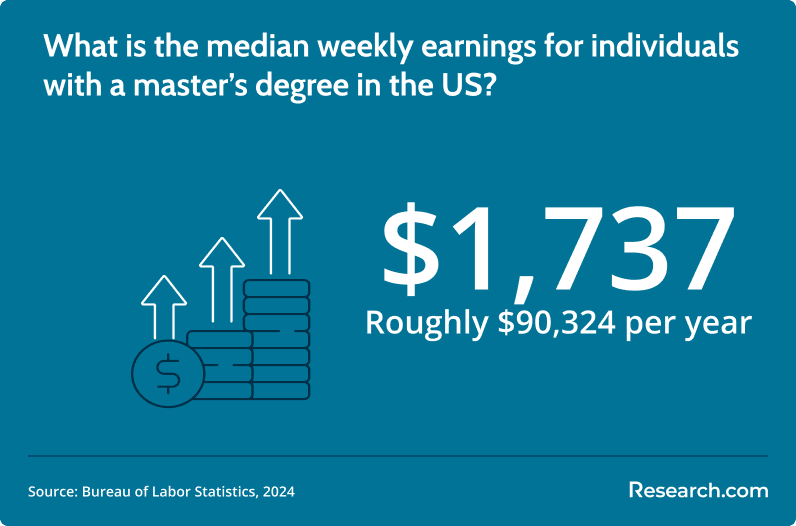
Employees with a master’s degree earn, on average, 20% more than workers whose highest credential is a bachelor’s degree. The difference can be larger in certain occupations. Business administration professionals with a master's degree earn 51.4% more than those with a bachelor's, while biology professionals see an 86.5% increase. Over a lifetime, individuals with an advanced degree can earn up to $4 million more than those with lower education levels.
Deeper specialization and career resilience
Graduate programs help students build advanced knowledge in a defined discipline, such as data systems, clinical practice, taxation, epidemiology, organizational strategy, or research methods. This specialization can be especially useful when industries change quickly or when employers need professionals who can solve complex problems rather than perform routine tasks. Some executive master's degrees are designed for experienced professionals who need graduate-level training without leaving full-time work.
Professional network and career signal
A strong graduate program can connect you with faculty, alumni, employers, classmates, research partners, and mentors. These relationships can support job searches, promotions, consulting opportunities, and long-term professional development. The network is most valuable when the program has active employer connections in your target industry.
What are the most useful and valuable master’s degree programs?
The most useful master’s degrees tend to combine strong labor-market demand, practical skill development, clear career pathways, and employer recognition. No degree guarantees a high salary or promotion, but the following fields are commonly associated with specialized roles and advancement opportunities.
| Master’s degree area | Best fit for | Common career value |
| Accounting | Professionals pursuing auditing, taxation, corporate accounting, or CPA preparation | Can support advancement into accounting leadership, compliance, or forensic accounting roles |
| Computer Science | Students with technical interests in software, systems, databases, AI, or IT leadership | Builds advanced computing and problem-solving skills for high-demand technology roles |
| Dietetics & Nutrition | Students pursuing dietitian, nutritionist, healthcare, wellness, or food science careers | Can help meet professional or licensing requirements depending on state and credentialing rules |
| Human Resources | Professionals interested in workforce strategy, compensation, talent development, or employee relations | Can support movement into HR management and organizational leadership |
| Library Science | Students interested in archives, information systems, public libraries, academic libraries, or youth services | Often required or preferred for professional librarian and information management roles |
| Mathematics & Statistics | Analytical thinkers pursuing data science, finance, education, research, or modeling roles | Provides quantitative training that can transfer across multiple industries |
| Nursing | Registered nurses seeking advanced practice, leadership, education, or research roles | Can lead to specialized clinical and healthcare leadership pathways |
| Public Health | Students interested in epidemiology, health policy, community health, or program management | Prepares graduates for population health, policy, and healthcare administration roles |
| Software Engineering | Developers and technical professionals focused on software architecture, systems, and product development | Strengthens applied engineering skills for complex software environments |
Accounting
A master’s in accounting is useful for students who want advanced preparation in auditing, taxation, financial reporting, corporate accounting, compliance, or forensic accounting. Many graduates use the degree to prepare for the CPA exam, which is a major credential in the accounting profession. According to the Bureau of Labor Statistics (BLS), accountants and auditors earn a median salary of $78,000, with steady job growth.
Computer Science
A master’s in computer science can be valuable for students aiming for advanced technology roles in software development, database administration, systems design, IT management, cybersecurity, or emerging computing fields. Computer scientists earn a median salary of $145,080, and demand for these roles is expected to grow.
Dietetics & Nutrition
A master’s in dietetics and nutrition can prepare students for work in clinical nutrition, public health nutrition, wellness, food science, and related healthcare settings. It can also help professionals pursue licensing as dietitians or nutritionists when the program meets applicable requirements. The median salary is $69,680, with those in outpatient care earning up to $80,190.
Human Resources
A master’s in human resources can help professionals develop advanced skills in workforce planning, employee relations, compensation, compliance, organizational development, and leadership. Human resource managers earn a median wage of $136,350, with opportunities in corporate and nonprofit sectors.
Library Science
A master’s in library science is designed for students interested in managing information, archives, digital collections, research services, school or public libraries, academic libraries, and youth services. Librarians earn a median salary of $64,370, with top professionals making over $101,970.
Mathematics & Statistics
A master’s in mathematics or statistics can be a strong choice for students who want quantitative training that applies to analytics, finance, data science, cryptography, modeling, research, and education. The degree can be especially useful for professionals who want to move into roles requiring advanced statistical reasoning, forecasting, or mathematical problem-solving.
Nursing
Graduate nursing programs prepare registered nurses for advanced clinical, administrative, educational, and research-focused roles. Many students choose this path because healthcare employers continue to need highly trained nursing professionals across patient care, leadership, and specialized practice settings. Students still comparing entry points into the field can review accessible nursing school options before deciding on a long-term graduate pathway.
Public Health
A master’s in public health, often called an MPH, prepares students for careers in epidemiology, health policy, community health, emergency preparedness, health education, and program management. Medical and health services managers earn a median salary of $110,680.
Software Engineering
A master’s in software engineering focuses on the design, development, testing, scaling, and maintenance of complex software systems. With a median salary of $110,680 and top earners making over $208,000, this field can offer strong prospects for professionals who can combine coding ability with architecture, project management, and systems thinking.
How to Choose the Best Master’s Degree for Your Career Goals
The best master’s degree is not always the most famous, expensive, or selective program. It is the program that fits your target role, meets employer or licensing expectations, works with your schedule, and has a cost you can reasonably recover through career growth.
Start with the job you want, not the degree title
Before comparing schools, identify the roles you want after graduation. Review job postings, employer requirements, preferred qualifications, certifications, and salary ranges in your location. If your goal is leadership, a business, management, public administration, or healthcare administration degree may fit. If your goal is technical specialization, computer science, software engineering, mathematics, statistics, or engineering-related programs may be better aligned.
Compare degree value by career outcome
| If your goal is... | Consider these master’s fields | Watch for |
| Promotion within your current organization | Human resources, business, accounting, nursing, public health | Whether your employer recognizes the credential for advancement or tuition reimbursement |
| Career change into technology | Computer science, software engineering, mathematics and statistics | Prerequisite courses, portfolio expectations, and whether the program supports non-CS majors |
| Clinical or regulated professional practice | Nursing, dietetics and nutrition, public health | Licensure, clinical placement, state authorization, and accreditation requirements |
| Analytical or data-heavy roles | Mathematics and statistics, computer science, public health, accounting | Coursework in programming, research methods, statistics, and applied projects |
| Information services or archives | Library science | Accreditation, fieldwork, digital information management, and employer partnerships |
Check time, cost, and flexibility early
Master’s programs differ widely in length, tuition, credit load, delivery format, and internship requirements. A full-time program may get you to graduation faster, but a part-time or online format may be more realistic if you work or care for family members. If you are evaluating accounting programs, it can help to compare the cost against potential career outcomes, including the information in this guide to whether a master’s in accounting is worth it.
Review prerequisites before you apply
Some programs accept students from many academic backgrounds, while others expect prior coursework, professional experience, licensure, or technical skills. Career changers should look for bridge courses, foundation modules, or conditional admission options. This is especially important in computer science, nursing, nutrition, accounting, and quantitative fields.
Ask whether the program solves your actual problem
A graduate degree should not be a default response to career uncertainty. If your main barrier is one missing technical skill, a certificate may be enough. If your barrier is lack of management experience, a promotion strategy, mentorship, or employer-sponsored training may be more efficient. Choose a master’s degree when it clearly improves your qualifications for specific jobs.
How much does a master’s degree cost?
The cost of a master’s degree depends on the school, field, format, residency status, and program length. On average, tuition ranges from $44,640 to $71,140, with public schools generally costing less than private institutions. Students should also budget for fees, books, technology, transportation, living costs, clinical or field placement expenses, and possible lost income if they reduce work hours.
Typical cost by degree type
Different graduate degrees can have different average costs. The figures below show common totals cited for several master’s categories:
| Degree type | Reported total cost | Cost note |
| Master of Public Health (MPH) | $39,580 | Highest among the listed master’s degrees |
| Master of Social Work (MSW) | $36,840 | Often includes field education requirements |
| Master of Science (MS) | $31,630 | Common in technical, scientific, and analytical disciplines |
| Master of Arts (MA) | $29,080 | Often found in humanities, social sciences, and education-related fields |
| Master of Business Administration (MBA) | $28,440 | Costs vary widely by institution and format |
| Master of Public Administration (MPA) | $27,870 | Common for government, nonprofit, and public leadership roles |
| Master of Education (MEd) | $24,490 | Lowest among the listed master’s degrees |
Online vs. in-person cost
Online master’s programs tend to cost less in many cases, often costing 45% less than in-person or hybrid programs. Some online degrees range from $4,000 to $7,000 per year, while the average annual online tuition is about $27,930. However, “online” does not automatically mean inexpensive. Always compare total program cost, not only advertised tuition.
Costs can also vary sharply by specialization. For example, students comparing information science programs may want to review affordable options for the cost of a master's in library science, while MBA, public policy, and healthcare programs may carry different price structures.
What financial aid options are available for master’s students?
Graduate students can use several funding sources, but aid packages are often different from undergraduate aid. The strongest financial plan usually combines scholarships, grants, assistantships, employer support, savings, and loans only when necessary.
Scholarships and grants
- Scholarships usually reward academic achievement, leadership, professional experience, demographic background, field of study, or community service. They do not need to be repaid.
- Grants are often need-based and may come from universities, government sources, or private organizations. Students can use an online scholarship database to search for funding opportunities.
Assistantships, fellowships, and work-study
- Fellowships may fund research, professional projects, or advanced study in a specific discipline.
- Teaching and research assistantships may provide tuition support and stipends in exchange for teaching, grading, lab, or research work.
- Work-study programs can help students earn money through part-time work, sometimes in roles connected to their academic field.
Employer tuition reimbursement
Some employers help pay for graduate education when the degree supports the employee’s current role or future leadership potential. Companies such as Google, Amazon, and Apple offer tuition assistance for approved programs. Before enrolling, ask whether your employer requires minimum grades, continued employment after graduation, or approval before courses begin.
Student loans
Federal and private loans can cover remaining costs, but borrowing should be evaluated carefully. Federal loans often provide more flexible repayment options than private loans, while private loans may be used when other funding is not enough.
Cost-reduction checklist
- Compare total program cost, including fees and required materials.
- Ask about assistantships before accepting admission.
- Check whether your employer reimburses graduate tuition.
- Apply for scholarships each year, not only before your first term.
- Consider part-time study if it allows you to keep income and benefits.
- Confirm whether transfer credits or prior graduate coursework can reduce the number of credits you need.
What are the admission requirements for a master’s program?
Most master’s programs require a bachelor’s degree, official transcripts, recommendation letters, a statement of purpose, and an application fee. Some also require a minimum GPA, standardized test scores, prerequisite coursework, professional licensure, or work experience.
Common admission requirements
- Bachelor’s degree: Most programs expect an undergraduate degree from an accredited institution. Some fields require a related major or prerequisite courses.
- Minimum GPA: Many schools look for at least a 3.0 GPA, though some consider applicants with a 2.5 or higher. Some universities may waive GPA expectations if applicants complete an entrance exam.
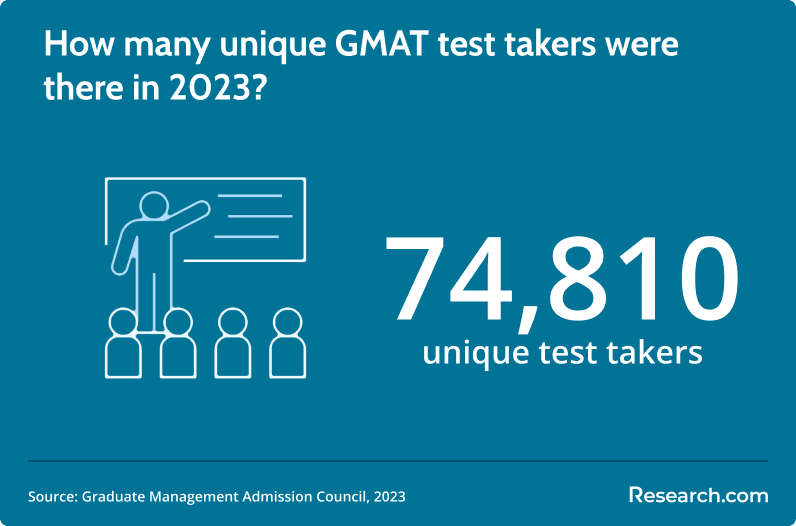
- Standardized tests: Some programs still require the GMAT or GRE, although many schools have made these tests optional or removed them from the process.
- Work experience: Professional experience is often important in business, healthcare administration, public policy, and executive-style programs.
Typical application materials
- Transcripts: Applicants usually submit records from every postsecondary institution they attended.
- Letters of recommendation: Schools commonly request 2-3 letters from professors, supervisors, or professional contacts.
- Personal statement: Many programs require a 2-3 page essay explaining your academic background, career goals, and fit with the program.
- Application fee: Fees often range from $50 to $85, and fee waivers may be available.
Admission advice for career changers
If you are moving into a new field, look carefully at prerequisites. An MBA or MHA may have broader admission flexibility, while nursing, computer science, accounting, and nutrition programs may require specific coursework, licensure, or technical preparation. Contact admissions advisors before applying so you do not pay application fees for programs where you are not yet eligible.
How long does it take to complete a master’s degree?
A master’s degree usually takes 18 months to two years of full-time study. The actual timeline can be shorter or longer depending on credit requirements, enrollment status, prerequisites, thesis or capstone expectations, fieldwork, and whether the program is online, accelerated, or part-time.
Credit requirements
- Most master’s programs require 30 to 60 credit hours, although some can go up to 72 credit hours.
- A Master of Applied Data Science with 34 credits may be completed in as little as 12 months, while an MBA with 72 credits often takes two to three years.
Thesis, capstone, internship, or clinical work
- Research-intensive programs, including some mathematics and psychology programs, may require a thesis, which can lengthen the timeline.
- Many business and technology programs use a capstone, applied project, or internship instead of a thesis, which may create a more predictable completion path.
Full-time vs. part-time enrollment
- Full-time students taking 9+ credits per semester usually finish sooner, but the workload can be difficult for students working full time.
- Part-time students often have more schedule flexibility, but they may need three to five years to graduate.
Online vs. campus scheduling
- Some online programs allow self-paced or accelerated progress, which can shorten the time to graduation.
- Campus programs may follow fixed course schedules, which can limit how many classes students can take each term.
Accelerated and dual-degree formats
- Accelerated pathways can allow students to complete a bachelor’s and master’s in five years.
- Dual-degree options, such as an MBA and law degree, take longer than a single master’s but may save time compared with completing both degrees separately.
Is a Master’s Degree Worth the Return on Investment?
A master’s degree is worth it when the expected career benefits outweigh tuition, fees, debt, time, and opportunity costs. The calculation is not the same for every student. A low-cost program that qualifies you for a required license may have a strong return, while an expensive program with unclear career outcomes may be harder to justify.
How to estimate ROI before enrolling
- Identify your target job. Use actual job postings rather than broad career descriptions.
- Check whether a master’s is required, preferred, or optional. If employers rarely ask for it, the degree may not improve your odds enough to justify the cost.
- Compare total cost against expected salary growth. Include tuition, fees, books, loan interest, and lost income.
- Estimate the break-even point. Calculate how long it may take for additional earnings to cover your education cost.
- Review outcomes data. Ask programs for graduation rates, job placement information, employer partnerships, and alumni career paths.
Some students may also compare graduate school against shorter credentials or online degrees that can lead to well-paying careers, especially when the goal is faster entry into a new field.
Is my master’s degree program accredited and cost-effective?
Accreditation helps confirm that a school or program meets recognized academic standards. It can affect employer recognition, transfer credits, licensure eligibility, and financial aid access. Cost-effectiveness means more than choosing the lowest tuition; it means selecting a credible program that supports your career goal at a price you can manage.
What to verify before applying
- Institutional accreditation from a recognized accrediting body.
- Programmatic accreditation if your field requires or strongly values it.
- Eligibility for federal financial aid if you plan to use loans or grants.
- Licensure alignment in the state where you plan to work.
- Total cost, including fees, technology, residency requirements, and travel.
- Graduation support, advising, internships, clinical placements, or career services.
Students comparing budget-conscious online options can also review online colleges that accept FAFSA as part of a broader affordability search.
Which online master’s degrees offer an accessible academic pathway?
Accessible online master’s programs typically combine flexible scheduling, clear admissions requirements, strong academic support, and career-relevant coursework. Some programs may offer accelerated modules, lower credit-hour requirements, or credit for prior graduate work. Accessibility should not come at the expense of quality, accreditation, or employer recognition.
If you want a flexible academic route, compare admission requirements, course pacing, faculty access, student support, and graduation timelines. Students still exploring simpler or more flexible academic options can review online degree paths with more accessible requirements.
Could an Associate Degree Be a Strategic Stepping Stone to Advanced Studies?
An associate degree is not a substitute for a master’s degree, but it can be useful for students who need affordable foundational training before committing to a longer academic pathway. This can be especially helpful for career changers who need basic technical, healthcare, business, or general education preparation before pursuing a bachelor’s degree and eventually graduate study.
Students looking for a shorter credential first may compare the shortest associate degree program options with certificate, bachelor’s, and master’s pathways to decide which route fits their timeline and budget.
Can an Accelerated Bachelor's Degree Enhance Your Graduate Journey?
An accelerated bachelor’s degree can help students reach graduate school sooner, especially when a master’s program requires a completed undergraduate degree. This route may appeal to students who already know their target field and want to reduce the time spent on undergraduate coursework.
Before choosing an accelerated format, confirm that the program is accredited, that credits will be accepted by graduate schools, and that the faster pace will not hurt your GPA or preparation. Students comparing fast undergraduate routes can review accelerated bachelor’s degree options online as part of their planning.
What additional certifications can complement a master’s degree?
Certifications can strengthen a master’s degree by proving specific applied skills. They are especially useful in fields where employers look for technical tools, software platforms, compliance knowledge, project management, analytics, or specialized clinical or professional competencies.
A certification may be enough when you only need one targeted skill, but a master’s degree may be more appropriate when you need advanced theory, research training, licensure preparation, or leadership development. Professionals comparing short credentials can review career-focused certification programs to decide whether a certificate should come before, after, or instead of graduate school.
How do accelerated online master’s programs ensure rigorous quality?
Accelerated online master’s programs can be rigorous when they maintain the same learning outcomes, faculty standards, assessments, and accreditation expectations as longer formats. A shorter timeline should not mean weaker coursework. Instead, quality accelerated programs usually require focused scheduling, intensive assignments, strong advising, and well-designed online learning systems.
Questions to ask about accelerated programs
- Is the institution accredited?
- Are the courses taught by qualified faculty?
- How many hours per week should students expect to study?
- Are projects, internships, labs, or clinical placements required?
- What academic and technical support is available online?
- Do employers in the field respect the program?
Students who want a faster graduate route can compare one-year master’s degree programs online, but they should weigh speed against workload, cost, and career fit.
Are online master’s degrees as valuable as in-person programs?
Online master’s degrees can be as valuable as campus-based degrees when they come from accredited institutions, have rigorous coursework, provide strong student support, and are respected by employers in the field. The delivery format matters less than program quality, accreditation, career relevance, and whether the program meets licensure or hands-on training requirements.
Online vs. in-person master’s programs
| Factor | Online master’s program | In-person master’s program |
| Schedule | Better for working adults who need flexibility | Better for students who prefer fixed class times and campus routines |
| Cost | May reduce commuting, relocation, and housing expenses | May include additional campus-based costs but can offer more on-site resources |
| Networking | Often virtual, with discussion boards, online events, and remote career support | Usually stronger for face-to-face networking, labs, and local employer connections |
| Hands-on learning | Works well for many business, technology, education, and policy programs | May be better for programs requiring labs, studios, clinical work, or intensive field training |
| Best for | Self-directed students balancing school with work or family | Students who learn best through in-person interaction and structured environments |
When online study makes sense
- You need to keep working while earning your degree.
- The program is accredited and recognized in your field.
- Your target career does not require extensive in-person labs or clinical placements.
- You are comfortable managing deadlines independently.
When campus study may be better
- Your field requires hands-on facilities, labs, clinical supervision, or studio work.
- You want frequent face-to-face access to faculty and classmates.
- You are using the program to build a local professional network.
- You benefit from a highly structured schedule.
Program-specific requirements matter. For example, a dietitian program online may offer flexible coursework, but students still need to confirm that the program meets certification, supervised practice, and licensing requirements where they plan to work.
What can you do with a master’s degree after graduation?
After graduation, a master’s degree can help you pursue advancement, specialization, career change, teaching, research, consulting, or entrepreneurship. The strongest outcomes usually come from degrees that match a defined labor-market need and include practical experience, networking, or industry-recognized preparation.
Move into senior or management roles
- Many students pursue graduate school to qualify for supervisory, managerial, or director-level opportunities.
- Business, healthcare, technology, accounting, public health, and human resources often reward advanced preparation for leadership tracks.
Increase salary potential
- Master’s degree holders often earn more than workers whose highest credential is a bachelor’s degree.
- High-value areas can include data science, finance, engineering, healthcare, software, and management, depending on experience and location.
Change careers
- A master’s degree can help professionals move into a new industry when the program includes bridge coursework, practical projects, internships, or professional networks.
- For example, a person with a science background may use an MBA to move toward business management.
Pursue teaching or research
- Some graduates use a master’s degree to teach in colleges, universities, training programs, or professional education settings.
- Research roles in academia, government, healthcare, and private industry may require or prefer graduate-level training.
Start consulting or build a business
- Graduate study can strengthen credibility in consulting fields such as finance, marketing, analytics, healthcare, public health, and organizational strategy.
- Students interested in entrepreneurship should choose programs with applied projects, mentors, and industry connections.
What are the highest-paying industries for master’s degree holders?
Master’s degree holders can earn strong salaries in industries that require advanced expertise, decision-making, technical skill, or leadership. Salary depends on role, employer, experience, geography, and performance, so these figures should be treated as broad industry ranges rather than guarantees.
| Industry | Salary range listed | Why advanced education can matter |
| Business & Executive Leadership | $150,000 – $260,000/year | Senior leaders make strategic decisions involving finance, operations, growth, and organizational performance. |
| Healthcare & Medical Services | $120,000 – $214,000/year | Advanced professionals may manage healthcare systems, provide specialized care, or shape policy and operations. |
| Technology & Computer Science | $130,000 – $180,000/year | Employers need experts who can build software, manage data, secure systems, and lead technical teams. |
| Finance & Investment Management | $120,000 – $250,000/year | Finance roles often require advanced analysis, risk management, investment strategy, and regulatory knowledge. |
| Engineering & Energy | $140,000 – $170,000/year | Technical leaders solve infrastructure, energy, production, and innovation challenges across complex industries. |
Common Mistakes to Avoid When Choosing a Master’s Degree
| Mistake | Why it can hurt you | Better approach |
| Choosing a program based only on prestige | A well-known school may not offer the best fit, support, specialization, or price for your goals. | Compare outcomes, curriculum, employer connections, cost, and accreditation. |
| Looking only at tuition | Fees, travel, materials, lost income, and loan interest can raise the true cost. | Calculate total cost of attendance and expected debt at graduation. |
| Ignoring accreditation | Unrecognized credentials can limit financial aid, licensure, transfer credits, and employer acceptance. | Verify institutional and programmatic accreditation before applying. |
| Assuming online means easier | Quality online programs can be demanding and require strong time management. | Ask about weekly workload, deadlines, support services, and course structure. |
| Assuming salary increases are guaranteed | Pay depends on field, experience, employer, location, and the strength of your skills. | Use real job postings and alumni outcomes to estimate likely returns. |
| Overlooking licensing rules | A program may not meet requirements in the state where you want to work. | Confirm licensure alignment before enrollment, especially in regulated fields. |
| Relying only on rankings | Rankings may not reflect your personal needs, career goals, or budget. | Use rankings as one input, not the final decision-maker. |
Questions to Ask Before You Enroll
- What exact job titles will this degree help me pursue?
- Do employers in my target field require, prefer, or merely accept this master’s degree?
- Is the institution accredited, and does the program have any required professional accreditation?
- Will this program meet licensing or certification requirements in my state?
- What is the total cost, including fees and required materials?
- What financial aid, assistantships, scholarships, or employer reimbursement options are available?
- How many students graduate on time?
- What career services are available to online and campus students?
- Can I speak with alumni working in my target role?
- Will I complete a thesis, capstone, internship, practicum, clinical placement, or portfolio?
Current Trends Affecting Master’s Degree Value
Employers are focusing on specialized skills
Graduate degrees are most useful when they provide skills that are hard to learn casually, such as advanced analytics, clinical judgment, regulatory knowledge, software architecture, research methods, or strategic management. Programs that include applied projects, internships, case studies, or portfolios can help students demonstrate those skills more clearly.
Online graduate education is now a mainstream option
More working adults are comparing online, hybrid, and accelerated programs because flexibility can reduce career disruption. However, students should still check accreditation, faculty access, student support, and employer recognition. A convenient program is only valuable if it is also credible.
AI and automation are changing skill expectations
Fields such as computer science, software engineering, statistics, accounting, human resources, public health, and healthcare are being reshaped by data systems, automation, analytics tools, and AI-supported decision-making. Master’s programs that teach students how to interpret data, manage technology, evaluate risk, and make ethical decisions may offer stronger long-term value than programs focused only on routine tasks.
Cost pressure makes ROI more important
As graduate costs vary widely, students are paying closer attention to affordability, financial aid, employer reimbursement, and shorter program formats. The best choice is not always the cheapest program, but students should be able to explain how the degree supports career growth before taking on major debt.
Key Insights
- The most useful master’s degree is the one that connects directly to a target career, not simply the one with the most impressive title.
- Jobs requiring a master’s degree are projected to grow 16.7% through 2026, making graduate education relevant in several professional fields.
- Employees with a master’s degree earn, on average, 20% more than those with only a bachelor’s degree, but salary gains vary by field and role.
- Business administration professionals with a master's degree earn 51.4% more than those with a bachelor's, while biology professionals see an 86.5% increase.
- Online master’s programs can be worthwhile when they are accredited, rigorous, and aligned with career or licensing requirements.
- Online master’s degrees often cost 45% less than in-person or hybrid programs, but students should compare total cost rather than tuition alone.
- Accreditation, licensure alignment, program outcomes, and employer recognition should be checked before enrollment.
- A master’s degree can support career advancement, career change, higher earning potential, research, teaching, consulting, or entrepreneurship, but outcomes are never automatic.
- The smartest graduate school decision starts with the job you want, the requirements for that job, and a realistic estimate of whether the degree’s benefits justify the cost.
References
- Bureau of Labor Statistics. (2024). Projected job openings by educational requirements. U.S. Department of Labor.
- Bureau of Labor Statistics. (2024). Education pays. U.S. Department of Labor.
- Indeed Editorial Team. (n.d.). Benefits of earning a master's degree. Indeed.
- Education Data Initiative. (n.d.). Education attainment statistics.
- Education Data Initiative. (n.d.). Average cost of a master's degree.
- Harvard Division of Continuing Education. (n.d.). How to choose a graduate program. Harvard Extension School.
- Graduate Management Admission Council. (2023). GMAT geographic trend report: Testing year 2023.
Other Things You Should Know about Getting a Master’s Degree
Employers in most in-demand fields value coursework and thesis degrees equally when the transcript shows relevant skills, internships, and a 30- to 36-credit curriculum. Thesis programs matter more for research roles, while coursework programs are common in business, data analytics, education, and public health.
Scholarship opportunities for 2027's most valuable master's degrees can vary significantly. Many universities offer merit-based scholarships, while organizations like Fulbright provide international scholarships for specific programs. Check individual program websites or scholarship databases for application requirements and deadlines specific to each master's program.


