
2027 Best 6 Month Certificate Programs That Pay Well

Co-Founder and Chief Data Scientist
Six-month certificate programs are designed for people who need a faster route into employable skills than a two-year or four-year degree can provide. They can be useful for recent high school graduates, GED holders, working adults, career changers, and professionals who want a focused credential without stepping away from work for years.
The strongest short-term programs are not simply “quick.” They connect directly to a real job role, prepare students for required licensing or certification when needed, include hands-on practice where the field demands it, and come from a school or provider that employers recognize. This guide explains which 6 month certificate programs may lead to solid pay, how to compare options, what they cost, when online learning works, and how to avoid choosing a credential that does not help your career.
Quick Answer: Are 6 Month Certificate Programs Worth It?
Six-month certificate programs can be worth it when the credential matches a specific hiring requirement, prepares you for an in-demand role, and costs less than the income or career mobility it may help you gain. They are usually best for practical fields such as healthcare support, skilled trades, transportation, bookkeeping, medical records, pharmacy support, and some technology roles.
They are not a replacement for a degree in every field. If your target job requires an associate, bachelor’s, license, apprenticeship hours, or graduate education, a certificate may be only the first step. Before enrolling, check accreditation, licensing rules in your state, total program cost, employer recognition, clinical or hands-on requirements, and whether credits can transfer later.
Key Things You Should Know About 6 Month Certificate Programs
- Six-month certificates are built for fast skill development, career switching, job entry, or upskilling in a specific occupational area.
- Costs vary widely. Many programs range from a few hundred dollars to several thousand dollars, depending on the field, provider, equipment, labs, exams, and delivery format.
- Online options are common, but healthcare, skilled trades, transportation, and emergency services often require labs, clinical practice, fieldwork, or in-person testing.
- The National Association of Colleges and Employers (NACE) reports that 87.4% of employers are willing to hire graduates with online education.
- Healthcare, IT, skilled trades, and administrative support credentials are often attractive because they train for specific workplace tasks.
- Financial aid may be available through federal aid, state programs, scholarships, payment plans, workforce funding, or employer tuition reimbursement, but not every short-term certificate qualifies.
- Best 6 Month Certificate Programs That Pay Well for 2027
- What 6 Month Certificate Programs Are
- How to Choose the Right 6 Month Certificate Program
- Typical Cost of a 6 Month Certificate Program
- Financial Aid for Short-Term Certification Programs
- Online 6 Month Certificate Programs
- How Employers View Online and Campus Certificates
- Using a Certificate to Change Careers Quickly
- Main Benefits of 6 Month Certificate Programs
- Drawbacks and Risks to Consider
- How to Maximize Career Growth After a Certificate and compare the drawbacks before enrolling
- Additional Factors to Review Before Choosing a Program
- Return on Investment for a 6 Month Certificate
- Further Education After a Certificate
- How Certificate Programs Keep Up With Industry Trends
- Most In-Demand 6 Month Certifications
- Career Support and Networking in Certificate Programs
- How a Certificate May Support Future Graduate Study and why career support still matters
- Job Placement Expectations
- Using Certificates as a Step Toward Affordable Bachelor’s Degrees
- Admission Requirements and Enrollment Steps
- Additional Certifications After a 6 Month Program
- Industries With Strong Opportunities for Certificate Graduates
- 6 Month Certificates vs. Accelerated Online Degrees
- How to Check Accreditation and Program Quality, compare degree options, ask schools the right questions, review licensing requirements, and confirm total costs
Best 6 Month Certificate Programs That Pay Well for 2027
The best-paying short-term certificate depends on your state, local employers, licensing rules, schedule, and willingness to complete hands-on training. The programs below are practical options because they prepare students for recognizable roles with defined duties and clear next steps after completion.
| Certificate option | Typical career fit | Median salary stated | Best for students who want |
| Dental Assistant | Clinical and office support in dental practices | $46,540 per year | A healthcare role with patient contact and structured tasks |
| Phlebotomy Technician | Blood collection, specimen handling, and lab support | $41,810 | A fast healthcare entry point focused on technical procedures |
| Bookkeeper | Financial recordkeeping and transaction support | $47,440 per year | Office-based work with numbers, software, and records |
| Medical Assistant | Clinical and administrative support in healthcare settings | $42,000 per year | A broad healthcare support role with room to specialize |
| Emergency Medical Technician (EMT) | Emergency response and pre-hospital patient care | $44,780 per year | Hands-on, high-pressure public safety and healthcare work |
| Pharmacy Technician | Medication dispensing support and pharmacy operations | $40,300 per year | Healthcare work in retail, hospital, or long-term care pharmacy settings |
| Real Estate Broker | Property sales, transactions, valuation, and client service | $56,620 per year | A sales-driven career path that requires state licensing |
| Truck Driver | Commercial driving and logistics | $54,320 per year | A transportation role with CDL preparation and practical driving skills |
| Electrician | Electrical installation, maintenance, and troubleshooting | $61,590 per year | A skilled trade pathway that may require apprenticeship or licensing steps |
| Medical Records Specialist | Health data, medical records, coding, and privacy compliance | $48,780 per year | Healthcare administration work with less direct patient care |
1. Dental Assistant
A six-month dental assistant certificate introduces students to the clinical and administrative work that keeps dental offices running. Coursework commonly includes chairside assisting, dental procedures, infection control, radiography basics, patient preparation, scheduling, and office records. Strong programs include supervised practice so students can become comfortable with instruments, safety protocols, and patient interaction before applying for entry-level roles.
- Median Salary: $46,540 per year
2. Phlebotomy Technician
A phlebotomy technician program focuses on safe blood collection, specimen labeling, patient identification, and laboratory workflow. Students learn venipuncture techniques, capillary collection, specimen handling, point-of-care testing, anatomy, disease processes, communication with anxious patients, and safety procedures for hazardous materials. Because accuracy and patient safety are central to the job, programs with hands-on practice and certification preparation are usually stronger than lecture-only options.
- Median Salary: $41,810
3. Bookkeeper
A six-month bookkeeping certificate prepares students to maintain financial records for businesses, nonprofits, contractors, and professional offices. Training typically covers accounting basics, transaction posting, payroll, tax-related documentation, bank reconciliations, financial reports, and accounting software. This option can work well for detail-oriented students who prefer office, remote, freelance, or small-business support roles.
- Median Salary: $47,440 per year
4. Medical Assistant
A medical assistant certificate is one of the broader healthcare support options because it combines clinical tasks with front-office responsibilities. Students may study medical terminology, patient intake, vital signs, injections, basic lab procedures, appointment scheduling, records management, and billing workflows. Graduates often look for roles in physician offices, clinics, outpatient centers, and private practices. If you are comparing program cost and career expectations, Research.com’s guide to affordable medical assistant programs can help you evaluate options more carefully.
- Median Salary: $42,000 per year
5. Emergency Medical Technician (EMT)
An Emergency Medical Technician program trains students to respond to medical emergencies and provide immediate care before and during transport. The curriculum usually includes patient assessment, CPR, trauma response, airway management, emergency equipment, documentation, and field readiness. EMT training is hands-on by nature, so students should check state certification requirements and confirm whether the program includes the practical components needed for exam eligibility.
- Median Salary: $44,780 per year
6. Pharmacy Technician
A pharmacy technician certificate prepares students to assist pharmacists with prescription processing, medication safety, dosage calculations, customer communication, inventory, patient records, and pharmacy law. Graduates may pursue work in retail pharmacies, hospitals, clinics, long-term care facilities, or mail-order pharmacy settings. Because requirements vary by state and employer, students should verify certification and registration rules before enrolling.
- Median Salary: $40,300 per year
7. Real Estate Broker
A real estate broker certificate or pre-licensing pathway helps students learn property valuation, real estate law, contracts, marketing, negotiation, market analysis, and transaction management. This path is different from many other certificate options because state licensing rules are central to employment eligibility. Students who want to strengthen their ability to generate leads and promote listings may also consider building digital marketing skills through an affordable online social media marketing degree.
- Median Salary: $56,620 per year
8. Truck Driver
A truck driving certificate prepares students for commercial driving by combining classroom instruction with behind-the-wheel training. Topics commonly include vehicle inspection, road safety, federal regulations, route planning, cargo handling, weather-related driving, and vehicle maintenance basics. The key outcome is preparation for a commercial driver's license (CDL), so students should confirm the program’s CDL training format, driving hours, equipment quality, and employer connections.
- Median Salary: $54,320 per year
9. Electrician
An electrician certificate introduces students to electrical theory, wiring, circuits, safety practices, tools, troubleshooting, and code compliance. It can be a strong starting point for entry-level electrical work, but students should understand that many electrician careers require additional supervised experience, apprenticeship hours, licensing exams, or state approval. A good program should be clear about what graduates can do immediately and what steps remain after completion.
- Median Salary: $61,590 per year
10. Medical Records Specialist
A medical records specialist certificate prepares students to organize, code, protect, and update patient health information. Coursework may include medical terminology, health information systems, data entry, diagnosis and procedure coding, HIPAA compliance, privacy rules, insurance documentation, and electronic health records. Students comparing low-cost options can also review Research.com’s guide to the cheapest medical billing and coding program.
- Median Salary: $48,780 per year
What Are 6 Month Certificate Programs?
A 6 month certificate program is a short, career-focused training option that teaches job-specific skills rather than broad general education. These programs are commonly offered by community colleges, technical schools, workforce training providers, universities, healthcare organizations, and private education companies.
They are most useful when the credential leads to a defined occupation, prepares students for an industry exam, or provides documented training employers expect. Some certificates are fully online, while others require labs, clinical rotations, apprenticeships, driving practice, or supervised field experience.
According to the U.S. Bureau of Labor Statistics, 22.6% of Americans aged 25 and older have a high school diploma or equivalent as their highest level of education. For many adults in this group, a short-term certificate can be a practical way to gain a marketable skill without committing immediately to a longer degree.
How to Choose the Best 6 Month Certificate Program
The right certificate is the one that fits a specific career goal, meets employer or licensing expectations, and makes financial sense. Do not choose only because a program is fast or advertised as high-paying.
| Factor to check | Why it matters | Questions to ask before enrolling |
| Career outcome | A certificate should connect to a real job title, not a vague promise of opportunity. | What jobs do graduates typically pursue? Are those jobs available in my area? |
| Accreditation and recognition | Employers, licensing boards, and financial aid programs may require recognized training. | Is the school accredited? Is the program approved by the relevant state or industry body? |
| Curriculum quality | Short programs need to focus on the exact skills employers expect. | Does the curriculum include current tools, software, equipment, codes, or clinical procedures? |
| Hands-on training | Healthcare, trades, transportation, and emergency services cannot be learned fully through reading alone. | Are labs, practicums, clinical hours, driving hours, or supervised fieldwork included? |
| Total cost | Tuition is only one part of the price. | What are the fees for books, tools, uniforms, exams, background checks, software, and licensing? |
| Schedule and format | A program that does not fit your life is harder to finish. | Are classes online, hybrid, evening, weekend, self-paced, or cohort-based? |
| Career support | Resume help, employer partnerships, and interview coaching can improve your job search. | Does the school publish placement outcomes? Which employers recruit graduates? |
| Transfer options | Some certificates can become stepping stones toward degrees. | Can credits transfer into an associate or bachelor’s program later? |
If your goal is creative or design work, compare certificate training with broader degree options such as top online graphic design schools. If you are entering a regulated human services field, such as addiction counseling, check whether your state requires education beyond a certificate and whether options such as accredited online colleges for drug and alcohol counseling better match your long-term plan.
How Much Does a 6 Month Certificate Program Cost?
Six-month certificate program costs differ by field, provider, learning format, equipment, and whether the program includes labs or supervised practice. Many cost a few hundred dollars to several thousand dollars. The total price can also include books, uniforms, tools, exam fees, background checks, drug screening, immunizations, software, technology fees, and licensing applications.
| Program area | Stated cost range | Why costs may vary |
| Healthcare-related programs | $1,000 to $4,000 | Clinical supplies, labs, background checks, immunization documentation, and exam preparation can increase total cost. |
| Technology and IT programs | $3,000 to $7,000 | Software access, labs, certification preparation, and technical platforms may be included in tuition or charged separately. |
| Trades and skilled labor | $4,000 to $10,000 | Tools, shop access, safety equipment, lab instruction, and local training requirements can raise the price. |
| Business and administrative programs | $500 to $3,000 | Online delivery and lower equipment needs can make these certificates less expensive than many hands-on programs. |
A short certificate is usually less expensive than a full degree, but it is still worth comparing the credential to alternatives. For example, a business certificate may be enough for entry-level bookkeeping, while leadership or management goals may eventually require a broader credential such as a 6 month MBA program or another advanced business pathway.
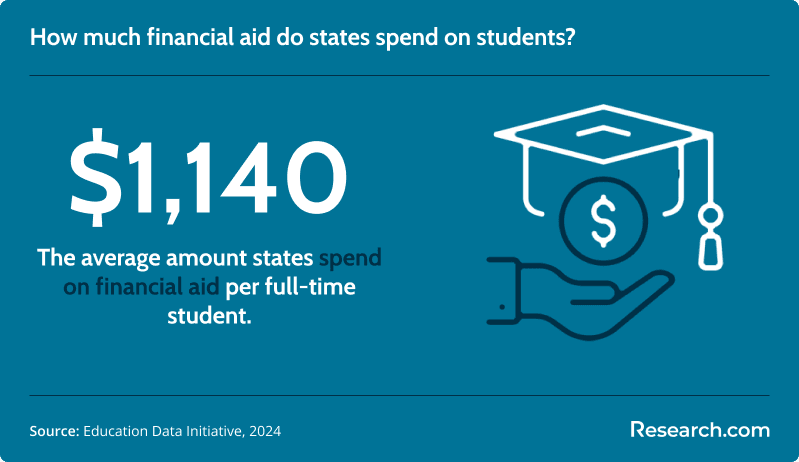
Can I Get Financial Aid for a 6 Month Certification Program?
Financial aid may be available for some six-month certificate programs, but eligibility depends on the school, the program length, accreditation, enrollment status, and federal or state rules. Always ask the financial aid office to confirm whether a specific certificate qualifies before assuming aid will cover it.
- Federal financial aid: Programs offered by eligible accredited institutions may qualify for aid through FAFSA, including grants, loans, or work-study options. Some short-term programs do not qualify, so students must verify eligibility directly.
- Scholarships: Schools, foundations, workforce boards, and professional groups may offer scholarships for students entering high-need fields. Creative programs, including animation schools online, may also list school-based aid or private scholarships.
- Employer tuition reimbursement: If the certificate supports your current job or an internal promotion, your employer may pay part of the cost.
- Payment plans: Many providers allow students to divide tuition across several payments instead of paying the full amount upfront.
- State grants and workforce programs: Some states support short-term training in healthcare, technology, transportation, and skilled trades, especially where employers report shortages.
Can I Complete a 6 Month Certificate Program Online?
Yes, many six-month certificate programs can be completed online, especially in fields such as bookkeeping, medical billing and coding, business administration, IT support, project management, digital marketing, and some healthcare administration roles. Online programs can work well for students who need flexibility because of work, childcare, commuting limits, or irregular schedules.
However, “online” does not always mean fully remote. Programs in phlebotomy, dental assisting, EMT, truck driving, pharmacy technology, and electrical work may include in-person labs, externships, clinical placements, driving practice, or local testing. Before enrolling, ask whether the school arranges placements near you or expects you to find them yourself.
| Format | Best for | Watch out for |
| Fully online | Bookkeeping, administrative support, IT theory, medical records, and software-based training | Limited hands-on practice, weaker networking, and self-discipline demands |
| Hybrid | Healthcare support, pharmacy technician training, and programs with labs or externships | Campus visits, local placement availability, and schedule conflicts |
| In person | Truck driving, EMT, electrical work, dental assisting, and other hands-on fields | Commuting time, fixed class schedules, and higher facility-related fees |
Online learning is also common at higher levels. For example, students who want a specialized graduate credential may compare options such as an online library science certificate. Students interested in broader communication careers may prefer an accelerated communications degree online instead of a short certificate.
How Do Employers View Online vs. Traditional 6 Month Certificates?
Employer acceptance depends less on whether the class was online and more on whether the credential is credible, relevant, and backed by measurable skills. The 2024 job outlook survey by NACE found that 87.4% of employers are willing to hire graduates with online degrees and offer them the same salary as those with traditional degrees.
That said, employer expectations vary by industry. Online credentials are often more accepted in technology, business, administrative, and remote-friendly roles. In fields that require physical procedures, equipment use, patient care, driving, or trade skills, employers may expect verified hands-on training even if the coursework was partly online.
When an Online Certificate Can Be Competitive
- The school or provider is accredited or recognized by employers.
- The curriculum matches current tools, regulations, software, or industry standards.
- The program includes projects, labs, simulations, externships, or practical assessments.
- The student can demonstrate skills through a portfolio, certification exam, work samples, or references.
When an In-Person Program May Be Stronger
- The occupation requires patient care, field response, driving, equipment operation, or trade practice.
- Local employers recruit directly from a nearby technical school or community college.
- Students benefit from face-to-face coaching, labs, and structured schedules.
- Licensing or certification requires supervised hours that cannot be completed online.
A 2023 survey by Champlain College found that 84% of adults believe employers are more accepting of online degrees now than before the pandemic, and 72% think online education has become more reputable over the past five years. This supports the broader shift toward online learning, but students should still prioritize program quality over delivery format.
Can a 6 Month Certificate Help Me Switch Careers Quickly?
A six-month certificate can help with a career change when it teaches a concrete skill set for jobs that hire entry-level candidates. It is especially useful for people moving into healthcare support, IT support, bookkeeping, transportation, administrative healthcare, or skilled trades.
It works best when you combine the credential with a focused job-search plan. That means identifying target job titles before enrolling, reviewing local job postings, building a resume around transferable skills, completing any required exam, and networking with employers while still in the program.
Best Uses for Career Changers
- Entering a new field: A certificate can provide the baseline technical vocabulary and procedures needed for interviews and entry-level work.
- Re-entering the workforce: Short programs can help returning workers update software skills, compliance knowledge, or professional confidence.
- Adding a practical skill: Workers already in healthcare, business, logistics, or trades may use a certificate to move into a more specialized role.
- Testing a field before a degree: A short credential can help you decide whether a longer academic path is worth the investment.
Benefits of 6 Month Certificate Programs
The biggest advantage of a six-month certificate is focus. Instead of spending years on broad requirements, students train for a narrower set of job tasks. This can make the path faster, less expensive, and easier to fit around work than many degree programs.
Main Advantages
- Faster completion: Students can prepare for some entry-level roles in less than a year.
- Lower cost than many degrees: Shorter programs often require fewer tuition payments and fewer semesters of fees.
- Job-specific training: The curriculum is usually tied closely to workplace duties, equipment, software, or procedures.
- Flexible formats: Many programs offer online, evening, hybrid, or part-time options.
- Bridge to further education: Some certificates may apply toward associate or bachelor’s degrees if the school has transfer pathways.
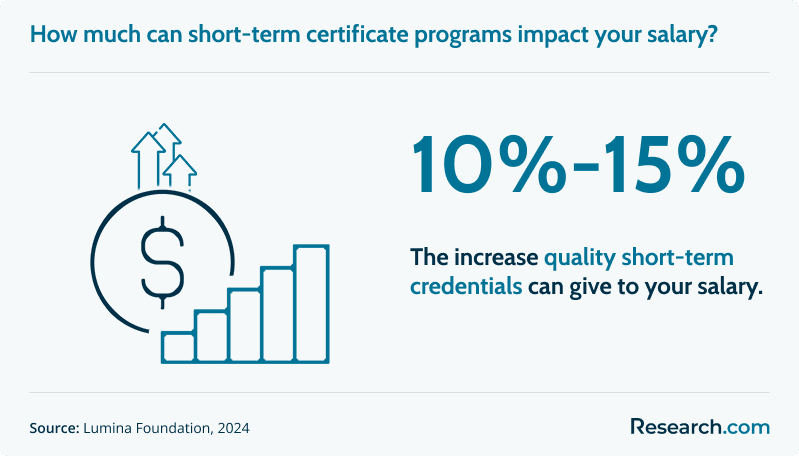
- Potential wage benefit: According to recent data, about 7.8% of adults in the United States possess short-term credentials that result in salary increases of at least 10%.
Students who want to turn a certificate into a broader technology career may eventually compare degree pathways such as an accelerated computer science degree online.
Disadvantages of 6 Month Certificate Programs
Short-term certificates can be valuable, but they also carry risks. A program that is fast, inexpensive, or heavily advertised may still be a poor investment if it is not recognized by employers or does not meet licensing requirements.
Common Limitations
- Narrow training: A certificate may prepare you for a specific task but not for broader roles that require deeper theory, management skills, or a degree.
- Employer skepticism: Some hiring managers may prefer applicants with longer training, more experience, or credentials from known institutions.
- Accreditation problems: A non-accredited or unapproved program may not qualify for aid, transfer credit, licensing, or certification exams.
- Hidden costs: Exam fees, tools, background checks, uniforms, software, textbooks, and licensing applications can increase the total price.
- Limited networking: Fully online programs may offer fewer employer introductions unless they include career services or placement partnerships.
- No guaranteed salary: Median salary figures describe occupational data, not a promise of what a new graduate will earn.
How to Maximize Career Growth with 6-Month Certificate Programs
A certificate is only the starting point. The students who benefit most usually treat the program as part of a larger career strategy: they choose a credential tied to local job openings, complete required exams, document their skills, and keep building qualifications after graduation.
- Apply your skills immediately: Look for internships, externships, volunteer practice, entry-level roles, freelance work, or projects that let you use the training quickly.
- Build a targeted resume: Translate coursework into employer language, such as patient intake, account reconciliation, CDL preparation, HIPAA compliance, wiring safety, or specimen handling.
- Use the school’s network: Attend employer sessions, ask instructors for referrals, join alumni groups, and request mock interviews.
- Add complementary skills: Digital literacy, communication, scheduling software, customer service, safety awareness, and documentation skills can help certificate graduates stand out.
- Consider a faster degree later: If your long-term goal requires a college credential, compare options such as the fastest degree to get online.
What Else Should I Consider When Choosing a 6-Month Certificate Program?
Beyond cost and completion time, compare each program’s employment value. Look at the exact job titles it prepares for, whether those jobs exist near you, whether the certificate is enough for entry, and whether you will need a state license, background check, exam, apprenticeship, or additional supervised hours.
It can also help to compare your options against broader lists of certifications that pay well. The best choice is not always the one with the highest advertised salary. It is the one that matches your strengths, schedule, local labor market, and long-term plans.
What Is the Return on Investment for a 6-Month Certificate Program?
Return on investment depends on total cost, realistic starting pay, time to employment, exam or licensing expenses, and whether the credential helps you move into a better role. A low-cost certificate with strong employer recognition can have better ROI than an expensive program with weak placement support.
To evaluate ROI, compare tuition, required fees, commute costs, lost work hours, job placement information, and entry-level wages in your location. Programs tied to steady healthcare demand, such as sonography programs, may show strong value when the credential aligns with employer requirements and local hiring needs.
Should I Pursue Further Education After Completing a 6-Month Certificate Program?
Further education is worth considering if your target career has advancement limits for certificate-only workers. Many entry-level healthcare, business, technology, and skilled trade roles can lead to supervisory, specialized, or higher-paying positions, but advancement may require additional certification, an associate degree, a bachelor’s degree, or licensure.
If you want a longer-term credential without following a traditional campus schedule, compare accelerated online bachelor degree programs. Ask whether your certificate credits transfer, whether your employer offers tuition support, and whether a degree is actually required for the jobs you want.
How Do 6-Month Certificate Programs Stay Ahead of Industry Trends?
Strong certificate programs update their curriculum when workplace tools, software, safety standards, compliance rules, and employer expectations change. In healthcare, this may involve electronic health records, privacy requirements, diagnostic workflows, and patient communication. In trades and transportation, it may involve safety codes, equipment, compliance, and technology used in the field. In business and IT, it may involve software, automation, cybersecurity awareness, and data tools.
Students should ask how often the curriculum is reviewed and whether employers help shape the training. If your career goal requires broader adaptability, compare certificate options with quick online degrees that may provide a wider academic foundation.
What Are the Most In-Demand 6 Month Certifications?
Demand varies by region, but several short-term credentials align with occupations that have clear hiring needs. The examples below are especially worth reviewing if you want a practical role with defined training requirements.
- Medical Assistant: According to the U.S. Bureau of Labor Statistics, medical assistant jobs are projected to grow by 15% from 2023 to 2033. This growth is expected to result in about 118,000 job openings annually.
- Information Technology (IT) Certifications: IT credentials such as CompTIA A+ and Cisco Certified Technician (CCT) can support entry into technical support, networking, systems support, and cybersecurity-adjacent roles. The U.S. Bureau of Labor Statistics projected an 11% growth in computer and IT jobs from 2019 to 2029.
- HVAC Mechanics and Installers: Employment of heating, air conditioning, and refrigeration mechanics and installers is expected to grow by 9% from 2023 to 2033. Around 42,500 job openings for these positions are projected each year throughout the decade.
- Medical Records Specialists: Employment for medical records specialists is expected to grow by 9% between 2023 and 2033, with roughly 15,000 job openings annually.
- Phlebotomy Technician: Phlebotomist employment is projected to grow by 8% from 2023 to 2033. Around 19,600 phlebotomist job openings are expected each year throughout the decade.
- Web Development: Web development certificates often cover HTML, CSS, JavaScript, web design, and site management. Job growth in this field is expected to rise by 8% over the next decade.
Do 6-Month Certificate Programs Offer Career Support and Networking Opportunities?
Many certificate programs offer career support, but the quality varies significantly. Strong programs provide resume guidance, interview practice, employer introductions, externship coordination, job boards, alumni access, and help preparing for certification or licensing exams. Weak programs may provide only general advice or no placement support at all.
Ask for specific evidence, not promises. Which employers hire graduates? Are there job fairs? Does the school help arrange clinical or field placements? Does it publish placement data? Students who need flexible, aid-eligible education options may also compare the cheapest online colleges that accept FAFSA.
Can a 6-Month Certificate Program Enhance My Prospects for a Master's Degree?
A six-month certificate alone usually does not replace the undergraduate requirements for master’s admission. However, it can strengthen your profile if it shows relevant professional skill, career direction, and commitment to a field. This is most useful when the certificate aligns with your work experience and future academic goals.
If graduate school is part of your plan, confirm the required bachelor’s degree, prerequisite courses, GPA expectations, standardized test policies, and professional experience requirements. You can also review which masters degree is most in-demand in world to understand how advanced credentials may connect to career goals.
How Effective Are 6-Month Certificate Programs in Securing Job Placement?
Job placement depends on the local labor market, the school’s employer relationships, the student’s availability, certification exam success, and whether the program teaches skills employers actually need. A certificate can improve employability, but it does not guarantee a job.
Before enrolling, ask for placement statistics, exam pass rates, employer partners, graduate outcomes, and whether the school assists with internships or externships. Hands-on career pathways may produce strong employment outcomes when training is aligned with local demand, similar to some trade school programs.
Can a 6-Month Certificate Program Open Doors to Affordable Bachelor’s Degrees?
Some certificates can help students move toward a bachelor’s degree by providing transfer credits, prior learning credit, or a clearer career focus. This depends entirely on the school, the certificate level, accreditation, and transfer agreements. Do not assume credits will transfer unless the receiving college confirms it in writing.
If you plan to keep studying, ask whether the certificate stacks into an associate or bachelor’s program. Students looking for a lower-cost pathway can compare options such as the cheapest online bachelor programs.
What Are the Admission Requirements and Enrollment Steps for a 6-Month Certificate Program?
Most six-month certificate programs require a high school diploma or GED. Some may also require transcripts, proof of identity, placement assessments, immunization records, background checks, drug screening, CPR certification, a valid driver’s license, or prerequisite coursework, depending on the field.
- Identify the target job: Search job postings first so you know what credential employers request.
- Confirm eligibility: Check age, education, background, health, technology, and licensing requirements.
- Review accreditation and approval: Make sure the institution and program meet relevant standards.
- Compare total costs: Include tuition, fees, equipment, exams, and commuting or placement expenses.
- Apply and submit documents: Complete the application, send records, and meet any testing or interview requirements.
- Secure funding: Ask about FAFSA eligibility, scholarships, employer support, payment plans, and state aid.
- Register for classes: Confirm schedule, format, clinical or lab requirements, and graduation or exam steps.
Students who want a credential without committing to a degree can also review online certifications that pay well without a degree.
Can Additional Certifications Boost Career Growth After a 6-Month Program?
Yes. Additional certifications can help if they build on your first credential and match the next role you want. For example, a medical assistant may add specialized clinical credentials, a bookkeeper may pursue accounting software certification, and an IT support worker may continue into networking or cybersecurity credentials.
The key is sequencing. Do not collect credentials randomly. Review job postings for your next target role and choose only the certifications employers name. You can compare options through Research.com’s guide to the most profitable certifications.
What Industries Offer the Best Job Opportunities After Completing a 6-Month Certificate Program?
Six-month certificates are most useful in industries where employers hire for demonstrable skills, exam readiness, or regulated support roles. The strongest opportunities often appear in fields with clear entry-level job titles and practical training needs.
- Healthcare: Phlebotomy, medical assisting, pharmacy technician, medical billing, medical coding, CNA, dental assisting, and medical records training can lead to support roles in clinics, hospitals, labs, pharmacies, and administrative healthcare settings.
- Information Technology: IT support, networking, cybersecurity fundamentals, cloud support, and web development certificates can help students build entry-level technical skills.
- Skilled Trades: Electrical, HVAC, plumbing, and related trade certificates can support entry into hands-on work, though apprenticeship and licensing requirements may still apply.
- Transportation and logistics: CDL-focused truck driving programs can lead to commercial driving opportunities after students meet licensing and safety requirements.
- Business and administration: Bookkeeping, payroll, office administration, project coordination, and records management certificates can support office-based career paths.
If your long-term goal requires graduate education, you may later consider options such as the easiest masters degree, but a master’s degree is not required for many certificate-level entry roles.
How Do 6-Month Certificate Programs Compare to Accelerated Online Degrees?
A six-month certificate and an accelerated online degree serve different purposes. A certificate is usually best for fast job-specific training. An accelerated degree is usually better for broader career mobility, management pathways, graduate school preparation, or fields that require a college degree.
| Option | Best for | Typical advantage | Main limitation |
| 6-month certificate | Students who want focused training for a specific entry-level role | Shorter, often less expensive, and practical | May not transfer, may not meet degree requirements, and may have limited advancement value alone |
| Accelerated online degree | Students who need a recognized academic credential for broader roles | Stronger long-term academic value and wider career options | Usually takes longer and costs more than a certificate |
If you want a degree but need speed and flexibility, compare the fastest online degrees. If you need immediate job skills, a certificate may be the better first step.
How Can I Verify the Accreditation and Quality of a 6-Month Certificate Program?
Accreditation and program approval are among the most important checks before enrolling. A low-quality certificate can waste time and money if employers, licensing boards, or transfer schools do not recognize it.
- Check institutional accreditation: Confirm the school is recognized by an appropriate accrediting agency.
- Check program-level approval: For healthcare, trades, real estate, EMT, truck driving, and pharmacy technology, verify state or industry approval when applicable.
- Ask about exam eligibility: Make sure graduates qualify for required certification, licensing, or registration exams.
- Review employer connections: Look for advisory boards, clinical partners, externship sites, apprenticeship links, or hiring partners.
- Request outcome data: Ask for completion rates, exam pass rates, job placement information, and graduate satisfaction data.
- Read policies carefully: Review refunds, transfer credit, attendance rules, externship placement, and technology requirements.
For students comparing short credentials with higher academic pathways, Research.com’s guide to one year online masters programs can provide additional context on how program length, credibility, and outcomes differ across education levels.
Common Mistakes to Avoid Before Enrolling
| Mistake | Why it can hurt you | Better approach |
| Choosing only the fastest program | The shortest option may not include the hands-on training or exam preparation employers expect. | Choose the shortest credible program that still meets job, exam, and licensing requirements. |
| Ignoring accreditation | A non-recognized credential may not qualify for aid, transfer, licensing, or employer acceptance. | Verify institutional accreditation and any program-level approval before paying. |
| Looking only at tuition | Fees, tools, uniforms, exams, software, and background checks can change the real cost. | Request a full cost breakdown in writing. |
| Assuming online means fully remote | Many healthcare, trade, and transportation programs require in-person practice. | Ask about labs, clinicals, externships, driving hours, and local placement rules. |
| Relying on advertised salary | Median pay does not guarantee a new graduate’s starting wage. | Check local entry-level job postings and ask about recent graduate outcomes. |
| Skipping transfer questions | Credits may not apply toward a future degree. | Ask the receiving college to confirm transferability before enrolling. |
| Not checking state licensing rules | Some careers require state approval, exams, supervised hours, or background clearance. | Review state board or licensing agency requirements before choosing a program. |
References
- Catania, K. (2024, May 15). Survey findings unveil new data about online higher education. Champlain College. Retrieved September 28, 2024.
- Federal Student Aid. (2017). Financial aid for graduate or professional students. FederalStudentAid.gov. Retrieved September 28, 2024.
- Hanson, M. (2024, May 25). Financial aid statistics [2023]: Average aid per student. Education Data Initiative. Retrieved September 28, 2024, from https://educationdata.org/financial-aid-statistics
- Lumina Foundation. (n.d.). A stronger nation: Learning beyond high school builds American Talent. LuminaFoundation.org. Retrieved September 28, 2024.
- Ositelu, M. O., McCann, C., & Laitinen, A. (2021, May 3). The short-term credentials landscape: What we see and what remains unseen. New America. Retrieved September 28, 2024.
- U.S. BLS. (2024, April 3). Occupational employment and wages, May 2023: 31-9097 Phlebotomists. U.S. Bureau of Labor Statistics. Retrieved September 28, 2024.
- U.S. BLS. (2024, September 25). Occupational outlook handbook: Dental assistants. U.S. Bureau of Labor Statistics. Retrieved September 28, 2024.
- U.S. BLS. (2024, August 29). Occupational outlook handbook: EMTs and paramedics. U.S. Bureau of Labor Statistics. Retrieved September 28, 2024.
- U.S. BLS. (2024, August 29). Occupational outlook handbook: Electricians. U.S. Bureau of Labor Statistics. Retrieved September 28, 2024.
- U.S. BLS. (2024, August 29). Occupational outlook handbook: Heavy and tractor-trailer truck drivers. U.S. Bureau of Labor Statistics. Retrieved September 28, 2024.
- U.S. BLS. (2024, August 29). Occupational outlook handbook: Medical assistants. U.S. Bureau of Labor Statistics. Retrieved September 28, 2024.
- U.S. BLS. (2024, August 29). Occupational outlook handbook: Medical records specialists. U.S. Bureau of Labor Statistics. Retrieved September 28, 2024.
- U.S. BLS. (2024, August 29). Occupational outlook handbook: Pharmacy technicians. U.S. Bureau of Labor Statistics. Retrieved September 28, 2024.
- U.S. BLS. (2024, August 29). Occupational outlook handbook: Real estate brokers and sales agents. U.S. Bureau of Labor Statistics. Retrieved September 28, 2024.
Key Insights
- Six-month certificates are most valuable when they prepare you for a specific job, exam, license, or employer-recognized skill set.
- Healthcare support, skilled trades, transportation, bookkeeping, pharmacy technology, and medical records are practical short-term options because they connect to defined roles.
- Online certificates can be respected, but hands-on fields still require labs, clinical experience, driving practice, or supervised training.
- Costs vary by field, and students should calculate the full price, including exams, supplies, software, background checks, and licensing fees.
- Do not rely on advertised salary alone. Compare local job postings, entry-level wages, employer demand, and placement support.
- Accreditation, state approval, exam eligibility, and transfer policies should be verified before enrollment.
- A certificate can be a fast career step, but it may not be the final credential if your goal is advancement, management, licensure, or graduate education.
Other Things You Need to Know About the 6 Month Certificate Programs That Pay Well for 2025
Only eligible programs at accredited schools can qualify for federal student loans under Title IV rules. The program must lead to a recognized credential, and the school must participate in the U.S. Department of Education’s aid programs. Short-term job training certificates often do not qualify.
Enrollment in a 2027 health informatics certificate program typically requires a bachelor's degree in a related field, such as healthcare or IT. Some programs may also require professional experience in healthcare settings or basic knowledge of healthcare data systems.


