2027 Organizational Leadership Salary Trends Report: Are Wages Keeping Up With Tuition and Inflation?

Co-Founder and Chief Data Scientist
Considering a graduate program in organizational leadership often begins with weighing potential salary outcomes against rising tuition costs. A prospective student or recent graduate faces the challenge of determining if the degree's financial return justifies the growing financial burden.
Tuition rates have climbed steadily, while inflation erodes purchasing power, making simple salary comparisons insufficient. Understanding how these factors interact is key to assessing the true value of the investment. Salary growth, education costs, and inflation frequently rise at different rates, complicating efforts to gauge long-term financial benefit.
Tracking only current salaries overlooks how inflation-adjusted earnings and debt repayment affect affordability and lifestyle. This report analyzes salary trends alongside tuition and inflation data to evaluate the return on investment, affordability, and the economic forces shaping the financial value of an organizational leadership degree over time.
Key Things to Know About Organizational Leadership Salary Trends
- Graduate salaries in organizational leadership have grown by just 2% annually since 2022, lagging behind a 4% average tuition increase, which narrows the net financial return on investment over time.
- Inflation-adjusted wages for early-career graduates remain flat, implying that rising living costs offset nominal salary gains, challenging realistic long-term debt repayment plans.
- Factors like industry specialization and prior managerial experience distinctly affect salary trajectories, underscoring that program selection alone won't guarantee enhanced earning potential without strategic career positioning.
- Key Things to Know About Organizational Leadership Salary Trends Key Things to Know
- What Is the Current Salary Outlook for Organizational Leadership Graduates? Salary Outlook
- Are Organizational Leadership Salaries Keeping Up With Inflation? Inflation Impact
- How Do Tuition Costs Compare With Organizational Leadership Salary Growth? Tuition vs Salary
- Does a Organizational Leadership Degree Deliver a Positive Return on Investment? Degree ROI
- Which Industries Offer the Highest Salaries for Organizational Leadership Graduates? Highest-Paying Industries
- Which States and Cities Offer the Highest Pay for Organizational Leadership Professionals? Highest-Paying Locations
- How Do Organizational Leadership Salaries Grow Throughout a Career? Career Growth
- How Do Organizational Leadership Salaries Compare With Similar Degrees? Salary Comparison
- How Is Employer Demand Affecting Organizational Leadership Salary Trends? Employer Demand
- How Can Students Maximize Their Lifetime Earnings With a Organizational Leadership Degree? Maximizing Earnings
What Is the Current Salary Outlook for Organizational Leadership Graduates?
The current salary outlook for organizational leadership graduates reveals a nuanced picture shaped by several economic and sector-specific factors. Mid-level roles in organizational leadership-related fields report a median annual wage near $105,000 according to the U.S. Bureau of Labor Statistics in 2024, reflecting modest growth but not fully offsetting inflation or tuition increases.
Entry-level salaries generally range between $60,000 and $70,000, varying by industry and geography, with corporate leadership roles typically offering the upper end due to greater complexity and responsibility. These figures indicate that while the immediate earnings potential provides a solid starting point, disparities emerge quickly depending on chosen sectors such as healthcare administration or nonprofit management.
For instance, two graduates holding identical organizational leadership degrees could experience different salary trajectories based on their career decisions: one entering nonprofit management might start near $60,000 but face slower salary growth, whereas another stepping into a corporate leadership pipeline might start higher and advance more rapidly beyond $150,000 annually in senior roles.
Interpreting organizational leadership graduate salary trends requires acknowledging these divergent paths alongside the broader demand for skilled leaders navigating complex challenges. Salary prospects are therefore best assessed with a long-term perspective, where experience, industry, and additional certifications substantially influence earnings growth beyond entry-level pay.
Prospective students must also weigh these earning patterns against rising costs, as tuition inflation outpaces annual salary increases, complicating return-on-investment calculations. Considering this, individuals may want to explore flexible education opportunities, including easier online degree options that balance affordability and career relevance, like those highlighted as the easiest online degree paths.
A realistic view recognizes that while the organizational leadership salary outlook is promising for those advancing toward executive roles, starting salaries and growth vary significantly, making careful planning essential for aligning educational choices with financial goals.
Are Organizational Leadership Salaries Keeping Up With Inflation?
Nominal salary increases for organizational leadership roles have averaged around 3% annually, but this pace frequently fails to outstrip inflation, which has hovered near 4% to 5% according to recent U.S. Bureau of Labor Statistics data. This gap means that employees may see a paycheck that looks larger on paper but actually wields less purchasing power when real costs, like housing, healthcare, and daily living expenses, are considered.
For example, a mid-level manager earning $90,000 who receives a 3% raise this year will struggle to cover rising expenses if inflation costs climb above that figure, effectively reducing their disposable income despite a salary boost.
The persistent challenge of organizational leadership salary growth versus inflation reflects broader economic and sector-specific trends. Wage stagnation in many management roles contrasts sharply with tuition increases in relevant degree programs, which have risen nearly 3% annually over recent years according to the National Center for Education Statistics.
This divergence raises important questions for prospective students and career changers about the long-term value of investing in a degree when the real return is tempered by rising costs. Exploring options like a cyber security masters degree, for instance, may offer different market dynamics worth considering alongside organizational leadership.
Ultimately, whether organizational leadership salaries keep pace with inflation depends on variables such as industry sector, geographic region, and level of experience. Certain organizations and fields may offer stronger compensation trends, whereas others show more stagnation or decline in real wages. Prospective students should weigh these factors thoughtfully, balancing educational costs against realistic expectations for salary growth in their target leadership roles.
How Do Tuition Costs Compare With Organizational Leadership Salary Growth?
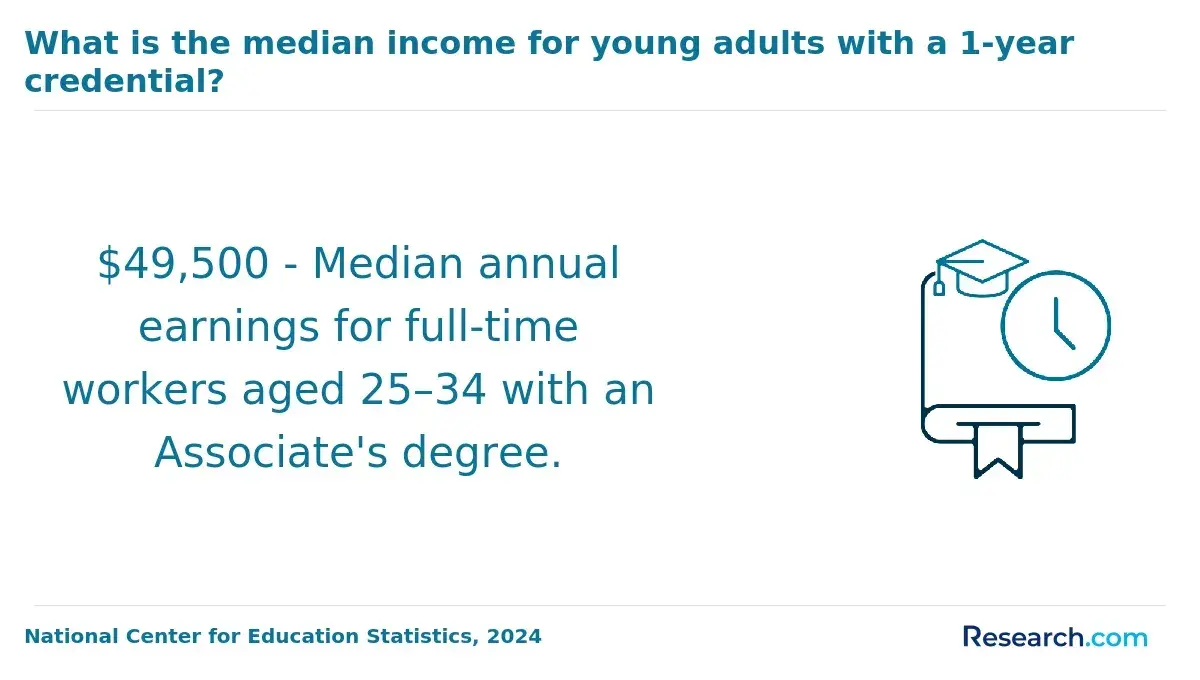
Evaluating tuition costs alongside salary growth offers a critical lens to gauge the true financial value of an organizational leadership degree. Data from the National Center for Education Statistics and the U.S. Bureau of Labor Statistics in 2024 show that annual tuition for these graduate programs has increased about 4% per year over the last five years, surpassing the roughly 2% average annual growth in early-career salaries, which fall between $55,000 and $65,000.
This mismatch means the initial cost burden grows faster than earnings, complicating the payoff timeline and potentially extending debt repayment well beyond graduation. Considering only one side, whether tuition or salary, misses this imbalance and hinders realistic financial planning.
For example, a recent graduate who finances their degree through loans may find that while mid-career salaries can rise to $85,000 to $95,000, these gains often fail to keep pace with accumulated tuition inflation and interest on debt. Variations in career paths, geographic location, and employer benefits can further impact how salary increases translate into actual disposable income relative to education costs.
Thus, personal circumstances and broader economic factors must shape expectations, avoiding assumptions that a higher degree straightforwardly equates to a higher net financial return.
One graduate recalled hesitating before enrolling due to escalating tuition costs but ultimately proceeded after calculating potential mid-career earnings. Early on, they felt the pinch of slow salary growth against loan payments, which made budgeting tight and delayed further education.
Over time, however, increased responsibilities and promotions helped stabilize their finances, though the initial years remained a financial balancing act. This experience underscores how timing and strategy are crucial when weighing rising organizational leadership tuition against expected salary progressions.
Does a Organizational Leadership Degree Deliver a Positive Return on Investment?
Return on investment (ROI) in higher education extends beyond initial expenses, encompassing the long-term balance between tuition costs, earning potential, and career opportunities. For organizational leadership degrees, this means assessing not just starting salaries but the trajectory of wage growth, job stability, and skill applicability in diverse sectors.
For instance, a graduate entering a corporate management track might face significant tuition debt upfront but could experience faster salary increases that outpace inflation over a decade, ultimately offsetting their initial investment. Conversely, graduates in non-profit or public roles may see slower financial gains, making the ROI more variable depending on the pathway chosen.
Recent figures from the National Association of Colleges and Employers show that while tuition for organizational leadership programs has escalated, median wages for holders of such degrees have also increased steadily, generally surpassing inflation in 2024. The developed competencies in strategic planning and leadership communication often enhance employability and resilience during economic downturns, adding intangible value that traditional ROI models might overlook.
However, differences in institutional prestige and industry sector influence outcome substantially, reinforcing that the degree's financial payoff is not uniform but context-dependent.
Ultimately, the financial value of an organizational leadership degree hinges on whether graduates leverage their education to access higher-paying roles with room for advancement or remain in positions with limited growth. Careful consideration of program cost relative to potential career paths, and the economic environment, is critical.
This nuanced approach reflects an interplay of factors rather than a simplistic cost-versus-salary comparison, emphasizing that ROI varies as much by individual circumstances as by shifts in labor market demand and inflationary pressures.
Which Industries Offer the Highest Salaries for Organizational Leadership Graduates?
Salary trends for organizational leadership graduates reveal distinct industry patterns where earnings potential significantly varies. Identifying sectors that pay premium wages is crucial for graduates aiming to optimize return on their educational investment.
The highest-paying industries often demand specialized skills such as strategic decision-making, risk management, and cross-functional team leadership. Understanding these nuances can help students and recent graduates target sectors aligned with both their expertise and financial goals.
Below is a list of industries that consistently offer elevated salaries for organizational leadership graduates based on recent labor statistics and industry analyses.
- Technology Sector: The technology industry dominates in compensation due to its rapid growth and complex project environments. Organizational leadership roles here emphasize managing innovation-driven teams and scaling digital business models, requiring agility and advanced change management skills.
- Healthcare and Pharmaceuticals: This sector offers high pay reflecting the critical leadership needed for compliance, patient safety, and multidisciplinary coordination. Graduates often lead hospitals or biotech firms where regulatory knowledge and operational efficiency are paramount.
- Finance and Insurance: Leaders in finance oversee risk management, strategic mergers, and regulatory compliance, demanding robust analytical decision-making and governance experience. These roles are well-compensated given their direct impact on organizational profitability and stability.
- Energy and Renewables: The evolving focus on sustainability elevates demand for leaders who can navigate industry transformation. Organizational leadership professionals in energy play strategic roles in innovation adoption and regulatory transition, resulting in competitive salary offerings.
- Manufacturing and Industrial: While less touted, manufacturing rewards leaders capable of streamlining operations and managing complex supply chains. Organizational leadership graduates with expertise in lean management or digital transformation within factories often command higher salaries.
- Government and Public Sector: Though generally lower paying, select leadership roles tied to large-scale public projects or emergency management offer competitive pay linked to the complexity and scale of responsibilities.
- Education and Nonprofit: Typically, these sectors offer lower salaries relative to tuition inflation and cost of living, making them less financially favorable for organizational leadership graduates focused on earnings. However, they provide meaningful work environments and leadership challenges distinct from corporate sectors.
According to the U.S. Bureau of Labor Statistics, the technology and healthcare sectors are among the top paying industries for organizational leadership-related occupations in 2024, with median salaries exceeding national averages by over 25%. For career changers or prospective students weighing education costs, these insights emphasize prioritizing industries that align with strong earning potential.
Practical navigation of the job market also means considering opportunities outside traditional sectors, such as leadership roles in paralegal school administrative functions, which can complement organizational leadership skills in legal management settings.
Which States and Cities Offer the Highest Pay for Organizational Leadership Professionals?
Geographic location remains a decisive factor in determining compensation levels for organizational leadership professionals. Salary data from the U.S. Bureau of Labor Statistics and the Economic Research Institute highlight distinct regional patterns that reflect the interplay between industry concentration, economic vitality, and living costs.
While certain states and metropolitan areas offer top-tier wages, sometimes exceeding the national median by over 30%, the net financial advantage hinges on weighing these earnings against cost-of-living pressures. Aspiring leaders must consider how local economic landscapes influence not only salary potential but also career mobility and quality of life.
Below are key locations known for commanding the highest pay in organizational leadership roles.
- Massachusetts: Known for its dense network of healthcare institutions, tech companies, and financial firms, Massachusetts offers average annual leadership salaries above $115,000. The state's robust demand for advanced management skills sustains these premium wages, but students should factor in steep living expenses and competitive educational costs.
- California Bay Area: The San Francisco metro area stands out with wages frequently surpassing $120,000 due to its tech-centric economy and concentration of global headquarters. High salary potential is tempered by one of the nation's highest costs of living and housing prices, making careful budget planning essential.
- New York City Metro: Executive roles in New York's finance, media, and service industries often command salaries exceeding $120,000. However, persistent inflation and urban living costs present a significant counterbalance to gross earnings, influencing long-term wealth accumulation.
- Seattle, Washington: Emerging as a tech and innovation hub, Seattle offers leadership salaries ranging between $100,000 and $110,000. The city's relatively moderate living costs compared to coastal counterparts enhance its appeal for career changers seeking better work-life balance without sacrificing income.
- Austin, Texas: With its rapidly growing corporate scene and expanding service sector, Austin provides leadership wages close to $100,000. The city's affordable housing and lower tuition fees for relevant education further improve return on investment for organizational leadership students.
How Do Organizational Leadership Salaries Grow Throughout a Career?
Entry-level organizational leadership roles, often held by graduates with bachelor's degrees or MBAs focused in this field, generally start with salaries between $55,000 and $70,000 annually, though this varies regionally and by industry. As professionals gain five to ten years of experience, salary growth typically becomes more significant, with mid-career wages rising to between $80,000 and $110,000 according to the 2024 report by the Association for Talent Development.
Career progression depends heavily on factors such as management scope, leadership responsibilities, and continued skill development, including certifications. For instance, two graduates starting at similar entry-level salaries might diverge considerably if one pursues additional credentials and leadership roles that expand their influence, while the other remains in more limited positions.
At senior levels, such as director, vice president, or C-suite roles, salaries often exceed $140,000 and can reach $200,000 or higher depending largely on organizational size and sector, data from the National Center for Education Statistics confirms. Advanced degrees and relevant experience enhance access to these higher-tier opportunities that frequently include bonuses and benefits, contributing notably to total compensation.
However, growth is not automatic; investments in professional development and strategic career moves tend to yield the most significant gains. Consequently, long-term salary increases reflect a combination of educational attainment, specialized expertise, and the ability to navigate organizational structures effectively.
One organizational leadership graduate described feeling uncertain early on about whether to pursue a costly certification while balancing family obligations. Initially hesitant, they chose to invest in the credential after a peer encouraged them with evidence of salary improvements linked to such qualifications.
Several years later, this decision led to a promotion and a salary jump that outpaced inflation, validating the initial struggle. The graduate reflected that navigating these choices required both patience and a willingness to accept short-term financial pressure for longer-term salary advancement.
How Do Organizational Leadership Salaries Compare With Similar Degrees?
Organizational leadership graduates face a salary landscape closely intertwined with other business-related degrees but with unique variables that influence earnings. Mid-career salaries typically fall just below those of business administration graduates, reflecting differences in industry sectors and career trajectories.
For example, a graduate shifting from organizational leadership to an executive role in a nonprofit frequently earns less than one entering corporate finance but may experience more meaningful long-term growth tied to sector stability.
The following comparison highlights how leadership graduate earnings versus similar career paths typically play out in the workforce.
- Business Administration: Median salaries for business administration graduates hover around $80,000, outpacing organizational leadership at approximately $75,000. This gap largely stems from business grads' access to finance and marketing roles, which generally command higher starting pay. The diversity in corporate sectors contributes to a broader salary range and often faster initial growth.
- Human Resource Management: Salaries in human resource management closely mirror those of organizational leadership, usually between $70,000 and $78,000 depending on location and industry. Both fields see variability from nonprofit and education roles versus corporate settings, making salary outcomes highly context-dependent for graduates in either program.
- Public Administration: Public administration typically shows lower median salaries near $65,000 but offers compensatory benefits such as greater job security and government-related perks. For organizational leadership alumni who prioritize stability and benefits over immediate salary, public administration roles represent a viable alternative.
Prospective students should factor these salary trends carefully against increasing tuition and inflation to determine their degree's true value. Evaluating options like an online degree in mechanical engineering may also provide comparative insights when considering long-term earning potential across disciplines.
How Is Employer Demand Affecting Organizational Leadership Salary Trends?
Employer demand significantly shapes organizational leadership salary trends by driving competition among organizations for qualified candidates. With the U.S. Bureau of Labor Statistics projecting an 8% growth in management occupations from 2022 to 2032, demand for leadership roles is rising faster than the average for all occupations.
In a practical context, consider a mid-sized company seeking a leader with a combination of strategic insight and tech fluency. When such skills are scarce, employers may increase salary offers or enhance benefits to secure top talent, directly influencing wage growth patterns.
However, the relationship between employer demand and salaries is nuanced. While strong demand can spur faster wage increases, salaries are also shaped by experience levels, specialization, economic conditions, and organizational budget constraints. Reports from the National Association of Colleges and Employers highlight that leadership skills coupled with technological expertise are particularly valued, which can justify premium pay for candidates with relevant educational backgrounds.
Yet, despite these dynamics, wage growth for organizational leadership professionals lags inflation, recorded at over 5% in early 2024, even as average annual salary increases hover around 3-4%. Prospective students must therefore consider these factors alongside rising tuition and living costs, possibly exploring more affordable paths such as a low cost online general studies degree to supplement foundational leadership education before specializing.
How Can Students Maximize Their Lifetime Earnings With a Organizational Leadership Degree?
Maximizing lifetime earnings with an organizational leadership degree requires more than completing coursework. Graduates must strategically combine education, experience, and industry focus to truly benefit financially.
Data from the U.S. Bureau of Labor Statistics (BLS) 2024 shows that professionals with organizational leadership skills earn more in sectors like healthcare administration and technology management. To elevate long-term pay, students should pursue targeted actions during and after their studies.
Below are key strategies supported by recent research and workforce analyses to help graduates navigate realistic career paths.
- Industry Specialization: Focus on industries with high demand for leadership roles such as healthcare, technology, or government agencies. These sectors not only pay more but tend to offer greater job stability and upward mobility over time.
- Certification Acquisition: Obtain certifications in project management, change management, or data analytics. Research from the National Association of Colleges and Employers (NACE) shows these credentials boost starting salaries and speed up promotion opportunities.
- Experience Through Internships: Gain relevant supervisory experience via internships or co-op placements during college. The Georgetown University Center on Education and the Workforce finds that 3-5 years of leadership experience by age 30 significantly increases earnings compared to entry-level roles.
- Advanced Degrees: Consider pursuing an MBA or a specialized master's in organizational leadership. These advanced qualifications open doors to executive-level positions and higher salary brackets over the long term.
- Networking Strategically: Build professional relationships with mentors and industry leaders to identify opportunities early. Robust networks often lead to faster career advancement and better compensation packages.
- Continuous Skill Development: Keep updating leadership and technical skills post-graduation, especially in data-driven decision-making and change management. Staying current with industry trends preserves relevancy and maximizes earnings potential throughout one's career.
References
- Organizational Leadership Job and Salary Opportunities https://www.pointloma.edu/resources/business-leadership/organizational-leadership-job-salary-opportunities
- Career Progression Framework | Ultralytics Handbook https://handbook.ultralytics.com/people/careers
- Does College Pay Off? A Comprehensive Return On Investment Analysis - FREOPP https://freopp.org/whitepapers/does-college-pay-off-a-comprehensive-return-on-investment-analysis/
- What Jobs Can I Get With a Degree in Organizational Leadership? | CSU Global https://csuglobal.edu/blog/what-jobs-can-you-get-bachelors-degree-organizational-leadership
- The price of college is rising faster than wages for people with degrees | USAFacts https://usafacts.org/articles/is-college-worth-it-the-price-of-college-is-rising-faster-than-wages-for-people-with-degrees/
- Master’s in Organizational Leadership vs. MBA https://www.warnerpacific.edu/blog/masters-in-organizational-leadership-vs-mba/
- Is College Worth it? | Return on Investment Analysis of College Degree https://educationdata.org/college-degree-roi
- Are salary increases outpacing inflation in 2025? https://www.wtwco.com/en-au/insights/2025/08/are-salary-increases-outpacing-inflation-in-2025
Other Things You Should Know About Organizational Leadership Salary Trends
Accelerated organizational leadership programs can reduce tuition costs and time spent earning a degree, but they often come with a more intense workload and compressed learning experience. For students considering these options, the tradeoff lies in faster entry into the workforce versus potentially sacrificing depth and networking opportunities that longer programs offer. If your goal is immediate reentry into leadership roles, accelerated formats may be justified, but if you prioritize comprehensive skill-building and industry connections, a traditional timeline could yield better long-term salary progression.
Many employers expect organizational leadership graduates to bring a blend of practical experience and advanced skills, not just academic credentials. However, when degree inflation occurs-more candidates hold advanced degrees-employers may discount the degree's value, controlling salary growth as a result. This suggests prioritizing internships, mentorships, and applied projects during your degree to stand out, as purely academic achievement alone is less likely to drive higher compensation.
Part-time students often balance work and study, which can delay graduation but maintain income during education. While this path reduces immediate financial strain, it may slow early-career salary increases as advanced credentials are completed later. Conversely, full-time study demands more upfront investment and lost wages but may accelerate access to higher-paying leadership roles. Deciding between these depends on your current financial resilience and whether near-term income or post-degree salary gains are the higher priority.
Choosing lower-cost programs can ease debt burdens but often means accepting less specialized curricula and limited employer connections, which correlate with slower salary growth in organizational leadership fields. Given stagnant wages, investing in higher-quality programs with robust career services and experiential learning opportunities frequently delivers better compensation outcomes. Therefore, candidates should assess whether saving on tuition today might restrict their ability to command competitive salaries later.