2027 Online vs Campus Organizational Leadership Outcomes Report: Graduation Rates, Cost, and Career Trade-Offs

Co-Founder and Chief Data Scientist
For adult learners seeking organizational leadership degrees, deciding between online and campus programs presents hidden challenges. Transfer credit acceptance rates averaged only 65% across institutions in 2024, forcing many students to retake courses, increasing time and cost disproportionately. This reality underscores that credit transfer policies remain a major barrier to degree completion efficiency, particularly for those balancing work and family obligations. Graduation rates further vary, with campus programs showing marginally higher outcomes but less schedule flexibility. This article analyzes graduation rates, total costs, and career trade-offs across both delivery methods to clarify which path best aligns with varied student priorities and constraints.
Key Things to Know About Online vs Campus Organizational Leadership Outcomes
- Online Organizational Leadership programs show graduation rates about 10% lower than campus ones, reflecting challenges in student engagement and self-discipline that may extend time to degree and increase dropout risk.
- Campus-based graduates often report stronger employer preference due to perceived networking advantages, signaling a strategic tradeoff for students prioritizing career-embedded relationship building over solely skill acquisition.
- While online options reduce geographic and time barriers, total costs including extended enrollment durations can approach campus tuition levels, meaning affordability gains depend on individual pacing and persistence in course completion.
- Key Things to Know About Online vs Campus Organizational Leadership Outcomes Key Things to Know About Online vs Campus Organizational Leadership Outcomes
- What Are the Biggest Differences Between Online and Campus Organizational Leadership Program Outcomes? Online vs Campus Outcomes
- How Do Graduation Rates Compare Between Online and Campus Organizational Leadership Programs? Comparing Graduation Rates
- Why Do Online and Campus Organizational Leadership Students Have Different Completion Rates? Why Completion Rates Differ
- How Do Online and Campus Organizational Leadership Programs Compare on Total Cost? Total Cost Comparison
- What Hidden Costs Should Students Expect in Online vs Campus Organizational Leadership Programs? Hidden Program Costs
- How Does Financial Aid Affect the Cost of Online and Campus Organizational Leadership Programs? Financial Aid Impact
- Do Online and Campus Organizational Leadership Graduates Have Different Career Outcomes? Comparing Career Outcomes
- How Do Employers View Online vs Campus Organizational Leadership Degrees? How Do Employers View Online vs Campus Organizational Leadership Degrees?
- Which Organizational Leadership Degree Format Offers Better Flexibility for Working Adults? Which Organizational Leadership Degree Format Offers Better Flexibility for Working Adults?
- How Should Students Choose Between an Online and Campus Organizational Leadership Program? Choosing Your Program Format
What Are the Biggest Differences Between Online and Campus Organizational Leadership Program Outcomes?
Graduation rates reveal a critical divergence in outcomes between online and campus organizational leadership programs, with campus-based learners achieving six-year completion rates near 62% compared to roughly 45% for fully online students, according to recent data from the National Center for Education Statistics. This difference often reflects more than just instructional format; it underscores how campus programs provide structured cohort environments, consistent access to faculty, and seamless integration of practicum or internship experiences directly linked to employer expectations. For example, a working adult pursuing an online degree while juggling part-time work and family commitments may face extended time to degree, which raises cumulative student loan debt and can delay entry into career advancement roles.
Cost and career trade-offs in organizational leadership programs extend beyond sticker tuition, encompassing total attendance expenses and indirect financial burdens connected to time-to-degree. Online learners may initially choose remote pathways for flexibility, but prolonged timelines often increase overall debt loads and affect long-term career mobility, a dynamic highlighted in the College Scorecard data. Employers tend to value the interpersonal and team-based skills fostered through campus interactions, though technology improvements are narrowing this gap. Prospective students must assess how these dimensions interplay with their personal and professional priorities, especially when considering that selecting a highly structured campus option may facilitate more immediate workforce readiness, while well-supported online programs offer a broader geographic choice and convenience without sacrificing access to collaborative learning in some cases. This nuanced understanding is crucial when evaluating the financial and experiential investment against career outcomes, particularly in a field where leadership capability often hinges on both practical exposure and network development tied to the learning environment.
Decision-making in this space also involves recognizing how program modality influences debt exposure and completion timelines, with online formats frequently generating longer degree pursuit periods that elevate financial strain. Individuals should weigh their tolerance for extended enrollment and variable scheduling against the potential signaling advantages and employer perceptions tied to campus credentials. These dynamics feed into the broader calculus of matching program structures to career goals and life circumstances. Those who leverage well-constructed online curricula armed with synchronous collaboration tools can mitigate some traditional online drawbacks, aligning flexibility with effective skill acquisition. For students balancing multiple priorities, understanding these trade-offs is essential not only for managing costs and timelines but also for optimizing leadership training that aligns with evolving demands in sectors characterized by increasing complexity and competitive hiring. This approach helps informed candidates strategically position themselves within the organizational leadership field, which according to data on majors that make the most money, remains a pathway with varied but substantial earning potential tied closely to successful program completion and applied experience.
How Do Graduation Rates Compare Between Online and Campus Organizational Leadership Programs?
Graduation rates for organizational leadership programs reveal complexities beyond simple format comparisons, with campus-based programs often reporting rates near 60-70% within six years versus 40-55% in fully online programs, according to 2024 data from the National Center for Education Statistics. These numbers reflect more than delivery method; student demographics, enrollment status, and institutional support weigh heavily. For example, online students commonly juggle full-time jobs and family responsibilities while attending part-time, increasing the likelihood of extended completion timelines or stop-outs. In contrast, campus students tend to be younger, full-time enrollees with fewer external demands, benefiting from structured cohort models and easier access to advising, which support persistence and timely graduation.
Raw graduation-rate comparisons can be misleading without understanding program design and reporting nuances. Schools using integrated experiential learning and clear progression paths often minimize attrition regardless of delivery mode, and selective admissions influence outcomes further. Employers recognize that online program graduates bring flexibility and self-management but may exhibit gaps in hands-on collaboration typically fostered by on-campus cohorts. Thus, prospective students must weigh whether the convenience of online learning offsets the potential need for higher self-discipline and limited immediate faculty interaction, especially when balancing work and personal commitments complicates steady course progression.
A student contemplating an organizational leadership degree reflected on their decision between formats after reviewing graduation data and discussing with advisors. Working full-time and raising children, they worried that an online program's flexibility might be offset by less structured pacing and weaker cohort connections. The student was particularly cautious about whether part-time online enrollment would delay completion beyond practical career timelines. Ultimately, they appreciated the candid graduation rate insights shaped by their unique situation, realizing that success in either format would hinge largely on personal discipline and the quality of academic support rather than delivery mode alone.
Why Do Online and Campus Organizational Leadership Students Have Different Completion Rates?
Completion rates between online and campus organizational leadership students often reflect deeper demographic and structural differences rather than academic rigor alone. Online learners are frequently juggling part-time enrollment alongside professional and family obligations, which can extend their time to degree and increase interruptions. Traditional campus programs, by contrast, tend to follow structured cohort models and established academic calendars that support regular peer interaction and faculty engagement, factors linked to higher persistence. For example, the National Center for Education Statistics reports a four-year graduation rate near 60% for campus students, compared with approximately 35% for fully online students, illustrating how program design and student circumstances collectively impact outcomes.
Access to advising and academic support plays a critical role in these differing rates. Campus students usually have easier, ongoing contact with tutors and advisors, which helps navigate transfer credits, degree requirements, and practicum placements common in organizational leadership degrees. Online students often face inconsistent availability of such resources, compounded by reduced cohort cohesion, which may affect motivation and completion, especially for those with complex educational backgrounds. Financial considerations also shape these pathways, as online students might save on housing but lose access to on-campus scholarships or employment, potentially complicating their educational continuity and cost-effectiveness.
Prospective organizational leadership students should thus interpret completion data through the lens of their own lifestyle stability and support needs. Choosing online formats may be practical for flexibility but requires strong self-discipline and reliable access to advising to mitigate risks of stop-out or prolonged progression. Meanwhile, campus programs better suit those who benefit from scheduled milestones and immersive academic communities that foster steady advancement. Understanding these trade-offs helps align educational choices with realistic timelines and career objectives rather than relying solely on graduation percentages as quality indicators.
How Do Online and Campus Organizational Leadership Programs Compare on Total Cost?
Total cost comparisons between online and campus organizational leadership programs reveal complex financial trade-offs beyond advertised tuition. While online formats often present lower base tuition, students must also account for technology fees and possible charges tied to distance learning infrastructure. Campus students face higher tuition plus mandatory campus fees, but additional costs for housing, transportation, and meal plans can significantly raise their overall expenses. These distinctions affect decisions on program length, as extended part-time enrollment is more common online, potentially lowering immediate debt but lengthening time to graduation and total financial burden.
A 2024 U.S. Department of Education report found campus-based master's programs in organizational leadership can cost 25% to 40% more including living and ancillary fees, though this gap narrows in private nonprofit or for-profit settings due to differing fee structures. Practical factors like clinical fieldwork travel expenses play out differently; campus students might incur daily commuting or relocation costs, whereas online learners may face travel for residencies or internships. Moreover, eligibility for employer tuition assistance or financial aid sometimes favors campus attendance, impacting net costs and career-continuity choices. Those comparing online vs campus organizational leadership program total cost comparison should also consider that graduates' student debt often aligns closely across formats, with work schedules and financial aid availability shaping the best fit.
For students prioritizing affordability alongside flexibility, investigating options similar to the cheapest online construction management degree programs-known for streamlined fees and online delivery-may offer a useful benchmark. Ultimately, weighing tuition structures, fee allocations, and living costs is imperative to crafting a realistic enrollment plan grounded in career and financial realities rather than sticker price alone.
What Hidden Costs Should Students Expect in Online vs Campus Organizational Leadership Programs?
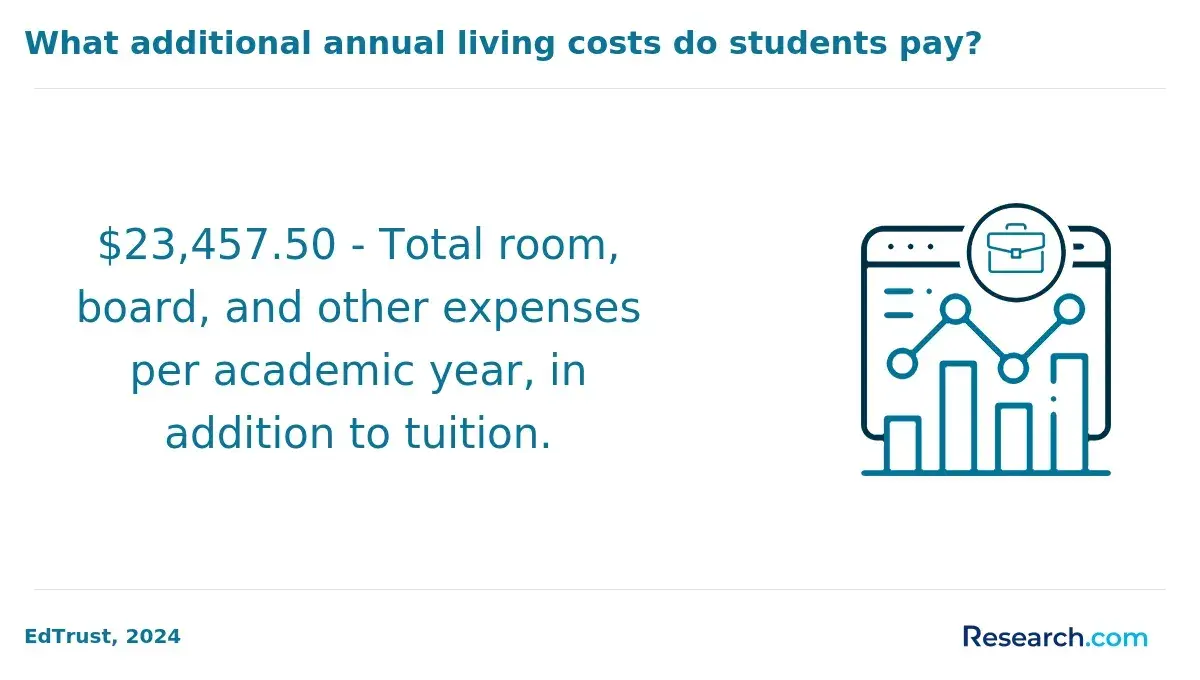
The apparent cost difference between online and campus organizational leadership programs often conceals significant financial trade-offs that shape the overall affordability and feasibility of completion. Online students typically encounter technology fees averaging between $100 and $600 per term, which cover essential software, proctoring, and platform access, explained by the National Center for Education Statistics in 2024. Meanwhile, campus students face substantial indirect expenses such as housing, which averages $11,000 annually, plus transportation and parking costs that can add over $1,200 yearly. These additional fees commonly fall outside headline tuition prices but influence the total financial and time commitments, making the cost advantage of one format over the other less straightforward than sticker prices suggest.
Beyond up-front costs, both delivery formats carry opportunity costs affecting working students differently. Full-time campus attendance usually requires reduced work hours and time-consuming commutes, which may reduce income and delay graduation if students juggle paid employment. Online formats offer greater scheduling flexibility yet can prolong program length, increasing indirect expenses and sometimes necessitating travel for practicum sessions or residencies. Such factors complicate budgeting and program planning, making it crucial to consider not only tuition but also hidden fees, time lost, and additional living costs before committing to a delivery mode that aligns with one's career timeline and financial reality.
One organizational leadership student shared that while online tuition initially appeared more affordable, unexpected technology fees and recurring expenses for specialized software caused hesitation. The student discovered that occasional campus residencies required travel and lodging, which were not clearly outlined upfront, tipping the scale when compared to local campus options and associated commuting costs. This experience underscored the importance of detailed cost breakdowns and personal priorities-balancing flexibility against real-world expenses-to avoid surprises that influence the overall value and feasibility of completing the degree on a chosen timeline.
How Does Financial Aid Affect the Cost of Online and Campus Organizational Leadership Programs?
Financial aid shapes the real cost landscape for students weighing online versus campus organizational leadership programs, often revealing trade-offs beyond sticker price. Campus offerings typically provide broader access to institutional scholarships and assistantships, but these are frequently contingent on full-time enrollment and campus presence, which can restrict flexibility for working adults. Conversely, online students often rely more heavily on federal aid and employer tuition benefits, with nearly 55% using employer assistance compared to 32% of campus enrollees. This dynamic means online learners might pay less upfront yet face different borrowing or pacing decisions depending on aid eligibility and auxiliary fees, such as technology surcharges.
Comparing financial aid availability for organizational leadership learning formats requires careful attention to how grant packages align with tuition structures and enrollment intensity. While online students may avoid costs tied to campus residency, such as housing and meal plans, they also encounter fewer campus-based scholarships, potentially increasing reliance on loans or employer reimbursement programs. These nuances affect not only net cost but also long-term financial exposure and graduation timelines, as campus students typically have higher four-year completion rates that influence return on investment. Prospective students should evaluate aid offers alongside personal work commitments, especially when considering program formats within the broader context of affordability and completion outcomes.
For those examining online leadership study options, exploring resources on accelerated pathways can provide additional context; for example, an accelerated finance degree online illustrates how program pacing and format affect financial aid application and career timing. Understanding these intersecting factors, including aid types and institutional expectations, is essential when forecasting total costs and career returns across learning modes.
Do Online and Campus Organizational Leadership Graduates Have Different Career Outcomes?
Graduates from online and campus organizational leadership programs generally achieve similar employment outcomes within six months of finishing, with workforce data indicating both groups secure jobs at rates near 85-90%. However, nuances arise around employer recognition, especially where some hiring managers remain cautious about online credentials lacking embedded internships or fieldwork-key experiential elements valued in early-career hiring decisions. For example, a recent survey by the Society for Human Resource Management reveals that graduates from campus programs often benefit from stronger alumni networks and in-person career support, which can facilitate promotions by roughly 10-15% more over five years compared to online counterparts.
Choices between online and campus formats also reflect trade-offs in career mobility and local employer access. Online programs afford flexibility for working adults balancing commitments, often appealing to those targeting broader geographic job markets, while campus programs may better serve candidates seeking localized hiring pipelines and professional connections through on-site networking events. Institutional reputation and proper accreditation play pivotal roles in mitigating format bias, particularly where diplomas do not specify delivery method, although preparation for certifications like Certified Manager or Project Management Professional remains central regardless of modality. Students weighing these options should consider not only tuition and debt differences-where online learning may reduce financial burden-but also the impact of program networks and practical training on long-term career progression.
How Do Employers View Online vs Campus Organizational Leadership Degrees?
Employer evaluations of online versus campus Organizational Leadership degrees hinge less on delivery format and more on tangible markers of program quality such as regional accreditation, rigorous curriculum, and experiential components like internships or practicums. A 2024 National Association of Colleges and Employers study found that 62% of employers hold no inherent bias against online credentials when these standards are met. However, in practice, hiring managers often scrutinize online degrees more closely, particularly when they lack well-known accreditations or when transcript details indicate substantial differences from on-campus offerings. For example, candidates applying for leadership roles in sectors with strict licensure or professional standards may face additional verification hurdles if their degree's applied learning components are unclear or less visible to employers.
The perceived credibility gap between online and campus programs narrows significantly when the online pathway provides equivalent selective admissions, integrated experiential learning, and demonstrable alignment with leadership competencies valued in the workplace. This is especially relevant for mid-career professionals who supplement academic credentials with relevant work experience or certifications, reducing employer skepticism tied to unfamiliar online formats. Yet, in industries where networking and collaborative learning are key, campus programs may offer advantages through more direct peer and faculty engagement. Ultimately, prospective students should prioritize program reputation, accreditation, and the presence of robust practical training over format alone, as these factors materially influence hiring outcomes and long-term career mobility.
Which Organizational Leadership Degree Format Offers Better Flexibility for Working Adults?
Flexibility in organizational leadership degree programs critically impacts working adults' ability to persist and complete their studies without disrupting career or family responsibilities. While online formats offer asynchronous coursework that eases scheduling around shift work or caregiving, they often require synchronous sessions and stable technology access, which can limit true flexibility. Campus-based programs, including evening or weekend classes, impose fixed schedules and commuting burdens-often exceeding 45 minutes round-trip-complicating work commitments. This dynamic means students prioritizing minimal disruption to employment and caregiving often find online or hybrid options more adaptable, though the need for fieldwork or local practical experiences may introduce travel demands regardless of format.
Understanding these trade-offs is essential when comparing campus versus online organizational leadership programs for adult learners balancing complex schedules. Online learners frequently enroll part-time and benefit from pacing options, enhancing persistence despite stop-outs or transfers, but must navigate faculty engagement styles and cohort timing that influence completion rates. Campus programs provide structured sequences and face-to-face networking that may benefit certain career trajectories, though at the cost of reduced scheduling autonomy. Employer expectations around practical competencies and credentials mean program choice also affects cost exposure and graduation timing, with flexibility playing a pivotal role in maintaining continuous employment during study periods.
In evaluating flexibility across formats, key factors include asynchronous versus synchronous course availability, residency and commuting requirements, and policies on part-time enrollment and course pacing. Prospective students should analyze how these elements align with their specific work and life demands rather than assuming one format is categorically more flexible. For example, integrating hybrid options or local partnerships in practical components can mitigate travel while preserving accessibility. Similarly, learners interested in fields such as the online bachelor's in electrical engineering recognize that program design profoundly influences flexibility outcomes and career alignment in evolving labor markets.
How Should Students Choose Between an Online and Campus Organizational Leadership Program?
A meaningful choice between online and campus organizational leadership programs hinges on balancing graduation rates, cost structures, and career implications. Campus-based programs generally exhibit graduation rates 10-15 percentage points higher, reflecting stronger student engagement and in-person support, which can reduce persistence and sequencing risks. For example, a mid-career professional aiming for leadership roles in healthcare administration might favor campus attendance to leverage face-to-face networking and supervised field experiences that enhance licensure eligibility and employer impressions. However, the lower time and housing costs of online formats can ease financial strain, particularly for working adults requiring flexible schedules to accommodate job or caregiving demands.
Choosing an online or campus organizational leadership degree requires weighing these trade-offs alongside employer expectations and practical realities. While many employers value accredited degrees regardless of format, those recruiting for leadership positions often prioritize candidates with demonstrable campus experience due to its association with immersive projects and mentorship. Online programs offer asynchronous learning that can improve course completion for nontraditional students but might reduce access to hands-on internships and real-time faculty interaction, which can impact early career mobility. Accreditation standards and licensure requirements may also necessitate campus attendance, underscoring the need to examine program specifics before enrollment.
Prospective students should integrate considerations about total cost, program structure, and long-term career goals into their decision. Those exploring leadership pathways can benefit from consulting recent analyses of workforce demand and program outcomes, such as comparisons across sectors including data analytics, where leaders are increasingly expected to blend operational skills with analytics expertise. Resources like the best masters in data analytics programs can provide additional insights into related program quality and occupational trends, allowing for an informed decision aligned with evolving employer priorities.
References
- The Hidden Costs of College: What Students Don’t Plan For – The Coach Space https://thecoachspace.com/blog/hidden-costs-of-college/
- 2025 Best Organizational Leadership Degrees Online https://www.onlineu.com/degrees/organizational-leadership
- Types of Financial Aid for Online Colleges https://www.umassglobal.edu/blog-news/types-financial-aid-online-colleges
- Online College Tuition Comparison: Online vs. In-Person https://www.uagrantham.edu/blog/online-college-tuition-comparison-online-vs-in-person/
- What You Learn with an Organizational Leadership Degree https://www.snu.edu/blog/what-you-learn-with-an-organizational-leadership-degree
- Is Organizational Leadership Hard? | CSU Global https://csuglobal.edu/blog/is-organizational-leadership-hard
- How Employers View Online Degrees: Interviews with Nine Hiring Executives https://www.onlineeducation.com/features/how-employers-view-online-degrees
- Financial Aid For Online Colleges https://www.affordablecollegesonline.org/financial-aid/financial-aid-for-online-colleges/
- In-Person Learning vs. Online Learning: Which Is Right for You? | ACE Blog https://ace.edu/blog/examining-in-person-instruction-from-a-virtual-mindset-what-can-we-improve/
- The Best EdD in Organizational Leadership Programs of 2025 https://www.eddprograms.org/schools/organizational-leadership/
Other Things You Should Know About Organizational Leadership
The hands-on interaction and spontaneous collaboration typically found in campus organizational leadership programs often foster stronger leadership skill development, especially in areas like team management and real-time decision-making. Online programs sometimes struggle to replicate these dynamic environments, which can limit exposure to interpersonal leadership challenges. However, well-designed online courses that incorporate live discussions and virtual team projects can mitigate this gap. Prospective students should weigh their personal learning style and access to interactive opportunities when evaluating program effectiveness for practical leadership growth.
Online organizational leadership students frequently face a more self-directed and intensive workload schedule, balancing asynchronous coursework with professional and personal commitments. This structure demands strong time-management skills but offers flexibility. Conversely, campus students typically have more structured schedules with fixed class times, which can aid in pacing but may offer less adaptability for working adults. Individuals prioritizing flexibility must be prepared for potentially higher self-discipline demands in online programs to avoid falling behind.
Campus-based programs generally provide richer in-person networking opportunities, including direct engagement with faculty, guest speakers, and peers, which can facilitate mentorships and professional connections. These connections often translate into smoother career transitions or job placements within certain industries. Online programs may offer less organic networking, relying on virtual forums that vary widely in quality. Students aiming for leadership roles in competitive, relationship-driven sectors should prioritize programs with strong, accessible networking frameworks over format convenience alone.
For working professionals balancing family, job demands, and education costs, online programs often provide considerable financial and scheduling advantages that justify potential trade-offs in experience. Yet, if immediate immersion in leadership practice and campus resources can significantly boost long-term career prospects, investing in a campus program may yield higher returns. Evaluating career stage and industry expectations is critical; early-career students may gain more from campus immersion, while mid-career professionals might value online access more for its cost and time efficiencies.