2027 Organizational Leadership Career Outcomes by Degree Level Report: Pay, Employment, and Advancement Patterns

Co-Founder and Chief Data Scientist
Choosing the right degree level in organizational leadership can be a high-stakes dilemma for working professionals and adult learners aiming for career growth. A 2024 National Career Council report found that individuals with graduate-level organizational leadership degrees experience 35% higher promotion rates within five years compared to those holding bachelor's degrees.
This disparity highlights critical differences in access to senior roles and long-term mobility. Yet, the cost and time investment of advanced degrees often clash with immediate professional demands. This article analyzes pay, employment, and advancement patterns by degree level to equip readers with data-driven insights for informed decisions.
Key Things to Know About Organizational Leadership Career Outcomes by Degree Level
- Employment data shows bachelor's degree holders in organizational leadership gain 15% faster access to mid-level management roles, reflecting employer preference for foundational leadership expertise over associate credentials.
- Master's-level credentialing correlates with a 22% higher promotion rate, indicating organizational demand for advanced strategic skills but requiring significant time and financial investment compared to certificates.
- Certificate programs offer rapid workforce entry yet often limit upward mobility, highlighting a tradeoff between immediate job-market access and long-term credential-driven advancement potential.
- Key Things to Know About Organizational Leadership Career Outcomes by Degree Level Key Things to Know About Organizational Leadership Career Outcomes by Degree Level
- What Career Outcomes Can Students Expect From Each Organizational Leadership Degree Level? Career Outcomes by Degree
- How Much Do Organizational Leadership Graduates Earn by Degree Level? Salary by Degree Level
- Which Organizational Leadership Degree Level Offers the Strongest Employment Prospects? Best Degrees for Employment
- What Entry-Level Jobs Can You Get With a Organizational Leadership Degree? Entry-Level Career Opportunities
- How Do Organizational Leadership Degree Levels Affect Career Advancement and Promotion Opportunities? Career Growth by Degree
- Is a Organizational Leadership Degree Worth It Based on Salary, Employment, and ROI? Salary, ROI, and Value
- How Do Associate, Bachelor's, Master's, and Doctoral Organizational Leadership Degrees Compare? Comparing Degree Levels
- Which Industries and Employers Hire Organizational Leadership Graduates by Degree Level? Which Industries and Employers Hire Organizational Leadership Graduates by Degree Level?
- What Skills, Credentials, and Experience Improve Organizational Leadership Career Outcomes? What Skills, Credentials, and Experience Improve Organizational Leadership Career Outcomes?
- Which Organizational Leadership Degree Level Is Best for Your Career Goals? Choosing the Right Degree
What Career Outcomes Can Students Expect From Each Organizational Leadership Degree Level?
Career outcomes for organizational leadership graduates hinge substantially on degree level, influencing both access to employment and advancement likelihood in ways that extend beyond simple pay differentials. For example, associate degree holders often find roles limited to frontline management or supervisory capacities, encountering wage and promotion ceilings without additional experience or certifications; this scenario contrasts with bachelor's degree graduates, who more readily secure mid-level leadership roles reflecting employer expectations for supervisory credentials.
Navigating transfer credits and prior learning becomes especially important for working adults or military-affiliated students aiming to minimize time investment while climbing from certificate or associate programs to bachelor's degrees, ensuring smoother transitions into roles with greater leadership readiness and career mobility. These degree distinctions directly impact organizational leadership degree job placement rates, revealing employer preferences that shape the practical trajectory of candidates in complex workforce pipelines.
Advanced degrees such as master's and doctoral programs cater primarily to professionals targeting upper management, strategic leadership, or consulting positions, with a growing emphasis on critical analytical skills and advanced theoretical frameworks demanded by competitive sectors. Employers frequently require graduate credentials for senior executive roles, reflecting labor market trends underscored by data from the U.S. Bureau of Labor Statistics, which highlight increasing demand for post-baccalaureate credentials tied to specialized leadership functions and licensing prerequisites.
At the same time, adult learners balancing work and study must weigh program flexibility and longer time to completion against prospects for substantial role influence and organizational authority. For those exploring pathways to pay and promotion aligned with these outcomes, resource planning tools such as the cheapest ABA certification online highlight options for affordable credential attainment alongside established degree programs, emphasizing the strategic interplay between credential selection and career advancement opportunities by organizational leadership degree level.
How Much Do Organizational Leadership Graduates Earn by Degree Level?
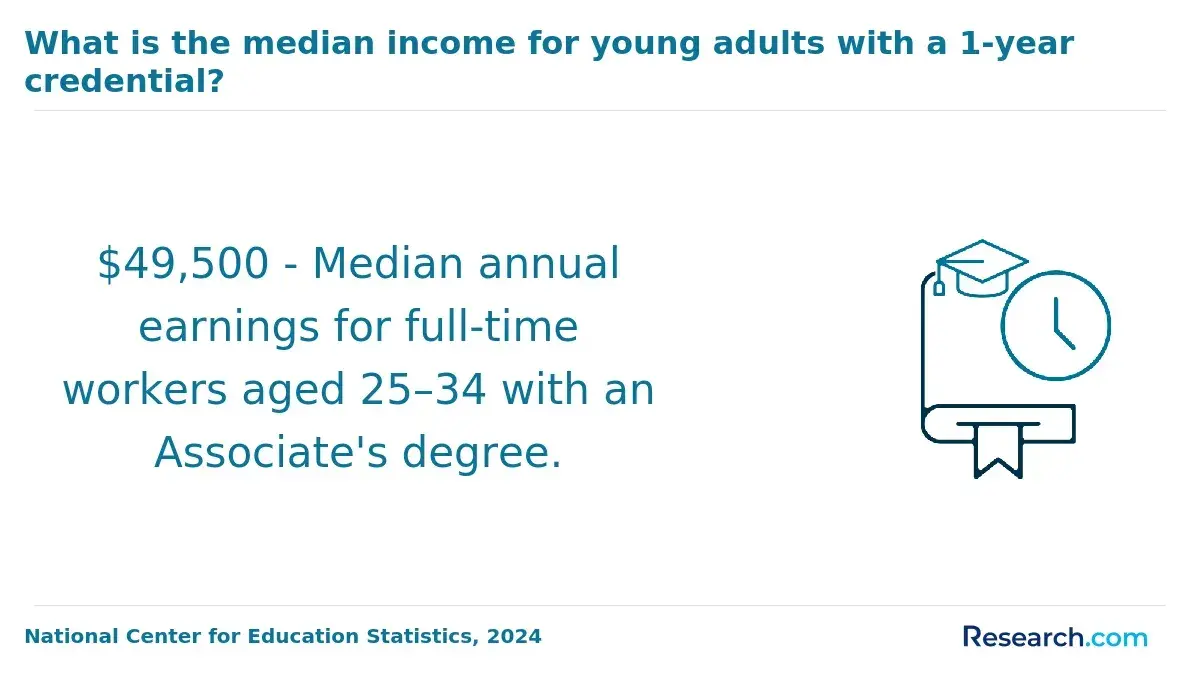
Earnings for organizational leadership graduates vary significantly by degree level, influenced by factors such as employer expectations, regional labor markets, and the specific roles graduates pursue. Entry-level certificates and associate degrees typically lead to supervisory positions with median wages between $45,000 and $60,000 but often entail limited promotional avenues and higher job volatility. Bachelor's degrees generally unlock mid-management opportunities, where median salaries rise to approximately $65,000-$80,000, reflecting roles that require greater responsibility for teams and budgets. Advanced degrees, including master's and doctorates, tend to qualify graduates for senior leadership or consulting roles with median pay ranging from $90,000 to $120,000, although these gains also depend on the field's demand for licensure and specialized skills in analytics or change management.
Interpreting these pay scales requires considering more than salary alone. The transition from one degree to the next often involves balancing time, tuition costs, and potential transfer credits against anticipated wage increases and improved job security. For working adults or military-affiliated students, part-time formats and credit transfer pathways can make this investment more manageable. Regional industry demands and individual prior experience frequently affect whether advanced credentials yield expected returns, making it crucial to align educational advancement with local market realities and specific career goals rather than assuming uniform wage progression.
One organizational leadership graduate recounted carefully comparing local job postings with reported wage data while deciding whether to pursue a master's after completing a bachelor's. Initial enthusiasm about salary increases was tempered by the realization that many employers prioritized leadership experience and certification over an additional degree alone. This insight prompted a strategic decision to first acquire targeted professional credentials alongside part-time graduate study-a compromise that balanced cost, time, and potential salary growth more realistically than aiming directly for a doctoral path.
Which Organizational Leadership Degree Level Offers the Strongest Employment Prospects?
Employment prospects for organizational leadership degrees vary significantly by credential level, with bachelor's degrees offering the broadest and most stable access to relevant roles. Labor market data from the U.S. Bureau of Labor Statistics in 2024 shows that completion-to-employment rates for those holding bachelor's degrees in leadership fields exceed 80% within a year, reflecting employer preferences for this baseline credential in management pipelines. While certificates and associate degrees provide quicker entry points into the workforce, their holders often confront limited upward mobility and narrower occupational scope since many leadership and supervisory positions explicitly require at least a bachelor's degree. For individuals aiming to enter the workforce promptly or test career fit without extended study, these shorter programs may still serve a purpose but typically come with constraints on long-term advancement.
Master's degrees in organizational leadership demonstrate distinct advantages for specialization and progression into senior roles, where leadership responsibilities demand both advanced knowledge and demonstrated experience. Integrated Postsecondary Education Data System analyses highlight that individuals with master's degrees can transition into mid- and upper-management positions within three to five years of graduation, often benefiting from salary premiums and stronger job security.
The tradeoff involves longer educational commitment but yields broader career flexibility and employer recognition in competitive markets, particularly where leadership roles require nuanced skills or specialized certifications. Doctoral credentials, while yielding high-level academic, consulting, or executive-track opportunities, represent a niche path limited by extended timelines and fewer openings, suitable primarily for those targeting research or top-tier strategic roles rather than general leadership positions.
What Entry-Level Jobs Can You Get With a Organizational Leadership Degree?
Entry-level organizational leadership jobs in the United States vary substantially based on degree level, with bachelor's degree holders typically accessing supervisory trainee or managerial roles, while associate degree graduates often find opportunities limited to support or coordinator positions. Many employers prioritize candidates who have completed internships or practicum experiences that demonstrate practical leadership application, reflecting a 2024 Bureau of Labor Statistics report emphasizing real-world exposure as a key screening factor. In competitive markets, this experience can distinguish candidates, whereas absence of it may confine graduates to roles with limited advancement, underscoring the importance of integrating hands-on internships during study.
Career opportunities with an organizational leadership degree also hinge on certifications like CPM or SHRM-CP, especially for roles linked to human resources, which can accelerate early mobility but are not universally required. While some entry positions include on-the-job training, there is an observable mismatch between advertised "entry-level" roles and actual experience expectations, which impacts job stability and skill development pathways. Remote work availability is growing unevenly, influencing access for candidates outside metropolitan hubs and shaping choices around location and career planning. For those weighing associate versus bachelor's programs, students should consider how foundational supervisory skill acquisition and internship integration affect long-term employability more than the credential alone.
Students comparing degree trajectories should also factor in strategic alignment with graduate study plans and industry demand trends, recognizing that some roles serve primarily as transitional stepping stones rather than stable career entry points. For insight into affordability considerations blending with degree outcomes, those exploring engineering-adjacent leadership roles might reference online engineering degree programs as a model of integrating cost, access, and job alignment. Overall, navigating entry-level organizational leadership positions requires balancing educational investment, experiential learning, and certification readiness to optimize both immediate employment prospects and longer-term career mobility.
How Do Organizational Leadership Degree Levels Affect Career Advancement and Promotion Opportunities?
Career trajectories in organizational leadership clearly differ by degree level, with master's and doctoral credentials often enabling faster access to mid- and senior-level management positions that explicitly require advanced training in strategic leadership and organizational development. Bachelor's degree holders frequently enter supervisory roles but face slower promotion paths unless supplemented by significant work experience or professional certifications, highlighting a tradeoff between formal education and on-the-job learning. According to the 2024 National Center for Education Statistics, professionals with graduate degrees typically experience accelerated advancement cycles, reflecting employer preferences for credentials tied to leadership competencies and formal preparation. However, attaining a doctoral degree, while less common, often positions candidates for executive or consultancy roles demanding rigorous research and policy expertise, though these pathways usually require longer commitment and rarely guarantee immediate promotion.
The degree level also influences when and how leaders move upward, as employers increasingly list credential requirements and continuing education mandates as prerequisites for advancement in leadership roles. For working adults and transfer students, prior experience and credit transfer options can mitigate time-to-degree, potentially increasing readiness for promotion without prolonged educational interruptions. Conversely, in highly competitive sectors, holding only a bachelor's degree may limit mobility despite frontline leadership skills, underscoring the importance of aligning degree choice with long-term career planning and industry standards. Licensure or certification requirements in specific fields can further complicate this landscape, making certain advanced degrees or specialized credentials necessary for eligibility in regulated leadership positions.
One graduate recalled hesitating over pursuing a master's in organizational leadership after several years of frontline management, concerned whether the investment would unlock new opportunities or be overshadowed by internal candidates with similar experience but no advanced degree. After completing the program, they recognized how the curriculum's emphasis on change management and strategic decision-making increased their confidence in applying for complex leadership roles and helped meet increasingly stringent employer expectations, ultimately smoothing their transition to a departmental director position despite initial uncertainty about formal credentials versus experience.
Is a Organizational Leadership Degree Worth It Based on Salary, Employment, and ROI?
Choosing whether to pursue an organizational leadership degree requires careful consideration of how degree level influences salary, employment stability, and career advancement. For instance, those holding a master's degree typically find stronger mobility and higher wages compared to bachelor's holders, although entry-level roles often do not demand graduate credentials. This dynamic underscores the importance of aligning educational investment with actual labor market demand and individual career timelines-particularly for working adults balancing opportunity costs tied to time-to-completion against potential salary gains. The decision becomes especially complex for transfer or military-affiliated students who must weigh prior credits and experience against program length and costs.
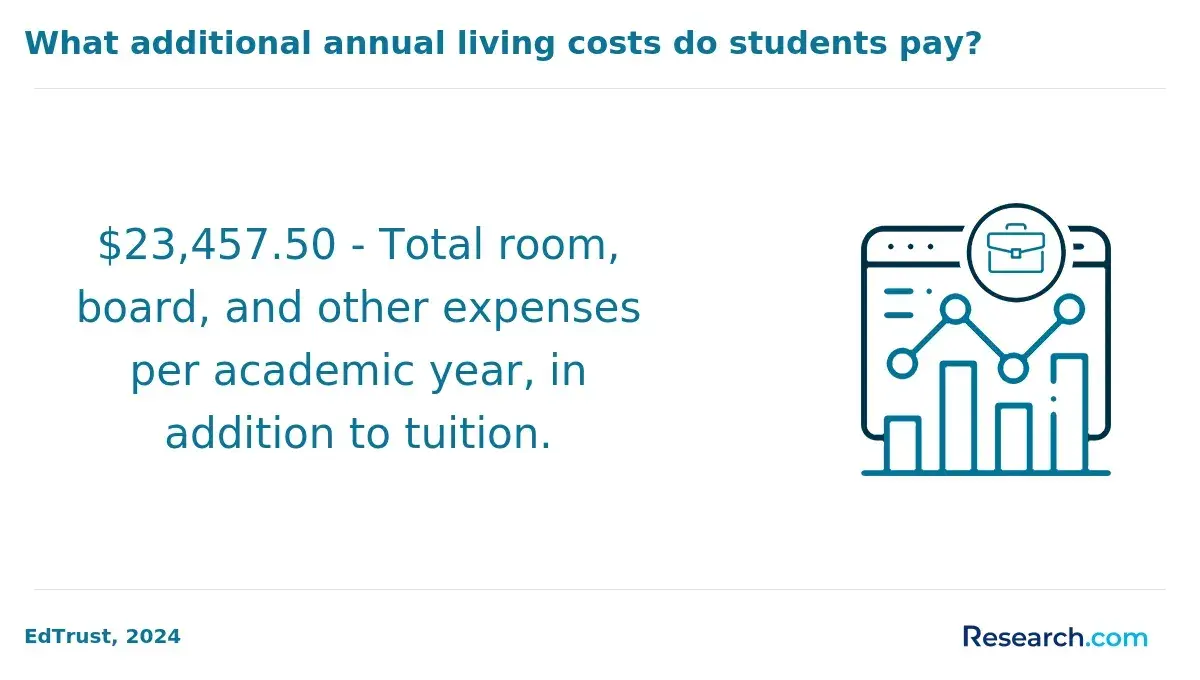
Employment outlook for management and leadership roles remains favorable, but assessing the return on investment for organizational leadership graduates goes beyond tuition. Living expenses, loan repayment burdens, and delayed income growth due to educational interruptions shape real-world ROI. Candidates who strategically select accelerated or part-time paths, such as exploring accelerated marriage and family therapy programs as analogs for shorter program options, might reduce opportunity costs. Still, success hinges on employer recognition of combined leadership experience and credentials, regional credentialing requirements, and sector-specific factors that influence advancement. Thus, salary potential, employment stability, and completion time must be balanced with realistic debt management and labor market alignment to inform sound decisions.
This nuanced analysis applies differently depending on whether a student already holds an associate degree or substantial professional experience. While higher degree completion often correlates with improved salary outcomes, especially in competitive labor markets, the practical payoff depends on the student's ability to complete the program efficiently without incurring crippling debt or extended income disruption. Considering organizational leadership degree salary and employment outcomes alongside one's personal, financial, and regional context will help ensure a measured approach to education that prioritizes long-term career sustainability.
How Do Associate, Bachelor's, Master's, and Doctoral Organizational Leadership Degrees Compare?
Employment and advancement in organizational leadership vary considerably by degree level, with a bachelor's degree often serving as the practical minimum for most management roles due to employer preferences for a four-year credential. While associate degrees can provide affordable and timely workforce entry, their scope for upward mobility remains constrained unless supplemented by significant experience or further education. For instance, working adults holding associate credentials frequently leverage these as stepping stones toward bachelor's programs, which offer broader specialization options-such as HR leadership or project management-and better alignment with industry certifications that enhance job stability and professional growth.
Master's degrees in organizational leadership generally require prior work experience and focus on strategic competencies that prepare candidates for mid- to upper-level administrative positions, with roughly 65% of master's graduates moving into mid-management roles compared to about 45% from bachelor's holders, according to the Bureau of Labor Statistics. However, the additional investment in time and tuition must be balanced against the specific career trajectory sought, as not all sectors mandate or substantially reward master's credentials. Doctoral programs are more research- and theory-oriented, targeting those aiming for academic, consultancy, or executive-level roles, but they demand significant commitment and typically do not translate directly to increased immediate employment opportunities; instead, their value emerges in specialized domains requiring deep expertise or thought leadership.
Deciding whether to halt at an associate or bachelor's degree, pursue a master's, or commit to a doctorate depends heavily on individual career goals, industry norms, and the tradeoff between time spent in study and expected professional returns. Credit transfer pathways facilitate modular learning from associate to bachelor's, supporting working learners, but beyond a bachelor's degree, the incremental practical advantage narrows, especially in sectors valuing hands-on experience. Ultimately, aligning educational investments with realistic expectations about role eligibility, credential recognition, and stable earnings is critical for informed planning in organizational leadership careers.
Which Industries and Employers Hire Organizational Leadership Graduates by Degree Level?
The hiring landscape for organizational leadership graduates shifts markedly by degree level, influencing industry access, role complexity, and employer expectations. Associate degree holders often enter operational supervisory roles in retail, healthcare support, and manufacturing, where employers prioritize practical skills and certifications over advanced academic credentials. For example, frontline supervisors in manufacturing plants typically require applied knowledge and experience more than strategic leadership training, reflecting a tradeoff where stopping at an associate level limits progression into broader management tracks but allows quicker workforce entry.
Bachelor's degree graduates are commonly recruited into mid-level management across business services, education, government, and nonprofit sectors, where proficiency in team leadership and project management is critical. Employers such as regional healthcare providers or government contractors expect these candidates to navigate organizational dynamics effectively, balancing communication and operational duties. Meanwhile, master's degree holders access specialized leadership roles in finance, tech, and healthcare administration, frequently involved in high-level decision-making and cross-functional strategy; this credential typically leads to director-level positions with greater salary potential but demands deeper expertise and strategic insight.
Doctoral graduates concentrate in academia, research, and policy-focused leadership roles at universities, think tanks, and global organizations, where advancing theoretical frameworks and innovation is central. Certificates generally enhance existing roles with focused skills like conflict resolution or change management but rarely replace degree qualifications. According to 2024 labor analyses from the U.S. Bureau of Labor Statistics, degree level remains a critical filter for organizational leadership roles, with employer preferences balancing academic credentials against hands-on experience, underscoring the necessity for students to weigh long-term return on educational investment against immediate employment needs.
What Skills, Credentials, and Experience Improve Organizational Leadership Career Outcomes?
Career advancement in organizational leadership hinges on a strategic blend of technical skills, credentials, and applied experience tailored to degree level and role complexity. Employers consistently prioritize competencies such as strategic thinking, communication, and change management across all educational tiers, but candidates with bachelor's degrees often encounter a ceiling without complementary certifications like the Project Management Professional (PMP). For example, an associate's degree graduate aiming for mid-level leadership typically benefits more from stacking credentials and internships than pursuing an immediate master's degree, as experiential learning demonstrably accelerates promotion readiness. This interplay between credentials and real-world application reflects hiring managers' preference for candidates who can show both theoretical knowledge and evidence of leadership impact through portfolios or documented team projects, which strongly influence movement beyond entry-level positions.
Organizational leadership skills credentials for career advancement differ significantly depending on the intersection of degree attainment and prior experience. Veterans and military-affiliated students, for instance, bring transferable leadership capabilities that complement foundational coursework and can shorten the pathway to supervisory roles at the associate or bachelor's degree level. Advanced certifications become more critical for master's degree holders targeting executive tracks, where industry-specific specializations address employer expectations for managing complex organizational challenges.
Career mobility likewise benefits from experiences such as internships or apprenticeships; a 2024 College Scorecard analysis highlights that candidates with at least one internship are 30% more likely to secure leadership positions within two years. Adult learners and transfer students must weigh how prior credits and work experience integrate with credential stacking to optimize employment outcomes, rather than relying solely on degree progression or generic leadership training found in a library degree or related programs.
The impact of organizational leadership experience and certification on job outcomes supports a nuanced approach to career planning. Soft skills like emotional intelligence and adaptability often outweigh technical aptitude during employer screening, especially in markets where competition for leadership roles is intense. This underscores that the practical value of degrees and certifications aligns not only with credential prestige but also with demonstrated applied leadership and interpersonal effectiveness. Candidates who strategically compile portfolios and engage in experiential learning capitalize on employer demand for readiness and complex problem-solving at scale, ensuring their credentials translate into tangible employment access and upward mobility.
Which Organizational Leadership Degree Level Is Best for Your Career Goals?
Deciding on the best organizational leadership degree level involves weighing practical workforce realities against individual career aims. Bachelor's degrees often serve as a critical access point for mid-level management, offering broad employment opportunities with moderate advancement potential and flexible learning formats for working adults. However, choosing to stop at this level may limit specialization and salary growth, especially in sectors demanding advanced expertise or executive qualifications. For instance, adult learners frequently leverage transfer credits to accelerate bachelor's completion, balancing opportunity cost and employer expectations in their decision-making.
Master's degrees in organizational leadership significantly enhance specialization and open doors to senior management and niche leadership roles. According to 2024 data from the National Center for Education Statistics, holders of master's degrees see employment rates about 10% higher than bachelor's-only counterparts, underlining a tangible return on additional investment and time. This degree is often required for leadership positions in regulated industries or those desiring a deep skill set, and may be pursued part-time to accommodate working professionals. Those interested in transitioning fields might also explore related credentials, like a masters degree in marketing, to expand career prospects.
Doctoral degrees attract a narrower audience targeting top-tier leadership, research, or academic roles, where the payoff in professional mobility varies and often hinges on alignment with institutional norms. While offering extensive specialization and long-term credential value, the time, cost, and uncertain impact on earnings require careful deliberation, especially since some employers limit advancement rewards beyond the master's level. For working professionals, strategic credential stacking and employer dialog are essential to ensure degree-level choices support realistic long-term growth rather than solely prestige. Understanding these tradeoffs clarifies how organizational leadership degree pay and employment outcomes correlate with thoughtful educational pathway selection.
References
- Top 7 Leadership Skills in the Workplace With Strategies For Development and Improvement https://bakkah.com/knowledge-center/leadership-skills-in-the-workplace
- Career Paths With a Degree in Organizational Leadership https://www.calcoast.edu/news/career-paths-with-a-degree-in-organizational-leadership
- How leadership skills can improve your career? | 3CIR https://www.3cir.com/how-leadership-skills-can-improve-your-career/
- Is a master's degree in leadership worth it? | edX https://www.edx.org/resources/is-a-masters-in-organizational-leadership-worth-it
- What Jobs Can I Get With a Degree in Organizational Leadership? | CSU Global https://csuglobal.edu/blog/what-jobs-can-you-get-bachelors-degree-organizational-leadership
- 5 Organizational Leadership Careers https://claremontlincoln.edu/news-blog/organizational-leadership-careers/
- Doctor of Education in Organizational Leadership https://www.umassglobal.edu/academic-programs/doctor-education-organizational-leadership
- Educational Leadership Degree: Master’s vs. Doctorate https://www.educationalleadershipdegree.com/blog/educational-leadership-degree-masters-vs-doctorate/
- Importance of On-The-Job Experiences in Developing Leadership Capabilities - Southern Regional Education Board https://www.sreb.org/publication/importance-job-experiences-developing-leadership-capabilities
- 5 Career Paths in Organizational Leadership https://www.jobconvo.com/blog/en/5-career-paths-organizational-leadership/
Other Things You Should Know About Organizational Leadership
The organizational leadership curriculum grows more complex and demanding with each degree level, especially at the graduate stage where critical thinking, research, and application to real-world settings intensify. Prospective master's and doctoral students should anticipate a significant time commitment for projects, case studies, and thesis work that extends beyond typical coursework. Understanding this workload is crucial because the ability to manage it effectively often correlates with successful degree completion and better career outcomes, particularly in managerial or executive tracks where advanced problem-solving skills are demanded.
Undergraduate programs tend to emphasize foundational leadership concepts with limited direct application in complex organizational settings, while graduate programs incorporate more experiential learning such as internships, capstones, or applied research. This practical engagement is vital for employment in roles requiring immediate leadership impact. Students prioritizing hands-on experience should therefore lean toward programs with integrated practica or partnership-based projects, especially at the master's level, since these better prepare for mid- to upper-level leadership roles and meet employer expectations for readiness.
Advancing too rapidly through degree levels without substantial professional leadership experience can result in a disconnect between academic knowledge and workplace realities, reducing the practical value of the degree. Many organizations place a premium on proven leadership ability alongside education, so pausing education after a bachelor's or master's degree to develop real-world skills often improves long-term career trajectory. A strategic break allows for applying learned theory, enhancing networks, and clarifying professional goals before pursuing costly and time-intensive doctoral programs whose immediate payoff in the workplace can be limited without corresponding experience.
Employers generally expect bachelor's degree holders to demonstrate potential and foundational leadership aptitude, while master's degree graduates are expected to bring refined analytical skills and practical leadership strategies aligned with organizational goals. Doctoral candidates, meanwhile, are often viewed as experts suited for high-level consultancy, thought leadership, or academic roles rather than typical management positions. This implies that degree selection should align tightly with career ambitions: those aiming for broad-based management roles may prioritize master's programs with applied leadership focus, whereas those targeting specialized research or academic leadership may pursue doctoral studies.