
2027 Best Online Curriculum and Instruction Doctoral Programs

Co-Founder and Chief Data Scientist
An online doctorate in curriculum and instruction is usually for experienced educators who want to move beyond classroom delivery into curriculum leadership, instructional improvement, teacher development, research-informed practice, or district-level academic decision-making. The decision is not simply whether an online Ed.D. is convenient. You need to know whether the program is respected, whether it fits your schedule and budget, whether it supports your career goals, and whether it gives you the research and leadership skills employers expect.
This guide explains how online Ed.D. and Ph.D. programs in curriculum and instruction work, how they compare with campus-based programs, what they cost, what admissions committees look for, which courses are common, and how to evaluate program quality. It also covers accreditation, professional networking, career growth, digital competencies, and common mistakes to avoid before enrolling. If you are comparing doctoral study with other advanced education pathways, you may also want to review Research.com’s guide to online curriculum and instruction master’s programs.
According to the Bureau of Labor Statistics (BLS, 2024), employment for instructional coordinators is projected to grow by 1% from 2024 to 2034. That modest projected growth makes program selection especially important: the strongest candidates will usually need more than a credential. They need evidence of leadership ability, applied research skill, curriculum expertise, and measurable impact in educational settings.
Best Online Curriculum and Instruction Doctoral Programs Table of Contents
- Can a curriculum and instruction doctorate be completed online?
- How do online and campus-based doctoral programs compare?
- What does an online curriculum and instruction doctorate cost?
- What admission and program requirements should applicants expect?
- What courses are common in online curriculum and instruction doctoral programs?
- How should you compare online Ed.D. programs in curriculum and instruction?
- 2027 best online curriculum and instruction doctoral programs
- How can online Ed.D. students build professional networks and mentorships?
- Can an online Ed.D. in Curriculum and Instruction be finished faster?
- What accreditation and quality standards matter most?
- What career growth can an online Ed.D. in Curriculum and Instruction unlock?
- Do online Ed.D. programs build future-ready digital skills?
- Why do faculty qualifications matter in an online Ed.D.?
- Which student support services help online doctoral students succeed?
- Can interdisciplinary study strengthen Ed.D. outcomes?
- How can an online Ed.D. improve educational leadership skills?
- What other specializations can strengthen an education career?
- How do dual-degree pathways complement an Ed.D. in Curriculum and Instruction?
- Can library science skills improve doctoral research and curriculum work?
Quick Answer: Is an Online Ed.D. in Curriculum and Instruction a Good Option?
Yes, an online Ed.D. in curriculum and instruction can be a strong option for working educators who want advanced training in curriculum design, instructional leadership, assessment, educational research, and school improvement without relocating or leaving their jobs. The degree is most valuable when it comes from a regionally accredited institution, includes a rigorous dissertation or applied capstone, offers strong faculty support, and aligns with the student’s target role.
It is not the right fit for everyone. If your goal is full-time academic research, a Ph.D. may be more appropriate than an Ed.D. If your target job requires state licensure, you must confirm that the online program meets the relevant licensing or endorsement rules before applying. If you mainly want a salary increase, compare total cost, employer tuition support, likely career opportunities, and time to completion before assuming the degree will pay off.
| Best fit | Use caution if | Questions to ask before applying |
| Experienced teachers, instructional coaches, curriculum specialists, department chairs, school leaders, and education consultants who want doctoral-level applied expertise. | You need a licensure pathway, prefer face-to-face learning, lack time for independent research, or are choosing mainly because of title or prestige. | Is the institution regionally accredited? Does the program require campus visits? What is the total cost? What support is available for dissertation or capstone completion? |
Can you get a degree completely online?
Yes. Many universities offer online doctorates in curriculum and instruction, including Ed.D. programs designed for practicing educators. Some are fully online, while others include short residencies, synchronous meetings, dissertation defenses, internships, or campus-based intensives. Before enrolling, verify the delivery format in writing rather than assuming “online” means no in-person requirements.
Employers commonly evaluate online doctoral degrees by looking at the same quality signals they use for campus programs: institutional accreditation, reputation, curriculum rigor, faculty expertise, and whether the university has an established academic presence. Alumni advice is also useful. In one Statista survey, 24% of U.S. online higher education alumni advised future students to research cost and financial aid more carefully, while another 23% advised comparing more programs before enrolling.
Will employers respect an online doctorate in curriculum and instruction?
Generally, yes, provided the degree is from a credible, regionally accredited institution. Employer confidence is stronger when the online program is offered by a university that also has a physical campus and a recognized academic brand. About three-quarters of employers value degrees from regionally accredited online programs, and favorability rises to 92% when the program is offered by a brick-and-mortar university. Students considering broader teacher preparation options can also review Research.com’s online science education degree guide.
Are online doctoral degrees recognized internationally?
Online degrees may be accepted outside the United States, but recognition depends on the country, employer, licensing body, and institution. If you plan to work internationally, ask the program for documentation of accreditation and confirm whether the credential will satisfy employment, immigration, professional registration, or licensing rules in the target country. Human resources professionals often view online degrees as legitimate, but many still prefer credentials from universities with campus-based operations. Educators exploring related graduate options can compare online master’s programs in adult education.
Online vs. Traditional Curriculum and Instruction Doctoral Programs
Online and campus-based curriculum and instruction doctorates can lead to similar academic outcomes, but they differ in how students learn, interact, manage time, and build professional relationships. The better choice depends on your work schedule, learning style, access to campus, need for structure, and comfort with technology.
| Factor | Online Ed.D. or Ph.D. | Campus-based doctorate | Best for |
| Schedule | Usually more flexible, with asynchronous coursework or evening meetings in many programs. | Often follows fixed class times and on-campus attendance expectations. | Online programs are often better for full-time educators and caregivers. |
| Interaction | Uses learning platforms, video meetings, discussion boards, group projects, and virtual advising. | Offers in-person classes, campus events, informal faculty access, and face-to-face cohort interaction. | Campus programs may suit students who need frequent in-person engagement. |
| Pacing | May allow part-time enrollment, accelerated terms, or self-directed research timelines. | Often follows a more structured sequence with set semesters and cohort milestones. | Online study favors disciplined students who can manage deadlines independently. |
| Learning tools | Relies heavily on digital collaboration, online libraries, recorded lectures, analytics tools, and virtual presentations. | May emphasize classroom seminars, local practicums, campus research groups, and direct observation. | Online students should be comfortable learning and collaborating through technology. |
Flexibility is one of the biggest reasons students choose online learning. Statista reported that 31% of surveyed online students selected this format because it fit their scheduling needs.
Is an online doctorate less expensive than an on-campus doctorate?
Not always. Online programs often reduce relocation, commuting, parking, and campus housing costs, but tuition can still be substantial. The total cost of an online Ph.D. in curriculum and instruction is commonly described as $25,000$50,000, while reported tuition and fees for a traditional counterpart are $10,687- $19,271. However, campus attendance can add major living expenses. Students’ living expenses could range from $14,000 to $55,000 a year, with food costs averaging $350, twice the cost of cooking at home (Think Impact, 2026; UniAcco, 2026).
Is an online Ed.D. in curriculum and instruction equivalent to a regular degree?
An online Ed.D. can be academically comparable to an on-campus doctorate when the program is accredited, well designed, faculty-led, and held to the same standards for coursework and doctoral research. The format alone does not determine quality. What matters is the strength of the curriculum, faculty supervision, research expectations, assessment methods, student support, and institutional credibility. Students comparing pathways can also review the major education degree types available.
The trade-off is practical. Online doctoral students gain flexibility, but they must manage work, family, coursework, collaboration, and independent research without the daily structure of campus life. Students who need close in-person supervision or strong peer community may prefer a hybrid or campus-based program.
Institutional Efforts for Higher Ed Faculty Development Access

How much does an online curriculum and instruction doctoral program cost?
The estimated cost of an online Ed.D. in curriculum and instruction generally ranges from $25,000 to $50,000. Actual cost depends on credit requirements, public or private institution status, residency rules, technology fees, dissertation continuation fees, transfer credit policies, and whether students attend full time or part time. Some students pay less because they avoid campus housing and commuting; others pay more because they enroll in high-cost private institutions or need extra dissertation terms.
Financial aid, employer tuition assistance, military benefits, scholarships, and payment plans may reduce out-of-pocket expenses. Students interested in education and information access careers may also compare related online library science degree options.
| Cost factor | Why it matters | What to ask the school |
| Tuition per credit | Doctoral programs often require many credits, so small per-credit differences can significantly affect total cost. | Is tuition different for in-state, out-of-state, full-time, or part-time students? |
| Dissertation or capstone fees | Students who need extra terms to complete research may pay continuation or enrollment fees. | What happens financially if the dissertation takes longer than expected? |
| Residency requirements | Travel, lodging, and time away from work can increase total cost. | Are any campus visits, intensives, or in-person defenses required? |
| Technology and materials | Online study may require software, hardware, proctoring tools, books, and research resources. | Which fees are mandatory beyond tuition? |
| Transfer credits | Accepted doctoral or graduate credits can shorten the program and reduce cost. | How many credits can be transferred, and who decides whether they apply? |
Is an online curriculum and instruction doctorate worth it?
It can be worth it if the degree supports a clear professional goal, such as moving into curriculum leadership, instructional coordination, district administration, higher education teaching, consulting, or applied education research. The financial case depends on cost, debt, current salary, employer support, and the roles available in your region or sector.
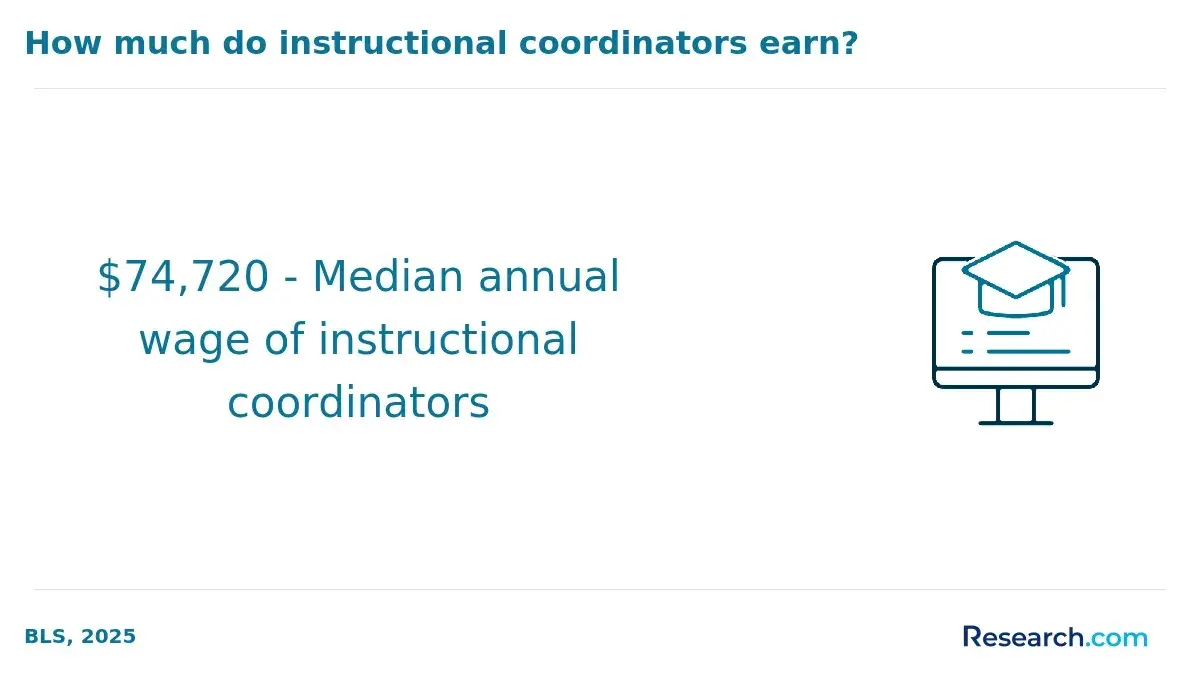
For context, the median salary for instructional coordinators is $63,740, and the BLS reports $98,420 for elementary, middle, and high school principals. Those figures do not guarantee outcomes for doctoral graduates, but they can help students evaluate whether the credential aligns with realistic career possibilities.
What are the requirements for an online curriculum and instruction doctoral program?
Requirements vary by institution, but applicants commonly need a master’s degree in education or a related field, professional experience in teaching or educational leadership, academic writing ability, and a clear reason for doctoral study. Once admitted, students usually complete advanced coursework in research methods, curriculum theory, instructional design, assessment, equity, leadership, and educational technology. Most programs end with either a dissertation or an applied capstone project.
Admission Requirements
Although every university sets its own admissions policy, online curriculum and instruction doctoral programs often review the following materials:
- Relevant prior degree: Most applicants are expected to hold a master’s degree in education, curriculum and instruction, instructional design, educational leadership, or a closely related field. Some programs may consider applicants with a bachelor’s degree and substantial professional experience.
- Academic record: Many institutions look for graduate-level academic strength and may require a minimum GPA of 3.0 or higher on a 4.0 scale.
- Professional experience: Programs often prefer applicants who have worked as teachers, instructional coaches, curriculum writers, school leaders, training specialists, or education administrators.
- Recommendations: Letters from supervisors, professors, or professional colleagues help admissions committees evaluate the applicant’s leadership potential, academic readiness, and professional impact.
- Statement of purpose: Applicants are usually asked to explain their career goals, research interests, reasons for choosing curriculum and instruction, and fit with the program.
- Writing sample: Some programs request scholarly or professional writing to assess readiness for doctoral-level research and academic communication.
Skills needed for success
Online doctoral study requires more than interest in education. Students need the discipline and professional habits to complete demanding research and writing while often continuing to work full time. The BLS (2022b) identifies several relevant abilities for roles such as instructional coordinator.
- Research ability: Doctoral students must be able to locate evidence, evaluate studies, use appropriate methods, analyze data, and write clearly about findings.
- Critical thinking: Curriculum leaders need to interpret complex instructional problems, weigh competing priorities, and propose practical improvements.
- Communication: Students must present research, collaborate with faculty and peers, write at a scholarly level, and explain recommendations to educators and administrators.
- Time management: Online learners need strong self-direction because coursework, reading, research, and dissertation tasks often happen outside standard work hours.
Students preparing for curriculum leadership should also build these workplace skills:
- Data analysis: Instructional coordinators often review student assessment results and instructional practices to identify areas for improvement.
- Decision-making: Curriculum professionals recommend materials, instructional methods, program changes, and assessment strategies.
- Collaboration: Effective curriculum work depends on trust with teachers, principals, district leaders, families, and community partners.
- Leadership: Many roles involve coaching teachers, leading professional development, and guiding teams through instructional change.
What technology do online doctoral students need?
Students should confirm technology requirements with each university before enrolling because learning platforms, proctoring systems, video tools, and research software vary. Based on Microsoft’s technical recommendations, online learners should have access to the following:
- Reliable internet: A stable connection is necessary for live sessions, discussion boards, research databases, uploads, and video meetings. A 400 kbps cable or DSL connection is recommended.
- Computer or laptop: Students should have a device capable of handling the learning management system, video conferencing, document editing, and research tools. Recommended specifications include at least a 1 GHz processor and 256 MB of RAM for Windows or at least a 1 GHz Intel processor (Core 2 Duo) and 1 GB of RAM for Mac.
- Video conferencing software: Programs may use Microsoft Teams, Skype, Zoom, or similar platforms for seminars, presentations, advising, and group collaboration.
- Webcam: Students in programs with live video participation should have a webcam, preferably HD. Most computers and tablets purchased within the last five years include a usable camera.
- Headphones and microphone: Built-in audio may be enough, but an external USB microphone can improve sound quality during discussions, presentations, and dissertation meetings.
Ask the program whether specialized software, online proctoring, statistical tools, or secure testing equipment are required before the first term begins.
| Windows | Mac | |
| Internet Connection | 400 kbps cable or DSL connection | 400 kbps cable or DSL connection |
| RAM | 256 MB | 1 GB |
| Processor | 1GHz | 1 Ghz Intel processor (Core 2 duo) |
Courses to Expect in Online Curriculum and Instruction Doctoral Programs
Course names vary by university, but online Ed.D. and Ph.D. programs in curriculum and instruction usually combine theory, applied leadership, research training, technology, assessment, and equity-focused instructional improvement. These doctoral courses can help educators expand what they can do with a teaching degree.
- Educational research methods: Students learn qualitative, quantitative, or mixed-methods approaches used to study teaching, learning, curriculum, and program effectiveness.
- Curriculum design and evaluation: Coursework examines curriculum models, instructional alignment, standards, assessment design, materials development, and program review.
- Instructional leadership: Students study how to lead academic improvement, guide professional learning, support teachers, and manage change in schools or organizations.
- Instructional technology: Courses may cover online learning, multimedia instruction, learning management systems, digital accessibility, and technology-supported teaching strategies.
- Diversity, equity, and inclusion: Students analyze cultural responsiveness, educational access, social justice, inclusive curriculum, and strategies for supporting diverse learners.
- Dissertation or applied capstone: Doctoral candidates complete a major research or practice-based project that demonstrates advanced inquiry and problem-solving in education.
Things to Look for in Online Ed.D. in Curriculum and Instruction Programs
Online Ed.D. programs may appeal to the 3.8 million public school teachers in the U.S. who want career advancement without stepping away from employment (Pew Research Center, 2024). Still, convenience should not be the only deciding factor. Use the criteria below to compare programs before submitting applications.
- Accreditation: Confirm that the institution holds recognized accreditation. Accreditation affects employer trust, credit transfer, financial aid eligibility, and the perceived value of the degree.
- State and location rules: Ask whether the program accepts students from your state or country and whether any fieldwork, exams, or licensure-related components can be completed where you live.
- Delivery format: Determine whether courses are fully online, hybrid, synchronous, asynchronous, cohort-based, self-paced, accelerated, or residency-based.
- Academic reputation: Review faculty credentials, alumni outcomes, research areas, completion expectations, and whether the program has a long-standing education department.
- Total cost: Look beyond tuition. Include fees, travel, software, books, dissertation enrollment, transcript evaluation, and potential lost income if the program affects your work schedule.
- Student support: Strong online doctoral programs provide academic advising, technology help, writing support, research librarian access, career services, and dissertation mentoring.
- Program outcomes: Ask about completion rates, dissertation support, graduate roles, time to completion, and how the program measures student learning.
| Common mistake | Why it creates risk | Better approach |
| Choosing the cheapest tuition without checking total fees. | Technology, dissertation, residency, and continuation fees can change the real cost. | Request a full cost sheet for the entire program. |
| Assuming every online program is fully remote. | Some programs require campus visits, synchronous sessions, or in-person defenses. | Ask for all required in-person or live components before applying. |
| Ignoring accreditation. | Unaccredited or poorly recognized credentials may limit employment and transfer options. | Verify institutional accreditation before paying application fees. |
| Relying only on rankings. | A highly ranked program may not fit your schedule, budget, research interests, or career goals. | Compare rankings with cost, faculty match, support, format, and outcomes. |
| Assuming salary gains are automatic. | A doctorate does not guarantee promotion or higher pay. | Check district pay rules, employer requirements, and local job openings. |
2027 Best Online Curriculum and Instruction Doctoral Programs
The National Science Foundation (NSF) reported a 0.2% increase in U.S. research doctorates awarded in 2024, with 58,131 degrees granted, including 0.9% EdDs. In 2024, 91.5% of new research doctorate recipients completed the survey on postgraduation plans. Financial and travel constraints, international student concerns, and disability-related community service cuts continue to affect access to advanced study. These issues help explain why flexible online doctoral formats remain important for working professionals.
Research.com review experts analyzed current public datasets from credible sources to identify online curriculum and instruction doctoral programs that can support educators seeking advancement while continuing to work. The following five programs were identified in the analysis:
Northcentral University
Northcentral University’s Ed.D. in Curriculum and Teaching is designed for educators interested in applying research-based instructional practices and strengthening curriculum expertise. The program includes a notable emphasis on research.
- Program Length: 33 months
- Tracks/Concentrations: Curriculum and Teaching
- Cost per Credit: $976 Per Credit
- Required Credits to Graduate: 48 credit hours
- Accreditation: Western Association of Colleges and Schools
Liberty University
Liberty University’s Ed.D. in Curriculum and Instruction in Elementary Education prepares students for classroom, curriculum, and instructional roles that may involve special education, general education, or community-based learning environments.
- Program Length: 2.5 years
- Tracks/Concentrations: elementary education
- Cost per Credit: $595 (full-time), $650 (part-time)
- Required Credits to Graduate: 54
- Accreditation: Southern Association of Colleges and Schools; National Council for the Accreditation of Teacher Education
Texas A&M University
Texas A&M University’s online Ed.D. in Curriculum and Instruction is built around educational leadership in teaching and learning environments. It is intended for mid-career professionals who want to expand their prior experience into leadership roles.
- Program Length: 4 years
- Tracks/Concentrations: Curriculum and Instruction
- Cost per Credit: $1,070.89 (resident), $1,600.40 (out-of-state)
- Required Credits to Graduate: 64 credit hours
- Accreditation: Southern Association of Colleges and Schools
University of West Florida
The University of West Florida’s online Ed.D. in Curriculum and Instruction emphasizes curriculum and assessment theory, design, development, evaluation, implementation, and applied research.
- Program Length: 32 months, plus dissertation hours
- Tracks/Concentrations: Curriculum and Instruction
- Cost per Credit: $384.60 (in-state), $1,044.24 (out-of-state)
- Required Credits to Graduate: 60
- Accreditation: Southern Association of Colleges and Schools
University of South Carolina
The University of South Carolina’s online Ed.D. in Curriculum and Instruction includes a curriculum studies concentration. The program examines contemporary and historical curriculum issues and is informed by the Carnegie Project on the Education Doctorate Consortium.
- Program Length: 4 years
- Tracks/Concentrations: Curriculum Studies
- Cost per Credit: $515 (in-state), $572.25 (out-of-state)
- Required Credits to Graduate: 60
- Accreditation: Southern Association of Colleges and Schools
How can online Ed.D. students build professional networks and mentorships?
Online doctoral students need to be intentional about networking because they do not automatically encounter faculty, classmates, and professional contacts on campus. Strong programs create virtual community, but students should also build their own professional network outside the learning platform.
- Join professional associations. Organizations such as the Association for Supervision and Curriculum Development (ASCD) and the American Educational Research Association (AERA) offer conferences, webinars, special interest groups, and research communities where doctoral students can meet educators, scholars, and curriculum leaders.
- Use professional social platforms carefully. LinkedIn and Twitter can help students follow education researchers, join discussions, share conference takeaways, and identify career opportunities. Keep posts professional and aligned with your research interests.
- Attend virtual conferences and webinars. Many education and EdTech events provide online access. These events allow students to hear current research, ask questions, and connect with practitioners beyond their university.
- Ask for faculty and alumni mentoring. Schedule virtual office hours, request feedback early, and ask faculty about research fit, dissertation planning, and career pathways. Alumni can provide practical insight into workload, hiring, and postgraduation transitions.
- Create peer study groups. Cohort chats, Zoom meetings, Microsoft Teams groups, and writing accountability sessions can reduce isolation and improve persistence.
- Use university career services. Online students should still have access to resume reviews, job search support, alumni events, interview preparation, and employer connections if the institution offers these services.
Can I Complete My Online Ed.D. in Curriculum and Instruction Quickly?
Some online Ed.D. programs are designed for faster completion through condensed terms, structured cohorts, year-round enrollment, transfer credit, or focused applied projects. These options can work well for highly organized educators who already have a clear research interest and can commit consistent weekly time to doctoral study.
Speed should not come at the expense of quality. Before choosing an accelerated pathway, ask whether the program shortens only the coursework or also compresses the dissertation timeline. Some programs are marketed as 2 year Ed.D programs online, but students should confirm the exact timeline, credit load, research expectations, and whether additional dissertation hours may be needed.
What Are the Accreditation Standards and Quality Measures for Online Ed.D. Programs?
Accreditation is one of the most important quality checks for an online Ed.D. in curriculum and instruction. At minimum, confirm that the institution is regionally accredited. When applicable, look for education-specific quality indicators, transparent student outcomes, qualified faculty, rigorous assessment, and clear dissertation or capstone standards.
Accreditation matters because it can affect employer acceptance, financial aid eligibility, credit transfer, and doctoral credibility. It does not guarantee that a program is the right fit, but lack of recognized accreditation is a serious warning sign. Students comparing cost-conscious graduate education routes can also review affordable online master’s degrees in teaching as a related planning resource.
| Quality measure | What it tells you | How to verify it |
| Institutional accreditation | The university meets recognized academic and administrative standards. | Check the school’s accreditation page and accreditor records. |
| Faculty credentials | Faculty should have doctoral training, research expertise, and relevant education experience. | Review faculty bios, publications, and dissertation supervision areas. |
| Dissertation or capstone support | Strong mentoring can affect completion and research quality. | Ask how advisors are assigned and how often students meet with chairs. |
| Student outcomes | Completion data and graduate roles help evaluate program performance. | Request available completion, retention, and career outcome information. |
| Online support infrastructure | Doctoral students need library access, writing help, technical support, and advising. | Ask what services are available to fully online students. |
What career growth can an online Ed.D. in Curriculum and Instruction unlock?
An online Ed.D. in curriculum and instruction can support advancement into roles that involve curriculum leadership, instructional improvement, teacher development, program evaluation, education consulting, assessment strategy, and academic administration. The degree is especially relevant for professionals who want to lead instructional change rather than focus only on classroom teaching.
Graduates may also build stronger research, policy analysis, and systems-change skills. Those abilities can be useful in school districts, higher education, nonprofit organizations, education technology companies, professional development organizations, and policy-related roles. If your career goal is broader administrative leadership or policy-focused work, an online doctorate in educational leadership may be a better or complementary option.
| Career direction | How the doctorate may help | Important caution |
| Instructional coordinator or curriculum specialist | Builds expertise in curriculum design, assessment, teacher support, and data-informed improvement. | Some roles require teaching credentials or district experience. |
| School or district leadership | Strengthens instructional leadership, strategic planning, program evaluation, and change management. | Principal or administrator roles may require separate licensure. |
| Higher education teaching | Provides doctoral credentials and research experience that may support college-level instruction. | Full-time faculty hiring is competitive and may favor Ph.D. preparation for research-heavy roles. |
| Education consulting | Supports credibility in curriculum audits, professional learning, assessment design, and instructional improvement. | Consulting success also depends on experience, network, and proven results. |
| Policy or nonprofit work | Develops research interpretation, program evaluation, and systems-level problem-solving skills. | Additional policy, grant, or management experience may be needed. |
Are online Ed.D. programs equipping educators with future-ready digital competencies?
Strong online Ed.D. programs increasingly expect educators to understand digital learning environments, virtual collaboration, instructional technology, accessibility, data-informed decision-making, and technology-supported assessment. These skills matter because curriculum leaders are often asked to evaluate digital tools, support online or blended instruction, and guide teachers through changing instructional systems.
Students should look for coursework or applied projects involving learning management systems, digital curriculum evaluation, adaptive learning tools, online teaching design, data analytics, and ethical technology use. Educators comparing earlier-stage pathways may also find value in reviewing affordable online elementary education degree programs.
How do faculty qualifications enhance the value of an online Ed.D. program?
Faculty quality can strongly shape the value of an online doctoral program. Students should look for professors with doctoral credentials, active scholarship, practical education leadership experience, curriculum expertise, and a record of mentoring doctoral research. Faculty who understand both research and real educational settings can help students connect theory to practice.
Interdisciplinary faculty can also add value. For example, expertise in information literacy, research organization, and resource evaluation from fields such as online master’s in library science programs can strengthen how doctoral students conduct literature reviews, organize evidence, and design research-informed curriculum work.
What Student Support Services Bolster Success in Online Ed.D. Programs?
Online doctoral students need more than access to recorded lectures. The most useful support services include academic advising, dissertation coaching, online library access, research database training, writing support, technical assistance, mental health resources, career counseling, and opportunities for peer connection.
Before enrolling, ask whether online students receive the same library and research support as campus students. Virtual library access can be especially important during the dissertation or capstone phase. Students who want to deepen research and information management skills can also compare affordable online master’s programs in library science.
Can integrating interdisciplinary perspectives enhance online Ed.D. outcomes?
Yes. Curriculum and instruction work often intersects with educational psychology, child development, special education, technology, assessment, literacy, policy, and organizational leadership. Interdisciplinary study can help doctoral students design more inclusive curricula, interpret learner needs more accurately, and respond to complex educational challenges.
For example, educators who work with young learners or curriculum development for early childhood and K–12 settings may benefit from understanding developmental theory and learner behavior. Related graduate study, such as master’s programs in child development, can broaden an educator’s perspective on how students grow, learn, and respond to instruction.
How can an online Ed.D. in Curriculum and Instruction improve educational leadership skills?
An online doctorate in curriculum and instruction can strengthen leadership by training educators to diagnose instructional problems, evaluate curriculum effectiveness, interpret data, guide professional learning, and lead change across classrooms, departments, schools, or districts. The strongest programs connect leadership theory with practical application.
Students often study strategic planning, assessment systems, instructional coaching, curriculum policy, equity, program evaluation, and data-driven decision-making. Applied assignments and dissertations can help students address real problems in their own schools or organizations while building a portfolio of leadership work.
Collaboration also matters. Online Ed.D. students can learn from classmates working in different districts, grade levels, and educational settings. This variety can expose students to problems and solutions they would not encounter in a single local campus cohort.
If your main interest is systemwide leadership, policy, or administration rather than curriculum design, a PhD in educational leadership online may be worth comparing. The best choice depends on whether you want to specialize in curriculum and instruction, broader leadership, or both.
What Other Specializations Can Enhance a Career in Education?
Curriculum and instruction pairs well with several related specializations. Educational psychology can help educators understand motivation, learning behavior, assessment, and intervention design. Special education can support inclusive curriculum development. Educational technology can prepare leaders to evaluate digital tools and online learning systems. Policy and leadership can support district or organizational roles.
Educators who want deeper knowledge of learning behavior and mental processes may explore online doctoral programs in psychology. This path is not a substitute for education leadership training, but it can complement curriculum work when focused on learning, development, or educational psychology.
How do dual-degree pathways complement an Ed.D. in Curriculum and Instruction?
Dual-degree study can make sense for educators whose career goals require expertise in more than one area. For example, curriculum leadership may pair well with educational technology, policy, special education, organizational leadership, or data analytics. A dual pathway can broaden professional options, but it also increases workload, cost, and time commitment.
Some professionals compare dual master’s programs before pursuing doctoral study because a second master’s can sometimes provide targeted skill development without the length of a doctorate. Others may prefer to complete the Ed.D. first and add certificates or endorsements later.
Before choosing a dual-degree route, ask whether both credentials are necessary for your target role. If one well-matched doctorate is enough, adding a second degree may not improve return on investment.
Can insights from library science enhance online Ed.D. outcomes?
Library science can strengthen doctoral work by improving how students search, organize, evaluate, and synthesize information. Curriculum leaders often need to review research, select instructional materials, manage digital resources, and support evidence-based decision-making. Skills in information literacy and research organization are directly useful in those tasks.
Doctoral students who struggle with literature reviews, citation management, source evaluation, or systematic inquiry may benefit from library science methods. For a related perspective, review what you can do with a master’s in library science.
Current Trends Affecting Curriculum and Instruction Doctoral Students
Several trends are shaping what online Ed.D. students need to learn and how they should evaluate programs.
- Digital learning is now a core leadership issue. Curriculum leaders are expected to evaluate online content, support blended teaching, and understand how technology affects access and outcomes.
- Teacher morale and retention remain central concerns. Curriculum and instruction leaders increasingly need skills in professional learning, teacher collaboration, instructional coaching, and sustainable change management.
- Data use is expected, but not enough by itself. Employers value educators who can interpret assessment data while also understanding context, equity, classroom realities, and student needs.
- Credential quality matters more in a competitive market. With limited projected growth in some education occupations, students should choose programs that build demonstrable skills, not just a doctoral title.
- Online doctoral programs are becoming more common, but quality varies. Applicants should verify accreditation, faculty engagement, dissertation support, and student outcomes before enrolling.
Who Should Choose an Online Ed.D. in Curriculum and Instruction?
This degree is usually a strong fit for educators who want to lead instructional improvement while continuing to work. It is especially relevant for teachers, instructional coaches, curriculum specialists, teacher leaders, school administrators, professional development coordinators, and education consultants.
| Choose this path if | Consider another path if |
| You want to design, evaluate, or lead curriculum and instructional improvement. | You want a research-intensive academic career where a Ph.D. may be preferred. |
| You need flexibility because you are working full time. | You learn best through frequent in-person seminars and campus research groups. |
| You have a clear problem of practice you want to investigate. | You are unsure about doctoral-level writing, research, or long-term independent work. |
| Your employer values doctoral preparation for leadership or specialist roles. | Your target job requires a specific license the program does not provide. |
| You can manage online collaboration, deadlines, and self-directed research. | You are choosing mainly because you expect an automatic salary increase. |
How to Choose the Right Online Curriculum and Instruction Doctoral Program
- Define your target role. Decide whether you want curriculum leadership, instructional coaching, school administration, higher education teaching, consulting, policy work, or applied research.
- Compare Ed.D. and Ph.D. expectations. An Ed.D. often emphasizes applied leadership and problems of practice, while a Ph.D. typically emphasizes original research and academic scholarship.
- Verify accreditation. Confirm the institution’s recognized accreditation before considering cost, format, or reputation.
- Check licensure implications. If your goal involves principal, superintendent, specialist, or state credentialing requirements, ask whether the program satisfies those rules.
- Review faculty fit. Look for faculty whose research and professional experience match your interests.
- Ask about dissertation support. Find out how advisors are assigned, how proposal development works, and what support is available if research stalls.
- Calculate total cost. Include tuition, fees, travel, books, software, technology, and additional dissertation terms.
- Evaluate online support. Make sure online students receive advising, writing help, library access, technical support, and career services.
- Speak with current students or alumni. Ask about workload, responsiveness of faculty, cohort culture, dissertation expectations, and career impact.
- Avoid unrelated detours. If you are actually more interested in technology careers, compare alternatives such as management information systems, information technology degree cost, or whether a computer science degree is worth it before committing to an education doctorate.
Key Insights
- An online Ed.D. in curriculum and instruction is best for experienced educators who want applied leadership roles. It can support careers in curriculum design, instructional coordination, teacher development, consulting, and school improvement.
- Accreditation is nonnegotiable. Choose a regionally accredited institution and verify any specialized or licensure-related requirements before enrolling.
- Online does not always mean cheaper or easier. Programs may cost $25,000 to $50,000, and students should also account for fees, software, travel, and dissertation continuation costs.
- The best program depends on fit, not rankings alone. Compare faculty expertise, format, research support, total cost, outcomes, and alignment with your career goal.
- Career value is not automatic. A doctorate can strengthen leadership credentials, but salary growth depends on role, employer, location, experience, and licensure rules.
- Digital and data competencies are increasingly important. Curriculum leaders need to understand instructional technology, online learning, assessment data, accessibility, and evidence-based improvement.
- Strong support systems matter. Dissertation mentoring, writing help, library access, technology support, and peer networks can make a major difference in online doctoral success.
References:
- Ash, A. M. (2025, September 24). Teachers Who Collaborate, Learn at Work Are More Satisfied. Gallup. https://news.gallup.com/poll/695492/teachers-collaborate-learn-work-satisfied.aspx
- BLS. (2025). Education, Training, and Library Occupations: Occupational Outlook Handbook: U.S. Bureau of Labor Statistics.
- BLS. (2025). Instructional Coordinators: Occupational Outlook Handbook: U.S. Bureau of Labor Statistics.
- EDUCAUSE. (2025). Findings From The 2025 Teaching and Learning Workforce Report. https://events.educause.edu/-/media/files/events/webinar/2025/web2513/slides.pdf
- Kurtz, H. & Baker, L. (2025, March 4). What Teacher Morale Looks Like in Every State. EdWeek. https://www.edweek.org/the-state-of-teaching/teaching-learning/what-teacher-morale-looks-like-in-every-state/2025/03
Other Things You Should Know About Online Curriculum and Instruction Doctoral Programs
Most online curriculum and instruction doctorates require 12 to 18 dissertation credits, usually completed after the core coursework. Some programs also require a proposal, committee approval, and an oral defense. The dissertation phase often continues until final approval from the graduate school or doctoral studies office.
In 2027, universities offering part-time online doctoral programs in curriculum and instruction include Liberty University, University of Florida, and Auburn University. These programs cater to working professionals, typically requiring 3-5 years to complete, with flexible course schedules.
Common dissertation topics include instructional design effectiveness, educational technology integration, curriculum development strategies, and assessing learning outcomes. These focus areas are researched to improve educational practices, technology adoption, and curriculum efficacy in online doctoral programs for 2027.


