
2027 What Is the Easiest Education Degree?

Co-Founder and Chief Data Scientist
Choosing an education degree is not just about finding the “easiest” program. The better question is: which program gives you the most manageable path to graduation, licensure, career mobility, and long-term value without sacrificing academic quality? For many students, especially working adults and career changers, the easiest education degree programs in the USA are those with flexible online formats, clear course sequencing, strong student support, reasonable transfer policies, and transparent licensure guidance.
This guide explains how online and campus-based education degrees work, what they cost, how long they take, which careers they can lead to, and how to compare programs before enrolling. It also highlights 2027 education degree options that may be easier to fit around work, family, or professional obligations because of their structure and flexibility.
Quick answer: What is the easiest education degree to complete?
The easiest education degree is usually an online, accredited program that matches your career goal and does not require unnecessary in-person components. For students seeking classroom teaching roles, the easiest practical path is often a bachelor’s degree in education with a licensure track in the state where they plan to teach. For current educators, a non-licensure master’s in curriculum and instruction, educational leadership, instructional design, or education technology may be more flexible because it often avoids student-teaching requirements.
“Easy” should not mean low-quality. A good education degree still requires reading, lesson planning, fieldwork, projects, assessments, and strong communication skills. The right program is one that reduces logistical barriers while still preparing you for the job or credential you want.
What are the benefits of getting an online education degree?
- An online education degree can support careers in K-12 schools, higher education, corporate training, government, nonprofit organizations, curriculum development, and educational technology.
- Online formats may lower indirect expenses such as housing, commuting, campus fees, and lost work time, especially for students who continue working while enrolled.
- Education-related salaries vary widely by role, location, degree level, and experience. Reported figures in this article include an average teacher salary of $71,699 in 2022-23 and role-specific averages such as $74,000 for instructional coordinators and $129,000 for school principals.
What can I expect from an education degree?
An education degree teaches the theory and practice behind effective learning. Students usually study child or adolescent development, learning theory, lesson design, classroom management, assessment, inclusive instruction, and curriculum planning. Licensure-focused programs also include field experiences or student teaching, while non-licensure programs may focus more on leadership, training design, educational technology, or policy.
The degree can be useful beyond traditional classroom teaching. Skills such as public speaking, instructional planning, conflict management, data interpretation, coaching, and written communication are transferable to corporate training, nonprofit education programs, academic advising, curriculum publishing, and online learning design.
Where can I work with an online education degree?
Graduates can work in public schools, private schools, charter schools, colleges, universities, education companies, training departments, nonprofits, museums, community organizations, and government agencies. Public school teaching jobs generally require state licensure, so students should confirm whether an online program meets the requirements in the state where they plan to work.
Common roles include elementary, middle, and high school teacher; special education teacher; instructional coordinator; curriculum developer; corporate trainer; educational consultant; school administrator; adult education instructor; and e-learning specialist. Some roles, such as school counselor, principal, superintendent, school psychologist, professor, or speech-language pathologist, may require graduate education, supervised experience, licensure, certification, or a specialized degree.
How much can I make with an online education degree?
Income depends heavily on job title, employer, region, union contract, experience, and credentials. According to ZipRecruiter (2024), education professionals in the United States earn an average annual salary of approximately $92,340, or about $44.39 per hour. UMass Global (2023) reports the following average salaries for selected education-related roles:
| Role | Average salary reported | What to consider |
| School Principal | $129,000 per year | Usually requires teaching experience, graduate education, and administrator credentials. |
| University or College Administrator | $82,000 per year | May require experience in higher education operations, student services, admissions, or academic administration. |
| Professor | $122,700 per year | Often requires advanced graduate study, and many positions require a doctoral degree. |
| Instructional Coordinator | $74,000 per year | Typically involves curriculum review, teacher training, standards alignment, and assessment planning. |
| Special Education Teacher | $96,000 per year | Usually requires state licensure or endorsement for special education services. |
| High School Teacher | $72,000 per year | Often requires a subject-area credential in addition to teacher preparation. |
| Curriculum Developer | $71,000 per year | Can exist in schools, publishers, nonprofits, training firms, and education technology companies. |
These figures show that an education degree can lead to very different earnings depending on whether the graduate remains in classroom teaching, moves into leadership, enters higher education, or works in instructional design or training.
- 2027 List of Easiest Education Degree Programs
- How long does it take to complete an education degree program?
- How does an online education degree compare to an on-campus program?
- What is the average cost of an education degree program?
- What are the financial aid options for students enrolling in an education degree program?
- What are the prerequisites for enrolling in an education degree program?
- What courses are typically in an education degree program?
- What types of specializations are available in education degree programs?
- How does one choose the best education degree program?
- What career paths are available for graduates of education degree programs?
- What emerging trends are influencing education degree programs?
- What is the job market for graduates with an education degree?
- Can creative writing skills enhance my effectiveness as an educator?
- What is the return on investment of an education degree?
- How can I optimize my online learning environment for academic success?
- How can I finance my advanced online education degree?
- How do online education programs support professional networking and career growth?
- What additional skills and certifications boost career success in education?
- How can I verify the academic quality of my online education degree program?
- How do online education programs offer ongoing career support after graduation?
- How can an MLIS certification boost my career prospects?
- How can interdisciplinary approaches enrich my online education experience?
2027 List of Easiest Education Degree Programs
The programs below may appeal to students looking for manageable education degree options because they offer online delivery, accelerated courses, multiple education tracks, adult-learner support, or flexible scheduling. Students should still verify accreditation, licensure alignment, total cost, transfer credit rules, and field placement requirements before applying.
How do we rank schools?
Research.com evaluates education programs using institutional and program information from respected data sources, including the IPEDS database, Peterson's database and its Distance Learning Licensed Data Set, the College Scorecard database, and the National Center for Education Statistics. Because program details can change, applicants should confirm the latest tuition, curriculum, licensure status, and admission requirements directly with each school.
| School | Program features | Length and credits | Tuition and accreditation |
| Southern New Hampshire University (SNHU) | Offers online and campus-based education options in areas such as Educational Leadership, Curriculum and Instruction, and Early Childhood Education. | Bachelor’s programs typically take 4 years full-time; master’s programs usually take 1-2 years. Bachelor’s degrees require 120 credits, with requirements varying by program. | Undergraduate online tuition is $330 per credit; graduate online tuition is $637 per credit. Accredited by the New England Commission of Higher Education (NECHE). |
| Grand Canyon University | Provides Initial Teacher Licensure (ITL) and non-licensure options in Early Childhood, Elementary, Secondary, Special Education, TESOL, Education Administration, and related areas. | Program length varies, with online courses typically offered in 7- to 15-week sessions. Bachelor’s programs may require up to 120 credits. | Online tuition is approximately $455 per credit; campus tuition is about $8,250 per semester. Accredited by the Higher Learning Commission (HLC). |
| National University | Offers education programs for teaching, administration, and leadership, including Educational Leadership, Technology in Education, and Instructional Supervision. | Programs listed here run about 15 to 16 months and generally require 30-36 credits. | Tuition is approximately $416 per credit, with total cost depending on program length and type. Accredited by the Western Association of Schools and Colleges (WASC). |
| Purdue Global | Offers a fully online Master of Science in Education with options such as Literacy and Language, Special Needs, and Educational Leadership, plus a Doctor of Education (EdD) in Leadership and Innovation. | The master’s program can be completed in approximately 1-2 years. The M.S. requires 45-46 credits, while the EdD requires 90 credits. | Master’s-level tuition is around $420 per credit. Accredited by the Higher Learning Commission (HLC). |
| Liberty University | Offers associate, bachelor’s, master’s, and doctoral education programs with licensure and non-licensure tracks in areas such as Elementary Education, Special Education, ESL, Higher Education, Educational Leadership, and School Counseling. | Associate and bachelor’s programs commonly take 2-4 years; master’s programs take around 1.5-2 years; doctoral programs take around 3-4 years. Bachelor’s programs typically require 120 credits. | Undergraduate tuition is $390/credit hour for full-time students or $455/credit hour for part-time students. Graduate programs generally range from $275 to $300 per credit hour for military students, with program variation. Accredited by SACSCOC and CAEP. |
| Full Sail University | Offers an Instructional Design and Technology master’s program focused on digital learning, e-learning, corporate training, and project-based curriculum design. | The accelerated format can be completed in as little as 12 months and requires approximately 36 credits. | Tuition varies and includes Project LaunchBox™, which provides technology resources and materials. Accredited by the Accrediting Commission of Career Schools and Colleges (ACCSC). |
| Wake Forest University | Offers undergraduate education-related study and a Master’s in Counseling with School Counseling and Clinical Mental Health Counseling tracks. | The Master’s in Counseling typically takes about two years full-time, with part-time flexibility, and requires 60 credits. | Tuition varies by program level. Wake Forest University is regionally accredited by the Southern Association of Colleges and Schools Commission on Colleges (SACSCOC). |
How long does it take to complete an education degree program?
Education degree timelines depend on the credential level, transfer credits, enrollment status, fieldwork requirements, and whether the program follows a traditional or accelerated calendar. Students who need teaching licensure should also account for student teaching, testing, background checks, and state paperwork.
| Degree level | Typical completion time | Best fit |
| Associate’s Degree | 2 years | Students seeking an introduction to education or a lower-cost transfer path into a bachelor’s program. |
| Bachelor’s Degree | 4 years | Aspiring teachers who need a full teacher-preparation pathway and possible licensure eligibility. |
| Master’s Degree | 1-2 years | Current educators, career changers, or professionals pursuing specialization, leadership, or instructional design roles. |
| Doctoral Degree | 3-6 years | Educators preparing for senior leadership, research, policy, superintendent, or higher education roles. |
Students comparing costs and timelines may want to review cheapest online bachelor's degree in education options. Those focused on elementary teaching can also compare routes through a master's in elementary education, especially if they already hold a bachelor’s degree in another field.
Online, accelerated, and part-time pacing
- Accelerated online programs: These may shorten completion time through condensed course terms, frequent start dates, or year-round enrollment.
- Part-time enrollment: This option may take longer but can be easier to sustain for working adults, parents, and full-time educators.
- Licensure fieldwork: Student teaching or practicum hours may limit flexibility because placements often follow school calendars.
How does an online education degree compare to an on-campus program?
Online education degrees can be just as rigorous as campus programs when they come from accredited institutions and meet state requirements. The real difference is how students complete coursework, interact with faculty, complete fieldwork, and manage their time.
| Factor | Online education degree | On-campus education degree |
| Schedule | Often better for working students because coursework may be asynchronous or offered in shorter sessions. | Works well for students who prefer fixed class times and in-person routines. |
| Location | Allows students to study from home, although licensure programs may still require local placements. | Requires commuting or relocation but may make campus resources easier to access. |
| Interaction | Uses discussion boards, video meetings, group projects, email, and learning platforms. | Offers face-to-face classes, campus events, and immediate in-person access to faculty and peers. |
| Student teaching | May be arranged near the student’s location, but requirements depend on state and program policy. | Often uses established partnerships with nearby schools. |
| Best for | Self-directed students who can manage deadlines without daily in-person structure. | Students who learn best through physical classroom engagement and campus-based support. |
Students comparing flexible graduate options in other fields may also find it useful to examine what are the easiest MBA programs to get into, especially as a reference point for admissions flexibility and online program structure.
What is the average cost of an education degree program?
Education degree costs vary by school type, residency, degree level, delivery format, and whether the student pays per credit or per term. Tuition is only one part of the total price; students should also review fees, technology charges, books, certification exams, background checks, travel for fieldwork, and lost income if they reduce work hours.
| Degree type | Estimated annual tuition range | Cost notes |
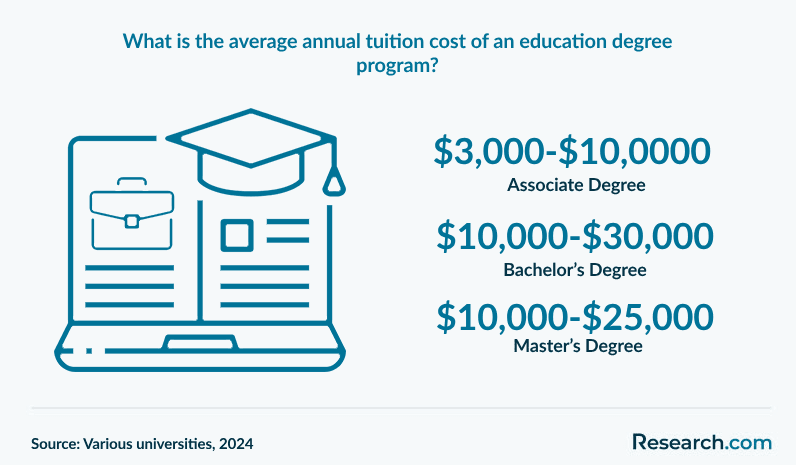
| Associate’s Degree | Approximately $3,000 - $10,000 per year | Often the lowest-cost starting point, especially when used for transfer. |
| Bachelor’s Degree | $10,000 - $30,000 per year depending on location | May include teacher-preparation coursework and student teaching requirements. |
| Master’s Degree | $10,000 - $25,000 annually | Costs may be higher for specialized or leadership-focused programs. |
| Doctoral Degree | $20,000 - $50,000 per year | Usually the largest investment because of program length and advanced coursework. |
Other expenses to budget for
- Books and materials: Students may spend around $1,000 - $3,000 annually.
- Technology and platform fees: Online programs may charge for learning systems, software, or digital resources.
- Licensure-related costs: Teacher candidates may need exams, background checks, fingerprinting, and placement-related travel.
Students who are comparing affordability across graduate programs may also look at the easiest computer science masters programs to get into as a cross-field example of how accessibility, cost, and career mobility can be evaluated together. Those considering healthcare instead of education should review the requirements for becoming a nurse major, since clinical requirements can create different cost and scheduling demands.
Associate's degrees cost $3,000-$10,000 annually. Bachelor's degrees range from $10,000 to $30,000 per year. Master's degrees typically cost $10,000-$25,000 annually. Doctoral degrees are the most expensive, ranging from $20,000 to $50,000 per year. Online programs may reduce commuting and housing costs, but students should compare total program cost rather than tuition alone.
What are the financial aid options for students enrolling in an education degree program?
Students in education programs can use federal aid, state grants, scholarships, loan forgiveness programs, work-study, employer tuition benefits, and graduate assistantships. The best funding strategy usually combines aid that does not need repayment with careful borrowing only when necessary.
Federal aid
- Pell Grants: Federal Pell Grants support eligible undergraduates pursuing their first bachelor’s degree. For the 2023-2024 school year, qualifying students could receive up to $7,395 per year.
- Federal Direct Loans: Undergraduate and graduate students may use federal loans, which typically offer borrower protections not always available with private loans. Subsidized loans do not accrue interest while the student is in school, while unsubsidized loans do.
- TEACH Grant: This program provides up to $4,000 annually for students who plan to teach in high-need fields and low-income schools. Students must meet the service requirement, or the grant can become a loan.
State grants, scholarships, and forgiveness programs
- State Education Grants: Some states fund future teachers directly. California’s Golden State Teacher Grant program, for example, offers up to $20,000 for students who commit to teaching in high-need schools in the state.
- Teacher Loan Forgiveness Programs: Teachers serving underserved communities may qualify for partial or full loan forgiveness depending on the program. The Public Service Loan Forgiveness (PSLF) program forgives federal loans after 120 qualifying payments while working in public service roles.
Scholarships and private grants
- National Board for Professional Teaching Standards Scholarships: These awards may support educators pursuing advanced professional certification.
- The Gates Millennium Scholars Program: This need-based scholarship supports minority students pursuing teaching and other degree paths.
- Teacher Education Assistance Scholarships: Colleges often offer institutional awards for education majors. One example is the Future Teacher Scholarship at Kansas State University, which awards $1,000 to eligible students.
Work-study and assistantships
- Federal Work-Study: Eligible students can work part-time while enrolled, helping reduce the amount they borrow.
- Teaching Assistantships: Graduate students in education may qualify for assistantships that cover part of tuition and provide a stipend in exchange for teaching or research work. Students comparing low-cost pathways can review affordable online master's programs for teachers.
Public investment in elementary and secondary education remains substantial. According to the National Center for Education Statistics (2024), total expenditures for public elementary and secondary schools increased from $627 billion in 2010-11 to $927 billion in 2020-21.
Financial aid can significantly lower the out-of-pocket cost of an education degree, but students should read service obligations, loan terms, renewal rules, and state eligibility requirements before accepting any award.
What are the prerequisites for enrolling in an education degree program?
Admission requirements differ by institution, degree level, and licensure status. Non-licensure online programs may have simpler admissions requirements, while teacher-preparation programs often require additional screening because graduates may work with children or vulnerable populations.
| Program level | Common prerequisite | Possible additional requirement |
| Associate or bachelor’s | High school diploma | ACT/SAT scores, placement testing, minimum GPA, background check, or prerequisite general education courses. |
| Master’s | Bachelor’s degree | GRE scores, teaching license, professional experience, essays, references, or field experience. |
| Doctoral | Graduate degree or qualifying academic background | Leadership experience, writing sample, interview, research interests, or professional resume. |
Before applying, students should ask whether admission to the university automatically includes admission to the educator-preparation program. In some schools, students must pass a second review before entering fieldwork or student teaching.
What courses are typically in an education degree program?
Education programs combine theory, instructional practice, student development, assessment, and classroom application. The exact curriculum depends on whether the program is designed for teacher licensure, leadership, counseling, instructional design, special education, or another specialization.
Common core courses
- Introduction to Education: Surveys the teaching profession, major educational theories, and the historical development of schooling in the United States.
- Child Development: Examines physical, cognitive, emotional, and social growth from infancy through adolescence.
- Classroom Management: Covers routines, behavior supports, organization, discipline approaches, and strategies for building a productive learning environment.
- Educational Psychology: Explores how students learn, what motivates them, and how theories such as behaviorism, constructivism, and cognitive development influence instruction.
- Diversity in Education: Focuses on inclusive teaching across race, gender, socioeconomic status, language, culture, and learning differences.
- Curriculum and Instruction: Teaches students how to plan lessons, align learning objectives, assess outcomes, and adapt instruction to learner needs.
Specialized or elective courses
- Special Education Methods: Prepares educators to support students with disabilities through individualized instruction and accommodations.
- Technology Integration in Education: Shows how digital resources, learning platforms, and interactive tools can support instruction.
- Teaching English as a Second Language (TESL): Covers language acquisition and strategies for teaching English learners.
- STEM Education Methods: Focuses on science, technology, engineering, and math instruction, including curriculum design and teaching strategies.
- Educational Leadership and Administration: Introduces budgeting, policy, personnel management, school operations, and leadership practice for future administrators.
Core coursework gives students a foundation in learning and teaching, while electives help them prepare for specific roles. Even flexible or easy-to-access education programs should include meaningful assignments, practical application, and feedback from qualified faculty.
Total public education spending in the United States has increased in recent years. Education Data Initiative (2024) reports spending of $710 billion in fiscal year 2018, $734 billion in 2019, $759 billion in 2020, and $857.2 billion in 2021.
What types of specializations are available in education degree programs?
Specializations help students align their degree with a specific age group, learner population, workplace, or leadership goal. This choice matters because it can affect licensure, field placements, job options, and salary potential.
| Specialization | Best for | Important consideration |
| Early Childhood Education | Students who want to work with children from birth through third grade. | Applicants can compare affordable early childhood education degree online programs, but should confirm state licensure alignment. |
| Special Education | Educators who want to support students with disabilities and individualized education programs. | May require state endorsement, supervised practice, and knowledge of IEP procedures. |
| Secondary Education | Students who want to teach high school subjects such as English, math, science, or history. | Usually requires subject-area preparation in addition to education coursework. |
| Educational Leadership | Teachers or education professionals pursuing school administration or policy roles. | Principal or administrator roles often require experience and state credentials. |
| STEM Education | Future or current teachers focused on science, technology, engineering, or math. | Can be valuable in shortage areas, but requirements depend on grade level and state rules. |
| E-learning and Digital Education | Students interested in online teaching, learning design, corporate training, or educational technology. | Pairs well with instructional design portfolios and familiarity with learning platforms. Students may also compare cheapest online teaching degree programs. |
| Curriculum and Instruction | Educators who want to improve lesson design, assessment, and instructional systems. | Useful for teacher leadership, curriculum development, and instructional coaching. |
| Bilingual Education | Educators working in multilingual classrooms. | May require language proficiency and state-specific endorsement requirements. |
| Educational Psychology | Students interested in motivation, learning behavior, assessment, and development. | The educational psychology field can connect teaching, research, and learner support. |
How does one choose the best education degree program?
The best education degree program is the one that fits your target role, meets credential requirements, stays within your budget, and offers enough support to help you finish. Rankings can be useful, but they should not replace program-level due diligence.
Questions to ask before enrolling
- Is the institution accredited? Accreditation affects credit transfer, graduate school eligibility, financial aid, and employer recognition.
- Does the program lead to licensure in my state? This is essential for public school teaching and many administrative roles.
- How are student teaching or field placements handled? Online students should ask whether placements can be completed locally.
- What is the total cost? Compare tuition, fees, books, technology charges, exams, and travel costs.
- Can I transfer credits? Generous transfer policies can shorten time to graduation and reduce total cost.
- What support is available online? Look for advising, tutoring, library access, technical help, career services, and licensure advising.
- What are graduate outcomes? Ask about licensure exam pass rates, placement support, alumni networks, and employer partnerships when available.
Who should choose an online education degree?
- Working adults who need flexible scheduling.
- Current educators seeking advancement without leaving their job.
- Students who live far from campus-based programs.
- Career changers who need a structured path into teaching, training, or educational technology.
Who may be better served by a campus program?
- Students who need frequent face-to-face support.
- Students entering a licensure pathway with intensive local school partnerships.
- Students who prefer campus life, in-person cohort learning, and immediate access to faculty.
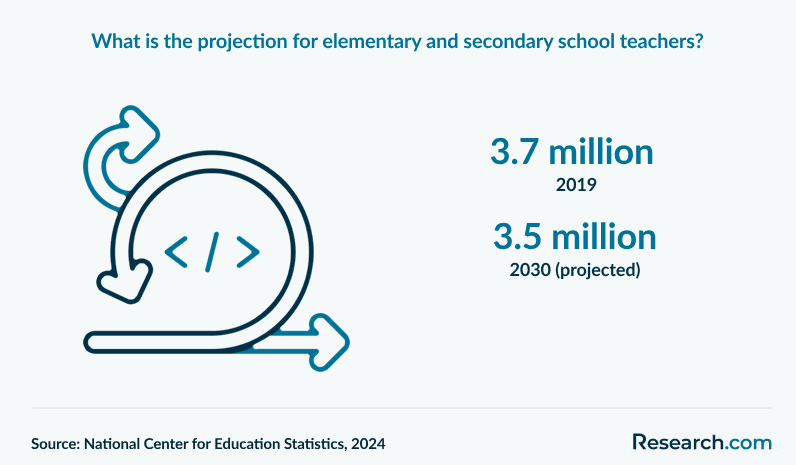
According to the National Center for Education Statistics (2024), elementary and secondary schools had 3.7 million teachers in 2019, with a projection of 3.5 million in 2030.
What career paths are available for graduates of education degree programs?
An education degree can lead to classroom, administrative, counseling, curriculum, training, technology, nonprofit, government, and higher education roles. The right path depends on degree level, specialization, licensure, experience, and local labor demand.
Teaching careers
- Elementary School Teacher: Teaches foundational subjects such as reading, math, science, and social studies to children in grades K-5. Students targeting this path can compare an elementary education degree online.
- Middle School Teacher: Teaches students in grades 6-8, often in specific subjects such as English, history, math, or science.
- High School Teacher: Provides subject-specific instruction for grades 9-12 and may help students prepare for college, employment, or vocational training.
- Special Education Teacher: Supports students with disabilities through adapted instruction, individualized plans, and classroom accommodations. Graduate-level options include affordable online master's in special education programs.
- English as a Second Language (ESL) Teacher: Teaches English language skills to multilingual learners in K-12, adult education, or community settings.
Administration and leadership roles
- School Principal: Leads school operations, supervises staff, manages budgets, supports instruction, and handles student discipline.
- Assistant Principal: Helps manage school operations and may oversee grade levels, departments, student behavior, or instructional programs.
- District Administrator: Works in a district office to support curriculum, staffing, policy, assessment, or program implementation across schools.
- Superintendent: Oversees district-wide strategy, policy, operations, community engagement, and educational priorities.
Specialized educational roles
- Instructional Coordinator: Develops curricula, trains teachers, reviews instructional materials, and analyzes student learning data.
- Curriculum Developer: Creates lessons, courses, assessments, and learning resources for schools, publishers, nonprofits, or education technology companies.
- Education Consultant: Advises schools, agencies, nonprofits, or companies on instructional improvement, policy, training, or program design.
- Educational Researcher: Studies learning outcomes, instruction, policy, or educational systems to guide practice and decision-making.
Student support roles
- School Counselor: Helps students with academic planning, social-emotional concerns, career readiness, and college preparation.
- Academic Advisor: Supports students in course selection, academic planning, degree progress, and career goal setting.
- School Psychologist: Assesses student learning, behavior, and emotional needs and helps design interventions.
- Speech-Language Pathologist: Speech-Language Pathologists support children and adults with speech, language, communication, and swallowing disorders in schools and other settings.
Higher education and adult learning
- College Professor: Teaches at a college or university in a specialized discipline, often requiring a master’s or doctoral degree.
- Academic Dean: Oversees academic departments, faculty, budgets, curriculum, and institutional priorities.
- Adult Education Instructor: Teaches adults in areas such as literacy, GED preparation, workforce training, or vocational skills.
- Corporate Trainer: Designs and delivers employee training programs that build workplace skills and improve performance.
Nonprofit and government roles
- Education Policy Analyst: Researches education policy, evaluates programs, and supports decision-making in agencies, think tanks, or advocacy organizations.
- Educational Program Director: Manages learning programs for nonprofits, museums, community organizations, or cultural institutions.
- Youth Program Coordinator: Plans and supervises youth programs in afterschool, community, recreation, or outreach settings.
Emerging and niche careers
- E-Learning Specialist: Designs online courses, digital resources, and technology-supported learning experiences.
- Learning and Development Specialist: Creates employee education programs for organizations and businesses.
- Educational Technology Consultant: Helps schools or companies select, implement, and improve digital learning tools and platforms.
What emerging trends are influencing education degree programs?
Education programs are adapting to changes in technology, online learning, student support needs, and employer expectations. Many programs now include digital instruction, learning management systems, remote collaboration, virtual teaching methods, data-informed decision-making, and instructional design. Artificial intelligence is also affecting how educators plan lessons, assess writing, personalize learning, and teach students to use technology responsibly.
Accelerated and competency-based formats are also gaining attention because they may help experienced educators move through familiar material more efficiently. Students considering leadership roles can compare options such as cheapest online EdD programs, but they should confirm that speed does not come at the expense of dissertation support, faculty access, or employer recognition.
What is the job market for graduates with an education degree?
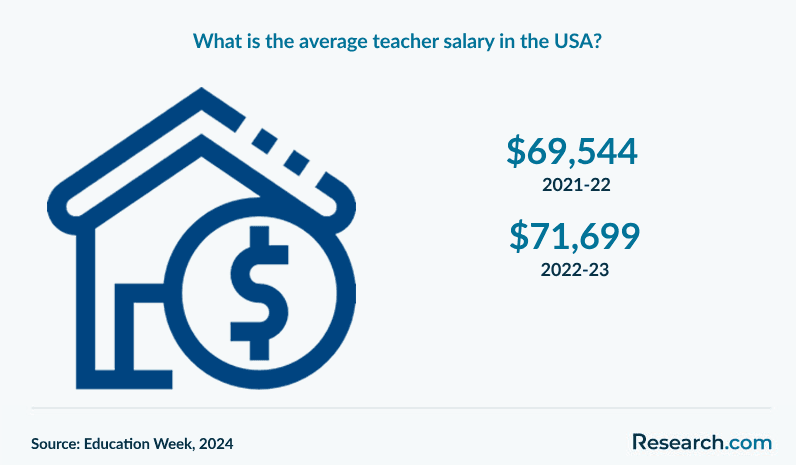
The job market for education graduates varies by location, subject area, grade level, and credential. According to Education Week (2024), the average teacher salary in the USA was $69,544 in 2021-22 and $71,699 in 2022-23.
Market conditions to understand
- Specialization matters: STEM, special education, and early childhood are commonly cited as areas with strong need, though demand varies by region.
- Licensure affects access: Public school teaching jobs usually require state credentials, and some states have different rules for out-of-state online graduates.
- Competition can be uneven: Popular urban districts may remain competitive even when other areas report shortages.
- Experience helps: Student teaching, internships, tutoring, substitute teaching, classroom aide work, and volunteer experience can strengthen a candidate’s application.
- College graduates face broader labor-market challenges: The unemployment rate for college graduates is about 2%, but approximately 41% of college graduates aged 22 to 27 are underemployed in roles that do not require a college degree.
Where opportunities are expanding
- Educational technology: Schools, training companies, and employers need professionals who can design and support digital learning.
- Tutoring and academic support: Families, schools, and community programs continue to use tutoring and supplemental instruction.
- Corporate training: Education graduates with instructional design and communication skills can work in learning and development roles outside schools.
An education degree can offer stable and meaningful work, but salary and job access are not guaranteed. Students should research their state, subject area, and credential requirements before choosing a program.
Can creative writing skills enhance my effectiveness as an educator?
Creative writing skills can help educators explain complex ideas, design engaging lessons, write clearer feedback, and develop stronger instructional materials. Teachers who can turn abstract content into stories, examples, scenarios, and prompts may be better prepared to reach students with different learning styles. For educators who want to strengthen communication alongside teaching credentials, writing degrees online may be worth exploring as a complementary path.
What is the return on investment of an education degree?
The return on investment of an education degree depends on total cost, time to completion, salary growth, licensure value, loan repayment, and the type of role a graduate pursues. A low-cost program with strong licensure alignment and good support may offer better value than a more expensive program with unclear outcomes.
How to evaluate ROI before enrolling
- Calculate total program cost, including fees, books, technology, exams, and fieldwork expenses.
- Compare that cost with realistic salaries in your state or target employer type.
- Ask whether the degree qualifies you for licensure, salary lane movement, promotion, or leadership roles.
- Check whether your employer offers tuition reimbursement or pay increases for advanced credentials.
- Compare affordable leadership-focused options, including cheapest online educational leadership programs, if administration is your goal.
What additional skills and certifications boost career success in education?
Education employers increasingly value candidates who combine strong teaching fundamentals with practical technology, assessment, communication, and leadership skills. Useful add-ons may include instructional design experience, special education endorsements, curriculum design, classroom technology skills, bilingual education preparation, data literacy, trauma-informed practice, and school leadership training.
Students who want to understand which roles are drawing attention can review education jobs in demand and compare those roles with their program’s curriculum and credential options.
How can I optimize my online learning environment for academic success?
Online education students need more than internet access. They need a study system. Set up a consistent workspace, block weekly study time, use a calendar for assignment deadlines, test your video and learning platform tools before classes begin, and contact technical support early when problems appear.
- Create a dedicated study area with limited distractions.
- Use digital folders for readings, lesson plans, research, and fieldwork documents.
- Join discussion boards and study groups instead of treating online learning as independent reading only.
- Use office hours, tutoring, writing centers, and advisor check-ins before you fall behind.
- When comparing programs such as an affordable online masters in early childhood education degree, ask what online learning support is available throughout the program.
How can I finance my advanced online education degree?
Graduate education degrees often require more careful planning because students may already have undergraduate debt, family expenses, or full-time jobs. Funding options can include federal loans, institutional scholarships, employer tuition assistance, district reimbursement, graduate assistantships, specialized grants, and state programs for educators.
Before borrowing, compare program length, per-credit tuition, transfer or prior-learning policies, and career payoff. Students considering doctoral leadership pathways may explore fully funded EdD programs online, but should verify what “funded” means, which costs are covered, and whether service or employment obligations apply.
How do online education programs support professional networking and career growth?
Strong online education programs do more than post lectures. They create structured opportunities for students to work with classmates, faculty, mentors, alumni, and school or industry partners. Networking may happen through virtual discussions, group projects, practicum placements, career events, alumni communities, and faculty advising.
Communication-focused study can also support professional growth. For example, a writing degree online may help educators improve narrative skill, clarity, persuasion, and audience awareness—abilities that are useful in teaching, leadership, grant writing, curriculum development, and professional presentations.
How can I verify the academic quality of my online education degree program?
To verify program quality, start with accreditation and then evaluate the curriculum, faculty, student support, fieldwork process, licensure alignment, and outcomes. Accreditation should be checked through official accreditor or government-recognized sources, not only through marketing pages.
Quality checklist
- Confirm institutional accreditation and, when relevant, educator-preparation accreditation.
- Ask whether the program meets licensure requirements in your state.
- Review faculty qualifications and professional experience.
- Compare course descriptions with your intended role.
- Ask how online students receive advising, tutoring, technical help, and career support.
- Request information on student teaching, practicum, internship, or capstone expectations.
- For leadership-focused goals, compare the curriculum with advanced options such as a PhD in organizational leadership online.
How do online education programs offer ongoing career support after graduation?
Career support can make a major difference, especially for online students who may not have campus-based networks. Look for programs that offer resume reviews, interview preparation, licensure advising, job boards, alumni mentoring, virtual career fairs, and school or employer partnerships.
Students comparing accredited education degrees online should ask whether career services are available to online alumni after graduation or only while enrolled.
How can an MLIS certification boost my career prospects?
An MLIS credential can complement an education background for students interested in school libraries, digital resources, information literacy, research support, and learning technology. This path may appeal to educators who want to work at the intersection of teaching, information management, and student access to learning materials. For a deeper look at related roles, review what can you do with an MLIS degree.
How can interdisciplinary approaches enrich my online education experience?
Interdisciplinary study can help education students connect teaching with psychology, technology, writing, leadership, public policy, business, library science, or social services. This can be valuable for students who do not want to stay in one narrow role or who plan to work in training, educational technology, community programs, or administration. Students who want a broader academic route can compare online degree interdisciplinary studies options.
Common mistakes to avoid when choosing an education degree
| Mistake | Why it matters | Better approach |
| Choosing a program because it looks easy | A weak program may not prepare you for licensure, classroom realities, or employer expectations. | Look for flexibility and support, not shortcuts. |
| Ignoring accreditation | Accreditation can affect financial aid, transfer credits, licensure, and employer acceptance. | Verify accreditation through official sources before applying. |
| Assuming every online degree leads to licensure | Licensure rules vary by state, and some programs are non-licensure by design. | Ask the school and your state licensing agency before enrolling. |
| Comparing tuition only | Fees, books, testing, fieldwork, and travel can change the real cost. | Build a full cost estimate for the entire degree. |
| Overlooking field placements | Student teaching or practicum requirements can affect work schedules and location flexibility. | Ask how placements are arranged for online students. |
| Assuming salary outcomes are guaranteed | Pay depends on role, district, region, experience, credentials, and labor market conditions. | Research local salary schedules and job postings. |
| Relying only on rankings | A highly ranked program may not fit your state, budget, timeline, or career goal. | Use rankings as one input, then evaluate fit and requirements. |
Key Insights
- The easiest education degree is not the least rigorous one; it is the program with the clearest path to completion, strong support, flexible scheduling, and alignment with your career or licensure goal.
- Online education degrees can reduce commuting and relocation barriers, but licensure programs may still require in-person fieldwork or student teaching.
- Typical timelines range from 2 years for an associate degree to 3-6 years for a doctoral degree, with bachelor’s programs commonly taking 4 years and master’s programs often taking 1-2 years.
- Reported annual costs vary widely: associate’s degrees cost $3,000-$10,000 annually, bachelor’s degrees range from $10,000 to $30,000 per year, master’s degrees typically cost $10,000-$25,000 annually, and doctoral degrees range from $20,000 to $50,000 per year.
- Education salaries differ substantially by role. Education Week (2024) reported average teacher pay of $69,544 in 2021-22 and $71,699 in 2022-23, while UMass Global (2023) reported averages such as $129,000 for school principals, $122,700 for professors, and $74,000 for instructional coordinators.
- Approximately 41% of college graduates aged 22 to 27 are underemployed, while the unemployment rate for college graduates is about 2%, so students should evaluate career fit and local demand rather than assuming a degree alone guarantees a specific outcome.
- NCES (2024) reported 3.7 million elementary and secondary teachers in 2019 and projected 3.5 million in 2030, making specialization, geography, and licensure strategy important for job planning.
- Public education spending increased from $710 billion in 2018 to $857.2 billion in 2021, according to Education Data Initiative (2024), but funding trends do not remove the need to compare program cost and ROI carefully.
- Before enrolling, verify accreditation, state licensure alignment, total cost, transfer credit policies, field placement support, faculty quality, and post-graduation career services.
References:
- AGB. (2024). College and the job market today. Association of Governing Boards of Universities and Colleges.
- Education Data Initiative. (2024). U.S. public education spending statistics. Education Data Initiative.
- Education Week. (2024). Average teacher pay passes $70K. How much is it in your state? Education Week.
- National Center for Education Statistics. (2024). Total expenditures for public elementary and secondary schools. National Center for Education Statistics.
- National Center for Education Statistics. (2024). Projections of education statistics to 2030. National Center for Education Statistics.
- Northeastern University. (2024). 10 benefits of having a college degree. Northeastern University.
- Pew Research Center. (2022). 10 facts about today's college graduates. Pew Research Center.
- UMass Global. (2023). The 10 highest paying jobs with a teaching degree. UMass Global.
- Williams, K. (2024). Why this job market is a bad match for the college degree, recent grads. CNBC. See also UMass Global salary overview.
- ZipRecruiter. (2024). Education salary. ZipRecruiter.
Other Things You Should Know About Online Education Degrees
Most education associate and bachelor’s programs require a minimum 2.0 to 2.5 GPA for admission, with some colleges asking for official transcripts and placement test scores. Teacher-preparation tracks may add background checks before students can enter upper-division fieldwork or student-teaching courses.
Yes, many online programs offer education degrees that are considered easy due to their flexible schedule and focus on foundational teaching theories. Institutions like Western Governors University provide such programs, emphasizing accessible coursework and minimal prerequisites while maintaining accredited standards.


