2027 Most Affordable Online Master's in Multilingual Learner Education

Co-Founder and Chief Data Scientist
If you are a teacher, instructional coach, curriculum specialist, or education professional who wants to support English learners, emergent bilingual students, immigrant students, or multilingual communities, an online Master's in Multilingual Learner Education can be a practical next step. The challenge is that programs use different names—TESOL, ESL, bilingual education, English language learners, ESOL, or multicultural education—and not every degree leads to the same credential, salary outcome, or career path.
This guide explains how to compare affordable online master's programs in multilingual learner education, what you can expect from the curriculum, how to evaluate accreditation and state requirements, what careers are available, and how to estimate whether the degree is worth the cost. It is designed to help you choose a program based on your goals rather than relying only on price, rankings, or broad marketing claims.
Quick answer: Is an online Master's in Multilingual Learner Education worth it?
An online Master's in Multilingual Learner Education can be worth it for licensed educators who want to move into ESL/ELL teaching, bilingual education, instructional coaching, curriculum design, literacy support, or district-level multilingual program leadership. It is especially useful if your district rewards graduate credits or master's degrees on the salary schedule, or if you need advanced preparation for working with multilingual learners. However, you should verify whether a program meets your state's endorsement, licensure, or certification rules before enrolling.
What are the main benefits of earning an online Master's in Multilingual Learner Education?
- Career mobility: The degree can support transitions into ESL/Bilingual Specialist, Curriculum Developer, District Multilingual Program Coordinator, literacy support, instructional coaching, and related leadership roles.
- Potential pay growth: Educators with this graduate qualification may see a salary increase of $5,000 to $15,000 annually, depending on district salary schedules, credentials, experience, and location.
- Flexible study: Online delivery can make graduate school more manageable for working teachers, especially when courses are asynchronous or offered part-time.
- Better preparation for diverse classrooms: Strong programs focus on language acquisition, culturally responsive teaching, assessment, family engagement, and equitable instruction for multilingual students.
What can I expect from an online Master's in Multilingual Learner Education program?
Online master's programs in this field prepare educators to teach and advocate for students who are developing English while also bringing valuable home languages and cultural knowledge to school. Depending on the university, the degree may be titled multilingual learner education, TESOL, ESL, ESOL, bilingual education, English language learners, curriculum and instruction, or multicultural education.
- Graduate-level coursework: Expect advanced study in second language acquisition, applied linguistics, language assessment, literacy development, culturally responsive pedagogy, and instructional design for multilingual learners.
- Online learning structure: Many programs combine asynchronous lessons, faculty-led discussions, digital assignments, peer collaboration, and applied projects that connect directly to classroom practice.
- Practicum or field-based work: Some degrees include local fieldwork, classroom-based inquiry, or supervised practice. This is especially important if you are pursuing an endorsement or certification.
- Academic and professional resources: Students typically use online libraries, faculty office hours, research databases, teaching materials, and digital learning platforms throughout the program.
Common courses in multilingual learner education master's programs
| Course area | What you learn | Why it matters |
| Second language acquisition | How students develop proficiency in an additional language over time | Helps teachers choose instruction that matches learners' language development stages |
| Assessment for multilingual learners | How to evaluate language growth and academic progress fairly | Reduces the risk of confusing language development with academic weakness |
| Culturally responsive pedagogy | How to build instruction that respects students' languages, identities, and communities | Supports inclusion, belonging, and stronger student engagement |
| Bilingual and dual language education | How two-language models support content learning and biliteracy | Useful for educators in bilingual, immersion, or heritage language programs |
| Curriculum adaptation | How to modify materials without lowering academic expectations | Helps multilingual learners access grade-level content |
| Policy and advocacy | How laws, school policies, and family rights affect multilingual learner services | Prepares graduates for leadership, compliance, and program coordination roles |
Where can I work with an online Master's in Multilingual Learner Education qualification?
Graduates usually work in schools, districts, adult education, curriculum organizations, nonprofits, higher education, or international settings. Your options depend on your teaching license, state endorsements, language skills, experience, and whether the program includes certification preparation.
- K-12 schools: Roles may include ESL/ELL teacher, bilingual educator, dual language teacher, multilingual learner specialist, or literacy support teacher.
- Curriculum and instructional design: Graduates may create language-accessible materials, adapt content lessons, or design professional development for teachers.
- Instructional coaching: Experienced educators can support classroom teachers in sheltered instruction, co-teaching, language objectives, and assessment practices.
- Higher education and adult education: Some graduates teach adult ESL, academic English, or language support courses through community colleges, universities, or continuing education programs.
- Nonprofit and community organizations: Professionals may support immigrant families, refugee education programs, literacy initiatives, or workforce language programs.
- District administration: Advanced roles may involve coordinating multilingual learner services, monitoring compliance, managing programs, and training staff.
- International and cross-cultural settings: Skills in language learning and intercultural communication can apply to international schools, refugee resettlement agencies, and corporate training environments.
How much can I make with an online Master's in Multilingual Learner Education qualification?
An online Master's in Multilingual Learner Education may improve earnings, but salary outcomes depend heavily on role, district pay scale, geographic location, experience, licensure, and whether you move into leadership. K-12 public school teachers may see a $5,000 to $15,000 annual increase. ESL teachers average $60,000 to $75,000 per year, specialized roles such as curriculum specialists or instructional coaches earn $65,000 to $85,000, and district-level coordinators or administrators can make $75,000 to over $100,000, depending on experience and location.
- Most Affordable Online Master's in Multilingual Learner Education for 2027
- How do I choose the best online Master's in Multilingual Learner Education program for my specific needs and career goals?
- What are the prerequisites and application process for online Master's in Multilingual Learner Education programs?
- What essential skills will I learn in a top online Master's in Multilingual Learner Education program?
- What are some career prospects after completing an online Master's in Multilingual Learner Education program?
- How much do online Master's in Multilingual Learner Education programs cost and what financing options are available?
- How much can you earn after obtaining an online Master's in Multilingual Learner Education qualification?
- What are the key benefits and drawbacks of online versus in-person Master's in Multilingual Learner Education programs?
- How can I verify accreditation and institutional quality for an online Master’s in Multilingual Learner Education program?
- What professional development and networking opportunities do online Master's in Multilingual Learner Education programs offer?
- What advanced academic or leadership opportunities can enhance my career after earning an online Master's in Multilingual Learner Education?
- What innovative teaching methods and technologies enhance online Master's in Multilingual Learner Education programs?
- What subspecialties and career paths are available for online Master's in Multilingual Learner Education graduates?
- What is the job market like for online Master's in Multilingual Learner Education graduates?
- What are the current industry trends and future outlook for online Master's in Multilingual Learner Education graduates?
Most Affordable Online Master's in Multilingual Learner Education for 2027
The programs below are presented as affordable online options connected to multilingual learner education, ESL, TESOL, bilingual education, ESOL, or related education leadership areas. Use the list as a starting point, then confirm tuition, licensure alignment, fieldwork rules, and state authorization directly with each school before applying.
| School | Program focus | Program length | Credits | Annual tuition cost | Accreditation listed |
| American College of Education | Teaching English Learners | Typically 12 months | 31 | $9,109 | Higher Learning Commission (HLC) |
| California Coast University | Multicultural and Multilingual Education focus available | Flexible, self-paced (typically 1-2 years) | 39 | $4,875 | Distance Education Accrediting Commission (DEAC) |
| Drury University | English for Speakers of Other Languages (ESOL) | 18-24 months | 36 | $5,925 | Higher Learning Commission (HLC) |
| Fort Hays State University | ESL/Multicultural Education | 12 months (part-time) | 36 | $5,750 | Higher Learning Commission (HLC) |
| Martin Luther College | English as a Second Language (ESL) | 18-24 months | 36 | $6,300 | Higher Learning Commission (HLC) |
| Minot State University | English Language Learners (ELL) | 18-24 months | 32 | $6,429 | Higher Learning Commission (HLC) |
| Sam Houston State University | TESOL, Second Language Instruction Certificate | 1 year (full-time), flexible part-time options available | 30 | $4,804 | Council for the Accreditation of Educator Preparation (CAEP) |
| Texas Tech University | Bilingual Education, English as a Second Language (ESL) | 18 months (five semesters) | 36 | $5,634 | Southern Association of Colleges and Schools Commission on Colleges (SACSCOC) |
| Union Commonwealth University | Educational Leadership, Education Specialist | 18-24 months | 36 | $5,735 | Council for the Accreditation of Educator Preparation and the Education Professional Standards Board |
| Western Illinois University | TESOL | 18-24 months | 33 | $5,793 | Higher Learning Commission (HLC) |
1. American College of Education
The American College of Education offers an online Master of Education in Teaching English Learners for educators who want stronger preparation in serving English learners across diverse settings. The program emphasizes language acquisition, instructional methods, assessment, culturally responsive practice, curriculum planning, classroom strategies, and technology-supported learning. Its online structure is built for working professionals, and assignments are designed to connect graduate study with current teaching responsibilities.
- Program Length: Typically 12 months
- Tracks/Concentrations: Teaching English Learners
- Tuition Cost: $9,109 (annual)
- Required Credits to Graduate: 31
- Accreditation: Higher Learning Commission (HLC)
2. California Coast University
California Coast University provides a fully online Master of Education with a self-paced format that may appeal to educators who need maximum scheduling flexibility. The program develops advanced teaching, curriculum, assessment, technology, and classroom leadership skills, with a multicultural and multilingual education focus available. Students should confirm how the program aligns with their state requirements, especially if they need an endorsement or license-related outcome.
- Program Length: Flexible, self-paced (typically 1-2 years)
- Tracks/Concentrations: Multicultural and Multilingual Education focus available
- Tuition Cost: $4,875 (annual)
- Required Credits to Graduate: 39
- Accreditation: Distance Education Accrediting Commission (DEAC)
3. Drury University
Drury University offers an online Master of Education in Instructional Leadership with an English for Speakers of Other Languages concentration. The program blends ESOL preparation with leadership coursework, making it a possible fit for educators who want to teach multilingual learners while also preparing for coaching, coordination, or school leadership responsibilities. Coursework includes second language acquisition, linguistics, assessment, culturally responsive pedagogy, field experiences, and applied research.
- Program Length: 18-24 months
- Tracks/Concentrations: English for Speakers of Other Languages (ESOL)
- Tuition Cost: $5,925 (annual)
- Required Credits to Graduate: 36
- Accreditation: Higher Learning Commission (HLC)
4. Fort Hays State University
Fort Hays State University offers a fully online Master of Science in Special Education with a concentration in ESL/Multicultural Education. This option may interest educators who want to connect multilingual learner support with special education knowledge. Students can pursue an endorsement-only route or the full master's pathway, and the program emphasizes language acquisition, cultural diversity, instruction, assessment, advising, peer collaboration, and classroom application.
- Program Length: 12 months (part-time)
- Tracks/Concentrations: ESL/Multicultural Education
- Tuition Cost: $5,750 (annual)
- Required Credits to Graduate: 36
- Accreditation: Higher Learning Commission (HLC)
5. Martin Luther College
Martin Luther College provides an online Master of Science in Education with an English as a Second Language emphasis. The curriculum covers language acquisition, linguistics, ESL methods, assessment, and practical classroom strategies. The program is designed for current educators who want to strengthen their instruction for multilingual students while continuing to work.
- Program Length: 18-24 months
- Tracks/Concentrations: English as a Second Language (ESL)
- Tuition Cost: $6,300 (annual)
- Required Credits to Graduate: 36
- Accreditation: Higher Learning Commission (HLC)
6. Minot State University
Minot State University offers an online Master of Education in Curriculum and Instruction with an English Language Learners concentration. The program focuses on language acquisition, assessment, instructional methods, cultural competence, research, technology integration, and applied projects. It may be a good match for educators who want a curriculum and instruction foundation with specialized preparation for ELL settings.
- Program Length: 18-24 months
- Tracks/Concentrations: English Language Learners (ELL)
- Tuition Cost: $6,429 (annual)
- Required Credits to Graduate: 32
- Accreditation: Higher Learning Commission (HLC)
7. Sam Houston State University
Sam Houston State University offers a fully online Master of Education in Teaching English to Speakers of Other Languages. The program serves educators who want to specialize in TESOL across school, adult, or other language-learning contexts. Students study language acquisition, linguistics, assessment, technology, instructional strategy, cultural analysis, advocacy, and reflective practice, and graduates also earn a certificate in Second Language Instruction.
- Program Length: 1 year (full-time), flexible part-time options available
- Tracks/Concentrations: TESOL, Second Language Instruction Certificate
- Tuition Cost: $4,804 (annual)
- Required Credits to Graduate: 30
- Accreditation: Council for the Accreditation of Educator Preparation (CAEP)
8. Texas Tech University
Texas Tech University offers an online Master of Education in Bilingual Education and English as a Second Language. The degree prepares educators to support emergent bilinguals through multilingual and multicultural pedagogy, research-based instruction, language acquisition, linguistics, assessment, and instructional design. Students can choose a thesis or comprehensive exam option, and the program is delivered 100% online.
- Program Length: 18 months (five semesters)
- Tracks/Concentrations: Bilingual Education, English as a Second Language (ESL)
- Tuition Cost: $5,634 (annual)
- Required Credits to Graduate: 36
- Accreditation: Southern Association of Colleges and Schools Commission on Colleges (SACSCOC)
9. Union Commonwealth University
Union Commonwealth University offers graduate education pathways through its Department of Education, including a Master's Degree in Educational Leadership and an Education Specialist degree for Tennessee residents. These programs are broader than multilingual learner education, so prospective students should review course content carefully if their goal is ESL, bilingual education, or multilingual learner specialization. The institution operates under authorization from the Tennessee Higher Education Commission and emphasizes regional service, graduate education, and professional preparation.
- Program Length: 18-24 months
- Tracks/Concentrations: Educational Leadership, Education Specialist
- Tuition Cost: $5,735 (annual)
- Required Credits to Graduate: 36
- Accreditation: Council for the Accreditation of Educator Preparation and the Education Professional Standards Board
10. Western Illinois University
Western Illinois University offers an online Master of Science in Education with a TESOL concentration. The program supports educators who want to work with multilingual learners in K-12, adult education, or related learning environments. Students study linguistics, second language acquisition, instructional methods, assessment, practical projects, and TESOL-focused research through a fully online format.
- Program Length: 18-24 months
- Tracks/Concentrations: TESOL
- Tuition Cost: $5,793 (annual)
- Required Credits to Graduate: 33
- Accreditation: Higher Learning Commission (HLC)
How do I choose the best online Master's in Multilingual Learner Education program for my specific needs and career goals?
The best program is not always the cheapest or fastest one. It is the program that matches your current license, career target, budget, schedule, state requirements, and preferred student population. A classroom teacher seeking an ESL endorsement should compare programs differently from a curriculum specialist planning to move into district leadership.
| If your goal is... | Prioritize programs with... | Watch out for... |
| ESL/ELL classroom teaching | Licensure or endorsement alignment, practicum options, assessment coursework | Programs that teach theory but do not meet your state's credential rules |
| Bilingual or dual language education | Bilingual education coursework, biliteracy preparation, language policy content | TESOL-only programs that may not prepare you for two-language instruction |
| Instructional coaching | Teacher leadership, professional development, curriculum design, data use | Programs with limited applied coaching or adult learning preparation |
| District program coordination | Policy, compliance, leadership, assessment systems, program evaluation | Degrees that focus only on classroom methods and not systems-level work |
| Adult ESL or nonprofit work | Adult learning, community education, immigrant and refugee education, literacy | K-12-only programs that assume a public school teaching context |
- Confirm accreditation first: Make sure the institution is recognized by an appropriate accreditor and that educator-preparation accreditation is relevant if you need licensure.
- Match the curriculum to your career path: TESOL, bilingual education, ESOL, dual language, literacy, and multicultural education are related but not identical.
- Review faculty expertise: Look for faculty experience in linguistics, multilingual classrooms, bilingual education, curriculum design, assessment, and language policy.
- Study the format carefully: Ask whether courses are asynchronous, synchronous, accelerated, cohort-based, self-paced, part-time, or full-time.
- Ask about fieldwork: If you need an endorsement, find out where field experiences happen, who approves placements, and whether your current classroom can qualify.
- Compare student support: Strong programs offer advising, licensure guidance, library access, career support, and faculty availability.
- Calculate total cost: Look beyond tuition and include fees, books, technology expenses, travel for any required experiences, and lost income if you reduce work hours.
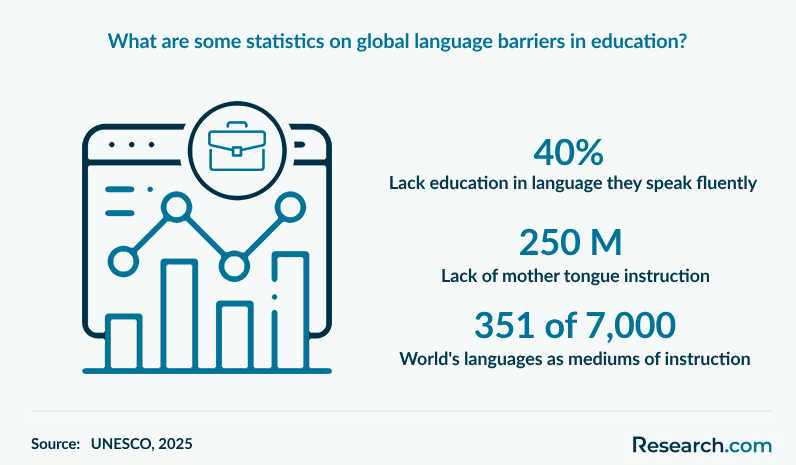
UNESCO reported in 2025 that 40% of individuals worldwide lack access to education in a language they speak fluently, and the figure rises to 90% in some low- and middle-income countries. The same UNESCO report noted that over 250 million learners worldwide are denied instruction in their mother tongue, while only 351 of the 7,000 spoken languages globally are used as mediums of instruction. These figures show why multilingual learner preparation is not a niche concern; it is central to educational access and inclusion.
What are the prerequisites and application process for online Master's in Multilingual Learner Education programs?
Admissions requirements vary by university, but most online master's programs in multilingual learner education expect applicants to show academic readiness, professional interest in education, and, in some cases, current teaching credentials. Programs tied to state endorsements may have stricter requirements than general education master's degrees.
- Bachelor's degree: Applicants typically need a bachelor's degree from an accredited institution, often in education or a related discipline.
- Minimum GPA: Many schools ask for an undergraduate GPA around 2.5 to 3.0 on a 4.0 scale.
- Teaching credential or license: Some programs prefer or require a preliminary or clear teaching credential, particularly when the degree leads to an endorsement or specialist credential.
- Statement of purpose: You may need to explain your interest in multilingual learner education, your relevant experience, and your career goals.
- Recommendation letters: Programs often request two or more letters from supervisors, administrators, professors, or other professional references.
- Resume or CV: Your application usually includes teaching experience, education history, professional development, language skills, and leadership experience.
- Official transcripts: Schools generally require transcripts from every college or university you have attended.
- Application and fee: Most universities require an online graduate application and a non-refundable application fee.
Some programs may also require an interview, writing sample, background check, proof of teaching experience, or state-specific documentation. If you are comparing this degree with broader graduate options, Research.com also provides information on affordable online masters degree programs.
Admissions patterns can be similar across education-related master's programs. For example, students considering instructional innovation can compare requirements with the cheapest online master's in education technology options, where applicants also need to show academic preparation and a clear professional purpose.
What essential skills will I learn in a top online Master's in Multilingual Learner Education program?
A strong program should help you do more than understand language theory. It should prepare you to make better instructional decisions, collaborate with colleagues, support families, interpret assessment data, and advocate for multilingual learners in real school systems.
- Culturally responsive pedagogy: You learn how to design classrooms where students' languages, identities, histories, and communities are treated as assets.
- Language acquisition knowledge: You study how learners develop listening, speaking, reading, and writing skills in an additional language.
- Equitable assessment: You learn to evaluate student growth while accounting for language proficiency, cultural context, and content knowledge.
- Curriculum design and adaptation: You practice modifying lessons, texts, assignments, and assessments so multilingual learners can access rigorous content.
- Language-development instruction: You build strategies for vocabulary, academic language, literacy, oral language, and content-area learning.
- Advocacy and policy awareness: You examine legal obligations, school policies, family rights, and equitable access to language services.
- Collaboration and communication: You develop approaches for co-teaching, family engagement, staff training, and cross-role coordination.
These same themes also matter in other education fields. For example, a low cost master's in adult education online may be relevant for educators who want to support adult learners, including adults developing English for work, college, or community participation.
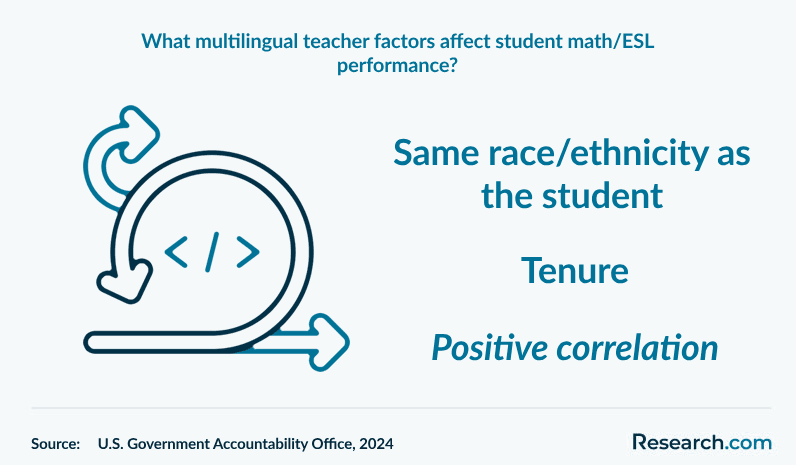
Teacher characteristics can influence multilingual learner outcomes, although the evidence is not simple. According to regression analyses by the U.S. Government Accountability Office in 2024, some teacher characteristics were associated with English learner academic performance. For some 4th and 8th grade student groups, having a teacher who shared the same race/ethnicity was positively associated with math or reading outcomes. Specific classroom sizes were also linked with better national reading assessment scores: 21 or more students for 4th-grade reading, and 16–20 students for 8th-grade reading. Other positive associations included 4th-grade teacher job satisfaction and tenure, while for 8th grade, the unavailability of school or district tenure was associated with better performance.
The same analysis found that several factors, including extensive teaching experience, certification route, teacher gender, and certain degrees, had inconsistent or no clear relationship with English learner academic outcomes. This reinforces the importance of looking beyond credentials alone and focusing on instructional quality, school context, and student support systems.
What are some career prospects after completing an online Master's in Multilingual Learner Education program?
Career options depend on your teaching license, language background, location, experience, and whether your degree leads to an endorsement. Many graduates remain in schools, while others move into curriculum, adult education, nonprofits, higher education, or leadership.
- ESL/ELL teacher: Teaches English language development to multilingual students in K-12 schools, adult education, language institutes, or community programs.
- Bilingual educator: Teaches content in two languages in dual language, transitional bilingual, or immersion models.
- Literacy or reading specialist: Supports reading and writing development, often including targeted support for multilingual learners.
- Curriculum developer or specialist: Designs materials, lessons, assessments, and interventions that reflect students' language development needs.
- Instructional coach or lead teacher: Helps teachers improve multilingual learner instruction through modeling, professional learning, co-planning, and data analysis.
- District coordinator or administrator: Oversees multilingual learner programs, compliance, staffing, professional development, assessment, and family engagement systems.
- Adult basic education or ESL instructor: Works with adult immigrants, refugees, or community learners developing English and literacy skills.
- Nonprofit or community education specialist: Supports immigrant and refugee families through educational programming, language access, and resource navigation.
- Doctoral pathway: Some graduates pursue a doctorate degree in education or a related terminal degree to move toward research, senior administration, supervision, or policy leadership.
U.S. language diversity creates sustained need for educators who understand multilingual learning. In the United States in 2023, Spanish was the most common language spoken at home other than English, with 43,369,734 speakers, according to Statista, 2025. Chinese, including Mandarin and Cantonese dialects, followed with 3,531,221 speakers. Other widely spoken home languages included Tagalog, including Filipino, with 1,803,005 speakers; Vietnamese with 1,570,595 speakers; Arabic with 1,423,225 speakers; French, including Cajun, with 1,194,555 speakers; Portuguese with 1,091,374 speakers; Korean with 1,079,420 speakers; Russian with 998,179 speakers; and Haitian with 973,378 speakers.
How much do online Master's in Multilingual Learner Education programs cost and what financing options are available?
Online master's programs in multilingual learner education can cost from approximately $8,000 to over $50,000 for the entire degree. Public universities are generally less expensive than private institutions, but total cost depends on tuition, fees, residency rules, program length, transfer credits, and whether the school charges online students a different rate.
- Tuition: Compare total program tuition, not only cost per credit, because credit requirements can differ widely.
- Mandatory fees: Budget for application fees, technology fees, graduation fees, background checks, testing fees, or field placement costs.
- Books and materials: Digital texts, software, assessment tools, and course materials can add to the final cost.
- Federal student aid: Eligible students can complete the FAFSA and may use Direct Unsubsidized Loans.
- Scholarships and grants: Universities, education organizations, and foundations may offer funding for graduate education, teacher preparation, or high-need fields.
- Employer tuition reimbursement: Some school districts help pay for graduate degrees, especially when the program supports district staffing needs.
- Payment plans: Installment plans can reduce short-term pressure, though they do not reduce total price.
- Private loans: Private education loans may be available, but they often have different interest rates and borrower protections than federal loans.
| Cost question | Why it matters |
| Is tuition charged per credit or per term? | Per-credit pricing makes total cost easier to calculate, while term-based pricing depends on course load. |
| Are online students charged in-state tuition? | Some public universities offer lower online rates, while others use residency-based pricing. |
| Does the program require fieldwork, testing, or travel? | These requirements can add costs that are not obvious in the tuition page. |
| Will my district pay for part of the degree? | Tuition reimbursement can substantially change affordability and return on investment. |
| Does the degree lead to a salary lane change? | A master's degree is more valuable financially when it qualifies you for a higher salary schedule. |
If you are weighing related specializations, you may also want to compare the cheapest online special education master's degree programs, especially if you work with students who need both language support and special education services.
How much can you earn after obtaining an online Master's in Multilingual Learner Education qualification?
Salary gains are possible, but they are not automatic. Your pay will depend on your role, school district salary schedule, years of service, location, union contract, credentials, and whether you move from classroom teaching into coaching or administration.
- Master's degree salary difference: Teachers with a master's degree generally earn an average of $2,000 to $15,000 more annually than teachers with only a bachelor's degree, with the gap often increasing over a career.
- Public school roles: Teachers with this specialization in public schools may earn approximately $55,000 to $85,000 annually, depending on district, experience, and position.
- Specialist positions: Literacy/Reading Coach or Curriculum Specialist roles may increase earnings by $3,000 to $8,000 or more per year compared with general classroom teaching.
- District-level leadership: Coordinator and administrator roles can bring increases of $10,000 to $30,000 more annually.
- Location effects: Salary can differ significantly by state, district, and cost of living.
- Private and non-school settings: Private school salaries may average $40,000 to $70,000, while nonprofits, international organizations, and other employers use different pay structures.
PayScale.com data from 2025 shows that classroom-based roles such as bilingual education teacher and dual language teacher average $54,000 and $53,000, respectively. English as a Second Language (ESL) teacher roles average approximately $53,029, and foreign language instructors average $52,573. Curriculum developer roles average $68,000, education program coordinators average $53,000, and language program directors average $63,000.
Leadership roles show higher compensation in the same PayScale.com data. Instructional coaches average $64,000, literacy specialists average $60,000, school administrators average $77,000, project managers in education average $78,967, and training & development managers average $84,000. Higher-level positions include school principals at $102,000, university deans at $120,000, school district superintendents at $137,000, and vice president (VP), academic affairs roles at $144,000.
For educators interested in long-term leadership roles, a master's degree can be one step toward advanced study, including affordable doctoral programs in leadership or related doctoral pathways.
What are the key benefits and drawbacks of online versus in-person Master's in Multilingual Learner Education programs?
Online and in-person master's programs can both provide strong preparation, but they serve different types of students. The right choice depends on your schedule, learning preferences, access to local universities, fieldwork needs, and need for face-to-face interaction.
| Format | Advantages | Limitations | Best for |
| Online | Flexible scheduling, wider school choice, no relocation, possible indirect cost savings, access to geographically diverse classmates | Less spontaneous interaction, more self-management, technology requirements, possible difficulty arranging fieldwork locally | Working educators, rural students, parents, military-connected students, and those comparing programs nationwide |
| In-person | Face-to-face discussion, structured schedule, campus resources, easier relationship-building, local field placement networks | Less flexibility, commuting or relocation costs, limited geographic choice, fixed class times | Students who prefer classroom interaction, live discussion, campus-based support, and local school partnerships |
When an online program makes sense
- You are already teaching full time and need evening, asynchronous, or part-time coursework.
- You do not live near a university with the specialization you want.
- You can stay organized without weekly in-person meetings.
- You have a local school setting where you can complete applied projects or fieldwork.
When an in-person program may be better
- You learn best through live discussion and immediate feedback.
- You want close access to campus resources, faculty, and local school partnerships.
- You need a highly structured schedule to stay on track.
- Your state licensure pathway is tied closely to a local university's placement network.
Educators comparing format, cost, and specialization can also review affordable online master's programs for teachers to see how multilingual learner programs compare with broader teaching degrees.
How can I verify accreditation and institutional quality for an online Master’s in Multilingual Learner Education program?
Start by checking institutional accreditation through recognized agencies, then determine whether educator-preparation accreditation applies to your career goal. Institutional accreditation affects financial aid eligibility, credit transfer, and employer recognition, while educator-preparation accreditation may matter for teaching licenses, endorsements, and district hiring standards.
- Verify the institution: Confirm the university's accreditation on the accreditor's official website, not only on the school's marketing page.
- Check educator-preparation recognition: If the program claims to prepare students for licensure, endorsement, or certification, ask for the exact state approval pathway.
- Contact your state education agency: Ask whether the degree meets requirements in the state where you plan to teach.
- Review faculty qualifications: Look for faculty with experience in multilingual education, TESOL, bilingual education, linguistics, assessment, and school leadership.
- Ask for outcomes: Request completion rates, licensure pass rates if applicable, placement information, and alumni career examples.
If you are also evaluating accelerated doctoral options later in your career, comparing the shortest online EdD programs can help you understand how advanced education pathways differ in pace and purpose.
What professional development and networking opportunities do online Master's in Multilingual Learner Education programs offer?
Good online programs should not leave students isolated. Look for structured opportunities to connect with faculty, classmates, alumni, school partners, and professional organizations connected to TESOL, bilingual education, literacy, and curriculum leadership.
- Virtual advising: Academic and licensure advisors can help you choose courses and avoid credentialing mistakes.
- Mentorship: Some programs connect students with experienced teachers, coaches, or administrators.
- Webinars and workshops: Programs may offer sessions on language assessment, bilingual education policy, culturally responsive teaching, and classroom technology.
- Peer collaboration: Online discussion boards, group projects, and cohort models can create professional networks across schools and states.
- Career support: Resume review, interview preparation, job boards, and alumni connections can help graduates move into specialist or leadership positions.
Educators who work with young multilingual children may also find related pathways through an affordable online masters degree in early childhood education, particularly if their work centers on early language development.
What advanced academic or leadership opportunities can enhance my career after earning an online Master's in Multilingual Learner Education?
After earning the master's degree, some educators continue into leadership roles, specialist credentials, doctoral study, policy work, or district administration. The best next step depends on whether you want to remain close to instruction or move toward systems-level decision-making.
- Instructional leadership: Move into coaching, lead teacher, curriculum specialist, or professional development roles.
- Program administration: Coordinate multilingual learner services, compliance, staffing, assessments, and family engagement across schools.
- Doctoral study: Pursue research, policy, curriculum leadership, or executive education roles through doctoral programs.
- Policy and advocacy: Work on language access, bilingual education policy, assessment equity, and family engagement at district, state, or nonprofit levels.
If doctoral study is part of your long-term plan, review the most affordable online doctor of education programs to compare cost, format, and leadership focus.
What innovative teaching methods and technologies enhance online Master's in Multilingual Learner Education programs?
Technology is changing both online graduate study and multilingual learner instruction. Effective programs use digital tools to model the same practices educators may later apply in classrooms, such as collaborative planning, multimedia language support, formative assessment, and differentiated learning.
- Interactive online modules: Students can practice lesson analysis, case-based decision-making, and assessment interpretation.
- Virtual simulations: Scenario-based learning can help educators practice family communication, co-teaching, and language-support strategies.
- Collaborative platforms: Shared documents, video feedback, and discussion tools support peer learning across locations.
- Adaptive learning tools: Educators learn how technology can help personalize practice while still requiring teacher judgment.
- Digital assessment tools: Programs may introduce ways to track language growth, analyze student work, and plan targeted support.
For a broader comparison of how online learning differs across disciplines, students can review unrelated but useful examples such as the cheapest political science online degrees to see how program design, cost, and flexibility vary by field.
What subspecialties and career paths are available for online Master's in Multilingual Learner Education graduates?
Multilingual learner education is not one single career track. Your specialization should match the learners you want to serve, the setting where you want to work, and whether you prefer classroom teaching, curriculum design, coaching, administration, or advocacy.
- TESOL/ESL: Focuses on teaching English to speakers of other languages in K-12, adult education, higher education, or international contexts.
- Bilingual education: Prepares educators for programs that teach academic content in two languages, including dual immersion and transitional bilingual models.
- Literacy and reading: Centers on reading, writing, intervention, and assessment for multilingual students.
- Curriculum and instruction: Emphasizes lesson design, materials adaptation, instructional coaching, and content access.
- Culturally and linguistically sustaining practices: Develops asset-based instruction that affirms students' cultures and languages.
- Program coordination: Prepares graduates to manage multilingual learner programs at the school, district, or organizational level.
- Refugee and immigrant education: Focuses on newcomer students, interrupted schooling, social-emotional needs, and community support.
- Adult ESL and literacy: Supports adult language learners in community colleges, workforce programs, nonprofits, and vocational settings.
- Language policy and advocacy: Addresses equitable access, legal requirements, family rights, and education policy.
- International education: Applies language-learning and intercultural skills in international schools, language institutes, and global education programs.
Graduates who want broader leadership preparation can compare this field with an affordable ms in organizational leadership online, especially if their goals involve administration, training, or organizational change beyond the classroom.
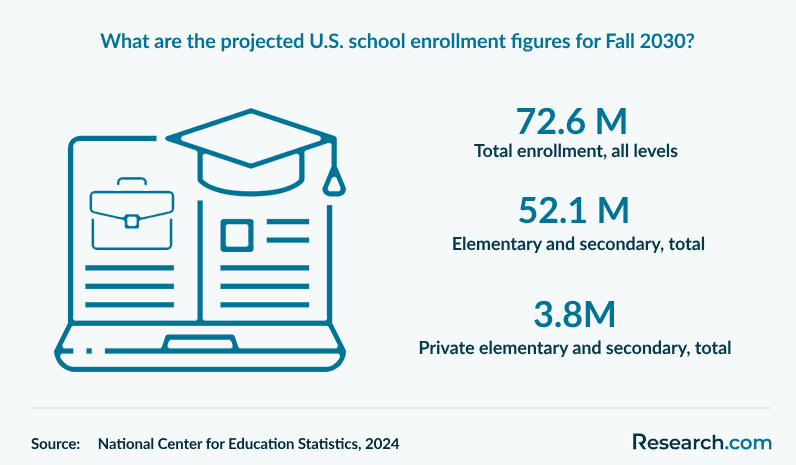
The National Center for Education Statistics projected that total U.S. enrollment across all levels will reach 72.6 million in Fall 2030. Elementary and secondary education is projected to account for 52.1 million students, including 47.6 million in prekindergarten through grade 8 and 4.5 million in grades 9 through 12. In private elementary and secondary education, total enrollment is projected to be 3.8 million, with 3.5 million students in prekindergarten through grade 8 and 1.4 million in grades 9 through 12.
What is the job market like for online Master's in Multilingual Learner Education graduates?
The job market is strongest for graduates who pair the master's degree with a valid teaching credential, relevant experience, and state-approved ESL, bilingual, or related endorsements when required. Schools and districts need educators who can support language development, academic access, assessment, compliance, and family engagement.
- Bilingual skills are valuable: Schools and other employers increasingly value professionals who can communicate across languages and cultures. Candidates who combine bilingual ability with an online degree for elementary education may be especially competitive in early-grade settings.
- Specialized teacher shortages matter: Many regions report difficulty filling high-need teaching areas, including roles serving multilingual learners.
- Multilingual student populations create steady need: Schools require trained educators who understand language development, assessment, and content access.
- Demand extends beyond schools: Social services, healthcare, government, workforce programs, and international organizations may need professionals with cross-cultural communication and language education expertise.
- Policy and compliance create leadership roles: Districts need specialists who can help meet state and federal requirements for multilingual learner services.
- Master's-level preparation supports advancement: Graduates may qualify for curriculum, coaching, coordination, and administration roles that are harder to access with classroom experience alone.
This pattern is similar to other specialized education fields. For instance, the cheapest online master's in gifted education programs serve educators who want targeted expertise for a defined student population.
What are the current industry trends and future outlook for online Master's in Multilingual Learner Education graduates?
Several trends are shaping multilingual learner education: asset-based teaching, technology integration, social-emotional support, stronger collaboration between specialists and general educators, policy advocacy, and growing recognition of bilingualism as an academic and economic strength.
- Asset-based instruction: Culturally and Linguistically Sustaining Practices (CLSP) reflect a shift away from deficit views of multilingual students and toward approaches that value students' languages and cultures.
- Instructional technology: Digital tools are increasingly used for language practice, assessment, translation support, family communication, and differentiated instruction.
- Social-emotional learning: Educators are paying closer attention to the needs of newcomers, students with limited or interrupted formal education, and refugee-background learners.
- Collaborative service models: Schools are emphasizing co-teaching, shared planning, and integrated support between multilingual learner specialists and classroom teachers.
- Advocacy and policy literacy: Educators are expected to understand language access, family rights, assessment rules, and equitable resource allocation.
- Personalized learning: Teachers are using data and language proficiency information to tailor instruction without reducing expectations.
- Bilingualism and biliteracy: More schools are recognizing bilingualism as an asset, supporting interest in dual language and biliteracy-focused programs.
Common mistakes to avoid when choosing an online Master's in Multilingual Learner Education
- Assuming every program leads to licensure: A master's degree, certificate, and endorsement are different credentials. Confirm the outcome in writing.
- Choosing only by tuition: A low-cost program may be a poor fit if it lacks the specialization, fieldwork, or state approval you need.
- Ignoring total cost: Fees, books, technology, testing, and travel can change the real price of attendance.
- Overlooking state authorization: Online programs may not be authorized or designed for every state's educator requirements.
- Confusing TESOL, ESL, ESOL, and bilingual education: These areas overlap, but they do not always prepare you for the same role.
- Assuming salary increases are guaranteed: Pay changes depend on your employer's salary schedule, contract, credential rules, and available positions.
- Skipping faculty and fieldwork review: Strong faculty expertise and practical application matter as much as course titles.
Questions to ask before enrolling
- Does this program meet my state's ESL, bilingual, TESOL, or ESOL endorsement requirements?
- Is the institution accredited, and is the educator preparation program recognized where I plan to teach?
- How many credits are required, and what is the total program cost including fees?
- Are courses asynchronous, synchronous, cohort-based, self-paced, full-time, or part-time?
- Can I complete required fieldwork in my current school or local community?
- What student support is available for online learners?
- What roles do graduates typically obtain after completing the program?
- Will my school district provide tuition reimbursement or a salary increase after graduation?
Key Insights
- Program fit matters more than the title: TESOL, ESL, ESOL, bilingual education, and multilingual learner education programs can lead to different outcomes, so match the curriculum to your career goal.
- Licensure rules are critical: If you need a state endorsement or certification, confirm requirements with both the university and your state education agency before enrolling.
- Affordability requires total-cost comparison: Online Master's programs in this field can range from approximately $8,000 to over $50,000 for the entire degree, so include tuition, fees, materials, and fieldwork-related costs.
- Career paths are broader than classroom teaching: Graduates may work as ESL/ELL teachers, bilingual educators, literacy specialists, curriculum developers, instructional coaches, adult ESL instructors, nonprofit specialists, or district coordinators.
- Salary outcomes vary by role: PayScale.com 2025 data shows classroom roles around the low-to-mid $50,000 range, while leadership roles such as school principal, university dean, school district superintendent, and VP, academic affairs show substantially higher averages.
- Multilingual education is a major access issue: UNESCO reported in 2025 that 40% of individuals worldwide lack education in a language they speak fluently, with the share rising to 90% in some low- and middle-income countries.
- U.S. language diversity supports continued demand: In 2023, Spanish was spoken at home by 43,369,734 people in the U.S. other than English, followed by Chinese with 3,531,221 speakers, according to Statista, 2025.
- Do not rely on rankings alone: Use rankings as a starting point, but make the final decision based on accreditation, licensure alignment, fieldwork, faculty expertise, cost, flexibility, and career outcomes.
References:
- Irwin, V., Bailey, T. M., Panditharatna, R., & Sadeghi, A. (2024, February). Projections of education statistics to 2030 (NCES 2024-034). U.S. Department of Education. National Center for Education Statistics.
- Statista. (2025). Ranking of languages spoken at home in the U.S. in 2008. Statista.
- UNESCO. (2025, March 11). New UNESCO report calls for multilingual education to unlock learning and inclusion. UNESCO.
- U.S. Government Accountability Office. (2024, July 25). Supplemental material for GAO-24-106360: Technical materials for regression analyses on student, teacher, and school characteristics associated with English learners’ academic performance (GAO Publication No. GAO-24-107485). U.S. Government Accountability Office.
- PayScale. (2025). Bilingual Education Teacher Salary. PayScale.
- PayScale. (2025). Curriculum Developer Salary. PayScale.
- PayScale. (2025). Director of Multicultural Affairs Salary. PayScale.
- PayScale. (2025). Dual Language Teacher Salary. PayScale. PayScale. (2025). Education Program Coordinator Salary. PayScale.
- PayScale. (2025). Educational Consultant Salary. PayScale.
- PayScale. (2025). English as a Second Language (ESL) Teacher Salary. PayScale.
- PayScale. (2025). Foreign Language Instructor Salary. PayScale.
- PayScale. (2025). Instructional Coach Salary. PayScale.
- PayScale. (2025). Interpreter Salary. PayScale.
- PayScale. (2025). K-12 Program Director Salary. PayScale.
- PayScale. (2025). Language Program Director Salary. PayScale.
- PayScale. (2025). Literacy Specialist Salary. PayScale.
- PayScale. (2025). Principal Salary. PayScale.
- PayScale. (2025). Project Manager, Education Salary. PayScale.
- PayScale. (2025). School Administrator Salary. PayScale.
- PayScale. (2025). School District Superintendent Salary. PayScale.
- PayScale. (2025). Training & Development Manager Salary. PayScale.
- PayScale. (2025). University Dean Salary. PayScale.
- PayScale. (2025). Vice President (VP), Academic Affairs Salary. PayScale.
Other Things You Should Know About Online Master's in Multilingual Learner Education Programs
Yes. Many states require a teaching license before adding an English learner or ESL endorsement, plus a graduate program with 15–24 dedicated ESL credits. Some states also require Praxis or state-specific exams and a supervised practicum aligned to the state education department.
Many programs require practical experience as part of the curriculum. Typically, students need to complete a teaching internship or practicum, focusing on multilingual learners. This experience is often supervised by professionals and can span 100 to 200 hours, depending on the institution.