
2027 Fastest Online Master’s in Science Education Degree Programs

Co-Founder and Chief Data Scientist
If you are a working teacher, career changer, or STEM professional, the main question is not simply whether a master’s in science education is useful. It is whether you can finish one quickly enough to justify the cost, workload, and time away from other priorities. Accelerated online master’s in science education programs are designed for that exact decision: they compress graduate coursework into shorter terms, offer flexible online delivery, and often let experienced educators move through requirements faster.
This guide explains what the fastest online master’s in science education programs include, how long they take, what they may cost, and which career paths they can support. You will also learn how to compare programs by accreditation, licensure fit, specialization, format, and return on investment so you can choose a degree that matches your teaching goals instead of relying only on speed.
Quick answer: Is an accelerated online master’s in science education worth it?
The fastest online master’s in science education programs can be a strong choice if you already work in education, want to deepen your science teaching expertise, and need a flexible graduate program that can be completed in about 12 to 18 months. These degrees are especially useful for licensed teachers seeking salary advancement, STEM curriculum roles, instructional coaching positions, or stronger preparation for science-focused classroom leadership.
They are not the best fit for every student. If you need initial licensure, you must confirm that the program meets your state’s requirements. If you need extensive in-person lab work or prefer slower pacing, a traditional or campus-based program may be easier to manage.
What are the main benefits of the fastest online master’s in science education programs?
- A graduate degree in science education can support roles such as high school science teacher, STEM curriculum specialist, instructional coach, community college instructor, educational content developer, or informal science educator.
- Professionals in this field often see median earnings between $60,000 and $80,000, although pay varies by school district, state, years of experience, certification, and job title.
- Online delivery can help you keep teaching or working while completing coursework, and accelerated formats may shorten the time needed to earn the credential.
What should you expect from the fastest online master’s in science education degree program?
An online master’s in science education is a graduate program for educators and professionals who want stronger science content knowledge and better instructional strategies without leaving the workforce. Coursework usually combines science pedagogy, curriculum planning, assessment, instructional technology, and subject-specific study in areas such as biology, chemistry, physics, earth science, environmental science, or STEM education.
Accelerated programs often use short academic terms, year-round course schedules, asynchronous classes, or competency-based learning. Many options can be finished in as little as 12 to 18 months, but the faster timeline usually means a heavier weekly workload. Students should expect graduate-level reading, lesson design, research assignments, online discussions, projects, and sometimes a capstone, practicum, or portfolio.
The right program depends on your goal. A licensed teacher seeking professional growth may need a different curriculum than a career changer pursuing initial certification. Some programs are designed for classroom teachers, while others focus on non-licensure professional development, curriculum design, or STEM leadership.
Where can graduates work with a fast online master’s in science education?
Graduates can work in traditional classrooms, district offices, postsecondary settings, nonprofit education programs, science outreach organizations, and education technology companies. The most common pathway is K–12 science teaching, but the degree can also help educators move into curriculum, coaching, STEM coordination, or instructional design roles.
| Work setting | Common roles | When this path makes sense |
| K–12 public or private schools | Middle school science teacher, high school science teacher, STEM teacher | Best for licensed educators who want stronger classroom expertise, advanced pay lanes, or specialized science assignments. |
| School districts | STEM coordinator, curriculum specialist, instructional coach | Useful for teachers who want to support other educators, lead curriculum work, or manage science initiatives. |
| Community colleges | Introductory science instructor, lab course instructor | May fit graduates who want to teach lower-division science courses, depending on institutional hiring requirements. |
| Educational publishers and edtech firms | Science content developer, instructional designer, assessment writer | Good for educators interested in building digital lessons, textbooks, virtual labs, or standards-aligned assessments. |
| Museums, nonprofits, and science centers | Informal education specialist, outreach coordinator, program designer | Fits professionals who want to teach science outside a traditional classroom. |
Typical employers include:
- K–12 school districts
- Community colleges
- Curriculum publishers
- Educational nonprofits
- Museums and science centers
- Edtech and e-learning firms
How much can you make with an accelerated online master’s in science education?
Salary outcomes vary widely because teacher pay is often tied to state, district salary schedules, grade level, contract days, and years of experience. In the U.S., K–12 science teachers with a master’s degree can expect average salaries between $55,000 and $85,000, and many districts offer $5,000–$15,000 more annually than bachelor’s-level teachers.
Other roles may pay differently. Instructional coordinators and curriculum developers earn around $64,830 to $71,240 per year, while educational consultants often see salaries averaging $95,000, with top roles paying over $120,000. High school teachers nationally earn a median of $62,870, and those with master’s-level STEM training can surpass the $65,000 mark. These figures should be used as planning benchmarks, not guaranteed earnings.
- Fastest Online Master's in Science Education Degree Programs for 2027
- How long does it take to complete the fastest online Master's in Science Education degree program?
- How does the fastest online Master's in Science Education degree program compare to an on-campus program?
- What is the average cost of the fastest online Master's in Science Education degree program?
- What are the financial aid options for students enrolling in the fastest online Master's in Science Education degree program?
- What are the prerequisites for enrolling in the fastest online Master's in Science Education degree program?
- What courses are typically in the fastest online Master's in Science Education degree program?
- What types of specializations are available in the fastest online Master's in Science Education degree programs?
- How do you choose the best among the fastest online Master's in Science Education degree programs?
- What career paths are available for graduates of the fastest online Master's in Science Education degree programs?
- What is the job market like for graduates of the fastest online Master's in Science Education degree program?
- What digital enhancements support accelerated online learning?
- How can further specialization benefit my career advancement?
- Are similar accelerated online degree options available in other disciplines?
- What is the return on investment of the fastest online Master's in Science Education degree programs?
Fastest Online Master's in Science Education Degree Programs for 2027
The programs below are designed for students who want a shorter path to a graduate credential in science education. Some use competency-based pacing, some offer short terms, and others provide fully online coursework that can fit around a teaching schedule. If you are comparing accelerated education degrees across subjects, you may also find it useful to review the structure of the shortest master's degree in reading and literacy online.
How do we rank schools?
Choosing a fast online master’s program requires more than finding the shortest completion time. Cost, accreditation, student outcomes, online delivery, and institutional quality all matter, especially for educators who may need the degree to qualify for district pay increases, state credentials, or leadership roles.
This ranking follows Research.com’s transparent methodology. Program data are reviewed using sources such as the Integrated Postsecondary Education Data System (IPEDS), Peterson's databases including the Distance Learning Licensed Data Set, and the College Scorecard from the National Center for Education Statistics.
Use this list as a starting point. Before enrolling, confirm current tuition, program length, licensure eligibility, field experience requirements, and whether the curriculum aligns with your state and career plans.
1. Western Governors University
Western Governors University offers an online Master of Arts in Teaching with science education options for secondary and middle grades. Its competency-based format may appeal to students who already have teaching experience or strong science knowledge because progress is based on demonstrating mastery rather than only completing weekly seat time. The program is fully online and is commonly completed in 18 months or less, depending on the student’s pace and requirements.
- Program Length: 12-18 months
- Tracks/concentrations: Master of Arts in Teaching, Science Education
- Cost per Credit: Charges tuition per 6-month term, $4,125 - $4,755
- Required Credits to Graduate: 30-36
- Accreditation: Northwest Commission on Colleges and Universities (NWCCU)
2. American College of Education
The American College of Education offers an online M.Ed. in Science Education for licensed educators who want to strengthen instructional practice and science content knowledge. The program is structured for working teachers and can often be completed in as little as 12 months. Its fully online format makes it a practical option for educators who need graduate coursework without leaving their current classroom roles.
- Program Length: 12 months
- Tracks/concentrations: M.Ed. in Science Education
- Cost per Credit: $275-$325 per credit hour
- Required Credits to Graduate: 34 credit hours
- Accreditation: Higher Learning Commission (HLC)
3. University of Texas Rio Grande Valley
University of Texas Rio Grande Valley provides an accelerated online Master of Education in Curriculum & Instruction with a specialization in Elementary Math and Science Education. The program is designed for elementary educators who want deeper preparation in STEM teaching. Courses are delivered in concentrated 7-week sessions, and the degree can be completed in as little as 10 months.
- Program Length: 10 months
- Tracks/concentrations: Master of Education in Curriculum & Instruction with an Elementary Math and Science Education concentration
- Cost per Credit: $458.33
- Required Credits to Graduate: 30-36 credit hours
- Accreditation: Southern Association of Colleges and Schools Commission on Colleges (SACSCOC)
4. Walden University
Walden University offers an MS in Education with a Science specialization for Grades K–8 in a non-licensure format. The curriculum emphasizes inquiry-based learning and the connection between science content and classroom practice. Because this option is not designed for initial licensure, it is best suited for current educators seeking professional development or additional science teaching expertise.
- Program Length: 1.5 to 2 years
- Tracks/concentrations: MS in Education with a specialization in Science
- Cost per Credit: $500-$600 per credit hour
- Required Credits to Graduate: 30-45 semester credits
- Accreditation: Higher Learning Commission (HLC)
5. Campbellsville University Online
Campbellsville University offers online Master of Arts in Teaching programs with science-focused options for Secondary Education (8-12 Science) and Middle Grades (5-9 Science). These programs are built for adult learners who want a flexible route to teacher preparation or graduate-level science education training. Many students can complete the program in 12 months.
- Program Length: 12 months
- Tracks/concentrations: Master of Arts in Teaching (MAT) with concentrations for Secondary Education (8-12 Science) and Middle Grades (5-9 Science)
- Cost per Credit: $319 per credit hour
- Required Credits to Graduate: 30-36 credit hours
- Accreditation: Southern Association of Colleges and Schools Commission on Colleges (SACSCOC)
6. Colorado State University
Colorado State University Online offers a Master of Natural Sciences Education for current and aspiring natural science teachers. The program covers biology, chemistry, physics, and environmental science while helping educators design more effective science instruction. Coursework is delivered online, and students may use science lab kits to support hands-on learning.
- Program Length: 2 years
- Tracks/concentrations: Master of Natural Sciences Education (M.N.S.E.)
- Cost per Credit: $660 - $700 per credit hour.
- Required Credits to Graduate: 30-32 credit hours
- Accreditation: Higher Learning Commission (HLC)
7. University of Georgia
The University of Georgia offers an online Master of Education in Science Education for educators who want advanced preparation in science instruction and pedagogy. Although the program generally takes around two years, the online format gives working teachers more flexibility to continue teaching while completing graduate study.
- Program Length: 2 years
- Tracks/concentrations: Master of Education (M.Ed.) in Science Education
- Cost per Credit: $1,000 per credit hour
- Required Credits to Graduate: 36 credit hours
- Accreditation: Southern Association of Colleges and Schools Commission on Colleges (SACSCOC)
8. North Carolina State University
North Carolina State University offers a Master of Arts in Science Education that functions as an accelerated teacher licensure pathway. It is designed for students preparing to teach high school science and leads to both initial teaching licensure and a master’s degree. Full-time students may finish in as little as 18 months.
- Program Length: 18 months
- Tracks/concentrations: Master of Arts in Science Education
- Cost per Credit: $500-$600 per credit hour
- Required Credits to Graduate: 30-36 credit hours
- Accreditation: Southern Association of Colleges and Schools Commission on Colleges (SACSCOC)
9. Capella University
Capella University offers an online MS in Education with specializations that can support science education careers, including Curriculum and Instruction or Instructional Design & Educational Technology. Its FlexPath format allows students to set deadlines and move at their own pace, which can help self-directed learners complete coursework more quickly.
- Program Length: 15 months
- Tracks/concentrations: MS in Education with various specializations, including those relevant to science education like Curriculum and Instruction or Instructional Design & Educational Technology
- Cost per Credit: Flat fee per 12-week billing session, around $2,640 - $3,075
- Required Credits to Graduate: 45-50 quarter credits
- Accreditation: Higher Learning Commission (HLC)
10. University of Nebraska at Kearney
The University of Nebraska at Kearney offers an online Master of Science in Education: Science/Math Education for 7-12 grade educators. The program is intended to strengthen both teaching methods and content knowledge in science and math. Its fully online delivery gives working teachers a flexible route to graduate study.
- Program Length: 1.5 to 2 years
- Tracks/concentrations: Master of Science in Education: Science/Math Education.
- Cost per Credit: $354 per credit hour(with a slightly lower rate for College of Education non-residents at around $500).
- Required Credits to Graduate: 36 credit hours.
- Accreditation: Higher Learning Commission (HLC).
How long does it take to complete the fastest online Master's in Science Education degree program?
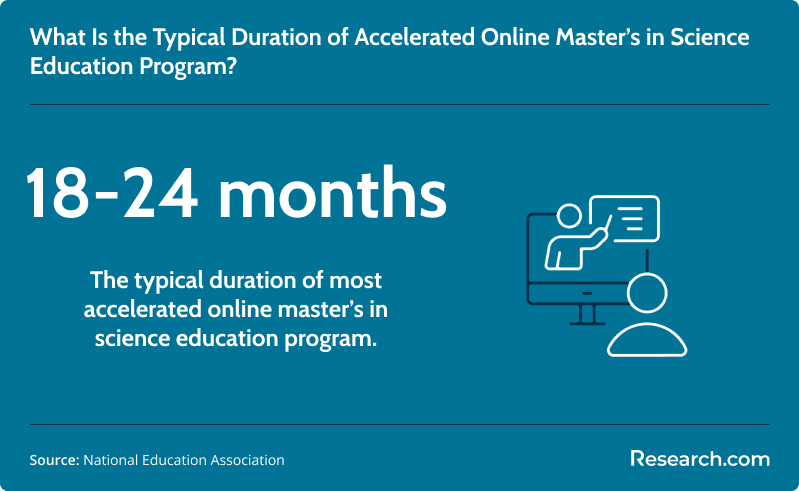
The fastest online Master's in Science Education programs can be completed in as little as 12 to 18 months. These accelerated formats work similarly to other compressed online pathways, such as an accelerated software engineering degree online, by using shorter terms, continuous enrollment, or self-paced coursework.
Completion time depends on several factors: the number of credits required, whether you enroll full-time, how many courses you take each term, whether field experiences are required, and whether the school allows transfer credits. Some programs use eight-week sessions; others rely on competency-based pacing or 7-week sessions.
| Program pace | Typical completion time | Best for | Main trade-off |
| Fastest accelerated route | 10 months to 12 months | Highly organized students who can handle a heavy workload | Less schedule flexibility and more intense weekly deadlines |
| Standard accelerated route | 12 to 18 months | Working teachers who want speed but still need balance | May require multiple courses at once |
| Flexible online route | 1.5 to 2 years | Students balancing teaching, family, and other commitments | Slower path to salary advancement or new roles |
| Traditional online route | 2 years | Students who prefer a more manageable course load | Longer time before degree completion |
Even when courses are online, fast programs are demanding. Students may need 15 to 25 hours of study per week, especially when completing projects, fieldwork, or capstone assignments. If cost is a major factor, compare tuition carefully and review broader affordable online courses and degree options before committing.
How does the fastest online Master's in Science Education degree program compare to an on-campus program?
Fast online and on-campus master’s programs in science education often cover similar academic content: science teaching methods, curriculum development, assessment, educational research, and advanced science topics. The major difference is not necessarily what you learn, but how you learn it. Online programs deliver lectures, readings, discussions, assignments, and projects through a learning platform, while campus programs rely more heavily on scheduled in-person meetings.
This difference matters for students with full-time teaching jobs. Online programs may be more flexible, while on-campus programs may provide more face-to-face access to faculty, peers, labs, and campus resources. Similar delivery trade-offs appear in other accelerated online graduate fields, including the shortest online marriage and family counseling master's degree.
| Factor | Fast online program | On-campus program |
| Schedule | Often asynchronous or designed for working educators | Usually tied to class meeting times |
| Completion speed | May offer 10 months, 12 months, 15 months, or 18 months options | Often closer to a traditional academic calendar |
| Interaction | Discussion boards, video meetings, group projects, virtual advising | In-person class discussions, office hours, and campus events |
| Labs and applied work | May use virtual labs, local placements, or lab kits | May provide easier access to campus labs and materials |
| Best fit | Teachers who need flexibility and cannot relocate | Students who want frequent in-person support and campus resources |
Both formats can be valuable if the institution is accredited and the program fits your state requirements. If licensure, endorsement, or certification is part of your plan, verify those details before choosing either format.
What is the average cost of the fastest online Master's in Science Education degree program?
The average cost of the fastest online Master's in Science Education degree program usually ranges from $15,000 to $30,000 in total tuition. Public universities may offer lower tuition, especially for in-state students, while private institutions and highly specialized programs can cost more. A similar cost-comparison process applies when evaluating other fast graduate options, including an accelerated cybersecurity master's degree online.
Tuition is only part of the total price. Students should also check technology fees, course materials, textbooks, background checks, testing fees, certification costs, practicum expenses, and graduation fees. Some universities charge by the credit hour, while others use flat-rate tuition by term or billing session.
| Cost factor | Why it matters | Question to ask |
| Tuition model | Per-credit pricing and flat-rate terms can produce very different totals. | Will I pay per credit, per term, or per billing session? |
| Program speed | Accelerated programs may reduce time in school but concentrate payments into a shorter period. | What is the payment schedule if I finish in 12 to 18 months? |
| Residency status | Some public universities charge different rates for in-state and out-of-state students. | Does online tuition differ by state residency? |
| Licensure expenses | Students seeking certification may face additional testing or application costs. | Are certification or endorsement fees included in the estimate? |
| Employer support | District reimbursement can significantly reduce out-of-pocket cost. | Does my employer reimburse graduate education tuition? |
If you want to compare related educator preparation options, review online school for teaching degree programs and request full tuition estimates from each institution before applying.
The chart below highlights the percentage of teachers holding bachelor's, master's, and doctoral degrees in K-12 science teaching.
What are the financial aid options for students enrolling in the fastest online Master's in Science Education degree program?
Graduate students in online science education programs may be able to use federal financial aid, institutional aid, state programs, employer tuition assistance, scholarships, and private loans. The first step is usually submitting the Free Application for Federal Student Aid (FAFSA), which can determine eligibility for federal student loans, grants, or work-study programs.
Teachers should also ask their school district about tuition reimbursement, salary lane advancement rules, and approved provider lists. Some states provide support for educators in high-need fields, and STEM teaching may qualify in certain locations. Students in other accelerated online fields, such as an accelerated online bachelor's degree in computer science program, should use the same strategy: compare federal, state, institutional, and employer-based funding before borrowing.
| Funding option | How it can help | Important caution |
| FAFSA-based aid | May provide access to federal student loans, grants, or work-study programs. | Graduate aid is often loan-based, so review repayment obligations. |
| Institutional scholarships | Schools may offer merit-based or need-based awards. | Scholarship deadlines may be earlier than admission deadlines. |
| District or employer reimbursement | Can reduce direct tuition costs for working teachers. | Some employers require the course or program to be preapproved. |
| Professional scholarships | Organizations such as the National Science Teaching Association may offer support for science educators. | Eligibility may depend on membership, teaching status, or subject area. |
| Private loans | May cover remaining balances after other aid. | Compare interest rates and borrower protections carefully. |
If price is your main constraint and you are open to broader education leadership roles, compare the cheapest online educational leadership programs as part of your financial planning.
What are the prerequisites for enrolling in the fastest online Master's in Science Education degree program?
Admission requirements vary by institution and by whether the program is designed for licensed teachers, aspiring teachers, or non-licensure professional development. Requirements can be as strict as those found in other accelerated professional graduate programs, such as the shortest clinical mental health counseling master's programs online.
- Bachelor’s degree: Applicants generally need a bachelor’s degree from an accredited college or university. Programs may prefer backgrounds in science, education, or a related field.
- Minimum GPA: Many schools require a minimum undergraduate GPA, often around 2.75 to 3.0.
- Teaching license: Some programs require a valid teaching certificate or license, especially those intended for current educators.
- Professional experience: Certain universities may prefer or require experience in K–12 schools or other education settings.
- Recommendation letters: Applicants commonly submit two or three letters from supervisors, faculty members, or colleagues.
- Personal statement: Schools may ask for a statement explaining your teaching background, career goals, and reasons for pursuing graduate study.
- Official transcripts: You will usually need transcripts from all colleges and universities attended.
- Resume or CV: A current resume helps admissions teams understand your academic and professional preparation.
- Technology readiness: Because coursework is online, students should be comfortable with learning management systems, video tools, digital submissions, and online collaboration.
If you need licensure, do not assume admission means the program meets certification requirements in your state. Ask the program director and your state education agency directly.
What courses are typically in the fastest online Master's in Science Education degree program?
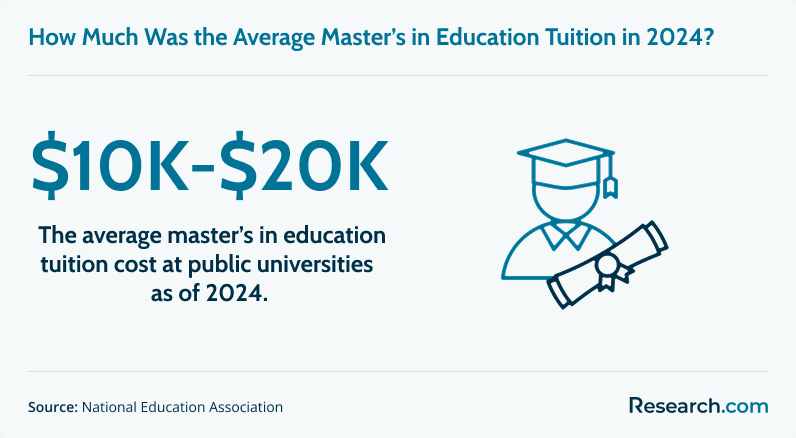
Fast online master’s programs in science education usually combine teaching methods, science content, research, curriculum development, assessment, and technology integration. On average, tuition for a master’s program ranges from $10,000 to $30,000 at public universities. Private institutions often charge $25,000 to $50,000 or more for the entire degree.
Course titles differ by school, but most programs are built to help teachers apply science concepts in real classrooms. If you are evaluating long-term career options, compare the curriculum with careers in education that require curriculum, coaching, or instructional leadership skills.
| Common course area | What you learn | Why it matters |
| Advanced Methods of Science Teaching | How to design and deliver effective K–12 science lessons. | Improves classroom instruction and student engagement. |
| Curriculum Design and Assessment | How to build, evaluate, and revise science curriculum aligned with standards. | Useful for teachers, curriculum specialists, and STEM coordinators. |
| Educational Research and Data Analysis | How to read research and use data to improve instruction. | Supports evidence-based decision-making and capstone work. |
| Science Content Specialization | Graduate-level study in biology, chemistry, physics, earth science, or related areas. | Strengthens subject-matter confidence and teaching depth. |
| Technology Integration in Science Education | How to use simulations, virtual labs, digital tools, and online resources. | Helps teachers adapt to modern STEM classrooms. |
| Equity and Diversity in Science Education | Strategies for inclusive science instruction across diverse student populations. | Supports stronger access and participation in STEM learning. |
| Capstone Project or Practicum | A final applied project, portfolio, or field-based experience. | Demonstrates graduate-level mastery and classroom application. |
What types of specializations are available in the fastest online Master's in Science Education degree programs?
Specializations help you align the degree with the students, subjects, and roles you want to pursue. Before selecting one, think carefully about whether you want to teach a specific science discipline, lead STEM programs, design curriculum, or move into educational technology. If you are still comparing credential paths, reviewing different education degree options can help clarify which graduate route fits your goals.
| Specialization | Focus | Best fit |
| Biology Education | Life sciences, genetics, ecology, and human biology. | Teachers who want to focus on biology or life science courses. |
| Chemistry Education | Chemistry concepts, lab safety, chemical processes, and instructional methods. | Educators preparing for chemistry teaching or science lab instruction. |
| Physics Education | Motion, energy, electricity, and physics teaching strategies. | Teachers interested in high school physics or physical science. |
| Earth and Space Science Education | Geology, meteorology, astronomy, and environmental science. | Educators teaching earth science or environmental topics. |
| General Science Education | A broad foundation across several science disciplines. | Middle school teachers or educators covering multiple science subjects. |
| STEM Education | Integrated science, technology, engineering, and math instruction. | Teachers aiming for STEM coordinator or interdisciplinary teaching roles. |
| Instructional Technology Integration | Digital tools, virtual labs, simulations, and online science learning. | Educators interested in edtech, instructional design, or blended learning. |
How do you choose the best among the fastest online Master's in Science Education degree programs?
The average high school science teacher salary in 2024 was $66,542, and a master’s degree may help some educators qualify for higher pay depending on district salary schedules and state rules. However, the best program is not always the shortest one. Whether you are comparing science education programs or an accelerated online masters degree in clinical mental health counseling, the decision should be based on accreditation, cost, curriculum fit, support, and career outcomes.
1. Verify institutional and program accreditation
Start with regional accreditation. A degree from a properly accredited university is more likely to be recognized by employers, graduate schools, and licensure agencies. If the program prepares teachers, also ask whether it aligns with your state’s educator preparation requirements.
2. Confirm licensure and endorsement compatibility
This is the most important step for students who need certification. Some online science education master’s programs are non-licensure degrees, while others lead to initial licensure or endorsements. Contact your state board of education before enrolling.
3. Compare speed against workload
A 10-month or 12-month program can be attractive, but it may require multiple courses at once. Ask how many hours students typically spend each week and whether you can slow down if work or family obligations change.
4. Review curriculum and specialization options
Choose a program that matches your teaching level and subject area. A K–8 science specialization, a secondary science licensure program, and a STEM leadership track may lead to different outcomes.
5. Calculate total cost, not just tuition
Include tuition, fees, textbooks, technology expenses, testing costs, and certification fees. Ask for a total program estimate and compare it with your expected salary advancement or promotion options.
6. Evaluate student support
Accelerated online students need responsive advising, technical help, library access, tutoring, and career support. Weak support can make a fast program harder than it needs to be.
7. Ask for outcome data
Look for graduation rates, completion timelines, student satisfaction, licensure pass information where applicable, and job placement support. Reviews are useful, but verified outcome data are stronger.
| Common mistake | Why it can hurt you | Better approach |
| Choosing only the shortest program | The fastest option may not meet licensure, content, or workload needs. | Balance completion time with accreditation, curriculum, and state approval. |
| Looking only at tuition | Fees, materials, and certification costs can change the true price. | Request a full cost-of-attendance estimate. |
| Assuming all online programs lead to licensure | Some science education programs are explicitly non-licensure. | Confirm requirements with the school and state board. |
| Ignoring transfer credit policies | You may miss opportunities to shorten the program or reduce cost. | Ask whether prior graduate credits can apply. |
| Relying only on rankings | A highly ranked program may not fit your state, schedule, or specialization. | Use rankings as one factor, not the final decision. |
The chart below illustrates the average salaries for high school science teachers. It provides a clear comparison of earnings to help you understand how experience can impact your income potential.
What career paths are available for graduates of the fastest online Master's in Science Education degree programs?
Graduates of accredited online teaching degree programs in science education can pursue classroom, leadership, curriculum, and informal education roles. The best path depends on whether the degree includes licensure, your teaching experience, and your science specialization.
- Middle school or high school science teacher: Teach biology, chemistry, physics, earth science, or general science. A master’s degree may support advanced pay or specialized teaching assignments.
- STEM coordinator or curriculum specialist: Design science curriculum, coordinate STEM initiatives, and support district-wide instructional improvement.
- Instructional coach: Mentor science teachers, model effective lessons, analyze classroom data, and help improve teaching practice.
- Community college instructor: Teach introductory science or lab courses, depending on the institution’s hiring standards.
- Science education consultant: Advise schools, districts, publishers, or education organizations on curriculum, assessment, and instructional design.
- Educational content developer: Create textbooks, digital learning modules, assessments, lab guides, or virtual science resources.
- Museum or informal education specialist: Develop public science programs, outreach events, exhibits, or nonprofit learning experiences.
What is the job market like for graduates of the fastest online Master's in Science Education degree program?
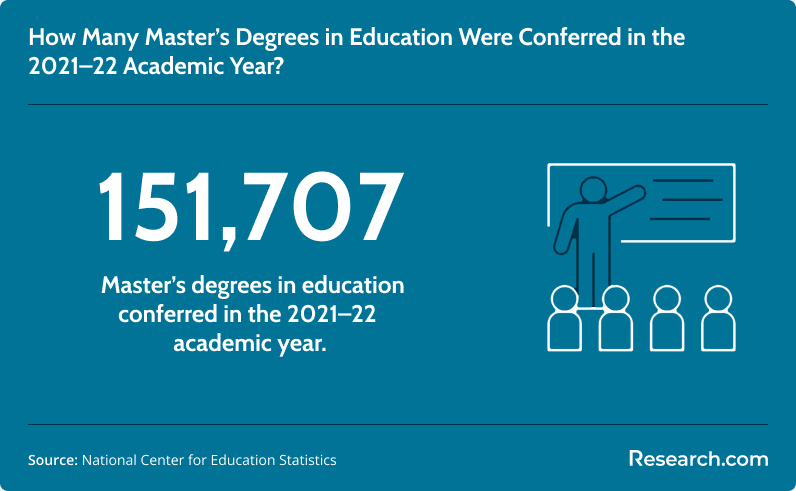
The job market for graduates is generally steady because schools continue to need qualified science educators, especially in middle and high school settings. In the 2021–22 academic year, colleges conferred 151,707 master’s degrees in education, showing that graduate education remains a common pathway for educators seeking advancement.
There is a consistent demand for qualified science teachers, particularly in STEM subjects. A master’s degree can help candidates stand out for science teaching, curriculum development, instructional coaching, STEM coordination, and education consulting roles. Still, local hiring conditions matter. Demand can vary by state, district, grade level, certification area, and school budget.
Technology is also changing expectations. Schools increasingly use digital curricula, online assessments, virtual simulations, and data tools. Graduates who can combine strong science knowledge with technology integration, inclusive teaching, and standards-aligned curriculum design may be better positioned for leadership and specialist roles.
What digital enhancements support accelerated online learning?
Strong online science education programs use more than recorded lectures. They often include learning management systems, virtual labs, interactive simulations, video discussions, digital assessments, online libraries, and structured faculty feedback. These tools are especially important in accelerated programs because students have less time to recover from unclear instructions, weak support, or technical issues.
When comparing programs, ask whether courses include synchronous meetings, asynchronous materials, peer collaboration, virtual office hours, academic coaching, and technical support. Also ask how science labs or applied projects are handled online. If affordability is part of your broader graduate education search, reviewing the cheapest online MLIS degree can offer another example of how online programs structure cost and flexibility.
How can further specialization benefit my career advancement?
Further specialization can help educators move beyond general classroom teaching into curriculum leadership, STEM program design, district coaching, assessment development, policy work, or administration. The value depends on the credential. A short certificate may be enough for a targeted skill, while doctoral study may be more appropriate for senior leadership, research, or higher education roles.
Before pursuing another credential, identify the exact role you want and check what employers require. If your goal is educational administration or system-level leadership, compare targeted certifications with low cost online doctoral programs for educational leadership to understand the time, cost, and career trade-offs.
Are similar accelerated online degree options available in other disciplines?
Yes. Accelerated online programs are common across education, technology, business, counseling, liberal arts, and other fields. The same basic model applies: shorter terms, flexible online coursework, year-round scheduling, and sometimes competency-based progress. The right option depends on whether the field requires licensure, supervised experience, labs, internships, or exams.
If you are comparing accelerated formats outside science education, look closely at program outcomes and career fit rather than speed alone. For example, the fastest online degrees philosophy programs use a different academic model and career pathway than science education, even though both may offer flexible online completion.
What do students say about accelerated online master’s in science education programs?
- Completing my accelerated online Master's in Science Education in just 14 months was life-changing. The flexible schedule let me keep teaching full-time while upgrading my skills in curriculum design and technology integration. I feel more confident and valued as an educator. Candice
- I loved how the online program combined rigorous science content with practical teaching strategies. The virtual labs and interactive modules made learning engaging and convenient from home. Finishing faster meant I could apply for leadership roles much sooner. Leo
- Earning my master’s online allowed me to connect with passionate science teachers from across the country. The supportive faculty and clear course structure helped me stay motivated, even during intensive sessions. It was the best decision for my career and my family’s schedule. Rachel
What is the return on investment of the fastest online Master's in Science Education degree programs?
The ROI of an accelerated online master’s in science education depends on total cost, completion time, salary policies, career goals, and whether the degree qualifies you for the roles you want. A shorter program can improve ROI if it helps you move into a higher pay lane, earn a promotion, or qualify for a specialist role sooner. However, speed alone does not guarantee financial return.
To estimate ROI, compare your total program cost with potential salary increases, district pay schedules, certification benefits, and promotion opportunities. Include opportunity costs as well: the time required for coursework, reduced availability for extra work, and the intensity of accelerated terms. If your long-term plan includes doctoral-level leadership, you may also want to compare master’s ROI with the quickest EdD program pathways.
| ROI question | Why it matters |
| Will this degree increase my salary in my district? | Teacher pay increases often depend on local salary schedules and approved credits. |
| Does the program meet my state’s licensure or endorsement requirements? | A non-compatible degree may not support your intended teaching credential. |
| How soon can I finish without overloading myself? | Faster completion can help ROI, but burnout or delayed completion can reduce the benefit. |
| What roles can this specialization realistically support? | Biology education, STEM education, and instructional technology may lead to different opportunities. |
| What is my total cost after aid and employer reimbursement? | Net cost is more useful than published tuition when evaluating value. |
Key Insights
- The fastest online master’s in science education programs can often be completed in 12 to 18 months, with some programs offering 10 months, 15 months, 18 months, 1.5 to 2 years, or 2 years completion timelines.
- Speed should not be the only selection factor. Accreditation, licensure compatibility, curriculum fit, total cost, and student support are more important than the shortest advertised timeline.
- Most programs require a minimum undergraduate GPA, typically between 2.75 and 3.0, along with transcripts, recommendations, a resume, and a personal statement.
- On average, tuition for a master’s program ranges from $10,000 to $30,000 at public universities. Private institutions often charge $25,000 to $50,000 or more for the entire degree.
- Salary outcomes depend heavily on state, district, role, and experience. Massachusetts is the highest paying state for science teachers, with educators receiving an average $96,096 per year. The highest-paying city, on the other hand, is New York, NY at $71,668.
- In the 2021–22 academic year, colleges conferred 151,707 master’s degrees in education, reflecting continued interest in advanced education credentials.
- If you need teacher certification, confirm state approval before enrolling. Some online programs are designed for licensed teachers, while others are non-licensure professional development degrees.
References:
- Bureau of Labor Statistics. (n.d.). Kindergarten and elementary school teachers. U.S. Department of Labor.
- Careers in Science Teaching. (n.d.). High school science teacher salary. National Science Teaching Association.
- National Center for Education Statistics. (2023). Master’s degrees conferred by postsecondary institutions, by field of study: 2021–22 [Table 325.40]. U.S. Department of Education.
- National Center for Science and Engineering Statistics. (2022). National Training, Education, and Workforce Survey. National Science Foundation.
- National Education Association. (n.d.). Educator pay and student spending: How does your state rank?
- RAND Corporation. (2021). Understanding the teacher pipeline for California: Retention and mobility of teachers (Research Report No. RRA1108-12).
- Zippia. (n.d.). Science teacher demographics and statistics [2024].
Other Things You Should Know About Online Master's in Science Education Degree Programs
Accelerated online Master’s in Science Education programs usually require 30 to 36 credit hours. Many are designed for completion in 12 to 18 months, and some allow part-time enrollment with a capstone, thesis, or action-research project instead of a full student-teaching placement.
To gain admission to the fastest online Master’s in Science Education programs in 2027, candidates generally need a bachelor’s degree from an accredited institution, teaching credentials, and letters of recommendation. Some programs may require a minimum GPA and standardized test scores, though these requirements can vary by institution.
Yes, students generally need a reliable internet connection, a computer that meets program specifications, and required software such as video conferencing tools and educational platforms to participate in the fastest online Master’s in Science Education degree programs in 2027.


