2027 ESL Teacher Requirements & ESOL Certification in Kentucky

Co-Founder and Chief Data Scientist
Kentucky schools need educators who can help English learners build academic language, participate fully in class, and meet grade-level expectations. With over 11,000 students enrolled in ESL programs statewide, the state’s need for qualified ESOL-endorsed teachers is not limited to one district or one grade level. It affects elementary classrooms, secondary content courses, adult education, and communities with growing multilingual populations.
This guide explains how to become an ESL teacher in Kentucky in 2026, including education requirements, ESOL endorsement options, Praxis testing, alternative certification routes, renewal rules, salary expectations, and career growth. It is written for aspiring teachers, licensed educators who want to add ESOL, career changers, veterans, and out-of-state teachers comparing Kentucky’s process with other states.
Quick answer: ESL teacher requirements in Kentucky
- To teach ESL in Kentucky public schools, you generally need a bachelor’s degree, a valid Kentucky teaching certificate, and an ESOL or ESL endorsement for the appropriate grade levels.
- The ESOL endorsement is typically added through an EPSB-approved educator preparation program, approved graduate coursework, or another state-recognized pathway.
- Kentucky candidates are commonly expected to pass the Praxis ESOL assessment and submit the required certification application, transcripts, fees, and supporting documentation through the state credentialing process.
- Alternative routes may be available for career changers, professionals with strong work experience, Teach for America participants, and military veterans, but each route has specific eligibility rules.
- Certification is not a one-time step. ESL teachers must maintain their credential through renewal, professional development, experience, and documentation requirements.
- What education do you need to teach ESL in Kentucky?
- How do you get ESOL certified in Kentucky?
- What alternative routes can lead to ESL teaching in Kentucky?
- What exams are required for Kentucky ESL certification?
- How often must Kentucky ESL teachers renew certification?
- What continuing education is required for ESL teachers?
- How long does it take to become an ESL teacher in Kentucky?
- How does Kentucky’s ESL teacher market compare with other states?
- How can teachers track changing certification standards?
- Does Kentucky accept out-of-state ESL certification?
- Is there demand for ESL teachers in Kentucky?
- How much do ESL teachers make in Kentucky?
- What advancement options are available for ESL teachers?
What are the education requirements to teach ESL in Kentucky?
Kentucky ESL teachers need both general teacher preparation and specialized training in how multilingual students acquire English. The ESOL endorsement is not simply a language credential; it prepares teachers to design instruction, assess language growth, support content learning, and work with students from different cultural and educational backgrounds.
- Bachelor’s degree from an accredited institution: A bachelor’s degree is the minimum academic starting point. Many candidates major in education, English, linguistics, world languages, or another related field, but the key requirement is completing a pathway that Kentucky recognizes for teacher certification.
- Valid Kentucky teaching certificate: In most cases, ESOL is added to an existing teaching certificate. That means candidates must first qualify for initial certification or already hold a standard teaching credential.
- ESL or ESOL endorsement for P-12: Kentucky’s ESL endorsement can prepare teachers to serve English learners across grade levels. It may be completed through graduate coursework, a certification-only program, or an add-on endorsement program.
- EPSB-approved preparation: The Education Professional Standards Board expects endorsement coursework to come through an approved program. Typical content includes second-language acquisition, linguistics, ESL methods, assessment, literacy development, and cultural responsiveness.
- Field experience with English learners: Programs often include classroom-based practice with multilingual learners. Some programs require about 30 hours of field experience so candidates can apply instructional strategies before they become the teacher of record.
- Optional graduate study for career growth: A master’s degree is not always required to begin teaching ESL, but graduate study can support rank advancement, leadership options, and access to some higher-paying education careers.
| Requirement | Why it matters | What to verify before enrolling |
| Bachelor’s degree | Establishes eligibility for teacher preparation and certification. | Confirm the institution is accredited and accepted for Kentucky certification purposes. |
| Teaching certificate | Allows you to teach in Kentucky public schools. | Check whether you are pursuing initial certification or adding ESOL to an existing license. |
| ESOL endorsement | Authorizes specialized instruction for English learners. | Ask whether the program is EPSB-approved and whether it leads to the P-12 endorsement. |
| Field experience | Builds practical classroom skills with English learners. | Confirm the number of hours, placement type, and whether placements can be completed locally. |
| Graduate coursework | Can support certificate renewal, rank advancement, or leadership roles. | Compare tuition, transfer policies, online format, and alignment with certification requirements. |
The safest approach is to choose a program only after confirming that it meets Kentucky certification requirements. A degree in education alone may not qualify you for ESL instruction unless it includes the required endorsement or approved add-on pathway.
How do you get ESOL certified in Kentucky?
ESOL certification in Kentucky is usually an endorsement process. You are not just proving that you speak English well; you are demonstrating that you know how to teach English language development, support academic content learning, and assess multilingual students appropriately.
- Earn a bachelor’s degree. Start with a degree from an accredited college or university. Some endorsement or graduate certificate programs may also require a minimum GPA, commonly around 2.75 to 3.0.
- Complete an approved teacher preparation or endorsement program. Choose a Kentucky-approved ESOL, ESL, TESL, or TESOL pathway that includes coursework in language acquisition, instructional methods, assessment, and cultural competency.
- Hold or qualify for a standard teaching certificate. The ESOL endorsement generally attaches to a teaching certificate rather than replacing it. If you are not already certified, you must complete the initial teacher certification process as well.
- Pass the required Praxis ESOL assessment. Candidates are commonly required to pass the Praxis II ESOL exam. One stated benchmark is a score of at least 157, but candidates should verify the current passing score directly with Kentucky’s certification authority before testing.
- Submit the state application and documentation. After completing the program and testing requirements, candidates submit the CA-1 application, official transcripts, evidence of certification eligibility, and any required fees.
- Monitor the Kentucky Educator Credentialing System. Keep copies of transcripts, test scores, employment records, and program-completion forms because missing documentation can delay approval.
| Step | Best for | Common mistake to avoid |
| Initial teaching degree with ESOL coursework | Undergraduates who know they want to teach English learners. | Assuming every education degree automatically includes ESOL endorsement preparation. |
| Add-on ESOL endorsement | Licensed teachers who want to expand their credential. | Choosing coursework that is useful professionally but not approved for Kentucky endorsement. |
| Graduate certificate or master’s pathway | Teachers seeking endorsement, renewal credit, or rank advancement. | Looking only at tuition and ignoring field experience, exam preparation, and certification alignment. |
| Alternative certification route | Career changers, veterans, or professionals with relevant experience. | Entering a pathway before securing required district support or confirming eligibility. |
Online options can be useful for working teachers, but they still need to match Kentucky’s requirements. If you are comparing programs, review Research.com’s guide to the best online teaching degree programs and then confirm certification details with the provider and the state.
What are the alternative routes to becoming an ESL teacher in Kentucky?
Kentucky provides several nontraditional routes for people who did not complete a conventional undergraduate education degree. These pathways can help districts recruit teachers in high-need areas, but they are not shortcuts around content knowledge, pedagogy, testing, or state review.
| Alternative route | Who it may fit | Key eligibility points | Important limitation |
| Exceptional Work Experience Pathway | Professionals with strong language, education, community, or ESL-related experience. | Requires a bachelor’s degree with at least a 2.75 GPA, relevant work experience, a job offer from a Kentucky school, and employer recommendations. | Candidates must have their portfolio approved and complete the Kentucky Teacher Internship Program (KTIP) while teaching under a provisional certificate. |
| Local District Training Program | Candidates hired by districts that operate an approved training route. | Requires a bachelor’s degree, 2.75 GPA, and either 30 semester hours in the endorsement area or five years of relevant work experience. | The route is limited in practice because no Kentucky districts currently have approved programs operating under this option. |
| University-Based Alternative Route | Career changers with a non-education bachelor’s degree. | Usually includes post-baccalaureate coursework, teaching methods, supervised practice, and certification preparation. | Often takes about one to two years, so candidates should plan for tuition, fieldwork, and testing timelines. |
| Adjunct Instructor Certification | Professionals who want part-time teaching experience in a specific area. | Requires a bachelor’s degree, relevant work experience, and a part-time job offer. | This option does not lead to full teacher certification. |
| Teach for America Alternative Route | Candidates willing to teach full-time in high-need schools. | Participants receive intensive preparation, provisional certification, and support while teaching. | Candidates are expected to complete certification requirements within three years. |
| Military Veterans Pathway | Veterans transitioning into education. | Veterans with six or more years of active duty and an honorable discharge may qualify if they secure employment with a Kentucky district. | District employment and state approval remain essential; military experience alone does not automatically grant full certification. |
Alternative certification can be a strong option when you already have relevant experience and a district is ready to hire you. It may not be the best fit if you need extensive pedagogical preparation, want a slower transition into teaching, or cannot complete internship and testing requirements while working.
What exams are required for ESL teacher certification in Kentucky?
Kentucky uses exams to confirm that teacher candidates understand both general teaching expectations and the specialized knowledge needed to serve English learners. Exam requirements can vary by initial certification area, endorsement route, and policy updates, so candidates should verify current requirements before registering.
- Praxis II: English to Speakers of Other Languages (ESOL), Test Code 5362: This is the central assessment for ESL endorsement. It covers language acquisition, linguistics, instruction, assessment, culture, and professional practice. One listed Kentucky passing score is at least 155, while another program reference cites at least 157, so candidates should confirm the current Kentucky-approved passing score before testing.
- Praxis assessment in the primary certification area: Candidates seeking initial certification in elementary, middle, secondary, or another teaching field may also need to pass the Praxis exam tied to that primary area.
- Educator Preparation Entry Assessment or Core Academic Skills requirement: Some candidates may need to meet reading, writing, and mathematics entry requirements before admission to an educator preparation program.
| Exam or assessment | Purpose | Preparation tip |
| Praxis II ESOL, Test Code 5362 | Measures readiness to teach English learners. | Study language acquisition theory, assessment accommodations, academic vocabulary instruction, and culturally responsive practice. |
| Praxis subject assessment | Supports initial certification in your main teaching field. | Check whether your ESOL plan is an add-on endorsement or part of initial certification. |
| Core academic skills assessment | May be used for educator preparation entry requirements. | Ask your program whether prior coursework, scores, or state policy changes affect this requirement. |
Do not wait until the end of your program to check testing requirements. Praxis scheduling, score reporting, retakes, and application deadlines can all affect when you become eligible for certification.
How often do ESL teachers need to renew their certification in Kentucky?
Kentucky ESL teachers must keep their certification active to continue teaching in public schools. Renewal is designed to show that educators have remained professionally engaged through teaching experience, graduate coursework, or other approved documentation.
- Renewal cycle: ESL-related teaching certificates are commonly valid for five years, and teachers should begin renewal planning well before the expiration date.
- Experience route: Teachers may renew with at least three years of full-time classroom teaching in an appropriate certified position during the five-year period.
- Coursework route: Teachers who do not meet the experience requirement may be able to complete six semester hours of graduate-level education coursework from an accredited institution.
- Professional documentation: District verification, official transcripts, and other records may be required. Teachers should keep copies throughout the renewal period rather than trying to reconstruct records at the deadline.
- Online renewal: Renewal is handled through the Kentucky Educator Credentialing System, where teachers submit applications and upload required evidence. A Character and Fitness review is part of the process.
- Fees: Renewal requires payment of the applicable fee online. Because fee amounts can change, teachers should confirm the current amount before submitting an application.
A practical strategy is to create a renewal folder as soon as your certificate is issued. Save employment verifications, PD certificates, graduate transcripts, and state correspondence in one place.
What are the continuing education requirements for ESL teachers in Kentucky?
Continuing education matters because ESL instruction changes as student populations, assessment practices, technology tools, and classroom expectations change. Kentucky ESL teachers need professional learning that strengthens both general teaching practice and specialized support for multilingual learners.
- Annual professional development: Teachers are expected to complete 24 hours of professional development each year.
- School-provided hours: Of those 24 hours, 6 hours are supplied by the school and usually focus on school or district priorities.
- Additional approved PD: The remaining 18 hours may come from workshops, online learning, seminars, conferences, collaborative teams, or other approved professional learning activities.
- Renewal connection: Every five years, teachers must document either three years of classroom experience or six semester hours of graduate credit, depending on their renewal situation.
- Advanced degree option: A master’s degree in ESL, TESOL, literacy, curriculum, or a related field can support professional growth, renewal planning, and higher certification rank.
- Recordkeeping: Teachers should retain verification from administrators, providers, districts, or universities and be ready to submit documentation to the Education Professional Standards Board when required.
- ESL-specific learning: The most useful PD focuses on language acquisition, academic vocabulary, multilingual assessment, family engagement, trauma-informed support, cultural responsiveness, and content-area scaffolding.
- Affordable credit options: Teachers who need graduate credits may want to compare the most affordable online education degrees before committing to a provider.
| Professional learning choice | When it makes sense | What to confirm |
| District PD | You need required annual hours and training tied to local initiatives. | Whether the session is documented and accepted for your district records. |
| ESL-focused workshop | You want immediate classroom strategies for multilingual learners. | Whether the content is aligned with English learner instruction, not just general pedagogy. |
| Graduate certificate | You need endorsement coursework or renewal credit. | Whether credits apply to Kentucky ESOL endorsement or certificate renewal. |
| Master’s degree | You want deeper preparation, rank advancement, or leadership potential. | Total cost, transfer credit policy, fieldwork requirements, and online flexibility. |
How long does it take to become an ESL teacher in Kentucky?
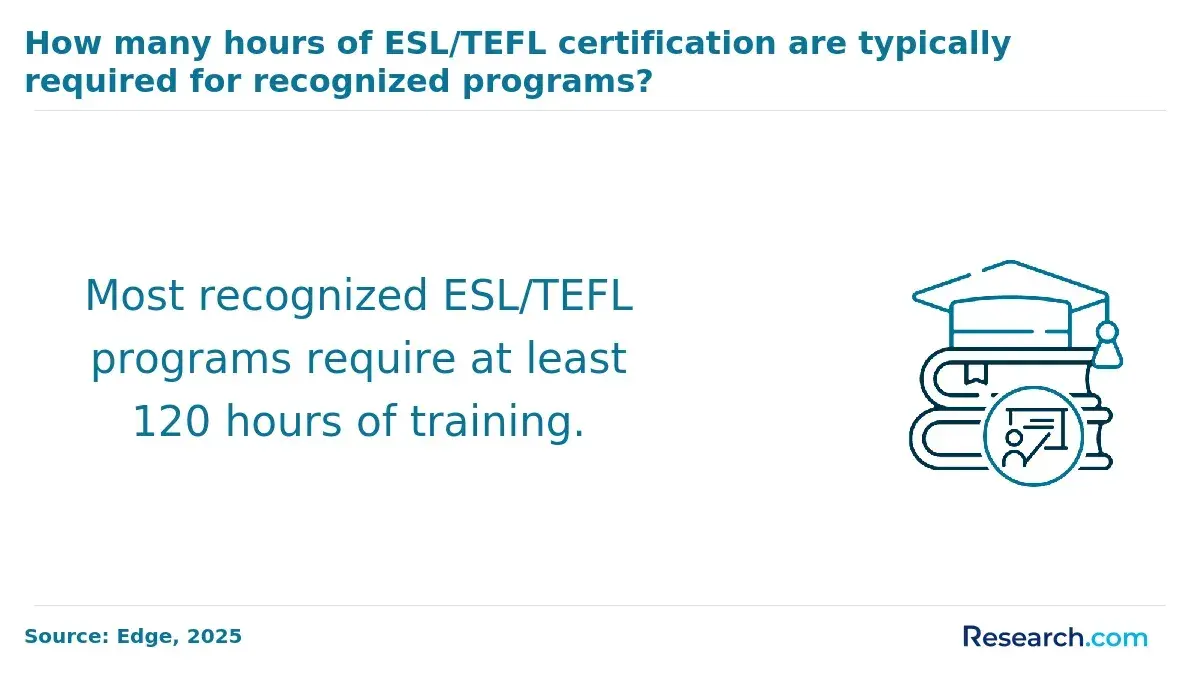
The timeline depends on where you start. A first-time college student usually needs longer than a licensed teacher adding an endorsement. Most candidates should expect the process to take four to six years from the beginning of a bachelor’s degree through certification, although endorsement-only and alternative routes can be shorter for qualified candidates.
- Bachelor’s degree: A full-time bachelor’s program generally takes about four years.
- Teacher preparation or endorsement coursework: Candidates without an education degree may need one to two additional years in an approved program. Licensed teachers adding ESOL may complete an endorsement in about a year if they take courses consistently.
- Student teaching or practicum: Clinical practice commonly lasts a semester, often around 12 to 16 weeks.
- Praxis testing: Preparation, registration, testing, score reporting, and possible retakes can add several weeks or months.
- Certification application: After all requirements are complete, application review can take several weeks, especially if documentation is missing or incomplete.
| Starting point | Likely route | Estimated timeline stated in source material |
| No bachelor’s degree | Complete bachelor’s degree, teacher preparation, testing, and certification. | Four to six years. |
| Bachelor’s degree in another field | Enter university-based alternative or post-baccalaureate certification. | About one to two years after the bachelor’s degree. |
| Already licensed teacher | Add ESOL endorsement through approved coursework and testing. | About a year if completed alongside graduate coursework. |
| Veteran or experienced professional | Use an approved alternative pathway if eligible and hired by a district. | Varies by route, district support, and completion of certification requirements. |
The fastest route is not always the strongest route. Choose the pathway that gives you enough ESL-specific preparation to manage language instruction, assessment, family communication, and content-area support from the first year.
How does Kentucky's ESL teacher market compare to other states?
Kentucky can be attractive for ESL educators because its English learner population is large enough to create meaningful need, but the state still uses a credential review process that requires careful documentation. Unlike states with broad automatic reciprocity in some teaching areas, Kentucky may evaluate out-of-state ESL credentials individually.
For candidates comparing Kentucky with nearby states, the main questions are practical: Will your current certificate transfer? Will you need another Praxis exam? Does your prior program match Kentucky’s ESOL endorsement standards? Can a district hire you provisionally while you complete missing requirements? If you are also comparing general teacher timelines, Research.com’s guide on how long it takes to become a teacher in Kentucky can help you map the broader certification process.
How Can I Stay Updated on Changing Certification Standards?
Certification rules, Praxis requirements, renewal procedures, and application systems can change. ESL teachers should rely on official Kentucky education sources, district human resources offices, and approved preparation programs rather than informal social media advice.
- Check Kentucky certification guidance before enrolling in coursework or registering for exams.
- Ask your program for written confirmation that it leads to the ESOL endorsement you need.
- Save screenshots or PDFs of advisement plans, test requirements, and application instructions.
- Review state requirements before each renewal cycle, not only when your certificate is about to expire.
- Use Research.com’s overview of Kentucky teacher certification requirements as a starting point, then verify final details with state sources.
Does Kentucky have reciprocity for ESL certification?
Kentucky does not treat every out-of-state ESL or ESOL credential as automatically equivalent. Teachers moving into the state should expect a document-based review that may include transcripts, proof of completed preparation, current teaching certificate records, Praxis scores, experience verification, background checks, and any state-required application forms.
Experienced educators may have some requirements reviewed differently depending on their prior preparation and years of service, but candidates should not assume that holding an ESL endorsement elsewhere guarantees immediate Kentucky approval. If you are relocating, contact Kentucky’s certification office before accepting a position, and ask the hiring district whether provisional options are available while your file is being evaluated.
| If you are moving to Kentucky | Ask this before you apply |
| You hold an out-of-state teaching certificate | Will Kentucky recognize your certificate level and subject area? |
| You have an ESL or ESOL endorsement | Does your coursework match Kentucky’s P-12 ESOL expectations? |
| You already passed Praxis exams | Are your scores still accepted, and do they meet Kentucky’s current cut scores? |
| You have several years of experience | Can experience reduce any requirements, or is additional coursework still needed? |
| You have a Kentucky job offer | Can the district support a provisional or alternative certification application? |
Is there a demand for ESL teachers in Kentucky?
Yes. Kentucky’s growing English learner enrollment supports continued need for trained ESL teachers, particularly in districts serving multilingual families, immigrant communities, and students who need language support across academic subjects. The strongest opportunities are often in public school systems, but adult education and workforce-focused ESL programs also need instructors.
Urban districts in regions such as Kentuckiana Works and Bluegrass tend to have higher concentrations of English learners, while some rural communities also need ESL support as local populations change. Demand can vary by district, budget, grade level, and hiring season, so candidates should monitor local job boards and speak directly with district HR offices.
Teachers who want to strengthen their competitiveness may consider graduate study, especially if they need endorsement coursework or want to move into instructional leadership. Research.com’s guide to affordable online master’s degrees in teaching can help working educators compare flexible options.
How much do ESL teachers make in Kentucky?
ESL teacher pay in Kentucky depends on district salary schedules, education level, years of experience, grade level, and whether the role is in a public school, private school, adult education program, or community organization. Salary figures should be used for planning, not as guarantees.
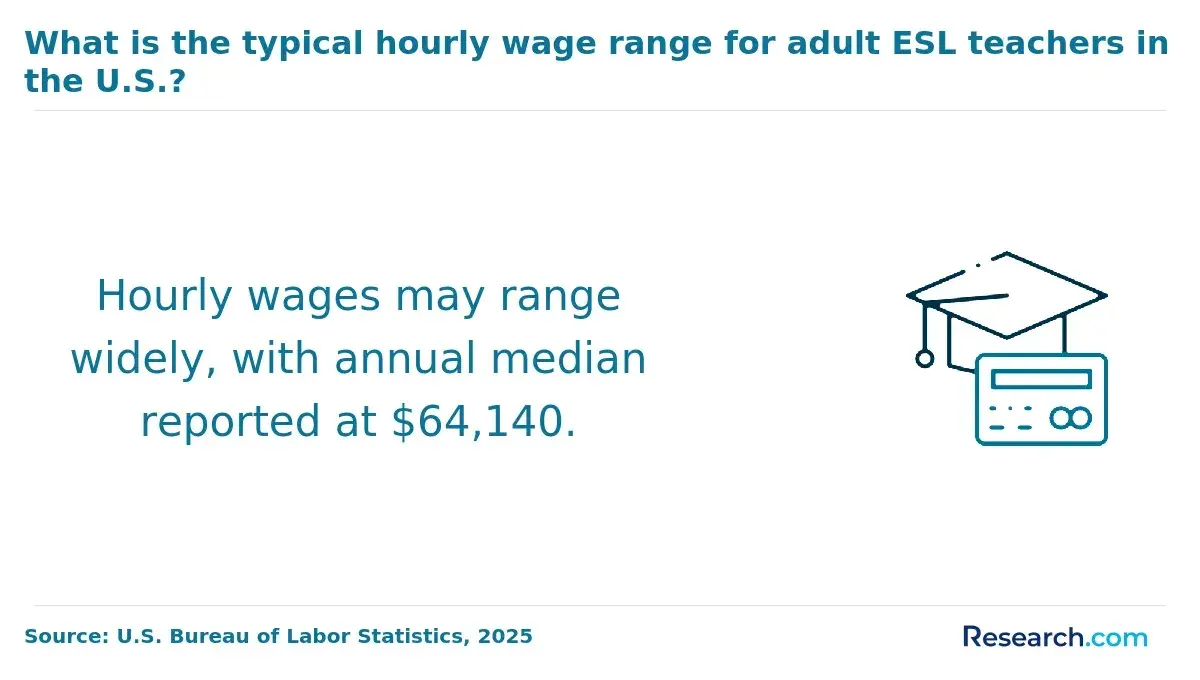
The average ESL teacher salary in Kentucky is about $49,244 per year, or roughly $23.68 an hour. Reported salaries range from around $36,000 at the lower end to $54,700 in the middle, with the top 10% earning up to nearly $70,000 annually. The national average salary for ESL teachers is closer to $64,549, so Kentucky’s reported average is below that benchmark.
| Salary factor | How it can affect pay |
| Institution type | Public schools often follow salary schedules with benefits, while private, charter, adult education, or community programs may use different pay structures. |
| Grade level and student population | K-12 district ESL roles may differ from adult education positions, especially where program budgets are tighter. |
| Education level | Advanced degrees or endorsements may improve placement on salary schedules. One stated example notes a master’s starting near $45,059 and a doctorate up to $48,559. |
| Experience | More years of service can raise pay, especially in districts with step-based salary schedules. |
| Location | Urban areas such as Louisville may offer higher salaries than some rural districts, but cost of living and commute should also be considered. |
If long-term earning potential matters to your decision, compare salary schedules before choosing a district and ask how graduate credits, master’s degrees, and doctoral degrees affect placement. Educators considering advanced study can review options for an online doctorate degree in education, but the cost should be weighed carefully against realistic salary movement.
What are the career advancement opportunities for ESL teachers in Kentucky?
ESL teaching can lead to several career paths beyond a single classroom assignment. Advancement usually requires experience, strong evaluation records, additional credentials, graduate education, or leadership training.
- Lead ESL teacher: Supports other teachers, coordinates services, and helps align instruction across grade levels.
- Instructional coach or specialist: Works with general education teachers on scaffolding, language objectives, vocabulary instruction, and assessment accommodations.
- Curriculum coordinator: Develops or reviews ESL curriculum, intervention models, and multilingual learner resources.
- District English learner program administrator: Oversees compliance, staffing, family engagement, data reporting, and program improvement.
- Adult education ESL instructor or coordinator: Supports adult learners building English for work, citizenship, college entry, or community participation.
- Teacher educator or adjunct instructor: Prepares future teachers through college, university, or district training programs.
Teachers considering a broader English language arts or literacy path can also review Research.com’s guide to Kentucky English teacher requirements.
Is ESL teaching in Kentucky worth it?
ESL teaching in Kentucky can be worth it for educators who want a student-centered role with clear social impact and a specialized skill set. The work is meaningful, but it is not easy. ESL teachers often balance language instruction, academic support, family communication, compliance documentation, testing, and collaboration with general education teachers.
| Choose this path if... | Consider another option if... |
| You enjoy working with culturally and linguistically diverse students. | You prefer teaching a single subject with less cross-curricular coordination. |
| You are comfortable collaborating with classroom teachers, counselors, administrators, and families. | You want a role with minimal documentation, testing, or compliance responsibilities. |
| You are willing to study language acquisition, assessment, and culturally responsive instruction. | You assume speaking English is enough preparation to teach English learners. |
| You want a credential that can support mobility across grade levels and programs. | You are not prepared to meet certification, Praxis, renewal, and PD requirements. |
Common mistakes to avoid when pursuing Kentucky ESOL certification
- Choosing a program before checking EPSB approval: A course may be valuable but still not satisfy Kentucky endorsement requirements.
- Assuming online automatically means easier: Online endorsement programs may still require field experience, proctored exams, and strict documentation.
- Ignoring Praxis timing: Late test registration or a needed retake can delay certification and hiring.
- Looking only at tuition: Fees, books, testing costs, transcript costs, travel for fieldwork, and lost work time can affect the true cost.
- Relying only on rankings: Rankings can help you start a search, but certification alignment, accreditation, placement support, and district relationships matter more.
- Assuming out-of-state certification transfers automatically: Kentucky may require additional review, exams, or coursework.
- Waiting until renewal year to track PD: Keep records every year so renewal does not become a documentation problem.
Questions to ask before choosing an ESL or ESOL program in Kentucky
- Is the program approved for Kentucky ESOL or ESL endorsement?
- Does it lead to P-12 endorsement, or is it limited to a narrower grade band?
- What Praxis exam and passing score does the program currently prepare students for?
- How many field experience hours are required, and where can they be completed?
- Can licensed teachers complete the endorsement while working full time?
- What is the total cost, including tuition, fees, books, testing, and application expenses?
- Does the program provide certification advising in writing?
- Will graduate credits apply toward a master’s degree or rank advancement?
- How does the program support candidates who need an alternative certification route?
- What happens if Kentucky changes certification rules while you are enrolled?
Key Insights
- Kentucky ESL teachers generally need a bachelor’s degree, a valid teaching certificate, approved ESOL preparation, and successful completion of required testing.
- The ESOL endorsement is usually an add-on credential, so already licensed teachers can often complete it faster than first-time teacher candidates.
- Alternative routes can help career changers, veterans, and experienced professionals enter teaching, but they still require state approval, documentation, and often district employment.
- Praxis requirements are important and should be verified before registration, especially because stated passing scores may differ across sources.
- Certification renewal requires planning. Track teaching experience, PD hours, graduate credits, and documentation throughout the five-year cycle.
- Salary in Kentucky averages about $49,244 per year, but pay varies by district, experience, degree level, institution type, and location.
- The best program is not always the cheapest or fastest. The right choice is accredited, Kentucky-aligned, affordable, realistic for your schedule, and strong enough to prepare you for multilingual classrooms.
Related Articles for Nearby States
- 2027 ESL Teacher Requirements & ESOL Certification in Indiana
- 2027 ESL Teacher Requirements & ESOL Certification in Ohio
- 2027 ESL Teacher Requirements & ESOL Certification in Tennessee
- 2027 ESL Teacher Requirements & ESOL Certification in West Virginia
- 2027 ESL Teacher Requirements & ESOL Certification in Virginia
- 2027 ESL Teacher Requirements & ESOL Certification in Illinois
- 2027 ESL Teacher Requirements & ESOL Certification in Missouri
- 2027 ESL Teacher Requirements & ESOL Certification in North Carolina
- 2027 ESL Teacher Requirements & ESOL Certification in Georgia
- 2027 ESL Teacher Requirements & ESOL Certification in Mississippi
References:
- TESOL Certification in Kentucky | How to Become an ESL Teacher in KY | ESL Endorsement and Jobs https://www.eslteacheredu.org/kentucky/
- Educator Certification - Kentucky Department of Education https://education.ky.gov/epsb/Pages/Educator-Certification.aspx
- Graduate Certificate in Teaching English as a Second Language | University of Kentucky https://academics.uky.edu/programs/graduate-certificate/teaching-english-second-language
- Alternative Pathways to Certification - Go Teach KY https://goteachky.com/resources/certification/alternative-pathways/
- Teaching English to Speakers of Other Languages (TESOL) | KCTCS Catalog https://catalog.kctcs.edu/programs-of-study/aas/tesol/
- Kentucky Teacher Certification and Licensing Guide 2025 https://www.teachercertificationdegrees.com/certification/kentucky/
- Teaching English as a Second Language (TESL), Endorsement | Western Kentucky University https://www.wku.edu/online/grad-certs/tesl/index.php
- For convenient options, consider the https://research.com/degrees/most-affordable-online-education-degrees
- Kentucky Teacher License Renewal - KY Teacher Renewal Certification – Happy Teacher Professional Development https://happyteacherpd.com/pages/kentucky
- Kentucky Licensing Renewal Requirements https://southeast.iu.edu/education/teacher-licensing/kentucky-license-renewal.html
Other Things You Should Know About Being an ESL Teacher in Kentucky
In 2027, ESL teacher certification in Kentucky requires passing the Praxis English to Speakers of Other Languages (ESOL) exam. Candidates must achieve the state's minimum qualifying score to meet the certification standards set by the Kentucky Department of Education.
Yes, Kentucky offers certification through reciprocity, but the Education Professional Standards Board still reviews your credentials. You must submit official transcripts, proof of a valid out-of-state license, and meet Kentucky’s ESOL endorsement or certificate requirements before teaching ESL classes in public schools.