
2027 How to Become a Special Education Teacher in Utah: Requirements & Certification

Co-Founder and Chief Data Scientist
Becoming a special education teacher in Utah is a serious career decision: it requires state-approved preparation, licensing, ongoing professional learning, and the ability to support students whose learning, communication, behavioral, or developmental needs vary widely. The role matters because around 13% of Utah’s student population receives special education services, and schools continue to need qualified teachers who can deliver legally compliant, individualized support.
This guide explains how to become a special education teacher in Utah, including education requirements, licensing steps, timeline, salary expectations, job demand, professional development, career advancement, and related career transitions. It is designed for future teachers, career changers, paraprofessionals, licensed teachers considering a special education endorsement, and educators comparing Utah teaching pathways.
Quick Answer: How do you become a special education teacher in Utah?
To become a special education teacher in Utah, you generally need to complete a bachelor’s degree in special education or a related approved teacher preparation program, finish supervised student teaching, pass required state licensure assessments, complete background checks and fingerprinting, and apply for a Utah educator license with the appropriate special education endorsement. Candidates who already hold a bachelor’s degree in another field may be able to use post-baccalaureate, master’s, or alternative preparation routes, depending on state and program requirements.
Key Things to Know About Becoming a Special Education Teacher in Utah
- In Spring 2021, there were 524 underqualified special education teachers in Utah, representing 9.4% of the total.
- Special education teachers in Utah earn an average annual salary of $69,180.
- Experienced special education teachers in Utah make $104,210 or more per year.
- Students with an IEP can receive up to 2.5 times the weighted pupil unit value through the Special Needs Opportunity Scholarship if their family's income is at or below 185% of the federal poverty level.
- Tuition and fees for public four-year institutions to pursue teaching in Utah average about $7,115, while private institutions typically charge around $7,613.
- Education requirements for Utah special education teachers
- Typical timeline to become licensed in Utah
- Utah special education teacher licensing requirements
- Demand for special education teachers in Utah
- Special education teacher salaries in Utah
- Professional development options for Utah special education teachers
- Career transition options for special education teachers in Utah
- Advanced roles for experienced Utah special education teachers
- Common challenges in Utah special education classrooms
- How to obtain a Utah special education teaching credential
- Cost-effective ways to earn a Utah teaching credential
- Transitioning from special education to school psychology in Utah
- Using special education experience for substance abuse counseling roles
- How Utah special education laws affect teachers
- Technology in Utah special education practice
- Moving from special education into school counseling in Utah
- Advanced certifications for Utah special education teachers
- Preschool special education teacher requirements in Utah
What are the educational requirements to be a special education teacher in Utah?
Utah special education teachers need formal preparation that combines disability studies, instructional design, assessment, classroom management, and supervised practice. The most direct path is a bachelor’s degree in special education or a closely related teacher preparation program from an accredited institution that meets Utah educator licensing expectations.
Programs at institutions such as the University of Utah and Brigham Young University prepare candidates to work with students who have learning disabilities, developmental delays, behavioral needs, communication differences, and other disabilities. Coursework commonly covers child development, evidence-based instruction, assessment methods, legal responsibilities, behavior support, collaboration with families, and individualized education program planning.
Many special education programs expect applicants or continuing students to meet academic standards, and a minimum cumulative GPA of 3.0 is generally necessary for admission into special education programs. Students should confirm the exact GPA, practicum, testing, and endorsement requirements with each institution because program rules can vary.
Career changers are not limited to starting over with a second bachelor’s degree. Candidates who already hold a bachelor’s degree in another field may be able to pursue a post-baccalaureate teacher preparation program, a master’s degree in special education, or another approved licensure pathway. These routes are especially useful for paraprofessionals, substitute teachers, and professionals from psychology, child development, social services, or related fields who want to move into classroom teaching.
Education pathways compared
| Pathway | Best for | What to check before enrolling |
| Bachelor's degree in special education | First-time college students who want the most direct route into Utah special education teaching | State approval, field placement quality, endorsement area, student teaching requirements, and GPA expectations |
| Post-baccalaureate teacher preparation | People who already have a bachelor’s degree but did not major in education | Whether the program leads to Utah licensure, how long clinical practice takes, and which prerequisites are required |
| Master’s degree in special education | Career changers or current educators who want deeper specialization and potential advancement | Licensure alignment, practicum requirements, cost, delivery format, and whether the degree supports the endorsement you need |
| Additional endorsement for licensed teachers | Current Utah teachers who want to add special education responsibilities | Required coursework, assessments, district support, and whether the endorsement matches the student population you plan to serve |
The core educational requirements for Utah special education teachers include:
- Bachelor's Degree: Completion of a special education degree or related state-approved educator preparation program from an accredited institution.
- Cumulative GPA Requirement: A minimum GPA of 3.0 is generally necessary for admission into special education programs.
- Clinical Preparation: Supervised classroom experience, including student teaching or practicum placements with students who have disabilities.
- Alternative Pathways: Post-baccalaureate and master’s options for candidates with non-education degrees who want to enter teaching.
When comparing programs, do not look only at the degree title. Ask whether the program is approved for Utah licensure, which endorsement it supports, how student teaching placements are arranged, and whether graduates receive help preparing for licensing exams.
This chart sourced from Data USA illustrates the gender of special education teachers.
How long does it take to become a special education teacher in Utah?
The timeline depends on your starting point, enrollment pace, and whether you pursue additional credentials. For a traditional undergraduate student, the route usually takes several years because it includes a degree, classroom fieldwork, student teaching, testing, and license processing.
- Bachelor's Degree: A bachelor’s degree in special education or a related field generally requires four years of full-time study. Utah State University and the University of Utah are examples of institutions that offer programs aligned with teacher preparation.
- Student Teaching Internship: After completing major coursework, candidates typically complete a supervised student teaching placement lasting approximately one semester, or four to six months.
- State Examinations: Candidates must pass state-mandated special education teacher examinations. Preparation, registration, score reporting, and retesting if needed can affect the overall schedule.
- Teaching License: After meeting education, testing, background check, and documentation requirements, candidates apply for a Utah teaching license. Processing commonly takes a few weeks once a complete application is submitted.
- Master's Degree Optional: A master’s degree in special education may add one to two years, depending on whether the program is full-time, part-time, online, or designed for working teachers.
Overall, the path to becoming a Utah special education teacher can take approximately five to seven years when it includes undergraduate study, student teaching, testing, and licensure. Career changers with a completed bachelor’s degree may follow a shorter or different route, but they still need approved preparation and supervised teaching experience.
Typical timeline by candidate type
| Candidate profile | Likely preparation route | Planning considerations |
| High school graduate entering college | Four-year bachelor’s degree plus student teaching and licensure steps | Choose a Utah-approved program early and confirm the special education endorsement area |
| College graduate from another major | Post-baccalaureate, master’s, or alternative preparation pathway | Ask how much prior coursework transfers and whether the program includes required fieldwork |
| Licensed general education teacher | Additional coursework and endorsement preparation | Confirm whether your district offers tuition support, mentoring, or paid placement options |
| Paraprofessional or substitute teacher | Degree completion plus educator preparation | Look for flexible scheduling, transfer credit policies, and advising for working adults |
What are the licensing requirements for special education teachers in Utah?
Utah requires special education teachers to hold the appropriate educator license and endorsement before serving as the teacher of record. Licensing confirms that a candidate has completed approved academic preparation, passed required assessments, satisfied background screening rules, and demonstrated readiness for classroom practice.
The process generally includes completion of a state-approved teacher preparation program, supervised teaching experience, licensure examinations, fingerprinting, background checks, and verification of academic credentials. Candidates should always confirm current requirements with the Utah State Board of Education or their educator preparation program because licensure rules, testing requirements, and endorsement categories can change.
Licensure is not a one-time responsibility. Utah special education teachers must complete professional learning to maintain and renew their license. Renewal occurs every five years, and educators must document required professional learning hours or approved activities that demonstrate continued professional growth.
Utah also offers reciprocity options for educators licensed in other states, but reciprocity does not always mean an automatic match. Out-of-state teachers should verify whether their current license, experience, assessments, and endorsement areas satisfy Utah’s requirements or whether additional coursework or testing is needed.
Utah licensing checklist
| Requirement | Why it matters | Action step |
| Approved educator preparation | Shows that your coursework and clinical training meet Utah teaching standards | Ask the program directly whether it leads to Utah special education licensure |
| Student teaching or supervised clinical practice | Provides evidence that you can teach, assess, adapt instruction, and manage classroom needs | Confirm placement settings, supervision, and required hours before enrolling |
| Licensure examinations | Measures required knowledge for special education teaching | Check which exams apply to your endorsement and build study time into your timeline |
| Background check and fingerprinting | Protects student safety and is required for school employment | Complete screening steps early to avoid delays |
| Professional learning for renewal | Keeps teachers current with laws, instructional practices, and student support strategies | Track approved professional learning activities throughout the five-year renewal cycle |
This chart sourced from Data USA illustrates the common majors of special education teachers.
What is the demand for special education teachers in Utah?
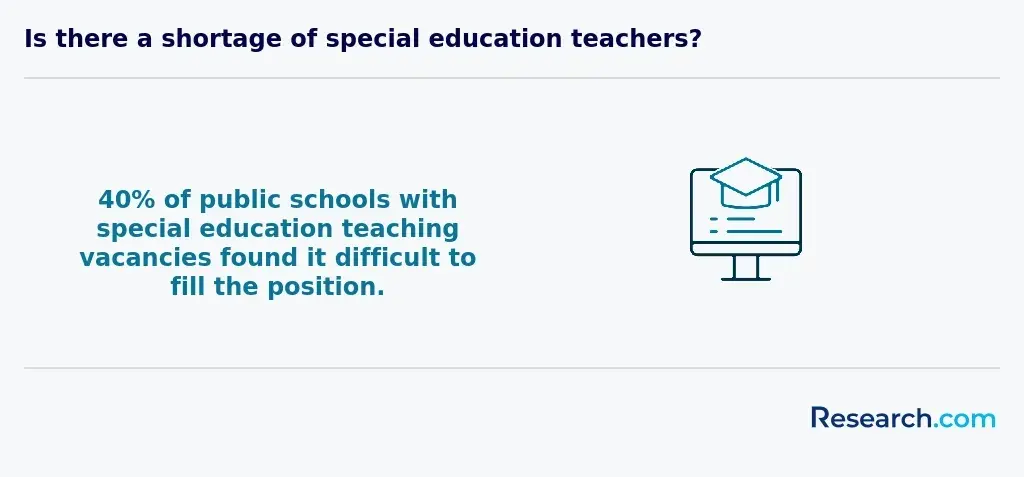
Utah continues to need qualified special education teachers. In Spring 2021, the state reported 524 underqualified special education teachers, representing 9.4% of all special education teachers. That figure points to a workforce gap that affects schools, students, families, and districts trying to provide consistent services.
Demand is driven by several practical realities: students with disabilities need legally required services, districts must staff individualized education programs, and schools need educators trained in inclusive instruction, behavior support, assistive technology, and collaboration with families and service providers. Shortages can be especially difficult for rural districts and specialized classrooms where the candidate pool may be smaller.
For aspiring teachers, demand can create opportunity, but it should not be interpreted as a guarantee of employment in every district or grade level. Hiring depends on endorsement area, location, district budgets, student needs, and timing. Candidates who are willing to teach in high-need areas, complete hard-to-fill endorsements, or work in rural communities may find more openings.
Teachers who want to move beyond classroom roles later may also explore educational leadership careers, especially if they are interested in coordinating services, leading teams, or shaping district-level special education programs.
How much do special education teachers in Utah earn?
Special education teacher pay in Utah varies by district, experience, education level, contract structure, endorsement area, and local budget. The average annual salary is $69,180, which gives future teachers a useful baseline when comparing career options and education costs.
- Entry-level special education teachers receive $45,090.
- Experienced special education teachers earn $104,210 or more.
Utah special education teacher salary snapshot
| Career stage | Annual earnings | What may influence pay |
| Entry-level | $45,090 | District salary schedule, endorsement area, location, and prior experience credit |
| Average | $69,180 | Years of service, education level, contract days, and local compensation policies |
| Experienced | $104,210 or more | Advanced degrees, leadership duties, specialized roles, and seniority |
Prospective teachers should compare salary against program cost, student loan needs, living expenses, and expected career path. Tuition and fees for public four-year institutions to pursue teaching in Utah average about $7,115, while private institutions typically charge around $7,613. Those figures do not necessarily include housing, transportation, books, testing fees, background checks, or lost income during student teaching.
Before enrolling, ask schools and districts how salary placement works for new teachers. Some districts may recognize prior teaching experience, graduate credits, or advanced degrees, while others follow more rigid salary schedules.
What professional development opportunities are available for special education teachers in Utah?
Professional development is essential in special education because teachers must keep up with instructional strategies, IEP compliance, behavior supports, assistive technology, disability law, and inclusive practices. In Utah, teachers can build their skills through conferences, online learning, district training, mentoring, and specialized workshops.
- Utah Special Education Conference: This annual conference brings together educators, administrators, and specialists to examine research, legal updates, classroom strategies, and service delivery practices. It can also help teachers build professional networks across districts.
- Online Learning through CEC: The Council for Exceptional Children provides webinars and online courses that allow educators to study evidence-based special education practices on a flexible schedule.
- State-Sponsored Workshops: The Utah State Board of Education offers training opportunities focused on topics such as behavior management, individualized education plans, inclusive instruction, and compliance responsibilities.
- District-Based Training: Many districts provide professional learning tied to local student needs, adopted curricula, data systems, and service models.
- Mentoring and Coaching: New special education teachers benefit from structured support from experienced colleagues who understand paperwork, caseload management, parent communication, and collaboration with general education teachers.
How to choose useful professional development
| Need | Best professional development focus | Why it helps |
| Managing IEP responsibilities | IEP writing, compliance, progress monitoring, and service documentation | Reduces legal risk and improves service consistency |
| Supporting challenging behavior | Positive behavior supports, functional behavior assessment, and intervention planning | Helps teachers create safer, more predictable classrooms |
| Teaching in inclusive classrooms | Co-teaching, universal design for learning, and differentiated instruction | Supports access to grade-level learning with appropriate accommodations |
| Using data well | Assessment, progress monitoring, and instructional decision-making | Helps teachers adjust instruction based on measurable student progress |
| Building long-term career options | Leadership, coaching, diagnostics, behavior analysis, or advanced specializations | Prepares teachers for roles beyond the classroom |
What are the opportunities for career transition as a special education teacher in Utah?
Special education teachers develop skills that transfer well into several education and human services roles: assessment, case management, behavior support, family collaboration, documentation, advocacy, and individualized planning. These strengths can support movement into private schools, consulting, counseling-related roles, educational leadership, student support services, or specialized therapy-adjacent careers.
Some teachers move into private school settings, where curriculum models, class size, student populations, and program philosophies may differ from public schools. Educators considering that direction can review how to become a private school teacher in Utah to understand how requirements may differ from public school licensure pathways.
Other teachers transition into educational consulting, academic support, parent advocacy, district coaching, curriculum adaptation, or training roles. These positions may allow experienced educators to support multiple classrooms or schools instead of managing one classroom caseload.
When planning a transition, identify which parts of special education you want to keep. If you enjoy assessment, school psychology or diagnostics may fit. If you prefer mental health and social-emotional support, school counseling may be more relevant. If behavior intervention is your strongest area, advanced behavior analysis credentials may be worth exploring.
Are there advanced roles for experienced special education teachers in Utah?
Experienced special education teachers in Utah can move into advanced positions that use their classroom experience in broader ways. Some roles require a master’s degree, additional certification, leadership experience, or district-level approval. Others depend more on demonstrated expertise, mentoring ability, and knowledge of special education systems.
Teachers exploring broader options can start with special education career paths to compare classroom, administrative, clinical, and consulting directions.
- Lead or Mentor Special Education Teacher: Experienced teachers may support new educators, model instruction, help with IEP compliance, and guide classroom systems.
- Educational Diagnostician: This role focuses on evaluating student needs, interpreting assessment data, and working with families and school teams to shape appropriate learning plans. A master’s degree is typically necessary.
- Behavior Intervention Specialist: These specialists design and support behavior interventions for students whose behavioral needs affect learning, safety, or classroom participation.
- Special Education Coordinator or Program Manager: Teachers with leadership skills may manage services, support compliance, supervise teams, or help districts improve special education programming.
- Independent Consultant: Veteran educators may advise schools, train teachers, review instructional systems, or help families understand student support options.
Advanced special education roles compared
| Role | Primary focus | Good fit for teachers who... |
| Educational diagnostician | Assessment, eligibility, data interpretation, and learning recommendations | Enjoy testing, problem-solving, and team-based decision-making |
| Behavior intervention specialist | Behavior assessment, intervention planning, and staff coaching | Are skilled at de-escalation, behavior data, and individualized supports |
| Program manager or coordinator | Service oversight, compliance, staffing, and program improvement | Want leadership responsibilities and district-level influence |
| Independent consultant | Training, strategy development, and specialized advising | Prefer flexible work and have deep expertise in a specific area |
What are the biggest challenges faced by special education teachers in Utah?
Special education teaching can be meaningful, but it is also demanding. Utah teachers must balance instruction, legal documentation, family communication, collaboration with service providers, behavior support, progress monitoring, and student advocacy.
- Heavy Caseloads: Some teachers manage large or complex caseloads, especially in districts with staffing shortages. High caseloads can make it harder to provide individualized attention and maintain documentation.
- Emotional Demands: Teachers may support students facing significant academic, behavioral, communication, medical, or social-emotional challenges. Without strong support systems, the work can contribute to burnout.
- Paperwork and Compliance Pressure: IEPs, progress reports, service minutes, evaluations, and meeting timelines require accuracy and consistency.
- Limited Planning Time: Special education teachers often collaborate with general education teachers, therapists, administrators, and families, which can reduce time available for lesson design and data review.
- Uneven Access to Professional Development: Training opportunities may be more limited in some rural communities or smaller districts.
Teachers who want to broaden their understanding of education-related career options outside special education can compare other academic paths, including a history degree, although anyone seeking classroom licensure should confirm the specific teaching requirements for their intended subject and state.
Common mistakes to avoid
| Mistake | Why it creates problems | Better approach |
| Choosing a program without checking Utah approval | A degree alone may not qualify you for the license or endorsement you need | Verify licensure alignment before applying |
| Looking only at tuition | Testing fees, books, transportation, background checks, and unpaid student teaching can increase total cost | Compare the full cost of attendance and ask about aid or district support |
| Assuming all online programs meet Utah requirements | Some online programs are designed for other states or non-licensure outcomes | Ask whether the program leads directly to Utah educator licensure |
| Underestimating paperwork | IEP compliance and documentation are central parts of the job | Build systems for calendars, service logs, progress monitoring, and family communication |
| Ignoring burnout risk | Emotional demands and heavy caseloads can affect retention | Seek mentoring, set boundaries, and use district support early |
How can I obtain my special education teaching credential in Utah?
To obtain a Utah special education teaching credential, begin by identifying the endorsement area and student population you want to serve. Then choose a state-approved preparation route, complete required coursework and field experiences, pass mandated assessments, complete background screening, and submit the required licensure application materials.
A strong credential plan should answer four questions: Does the program lead to Utah licensure? Which special education endorsement will you earn? How is student teaching arranged? What support is available for testing, applications, and job placement?
For a broader overview of credentialing steps, documentation, and decision points, review this guide on how to get your teaching credential.
What are cost-effective ways to earn a teaching credential in Utah?
The most affordable pathway is not always the lowest published tuition. A cost-effective credential route should minimize unnecessary credits, support licensure completion, offer strong advising, and help you avoid delays that add semesters or fees.
- Compare public, private, online, post-baccalaureate, and master’s routes based on total program cost, not tuition alone.
- Ask whether prior college credits can transfer into the program.
- Check whether your district offers tuition support, paid residency options, or paraeducator-to-teacher pathways.
- Confirm whether student teaching can be completed near your home or workplace.
- Ask about exam preparation, licensure advising, and job placement support.
If affordability is your primary concern, compare teaching credential programs in Utah with attention to total cost, completion time, and licensure alignment.
Can special education teachers transition into school psychology roles in Utah?
Yes, special education teachers can transition into school psychology, but the move requires additional graduate-level preparation and school psychology-specific training. Special education experience is useful because teachers already understand IEPs, assessment teams, student behavior, learning differences, and collaboration with families.
The key difference is scope. School psychologists focus more deeply on psychoeducational assessment, mental health, consultation, crisis response, intervention planning, and eligibility-related evaluation. Teachers considering this move should review school psychologist requirements Utah before choosing a graduate program.
Can special education teaching skills facilitate a transition into substance abuse counseling in Utah?
Special education teachers often build transferable skills in behavior support, trauma-informed communication, documentation, family engagement, and individualized planning. Those skills can be relevant to substance abuse counseling, but counseling roles require separate education, supervised experience, and credentialing.
This transition may appeal to educators who want to work more directly with behavioral health, intervention planning, and long-term client support. To understand the training and credential requirements, review how to become a substance abuse counselor in Utah.
How do special education laws in Utah impact teachers?
Special education teachers in Utah work within both federal and state legal frameworks. These rules affect eligibility, IEP development, service delivery, documentation, parent participation, discipline procedures, accommodations, and student rights.
The Individuals with Disabilities Education Act (IDEA) requires that eligible students with disabilities receive a Free Appropriate Public Education (FAPE). In practice, Utah special education teachers help develop and implement Individualized Education Programs that describe a student’s present levels, goals, services, accommodations, placement, and progress monitoring.
Utah policies also affect transitions between Local Education Agencies. When a student with an existing IEP transfers, the new school must provide services comparable to those in the previous IEP until a new plan is created. This makes timely record review, staff communication, and family collaboration essential.
Teachers must ensure that IEP information is accessible to staff members responsible for implementing services. A general education teacher, paraprofessional, therapist, or related service provider cannot support the student appropriately if they do not understand their assigned responsibilities.
Licensure rules also matter. Utah mandates that special education teachers obtain full state certification, which includes passing a licensing exam and holding at least a bachelor's degree. Educators comparing requirements across states should remember that state rules differ; for example, this overview of Louisiana education degree programs shows why candidates should not assume one state’s pathway automatically applies elsewhere.
Legal responsibilities teachers should understand
| Area | Teacher responsibility | Practical risk if ignored |
| IEP implementation | Deliver services, accommodations, and supports described in the IEP | Students may not receive required services |
| Progress monitoring | Collect and report data tied to IEP goals | Teams may lack evidence to adjust instruction |
| Staff communication | Share relevant IEP responsibilities with appropriate personnel | Accommodations may be missed in general education settings |
| Transfer students | Support comparable services until a new IEP is developed | Service continuity may be disrupted |
| Family participation | Collaborate with parents and guardians during IEP planning | Trust, compliance, and student support may suffer |
How can technology enhance special education practices in Utah?
Technology can help special education teachers individualize instruction, collect data, improve accessibility, and support communication. Useful tools may include assistive technology, text-to-speech and speech-to-text tools, visual schedules, adaptive learning software, communication devices, progress-monitoring platforms, and accessible instructional materials.
The goal is not to use technology for its own sake. The best tools connect directly to student needs, IEP goals, accommodations, and classroom routines. Teachers should evaluate whether a tool improves access, reduces barriers, supports independence, or helps collect better data.
Utah educators should also consider privacy, training, device access, and family communication when adopting new tools. A platform that works well in one classroom may not be appropriate for another student, disability category, or district system. Teachers who want to compare special education with broader elementary classroom practice can review how to become an elementary school teacher in Utah.
Questions to ask before using a special education technology tool
- Which IEP goal, accommodation, or access need does this tool support?
- Can the student use it independently, or will it require ongoing adult prompting?
- Does it protect student privacy and comply with district technology policies?
- Can progress or usage data be reviewed by the IEP team?
- Will families need training to support use outside school?
What career paths are available to special education teachers who want to transition into related fields in Utah?
Special education teachers who want to remain in student support but change roles have several options. Speech-language pathology is one possible direction for educators interested in communication, language development, and support for students with speech or language disorders. This transition requires specialized graduate preparation and clinical training, so teachers should review how to become a speech language pathologist in Utah before making the shift.
Other related paths may include school counseling, school psychology, behavior analysis, instructional coaching, educational consulting, private school teaching, intervention coordination, or district-level program support. The best fit depends on whether you want to focus on instruction, assessment, behavior, mental health, communication, or leadership.
Can special education teachers transition into school counseling roles in Utah?
Yes. Special education teachers may be strong candidates for school counseling because they already understand student support teams, family communication, intervention planning, academic barriers, and social-emotional needs. However, school counseling is a distinct profession with its own preparation and credentialing requirements.
Teachers considering this transition should compare the day-to-day work carefully. School counselors usually focus on academic planning, social-emotional development, crisis support, college and career readiness, and student advocacy across a broader school population. To understand required coursework, practicum expectations, and certification steps, review school counselor requirements in Utah.
Are there scholarships and grants available for special education teachers in Utah?
Financial planning is an important part of becoming a special education teacher. Tuition, fees, books, transportation, exams, background checks, and unpaid clinical placements can all affect affordability. Students should ask each program about scholarships, grants, loan forgiveness options, district partnerships, and aid for teacher shortage areas.
Some Utah scholarship programs are designed for students with disabilities and their families rather than teacher candidates, but they still shape the broader special education landscape because they affect school choice and service delivery.
- Carson Smith Scholarship: The Carson Smith Scholarship provides financial assistance to families of students with disabilities in Utah so they can attend private schools. For the 2024-2025 school year, scholarship amounts vary by service minutes received and may apply to full-day K-12 students as well as preschool or half-day kindergarten students. Funding is capped at the tuition and fees charged by the selected private institution.
- Special Needs Opportunity Scholarship: The Special Needs Opportunity Scholarship Program offers tuition assistance for eligible Utah students with disabilities who are not enrolled in public schools. Students may receive different award amounts based on family income and educational needs. Students with an IEP can receive up to 2.5 times the value of the weighted pupil unit for families at or below 185% of the federal poverty level, with the award capped at the private school’s tuition and fees.
Cost questions to ask before choosing a program
- What is the full estimated cost, including fees, books, testing, and background checks?
- Does the program qualify for federal financial aid?
- Are scholarships available for special education teacher candidates?
- Can I transfer previous credits to reduce time and cost?
- Will student teaching require unpaid time away from work?
- Does the district offer tuition reimbursement or grow-your-own teacher support?
Are there effective mentorship and support programs for special education teachers in Utah?
Mentorship can make a major difference for new special education teachers. The first years often involve learning district systems, managing IEP timelines, communicating with families, coordinating services, and adapting instruction for multiple learners at once. A strong mentor helps new teachers avoid isolation and build workable routines.
Useful support may come from district induction programs, school-based mentors, special education instructional coaches, professional learning communities, peer observations, and administrator check-ins. Teachers should ask potential employers how new special education teachers are supported, especially if they will manage a high caseload or serve multiple grade levels.
Educators comparing special education with other teaching fields can also review how to become an English teacher in Utah to see how preparation and support structures differ by subject area.
What Special Education Teachers in Utah Say About Their Careers
- "The most meaningful part of teaching special education is watching students gain skills that once felt out of reach. Progress may look different for every child, but each step forward matters." - Sally
- "Collaboration with families, general education teachers, and specialists is central to the work. When everyone communicates clearly, students receive stronger and more consistent support." - Jamar
- "The job can be demanding, especially when paperwork and student needs overlap, but good training and professional support help teachers stay focused on student growth." - Mallory
What are the benefits of pursuing advanced certifications for special education teachers in Utah?
Advanced certifications can help special education teachers build expertise in high-need areas, qualify for specialized roles, and strengthen student intervention practices. Certifications may be especially useful for teachers interested in behavior support, autism services, assistive technology, transition planning, early childhood special education, or leadership.
Behavior analysis is one example of a specialization that may fit teachers who frequently support students with behavioral needs. Educators interested in that route can explore how to become a BCBA in Utah to understand the pathway and requirements.
When advanced certification may be worth it
| Choose advanced certification if... | Be cautious if... |
| You want a specialized role beyond the classroom | You are unsure whether the credential is recognized by your district or employer |
| Your students need support in an area where you lack formal training | The program is expensive and does not clearly improve your career options |
| You plan to move into coaching, consulting, diagnostics, or behavior intervention | You are already overwhelmed and cannot complete practicum or supervision requirements |
| Your district offers salary credit, reimbursement, or role advancement | The credential does not align with Utah requirements or your long-term goals |
What are the requirements to teach preschool special education in Utah?
To teach preschool special education in Utah, educators need a valid Utah Educator License with an endorsement in Early Childhood Special Education (Birth–Age 5). This endorsement prepares teachers to support young children with developmental delays or disabilities in early learning and intervention settings.
Candidates typically complete a bachelor’s degree in early childhood education, special education, or a related state-approved program. Preparation generally includes child development, early assessment, inclusive instruction, family collaboration, developmental intervention, and supervised teaching in preschool special education environments.
This pathway is best for educators who want to work with children during a critical developmental stage and who are comfortable collaborating closely with families, therapists, and early intervention teams. Those comparing early childhood roles can review preschool teacher requirements in Utah for a broader look at training and career options.
Key Insights
- Utah special education teachers generally need a state-approved preparation program, supervised student teaching, licensing exams, background checks, and the correct special education endorsement.
- The traditional route can take approximately five to seven years, while career changers may use post-baccalaureate, master’s, or alternative pathways if they already hold a bachelor’s degree.
- Demand remains meaningful: in Spring 2021, Utah had 524 underqualified special education teachers, representing 9.4% of the total.
- Utah special education teachers earn an average annual salary of $69,180, with entry-level teachers receiving $45,090 and experienced teachers earning $104,210 or more.
- Before enrolling in any program, verify Utah licensure approval, endorsement alignment, field placement quality, total cost, transfer credit policy, and support for licensing exams.
- Special education experience can lead to advanced roles in diagnostics, behavior intervention, program coordination, consulting, school counseling, school psychology, speech-language pathology, or behavior analysis, but many transitions require additional credentials.
- The most successful teachers build systems for IEP compliance, progress monitoring, family communication, collaboration, and self-care early in their careers.
Related Articles for Nearby States
- 2027 How to Become a Special Education Teacher in Nevada: Requirements & Certification
- 2027 How to Become a Special Education Teacher in Arizona: Requirements & Certification
- 2027 How to Become a Special Education Teacher in Idaho: Requirements & Certification
- 2027 How to Become a Special Education Teacher in Wyoming: Requirements & Certification
- 2027 How to Become a Special Education Teacher in Colorado: Requirements & Certification
- 2027 How to Become a Special Education Teacher in New Mexico: Requirements & Certification
- 2027 How to Become a Special Education Teacher in California: Requirements & Certification
- 2027 How to Become a Special Education Teacher in Montana: Requirements & Certification
- 2027 How to Become a Special Education Teacher in Oregon: Requirements & Certification
- 2027 How to Become a Special Education Teacher in Washington: Requirements & Certification
References:
- Data USA (n.d). Special Education Teachers. Retrieved from https://datausa.io/profile/soc/special-education-teachers
- EdBuild (n.d.). Special Education Funding Policies in Each State. Retrieved from http://funded.edbuild.org/reports/issue/special-ed/in-depth
- NCES (n.d.). Average undergraduate tuition, fees, room, and board charges for full-time students in degree-granting postsecondary institutions, by control and level of institution and state: Academic years 2020-21 and 2021-22. Retrieved from https://nces.ed.gov/programs/digest/d22/tables/dt22_330.20.asp
- NCES (2024). Students With Disabilities. Retrieved from https://nces.ed.gov/programs/coe/indicator/cgg/students-with-disabilities
- O*NET OnLine (n.d.). 25-2059.00 - Special Education Teachers, All Other. Retrieved from https://www.onetonline.org/link/localwages/25-2059.00?st=UT
- Utah State Board of Education (2022). Reducing the Shortage of Utah Special Education Teachers. Retrieved from https://www.utah.gov/pmn/files/754443.pdf
- Utah State Board of Education (n.d.). Special Needs Opportunity Scholarship Program General Overview. Retrieved from https://schools.utah.gov/specialeducation/_specialeducation/_specialneedsscholarship/_specialneedsopportunity/SpecialNeedsOverview.pdf
Other Things You Should Know About Becoming a Special Education Teacher in Utah
To start a career as a special education teacher in Utah in 2027, you must have a bachelor's degree in special education or a related field, complete a state-approved teacher preparation program, and pass the Praxis exam specific to special education.
The Utah State Board of Education issues special education teacher licenses through its educator licensing division. Applicants submit transcripts, background clearance, and certification records to this agency, which reviews eligibility for the Utah Professional Educator License with a special education endorsement.
The Praxis Special Education: Core Knowledge and Mild to Moderate Applications exam is required for certification in Utah. Candidates must achieve a passing score as determined by the Utah State Board of Education to qualify for special education teaching positions in the state.





