
2027 How to Become a Private School Teacher in Utah: Requirements & Certification

Co-Founder and Chief Data Scientist
Becoming a private school teacher in Utah is different from becoming a public school teacher because private schools have more control over whom they hire, what credentials they prefer, and how they structure classrooms. That flexibility can create opportunities for career changers, subject-matter experts, recent education graduates, and experienced teachers who want a school setting with a specific mission, smaller community, religious focus, alternative curriculum, or more curricular independence.
This guide explains what Utah private schools typically look for, how licensing differs from public education, what costs to expect, how long preparation may take, and how to improve your chances of being hired. It also covers salary expectations, career paths, professional development options, common mistakes, and practical questions to ask before accepting a private school teaching role.
Quick Answer: How Do You Become a Private School Teacher in Utah?
Utah private school teachers are not required to hold a Utah state teaching license in the same way public school teachers are. However, many private schools prefer applicants with a bachelor’s degree, relevant classroom experience, strong subject knowledge, and a clear teaching philosophy. Schools may also require fingerprinting, a criminal background check, immunization record responsibilities, references, and school-specific training before employment.
| Requirement or Expectation | What It Usually Means for Utah Private School Applicants |
| State teaching license | Not mandated for private school employment, but it can improve credibility and hiring competitiveness. |
| Degree | A bachelor’s degree is commonly preferred, especially for full-time K–12 teaching roles. |
| Experience | Substitute teaching, tutoring, volunteer work, internships, youth ministry, coaching, or classroom aide experience can strengthen an application. |
| Background screening | Private schools commonly require fingerprinting and criminal background checks to support student safety. |
| School-specific expectations | Each private school may set its own requirements for curriculum, faith alignment, discipline policies, parent communication, and professional conduct. |
Key Things You Should Know About Becoming a Private School Teacher
- Utah private school teachers are not required by the state to hold public-school-style teacher certification, although many schools prefer candidates with formal education training or relevant teaching experience.
- Hiring standards vary by school, so applicants should review each employer’s degree expectations, mission requirements, classroom policies, and contract terms before applying.
- Teachers may be responsible for accurate student records, including immunization documentation and other required school files.
- Professional development support is not identical across private schools; some invest heavily in training, while others expect teachers to pursue learning independently.
- Private school educators should understand the legal and institutional rules that govern discipline, student safety, mandated reporting, and parent communication.
- Applicants should expect student-safety screening, which may include fingerprinting and a criminal background check.
- Preparation costs can include background check fees, transcripts, testing, certification, degree programs, classroom materials, and professional development.
- Educational requirements for Utah private school teachers
- Licensure application and renewal process
- Can you teach in a Utah private school with only a certificate?
- Average private school tuition costs in Utah
- How long it takes to become a private school teacher
- Total cost to become a private school teacher in Utah
- Ways to reduce preparation costsCost planning details
- Job outlook for Utah private school teachers
- How specialized training can improve opportunities
- Private school teacher salary in Utah
- Preschool requirements and early childhood pathways
- Professional networks and support systems
- Alternatives to traditional private school teaching
- Digital learning tools for private school classrooms
- Career paths for private school teachers
- Teacher certification options in Utah
- Using a digital professional portfolio
- Online education for professional growth
- Mentorship and advancement
- Subject-specific certifications
- Contract negotiation and career stabilityMentorship planningOnline learning optionsCareer path overviewAdditional career planning questions
What are the educational requirements for private school teachers in Utah?
Utah does not impose the same licensure requirements on private school teachers that apply to public school educators. Still, most private schools want evidence that a candidate can manage a classroom, teach age-appropriate content, communicate with families, and support the school’s academic or religious mission. For context on how state rules can differ, compare Utah’s flexible private school environment with other state-specific pathways such as teacher certification requirements in Nevada.
- Bachelor’s degree: A bachelor’s degree is the most common baseline expectation. The degree may be in education, early childhood education, elementary education, secondary education, or a subject such as English, mathematics, science, music, history, or world languages.
- Education coursework: Schools may prefer candidates who have studied instructional methods, classroom assessment, child development, educational psychology, literacy, and classroom management.
- Subject-area preparation: Middle school and high school roles often place greater weight on content expertise. A school hiring a chemistry, algebra, music, or literature teacher may prioritize demonstrated subject mastery.
- Advanced degrees: A master’s degree is not generally required for every private school job, but it can help candidates compete for leadership, specialized instruction, curriculum, or department-level roles.
- Teaching license or certificate: A Utah teaching license is optional for private school employment, but holding one can reassure employers that the candidate completed formal preparation and met state standards.
- Practical experience: Tutoring, substitute teaching, youth programs, camp leadership, classroom aide work, student teaching, coaching, or volunteer work with children can make an application more credible.
- Background check: Private schools commonly require criminal background screening before a teacher works with students.
| Applicant Background | How Private Schools May View It | Best Next Step |
| Education graduate | Strong fit for schools seeking formal teacher preparation. | Prepare a teaching portfolio, lesson samples, and references from practicum or student teaching placements. |
| Subject-matter expert without an education degree | Potentially attractive for secondary or specialized roles, depending on classroom readiness. | Add classroom experience through tutoring, substitute teaching, or pedagogy coursework. |
| Career changer | May bring valuable real-world expertise, especially in STEM, arts, business, or languages. | Translate prior experience into teaching skills and learn child development and classroom management basics. |
| Early childhood applicant | May qualify for preschool or lower elementary settings if training aligns with child development expectations. | Consider an online bachelor’s in early childhood education if long-term classroom work is the goal. |
The strongest candidates usually combine academic preparation with evidence of real classroom readiness. A degree can open the door, but schools also look for warmth, organization, reliability, communication skills, and the ability to support the school’s mission.
What is the licensure application and renewal process for private school teachers in Utah?
There is no single Utah private school teacher license application that every private school teacher must complete. Public school teachers follow the Utah State Board of Education licensing process, while private schools have more discretion to set hiring criteria. That means the “application process” for private school employment is usually school-based rather than state-based.
A typical private school hiring process may include:
- Submitting a resume, transcripts, references, and a cover letter tailored to the school’s mission.
- Completing one or more interviews with administrators, department leaders, faculty, or a faith-based leadership team.
- Providing a teaching philosophy, lesson plan, sample assessment, or portfolio of student-centered work.
- Teaching a demonstration lesson or discussing classroom scenarios.
- Completing fingerprinting, background checks, and required employment paperwork.
- Participating in school-specific onboarding, safety training, curriculum training, or religious formation requirements when applicable.
Even when a license is not mandatory, some candidates choose to pursue formal credentials through the Utah State Board of Education because licensing can expand options in public schools, charter schools, and some private institutions. Candidates comparing credential types can start with broader information about education degree options.
| Pathway | Required for Utah Private Schools? | When It Makes Sense |
| No state license, but relevant degree and experience | Often acceptable, depending on the school. | Best for applicants targeting mission-driven, independent, religious, or specialized schools that set their own criteria. |
| Utah teaching license | Not universally required for private schools. | Useful for applicants who want broader mobility or want to show formal teacher preparation. |
| Alternative or associate-level credential | May be valued by some schools, but requirements vary. | Helpful for career changers or applicants seeking a faster route into classroom work. |
| Advanced degree or specialization | Not always required. | Useful for leadership, special education, early childhood, curriculum, or high-demand subject roles. |
Renewal requirements also depend on the credential and employer. A state credential has state renewal rules, while a private school role may have internal expectations such as annual training, professional development hours, performance reviews, or continued alignment with the school’s educational philosophy.
Can I become a private school teacher in Utah with just a certificate?
Yes, it may be possible to teach in a Utah private school with a certificate rather than a full traditional teaching degree or state license, but it depends entirely on the school and the position. A certificate alone is more likely to be considered for assistant roles, substitute roles, enrichment programs, early childhood settings, religious education, tutoring, or hard-to-fill subject areas than for competitive full-time K–12 classroom positions.
Some candidates explore certificate-based or alternative pathways, including associate-level options that may involve:
- Fingerprinting and a criminal background check.
- Online training modules that may be completed within a few weeks.
- Documentation of subject knowledge, experience with children, or school-specific readiness.
A certificate can help you start, but it may not be enough to stand out if other applicants have bachelor’s degrees, student teaching experience, state licensure, or advanced degrees. If you are applying with limited formal training, strengthen your profile with classroom experience, references, sample lesson plans, and a clear explanation of why you are prepared to teach.
| If You Have... | Your Likely Positioning | How to Improve Your Chances |
| Only a short certificate | Entry-level or school-specific opportunities may be possible. | Add substitute teaching, tutoring, volunteer experience, and a portfolio. |
| Associate’s degree | May support early childhood, aide, assistant, or some school-specific roles. | Consider completing a bachelor’s degree if you want long-term full-time classroom options. |
| Bachelor’s degree outside education | May be competitive for subject-specific roles. | Add pedagogy training and demonstrate classroom management ability. |
| Bachelor’s degree plus license | Generally stronger for full-time teaching roles. | Highlight both instructional skill and alignment with the school’s mission. |
What is the average cost of Private education programs in Utah?
This question can refer to two different costs: the tuition families pay for private K–12 schooling and the cost an aspiring teacher pays to prepare for employment. For families, private school tuition in Utah varies widely by school type, grade level, location, program model, and services offered.
- Average tuition costs: For 2024, average annual tuition for private schools in Utah is approximately $10,235. When all private institutions are considered, the average is around $7,317.
- Tuition by level: Elementary school tuition averages about $10,168 per year, while high school tuition averages around $11,516.
- Lowest and higher examples: The lowest listed tuition is $1,010 per year at the Montessori Learning Center, which serves students from nursery through high school. Tuition can reach as high as $13,580, depending on the school.
- Range examples: Lower-end tuition often falls between $5,950 and $7,800, with Layton Christian Academy at $5,950 and Grace Lutheran School at $7,800. Mid-range examples include St. Andrew Catholic School and Saint Olaf Catholic School, with tuition between $7,500 and $8,319. Higher-end or specialized programs can exceed $12,500, including Daystar Adventist Academy at $12,500 and Realms of Inquiry Private School at $12,900.
| Cost Category | Amount Stated | What It Means |
| Average annual private school tuition in Utah | Approximately $10,235 | A broad estimate for families comparing private school costs. |
| Average across all private institutions | Around $7,317 | A lower overall average when more institutions are included. |
| Elementary average | About $10,168 annually | Useful for families considering early or middle grade private school enrollment. |
| High school average | Around $11,516 | High school programs may cost more because of advanced courses, activities, or specialized instruction. |
| Lowest listed example | $1,010 per year | Montessori Learning Center is cited as the lowest-tuition example. |
| Higher listed examples | $12,500, $12,900, and up to $13,580 | Specialized, high school, or well-resourced programs may cost significantly more. |
For teachers, tuition levels matter indirectly because a school’s funding model can affect class size, staffing, benefits, materials, and salary budgets. However, high family tuition does not automatically guarantee high teacher pay or extensive benefits.
How long does it take to become a private school teacher in Utah?
The timeline can range from a few months to two years or more, depending on your current education, the type of position you want, and whether you pursue a certificate, associate’s degree, bachelor’s degree, or state license. Candidates who already hold a bachelor’s degree may be able to apply quickly after preparing a portfolio and completing background screening. Candidates starting from scratch may need substantially more time.
| Preparation Route | Approximate Timeline Stated | Best For |
| Certificate or school-specific training | A few months may be enough in some cases. | Applicants seeking faster entry, substitute work, assistant roles, or schools open to alternative preparation. |
| Associate’s degree | Typically about two years. | Candidates interested in early childhood, aide, or stepping-stone roles. |
| Associate Education License-related preparation | Often completed within a few months when requirements are limited to background checks, fingerprinting, and online modules. | Candidates pursuing an alternative credential to strengthen employability. |
| Bachelor’s degree route | Longer than certificate routes and commonly expected for full-time teaching roles. | Candidates aiming for competitive K–12 classroom positions. |
Experience can speed up or slow down the search. Someone with tutoring, substitute teaching, or youth leadership experience may be ready to interview sooner than someone who has never worked with children. On the other hand, schools with rigorous hiring standards may require demonstration lessons, multiple interviews, references, and mission-alignment screening.
In the 2020-21 school year, the National Center for Education Statistics reported that traditional public school teachers were more likely to hold postbaccalaureate degrees than public charter and private school teachers. Sixty-two percent of traditional public school teachers had completed a postbaccalaureate degree, compared with 51% of public charter school teachers and 50% of private school teachers.
How much does it cost to become a private school teacher in Utah?
The cost depends on how much education and credentialing you already have. A candidate with a bachelor’s degree may only need to pay for transcripts, background screening, application materials, and professional development. A candidate who still needs a degree may face a much larger investment.
| Expense | Estimated Cost Stated | Planning Notes |
| Bachelor’s degree | $20,000 to $50,000 | Most private schools prefer at least a bachelor’s degree, often in education or a relevant subject. |
| Certification exams and preparation | $500 to $1,500 | Optional for many private schools, but may improve employability. |
| Background check | $50 to $100 | Commonly required before working with students. |
| Professional development | $200 to $1,000 annually | May include workshops, conferences, coursework, or school-required training. |
| Classroom materials and supplies | $100 to $500 per year | Teachers should ask whether the school provides a classroom budget. |
| Total potential preparation cost | $20,850 to $53,100 or more | This range depends heavily on whether a candidate needs to complete a degree. |
Before enrolling in any program, compare the credential’s cost with the jobs it realistically helps you obtain. Also ask private schools whether they require licensure, prefer it, or treat experience and subject expertise as equally valuable.
According to the National Center for Education Statistics, most private school teachers work full-time, at 80.8%. A smaller percentage work part-time at varying levels, and only 2.7% work less than one-quarter time.
How can you minimize the costs of becoming a private school teacher in Utah?
The best way to control costs is to avoid paying for credentials that your target schools do not require. Private school hiring is decentralized, so research real job postings and speak with school administrators before committing to an expensive degree, certificate, or exam sequence.
- Start with the schools you want to work for: Review current job postings and note whether they require a bachelor’s degree, Utah license, religious formation, subject endorsement, or classroom experience.
- Use lower-cost stepping stones: Substitute teaching, tutoring, coaching, classroom aide work, and volunteering can build experience before you invest in additional credentials.
- Compare credential programs carefully: If you need a credential, consider cost-conscious options such as the cheapest teaching credential program in Utah, but verify that it aligns with your intended role.
- Ask about employer support: Some private schools may help pay for workshops, conferences, continuing education, or required training after you are hired.
- Use transfer credits: If completing a degree, ask colleges how many prior credits, exams, or work-based credits they will accept.
- Avoid duplicate training: Do not pay for a second program until you understand whether it adds clear hiring value.
| Common Cost Mistake | Better Approach |
| Choosing the most expensive education program because it sounds prestigious. | Compare accreditation, placement support, school requirements, transfer policies, and total net cost. |
| Assuming every private school requires state licensure. | Check each school’s job posting and speak directly with hiring staff. |
| Ignoring annual professional development costs. | Ask whether the school provides paid training, reimbursement, or a classroom supply budget. |
| Paying for a certificate without knowing where it is accepted. | Confirm that target employers recognize the credential before enrolling. |
What is the job outlook for private school teachers in Utah?
The job outlook for Utah private school teachers depends on local enrollment, school budgets, grade-level needs, subject shortages, teacher turnover, and each school’s hiring model. Private schools may hire teachers for traditional academic subjects, religious education, Montessori or other alternative models, early childhood programs, arts, languages, special education support, and enrichment instruction.
- Enrollment patterns matter: Schools with growing enrollment may need additional teachers, while schools with flat or declining enrollment may hire selectively.
- Specialized programs create niche openings: Montessori, religious, classical, arts-based, STEM-focused, language immersion, and special needs programs may prefer applicants with targeted training.
- Hiring can be competitive: Private schools may seek candidates who combine teaching ability with mission fit, strong references, and parent-communication skills.
- Benefits and salary vary: Compensation depends on the school’s funding, enrollment, tuition model, and budget priorities.
Private school applicants should not rely only on broad teacher demand claims. Instead, track actual job postings, review school employment pages such as private school job openings, build relationships with school leaders, and apply before the main hiring season whenever possible.
Teachers who want to improve their competitiveness may benefit from advanced study in child development, special education, curriculum design, literacy, or leadership. For example, an online master’s in child development can be useful for educators who want deeper expertise in developmental needs and family-centered learning.
How Does Specialized Training Improve Career Opportunities for Private School Teachers in Utah?
Specialized training can help private school teachers move beyond general classroom roles and qualify for positions that require deeper expertise. This is especially important in schools serving students with learning differences, gifted learners, early childhood students, English language learners, or students who need individualized instruction.
Special education knowledge is particularly valuable because private schools may need teachers who can adapt lessons, collaborate with families, document accommodations, and coordinate services. Educators interested in this route can review how to become a special education teacher in Utah to understand the training and credential expectations associated with the field.
| Specialized Training Area | How It Can Help in Private Schools |
| Special education | Supports inclusive instruction, intervention planning, and differentiated learning. |
| Early childhood education | Prepares teachers for preschool, kindergarten, and lower elementary developmental needs. |
| STEM | Can improve competitiveness for math, science, technology, and project-based learning roles. |
| Arts or music | Supports enrichment programs and school-wide performance or creative arts initiatives. |
| Educational technology | Helps teachers use digital platforms, assessment tools, and blended learning effectively. |
How much do private school teachers in Utah make?
Private school teacher pay in Utah varies by school funding, grade level, subject area, years of experience, degree level, and whether the role includes coaching, leadership, residential duties, religious responsibilities, or extracurricular assignments. The stated average range is between $30,000 and $50,000 annually, while some teachers in prestigious or well-funded private schools may earn upwards of $60,000 or more.
| Salary Factor | Why It Matters |
| Degree and credentials | A bachelor’s degree, license, advanced degree, or specialization may strengthen salary negotiations. |
| Experience | Prior classroom success, strong references, and leadership duties can improve bargaining power. |
| Subject area | High-demand or difficult-to-staff subjects may offer better opportunities. |
| School resources | Tuition, donations, enrollment, and institutional priorities can affect pay and benefits. |
| Benefits | Health insurance, retirement plans, tuition discounts, paid professional development, and planning time may change the real value of an offer. |
Prospective teachers should compare total compensation, not salary alone. A lower base salary with strong health benefits, retirement contributions, tuition remission, mentoring, and paid training may be more valuable than a higher salary with limited support. Educators who want a broader view of advancement options can also explore careers in higher education.
How do preschool teacher requirements in Utah expand career opportunities?
Early childhood training can make a teacher more competitive for preschool, prekindergarten, kindergarten readiness, and lower elementary roles in private schools. These positions require more than patience and warmth; teachers must understand developmental milestones, play-based learning, early literacy, family communication, classroom routines, and safety practices.
Applicants interested in early learning can review preschool teacher requirements in Utah to compare training expectations and decide whether early childhood is a better fit than elementary or secondary teaching.
What professional networks and support systems can enhance a private school teaching career in Utah?
Professional networks help private school teachers find openings, improve instruction, and avoid working in isolation. Because private school hiring can depend heavily on mission fit and references, relationships often matter.
- School-based mentoring: New teachers should ask whether the school pairs them with a mentor or department lead.
- Local educator groups: Workshops and conferences can help teachers learn classroom strategies and meet hiring contacts.
- National private education organizations: These groups can help educators follow curriculum, accreditation, governance, and parent-engagement trends.
- Subject-area communities: Math, science, literacy, music, history, and language associations can support lesson development and professional credibility.
- Alternative education networks: Montessori, classical, religious, and project-based learning communities can be especially useful for teachers targeting specific school models.
If classroom teaching is only one of several options you are considering, review related jobs with an education degree to see how education training can transfer into curriculum, advising, administration, nonprofit, or training roles.
What alternatives are available for educators who do not wish to pursue a traditional private school teaching career in Utah?
Not every education professional wants a full-time classroom role. Some prefer one-on-one student support, curriculum work, instructional technology, educational consulting, administration, advocacy, assessment, or therapy-related careers. These alternatives can still use teaching skills such as communication, lesson design, child development knowledge, and family collaboration.
- Speech-language pathology: Educators interested in communication and language development can review how to become a speech pathologist in Utah.
- Curriculum development: Experienced teachers can design lessons, assessments, learning materials, or school-wide curriculum maps.
- Educational technology: Teachers with digital skills can support learning platforms, online instruction, and blended classrooms.
- Educational consulting: Consultants may advise families, schools, homeschool programs, or learning organizations.
- Administration or student services: Teachers may move into admissions, academic advising, dean roles, program coordination, or school leadership.
How can digital learning tools enhance classroom effectiveness for private school teachers in Utah?
Digital tools can help private school teachers personalize instruction, communicate with families, track progress, and provide flexible learning materials. The goal is not to replace good teaching. The goal is to use technology to make instruction clearer, feedback faster, and student support more targeted.
- Learning management systems: Organize assignments, grades, announcements, and resources in one place.
- Interactive tools: Support participation, formative checks, and visual explanations during lessons.
- Data tools: Help identify which students need reteaching, enrichment, or intervention.
- Assistive technology: Supports students with reading, writing, communication, attention, or accessibility needs.
- Digital citizenship instruction: Helps students use online tools responsibly, safely, and ethically.
Teachers who want to strengthen technology-supported instruction may also compare broader preparation routes such as how to become an elementary school teacher in Utah, especially if they are considering licensure or elementary education roles.
What career paths are available for Private school teachers in Utah?
Private school teaching can lead to several career directions. Some educators remain classroom teachers for decades, while others move into curriculum, administration, student support, teacher training, or specialized instruction. The best path depends on your strengths, credentials, and willingness to take on leadership responsibilities.
| Career Path | Typical Responsibilities | Good Fit For |
| Classroom teacher | Plan lessons, teach students, assess learning, communicate with families, and manage classroom routines. | Educators who enjoy daily student interaction and subject instruction. |
| Lead teacher or department chair | Support other teachers, coordinate curriculum, mentor faculty, and contribute to academic planning. | Experienced teachers who want leadership without leaving instruction entirely. |
| Curriculum developer | Design curriculum maps, lesson sequences, assessments, and instructional resources. | Teachers who enjoy planning, standards alignment, and instructional design. |
| Professional development coordinator | Train teachers, lead workshops, support instructional improvement, and introduce new practices. | Educators skilled at coaching adults and translating research into classroom practice. |
| Administrator | Oversee programs, supervise staff, manage operations, support families, and guide school policy. | Teachers interested in leadership, governance, and school-wide decision-making. |
| Specialist teacher | Teach music, art, STEM, languages, special education, early childhood, or enrichment courses. | Educators with focused subject expertise or specialized training. |
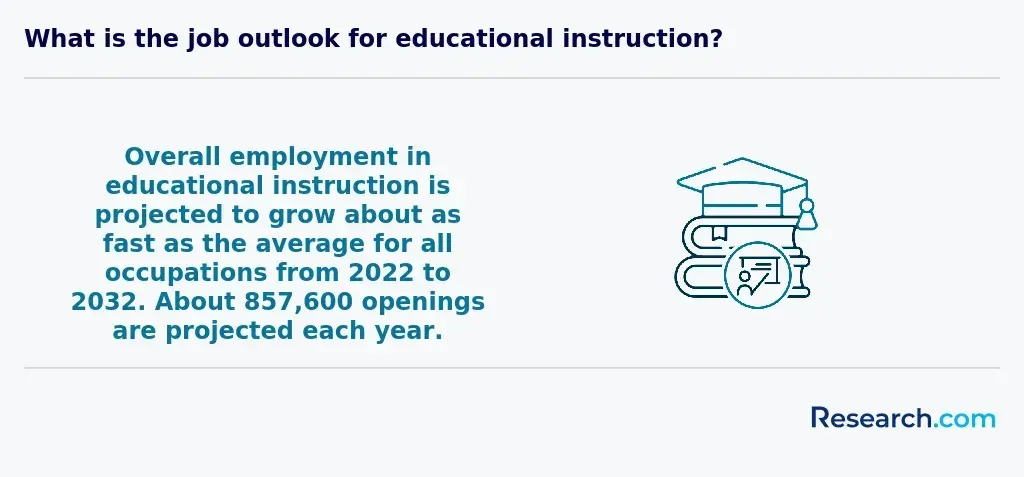
Private schools often value collaboration and mission alignment, so advancement may depend on more than seniority. Teachers who document results, contribute to school culture, mentor peers, and develop specialized expertise may have stronger long-term options. Broad labor-market projections also matter for context: average projected employment growth for all occupations includes 857,600 expected openings each year, but that figure should not be read as a Utah private school teacher forecast.
What teacher certification options are available for private school teachers in Utah?
Private school teachers in Utah can choose whether formal certification is worth the investment based on their goals. If you want the broadest range of teaching options, a state-recognized teaching credential may be useful. If you are targeting a specific private school that values subject expertise, religious formation, Montessori preparation, or professional experience, another credential may be more strategic.
To compare formal and alternative routes, review types of teacher certification in Utah. Certification can be especially valuable if you want to move between private, charter, and public schools or if your target employer lists licensure as preferred.
How can a digital professional portfolio boost career prospects for private school teachers in Utah?
A digital portfolio can make a private school application more concrete. Instead of simply saying you are organized, creative, student-centered, or mission-driven, you can show evidence of your work.
- Sample lesson plans and unit plans.
- Student work samples with identifying information removed.
- A short teaching philosophy tailored to private school environments.
- Classroom management routines and parent communication examples.
- Evidence of professional development, certificates, workshops, or training.
- Technology-supported instruction examples, such as digital assessments or learning activities.
- References, endorsements, or mentor feedback when appropriate.
A strong portfolio is especially useful for applicants without a traditional education degree because it helps hiring committees evaluate classroom readiness. Teachers building online instructional skills can also review how to become a teacher online in Utah.
Here’s What Graduates Have to Say About Becoming a Private School Teacher in Utah
-
: "
“Teaching in a Utah private school gave me the chance to know students more personally. Smaller classroom communities made it easier to adjust lessons, notice when students needed help, and celebrate growth over time.” — Isabela A.
"
-
: "
“The faculty community has been one of the most valuable parts of the job. Sharing strategies with colleagues helped me become more confident and gave students a more connected learning experience.” — Ramon M.
"
-
: "
“Private school teaching allowed me to bring the arts into daily learning in a meaningful way. I was able to design creative projects while still supporting academic goals.” — Amelia K.
"
How can online education boost professional growth for private school teachers in Utah?
Online education can help private school teachers add credentials without leaving their jobs. It is especially useful for teachers balancing classroom duties, family responsibilities, coaching assignments, or part-time work.
- Degree completion: Teachers without a bachelor’s degree can use online programs to move toward full-time classroom qualifications.
- Subject-area development: Online coursework can deepen expertise in literacy, math, science, child development, or educational technology.
- Leadership preparation: Teachers interested in department chair, curriculum, or administration roles can add graduate-level training.
- Flexible scheduling: Online formats may make professional development easier during the school year.
For educators comparing degree routes, online bachelor’s in education programs can provide a flexible way to build formal teaching preparation while continuing to gain experience.
How can mentorship programs drive career advancement for private school teachers in Utah?
Mentorship can shorten the learning curve for private school teachers because it connects new educators with people who understand the school’s culture, parent expectations, curriculum model, and classroom norms. A good mentor can help with lesson planning, discipline, grading, communication, and professional judgment.
| Mentorship Benefit | Why It Matters |
| Classroom management support | New teachers can learn routines that fit the school’s culture and student population. |
| Curriculum guidance | Mentors can explain pacing, assessment expectations, and mission-based instruction. |
| Career planning | Experienced teachers can help identify leadership, certification, or graduate study opportunities. |
| Feedback and reflection | Regular observation and discussion can improve teaching faster than working alone. |
Mentorship also complements formal preparation. If you are still deciding whether to pursue a traditional license, compare the broader process in how to become a teacher in Utah.
What subject-specific certifications can boost career opportunities in Utah’s private schools?
Subject-specific credentials can help private school teachers prove expertise in areas that parents and administrators value. These credentials are most useful when they align with a school’s curriculum, extracurricular priorities, or hard-to-staff subjects.
- Music and performing arts: Teachers can strengthen arts programs, concerts, ensembles, and integrated arts instruction. Review music teaching qualifications in Utah for a focused example.
- History and humanities: Classical, religious, and college-preparatory schools may value deep humanities preparation.
- STEM: Math, science, robotics, coding, and engineering-related experience can support specialized programming.
- World languages: Language skills may support immersion, enrichment, or advanced secondary coursework.
- Early childhood: Developmental training can improve prospects in preschool and lower elementary programs.
How can strategic contract negotiation drive career stability in Utah's private schools?
Private school teachers should review employment contracts carefully because salary, benefits, workload, renewal terms, tuition discounts, professional development support, and extracurricular duties can vary widely. A clear contract reduces confusion and helps teachers understand what they are agreeing to before the school year begins.
- Clarify compensation: Ask whether salary is annualized, paid over 10 months or 12 months, and whether stipends are available for coaching or clubs.
- Review benefits: Compare health insurance, retirement plans, paid leave, tuition remission, and professional development funding.
- Understand workload: Confirm teaching load, prep periods, advisory duties, supervision, after-school expectations, and required events.
- Ask about evaluation: Understand how observations, performance reviews, renewal decisions, and raises are handled.
- Discuss growth: Ask whether advanced credentials, leadership duties, or subject expertise can lead to higher pay or promotion.
- Get advice when needed: If contract language is unclear, consider professional or legal guidance before signing.
Subject specialization can also support stronger negotiations. For example, candidates preparing for humanities roles can review how to become a history teacher in Utah and use documented expertise to show their value.
Common Mistakes to Avoid
| Mistake | Why It Can Hurt You | What to Do Instead |
| Assuming private schools follow public school licensing rules. | You may overpay for credentials or misunderstand hiring requirements. | Check each school’s stated qualifications before choosing a program. |
| Focusing only on salary. | You may miss differences in workload, benefits, planning time, tuition discounts, and professional support. | Compare total compensation and contract terms. |
| Applying with a generic resume. | Private schools often care about mission fit and community values. | Tailor your materials to the school’s educational model and culture. |
| Ignoring background check and fingerprinting requirements. | Hiring can be delayed if documentation is incomplete. | Ask early what screening steps and fees are required. |
| Choosing an online program without checking fit. | Not every credential will help with your target role. | Confirm accreditation, transfer policies, field experience, and employer recognition. |
| Relying only on rankings or reputation. | A prestigious program may not be the most practical or affordable option. | Evaluate cost, flexibility, outcomes, and alignment with Utah private school hiring needs. |
Questions to Ask Before Accepting a Utah Private School Teaching Job
- What degree, license, certificate, or experience does the school require for this role?
- Will I need fingerprinting, a background check, safety training, or religious formation before starting?
- How many students will be in each class?
- What curriculum will I be expected to use, and how much flexibility will I have?
- How are discipline, grading, accommodations, and parent communication handled?
- What is the salary range, and are benefits included?
- Are professional development costs covered by the school?
- How are raises, contract renewals, and performance evaluations determined?
- Will I receive mentoring during my first year?
- What duties outside classroom teaching are required?
Key Insights
- Utah private school teachers do not need a state teaching license by default, but many schools prefer a bachelor’s degree, classroom experience, or specialized credentials.
- The fastest path may take only a few months for candidates pursuing certificate-based or school-specific roles, while an associate’s degree commonly takes about two years and a bachelor’s degree requires a larger investment.
- Estimated preparation costs can range from $20,850 to $53,100 or more when degree costs, certification expenses, background checks, professional development, and supplies are included.
- Private school teacher salaries in Utah are stated as commonly ranging between $30,000 and $50,000 annually, with some teachers in prestigious or well-funded schools earning upwards of $60,000 or more.
- Private school tuition levels vary widely in Utah, but high tuition does not automatically mean high teacher compensation; applicants should review salary, benefits, workload, and contract terms together.
- Specialized training in special education, early childhood, STEM, arts, music, or educational technology can improve competitiveness for targeted private school roles.
- A strong portfolio, references, demonstration lesson, and mission-aligned application can matter as much as formal credentials in private school hiring.
- Before paying for any credential, verify that the schools you want to work for actually value or require it.
Related Articles for Nearby States
- 2027 How to Become a Private School Teacher in Nevada: Requirements & Certification
- 2027 How to Become a Private School Teacher in Arizona: Requirements & Certification
- 2027 How to Become a Private School Teacher in Idaho: Requirements & Certification
- 2027 How to Become a Private School Teacher in Wyoming: Requirements & Certification
- 2027 How to Become a Private School Teacher in Colorado: Requirements & Certification
- 2027 How to Become a Private School Teacher in New Mexico: Requirements & Certification
- 2027 How to Become a Private School Teacher in California: Requirements & Certification
- 2027 How to Become a Private School Teacher in Montana: Requirements & Certification
- 2027 How to Become a Private School Teacher in Oregon: Requirements & Certification
- 2027 How to Become a Private School Teacher in Washington: Requirements & Certification
References:
- National Center for Education Statistics. (2023). Characteristics of Traditional Public, Public Charter, and Private School Teachers. Retrieved from: https://nces.ed.gov/programs/coe/indicator/sld/public-private-school-teachers
- Privateschoolreview.com (01 Jul 2024). Utah Private Schools By Tuition Cost. privateschoolreview.comhttps://www.privateschoolreview.com/tuition-stats/utah
- Rowlandhall.org (N.D.). Job Openings. Retrieved from: https://www.rowlandhall.org/about/employment
- Schools.utah.gov (N.D.). Educator Licensing. Retrieved from: schools.utah.gov https://schools.utah.gov/licensing.php
- Utah State Board of Education. (N.D.) Administrative Rules. Retrieved from: https://schools.utah.gov/administrativerules/index
Other Things You Should Know About How to Become a Private School Teacher in Utah
In 2027, private school teachers in Utah are not required by state law to hold a teaching license, though individual schools may have their own specific requirements. Candidates should check with the private schools they are interested in for any additional qualifications needed.
In 2027, to become a private school teacher in Utah, you typically need a bachelor's degree and expertise in your subject area. While a state teaching license is not always mandatory, some schools prefer it. Prior teaching experience, strong communication skills, and a commitment to fostering a supportive learning environment are also important.


