
2027 How to Earn a Master’s Degree in Computer Science as a Non-CS Major

Co-Founder and Chief Data Scientist
According to the U.S. Bureau of Labor Statistics (BLS), STEM jobs will grow by 8.1% from 2024 to 2034. With technology advancing rapidly, it is no surprise that many students and professionals are drawn to tech careers and educational pathways. Among these, a computer science degree stands out as one of the most versatile options at both the undergraduate and graduate levels.
However, for non-CS majors, pursuing a master’s in computer science (MCS) may seem daunting. It requires the right preparation and commitment. Fortunately, there are ways to enter this field even without a tech or programming background.
In this guide, I will discuss the best ways to earn a master’s degree in computer science as a non-CS major. It will also explain career pathways, job outlook, and other vital information to help students and professionals without a background in computer science thrive in the field.
Key Things To Know About Taking Up a Master’s Degree in Computer Science as a Non-CS Major
- Students planning to earn a computer science degree at the graduate level can expect to complete coursework in programming, algorithms, and math.
- Many master’s programs do not require a bachelor’s degree in computer science. Some universities offer pathways specifically for non-CS majors.
- Professionals with an MCS can become data scientists, software engineers, or AI specialists, earning around $100,000 or more yearly.
- Do you need a computer science degree to get into a CS master’s degree program? Degree Requirement
- What is a computer science degree bridge program for non-CS majors? Bridge Programs
- Are there master’s in computer science degree programs specifically for non-CS majors? Graduate Pathways
- What prerequisites should non-CS majors have before getting a master’s in computer science? Prerequisites
- What challenges do non-CS majors face when pursuing a master’s in computer science program? What challenges do non-CS majors face when pursuing a master’s in computer science program?
- What strategies help non-CS majors thrive in a computer science degree program? What strategies help non-CS majors thrive in a computer science degree program?
- How to choose a master’s degree in computer science as a non-CS major? How to choose a master’s degree in computer science as a non-CS major?
- What jobs can you get with a master’s in computer science as a non-CS major? Careers
- What is the job outlook for graduates of master’s in computer science as a non-CS major? Job Outlook
- Is a master’s in computer science worth it as a non-CS major? Is a master’s in computer science worth it as a non-CS major?
Can you get into a master’s in computer science without a CS bachelor’s degree?
If your bachelor’s degree is not in computer science, you are not automatically disqualified from earning a master’s in computer science. Many universities now admit students from mathematics, engineering, business, statistics, finance, accounting, data-related fields, and even nontechnical majors, as long as they can show readiness for graduate-level computing coursework.
This question matters because computer science remains one of the most competitive and career-relevant graduate fields. According to the National Student Clearinghouse Research Center, undergraduate enrollment in computer science programs reached 217,579 in spring 2025, making it the second most popular discipline in the computer and information science group. At the graduate level, demand is also strong, but admissions expectations vary widely by school.
This guide explains how non-CS majors can enter a computer science master’s program, what bridge programs do, which prerequisites usually matter, how to compare programs, what challenges to expect, and what jobs may be available after graduation. It is designed for career changers, working professionals, and recent graduates deciding whether a graduate computer science degree is realistic and worthwhile.
Quick answer
Yes, you can pursue a master’s in computer science without a computer science bachelor’s degree. The most common routes are applying to a program designed for non-CS majors, completing a bridge program, earning conditional admission with prerequisite coursework, or strengthening your background through programming, math, and computing fundamentals before applying. However, admission is not guaranteed. Each university sets its own requirements for GPA, prerequisites, GRE scores, technical preparation, and academic fit.
A CS undergraduate degree is still the most direct path because it usually covers programming, algorithms, data structures, computer systems, and discrete mathematics. Still, students from adjacent fields often have useful preparation. Graduates of the fastest online bachelor’s in mathematics degree programs, for example, may already have the quantitative foundation needed for theory-heavy computer science courses.
Other common feeder backgrounds include statistics, finance, accounting, and computer engineering. These fields build analytical reasoning, problem-solving ability, data fluency, and technical thinking. Mathematics supports logic and algorithms, statistics and finance help with modeling and data analysis, and engineering backgrounds often provide exposure to systems, abstraction, and technical design.
The key point is that your major alone does not determine eligibility. A strong applicant needs to match the program’s admissions requirements and show evidence of preparation for graduate computing work.
This chart displays the number of enrollees in computer science and other programs.
What is a computer science bridge program for non-CS majors?
A computer science bridge program is a structured academic pathway that helps students without a CS degree prepare for graduate-level computer science coursework. Instead of requiring students to earn a second bachelor’s degree, bridge programs focus on the missing foundations: programming, discrete mathematics, data structures, algorithms, computer systems, and sometimes software engineering.
Bridge programs differ from short career-training options. Short programs such as the fastest online CompTIA A+ training bootcamps may help with entry-level IT knowledge or certification preparation, but a CS bridge program is usually tied to graduate admission or progression into a master’s curriculum.
| Pathway | Best for | What it usually covers | Decision point |
| Bridge program | Non-CS majors who want a formal route into a CS master’s program | Programming, math, computer systems, algorithms, and graduate preparation | Choose this if you want structure and academic support before advanced coursework |
| Conditional admission with prerequisites | Applicants who are close to meeting requirements but lack specific courses | Required undergraduate-level or preparatory courses before full graduate enrollment | Choose this if the school clearly explains what you must complete before progressing |
| Master’s program designed for non-CS majors | Career changers and students with little or no formal computing background | Foundational courses integrated into the graduate degree plan | Choose this if you want the admissions process and curriculum built around non-CS students |
| Independent preparation | Applicants who need to improve technical readiness before applying | Programming, math review, projects, and portfolio work | Choose this if you need flexibility, but confirm that schools will accept your preparation |
Several universities offer bridge-style options for students transitioning into computer science:
- Rice University - Computer Science/Data Science Bridge Course: This six-week course prepares students for graduate study by introducing foundational concepts, mathematics and logic, and core programming skills.
- Iowa State University - MS Bridge Program in CS: This 2.5-year pathway combines foundational computer science preparation with graduate-level study, allowing students to build essential knowledge before moving into advanced coursework.
- University of San Francisco - CS Bridge Program: This three-year option uses the first year for core computing preparation before students continue into coursework aligned with the traditional Master of Science in Computer Science curriculum.
- Seattle University - CS Fundamentals Certificate Program: This option is designed for students with no programming experience and includes boot camps that teach Java and other applied skills. Students who complete it may continue into the school’s MSCS program.
- Ohio State University - CS and Engineering MS Bridge Program: This one-year certificate pathway prepares students for graduate computer science study and supports transfer into the CSE MS program through undergraduate and graduate coursework, mentoring, peer networks, research exposure, and professional practice opportunities.
Other institutions offering bridge-style pathways include Columbia University, New York University, Seattle University, Grand Canyon University, Virginia Polytechnic Institute and State University (Virginia Tech), and Case Western Reserve University.
Which master’s in computer science programs are built for non-CS majors?
Some master’s programs are intentionally designed for students who did not major in computer science. These programs usually begin with foundational coursework and then move into advanced topics such as software development, systems, algorithms, artificial intelligence, databases, cybersecurity, or data science. They can be a better fit than traditional MSCS programs for applicants who need a clear academic ramp-up.
Examples of programs that welcome or accommodate non-CS majors include:
- University of Pennsylvania - Master of Computer and Information Technology: This online program is designed for students without a computing background and offers a flexible, self-paced format for learners balancing school with work or other commitments.
- Northeastern University - Align MSCS: This 2.5-year program starts with two semesters of bridge coursework in core concepts, followed by three semesters of master’s-level study and a paid co-op or internship.
- Boston University - MSCS: This program introduces essential computer science areas such as software engineering, algorithms, and operating systems while combining theory with practical application.
- Syracuse University - MSCS: Applicants without technical preparation may receive conditional admission and complete a free five-week Mathematical Foundations for Engineers course before beginning the full MSCS curriculum.
- Merrimack College - MSCS: This 16 to 18 month program starts non-CS students with a zero-credit introduction to programming and discrete mathematics before graduate coursework, with specialization options in software engineering or AI.
Other universities with master’s options for non-CS majors include Franklin University, New Jersey Institute of Technology, and Texas A&M University.
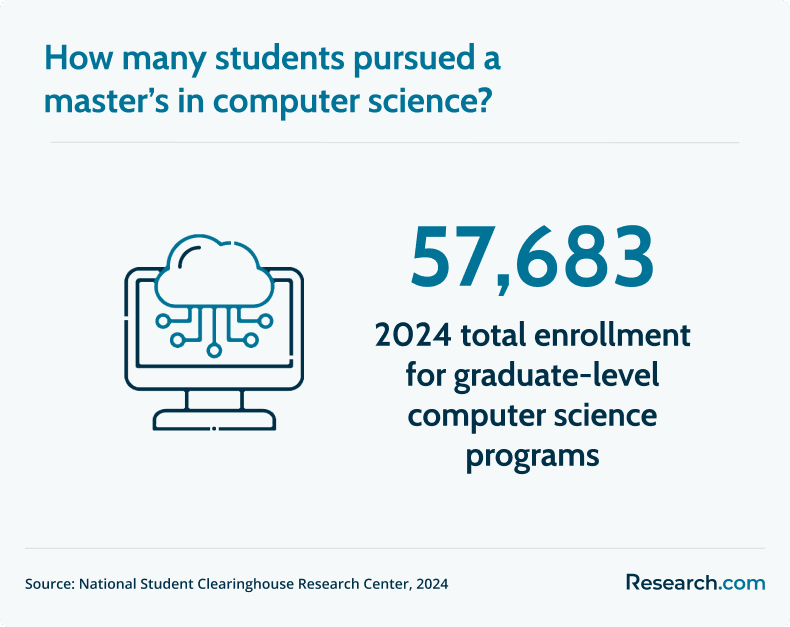
In 2024, a total of 57,683 students enrolled in computer science graduate programs. A CS bachelor’s degree remains the simplest academic route, but these programs show that students from other disciplines can still enter graduate computer science through structured preparation.
Students exploring how to get into cloud computing should pay close attention to whether a program teaches programming, networking, operating systems, distributed systems, and systems design. These areas often support later cloud coursework, certifications, or infrastructure-focused roles.
What prerequisites do non-CS majors usually need for a computer science master’s?
Prerequisites vary by university, but most programs want proof that applicants can handle technical coursework. Some schools require formal prerequisite classes before admission, while others allow students to complete them after conditional admission. Either way, the goal is the same: students need enough computing and math preparation to succeed in graduate-level CS.
| Prerequisite area | Why it matters in graduate CS | What non-CS majors should do |
| Mathematics | Courses such as linear algebra, calculus, discrete mathematics, statistics, and probability support algorithms, machine learning, theory, and data-intensive computing. | Review the exact course list required by each school and fill gaps before applying when possible. |
| Algorithms | Algorithms teach students how to design, evaluate, and implement efficient computational solutions. | Build comfort with step-by-step problem solving, complexity, and proofs before advanced coursework. |
| Computer systems and programming | Students need to understand how software interacts with operating systems, hardware, memory, and execution environments. | Learn at least one programming language well enough to write, test, debug, and improve code. |
| Software engineering | Graduate projects often require planning, version control, testing, documentation, and maintainable design. | Practice building small but complete software projects rather than only completing isolated coding exercises. |
| Data structures | Data structures explain how information is organized so programs can search, store, retrieve, and process it efficiently. | Study arrays, lists, stacks, queues, trees, graphs, hash tables, and their common use cases. |
Some programs also expect a GPA of at least 3.0 on a 4.0 scale and satisfactory GRE scores. Requirements differ, so applicants should avoid assuming one school’s standards apply everywhere. Non-CS graduates who need more technical preparation may also consider the shortest data science bootcamp online or similar short-term training to build confidence in programming, statistics, and applied data work before moving into advanced computer science courses.
What challenges should non-CS majors expect in a CS master’s program?
A master’s in computer science can be demanding even for students with CS backgrounds. For non-CS majors, the adjustment can be sharper because graduate courses often assume prior exposure to programming, mathematical reasoning, and technical problem solving. Knowing the likely obstacles early helps you plan realistically.
- Steep technical learning curve: Graduate courses may move quickly through coding assignments, proofs, systems concepts, and abstract problem solving. Students without prior programming experience may need extra time outside class.
- Added time and cost: Bridge courses, prerequisites, certificates, or boot camps can extend the total timeline and increase the overall cost of the degree.
- Limited early industry experience: Some internships and co-ops expect students to already have projects, coding experience, or technical interview skills. Non-CS majors may need to start with research projects, open-source contributions, volunteer work, or small freelance projects.
- Confidence gap: It is common for career changers to compare themselves with classmates who have years of CS training. This can make the first year feel more difficult than the actual long-term career path.
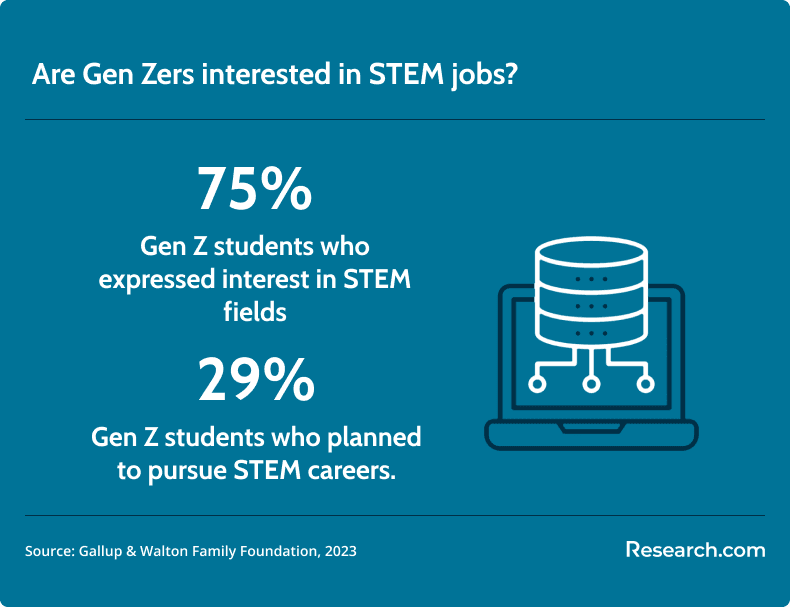
- Career fit uncertainty: A 2023 Gallup and the Walton Family Foundation survey found that 75% of Gen Z expressed interest in STEM fields, but only 29% planned to pursue STEM careers. That gap reflects a real concern many students have: being interested in technology does not automatically mean every tech career is the right fit.
These challenges do not mean non-CS majors should avoid the degree. They mean the decision should be made with a clear plan for preparation, funding, academic support, and career direction.
In some cases, students later discover that another school offers a stronger fit, better pacing, or more support for career changers. If that happens, understanding transferring graduate schools can help students protect completed credits and avoid unnecessary delays.
How can non-CS majors succeed in a master’s in computer science?
Non-CS students can succeed in graduate computer science, but they usually need a deliberate preparation strategy. The strongest applicants and students do not simply “try harder”; they identify gaps early and build systems for learning, feedback, and practice.
- Audit your preparation before applying. Compare your transcript with each program’s prerequisites. List what you have completed, what is missing, and whether the school allows conditional admission.
- Strengthen math fundamentals. Review calculus, algebra, discrete mathematics, statistics, and probability if your target program expects them. Math gaps often show up later in algorithms, machine learning, and theory courses.
- Build real coding experience. Choose a beginner-friendly language and complete small projects that require input, logic, data storage, testing, and debugging. Passive tutorial watching is not enough.
- Consider a bridge program if you need structure. A formal bridge pathway can be useful if you want advising, sequenced coursework, and a clearer route into the master’s curriculum.
- Use mentorship early. Faculty, alumni, teaching assistants, and advanced students can help you understand which courses to take first, how to prepare for technical interviews, and how to connect your original field to CS.
- Use academic support before you fall behind. Tutoring centers, office hours, study groups, workshops, and online communities are most effective when used proactively.
- Translate your prior background into a technical niche. Finance majors may be strong candidates for fintech or data roles, biology majors may move toward computational biology, and educators may pursue learning technology or human-computer interaction.
Early exposure to computer science can also help. A joint report from the Code.org Advocacy Coalition, Computer Science Teachers Association (CSTA), and the Expanding Computer Science Pathways (ECEP) Alliance shows that about 60% of U.S. public high schools and 37% of middle schools now offer computer science subjects. Students who took those courses but later majored in another field may be able to rebuild their computing foundation faster than complete beginners.
Students comparing computer science with analytics may also ask, “is data science hard?” The overlap is important: programming, algorithms, statistics, and data structures appear in both areas. Understanding that overlap can help non-CS majors choose between a general CS master’s, a data science-focused program, or a software engineering pathway.
How should non-CS majors choose a master’s in computer science program?
The best program for a non-CS major is not always the highest-ranked or fastest option. The right choice depends on your current preparation, target job, budget, timeline, and need for academic support. A program that works well for CS graduates may be a poor fit for students who need foundational training.
| Factor to compare | What to look for | Why it matters for non-CS majors |
| Admissions policy | Clear language stating whether non-CS applicants are accepted | A program that does not accommodate non-CS students may expect knowledge you do not yet have. |
| Prerequisite structure | Bridge courses, conditional admission, or integrated foundational courses | This determines whether you can enter directly or need extra coursework first. |
| GPA and GRE expectations | Minimum GPA, GRE policy, and whether scores affect scholarships or admission strength | Some programs use these benchmarks to assess readiness for rigorous graduate study. |
| Hands-on learning | Capstones, labs, internships, co-ops, research, or applied projects | Projects help career changers prove skills to employers. Similar practical learning features may also appear in the shortest software engineering programs online. |
| Faculty and advising | Professors with relevant research or industry experience and advisors familiar with non-CS students | Supportive faculty can help you choose the right sequence and avoid being overwhelmed early. |
| Format and pacing | Online, campus, hybrid, full-time, part-time, accelerated, or extended options | Working adults and career changers may need flexibility to avoid burnout. |
| Total cost | Tuition, fees, bridge courses, books, software, commuting, and lost work time | The lowest tuition may not be the lowest total cost if many prerequisites are required. |
| Career support | Career coaching, technical interview prep, alumni networks, employer partnerships, and internship access | Non-CS students often need help converting academic work into job-ready evidence. |
Questions to ask before applying
- Does the program explicitly admit students without a computer science bachelor’s degree?
- Which prerequisite courses are required before admission, and which can be completed after admission?
- Will bridge or prerequisite courses count toward the degree, or are they extra?
- How many students in the program come from non-CS backgrounds?
- What support is available for students new to programming?
- Does the program offer internships, co-ops, capstones, or research opportunities?
- What programming languages and tools are used in the first year?
- How does the program help students prepare for technical interviews?
- Can online students access the same advising, career services, and networking opportunities as campus students?
- What happens if a student struggles in the first programming or algorithms course?
Common mistakes to avoid
- Choosing only by ranking: A highly ranked program may not offer the bridge support a non-CS student needs.
- Looking only at tuition: Prerequisites, extended enrollment, materials, and reduced work hours can change the real cost.
- Assuming every online program fits career changers: Some online programs are flexible but still expect prior CS knowledge.
- Ignoring course sequencing: Taking algorithms or systems too early can create avoidable stress if programming skills are weak.
- Expecting a degree alone to secure a job: Employers often want projects, internships, technical interview skills, and evidence of applied ability.
- Overlooking transfer and credit policies: If you have prior graduate coursework, ask whether it can reduce your timeline or cost.
What jobs can non-CS majors get after a master’s in computer science?
A master’s in computer science can prepare graduates for technical roles across technology, finance, healthcare, e-commerce, education, government, and business. The degree can be especially powerful for non-CS majors who combine their original discipline with computing skills. For example, a finance graduate may move into fintech analytics, while a healthcare professional may pursue health data systems or AI applications.
According to CompTIA, the median tech job salary is $112,667, which is about 127% higher than the national median wage. Salary outcomes still depend on role, location, experience, employer, portfolio strength, and market conditions. A graduate degree can improve access to certain roles, but it does not guarantee a specific salary.
| Career | Salary listed | What the role does | Why a non-CS background may help |
| AI Engineers | $101,752 | Build and implement AI models for automation, prediction, language processing, image recognition, and decision support. | Domain knowledge can help translate AI systems into useful business, finance, healthcare, or research applications. |
| Database Administrators | $107,440 | Manage, secure, back up, and optimize databases that store organizational information. | Students with business, accounting, or operations backgrounds may understand data governance and reporting needs. |
| Software QA Analysts and Testers | $110,260 | Design and run tests to find software bugs, usability issues, security problems, and performance concerns. | Detail-oriented backgrounds such as finance, science, or operations can transfer well into testing and quality control. |
| IT Project Managers | $113,676 | Coordinate technology projects, timelines, budgets, teams, deliverables, and stakeholder expectations. | Prior management, business, or industry experience can be valuable when leading technical teams. |
| Data Scientists | $124,590 | Use programming, statistics, machine learning, and analytical models to find patterns in complex data. | Students from statistics, economics, finance, or science may already understand modeling and evidence-based analysis. |
| Cybersecurity Analysts | $127,730 | Monitor alerts, investigate threats, respond to incidents, and improve defensive systems. | Professionals with policy, risk, business, or IT backgrounds can bring useful context to security operations. Graduates of a fast track online cybersecurity bachelor's degree may also use a CS master’s to move into more advanced technical or leadership roles. |
| Software Developers | $144,570 | Design, build, test, and maintain applications, platforms, and systems. | Industry knowledge can help developers build better tools for specialized users and business problems. |
| Computer and Information Research Scientists | $152,310 | Develop new algorithms, models, systems, and computing methods that address complex technical problems. | Interdisciplinary experience can support research in applied computing, data science, AI, and domain-specific innovation. |
In the chart below, I have outlined the average wages of different tech graduates.
What is the job outlook for CS master’s graduates from non-CS backgrounds?
The employment outlook for many computing and IT occupations remains positive because organizations continue to invest in digital systems, data, cybersecurity, automation, software platforms, and AI-enabled tools. According to CompTIA, employment in tech occupations is projected to grow at roughly twice the rate of overall employment across the U.S. economy over the next decade.
Demand is not evenly distributed across every tech role. Areas such as data science, cybersecurity, software development, and UX/UI design are projected to grow well above the national average, reflecting the need for secure systems, useful applications, data-driven decisions, and better user experiences.
At the same time, some traditional roles face pressure. The BLS projects that employment for computer programmers will decline by about 6%. Even with that decline, around 5,500 openings are still expected each year as workers move into other roles or leave the occupation. This is an important warning for students: do not prepare only for routine coding tasks. Build higher-value skills in problem solving, systems thinking, collaboration, security, data, AI, and applied software design.
How AI and automation affect the decision
AI tools are changing how software is written, tested, documented, and deployed. For non-CS majors, this creates both opportunity and risk. The opportunity is that professionals who understand both computing and another domain can help organizations apply AI responsibly and practically. The risk is that entry-level work focused only on repetitive coding may become more competitive. A strong CS master’s program should therefore teach fundamentals, not just tools, so graduates can adapt as technologies change.
Professionals who want to move beyond applied roles into advanced analytics research, academic work, or senior technical leadership may later consider a doctorate in data science online. That path is not necessary for most software or IT roles, but it can make sense for professionals pursuing research-intensive or highly specialized careers.
This chart below highlights the careers projected to grow faster than the national average.
Is a master’s in computer science worth it for non-CS majors?
A master’s in computer science can be worth it for non-CS majors when the program matches the student’s preparation, career goals, budget, and tolerance for technical difficulty. It is usually not worth it if the student chooses a program without checking prerequisites, underestimates the time needed to learn programming, or expects the degree alone to guarantee a high-paying job.
| It may be worth it if... | It may not be the right move if... |
| You want to move into software, AI, cybersecurity, data science, systems, or technical leadership. | You are mainly looking for a quick credential with minimal technical coursework. |
| You are willing to complete prerequisites or bridge coursework before advanced classes. | You do not have time or budget for possible extra preparation. |
| Your previous field can combine with computing to create a stronger career niche. | You are unsure whether you enjoy programming, math, or technical problem solving. |
| The program offers strong advising, career support, projects, internships, or co-ops. | The program assumes a CS background and provides little support for career changers. |
| You understand that salary and job outcomes depend on skills, experience, location, and employer demand. | You are choosing the degree only because tech salaries look attractive. |
The strongest reasons to pursue this path include broader career mobility, access to technical roles, long-term adaptability, and the ability to combine an existing discipline with computing. Non-CS majors may stand out when they can solve technical problems in a specific industry rather than compete only as generalists.
The trade-off is real. The path can require additional time, money, and persistence, especially during the first year. Before enrolling, compare total cost, prerequisite burden, program support, career services, and likely return on investment.
What non-CS majors say about earning a master’s in computer science
- : "Before I applied, I had no coding background, so the first programming boot camp felt intense. Group projects were difficult because some classmates already knew the material, but that also pushed me to learn faster. I finished the degree by staying consistent and asking for help early, and I now work in cybersecurity. — Lex"
- : "I studied economics before entering a U.S. computer science master’s program as an international student. At first, I felt behind students who had CS degrees, so I attended workshops, spoke with industry professionals, and practiced constantly. The program taught me that career changers can succeed when they use the support available to them. — Sian"
- : "My undergraduate degree was in finance, and I worried that I would not be viewed as a serious CS student. Algorithms and systems courses were challenging at first, but my finance background helped me approach problems logically. Internships helped me move toward fintech, where both my technical training and finance experience mattered. — Carmela"
Sources and references
- CompTIA. (2025). State of the Tech Workforce 2025. https://www.comptia.org/en/resources/research/state-of-the-tech-workforce-2025
- National Student Clearinghouse Research Center. (2025, January 3). Current Term Enrollment Estimates (CTEE) Expanded Edition: Fall 2024 Enrollment Overview. Retrieved September 10, 2025, from https://public.tableau.com/app/profile/researchcenter/viz/CTEEFall2024dashboard/CTEEFall2024
- National Student Clearinghouse Research Center. (2025, May 22). Current Term Enrollment Estimates: Spring 2025. Retrieved September 10, 2025, from https://nscresearchcenter.org/current-term-enrollment-estimates
- Paynter, N., Mishra, M., Kreit, B., Mahto, M., Cantrell, S., Mahoutchian, T., & Shact, L. (2024, June 11). Navigating the tech talent shortage. Deloitte. https://www.deloitte.com/us/en/insights/topics/talent/overcoming-the-tech-talent-shortage-amid-transformation.html
- U.S. Bureau of Labor Statistics. (2024). Data scientists [Interactive data]. Occupational Employment and Wage Statistics (OEWS) Profiles. Retrieved September 10, 2025, from https://data.bls.gov/oesprofile
- U.S. Bureau of Labor Statistics. (2025, August 28). STEM Occupations Are Projected to Grow Much Faster Than Average. Retrieved September 10, 2025, from https://www.bls.gov/emp/graphics/stem-occupations.htm
- ZipRecruiter. (2025, September 4). IT Project Manager Salary. Retrieved September 10, 2025, from https://www.ziprecruiter.com/Salaries/It-Project-Manager-Salary
Key Insights
- You do not need a computer science bachelor’s degree for every CS master’s program, but you do need evidence that you can handle programming, math, systems, algorithms, and graduate-level technical work.
- The best routes for non-CS majors are bridge programs, conditional admission pathways, or master’s programs intentionally designed for students without a computing background.
- Prerequisites matter. Before applying, check each program’s requirements for mathematics, programming, data structures, algorithms, GPA, and GRE scores instead of assuming all schools follow the same standards.
- A CS master’s can be valuable for career changers when it connects prior expertise with technical skills. The strongest outcomes often come from combining computing with fields such as finance, healthcare, business, statistics, education, or engineering.
- Program fit is more important than speed. Non-CS students should prioritize advising, foundational support, hands-on projects, internships, career services, and realistic pacing.
- AI and automation make fundamentals more important, not less. Students should prepare for roles that require problem solving, systems thinking, data judgment, security awareness, and domain expertise rather than relying only on routine coding skills.
- The degree can be worth it, but only after comparing total cost, prerequisite time, career goals, and likely return on investment. A strong plan before enrollment reduces the risk of choosing the wrong program.
Other Things You Should Know About Getting a Master’s Degree in Computer Science
Non-CS majors should enhance their math skills, especially in discrete mathematics. Familiarize yourself with basic programming concepts through online courses or self-study, and consider completing prerequisite courses if required by the program. Familiarize yourself with data structures and algorithms to build a strong foundation.
Most programs require calculus through at least one or two semesters, discrete mathematics, and prior programming in a high-level language such as Python, Java, or C++. Many also expect data structures knowledge and a minimum GPA, often around 3.0, before admission.


