2027 List of Scholarships for Computer Science Majors

Co-Founder and Chief Data Scientist
Paying for a computer science degree is a major financial decision, especially when the average cost of college attendance in the U.S. is $38,270 per student per year (Education Data Initiative, 2026). For many students, scholarships are not just a bonus. They can determine whether a student can attend a preferred school, enroll full time, reduce work hours, avoid excessive borrowing, or choose one of the best online computer science programs instead of settling for the cheapest option available.
This guide explains how computer science scholarships work, where to find them, which awards are worth researching, and how to build a stronger application. It is written for high school seniors, current undergraduates, graduate students, career changers, women in technology, minority students, and anyone comparing computer science education costs against long-term career value.
You will learn how to evaluate scholarship opportunities, combine them with other forms of financial aid, avoid common application mistakes, and choose programs that support both affordability and career outcomes.
Computer Science Scholarship Guide: Table of Contents
- Why major in computer science?
- Can accelerated computer science degree programs improve scholarship value?
- How can computer science scholarships support career success?
- Where should students look for computer science scholarships?
- Computer science scholarships for 2027
- Can online AI degrees strengthen scholarship and career options?
- Other financial aid options for computer science students
- How can computer science students improve scholarship eligibility?
- How can data science skills strengthen scholarship applications?
- How can scholarships improve career opportunities?
- How can cybersecurity specialization support scholarship and career goals?
- Can comparing degree costs improve your scholarship strategy?
- Why does accreditation matter for scholarships and employment?
- Which scholarship application mistakes should students avoid?
Quick Answer: Are Computer Science Scholarships Worth Applying For?
Yes. Computer science scholarships can significantly reduce the cost of earning a degree in a field with strong employment potential. Awards range from smaller department-based scholarships to full-tuition programs, government-funded fellowships, diversity-focused awards, and scholarships tied to internships or post-graduation employment. The best approach is to apply broadly, complete the FAFSA when required, verify eligibility carefully, and prioritize scholarships that match your academic level, technical interests, financial need, background, and career goals.
| Student situation | Best scholarship strategy | What to check before applying |
| High school senior planning a CS major | Apply for national awards, school-based scholarships, local community scholarships, and diversity-focused programs if eligible. | Enrollment requirements, citizenship rules, GPA minimums, essay prompts, and whether the award is renewable. |
| Current undergraduate student | Look for department scholarships, internship-linked programs, employer-sponsored awards, and professional association scholarships. | Major requirements, full-time enrollment rules, internship obligations, and minimum credit completion. |
| Graduate student | Focus on fellowships, research-based grants, assistantships, and scholarships tied to federal agencies or technical fields. | Research expectations, stipend terms, practicum requirements, service commitments, and renewal conditions. |
| Online computer science student | Confirm that online students qualify for institutional, federal, private, and employer-sponsored aid. | Accreditation, program eligibility for federal aid, residency requirements, and online student fees. |
| Career changer | Search for scholarships connected to workforce development, employer tuition assistance, professional associations, and accelerated programs. | Prior degree limits, transfer credit policies, part-time eligibility, and whether nontraditional students may apply. |
Reasons to Major in Computer Science
Computer science remains a practical major for students who want to build technical skills that apply across software development, data systems, cybersecurity, artificial intelligence, cloud computing, finance, healthcare, manufacturing, education technology, and government. The field is not limited to coding jobs. It also includes problem-solving roles that involve systems design, database management, technical product development, network security, user experience, machine learning, and digital transformation.
The need for digital and computer skills continues to influence hiring across industries. Employers increasingly expect workers to understand software tools, data, automation, cybersecurity risks, and digital workflows. That broad demand is one reason students continue to consider computer science despite tuition pressures and changing enrollment patterns.
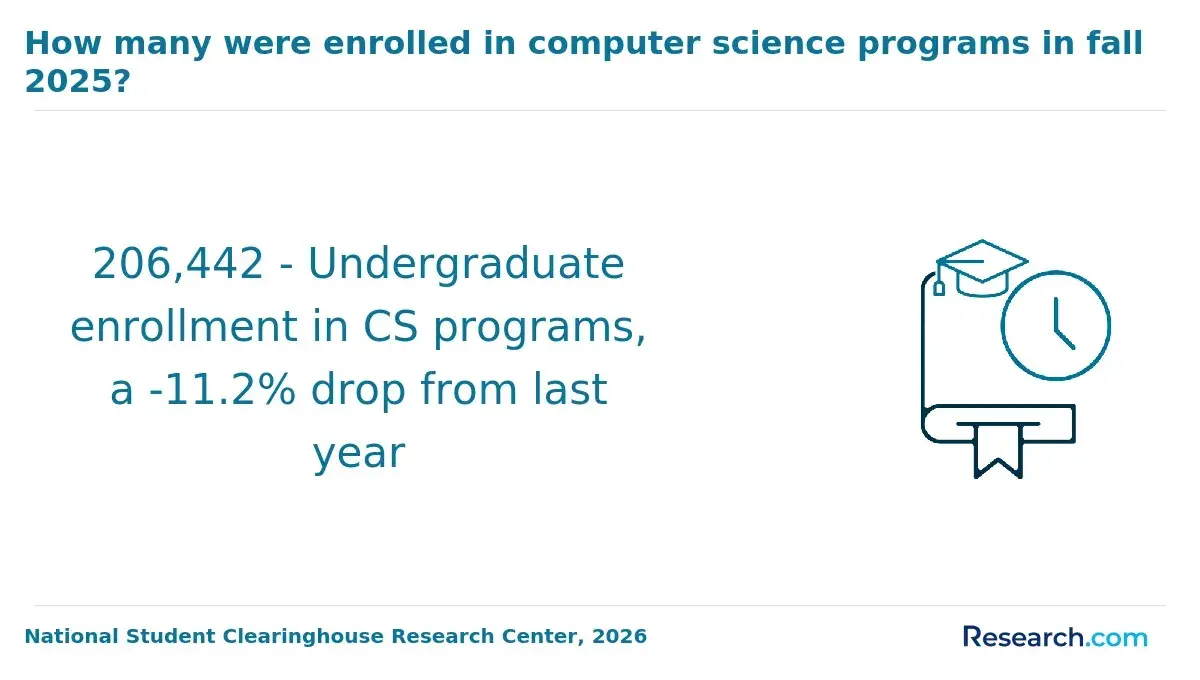
In 2025, Spring enrollment for computer and information sciences and support services majors at 4-year institutions dropped by 7.7% from the previous year (National Student Clearinghouse Research Center, 2025). That decline does not mean the field lacks opportunity; rather, it may make affordability, program quality, student support, and scholarship access even more important for students deciding whether to enroll.
According to a 2026 survey by the National Association of Colleges and Employers (NACE), computer science master's graduates are the most sought-after by U.S. employers, with nearly one-quarter of employers planning to recruit them. For students considering graduate school, this suggests that advanced technical education can still be valuable when it aligns with employer demand and does not create unsustainable debt.
A career in computer science and information technology can also offer higher-than-average earnings. ZipRecruiter data reported a median annual wage of $109,707 for computer science and IT careers as of April 2024, compared with a median annual wage of $48,060 for all occupations. Salaries vary widely by role, location, experience, degree level, employer, and specialization, so students should treat these figures as broad benchmarks rather than guaranteed outcomes.
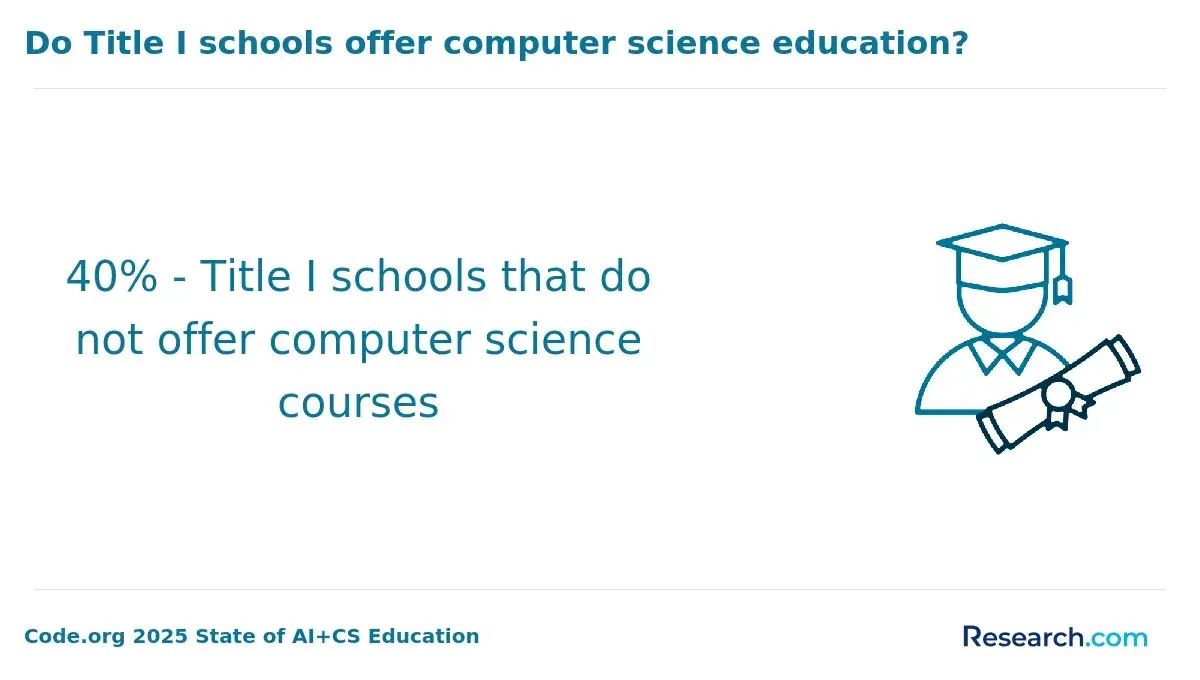
The Bureau of Labor Statistics reported in November 2025 that overall employment in computer and IT occupations is expected to grow much faster than average from 2024 to 2034, with a projected 317,700 job openings annually. CompTIA's 2025 "State of the Tech Workforce" report also projected that tech jobs in the U.S. would grow from 6.09 million in 2025 to 7.03 million in 2035, roughly twice the rate of the overall workforce over the next decade.
These labor market signals help explain why scholarships for computer science matter. When tuition is high and technical talent is in demand, scholarships can make it possible for more students to enter the field, complete degrees, and pursue internships or research experiences without taking on unnecessary debt.
What computer science students typically study
- Programming and software development: Students learn to write, test, debug, and maintain code using programming languages and development tools.
- Algorithms and data structures: These courses build the problem-solving foundation needed for efficient software and technical interviews.
- Computer systems: Students study operating systems, networks, databases, hardware concepts, and distributed systems.
- Mathematics and theory: Discrete mathematics, logic, statistics, and computational theory help students understand how computing problems are modeled and solved.
- Applied specializations: Many programs offer tracks in AI, data science, cybersecurity, software engineering, game development, cloud computing, or human-computer interaction.
Can Accelerated Computer Science Degree Programs Enhance Scholarship Opportunities?
Accelerated computer science programs can improve the value of a scholarship by shortening the time a student spends enrolled. If a student can complete degree requirements faster without sacrificing learning quality, they may reduce tuition, housing, fees, and opportunity costs. This can make each scholarship dollar go further.
However, accelerated formats are not automatically better. They are usually more demanding, and students may have less time for internships, campus jobs, research, or extracurricular leadership. Before choosing an accelerated computer science degree, students should ask whether scholarships apply to condensed terms, whether aid is prorated, and whether the course pace leaves enough time to maintain strong grades.
| Accelerated program factor | Why it matters for scholarships | Question to ask |
| Shorter completion timeline | May reduce total costs and help students use scholarship funds more efficiently. | Will my scholarship cover summer, intersession, or compressed courses? |
| Higher course intensity | Can make it harder to maintain GPA-based scholarship eligibility. | What GPA must I keep to renew the award? |
| Limited time for internships | Some scholarships value work experience, research, or leadership activities. | Can I still complete internships or research while enrolled? |
| Transfer credit policies | Accepted credits can reduce costs, but some awards require a minimum number of institutional credits. | Will transfer credits affect scholarship eligibility or award size? |
How do computer science scholarships shape career success?
Scholarships can affect more than tuition. By reducing financial pressure, they may give students more time to complete projects, participate in hackathons, join research labs, accept internships, attend conferences, or study for certifications. These experiences often matter when students apply for entry-level technical roles.
Lower debt can also create more flexibility after graduation. A graduate with fewer loan obligations may be better positioned to choose a strong training opportunity, relocate for a promising role, continue into graduate school, or pursue a specialization connected to the highest paying jobs in computer science field. Scholarships do not guarantee career success, but they can remove financial barriers that often limit students’ academic and professional choices.
Where to Find Scholarships for Computer Science
Computer science scholarships come from several sources: universities, technology companies, professional associations, foundations, nonprofits, government agencies, employers, and local community organizations. A broad search is important because the most visible national awards are often the most competitive, while smaller local or department-based scholarships may have fewer applicants.
A basic search for scholarships for IT and computer science majors can uncover awards from tech companies, foundations, nonprofits, and government programs. Award amounts vary. Some scholarships provide about $1,000, while others cover the full cost of attendance. For example, the Generation Google Scholarship (North America) awards $10,000 to qualified students enrolled in the U.S. and $5,000 to students studying in Canada who are pursuing computer science degrees (Google, n.d.).
Colleges and universities may also offer department-specific scholarships. The Computer Science and Engineering Department at the Ohio State University, for example, offers scholarships worth $1,500 each spring. Students should contact the department, admissions office, and financial aid office because some awards require a separate application while others are considered automatically.
Federal aid can also play a major role. According to the National Center for Education Statistics (NCES), college students received federal grants totaling $32.121 billion, with an average federal grant award of $5,019.17. The federal government is most likely to award grants to students attending private, for-profit colleges, with 67.2% of undergraduates at these institutions receiving federal grants.
Key Tech Areas That Are Understaffed

Students should also speak with a high school counselor, college financial aid adviser, academic department coordinator, or transfer adviser. These offices can help identify scholarships, estimate remaining costs, and explain what full-ride and full-tuition scholarships cover. This distinction matters because a full-tuition award may not pay for housing, meals, books, transportation, technology fees, or personal expenses.
| Scholarship source | Examples of what it may offer | Best for |
| College or department | Merit awards, need-based grants, research awards, transfer scholarships, continuing student scholarships. | Students already admitted or enrolled in a specific computer science program. |
| Technology companies | Diversity scholarships, internship-linked awards, regional awards, industry mentorship. | Students with strong technical interests, leadership experience, or underrepresented backgrounds. |
| Professional associations | Field-specific scholarships connected to automation, engineering, cybersecurity, computing, or research. | Students who can show career focus and professional engagement. |
| Federal agencies | STEM scholarships, graduate fellowships, research support, internships, and possible service commitments. | Students interested in public service, national labs, defense, scientific computing, or government research. |
| Community organizations | Local scholarships with smaller applicant pools. | High school seniors and returning students with local ties. |
| Employers | Tuition assistance, reimbursement, upskilling support, or education benefits. | Working adults and career changers pursuing computer science online or part time. |
List of Scholarships for Computer Science Majors for 2027
Students often assume computer science scholarships are only for applicants with a 4.0 GPA, national awards, elite extracurricular records, or exceptional athletic or leadership achievements. Some awards are highly competitive, but many scholarship programs also consider financial need, identity, location, career goals, research interests, professional experience, community service, or commitment to underrepresented groups in technology.
The scholarships below are a starting point, not a complete list. Deadlines, eligibility rules, award amounts, and application requirements can change, so students should always confirm details directly with the scholarship provider before applying.
Undergraduate Scholarships
| Scholarship | Who may qualify | Amount awarded | Typical deadline |
| Davidson Fellows Scholarship | Gifted students who are 18 years old or younger and have completed significant work in a category such as computer science. Applicants must be citizens or permanent residents of the United States. | $10,000, $25,000, or $50,000, depending on the judges’ decision. | Applications often open late in the year and close around February of the following year. |
| AIST Foundation Steel Intern Scholarships | Undergraduate or graduate students enrolled full time at an accredited North American university, with a minimum cumulative GPA of 2.5, who are citizens of Canada, Mexico, or the U.S. and can complete a paid summer internship at a steel-producing or steel-related company in North America. | $7,500 or $12,000 per year for those who qualify for the Premier Intern Scholarship. | The application deadline usually falls in October. |
| Science, Mathematics, and Research for Transformation (SMART) Scholarship | Undergraduate and graduate STEM students pursuing eligible degrees and interested in Department of Defense opportunities. | Full tuition to any U.S. accredited university or college and an annual stipend of $30,000 to $46,000, depending on degree level. | The yearly cycle typically opens on August 1 and runs until December 1. |
Graduate Scholarships and Fellowships
| Scholarship or fellowship | Who may qualify | Amount awarded | Typical deadline |
| Department of Energy Computational Science Graduate Fellowship (DOE CSGF) | Students pursuing full-time graduate study at an accredited U.S. university or college and interested in research aligned with Department of Energy priorities. | Full tuition and required fees, a $45,000 yearly stipend, and a $1,000 professional development allowance. | The annual application cycle usually begins in the fall and ends the following spring. |
| NSF Graduate Research Fellowship Program (GRFP) | Early graduate students or applicants planning to enter an eligible research-based graduate degree program at an accredited institution in the U.S. or its territories. | A 3-year annual stipend of $37,000 and a $12,000 cost of education allowance for tuition and fees. | Applications usually begin in July or August and close in October or November, depending on discipline. |
| ISA Scholarships | Outstanding undergraduate or graduate students studying automation and control or a closely related field, with a cumulative grade average of C or equivalent and full-time enrollment. | Amount varies. | Students should contact the scholarship provider for the next application schedule. |
Many computer science scholarships are designed to expand access for students from lower-income families, women, racial and ethnic minorities, first-generation college students, students with disabilities, veterans, and other groups that have historically been underrepresented in computing.
The gender gap in information technology careers and computer science has encouraged more companies, professional groups, universities, and charitable organizations to fund scholarships for women in technology. These awards can help reduce financial barriers while also connecting recipients with mentoring, academic communities, internships, and professional networks.
Scholarships for Women in Computer Science
| Scholarship | Who may qualify | Amount awarded | Typical deadline |
| Generation Google Scholarship: for women in computer science | Women who have not received another Google scholarship, are enrolled full time in a bachelor’s program at an accredited institution, demonstrate a strong academic record, and are interested in studying at an accredited university in Africa, Europe, or the Middle East. | Approximately $7,600, or the equivalent of 7,000 Euros, for an academic year. | The cycle varies and usually closes when 3,000 eligible application responses are received (Google, n.d.). |
| Center for Women In Technology (CWIT) at the University of Maryland Baltimore County (UMBC) | Talented women enrolling at UMBC in computer science, computer engineering, information systems, or a related undergraduate program. | $5,000-$15,000 per academic year for in-state students and $10,000-$22,000 per academic year for out-of-state students. | Eligible incoming freshmen can usually apply until mid-January. |
| Honeywell International Inc. Scholarship | Society of Women Engineers members who are U.S. citizens, identify as women, have a minimum GPA of 3.5 on a scale of 4.0, and are sophomores, juniors, or seniors in a program accredited by the Accreditation Board for Engineering and Technology, Inc. (ABET). Preference is given to applicants with financial need and those from under-represented groups. | $5,000 | The annual application deadline usually falls in February. |
Scholarships for Minority Students
| Scholarship | Who may qualify | Amount awarded | Typical deadline |
| The Gates Scholarship (TGS) | High school seniors enrolling in a 4-year program at an accredited 4-year non-profit private or public institution in the U.S. Applicants must be African American, American Indian/Alaska Native with proof of tribal enrollment, Asian and Pacific Islander, or Hispanic American. | The full cost of attendance not already covered by the expected family contribution and other scholarships. | The first phase usually begins in July and ends in September of the same year. |
| José E. Serrano Educational Partnership Program with Minority Serving Institutions (EPP/MSI) Scholarship | U.S. citizens or U.S. nationals attending minority-serving institutions and majoring in STEM fields that directly support NOAA’s mission. Applicants must be full-time 2nd-year students in a 4-year program, 3rd-year students in a 5-year program, or transferring from a 2-year to a 4-year institution. | Support during junior and senior years of study, which can reach up to $45,000 including conference participation and travel. | The yearly application cycle runs from September through January. |
| Ralph W. Shrader Graduate Diversity Scholarship | Graduate-level candidates who are U.S. citizens, currently reside in the U.S., have an overall GPA of 3.5 minimum at the time of application, and are pursuing a graduate degree at an accredited U.S. college or university. | $3,000 for tuition and course-related expenses. | Students should contact the provider for the next application cycle. |
These scholarships are only examples. Students should also search for state awards, local foundation scholarships, coding bootcamp-to-degree pathways, transfer student aid, honors college scholarships, and awards tied to specific fields such as AI, cybersecurity, software engineering, data science, robotics, and automation.
Can Online AI Degrees Enhance Scholarship Prospects and Career Paths?
Artificial intelligence is one of the most visible specialization areas within computer science. Students who can show experience with machine learning, data analytics, neural networks, natural language processing, or responsible AI may be able to make a more focused scholarship case, especially for awards that value emerging technology, research, or interdisciplinary problem-solving.
That does not mean every computer science student needs an AI degree. An AI-focused program is most useful when it supports a clear goal, such as machine learning engineering, AI research, data science, robotics, computational linguistics, or applied analytics. Students considering online AI degrees should compare accreditation, faculty expertise, math prerequisites, project requirements, tuition, financial aid eligibility, and whether the curriculum includes hands-on model development rather than only broad survey courses.
Additional Financial Assistance for Computer Science Majors
Many scholarship applications require or strongly encourage students to complete the Free Application for Federal Student Aid (FAFSA). The FAFSA helps schools, states, and some scholarship providers evaluate eligibility for federal grants, work-study, loans, and need-based institutional aid. Even students who expect to receive merit scholarships should complete it if they want access to the widest range of aid options.
Scholarships are only one part of an affordability plan. Students can also consider grants, work-study, tuition discounts, payment plans, assistantships, employer tuition assistance, military education benefits, state aid, and transfer credits. Some employers may help workers pay for upskilling through computer science online degree programs, especially when the coursework aligns with current or future job responsibilities.
Students should estimate the full cost of attendance, not just tuition. Housing, meals, books, software, laptop requirements, transportation, lab fees, student fees, internet access, and lost work hours can affect the real price of a computer science degree.
| Financial aid option | How it helps | What to watch for |
| Scholarships | Usually do not need to be repaid and may be based on merit, need, identity, field of study, or career goals. | Renewal rules, minimum GPA, enrollment status, and whether funds can be used for non-tuition expenses. |
| Grants | Often need-based and may come from federal, state, or institutional sources. | FAFSA deadlines, satisfactory academic progress rules, and lifetime eligibility limits. |
| Work-study | Allows eligible students to earn money through approved jobs while enrolled. | Work hours may compete with coursework, projects, and internships. |
| Employer tuition assistance | Can reduce costs for working adults pursuing a degree or certificate. | Reimbursement timing, grade requirements, approved programs, and employment commitments. |
| Assistantships | Graduate students may receive tuition support or stipends for teaching or research work. | Workload, eligibility, availability by department, and impact on degree timeline. |
| Transfer credits | Can reduce the number of credits a student must pay for at the degree-granting institution. | Credit transfer limits, residency requirements, and whether transferred courses satisfy major requirements. |
How can computer science students increase their scholarship eligibility?
Strong scholarship applications are specific, evidence-based, and aligned with the award’s mission. Students should avoid sending the same generic essay to every provider. A better approach is to build a clear profile that shows academic readiness, technical curiosity, financial need when relevant, and a realistic plan for using computer science skills.
- Strengthen your academic record. Many scholarships have minimum GPA requirements. Strong performance in math, science, computer science, AP courses, dual-enrollment classes, or advanced STEM coursework can help demonstrate readiness for a rigorous CS curriculum.
- Build a technical portfolio. Include coding projects, apps, websites, data analysis projects, open-source contributions, robotics work, cybersecurity labs, or research posters. A small but well-documented project is often more convincing than a vague claim about being passionate about technology.
- Get relevant experience. Internships, summer programs, hackathons, coding clubs, robotics teams, tutoring, and digital literacy volunteering can show commitment beyond the classroom.
- Connect your goals to the scholarship mission. If an award supports women in computing, explain how your work contributes to inclusion. If it supports defense research, automation, or environmental science, show how your technical interests match that purpose.
- Request targeted recommendation letters. Choose teachers, mentors, supervisors, or professors who can describe your technical ability, persistence, leadership, or research potential. Give them the scholarship details, your resume, and enough time.
- Apply early and broadly. National awards matter, but local scholarships, department awards, and smaller professional association scholarships can also reduce costs. Create a deadline calendar and submit before the final day.
- Proofread every document. Errors, missing files, outdated transcripts, or vague essays can weaken an otherwise qualified application.
How Can Data Science Expertise Enhance Your Scholarship Applications?
Data science can make a computer science application more concrete because it shows how technical skills can be applied to real problems. Students who can discuss data cleaning, statistical reasoning, machine learning, visualization, or big data tools may appeal to scholarship committees that value interdisciplinary work.
This specialization can be especially useful for students interested in healthcare analytics, business intelligence, climate modeling, computational social science, public policy, or AI. Those comparing graduate options may want to review a cheap data science master degree online program, but affordability should be evaluated alongside accreditation, curriculum depth, faculty support, and career services.
How can scholarships boost career opportunities?
Some scholarships provide more than money. They may include mentorship, internship access, conference funding, research placements, networking events, professional development workshops, or introductions to employers. These benefits can help students build the experience needed for competitive internships and entry-level roles.
Students should read the full scholarship description and look for career-building features. A smaller award with mentoring, industry exposure, or a required internship may be more valuable than a larger one-time award with no professional support. For students targeting advanced technical roles, these experiences can support a path toward the highest paying jobs in computer science field, although salary outcomes still depend on skills, location, role, experience, and market conditions.
How Can a Cybersecurity Focus Bolster Your Scholarship and Career Trajectory?
Cybersecurity is a practical specialization for students who want to work on digital risk, network defense, secure software, cloud security, incident response, or compliance. Scholarship committees may view cybersecurity projects, competitions, certifications, or lab experience as evidence that a student has a defined technical direction.
Students considering an affordable cyber security degree online should verify whether the program is properly accredited, whether coursework includes hands-on labs, and whether it prepares students for the kinds of security roles they want. A cybersecurity focus can strengthen an application when it is supported by clear evidence, not just a general statement of interest.
Could Comparing Degree Costs Enhance Your Scholarship Strategy?
Yes. A scholarship strategy should begin with a full cost comparison. Students should calculate tuition, fees, living costs, technology requirements, books, transportation, time to completion, and expected remaining balance after grants and scholarships. A large scholarship at an expensive school may still leave a higher net cost than a smaller scholarship at a more affordable accredited program.
Comparing costs across related fields can also help students understand whether a program’s price is reasonable. For example, reviewing how much does electrical engineering degree cost can provide a benchmark for evaluating technology and engineering-related programs. The goal is not to choose the cheapest option automatically; it is to identify the program with the strongest combination of accreditation, cost, completion support, curriculum quality, and career alignment.
| Cost factor | Why it matters | What students should compare |
| Published tuition | It is the starting price, but rarely the full cost. | Per-credit rates, tuition caps, residency rates, and online tuition policies. |
| Fees | Technology, lab, distance learning, graduation, and student service fees can add up. | Mandatory fees by term and by credit hour. |
| Time to completion | Longer enrollment can increase total cost and delay full-time earnings. | Full-time, part-time, transfer, and accelerated pathways. |
| Scholarship renewal | A nonrenewable award may help only in the first year. | GPA rules, credit minimums, and whether funding is guaranteed for future years. |
| Career support | Internships, employer partnerships, and career advising can affect job readiness. | Placement support, internship access, alumni networks, and project-based learning. |
How Does Accreditation Influence Your Scholarship and Career Outcomes?
Accreditation matters because it affects financial aid eligibility, credit transfer, graduate school options, employer confidence, and academic quality controls. Students should confirm that the institution is accredited by a recognized accreditor before enrolling. For some computing-related programs, specialized accreditation or industry-aligned curriculum may also matter, depending on the student’s goals.
Scholarship providers may require enrollment at an accredited college or university. Employers may also prefer candidates from programs with rigorous coursework, strong faculty, credible projects, and recognized academic standards. Students exploring cybersecurity or other technical specializations should be especially careful because program quality varies. For a broader career perspective, students can review Is cybersecurity a good career choice?.
What Common Scholarship Application Pitfalls Should You Avoid?
Many students lose scholarship opportunities not because they are unqualified, but because they apply too late, ignore instructions, submit generic essays, or fail to show why they match the award. A careful application process can improve the odds of being considered seriously.
| Common mistake | Why it hurts | Better approach |
| Applying only to famous national scholarships | Large awards often have intense competition. | Combine national, local, departmental, professional, and employer-based scholarships. |
| Using one generic essay | Committees may not see a clear connection between the applicant and the award. | Tailor each essay to the scholarship’s mission, eligibility priorities, and selection criteria. |
| Missing small requirements | An incomplete file may be rejected before review. | Create a checklist for transcripts, recommendations, FAFSA, essays, proof of enrollment, and citizenship documents if required. |
| Ignoring accreditation | Some scholarships and aid programs require enrollment at an accredited institution. | Verify institutional accreditation before committing to a program. |
| Focusing only on tuition | Students may underestimate housing, fees, technology, food, and transportation costs. | Compare total cost of attendance and net price after aid. |
| Choosing a specialization without evidence | Statements about AI, cybersecurity, or data science may sound vague without projects or coursework. | Support your interest with technical work, certifications, internships, research, or enrollment plans such as the fastest online MS artificial intelligence specialty. |
How to Build a Practical Computer Science Scholarship Plan
A strong scholarship plan is organized, realistic, and tied to both program choice and career goals. Students should begin before admission deadlines whenever possible because some institutional scholarships are awarded early and may not be available to late applicants.
- Estimate your full cost of attendance. Include tuition, fees, housing, meals, transportation, books, software, equipment, and personal expenses.
- Complete the FAFSA if eligible. Many schools and scholarship providers use FAFSA information to determine need-based aid.
- Build a scholarship spreadsheet. Track award name, URL, amount, eligibility, documents, recommendation requirements, deadline, renewal terms, and submission status.
- Prioritize fit over volume. Apply broadly, but spend the most time on scholarships that closely match your background, academic level, technical interests, and goals.
- Prepare reusable materials. Keep an updated resume, transcript, project list, personal statement draft, financial information, and recommendation contact list.
- Customize every application. Adjust essays and short answers so they directly answer the prompt and reflect the provider’s mission.
- Ask for feedback. Have a counselor, teacher, adviser, mentor, or writing center review your strongest applications.
- Plan for renewal. If you win a scholarship, understand GPA, credit, enrollment, reporting, and service requirements before accepting.
Questions to Ask Before Choosing a Computer Science Program Based on Scholarships
- Is the college or university accredited by a recognized accreditor?
- Does the program qualify for federal financial aid?
- Are online, part-time, transfer, or accelerated students eligible for the same scholarships as campus students?
- Is the scholarship renewable, and what GPA or credit load is required?
- Can scholarship funds be used for fees, housing, books, software, transportation, or only tuition?
- Will outside scholarships reduce institutional grants or other aid?
- Does the computer science department offer separate scholarships for continuing students?
- Are internships, research assistantships, or employer partnerships available?
- What happens if you change majors, reduce your course load, or take a leave of absence?
- Does the program’s curriculum match your intended career path in software, AI, data science, cybersecurity, systems, or research?
Achieve Your Education Goals with Computer Science Scholarships
Computer science scholarships take time to find and complete, but the effort can reduce borrowing and expand academic options. Students should not assume they are ineligible because they lack a perfect GPA or a long list of awards. Many scholarships consider financial need, identity, career focus, community service, technical projects, research interests, or commitment to diversity in technology.
The strongest applicants start early, read instructions carefully, and submit materials that show both preparation and purpose. Students can also improve their applications by using scholarship application letter writing tips, asking advisers for feedback, and matching each essay to the scholarship provider’s goals.
Most importantly, scholarships should be part of a broader affordability plan. Compare net price, accreditation, degree quality, transfer policies, career services, and program fit before deciding where to enroll.
Key Insights
- Computer science scholarships can materially reduce degree costs. With U.S. college attendance averaging $38,270 per student per year, grants and scholarships can make a major difference in affordability.
- The field still offers strong labor market signals. BLS projections, CompTIA workforce estimates, and NACE employer survey results all point to continued demand for computing skills, though individual job and salary outcomes vary.
- Students should search beyond national awards. Department scholarships, professional associations, employers, government agencies, local foundations, and diversity-focused programs can all provide useful funding.
- FAFSA matters even for scholarship-focused students. Many colleges and aid providers use FAFSA information to determine eligibility for grants, need-based scholarships, work-study, and other support.
- Program choice affects scholarship value. Accreditation, net cost, renewal rules, online eligibility, transfer credits, and time to completion can determine whether an award truly lowers total debt.
- Specializations can strengthen applications when backed by evidence. AI, data science, cybersecurity, automation, and research interests are more persuasive when supported by projects, coursework, internships, or clear career goals.
- Avoid generic applications. Tailored essays, complete documentation, strong recommendations, and early submissions are often what separate competitive applicants from overlooked ones.
References:
- Gerosa, M. & Lawson, A. (2025, June). 2025 State of Tech Talent. Linux Foundation. https://www.linuxfoundation.org/hubfs/Research%20Reports/LFTraining_Tech_Talent_Report_Global_2025_060525.pdf
- Google (n.d.). Generation Google Scholarship (North America). https://buildyourfuture.withgoogle.com/scholarships/generation-google-scholarship
- Massachusetts Institute of Technology (n.d.). MIT Scholarships. MIT Student Financial Services. https://sfs.mit.edu/undergraduate-students/types-of-aid/mit-scholarship
- National Student Clearinghouse Research Center. (2026, January 15). Final Fall Enrollment Trends. https://nscresearchcenter.org/final-fall-enrollment-trends
- Ohio State University (n.d.). Scholarships. https://cse.osu.edu/current-students/undergraduate/scholarships
- U.S. Bureau of Labor Statistics. (2025). Occupational Outlook Handbook, Computer and Information Technology Occupations. https://www.bls.gov/ooh/computer-and-information-technology/home.htm
Other Things You Should Know About Scholarships for Computer Science Majors
In 2027, popular scholarships for computer science majors include the ACM SIGHPC/Intel Computational and Data Science Fellowship, the Google Lime Scholarship, and the Generation Google Scholarship. Each offers varying amounts to support tuition, books, and other education-related expenses for eligible students.
Scholarships for computer science majors can be found through tech companies, foundations, nonprofits, government programs, and post-secondary institutions. It is also beneficial to consult high school guidance counselors and financial aid offices at colleges.
Completing the FAFSA is crucial for computer science majors seeking financial aid. It determines your eligibility for federal grants, work-study, and loans. Many scholarships also require a completed FAFSA as part of their application process, making it an essential step in accessing available financial resources.
Yes, scholarships like The Gates Scholarship, the EPP/MSI Undergraduate Scholarship, and the Ralph W. Shrader Graduate Diversity Scholarship are available to support minority students in computer science and related fields.
While some scholarships require a high GPA, many consider other factors such as personal or professional experiences, financial need, and demographic background. There are scholarships available for a wide range of students.
Besides scholarships, students can explore federal grants, work-study programs, tuition discounts, and employer-sponsored education benefits to cover college costs.
Completing the FAFSA is crucial as it helps determine eligibility for federal grants, scholarships, and other forms of financial aid, making it an essential step in the financial aid process.
Some scholarships may cover the full cost of attendance, including tuition, fees, and living expenses, while others may only cover a portion. It is advisable to apply for multiple scholarships and explore additional financial aid options to minimize out-of-pocket expenses.
To increase your chances of getting a scholarship, start by researching available scholarships early, prepare your application materials meticulously, write a strong application letter, and seek guidance from academic advisers and financial aid offices.