
2027 Is A Cybersecurity Degree Worth It?

Co-Founder and Chief Data Scientist
Choosing a cybersecurity degree is a major decision because it affects your time, cost, credentials, and career options in a field where employers often value both formal education and hands-on technical proof. Some cybersecurity jobs can be reached through certifications and experience, while others prefer or require a degree in cybersecurity, computer science, information technology, cybercrime, or a related discipline.
This guide explains what a cybersecurity degree can offer, how long it usually takes, what it may cost, what skills you build, and how it compares with alternative paths such as certifications or accelerated online programs. It is designed for students, career changers, IT workers, and professionals deciding whether a cybersecurity degree is worth the investment.
Quick answer: Is a cybersecurity degree worth it?
A cybersecurity degree can be worth it if you want structured technical training, broader career mobility, access to internships, and a credential that may help with analyst, engineering, consulting, management, and digital forensics roles. It is usually most valuable when the program is accredited, includes hands-on labs, aligns with industry certifications, and fits your budget. It may be less necessary if you already have strong IT experience and only need targeted certifications to qualify for a specific role.
Key things you should know about getting a cybersecurity degree
- A cybersecurity degree can prepare graduates for roles such as security analyst, penetration tester, network security engineer, cybercrime investigator, and security consultant.
- Cybersecurity professionals in the U.S. earn an average salary of $132,962.
- Online cybersecurity degrees are widely available, which can help working adults study while managing job, family, and financial responsibilities.
- How long does a cybersecurity degree take?
- What education do you need for a cybersecurity degree?
- What skills will you learn in a cybersecurity degree?
- How much can you earn with a cybersecurity degree?
- What jobs can you get with a cybersecurity degree?
- Can you earn a cybersecurity degree online?
- How much does a cybersecurity degree cost?
- What challenges should cybersecurity students and professionals expect?
- Can an accelerated online cybersecurity degree help you move faster?
- What is the cybersecurity job outlook?
- How does a degree prepare you for cybersecurity trends?
- How does location affect cybersecurity pay?
- Why do industry partnerships matter in cybersecurity programs?
- Does advanced computer science knowledge strengthen cybersecurity expertise?
- What should you compare before choosing a cybersecurity degree?
- Can an online technology degree support a cybersecurity career?
- Why choose cybersecurity instead of another tech field?
- How are emerging technologies changing cybersecurity education?
- How do cybersecurity and engineering degrees compare for cost and value?
- How can interdisciplinary study improve cybersecurity training?
- How can cybersecurity knowledge improve healthcare data security?
How long does it take to complete a cybersecurity degree?
The timeline depends on the credential level, whether you study full time or part time, and how many transfer credits you can apply. A traditional bachelor’s degree in cybersecurity commonly takes four years of full-time enrollment. An associate degree usually takes about two years and may qualify students for some entry-level technical roles or transfer into a bachelor’s program.
Online bachelor’s programs may offer accelerated formats that allow students to finish in as little as two to three years, depending on transfer credits and course load. Master’s programs in cybersecurity generally take one to two years for full-time students, although part-time students may need longer if they are working while enrolled.
| Degree option | Typical completion time | Best fit |
| Associate degree in cybersecurity or IT | Usually around two years | Students seeking an entry point into IT security or a transfer pathway |
| Bachelor’s degree in cybersecurity | Typically four years full time | Students who want broad preparation for analyst, engineering, consulting, and investigation roles |
| Accelerated online bachelor’s program | As little as two to three years, depending on transfer credits and course load | Adults with prior college credits or IT experience who want to finish faster |
| Master’s degree in cybersecurity | Generally one to two years full time | Professionals seeking advanced technical, leadership, risk, or policy roles |
What are the educational requirements to obtain a cybersecurity degree?
Cybersecurity degree admissions vary by school and degree level, but most programs expect applicants to have a high school diploma or equivalent for undergraduate admission. Students who want to become a cyber security consultant, cybersecurity analyst, cybercrime investigator, or security engineer should also be ready to build skills in computing, math, logic, and troubleshooting.
- Basic IT and math preparation: Algebra, introductory computer science, and analytical problem-solving help students handle networking, encryption, systems, and security concepts.
- Introductory programming exposure: Some programs prefer applicants who have seen languages such as Python or Java, although many bachelor’s programs begin with foundational programming courses.
- Bachelor’s degree coursework: A cybersecurity bachelor’s program or cyber crime degree usually combines general education courses with specialized classes in network defense, digital forensics, ethical hacking, operating systems, cryptography, and security policy.
- Graduate program prerequisites: Master’s programs often expect a bachelor’s degree in cybersecurity, computer science, information technology, or a related field. Some may also value IT work experience or certifications such as CompTIA Security+, CISSP, or CEH.
- Online admissions flexibility: Many online programs accept students from different academic and professional backgrounds, which can help career changers. Students comparing flexible options may also review the easiest bachelor degree to get online when deciding how cybersecurity compares with other online majors.
Degree, certification, or self-study: which path makes sense?
| Path | When it may be a good choice | Limitations to consider |
| Cybersecurity degree | You want a structured curriculum, academic credential, internship access, and broader long-term mobility. | It usually requires more time and money than a certification-only route. |
| Industry certifications | You already have IT experience or need proof of skill for a specific tool, domain, or role. | Certifications may not replace a degree for employers that screen for formal education. |
| Self-study and labs | You are exploring the field, building a portfolio, or supplementing school and certifications. | Self-study alone may be harder to verify unless supported by projects, work experience, or recognized credentials. |
| Degree plus certifications | You want both academic depth and employer-recognized technical validation. | This route can add exam fees, preparation time, and renewal requirements. |
What skills do you gain from a cybersecurity degree?
A strong cybersecurity degree should teach more than security theory. The best programs help students practice how to identify risk, secure systems, investigate attacks, communicate findings, and support compliance requirements. Graduates often leave with a blend of technical, analytical, and policy-focused skills.
- Network security: Students learn how to secure networks, configure defenses, recognize weak points, and reduce unauthorized access.
- Risk assessment and management: A future cybersecurity analyst learns how to evaluate threats, estimate potential impact, and recommend controls that reduce organizational risk.
- Cryptography: Coursework introduces methods for protecting data confidentiality and integrity through encryption, decryption, key management, and secure transmission practices.
- Incident response: Students learn how to detect, contain, investigate, and document security incidents so organizations can limit damage and prevent repeat attacks.
- Programming knowledge: Programs may use languages such as Python, Java, or C++ to help students automate tasks, analyze malware behavior, and understand secure software design.
- Regulatory compliance: Degree programs often cover frameworks and laws such as the General Data Protection Regulation (GDPR), HIPAA, and ISO/IEC 27001 so graduates can support legal and industry requirements.
- Security data analysis: Students practice reviewing logs, alerts, and system data to detect abnormal activity and prioritize threats.
- Critical thinking under pressure: Cybersecurity work often requires fast decisions with incomplete information, so programs emphasize structured problem-solving and clear communication.
| Skill area | Why employers care | How students can prove it |
| Network defense | Organizations need professionals who can protect infrastructure and reduce intrusion risk. | Firewall labs, intrusion detection exercises, and network configuration projects |
| Digital forensics | Security teams need evidence-based investigations after incidents. | Forensics reports, chain-of-custody exercises, and disk or memory analysis labs |
| Cloud and systems security | Modern organizations rely on distributed systems, cloud platforms, and remote access. | Cloud security projects, access control labs, and secure configuration assignments |
| Communication | Security recommendations must be understood by executives, legal teams, IT staff, and end users. | Risk memos, incident reports, presentations, and policy documents |
How much can you earn with a cybersecurity degree?
Cybersecurity is often discussed among the highest-paying degree paths because organizations are willing to pay for professionals who can reduce security, privacy, financial, and operational risk. Pay depends on role, location, industry, experience, security clearance, certifications, and whether the job is technical, managerial, or research-focused.
Entry-level roles, such as computer programmers, typically offer a salary of around $99,700 per year, depending on the employer and region. As professionals gain experience and add credentials such as Certified Information Systems Security Professional (CISSP) or CEH, mid-level positions such as information security analysts can reach salaries of $120,360 annually. Senior positions such as computer network architects often exceed $129,840 per year, while computer and information research scientists can earn $145,080 or more, especially in large organizations or risk-sensitive industries such as finance and healthcare.
| Role or category mentioned | Salary figure stated | Important context |
| Cybersecurity professionals in the U.S. | Average salary of $132,962 | Actual pay varies widely by state, industry, experience, and specialization. |
| Computer programmers | Around $99,700 per year | Can overlap with secure software, automation, and technical security work. |
| Information security analysts | $120,360 annually | Common role for cybersecurity graduates and experienced IT professionals. |
| Computer network architects | Often exceed $129,840 per year | Usually requires strong networking, systems, and architecture experience. |
| Computer and information research scientists | $145,080 or more | Often associated with advanced technical, research, or specialized roles. |
What are the career opportunities you can get with a cybersecurity degree?
A cybersecurity degree can lead to technical, investigative, advisory, and leadership careers. The right path depends on whether you prefer monitoring systems, breaking into systems ethically to find weaknesses, investigating digital evidence, designing secure infrastructure, or managing security strategy.
| Career path | What the role does | Good fit for students who like |
| Cybersecurity analyst | Monitors networks, investigates alerts, reviews logs, configures tools, and helps prevent future attacks. This role can overlap with cybercrime investigator work in some organizations. | Threat detection, dashboards, investigation, and steady problem-solving |
| Penetration tester or ethical hacker | Simulates attacks to find vulnerabilities before malicious actors exploit them. | Hands-on testing, offensive security, scripting, and creative technical thinking |
| Network security engineer | Builds and maintains secure networks using firewalls, encryption, access controls, and intrusion detection tools. | Infrastructure, routers, firewalls, cloud networks, and secure architecture |
| Information security manager | Leads teams, sets security policies, manages controls, and helps organizations meet security and compliance expectations. | Leadership, planning, risk management, and cross-functional communication |
| Security consultant | Reviews an organization’s current security posture, identifies gaps, and recommends improvements. | Client work, assessments, technical writing, and strategic advising |
| Forensic analyst | Examines digital evidence, reconstructs incidents, and supports legal or internal investigations. | Detail-oriented analysis, evidence handling, and investigative reporting |
| Chief Information Security Officer (CISO) | Directs the organization’s security strategy, risk posture, compliance priorities, and cybersecurity team. | Executive leadership, governance, business risk, and security strategy |
| Incident response specialist | Responds to breaches, contains damage, identifies root causes, and recommends corrective actions. | Fast-paced problem-solving, crisis response, and technical investigation |
Can you pursue a cybersecurity degree online?
Yes. Many colleges and universities offer online cybersecurity degrees at undergraduate and graduate levels. These programs are especially useful for working adults, military learners, parents, and career changers who need more schedule flexibility. Some students also compare cybersecurity programs with the cheapest online master's programs when weighing graduate study options.
Online cybersecurity programs typically cover the same major subjects as campus programs, including network security, cryptography, ethical hacking, risk management, and compliance. Many also use virtual labs, simulations, remote environments, and project-based assignments so students can practice technical skills. Before enrolling, confirm that the school is accredited and that the program offers enough hands-on work, career support, and instructor access for your goals.
| Online cybersecurity degree | Campus cybersecurity degree |
| Often better for students who need flexible scheduling or cannot relocate. | Often better for students who want in-person labs, campus networking, and face-to-face support. |
| May offer asynchronous courses and accelerated formats. | May follow a more fixed academic calendar. |
| Requires reliable technology, strong self-discipline, and comfort with remote collaboration. | Requires commuting or relocation but may provide more immediate access to campus resources. |
| Can still be rigorous if it includes labs, projects, and faculty feedback. | Can provide structured routines and on-campus peer communities. |
What are the costs associated with earning a cybersecurity degree?
The cost of a cybersecurity degree depends on institution type, residency status, degree level, delivery format, program length, fees, technology requirements, and whether you receive transfer credit or financial aid. Tuition is usually the largest expense, but students should also budget for books, equipment, certification exams, lab fees, and possible software or cloud resources.
| Cost category | Amount or example stated | How to evaluate it |
| Tuition | For a bachelor of science in computer engineering at Georgia Institute of Technology, tuition can cost $42,900 for in-state students and $136,600 for out-of-state students to complete the four-year program. For Purdue University’s online undergraduate cybersecurity program, total tuition is around $44,500 for four years of education. | Compare total program cost, not just per-credit tuition. |
| Books and supplies | Around $500 to $1,000 per year, depending on program requirements. | Ask whether digital materials, lab platforms, or software subscriptions are included. |
| Certification exams | Certification exams typically cost $200 to $1,000 each. | Check whether the curriculum prepares you for CompTIA Security+, CEH, CISSP, or similar credentials. |
| Technology and equipment | A capable computer for security tools could range from $1,000 to $2,500, depending on specifications. | Review hardware requirements before enrolling, especially for online programs. |
| Miscellaneous fees | Additional expenses such as application, lab, and graduation fees can add up to $200 to $1,000 over the degree. | Request a full fee schedule from the school before committing. |
Students may reduce costs through scholarships, grants, student loans, employer tuition reimbursement, transfer credits, and accelerated study. Some also consider the fastest computer science degree options if they want a related technical foundation while saving time.
Questions to ask before paying for a cybersecurity program
- Is the institution accredited, and is the accreditation recognized by employers or graduate schools?
- What is the total cost after tuition, fees, books, software, labs, and equipment?
- How many transfer credits can I apply?
- Does the curriculum include hands-on labs, cloud security, incident response, and secure networking?
- Does the program prepare students for certifications, internships, or portfolio projects?
- What career services are available for online and part-time students?
- Are courses taught by faculty with current cybersecurity experience?
What are the challenges of pursuing a career in cybersecurity?
Cybersecurity can be rewarding, but students should understand the pressure and pace of the field before choosing it. The work often involves high-stakes systems, sensitive data, urgent incidents, and continuous learning.
- Rapidly changing threats: Attack methods, vulnerabilities, tools, and defensive techniques evolve constantly, so professionals must keep learning after graduation.
- High responsibility: Security failures can affect customers, operations, finances, reputation, and legal compliance. Incident response work can be stressful when systems are under active attack.
- Specialization pressure: Employers may need expertise in areas such as cloud security, ethical hacking, digital forensics, risk management, or network defense. Specialized demand can resemble niche technology fields such as those supported by the best online masters in UX design programs, where targeted skills matter.
- Complex compliance requirements: Professionals may need to understand GDPR, HIPAA, and industry-specific security standards, especially in healthcare, finance, government, and global organizations.
Common mistakes to avoid when choosing a cybersecurity degree
| Mistake | Why it can hurt you | Better approach |
| Choosing a program without checking accreditation | An unrecognized credential may limit transfer, graduate school, or employment options. | Verify institutional accreditation before applying. |
| Looking only at tuition | Fees, equipment, books, certification exams, and lost work time can change the real cost. | Compare the full cost of attendance and financing options. |
| Assuming every online program is hands-on | Cybersecurity requires practice, not just reading and exams. | Look for labs, simulations, projects, and portfolio-building assignments. |
| Ignoring transfer credit policies | You may pay for courses you have already completed elsewhere. | Request a transfer evaluation before enrolling. |
| Relying only on rankings | A highly ranked program may not match your schedule, budget, or career goals. | Compare curriculum, support, outcomes, flexibility, and cost together. |
| Assuming salary outcomes are guaranteed | Pay depends on location, experience, certifications, employer, and role. | Use salary data as a planning tool, not a promise. |
Could an Accelerated Cyber Security Degree Online Program Accelerate Your Career Progression?
An accelerated online cybersecurity program can help students finish faster when they have transferable credits, strong time-management skills, or prior technical experience. These programs often compress coursework into shorter terms and may emphasize applied projects, security labs, and practical tools so students can connect classroom learning to workplace problems more quickly.
Before choosing a fast-track option, review accreditation, weekly workload, faculty access, lab quality, and whether the schedule leaves enough time to master technical concepts. A faster program is only useful if it still builds durable skills. Students comparing formats can learn more about an accelerated cyber security degree online.
What is the job outlook for professionals in the field of cybersecurity?
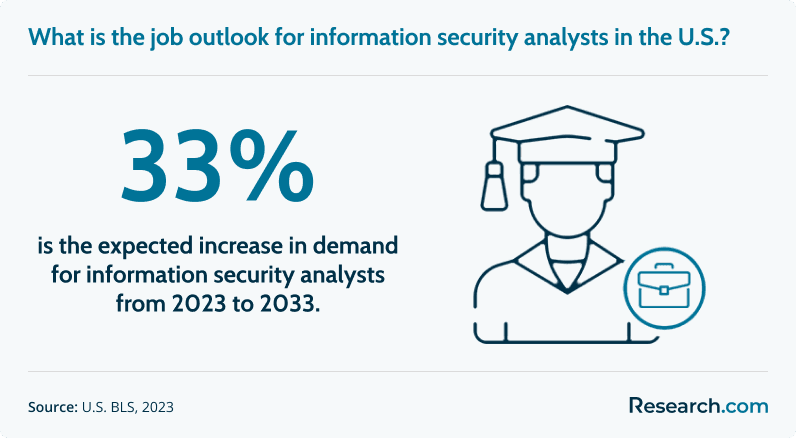
Organizations continue to invest in security because digital systems, cloud services, remote work, connected devices, and sensitive data all create risk. According to the U.S. Bureau of Labor Statistics (BLS), employment of information security analysts, which includes cybersecurity professionals, is projected to grow 33% from 2021 to 2031, much faster than the average for all occupations.
Even with strong demand, cybersecurity hiring is not automatic. Employers typically want evidence of hands-on ability, communication skills, and role-specific knowledge. A degree can help, but candidates often strengthen their prospects with internships, labs, certifications, projects, and prior IT experience. This is one reason IT, computer engineering, and cybersecurity remain among the most popular college majors for students seeking technology careers.
How does a cybersecurity degree prepare you for industry trends?
A cybersecurity degree can prepare students for industry change by combining durable fundamentals with newer topics in threat detection, privacy, automation, and secure infrastructure. The strongest programs do not chase every tool; they teach students how systems fail, how attackers behave, and how to evaluate risk as technology changes.
- Evolving cyber threats: Coursework may include malware analysis, ethical hacking, advanced persistent threats (APTs), social engineering, and defensive monitoring.
- Hands-on security tools: Many programs introduce firewalls, encryption tools, log analysis platforms, and intrusion detection systems (IDS) so students can practice with technologies used in professional environments.
- Data privacy and compliance: Programs often cover laws and frameworks such as GDPR and CCPA so graduates understand how security decisions connect to legal and ethical obligations.
- AI, automation, and analytics: Emerging tools can help detect threats and automate response, but professionals still need judgment to validate alerts, reduce false positives, and manage risk.
- Cloud and connected systems: As organizations depend on cloud platforms and Internet of Things devices, students need to understand identity, access, configuration, and monitoring across distributed systems.
How Does Geographic Location Impact Cybersecurity Compensation?
Location can strongly influence cybersecurity pay because compensation reflects local employer demand, cost of living, industry concentration, and competition for technical talent. Professionals in major technology markets, finance centers, government contracting regions, and high-cost metropolitan areas may see different salary ranges than professionals in smaller markets.
Before relocating or accepting a remote role, compare salary against housing, taxes, commuting, and career growth. State-level information on cyber security jobs salary can help you evaluate whether a higher offer truly improves your financial position.
Could an Online Technology Degree Enhance My Cybersecurity Career?
An online technology degree can support a cybersecurity career when it builds the IT foundation needed to secure real systems. Cybersecurity professionals often need to understand operating systems, networks, databases, cloud infrastructure, scripting, and user support before they can secure those environments effectively.
For students who want broader technical preparation before specializing, an online technology degree may provide a practical route into IT roles that later lead to cybersecurity positions.
Why Should I Choose Cybersecurity Over Other Tech Disciplines?
Cybersecurity may be a strong choice if you are drawn to risk, investigation, systems defense, privacy, compliance, and adversarial problem-solving. Unlike some technology fields that focus mainly on building products, cybersecurity focuses on protecting systems, data, people, and operations from misuse or attack.
It is not the right fit for everyone. Students who prefer creative production, visual design, or entertainment technology may be more interested in paths such as an online game development degree. Cybersecurity is best for learners who can handle ambiguity, pressure, constant learning, and detailed technical investigation.
How Are Emerging Technologies Shaping Cybersecurity Education?
Artificial intelligence, machine learning, cloud computing, blockchain, and the Internet of Things are changing what cybersecurity students need to know. Programs are increasingly expected to address AI-supported threat detection, automated incident response, secure device ecosystems, and the security risks created when more systems connect to networks.
Students benefit when cybersecurity coursework includes practical labs, real-time analysis, and exposure to adjacent technical domains. In some cases, concepts from an online electrical engineer degree can help learners understand hardware, embedded systems, and infrastructure vulnerabilities.
How Do Cybersecurity and Engineering Degrees Compare in Terms of Cost and Value?
Cybersecurity and engineering degrees can both lead to technical careers, but they differ in training model, cost structure, and career focus. Cybersecurity programs often work well online because many labs can be delivered through virtual environments. Engineering programs may require more physical labs, equipment, and on-campus components depending on the discipline.
When comparing value, consider total cost, time to completion, employer demand, required licensure or certifications, and your preferred work. Students evaluating engineering affordability can compare options through the cheapest online schools for engineering.
How Can Interdisciplinary Innovation Enhance Cybersecurity Education?
Cybersecurity problems rarely stay inside one discipline. A breach may involve software flaws, human behavior, legal obligations, business risk, data analytics, and operational continuity. Interdisciplinary programs can help students think beyond tools and understand how security decisions affect whole organizations.
Combining cybersecurity with artificial intelligence, analytics, computer science, healthcare, policy, or engineering can prepare graduates for specialized roles. Students interested in AI-driven security may want to explore the best online AI degree programs as a related academic option.
Can Cybersecurity Principles Enhance Healthcare Data Security?
Cybersecurity is especially important in healthcare because organizations manage sensitive patient data, connected medical devices, electronic health records, insurance information, and regulated systems. Security failures can affect privacy, patient trust, operations, and compliance.
Professionals who combine cybersecurity fundamentals with healthcare data knowledge can support risk assessment, incident response, access control, and regulatory readiness in clinical and administrative environments. Students interested in this intersection may also compare health informatics online programs.
Here's What Cybersecurity Graduates Have To Say About Their Degrees
-
: "
"Moving into cybersecurity turned out to be one of the strongest career choices I have made. I work on real threats, keep learning, and feel that the field gives me room to grow while offering strong employment stability." — Patricia
"
-
: "
"The most meaningful part of cybersecurity is knowing that my work protects sensitive information. The pay and advancement opportunities matter, but the sense of purpose is what keeps me motivated." — Joy
"
-
: "
"Cybersecurity lets me combine problem-solving with modern technology. My degree and certifications helped me access roles I had not expected, and I now work with people who challenge me to keep improving." — Katrina
"
Does Industry Collaboration Enhance Cybersecurity Degree Programs?
Industry collaboration can make a cybersecurity degree more practical because it connects students to current tools, employer expectations, threat intelligence, internships, mentorship, and applied projects. A program with strong employer ties may be better positioned to update coursework as attack methods, platforms, and compliance expectations change.
Students should ask whether industry partners contribute to labs, capstone projects, advisory boards, internships, or hiring pipelines. To understand how cybersecurity fits into broader technology compensation, review this computer science jobs list and salary.
Can an Advanced Computer Science Background Enhance Cybersecurity Expertise?
Advanced computer science knowledge can strengthen cybersecurity expertise by deepening understanding of algorithms, operating systems, secure software development, networks, data structures, artificial intelligence, and large-scale systems. This foundation is especially useful for security research, malware analysis, cryptography, application security, and cloud architecture.
Professionals who want a deeper technical base may compare cybersecurity graduate programs with an online computer science masters, especially if they are interested in software security, AI security, or research-focused roles.
What Key Factors Should I Consider When Choosing a Cybersecurity Degree Program?
The best cybersecurity degree for you is not always the most famous or the fastest. It is the program that fits your budget, schedule, academic background, and target role while providing credible, hands-on preparation.
| Factor | What to look for |
| Accreditation | Choose an accredited institution so your credits and degree are more likely to be recognized. |
| Curriculum | Look for networking, systems, cloud security, cryptography, ethical hacking, risk, compliance, and incident response. |
| Hands-on learning | Prioritize programs with labs, simulations, cyber ranges, projects, and portfolio assignments. |
| Flexibility | Compare synchronous and asynchronous options, part-time formats, transfer credit, and accelerated pacing. |
| Total cost | Review tuition, fees, equipment, books, certification exams, financial aid, and employer reimbursement. |
| Faculty and industry ties | Check instructor backgrounds, advisory boards, internships, partnerships, and career services. |
| Career alignment | Make sure the program supports your target path, whether that is analysis, engineering, forensics, consulting, or leadership. |
Students who want a budget-conscious starting point can compare cyber security schools online.
Key Insights
- A cybersecurity degree is most useful when it combines accredited coursework, hands-on labs, career support, and alignment with certifications or internships.
- Most students should expect about four years for a bachelor’s degree, about two years for an associate degree, and one to two years for a master’s degree if enrolled full time.
- Cybersecurity can lead to roles such as cybersecurity analyst, ethical hacker, network security engineer, forensic analyst, security consultant, incident response specialist, and CISO.
- Salary potential is strong, but not guaranteed. Pay depends on experience, location, certifications, industry, clearance requirements, and job level.
- The demand for cybersecurity and information security analysts is expected to increase by 33% from 2023 to 2033.
- Online cybersecurity degrees can be a good fit for working adults, but students should verify accreditation, lab quality, transfer policies, and total cost before enrolling.
- Cybersecurity education is changing as AI, IoT, cloud systems, privacy regulation, and automation reshape the skills employers expect.
- The biggest mistakes are choosing a program without checking accreditation, focusing only on tuition, assuming every online program is practical, and treating salary figures as guaranteed outcomes.
Resources:
- Georgia Technological Institute. (2024). Undergraduate Costs. https://finaid.gatech.edu/costs/undergraduate-costs
- Purdue University. (2024). Tuition Costs. https://www.purdueglobal.edu/tuition-financial-aid/undergraduate-graduate-tuition-and-fees
- U.S. Bureau of Labor Statistics. (2023). Occupational Outlook Handbook: Information Security Analysts. https://www.bls.gov/ooh/computer-and-information-technology/information-security-analysts.htm#tab-8
- ZipRecruiter. (2024). Cybersecurity Salary. https://www.ziprecruiter.com/Salaries/Cyber-Security-Salary
Other Things You Should Know About Obtaining a Cybersecurity Degree
Certifications like CISSP, CEH, and CompTIA Security+ can significantly enhance the value of a cybersecurity degree in 2027, making graduates more attractive to employers. These certifications validate skills in risk management, ethical hacking, and system security, complementing academic credentials.
A strong cybersecurity degree should require at least one supervised internship or co-op, usually 120 to 300 hours, with work tied to incident response, network security, or digital forensics. Many employers value programs that place students with government agencies, MSSPs, or internal security teams.


