
2027 How to Become a Data Analytics Manager

Co-Founder and Chief Data Scientist
Becoming a data analytics manager is a strong career goal for professionals who want to move beyond building dashboards or running analyses and start leading data strategy. The role sits at the intersection of analytics, business decision-making, technology, and people management. It is also increasingly important as employers rely on data teams to improve operations, reduce risk, personalize services, and support executive decisions.
This guide explains what data analytics managers do, which industries hire them, what education and experience can help, which technical and soft skills matter most, and how related roles compare in salary and job outlook. It is designed for data analysts, business analysts, data scientists, statisticians, database professionals, and career changers who want a practical roadmap to analytics leadership.
The labor market context is favorable for many analytics-related occupations. According to 2024 occupational data from the United States (US) Bureau of Labor Statistics (BLS), several related roles show positive projected growth between 2023 and 2033. Data scientists, for example, had a 2023 median annual wage of $108,020 in the US (US BLS, 2024).
Quick answer: How do you become a data analytics manager?
Most data analytics managers start by earning a bachelor’s degree in data analytics, data science, business analytics, computer science, statistics, or a related field. They then build several years of hands-on experience in roles such as data analyst, business analyst, database administrator, statistician, data scientist, or financial analyst. To move into management, they usually need strong SQL and analytics skills, experience with business intelligence tools, the ability to explain data to non-technical leaders, and a record of leading projects or mentoring junior analysts. A master’s degree, MBA, or certification can help, but experience, business judgment, and leadership ability often matter just as much.
What are the benefits of becoming a data analytics manager?
- Multiple career options: The skills used in analytics management can also support paths in data science, statistics, business intelligence, financial analysis, database management, and consulting.
- Competitive earnings potential: Data scientists in the US earned a 2023 median annual wage of $108,020 (US BLS, 2024), showing the value employers place on advanced analytics skills.
- Broad industry demand: Analytics professionals work across computer systems design, insurance, consulting, government, healthcare, education, finance, and research settings.
- High business visibility: Data analytics managers often work with executives and department leaders because their teams help translate raw information into decisions.
- Room for advancement: Experienced managers can move into director of analytics, head of business intelligence, data strategy, product analytics leadership, or chief data-related roles.
- What does a data analytics manager do?
- What industries hire data analytics managers most for 2027?
- What degree do you need to become a data analytics manager?
- What is the typical career path to becoming a data analytics manager?
- What technical skills are required for a data analytics manager?
- What soft skills are essential for a data analytics manager?
- What are the best certifications for data analytics managers?
- How can advanced technical education accelerate my transition to data analytics management?
- What ongoing education strategies can elevate a data analytics manager’s career?
- What future trends are shaping the role of data analytics managers?
- How do mentorship and networking opportunities impact career advancement?
- Are certifications and advanced degrees essential for career growth in data analytics management?
- How can interdisciplinary education elevate a data analytics manager's career?
- Can complementary educational backgrounds boost a career in data analytics management?
- How can data analytics managers integrate cybersecurity into their strategic framework?
- What entry-level jobs lead to a data analytics manager role?
- What are the biggest challenges that data analytics managers face?
- How does the job outlook for data analytics managers compare to other tech roles?
What does a data analytics manager do?
A data analytics manager leads the people, processes, tools, and priorities behind an organization’s analytics work. Instead of only analyzing datasets individually, this professional decides which business questions the analytics team should answer, how data should be collected and validated, which metrics should be tracked, and how results should be communicated to decision-makers.
In practice, the role usually combines hands-on technical understanding with team leadership. A manager may review SQL queries, evaluate dashboards, define reporting standards, coordinate with data engineers, help analysts choose the right methods, and present findings to executives. The goal is not simply to produce reports. The goal is to make sure analytics work leads to better decisions.
| Responsibility | What it means in practice | Why it matters |
| Team leadership | Hire, mentor, assign work, review output, and support analyst development. | A strong analytics team needs clear priorities, feedback, and accountability. |
| Data strategy | Define which metrics, reports, and models should support business goals. | Analytics should answer important business questions, not produce unused dashboards. |
| Data quality oversight | Set validation processes, identify unreliable sources, and reduce reporting errors. | Bad data can lead to poor decisions and loss of stakeholder trust. |
| Stakeholder communication | Explain findings to executives, department heads, clients, or product teams. | Insights only create value when decision-makers understand and use them. |
| Tool and workflow management | Guide use of SQL, Python, Tableau, Power BI, Looker, data warehouses, and related systems. | The right tools help teams work faster, more accurately, and more consistently. |
Many professionals strengthen their leadership and business analytics skills through graduate study. An online MBA business analytics program may be useful for analysts who want more training in strategy, finance, operations, leadership, and data-driven decision-making. If an MBA is part of your plan, Research.com’s MBA program application guide can help you understand admissions steps and application expectations.
Data analytics managers are found in finance, healthcare, technology, education, government, insurance, consulting, and many other sectors. The exact role varies by employer. At a small company, the manager may still build reports and models. At a large organization, the job may focus more on strategy, governance, stakeholder management, and leading specialized analytics teams.
What industries hire data analytics managers most for 2027?
Data analytics managers are not limited to technology companies. Any organization that collects operational, customer, financial, scientific, healthcare, or product data may need professionals who can turn that information into decisions. Since the BLS does not publish a separate occupational category for “data analytics manager,” related occupations such as data scientists, statisticians, and database administrators provide useful labor-market context.
In 2023, the largest US employers of data scientists were the following industries (US BLS, 2024):
- Computer Systems Design and Related Services: 11%
- Insurance Carriers and Related Activities: 10%
- Management of Companies and Enterprises: 9%
- Management, Scientific, and Technical Consulting Services: 6%
- Scientific Research and Development Services: 5%
For statisticians, the largest US employers in 2023 were (US BLS, 2024):
- Federal Government: 16%
- Research and Development in the Physical, Engineering, and Life Sciences: 16%
- Healthcare and Social Assistance: 7%
- Computer Systems Design and Related Services: 6%
- Colleges, Universities, and Professional Schools; state: 6%
For database administrators, the largest US employers in 2023 were (US BLS, 2024):
- Computer Systems Design and Related Services: 13%
- Finance and Insurance: 13%
- Educational Services (State, Local, and Private): 10%
- Information: 10%
- Management of Companies and Enterprises: 7%
| Industry area | Why analytics managers are needed | Examples of analytics work |
| Computer systems design | Technology firms need analytics for products, platforms, customers, and operations. | Usage analysis, product metrics, performance dashboards, customer behavior models. |
| Insurance and finance | These employers rely heavily on risk analysis, forecasting, compliance, and customer data. | Claims analysis, fraud detection, credit risk, portfolio trends, pricing support. |
| Consulting | Consultants use analytics to solve client problems across industries. | Operational diagnostics, market analysis, cost reduction, performance measurement. |
| Government and research | Public agencies and research organizations need rigorous analysis and statistical methods. | Program evaluation, public data reporting, scientific studies, policy analysis. |
| Healthcare and education | These sectors use data to improve outcomes, control costs, and manage resources. | Patient trends, enrollment analysis, retention metrics, staffing and resource planning. |
The chart below visualizes the largest US employers of data scientists in 2023, based on 2024 data from the US BLS.
What degree do you need to become a data analytics manager?
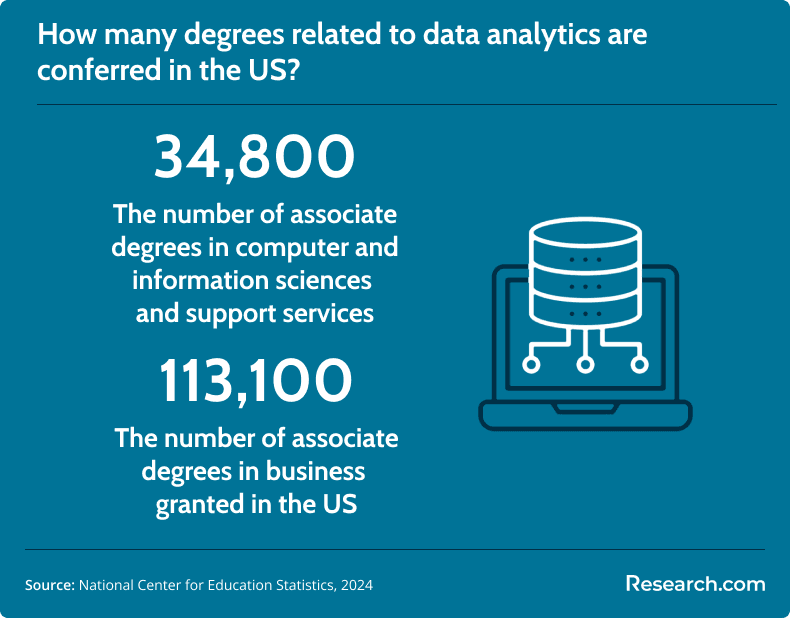
Many data analytics managers begin with a bachelor’s degree in data analytics, data science, business analytics, computer science, information systems, mathematics, statistics, economics, finance, or another quantitative field. These programs can build core knowledge in databases, programming, statistics, visualization, business decision-making, and research methods.
A bachelor’s degree is often enough to enter analyst roles, but management positions usually require experience. Some employers, especially larger corporations or highly technical organizations, may prefer candidates with a master’s degree in data science, analytics, statistics, computer science, management information systems, or an MBA with an analytics concentration.
For students who want a flexible foundation in management before specializing, an easiest online business degree can introduce core business concepts such as accounting, operations, marketing, management, and decision-making. However, anyone targeting analytics leadership should make sure the program includes enough quantitative, technical, or business intelligence coursework.
Education is important, but it is not the only route. Employers may value demonstrated experience, technical skill, industry knowledge, and leadership more than a specific degree title. In some cases, practical experience can sometimes outweigh formal education, especially when a candidate has a strong portfolio of projects, stakeholder-facing work, and measurable business results.
| Education option | Best for | Potential limitation |
| Bachelor’s in data analytics or data science | Students who want a direct technical path into analytics roles. | May need additional business or leadership experience before moving into management. |
| Bachelor’s in computer science or information systems | Learners who want strong technical preparation in programming, databases, and systems. | May require extra coursework or experience in business analysis and communication. |
| Bachelor’s in statistics, mathematics, economics, or finance | Students who want strong quantitative training for modeling, forecasting, or financial analytics. | May need to build practical skills in SQL, BI tools, and data platforms. |
| Master’s in data science or analytics | Professionals seeking deeper technical knowledge or access to more advanced analytics roles. | Can be demanding and may not focus heavily on management unless designed for working professionals. |
| MBA with analytics or business analytics focus | Analysts who want to move into leadership, strategy, or cross-functional management. | May not be technical enough unless the curriculum includes applied analytics, statistics, and BI tools. |
Choosing the Right MBA Path
An MBA can be helpful for analytics professionals who want to manage teams, influence strategy, or work more closely with executives. The key decision is whether to choose a broad MBA or a specialized MBA. Understanding what is the difference between general and specialized MBA programs can help you choose the better fit.
A general MBA usually emphasizes broad leadership topics such as finance, marketing, operations, organizational behavior, and strategy. This can be useful if you want to move into senior business leadership. A specialized MBA in business analytics, data science, or a related area usually offers more focused preparation for analytics-driven roles. Choose based on your career gap: if you already have strong technical skills, a general MBA may fill business and leadership gaps; if your analytics foundation is weaker, a specialized program may be more practical.
What is the typical career path to becoming a data analytics manager?
The path to analytics management is usually gradual. Employers typically want managers who understand the technical work well enough to evaluate it, but who can also lead people, prioritize projects, and communicate with business stakeholders.
- Start in an analytical or data-focused role. Many professionals begin as data analysts, business analysts, reporting analysts, database administrators, junior data scientists, statisticians, financial analysts, or operations analysts. This stage builds practical skills in SQL, Excel, Python, visualization tools, data cleaning, and business reporting.
- Take ownership of larger projects. After gaining experience, analysts often move into senior analyst, lead analyst, analytics consultant, BI developer, or data science roles. At this level, professionals handle more complex questions, improve reporting processes, mentor newer team members, and begin presenting directly to stakeholders.
- Build leadership evidence before applying for manager roles. Management candidates should be able to show that they have led projects, coordinated across departments, improved data quality, influenced decisions, or trained other analysts. Formal people-management experience helps, but project leadership can also be valuable.
- Move into data analytics management. Once professionals combine technical credibility with leadership ability, they can pursue roles such as analytics manager, business intelligence manager, data insights manager, reporting manager, or product analytics manager. An accelerated online MBA may help working professionals develop management and strategy skills more quickly if graduate study fits their goals and schedule.
| Career stage | Primary goal | Skills to prove |
| Entry-level analyst | Learn how to work with real business data. | Data cleaning, SQL, spreadsheets, dashboards, basic statistics, documentation. |
| Mid-level analyst or specialist | Handle larger projects and more ambiguous questions. | Advanced analysis, stakeholder interviews, automation, data visualization, business interpretation. |
| Senior or lead analyst | Guide analytical direction and support other analysts. | Project leadership, mentoring, quality review, presentation skills, cross-functional coordination. |
| Analytics manager | Lead the team and connect analytics to organizational goals. | People management, prioritization, governance, strategic communication, tool evaluation. |
Online vs. In-Person MBA Formats
If you use an MBA to support your move into management, program format matters. The choice between an online MBA vs in person MBA depends on your schedule, learning preferences, networking needs, and career stage.
Online programs may work well for full-time professionals who need flexibility and want to continue building experience while studying. In-person programs may offer more structured networking, campus recruiting, cohort interaction, and face-to-face collaboration. For aspiring data analytics managers, the best format is the one you can complete successfully while still gaining relevant work experience.
What technical skills are required for a data analytics manager?
A data analytics manager does not always need to be the most advanced programmer on the team, but they must understand the technical work well enough to evaluate quality, ask the right questions, remove blockers, and explain trade-offs to stakeholders. The strongest managers combine technical fluency with business context.
- SQL and database knowledge: Managers should understand how data is stored, queried, joined, validated, and transformed. SQL remains essential for reviewing analysis logic, troubleshooting data issues, and working with databases or data warehouses.
- Programming and automation: Python or similar tools can help teams automate workflows, analyze larger datasets, build reproducible processes, and support predictive modeling. A manager may not code daily, but should understand what the team is building.
- Business intelligence and visualization: Tools such as Tableau, Power BI, and Looker help turn analysis into dashboards, reports, and executive-ready visuals. Managers need to know what makes a dashboard useful, accurate, and easy to interpret.
- Statistics and experimental thinking: Regression, forecasting, A/B testing, probability, sampling, and hypothesis testing help managers judge whether findings are meaningful or misleading.
- Machine learning literacy: Managers do not always build models themselves, but they should understand model limitations, bias, validation, interpretability, and when machine learning is or is not appropriate.
- Data governance awareness: Analytics leaders should understand data definitions, documentation, access controls, privacy requirements, and quality standards.
Professionals who want business training with analytics content may compare the top online MBA programs to see whether the curriculum includes quantitative decision-making, analytics strategy, business intelligence, and data-driven leadership. Those who want a more technical graduate pathway can also review MBA in data science best programs, which may combine management education with data science coursework.
| Technical area | What to learn | How to demonstrate it |
| SQL and databases | Joins, aggregations, window functions, data modeling, data quality checks. | Build a portfolio query, improve a reporting pipeline, or document data definitions. |
| Visualization | Dashboard design, KPI reporting, chart selection, executive summaries. | Create dashboards that answer specific business questions and include clear recommendations. |
| Programming | Python basics, data manipulation, automation, reproducible notebooks. | Automate a manual report or build a repeatable analysis workflow. |
| Statistics | Regression, testing, confidence intervals, forecasting, sampling. | Explain assumptions, limitations, and business implications of an analysis. |
| Analytics operations | Documentation, governance, tool selection, workflow management. | Standardize metrics, improve data QA, or reduce duplicated reporting work. |
What soft skills are essential for a data analytics manager?
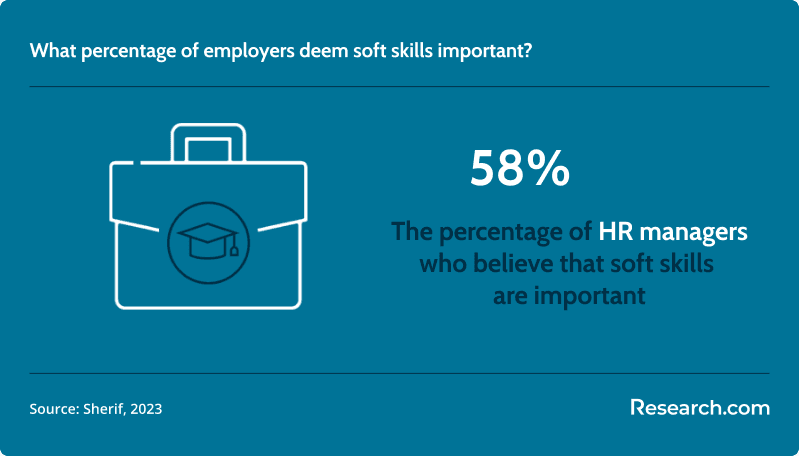
Technical skills help analytics managers earn credibility, but soft skills determine whether their teams influence decisions. Managers must align stakeholders, explain uncertainty, handle competing requests, and lead analysts with different skill levels. In fact, 58% of HR managers say that soft skills are important to any role.
- Leadership and coaching: Managers assign work, set expectations, review deliverables, and help analysts grow. Good leadership means protecting the team from unclear priorities while still keeping work aligned with business needs.
- Communication and data storytelling: Analytics managers must translate complex findings into practical recommendations. They need to explain what the data shows, what it does not show, and what action the organization should consider.
- Business judgment: Not every analysis deserves the same level of effort. Managers must know which questions are worth answering, which metrics matter, and when a quick directional answer is more useful than a perfect model.
- Critical thinking: Strong managers challenge assumptions, identify flawed data, question surprising results, and prevent teams from overinterpreting weak evidence.
- Stakeholder management: Analytics teams often support sales, marketing, operations, finance, product, and executive leadership. Managers need to balance demands and communicate trade-offs clearly.
- Change management: When analytics reveals a problem, teams may resist the conclusion. Managers need diplomacy and persistence to help organizations adopt data-informed changes.
Some professionals build management and analytical thinking in adjacent fields before moving into analytics leadership. For example, an online supply chain management degree can develop skills in operations, logistics, forecasting, and data-supported decision-making, all of which can transfer to analytics management in the right role.
What are the best certifications for data analytics managers?
Certifications can help professionals document specific skills, especially when they are changing careers, filling technical gaps, or trying to prove proficiency with a tool. They are not a substitute for experience, but they can strengthen a resume when paired with projects, work samples, and business results. Professionals with an MIS major may use certifications to add more tool-specific or analytics-specific evidence to their academic background.
| Certification | Who it may help | What it signals |
| Google Data Analytics Professional Certificate | Beginners or career changers who want structured exposure to analytics basics. | Google offers this certificate through Coursera. It includes eight self-paced courses and does not require a degree or prior analytics experience. |
| IBM Data Analyst Professional Certificate | Learners preparing for entry-level analytics work or trying to build applied portfolio projects. | IBM offers this certificate through Coursera. It indicates preparation for entry-level analytics tasks, including analytical methods, visualizations, and reporting. |
| Microsoft Certified: Power BI Data Analyst Associate | Professionals who use Microsoft Power BI or want to show BI tool competency. | This intermediate-level credential demonstrates knowledge of methods and best practices for handling data with Microsoft Power BI. |
When choosing a certification, ask three questions: Does it match the tools used in your target jobs? Will it require you to complete real projects? Can you explain how the credential improved your ability to solve business problems? A short certificate can help you get started, but management roles usually require more than a credential alone.
How can advanced technical education accelerate my transition to data analytics management?
Advanced technical education can help experienced analysts move into management when it fills a clear skill gap. For example, if you already understand business reporting but lack deeper knowledge of algorithms, software systems, cloud platforms, or data architecture, a more technical program may improve your confidence and credibility with engineering and data science teams.
Programs such as the fastest online computer science degree options may appeal to learners who want concentrated technical training. Before enrolling, compare the curriculum against your target roles. A future analytics manager should look for coursework in databases, programming, statistics, software development, machine learning concepts, cloud systems, and data ethics, not just general technology topics.
What ongoing education strategies can elevate a data analytics manager’s career?
Analytics management changes quickly because tools, data platforms, privacy expectations, and business use cases keep evolving. Ongoing education should be targeted rather than random. Instead of collecting unrelated courses, identify the next capability your role requires: stronger executive communication, better data governance, more advanced experimentation, AI literacy, domain-specific analytics, or people management.
- Use short courses for tool updates: BI tools, cloud platforms, and analytics libraries change often, so focused workshops may be more efficient than full degree programs.
- Study leadership deliberately: New managers often underestimate coaching, performance feedback, conflict resolution, and prioritization.
- Build domain expertise: Healthcare, finance, education, insurance, and product analytics each have different metrics, regulations, and stakeholder needs.
- Practice data storytelling: Visualization and narrative skills help analytics leaders make complex findings easier to act on.
- Stay connected to the field: Conferences, professional communities, and industry forums can help managers compare practices and spot emerging expectations.
Interdisciplinary learning can also improve communication and visualization. For instance, some professionals may draw lessons from creative and technical programs such as top online game art schools when thinking about visual design, user attention, and interactive storytelling. The value comes from applying those ideas to clearer analytics communication, not from collecting unrelated credentials.
What future trends are shaping the role of data analytics managers?
Several trends are changing what employers expect from analytics leaders. Artificial intelligence, machine learning, automation, cloud-based data platforms, real-time reporting, and stronger privacy expectations are all influencing the role. These changes do not eliminate the need for managers. They make judgment, governance, and communication more important.
- AI-assisted analytics: Teams are using AI-enabled tools to speed up querying, reporting, summarization, and pattern detection. Managers must know how to validate outputs and prevent overreliance on automated results.
- Data governance and privacy: As more teams use shared data, managers need consistent definitions, access controls, documentation, and quality checks.
- Real-time decision-making: Organizations increasingly expect faster reporting and monitoring, which raises the importance of reliable pipelines and clear alerting rules.
- Domain-specific analytics: Employers want analytics leaders who understand industry context. A health informatics career, for example, shows how analytics skills can be applied to a highly regulated and specialized field.
- Cross-functional influence: Analytics managers increasingly work with product, cybersecurity, finance, operations, and compliance teams rather than serving as a separate reporting function.
How do mentorship and networking opportunities impact career advancement?
Mentorship and networking can shorten the learning curve for aspiring analytics managers. A mentor can help you understand what employers expect, how to move from individual contributor to leader, how to handle executive stakeholders, and how to avoid common mistakes. Networking can also expose you to roles that are not always visible through job boards.
Good networking is not only about asking for jobs. It is about learning how analytics teams operate in different industries, what tools employers use, what leadership challenges managers face, and which skills are becoming more important. Professional communities, alumni groups, conferences, internal company networks, and industry events can all help.
Education can support this process when it deepens a relevant skill. For example, professionals interested in AI-driven analytics may explore the cheapest degree in artificial intelligence options to understand how AI concepts connect with analytics strategy, model evaluation, and responsible implementation.
Are certifications and advanced degrees essential for career growth in data analytics management?
Certifications and advanced degrees are not always required, but they can be useful when they solve a specific career problem. If you lack technical credibility, a technical master’s degree or rigorous certificate may help. If you are technically strong but have limited management exposure, an MBA or leadership-focused program may be more relevant. If you need to prove tool proficiency, a vendor certification may be enough.
An affordable online data science masters degree may make sense for professionals who want deeper training in analytics methods, modeling, programming, and data systems while keeping cost in mind. Before enrolling, compare total cost, time commitment, admission requirements, course sequence, faculty experience, career support, and whether the program includes applied projects.
| Credential path | Choose it when | Do not choose it only because |
| Short analytics certificate | You need basic structure, tool exposure, or a career-change starting point. | You assume it will qualify you for management by itself. |
| Vendor certification | Your target jobs list a specific platform such as Power BI. | You want a broad analytics education. |
| Master’s in data science or analytics | You need deeper technical training and want advanced analytics roles. | You already have the needed technical depth and mainly need leadership experience. |
| MBA or business analytics MBA | You want to move closer to strategy, management, and executive decision-making. | You expect it to replace technical skills entirely. |
How can interdisciplinary education elevate a data analytics manager's career?
Analytics managers become more valuable when they understand the industry problems behind the data. Interdisciplinary education can help professionals connect technical analysis to real-world operations, regulations, customer behavior, scientific processes, or clinical workflows.
For example, healthcare-focused study can help analytics professionals understand patient data, clinical workflows, privacy concerns, and operational metrics. Programs such as affordable online nursing informatics programs may be relevant for professionals who want to apply analytics in healthcare or health technology environments. The main advantage is not simply having another credential; it is gaining the domain knowledge needed to ask better questions and interpret results responsibly.
Can complementary educational backgrounds boost a career in data analytics management?
Yes, a non-traditional academic background can be an advantage when it gives a manager deeper subject-matter expertise. Analytics teams often struggle when they understand the data structure but not the business or scientific context. Professionals from biotechnology, healthcare, finance, operations, education, or supply chain backgrounds can bring valuable domain insight to analytics leadership.
For instance, someone exploring jobs after masters in biotechnology may find that technical domain knowledge can support analytics roles in life sciences, research, product development, or healthcare technology. To make the transition credible, the professional should also build analytics fundamentals such as SQL, statistics, visualization, and data management.
How can data analytics managers integrate cybersecurity into their strategic framework?
Data analytics managers work with sensitive information, so cybersecurity cannot be treated as someone else’s responsibility. Managers do not need to replace security specialists, but they should collaborate with IT and cybersecurity teams to ensure that analytics practices protect data, follow access rules, and reduce unnecessary exposure.
- Limit access: Give team members access only to the data they need for their work.
- Document data sources: Track where data comes from, how it is transformed, and who owns it.
- Protect sensitive fields: Use masking, anonymization, encryption, or aggregation when appropriate.
- Review dashboard sharing: Make sure reports are not distributed to unauthorized users.
- Train analysts: Teach the team how to handle confidential data and recognize security risks.
- Coordinate with security teams: Include cybersecurity stakeholders when launching new analytics platforms, pipelines, or data-sharing processes.
Professionals who want stronger security knowledge may consider programs such as a cheapest online master's in cyber security. This can be especially useful for analytics leaders working in finance, healthcare, government, insurance, or other environments where data protection is central to the job.
What entry-level jobs lead to a data analytics manager role?
There is no single entry-level job that guarantees a future analytics manager role. The best starting point is usually a position that builds practical experience with data, business questions, reporting, and stakeholders. The following related occupations provide useful examples, along with 2023 US median annual wages reported by the US BLS in 2024.
| Role | How it can lead to analytics management | 2023 median annual wage |
| Database Administrators and Architects | These professionals design, maintain, and organize databases, giving them strong knowledge of data structures, access, integrity, and systems. | $117,450 (US BLS, 2024) |
| Data Scientists | Data scientists build models, perform advanced analysis, and solve complex business or research problems, which can translate into leadership over advanced analytics teams. | $108,020 (US BLS, 2024) |
| Statisticians | Statisticians bring rigorous quantitative skills in data collection, probability, modeling, and interpretation, which are valuable in evidence-based decision-making. | $104,110 (US BLS, 2024) |
| Financial Analysts | Financial analysts use data to evaluate performance, forecast trends, assess risk, and guide investment or budgeting decisions. | $99,890 (US BLS, 2024) |
| Management Analysts | Management analysts evaluate operations and recommend improvements, often using data to support organizational change. | $99,410 (US BLS, 2024) |
The chart below compares 2023 median annual wages for roles related to data analytics in the US, based on 2024 US BLS data.
What are the biggest challenges that data analytics managers face?
Analytics management can be rewarding, but it is not only a technical leadership role. Managers often work in environments where data is messy, business priorities shift, and stakeholders want simple answers to complex questions. The biggest challenges usually fall into three categories.
- Maintaining data accuracy and trust: Incomplete records, inconsistent definitions, duplicate sources, and missing values can damage confidence in analytics. Managers need governance processes, validation checks, documentation, and clear metric ownership.
- Explaining uncertainty to non-technical stakeholders: Executives may want a direct answer, but data often comes with assumptions, confidence levels, limitations, and trade-offs. Strong managers explain results clearly without overstating what the data proves.
- Keeping skills and tools current: Analytics platforms, AI features, automation tools, and privacy expectations continue to change. Managers must decide which trends are worth adopting and which are distractions.
- Prioritizing requests: Analytics teams often receive more requests than they can complete. Managers must evaluate business impact, urgency, data availability, and strategic value.
- Balancing speed and rigor: Sometimes leaders need fast directional insight. Other times, a decision requires deeper statistical review. Managers must choose the right level of analysis for the risk involved.
Common mistakes to avoid when preparing for this career
| Mistake | Why it hurts your progress | Better approach |
| Focusing only on tools | Knowing software is useful, but managers must connect analysis to business decisions. | Pair tool skills with business cases, stakeholder communication, and decision recommendations. |
| Waiting for a manager title before leading | Employers want evidence that you can guide work before promoting you. | Volunteer to lead projects, mentor peers, document processes, or coordinate stakeholder meetings. |
| Ignoring data quality | Beautiful dashboards built on unreliable data can undermine your credibility. | Learn validation, documentation, metric definitions, and data governance fundamentals. |
| Choosing a degree without checking fit | A program may be reputable but still lack the analytics, leadership, or flexibility you need. | Compare curriculum, cost, format, applied projects, faculty, and career outcomes before enrolling. |
| Assuming a certificate guarantees promotion | Credentials can support your case, but they rarely replace experience. | Use certifications to build demonstrable skills and create work samples you can discuss in interviews. |
| Relying only on rankings | Rankings may not reflect your goals, budget, schedule, or target industry. | Use rankings as one input, then evaluate program details and employer relevance. |
How does the job outlook for data analytics managers compare to other tech roles?
The BLS does not provide a separate job-outlook category for data analytics managers, but related roles show positive projected employment growth between 2023 and 2033 (US BLS, 2024). These occupations are useful indicators because analytics managers often come from, lead, or work closely with professionals in these areas.
- Database Administrators and Architects: US employment is projected to grow by 9% over the decade, with an average of around 9,500 job openings annually.
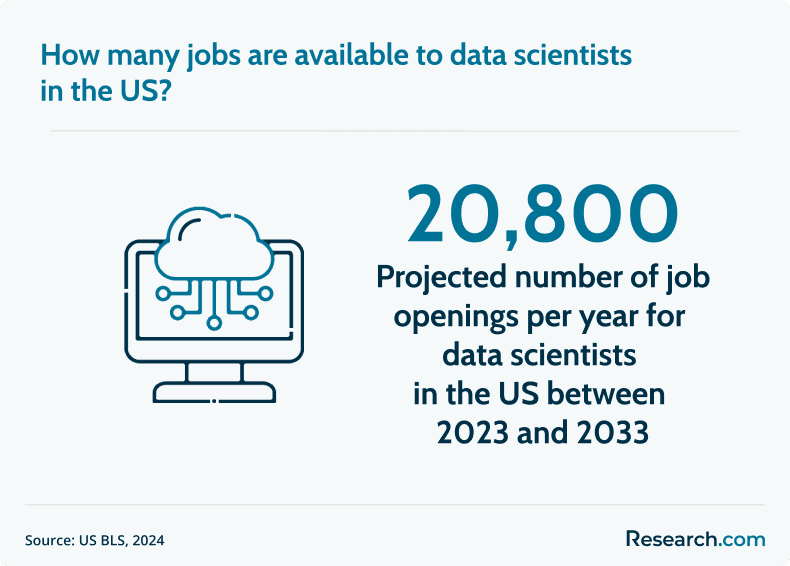
- Data Scientists: Employment is projected to grow by 36% over the decade, with an average of around 20,800 job openings every year.
- Statisticians: US employment is projected to grow by 12%, with an average of about 2,500 job openings for statisticians and mathematicians each year over the decade.
- Financial Analysts: US employment is projected to grow by 9% over the decade, with an average of around 30,700 job openings annually.
- Management Analysts: Employment is projected to grow by 11% over the decade, with an average of about 95,700 job openings annually.
| Related role | Projected growth, 2023 to 2033 | Average annual openings | What it suggests for aspiring analytics managers |
| Database Administrators and Architects | 9% | Around 9,500 | Data infrastructure and governance skills remain valuable. |
| Data Scientists | 36% | Around 20,800 | Advanced analytics and modeling experience can support leadership opportunities. |
| Statisticians | 12% | About 2,500 for statisticians and mathematicians | Statistical reasoning remains important for evidence-based decisions. |
| Financial Analysts | 9% | Around 30,700 | Finance-focused analytics can lead to management roles in planning, risk, and strategy. |
| Management Analysts | 11% | About 95,700 | Business problem-solving and consulting skills pair well with analytics leadership. |
Here’s What Professionals Have to Say about Their Careers in Data Analytics
- “Moving into analytics management changed the scope of my work. I still use technical knowledge every day, but the bigger responsibility is helping the business ask better questions and act on the answers.” —Kendall
- “The role gives me a mix of structure and challenge. Some days are about dashboards and metrics; other days are about coaching analysts, explaining trade-offs, and helping leaders make decisions with incomplete information.” —Lucas
- “What keeps the work interesting is that the field never stands still. New tools matter, but the real value is learning how to turn data into a recommendation people can trust.” —Denise
How to choose the right preparation path
The best path depends on where you are starting. A recent graduate may need entry-level analytics experience first. A technical analyst may need leadership exposure. A business professional may need stronger SQL, statistics, and dashboarding skills. Before choosing a degree, certificate, or job move, use the questions below.
- What is my current gap? Technical skill, business knowledge, leadership experience, industry expertise, or credentials?
- What roles am I targeting? Analytics manager, BI manager, product analytics manager, data science manager, reporting manager, or strategy analytics lead?
- Do job postings require a graduate degree? If not, experience and projects may be a better short-term investment.
- Can I show leadership without a manager title? Look for chances to mentor, review work, lead a dashboard migration, or manage stakeholder requests.
- Does the program teach applied analytics? Prioritize projects, real datasets, business cases, SQL, visualization, and communication.
- Will the credential fit my schedule and budget? A program only helps if you can complete it without derailing your work experience.
Key Insights
- A data analytics manager leads analytics strategy, team performance, data quality, reporting priorities, and stakeholder communication; the role is broader than building dashboards or writing code.
- Most professionals reach this role after building experience in data analyst, data scientist, statistician, database, financial analyst, business analyst, or consulting roles.
- A bachelor’s degree in a quantitative or technical field is common, while a master’s degree, MBA, or certification can help when it fills a clear skill gap.
- The largest US employers of data scientists in 2023 included computer systems design and related services (11%), insurance carriers and related activities (10%), management of companies and enterprises (9%), management, scientific, and technical consulting services (6%), and scientific research and development services (5%) (US BLS, 2024).
- Data scientists had a 2023 median annual wage of $108,020 in the US, and data-scientist employment is projected to grow by 36% between 2023 and 2033, with around 20,800 average annual openings (US BLS, 2024).
- The strongest candidates combine SQL, statistics, BI tools, programming literacy, and data governance with leadership, communication, business judgment, and stakeholder management.
- AI and automation are changing analytics work, but they increase the need for managers who can validate outputs, protect data, explain uncertainty, and align analytics with business goals.
- Before investing in a degree or certification, compare it against your target jobs, current skill gaps, cost, time commitment, curriculum, and opportunities to produce applied work.
References:
- National Center for Education Statistics. (2024, May). Undergraduate Degree Fields. https://nces.ed.gov/programs/coe/indicator/cta
- US Bureau of Labor Statistics. (2024, August 29). Database Administrators and Architects. Occupational Outlook Handbook. https://www.bls.gov/ooh/computer-and-information-technology/database-administrators.htm
- US Bureau of Labor Statistics. (2024, August 29). Data Scientists. Occupational Outlook Handbook. https://www.bls.gov/ooh/math/data-scientists.htm
- US Bureau of Labor Statistics. (2024, August 29). Financial Analysts. Occupational Outlook Handbook. https://www.bls.gov/ooh/business-and-financial/financial-analysts.htm
- US Bureau of Labor Statistics. (2024, August 29). Management Analysts. Occupational Outlook Handbook. https://www.bls.gov/ooh/business-and-financial/management-analysts.htm
- US Bureau of Labor Statistics. (2024, August 29). Mathematicians and Statisticians. Occupational Outlook Handbook. https://www.bls.gov/ooh/math/mathematicians-and-statisticians.htm
Other Things You Should Know About Becoming a Data Analytics Manager
In 2027, a data analytics manager must excel in data management, statistical analysis, and data visualization. Proficiency in tools like Python, R, and Tableau is crucial, along with strong leadership and communication skills to effectively manage teams and translate data insights into actionable business strategies.
To become a data analytics manager in 2027, a bachelor's degree in data science, computer science, or a related field is typically required. Additionally, experience in data analysis, management skills, proficiency in relevant software tools, and a strong understanding of data-driven decision-making processes are essential.


