2027 Online MBA vs. On-Campus MBA Degree Programs: Explaining the Difference

Co-Founder and Chief Data Scientist
Choosing between an online MBA and an on-campus MBA is not just a question of convenience. It affects your cost, schedule, networking access, recruiting opportunities, learning experience, and return on investment. The right format depends on whether you need flexibility, want a traditional campus network, plan to switch industries, or want to keep earning while you study.
The decision matters because employer demand for graduate business talent remains active: 26% of U.S. employers expect higher demand for MBA graduates in the next five years. At the same time, MBA delivery models are changing. More schools now offer online, hybrid, accelerated, and executive formats, which gives students more options but also makes comparison harder.
This guide explains how an online vs. on-campus MBA compares across cost, admissions, employer perception, program quality, networking, financial aid, speed, specializations, and ROI. It is designed for working professionals, career changers, recent graduates, and executives who want a practical way to choose the MBA format that fits their goals.
Quick Answer: Online MBA vs. On-Campus MBA
An online MBA is usually the better fit if you need schedule flexibility, want to keep working, cannot relocate, or want to reduce commuting and living costs. An on-campus MBA is often stronger for students who want immersive networking, structured recruiting, internships, and access to in-person alumni and employer events. Hybrid MBAs can be a middle path for students who want online convenience with some campus-based interaction.
The degree format alone does not determine value. Accreditation, school reputation, curriculum, faculty, career services, alumni network, and your target industry matter more than whether the classes are delivered online or in person.
Key Things You Should Know About Online vs. On-Campus MBA Programs
- In 2024, 17% of prospective graduate business students preferred hybrid learning, which shows growing interest in MBA formats that combine flexibility with some face-to-face interaction.
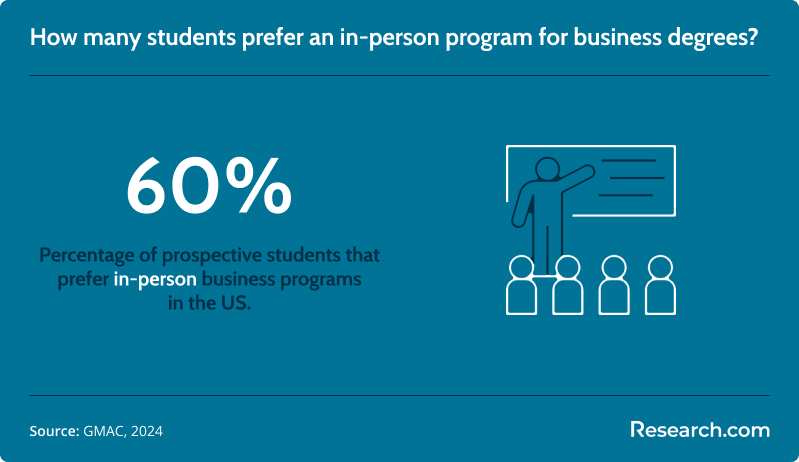
- 44% of U.S. employers believe in-person MBAs build stronger technical skills, although many employers now view well-designed online MBAs as credible when they come from reputable, accredited schools.
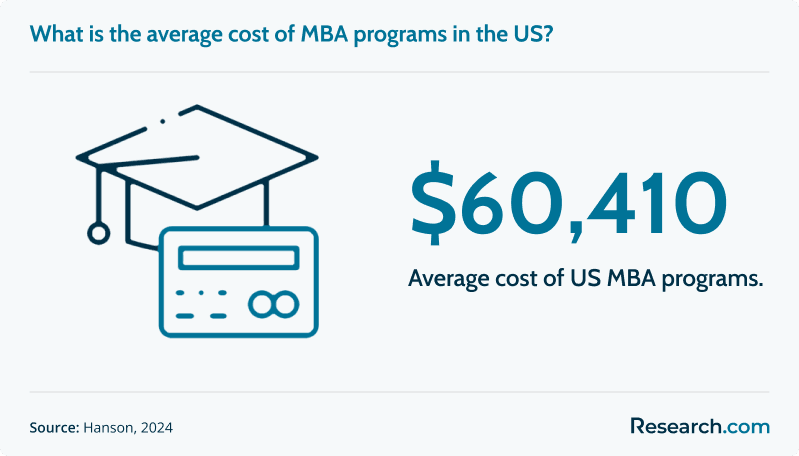
- The average cost of an MBA is $60,410, but total cost varies widely by school, format, relocation needs, fees, and lost income.
- Accelerated online MBA programs can be completed in 12-18 months, while most full-time on-campus MBAs take two years.
- Top-ranked on-campus MBA programs usually have lower acceptance rates, while online MBA programs are often more accessible but can still be selective.
- What are the main differences between an online MBA and an on-campus MBA?
- How do employers view online MBA degrees compared to on-campus MBAs?
- How much does an online MBA cost compared to an on-campus MBA?
- Are scholarships and financial aid different for online and on-campus MBAs?
- Can you finish an online MBA faster than an on-campus MBA?
- How competitive are online MBA programs compared to top on-campus MBAs?
- What student support and career services are offered?
- How do accreditation and rankings impact MBA program credibility?
- What Are the Hidden and Long-Term Costs of an MBA?
- What role do alumni networks play in long-term career success?
- Are there cost-effective options for executive MBAs?
- What are the differences in admission criteria and student demographics?
- How Do Experiential Learning Opportunities Impact Career Readiness?
- What practical skills are uniquely developed in online vs. on-campus MBA programs?
- How do online and on-campus MBAs compare in quality?
- What are the most popular MBA specializations online vs. on-campus?
- Which MBA gives a better return on investment?
- How will online and on-campus MBA programs evolve?
What are the main differences between an online MBA and an on-campus MBA?
The biggest differences between an online MBA and an on-campus MBA are flexibility, class structure, networking style, recruiting access, and cost beyond tuition. Online MBA students usually complete coursework remotely, often through asynchronous lessons, live virtual classes, discussion boards, team projects, and digital simulations. On-campus MBA students attend in-person classes, participate in campus events, and often have more direct access to classmates, faculty, recruiters, and alumni.
A flexible or self paced online MBA can work well for professionals who cannot pause their careers or relocate. Students can often study during evenings, weekends, or between work commitments. By contrast, many on-campus MBA programs operate on fixed class schedules and academic calendars, which can be helpful for students who want structure but difficult for those with demanding jobs or family obligations.
Hybrid programs are becoming more visible because they address a common trade-off: students want flexibility, but they also value personal connection. A 2024 report found that 17% of prospective graduate business students preferred hybrid learning. This format may include online coursework plus campus residencies, weekend sessions, intensive networking events, or short in-person leadership experiences.
| Factor | Online MBA | On-Campus MBA | Best Fit |
| Schedule | Often flexible, with asynchronous or evening options | Usually follows a fixed class calendar | Online for working professionals; on-campus for students who want structure |
| Location | Study from anywhere with reliable internet access | Requires regular campus attendance and possibly relocation | Online for students who cannot move; on-campus for those seeking immersion |
| Networking | Virtual events, digital cohorts, online alumni platforms, residencies in some programs | In-person classmates, clubs, recruiters, alumni events, and campus activities | On-campus for relationship-heavy career switching; online for geographically flexible networking |
| Career services | Remote advising, virtual career fairs, online coaching, digital resume support | Campus recruiting, internship support, employer visits, live career events | Depends on how active the school’s career office is for your format |
| Cost profile | May reduce relocation, commuting, and lost income costs | May include higher living, travel, and opportunity costs | Online for cost control; on-campus when network and recruiting justify the cost |
The chart below illustrates how much time full-time hybrid MBA students want to spend online, as reported by the GMAC in 2024.
How do employers view online MBA degrees compared to on-campus MBAs?
Employers increasingly recognize online MBA degrees, especially when the program is accredited, selective, rigorous, and attached to a respected business school. However, employer opinions are not identical across industries. Some recruiters still associate traditional on-campus MBAs with stronger face-to-face leadership development, campus recruiting, and peer collaboration.
A 2024 GMAC survey found that employers generally accept online MBAs, but 44% believe in-person programs develop stronger technical skills. The same employer perception issue extends to soft skills: about two-thirds think on-campus graduates have stronger leadership and communication skills. These views often reflect the traditional MBA experience, where students practice presenting, negotiating, solving cases, and leading teams in person.
That does not mean an online MBA is weak. Strong online programs now use live case discussions, group consulting projects, virtual simulations, faculty-led discussions, and remote collaboration platforms. Online students also demonstrate skills that matter in modern workplaces, including self-direction, digital communication, time management, and remote team leadership.
For hiring decisions, the format is usually only one part of the evaluation. Employers also look at your work history, leadership experience, industry knowledge, internships or projects, specialization, school reputation, and ability to explain what you achieved during the program.
| Employer Concern | How Online MBA Students Can Address It | How On-Campus MBA Students Can Leverage It |
| Leadership development | Highlight team projects, promotions, management experience, and live presentations | Use campus leadership roles, clubs, consulting projects, and group work as evidence |
| Communication skills | Show examples of remote presentations, stakeholder management, and cross-functional collaboration | Emphasize in-person presentations, negotiations, and classroom participation |
| Technical business skills | Point to analytics, finance, operations, or strategy projects completed during the program | Use internships, labs, and case competitions to demonstrate applied skill |
| Program credibility | Choose an accredited program with clear outcomes and strong faculty | Use school reputation, recruiter access, and alumni strength strategically |
How much does an online MBA cost compared to an on-campus MBA?
Tuition can overlap between online and on-campus MBA programs, but the total cost often differs substantially. The average MBA costs $60,410. Online MBAs typically range from $25,000 to $80,000, while on-campus MBAs often cost between $50,000 and $120,000, especially at top business schools.
The most important cost difference is not always the tuition bill. It is the full financial impact of the program. Online MBA students can often stay employed, avoid relocation, reduce commuting expenses, and continue living in their current housing. Full-time on-campus students may benefit from immersive recruiting and networking, but they may also face higher living costs and lost income.
- Housing and meals: On-campus students who relocate may pay an extra $10,000 to $20,000 per year for housing and meals. Online students typically avoid this relocation cost.
- Commuting and transportation: Students attending campus may spend $1,000 to $5,000 annually on gas, parking, rideshare, or public transportation. Online students usually avoid most of these costs.
- Opportunity cost: Full-time on-campus MBA students may give up $50,000 or more annually in income if they leave the workforce. Online students often continue earning while enrolled.
- Technology and remote learning expenses: Online MBA students may pay technology fees of $500 to $2,000 per year and may need a laptop, upgraded internet, software, or home office equipment.
- Travel for networking: Some online MBA students attend residencies, conferences, or employer events, which can add $1,000 to $3,000 annually.
Accelerated MBA programs can reduce time in school and may lower the opportunity cost of earning the degree. The trade-off is intensity. A shorter MBA can be difficult for students with full-time jobs, caregiving responsibilities, or limited study time.
If you are comparing programs, calculate the total cost of attendance, not just tuition. Students who need help understanding admissions requirements can also review Research.com’s guide on how to apply for an MBA program.
| Cost Category | Online MBA | On-Campus MBA |
| Tuition | Typically ranges from $25,000 to $80,000 | Often ranges from $50,000 to $120,000 |
| Housing and meals | Usually no relocation required | May add $10,000 to $20,000 per year |
| Transportation | Usually minimal | May add $1,000 to $5,000 annually |
| Lost income | Often lower because students can keep working | May exceed $50,000 or more annually for full-time students who stop working |
| Technology and travel | May include technology fees of $500 to $2,000 per year and travel of $1,000 to $3,000 annually | May include campus fees, relocation, commuting, and professional event costs |
Are scholarships and financial aid different for online and on-campus MBAs?
Online and on-campus MBA students can often access similar broad categories of funding, including federal financial aid, employer tuition assistance, private scholarships, and institutional aid. The difference is in eligibility. Some awards require full-time enrollment, campus participation, specific academic status, or admission to a particular program format.
- Federal financial aid: Students in both formats can complete the FAFSA for federal loans and grants. Part-time online students should confirm enrollment minimums because aid may depend on credit load.
- University scholarships: Many business schools offer merit-based and need-based awards to both online and on-campus MBA students. However, some institutions reserve certain awards for full-time or in-person candidates. Reviewing AACSB accredited online MBA programs rankings can help students identify reputable online options where financial aid may be available.
- Private scholarships: Organizations such as the Forté Foundation, the National Black MBA Association scholarship list, and the Prospanica Foundation support MBA students across formats. Some awards, including the Golden Key Graduate Scholar Award, may be available to online students only.
- Employer tuition assistance: Many employers help pay for MBA coursework, but policies vary. Some companies require AACSB accreditation, a minimum grade, job relevance, or continued employment after graduation.
- Graduate assistantships: Campus-based MBA students may have more access to teaching or research assistant roles with stipends. Online MBA students usually have fewer assistantship opportunities.
Financial aid can also depend on your academic focus. A student pursuing a general management MBA may qualify for different awards than a student in finance, analytics, healthcare, or entrepreneurship. Before enrolling, compare award eligibility by format and specialization, and consider how the difference between general MBA and specialized MBA programs may affect employer support, scholarship fit, and long-term career value.
Can you finish an online MBA faster than an on-campus MBA?
Many students can complete an online MBA faster than a traditional on-campus MBA, but speed depends on course load, program design, transfer policies, work schedule, and personal capacity. Traditional full-time campus MBAs commonly take two years, while part-time campus formats may take three to five years. Some online MBA programs offer accelerated options that allow students to finish in as little as 12 to 18 months.
- Shorter academic terms: Some online MBA programs use five- or eight-week blocks instead of traditional 16-week semesters, allowing students to complete more courses across the year.
- Self-paced or flexible pacing: Certain online programs allow motivated students to move through material more quickly, while on-campus students usually follow a fixed schedule.
- Multiple start dates: Online programs often offer several entry points during the year, while campus programs may admit primarily in fall or spring.
- Adjustable course loads: Online students may be able to take heavier or lighter loads depending on work and family responsibilities.
Faster is not always better. An accelerated online MBA can be efficient, but it may leave less time for internships, networking, reflection, and career exploration. Students changing industries may benefit from a slower format that gives them time to build contacts, complete projects, and prepare for recruiting.
| MBA Timeline | Typical Student Profile | Main Advantage | Main Risk |
| 12 to 18 months | Highly focused online or accelerated MBA student | Fast completion and quicker return to career advancement | Heavy workload and less time for networking |
| Two years | Traditional full-time on-campus MBA student | Structured recruiting, internships, and cohort experience | Higher opportunity cost if the student stops working |
| Three to five years | Part-time MBA student balancing work and school | More manageable pacing for working professionals | Longer time before completing the credential |
The chart below lists the top barriers that prevent prospective MBA students from enrolling into in-campus programs, as published in 2024 by the GMAC.
Use the enrollment barriers in the chart as a reminder to evaluate more than academic fit. Time, money, relocation, family responsibilities, and work obligations can determine whether an MBA format is realistic.
How competitive are online MBA programs compared to top on-campus MBAs?
Top on-campus MBA programs are usually more competitive than online MBA programs, especially at elite business schools. Institutions such as Harvard, Stanford, and Wharton have single-digit acceptance rates for their in-person MBAs and may admit fewer than 1 in 10 applicants. Many online MBA programs have higher acceptance rates, but that does not mean they lack rigor or value.
Admissions selectivity often reflects program goals. Full-time on-campus MBAs usually build small, highly curated cohorts for intensive networking and recruiting. Online MBA programs often serve working professionals from broader locations and may design admissions around professional experience, leadership potential, and ability to succeed in a flexible learning environment.
- Class size: Elite campus programs often limit seats to preserve exclusivity and cohort cohesion. Online programs may enroll larger groups because remote delivery can scale more easily.
- Test requirements: Many top in-person programs expect strong standardized test scores. Some online MBAs waive GMAT/GRE requirements for experienced applicants.
- Professional experience: Competitive campus MBAs may prefer applicants with 5+ years of work experience. Some online programs may admit students with as little as two years of work history.
- Applicant pool: Global demand for prestigious campus MBAs creates intense competition. Online MBA programs attract a wider mix of working professionals, career changers, parents, military learners, and location-bound students.
Some online programs are highly selective, especially in specialized fields. For example, top ranking MBA programs in data science may use strict admission standards because analytics-focused business roles require quantitative preparation and applied technical skills.
What student support and career services are offered?
Career support can be a major differentiator between MBA programs. Online MBA students should not assume they will receive the same level of recruiting access as full-time campus students unless the school clearly provides it. Strong online programs offer virtual advising, resume reviews, mock interviews, job boards, alumni mentoring, online employer sessions, and digital career fairs. Some online MBA programs also include structured mentorship and virtual networking events to help remote students build professional connections.
On-campus MBA programs often provide more immediate access to in-person career coaching, employer visits, internships, student clubs, case competitions, and networking receptions. This can matter for students targeting consulting, finance, leadership development programs, or competitive career switching.
| Service to Check | Why It Matters | Questions to Ask the School |
| Career coaching | Helps students translate MBA coursework into promotions or job changes | Are online and on-campus students served by the same career office? |
| Employer access | Direct recruiting can influence job outcomes | Which employers recruit from this MBA format? |
| Internship support | Important for career changers and full-time students | Are internships available or required for online students? |
| Alumni mentoring | Can create industry-specific guidance and referrals | How active is the alumni network for remote students? |
| Technical support | Online students need reliable platforms and fast help | Is support available during evenings and weekends? |
How do accreditation and rankings impact MBA program credibility?
Accreditation is one of the first quality checks students should complete before applying. It signals that a school or program has been reviewed against recognized academic standards. Rankings can also be useful, but they should not replace direct evaluation of curriculum, outcomes, cost, employer access, and student support.
Program reputation matters in MBA hiring, but it matters differently by industry. A highly ranked campus MBA may carry more weight in consulting, investment banking, and leadership-track recruiting. A reputable online MBA may be more practical for professionals who already work in business, healthcare, technology, operations, or management and want advancement without leaving their job.
Students comparing online options can start with reputable lists of MBA online programs, then verify accreditation, curriculum relevance, faculty credentials, career services, tuition, fees, and alumni engagement directly with each school.
What Are the Hidden and Long-Term Costs of an MBA?
The sticker price of an MBA can underestimate the real investment. Students should include tuition, fees, books, software, travel, housing, commuting, time away from work, childcare, test preparation, application fees, and interest on borrowed funds. Online students may avoid relocation but still face technology fees, equipment costs, and optional travel for residencies or networking.
The long-term cost also includes career timing. A full-time campus MBA may temporarily reduce income but offer structured recruiting. An online MBA may preserve income but require disciplined time management and self-directed networking. Neither option automatically produces a better financial outcome.
Before enrolling, build a full budget and compare payback scenarios. Research.com’s guide, How much does an MBA cost?, can help students review the true financial implications of different MBA pathways.
What role do alumni networks play in long-term career success?
An MBA alumni network can influence career growth long after graduation. Alumni can provide referrals, mentorship, industry advice, investor introductions, hiring leads, and access to private communities. The key question is not whether a school has alumni. It is whether alumni actively support students in your format, location, and target industry.
On-campus programs often make alumni relationships easier to build through events, clubs, conferences, and local chapters. Online programs may rely on digital communities, virtual events, regional meetups, and short residencies. Some accelerated formats, including online MBA programs 1 year, use compact cohort models that can create strong peer ties quickly, but students must be intentional about staying connected.
When evaluating alumni strength, ask for examples. Which industries are represented? How often do alumni events occur? Are online students invited to the same networking opportunities? Can students access alumni directories? Are there active chapters in your city or target market?
Are there cost-effective options for executive MBAs?
Executive MBA programs are designed for experienced professionals who want advanced leadership education without stepping away from senior-level work. Traditional on-campus EMBAs may include travel, lodging, meals, and residency costs. Online executive MBA formats can reduce some of these expenses while preserving flexibility.
A cost-effective EMBA should still be evaluated carefully. Lower cost is helpful only if the program offers credible accreditation, experienced faculty, relevant leadership coursework, strong peer quality, and career value for executives. Students comparing options can use Research.com’s guide to the best affordable executive MBA online to identify programs that balance price and quality.
What are the differences in admission criteria and student demographics?
Online and on-campus MBA programs often attract different student populations. Online MBA cohorts tend to include working professionals who need flexibility, cannot relocate, or want to apply coursework immediately in their jobs. On-campus MBA cohorts may include students who are more focused on internships, career switching, leadership development programs, and full-time recruiting.
Admissions criteria also vary. Online programs may place more weight on professional experience, recommendations, leadership trajectory, and readiness for independent study. On-campus programs may emphasize standardized test scores, academic performance, full-time work experience, essays, interviews, and fit with a residential cohort.
Academic preparation still matters for both formats. A business-related undergraduate background can be useful, but it is not always required. Students with an online bachelor's degree in finance, accounting, economics, analytics, engineering, or another quantitative field may be well positioned for finance, analytics, or strategy-focused MBA coursework.
How Do Experiential Learning Opportunities Impact Career Readiness?
Experiential learning helps MBA students move from theory to workplace application. It can include internships, consulting projects, case competitions, simulations, capstone projects, startup labs, client-based assignments, and industry partnerships. These experiences matter because employers often want evidence that graduates can solve real business problems, not just complete coursework.
On-campus MBA students may have more access to live consulting projects, internships, incubators, and employer-sponsored events. Online MBA students can still gain practical experience through virtual simulations, remote team projects, applied capstones, and projects tied to their current employers. Students interested in finance and economics-heavy roles may also compare related graduate options such as the cheapest master of economics online when deciding whether an MBA is the best credential.
Career changers should prioritize programs with strong experiential components. If you already work in your target field, an online MBA with applied projects may be enough. If you need a major industry pivot, an on-campus or hybrid program with internships and recruiter access may offer stronger support.
What practical skills are uniquely developed in online vs. on-campus MBA programs?
Online MBA programs tend to strengthen digital communication, remote collaboration, asynchronous project management, independent learning, and comfort with business technology platforms. These skills are highly relevant in distributed teams and hybrid workplaces. Students often practice managing deadlines, coordinating group work across time zones, and presenting virtually.
On-campus MBA programs often emphasize in-person communication, leadership presence, live negotiation, classroom debate, relationship-building, and real-time team dynamics. These skills can be valuable in client-facing roles, consulting, finance, entrepreneurship, and executive leadership.
Some skill areas overlap across formats. For example, both online and on-campus MBAs may include operations, strategy, analytics, finance, and leadership coursework. Students interested in managing complex initiatives may also explore related training such as a project management degree online if project delivery is central to their career path.
How do online and on-campus MBAs compare in quality?
MBA quality depends more on program design than delivery format. A rigorous online MBA from a reputable, accredited school can be stronger than a weak on-campus program. Likewise, a well-established campus MBA with strong faculty, employer connections, and alumni outcomes may offer value that a less developed online program cannot match.
- Curriculum depth: Compare core courses, electives, specializations, capstones, and applied projects. A strong MBA should cover finance, accounting, strategy, marketing, operations, leadership, data-informed decision-making, and organizational behavior.
- Faculty involvement: Confirm whether the same faculty teach online and on-campus courses and whether students can access office hours, mentoring, and feedback.
- Learning technology: Online MBAs need reliable platforms, interactive content, live engagement options, and strong technical support.
- Peer quality: The value of an MBA often comes from classmates. Review cohort experience, average work background, industries represented, and collaboration expectations.
- Networking design: High-quality online programs intentionally build networking through live sessions, residencies, alumni groups, and team projects.
- Career outcomes: Ask for employment data by program format when available. Do not assume the online and campus outcomes are identical.
Students who learn best through face-to-face discussion may thrive on campus. Students who are disciplined, digitally fluent, and balancing work may do well online. The better choice is the one that matches both your learning style and your career strategy.
What are the most popular MBA specializations online vs. on-campus?
MBA specializations often reflect industry demand, but program format can affect which concentration makes the most sense. Online MBA specializations frequently serve working professionals who want immediate workplace application. On-campus specializations may be stronger in fields where internship access, recruiter relationships, or local industry ecosystems matter.
- Technology and data analytics: Online MBAs commonly feature Business Analytics, Information Technology Management, and data-driven decision-making because these fields translate well to virtual coursework and remote collaboration.
- Finance and investment banking: On-campus MBAs remain influential for finance-heavy career paths. Some of the highest paying MBA specialization in USA areas, including Investment Banking and Private Equity, often rely on strong recruiter pipelines and in-person networking.
- Healthcare management: Both formats can work. Online programs may appeal to mid-career healthcare professionals, while campus programs may provide more structured leadership development and experiential learning.
- Entrepreneurship and innovation: Campus programs may offer stronger access to incubators, startup mentors, pitch events, and venture networks. Online programs can still support founders, especially those already building businesses while studying.
- Supply chain and operations management: Online MBAs can be practical for logistics, e-commerce, manufacturing, and global trade professionals who want to keep working while building managerial skills.
| Career Goal | Format That May Fit Better | Reason |
| Career switch into consulting or investment banking | On-campus or hybrid | Recruiting access, internships, and in-person networking can be critical |
| Promotion within current company | Online | Students can keep working and apply coursework immediately |
| Move into healthcare leadership | Online, hybrid, or on-campus | Best format depends on whether the student already works in healthcare |
| Build analytics or technology management skills | Online or hybrid | Digital delivery often aligns well with technical and data-focused coursework |
| Launch a startup | On-campus, hybrid, or online with strong entrepreneurship support | Access to mentors, investors, and incubators varies by school, not just format |
Which MBA gives a better return on investment?
MBA ROI depends on how much you spend, how much income you give up, how your salary changes, how quickly you complete the degree, and whether the program helps you reach your target role. Neither online nor on-campus MBAs guarantee a better outcome.
- Cost versus salary gains: Top on-campus MBAs can lead to high-paying roles, but tuition, relocation, living costs, and lost wages can be substantial. Online MBAs may cost less overall because students can often continue working.
- Industry expectations: Finance and consulting may reward campus prestige and structured recruiting. Technology, healthcare, operations, and internal corporate advancement may place more emphasis on skills, experience, and applied results.
- Speed to payoff: Accelerated online MBA graduates may complete the degree sooner and continue earning while enrolled. Full-time campus students may delay earnings while they study.
- Network value: A top on-campus network can create access to employers and leadership tracks. A strong online network can support advancement if students actively participate and the school invests in engagement.
- Specialization fit: ROI improves when the concentration aligns with the student’s target market. For example, students interested in healthcare leadership can review potential MBA jobs in healthcare before choosing a concentration.
Online MBAs may offer faster and more cost-controlled ROI for professionals who want to advance without leaving the workforce. On-campus MBAs may justify higher costs for students targeting industries where school brand, internships, and campus recruiting strongly influence hiring.
The chart below lists the US median salary for graduate-level business students by degree type, as reported by the GMAC in 2024.
How will online and on-campus MBA programs evolve?
MBA programs are likely to keep moving toward more flexible, technology-supported, career-specific formats. Online programs will continue improving digital engagement, while on-campus programs will emphasize experiences that are difficult to replicate remotely, such as live networking, immersive projects, and cohort-based leadership development.
- More technology-enabled learning: Online MBAs will continue expanding interactive simulations, digital collaboration, analytics tools, and technology-supported coursework. Campus programs will also use these tools while preserving face-to-face interaction.
- More specialized pathways: Students increasingly want MBA programs tied to specific outcomes, such as analytics, healthcare, sustainability, finance, supply chain, entrepreneurship, or technology management.
- Growth of hybrid formats: Hybrid MBAs can appeal to students who want online flexibility with periodic in-person networking, residencies, or leadership sessions.
- Greater employer familiarity with online degrees: As remote and hybrid work remain common, employers may become more comfortable evaluating online MBA graduates by skills, results, and school quality rather than format alone.
- Broader student access: Online MBAs can reach students who cannot relocate, while on-campus programs will continue competing for students who want a traditional business school experience.
Students should also consider how the MBA aligns with specific career paths. For example, professionals aiming for analytics leadership should understand what do you need to be a data analytics manager before choosing a program, format, or specialization.
Common Mistakes When Choosing Between an Online and On-Campus MBA
- Choosing by format alone: A weak online or on-campus program is still a weak program. Evaluate accreditation, faculty, curriculum, support, alumni network, and outcomes.
- Comparing tuition instead of total cost: Include fees, housing, relocation, travel, technology, childcare, commuting, and lost wages.
- Assuming online means easier: Online MBA programs can be demanding because they require self-discipline, time management, and consistent participation.
- Ignoring career services by format: Ask whether online MBA students receive the same recruiting access and coaching as campus students.
- Overvaluing rankings: Rankings can help with discovery, but they do not guarantee fit, affordability, or career outcomes.
- Failing to verify employer reimbursement rules: Some employers require accreditation, minimum grades, or job-related coursework before reimbursing tuition.
- Not planning for networking: Online students especially need a deliberate networking strategy because informal hallway and campus interactions are limited.
How to Choose the Right MBA Format
- Define your career goal. Decide whether you want a promotion, career switch, startup pathway, executive advancement, or specialized skill set.
- Identify your constraints. Be honest about work schedule, family responsibilities, relocation ability, budget, and preferred learning style.
- Compare total cost. Calculate tuition, fees, living expenses, lost income, travel, technology, and financing costs.
- Check accreditation and reputation. Confirm that the school and program have credible recognition and that employers in your field respect the credential.
- Review career support. Ask for details on coaching, employer access, alumni mentoring, internships, and outcomes by format.
- Evaluate the cohort. Look at classmates’ work experience, industries, geography, and leadership backgrounds.
- Match format to goal. Choose online for flexibility and continued employment, on-campus for immersive recruiting and networking, or hybrid for a blend of both.
- Speak with students and alumni. Ask how accessible faculty are, how useful career services are, and whether the workload is realistic.
Questions to Ask Before Enrolling
| Question | Why It Matters |
| Is the program accredited and respected by employers in my target industry? | Credibility affects employer perception and tuition reimbursement eligibility. |
| Are online and campus students taught by the same faculty? | Faculty access can influence academic quality and mentoring. |
| What career services are available specifically to my format? | Online students should confirm they receive meaningful career support. |
| What is the full cost of attendance? | Total cost includes far more than tuition. |
| Can I keep working while enrolled? | Income continuity can significantly affect ROI. |
| How active is the alumni network for students in my format? | Alumni access can shape long-term opportunities. |
| Does the specialization align with my career goal? | The right concentration can improve relevance and employability. |
| How much live interaction is included? | Students who need real-time engagement may prefer synchronous, hybrid, or campus formats. |
Here’s What Graduates Have to Say About Their Online vs. On-Campus MBA Degree Programs
My online MBA made it possible to stay in my full-time role while building the leadership skills I needed. I used the coursework at work right away, and that helped me earn a promotion before I finished the program. – Rachel
The campus experience opened doors I did not expect. Learning alongside classmates from finance, technology, and healthcare changed how I approached business problems, and one of those connections helped lead to a job offer before graduation. – Amina
I needed an MBA that could fit around my family and work responsibilities. A self-paced online format let me study at night, stay present at home, and keep moving toward my career goals. – Zack
Key Insights
- An online MBA is usually best for students who need flexibility, want to keep working, cannot relocate, or want to reduce total costs.
- An on-campus MBA may be stronger for students pursuing career switches, internships, elite recruiting, consulting, finance, or relationship-heavy networking.
- Program quality depends more on accreditation, faculty, curriculum, career services, alumni activity, and employer recognition than on delivery format alone.
- Total cost should include tuition, fees, housing, relocation, commuting, technology, travel, and lost income. The average MBA costs $60,410, but individual program costs vary widely.
- Employer perception of online MBAs has improved, but some employers still associate in-person MBAs with stronger leadership, communication, and technical skill development.
- Accelerated online MBAs can be efficient, with some programs completed in 12-18 months, but they require strong time management and may offer less time for networking.
- The best ROI comes from matching the MBA format to your career goal, industry expectations, budget, schedule, and ability to use the school’s network.
References:
- Graduate Management Admission Council (GMAC). (2024a). Corporate Recruiters Survey 2024. GMAC.
- Graduate Management Admission Council (GMAC). (2024b). Corporate Recruiters Survey 2024 Regional Profile United States. GMAC.
- Graduate Management Admission Council (GMAC). (2024c). Prospective Students Survey. GMAC.
- Hanson, M. (2024). Average Cost of a Master’s Degree. Education Data Initiative.
Other Things You Should Know About Online vs. On-Campus MBA Degree Programs
In 2027, online MBA programs offer flexibility and accessibility, allowing students to study from anywhere, often at a lower cost. They may use asynchronous course delivery. On-campus MBA programs provide in-person interaction, networking opportunities, and access to campus facilities, appealing to those seeking a traditional academic experience.
In 2027, online MBA programs offer greater flexibility, allowing students to balance work and study from anywhere, using digital platforms for asynchronous learning. On-campus MBAs, by contrast, offer a structured schedule with face-to-face interactions and networking opportunities, fostering a traditional classroom environment.
Online MBA degrees in 2027 are largely respected internationally, particularly when accredited by recognized institutions. Their global acceptance is often on par with on-campus programs, though individual program reputation may vary. Employers increasingly value the adaptability and technological skills honed in online courses, alongside traditional academic rigor.