2027 MBA Application Process: How to Apply to an MBA Degree Program

Co-Founder and Chief Data Scientist
Applying to an MBA program is not a single form submission. It is a months-long admissions project that asks you to prove three things: you are ready for graduate-level business study, you have credible career goals, and the program you are targeting is the right fit for your next move.
This guide is for prospective MBA applicants comparing full-time, part-time, executive, and online options, including candidates deciding whether to take the GMAT or GRE, how early to apply, whom to ask for recommendations, and how to evaluate the cost. You will learn how the MBA application process works, what materials most schools require, how application rounds affect your strategy, and how to avoid mistakes that weaken otherwise competitive applications.
Quick answer: What is the MBA application process?
The MBA application process usually includes researching schools, confirming eligibility, preparing for the GMAT or GRE if required, requesting recommendation letters, writing school-specific essays, updating your resume, submitting transcripts and test scores, completing interviews, and comparing admission and financial aid offers. Many applicants should begin at least 12 months before their target deadline, especially if they need test preparation, scholarship planning, or multiple application rounds.
Key things to know before applying to an MBA program
- The MBA application process can take months because applicants must coordinate test preparation, essays, transcripts, recommendations, interviews, and financing. Starting at least a year ahead gives you more control over deadlines and quality.
- Round 1 deadlines, often in September–October, can be attractive because more seats and scholarship funds may still be available. Round 2, often in January, remains competitive. Round 3, often in March–April, can be more selective because fewer seats and funding options may remain.
- GMAT or GRE scores can strengthen an application, but MBA admissions committees also evaluate work history, leadership evidence, academic readiness, essays, recommendations, and interview performance. Some programs offer GMAT/GRE waivers for qualified applicants.
- Strong MBA essays explain why you want the degree, why now, why that school, and what career outcome you are pursuing. Recommendation letters should reinforce those claims with specific examples.
- Full-time, part-time, executive, and online MBA programs serve different applicants. The best option depends on your career goals, schedule, budget, location, networking needs, and expected return on investment.
- What are the steps to apply for an MBA program for 2027?
- What is the typical MBA application timeline?
- What are the requirements for an MBA application?
- What are the differences between full-time, part-time, and online MBA programs?
- How important are GMAT/GRE scores for MBA applications?
- What are common mistakes to avoid in MBA application essays?
- Whom should I ask to write my MBA letters of recommendation?
- How can I finance my MBA program?
- What career opportunities can an MBA degree provide?
- Is the financial investment in an MBA justified?
- Which MBA Program Offers the Best Value Without Compromising Quality?
- Are Accelerated Online MBA Programs Ideal for Rapid Career Progression?
- How can an accelerated online project management degree complement my MBA?
- How can I demonstrate my leadership skills during an MBA interview?
- How can an MBA drive success in healthcare administration?
- How long does the MBA application process take?
- What are the specific requirements for international MBA applicants?
- What Unique Benefits Do Specialized MBA Programs Offer?
What are the steps to apply for an MBA program for 2027?
A strong MBA application begins with fit, not paperwork. Before you write essays or schedule a test date, identify what you want the MBA to do for your career. The most successful applications usually connect past experience, current skill gaps, target schools, and post-MBA goals into one coherent story. For a broader planning perspective, Harvard Business Review provides useful guidance on how to approach the MBA application process.
| Application step | What to do | Why it matters |
| Define your MBA goal | Clarify whether you want career advancement, a career switch, entrepreneurship training, a salary step-up, or leadership preparation. | Your goal determines which format, curriculum, location, and recruiting network make sense. |
| Research programs | Compare full-time, part-time, executive, hybrid, and online MBA options. | Applying to schools that do not match your needs wastes time and application fees. |
| Check admissions requirements | Review degree, work experience, test score, transcript, essay, recommendation, and interview requirements. | Requirements vary by school and program type, so assumptions can lead to missed deadlines. |
| Prepare testing strategy | Decide whether to take the GMAT or GRE, request a waiver, or apply to test-optional programs. | A score can help some applicants, while others may be stronger with a waiver-based strategy. |
| Build your application story | Align your resume, essays, recommendations, and interview examples around leadership, impact, and career direction. | Admissions committees look for consistency across every part of the file. |
| Submit and follow up | Upload materials, pay the fee, monitor recommendation submissions, and prepare for interviews. | Incomplete files can delay review or remove you from consideration for a round. |
1. Research MBA programs carefully
- Choose the program format that fits your career goals, budget, work schedule, and learning style: full-time, part-time, executive, hybrid, or online MBA.
- Evaluate accreditation, faculty expertise, curriculum design, rankings, recruiting support, alumni network, location, and industry connections.
- Review each school’s deadlines, application rounds, interview policy, prerequisite coursework, and test requirements.
- If you are considering a concentration, compare how different MBA specializations align with your target roles.
2. Confirm that you meet admissions expectations
- Most MBA programs expect applicants to hold a bachelor’s degree from an accredited institution.
- Many programs prefer applicants with professional experience, although requirements vary by format and school.
- Some specialized programs may expect prior quantitative, accounting, economics, analytics, or business coursework.
3. Prepare for standardized tests if required
- Check whether your target programs require the GMAT, GRE, Executive Assessment, or no test.
- If you plan to test, leave enough time for preparation, score reporting, and a possible retake.
- If you are pursuing a waiver, prepare evidence such as quantitative coursework, advanced degrees, certifications, or substantial professional experience.
4. Request recommendation letters early
- Ask people who have directly supervised your work or can speak to your leadership, judgment, collaboration, and growth.
- Give recommenders at least four to six weeks when possible.
- Share your resume, target schools, deadlines, career goals, and examples they may want to discuss.
5. Write school-specific essays
- Explain why you want an MBA, why now, why that program, and how the degree supports your career plan.
- Connect your story to the school’s curriculum, clubs, concentrations, experiential learning, alumni network, or recruiting strengths.
- Avoid using the same generic essay for every school. Admissions teams can usually tell when an essay has not been tailored.
6. Build an MBA-ready resume
- Emphasize achievements, promotions, leadership roles, cross-functional projects, revenue impact, cost savings, process improvements, or team outcomes.
- Keep the resume concise, usually 1-2 pages, and focus on impact rather than task lists.
- Use specific results where you can support them accurately.
7. Submit the application and monitor completion
- Complete the online application for each school and upload required documents.
- Confirm that transcripts, test scores, recommendations, essays, and the application fee have been received.
- Save copies of every submitted material and note each school’s interview and decision date.
8. Prepare for the MBA interview
- If invited, expect questions about your career history, leadership examples, goals, school fit, and decision-making.
- Practice concise stories that show results, reflection, and maturity.
- Be ready to explain why the specific MBA program is necessary for your next step.
9. Respond to decisions strategically
- If admitted, compare tuition, aid, program fit, career services, recruiting outcomes, and opportunity cost before accepting.
- If waitlisted, follow the school’s instructions and provide meaningful updates only when allowed.
- If denied, review whether your school list, essays, test strategy, or leadership evidence needs adjustment before reapplying.
The chart below shows the percentage growth in applications over the past year and points to renewed interest in advanced business education, particularly traditional MBA programs.
What is the typical MBA application timeline?
The MBA admissions calendar varies by school, but most applicants benefit from treating the process as a one-year project. This is true whether you are comparing an online MBA vs on campus MBA or deciding between full-time and part-time formats.
| Time before deadline | Primary tasks | Applicant decision to make |
| 12-18 months | Research schools, identify career goals, attend information sessions, review requirements, and plan testing. | Which MBA format and school category best match your goals? |
| 9-12 months | Prepare for and take the GMAT/GRE if required, connect with students and alumni, and begin essay brainstorming. | Should you submit a test score, retake the exam, or pursue a waiver? |
| 6-9 months | Finalize your school list, contact recommenders, draft essays, and update your resume. | Which schools belong in your reach, target, and safer application mix? |
| 3-6 months | Submit Round 1 applications or complete Round 2 materials, verify transcripts, and track recommendation submissions. | Which round gives you the strongest combination of readiness and opportunity? |
| 1-3 months | Prepare for interviews, respond to waitlist requests, and compare admissions and funding offers. | Which offer has the best academic, career, financial, and personal fit? |
12-18 months before deadlines: research and foundation
- Clarify your short-term and long-term career goals.
- Attend virtual or in-person admissions events.
- Speak with current students, alumni, and admissions representatives.
- Check degree, work experience, test, and prerequisite requirements.
- Create a realistic study plan if your target schools require the GMAT or GRE.
9-12 months before deadlines: testing and networking
- Take the GMAT or GRE if required and decide whether a retake is necessary.
- Build genuine connections with people at your target schools.
- Attend MBA fairs, school webinars, and program-specific sessions.
- Start developing your core application story before essay prompts are due.
6-9 months before deadlines: essays and materials
- Finalize a balanced list of target programs.
- Ask recommenders and provide them with useful background materials.
- Draft essays, revise your resume, and order transcripts.
- Begin Round 1 applications if you are ready to submit a strong file.
3-6 months before deadlines: submission period
- Submit Round 1 applications, often due between September and October.
- If applying in Round 2, often in January, use the additional time to strengthen essays, test scores, or recommendations.
- Confirm that every required item has been received by each school.
1-3 months before decisions: interviews and follow-up
- Prepare for interviews with admissions officers, alumni, faculty members, or current students.
- Review your resume and essays so your answers remain consistent.
- If waitlisted, follow instructions carefully and submit updates only when they add value.
What are the requirements for an MBA application?
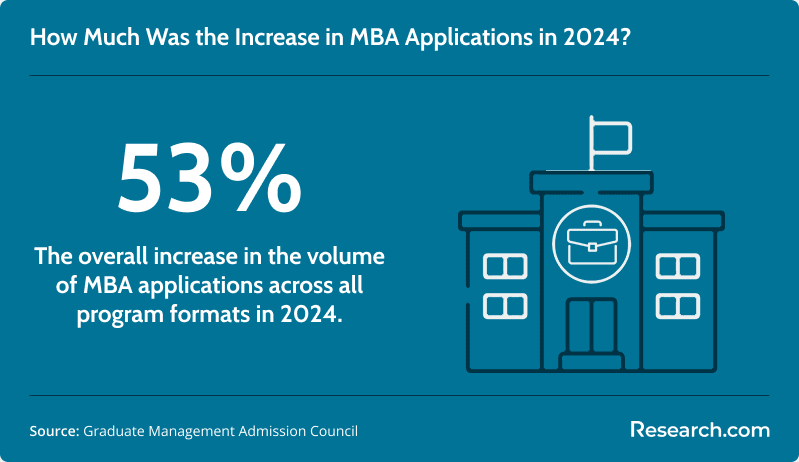
The overall volume of MBA applications across all program formats experienced a 53% surge in 2024, reflecting growing interest in graduate business education. Requirements differ by school, but most MBA programs, including an affordable executive MBA, ask for a similar set of materials.
| Requirement | What schools usually want to see | How to strengthen this part of the application |
| Bachelor’s degree | A degree from an accredited institution, usually with transcripts from all schools attended. | Explain academic trends or weaknesses briefly and professionally if the application allows it. |
| Work experience | Evidence of professional growth, leadership potential, and meaningful responsibility. | Highlight progression, promotions, project ownership, and measurable contributions. |
| GMAT/GRE score or waiver | A score if required, or waiver evidence if the school permits it. | Use test scores to offset academic concerns, or build a strong waiver case with experience and quantitative proof. |
| Essays or personal statement | A clear explanation of goals, motivation, fit, and leadership maturity. | Customize each essay to the school and avoid vague career language. |
| Recommendations | Two or three letters from people who can assess your performance and potential. | Choose recommenders who can provide specific examples rather than impressive titles alone. |
| Resume or CV | A concise record of professional accomplishments and leadership experiences. | Focus on outcomes, not duties, and make your progression easy to understand. |
| Interview | A conversation assessing communication, fit, goals, and self-awareness. | Prepare stories that show leadership, collaboration, judgment, and growth. |
- Bachelor’s Degree from an Accredited Institution: Most MBA programs require a four-year undergraduate degree. The degree does not always need to be in business, and applicants may come from engineering, humanities, social sciences, healthcare, government, technology, or other backgrounds. Some programs may ask for prerequisite courses in business, accounting, economics, or quantitative subjects.
- Work Experience: Many top MBA programs prefer two to five years of professional work experience. Executive MBA programs may expect five to 10 years of leadership experience. Some programs admit applicants with limited work experience, but those candidates often need strong academics, leadership evidence, or unusual professional promise. Applicants coming from public service, policy, or related fields may also want to understand how their background compares with broader political science career options.
- GMAT or GRE Score: Most MBA programs require GMAT or GRE scores unless they are test-optional or offer waivers. Competitive scores vary by school, and top-tier programs often look for GMAT scores of over 700. Waivers may be available for applicants with substantial work experience, strong academics, advanced degrees, or professional credentials.
- Letters of Recommendation: Most schools ask for two or three recommendations. Strong letters come from supervisors, managers, professors, mentors, or other people who can describe your leadership, judgment, performance, and potential with specific examples.
- MBA Essays or Personal Statement: Essays usually ask why you want an MBA, what you plan to do after graduation, and why the school fits your goals. Some schools use very specific prompts, while others offer broader personal statement questions.
- Resume or Curriculum Vitae: Your MBA resume should show career progression, leadership, measurable achievements, and relevant skills. Keep it organized, concise, and focused on impact.
- Transcripts: Schools generally require transcripts from undergraduate and graduate institutions attended. Some allow unofficial transcripts for review but require official versions after admission. Non-English transcripts may need translation.
- English Proficiency Test: Non-native English speakers may need TOEFL, IELTS, or PTE scores unless they qualify for a waiver.
- Admission Interview: Many programs interview shortlisted applicants in person or virtually. Expect questions about your experience, goals, leadership examples, and reasons for choosing the school.
- Application Fee: MBA application fees often range from $50 to $300. Some schools provide fee waivers for military veterans, applicants with financial need, and participants in certain diversity or mentorship programs.
Applicants interested in analytics-heavy business roles may also compare general MBA options with the best MBA in data science degree programs, especially if they want a curriculum that emphasizes quantitative decision-making, business intelligence, or data strategy.
What are the differences between full-time, part-time, and online MBA programs?
Despite 62% of global business schools offering non-degree credentials, many professionals still pursue a traditional MBA because it combines core business training, peer learning, alumni networks, and career services in a structured graduate program. When comparing MBA program formats, focus on opportunity cost, flexibility, recruiting access, and how quickly you need the credential.
| MBA format | Typical fit | Common advantages | Common trade-offs |
| Full-time MBA | Career changers, early-to-mid-career professionals, and students who can pause full-time work. | Immersive experience, internship access, on-campus recruiting, and faster completion. | High opportunity cost, possible relocation, and reduced income while studying. |
| Part-time MBA | Working professionals seeking advancement without leaving their jobs. | Continued salary, evening/weekend/hybrid options, and immediate workplace application. | Longer timeline, heavier work-school-life balance, and fewer traditional internships. |
| Online MBA | Professionals who need flexibility, cannot relocate, or prefer remote learning. | Flexible scheduling, geographic access, and often lower relocation-related costs. | Requires self-discipline and may offer fewer in-person networking opportunities. |
| Executive MBA | Experienced managers and leaders with substantial professional responsibility. | Peer network of senior professionals and leadership-focused curriculum. | Intensive schedule and often higher expectations for work experience. |
Full-time MBA
A full-time MBA is often best for applicants who want a major career shift, need internship access, or want to participate fully in campus recruiting. Programs commonly last one to two years and may offer accelerated or traditional formats. Many full-time MBA programs expect two to five years of prior work experience.
This format can be useful for candidates pursuing fields such as consulting, investment banking, product management, general management, or analytics leadership. Applicants interested in analytics-focused management roles may also explore career pathways such as how to become a data analytics manager.
The main benefit is immersion: classmates, clubs, competitions, internships, recruiting events, and alumni interactions are often easier to access. The main drawback is cost, including tuition, living expenses, and foregone salary.
Part-time MBA
A part-time MBA is designed for professionals who want to keep working while earning the degree. Many programs run in evening, weekend, hybrid, or flexible formats and may take three to five years. Some applicants compare part-time programs with self paced online MBA programs when flexibility is the top priority.
The biggest advantage is financial continuity. You may keep your income, use employer tuition assistance, and apply classroom concepts immediately at work. The trade-off is time pressure. Balancing a demanding job, coursework, family, and networking can be difficult.
Online MBA
An online MBA can be a strong option for professionals who want graduate business training without relocating or leaving full-time employment. Programs may be fully online or hybrid, sometimes with residencies, live sessions, or optional campus experiences. Online MBA programs continued their growth trajectory in 2024, witnessing a 15% increase in applications, showing rising demand for flexible business education. An accelerated MBA may appeal to students who want a shorter path.
Online programs can work well for disciplined learners, parents, military students, frequent travelers, and professionals outside major business-school markets. However, applicants should examine how each program handles career coaching, alumni access, employer recruiting, team projects, and faculty interaction.
How to choose the right MBA format
- Choose a full-time MBA if you want a career pivot and need internships or structured recruiting.
- Choose a part-time MBA if you want to advance while staying employed.
- Choose an online MBA if location flexibility and schedule control matter most.
- Choose an executive MBA if you already have significant leadership experience and want peer learning with senior professionals.
How important are GMAT/GRE scores for MBA applications?
GMAT and GRE scores still matter at many business schools. Navigating test requirements remains important because only 20 of the top 54 U.S. business schools are currently test-optional. That means many applicants should still think carefully about whether a test score will strengthen their file.
Business schools use standardized tests to assess quantitative reasoning, analytical thinking, verbal skills, and academic readiness across applicants from many undergraduate and professional backgrounds. Scores can also help schools compare candidates, evaluate scholarship potential, and assess readiness for quantitative coursework.
That said, most MBA admissions processes are holistic. Schools, including many business schools with high acceptance rates, also weigh the following:
- Quality, progression, and relevance of work experience
- Leadership potential and evidence of impact
- Undergraduate GPA and academic rigor
- Essays and personal statement
- Recommendation letters
- Interview performance
- Extracurricular, community, or entrepreneurial leadership
When a strong GMAT or GRE score can help
- Your undergraduate GPA is below the school’s typical range.
- Your transcript has limited quantitative coursework.
- You are applying to highly selective programs.
- You have fewer years of professional experience than many applicants.
- You want to improve your competitiveness for merit-based scholarships.
When a waiver may make sense
- You have more than 5 years of strong professional experience.
- You hold advanced credentials such as CPA, CFA, PhD, or JD.
- You earned a high undergraduate GPA in a quantitative field.
- Your target program explicitly states that your background may qualify for a waiver.
For Executive MBA programs, many schools waive test requirements and place greater weight on professional leadership experience. Examples include MIT Sloan, UVA Darden, Michigan Ross, and NYU Stern.
A high score can strengthen an application, but it does not guarantee admission. It cannot replace strong leadership evidence, thoughtful essays, career clarity, or credible recommendations. The best test strategy is the one that improves the overall strength of your application, not just one number.
The chart below shows percentage changes in applications compared with the previous year, helping illustrate how interest in MBA programs has shifted over time.
What are common mistakes to avoid in MBA application essays?
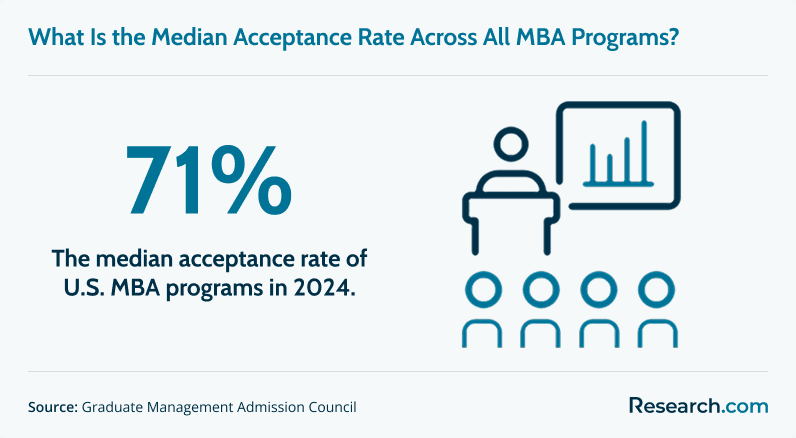
MBA essays are where admissions committees evaluate judgment, clarity, motivation, self-awareness, and fit. With a 71% average acceptance rate in 2024, applicants should not assume essays are a formality. A weak essay can make a qualified applicant seem unfocused, generic, or poorly matched to the program.
| Common essay mistake | Why it hurts | Better approach |
| Answering a different question | It signals poor attention to detail. | Break the prompt into parts and answer each one directly. |
| Repeating the resume | The essay adds no new insight. | Explain motivations, decisions, lessons, and impact behind the resume bullets. |
| Using generic school praise | It could apply to any MBA program. | Name specific courses, clubs, faculty, experiential learning, or recruiting resources that connect to your goals. |
| Overstating leadership | Unsupported claims can sound inflated. | Use concrete examples that show influence, responsibility, and results. |
| Ignoring setbacks | The application may seem polished but shallow. | Discuss challenges honestly and emphasize learning, accountability, and growth. |
| Writing without a career logic | Admissions teams may question whether the MBA is necessary. | Connect past experience, skill gaps, MBA resources, and post-MBA goals. |
- Not answering the prompt: Read the essay question carefully. If it asks for short-term goals, long-term goals, and school fit, cover all three.
- Turning the essay into a resume summary: Your resume already lists roles and achievements. The essay should explain what shaped your decisions and what those experiences taught you.
- Showing limited self-reflection: Admissions committees want to understand your values, judgment, and growth, not only your accomplishments.
- Writing vague goals: “I want to be a leader in business” is too broad. Explain the function, industry, problem, or type of organization you want to work in.
- Sounding inauthentic: Avoid writing what you think admissions officers want to hear if it does not match your actual background or goals.
- Failing to explain “why this school”: Show that you understand the program’s curriculum, culture, community, and career support.
- Lacking a narrative: A strong essay has a clear beginning, turning point, and future direction.
- Doing superficial research: Admissions readers can usually distinguish between a personalized essay and a recycled one.
Whom should I ask to write my MBA letters of recommendation?
The best MBA recommenders are not always the most senior people you know. They are the people who can describe your work, leadership, judgment, and growth with specific evidence. A detailed letter from a direct supervisor is usually stronger than a vague letter from a famous executive who barely knows you.
Best choices for MBA recommenders
- Current supervisor: This is often the strongest option because they can discuss recent performance, responsibilities, and leadership potential.
- Former supervisor: A previous manager can be effective if they worked closely with you and can provide detailed examples.
- Professional mentor: A mentor can speak to your development, decision-making, and long-term potential if they know your work well.
- Senior colleague: A colleague may work if they have directly observed your leadership on important projects.
- Client or business partner: This can be useful for applicants in consulting, sales, account management, entrepreneurship, or client-facing roles.
Who to avoid
- Someone with an impressive title but little knowledge of your work.
- A family friend, relative, or personal contact who cannot evaluate professional performance.
- A recommender who is too busy to meet the deadline or write a thoughtful letter.
- Someone who may provide only generic praise without examples.
How to help recommenders write stronger letters
- Ask early and confirm they can write a positive, specific recommendation.
- Provide your resume, essay themes, target schools, deadlines, and submission instructions.
- Share two or three examples they may want to reference, such as a leadership challenge, project outcome, or professional growth moment.
- Do not write the letter for them. Admissions committees value authentic third-party evaluation.
How can I finance my MBA program?
MBA financing should begin before you apply, not after you receive an admission offer. Compare tuition, fees, books, travel, residency costs, living expenses, technology fees, and lost income if you plan to study full time. Then examine scholarships, fellowships, assistantships, employer sponsorship, military benefits, federal loans, private loans, payment plans, and part-time work options.
Cost-conscious applicants may want to compare traditional options with the most affordable online MBA programs, especially if relocation and opportunity cost are major concerns.
| Funding option | Best for | What to check |
| Merit scholarships and fellowships | Applicants with strong academic, professional, leadership, or diversity-related profiles. | Whether applying in an earlier round improves consideration and whether awards renew each term. |
| Employer sponsorship | Working professionals whose MBA aligns with company needs. | Service commitments, reimbursement limits, grade requirements, and repayment clauses. |
| Federal or private loans | Students who need to finance remaining costs after grants and scholarships. | Interest rates, repayment terms, deferment options, and total borrowing cost. |
| Part-time or online study | Applicants who want to keep earning while enrolled. | Whether slower completion affects career goals or access to recruiting. |
What career opportunities can an MBA degree provide?
An MBA can support advancement into management, strategy, finance, consulting, operations, marketing, analytics, entrepreneurship, healthcare administration, technology management, and general leadership roles. The degree is most valuable when the program’s recruiting network, curriculum, and alumni base align with your target industry.
Applicants comparing flexible formats may review the best online MBA programs to understand how online schools structure career coaching, networking, and employer connections for working professionals.
Questions to ask about MBA career outcomes
- Which employers recruit from the program?
- What industries and functions do graduates enter?
- Does the school publish placement rates, salary data, or internship outcomes?
- Are career services available to online, part-time, and executive students?
- How active is the alumni network in your target city or industry?
- Does the program support career switchers, or mainly students advancing in their current field?
Is the financial investment in an MBA justified?
An MBA can be financially worthwhile, but the answer depends on your starting salary, career goals, school cost, scholarship package, debt level, work status during school, and the strength of the program’s recruiting network. Do not evaluate ROI using tuition alone. A full-time MBA may also include lost income, relocation, and living costs, while an online or part-time MBA may reduce opportunity cost by allowing continued employment.
Use the cost of an online MBA as one benchmark when comparing lower-cost or flexible options against traditional campus programs. The right financial decision is not always the cheapest program; it is the program that offers the best combination of affordability, credibility, support, network, and career relevance.
Before committing financially, ask these questions
- What is the total cost of attendance, not just tuition?
- How much aid is guaranteed, and how much is conditional?
- What debt payment would be manageable after graduation?
- Will you need to stop working, reduce hours, or relocate?
- Does the school publish career outcomes for your specific program format?
- Would a certificate, specialized master’s degree, or employer-sponsored training achieve the same goal at lower cost?
Which MBA Program Offers the Best Value Without Compromising Quality?
The best-value MBA is an accredited program that supports your goals at a cost you can manage. Value depends on more than tuition. Accreditation, faculty quality, curriculum fit, alumni reach, student support, employer reputation, career services, and flexibility all affect whether the program is worth the investment.
Applicants who want a lower-cost option with recognized business-school accreditation may compare the cheapest online AACSB MBA programs. When reviewing any value-focused list, confirm whether fees, residencies, textbooks, and technology costs are included.
Are Accelerated Online MBA Programs Ideal for Rapid Career Progression?
Accelerated online MBA programs can work well for professionals who already have clear goals, strong time-management skills, and enough business background to move quickly through an intensive curriculum. They may be less suitable for applicants who need extensive career exploration, internship access, or more time to build a network.
Before choosing one of the accelerated online MBA programs, review course pacing, weekly workload, live-session requirements, student support, career services, and whether the faster schedule affects your ability to absorb material or participate in networking.
How can an accelerated online project management degree complement my MBA?
Project management training can complement an MBA by adding structured methods for planning, budgeting, risk management, stakeholder communication, and execution. This combination may be useful for professionals who lead cross-functional teams, manage technology rollouts, oversee operations, or coordinate complex organizational change.
An accelerated online project management degree may be especially relevant for applicants who want practical project leadership skills alongside broader MBA coursework in strategy, finance, marketing, and organizational management.
How can I demonstrate my leadership skills during an MBA interview?
In an MBA interview, leadership is more convincing when shown through specific examples than when claimed directly. Admissions interviewers want to understand how you influence people, make decisions, handle conflict, solve problems, and learn from experience.
Use the STAR method
The STAR method helps you organize stories clearly:
- Situation: Set the context briefly.
- Task: Explain the challenge, responsibility, or goal.
- Action: Describe what you personally did.
- Result: Share the outcome, including measurable impact when accurate.
Leadership qualities to highlight
- Communication: Show how you clarified goals, persuaded stakeholders, or handled difficult conversations.
- Decision-making: Explain how you evaluated information and made a sound choice under constraints.
- Teamwork: Describe how you motivated, supported, or aligned people.
- Problem-solving: Discuss how you diagnosed an issue and implemented a practical solution.
- Initiative: Show when you took ownership without waiting to be asked.
- Adaptability: Share how you responded to uncertainty, change, or failure.
Interview mistakes to avoid
- Giving vague answers without examples.
- Taking all the credit for team achievements.
- Speaking negatively about employers, coworkers, or clients.
- Memorizing answers so tightly that you sound scripted.
- Failing to connect your leadership examples to your MBA goals.
The following chart shows median acceptance rates across MBA programs and offers a snapshot of the admissions landscape for prospective students.
How can an MBA drive success in healthcare administration?
An MBA can support healthcare administration careers by combining management training with healthcare-specific knowledge in finance, operations, regulation, strategy, data-driven decision-making, and ethical leadership. This blend can be valuable for professionals who want to manage hospitals, clinics, health systems, insurance organizations, healthcare technology companies, or service lines.
Students focused on healthcare leadership may compare MBA healthcare tracks with a healthcare administration degree online. The better choice depends on whether you want broad business mobility or a more specialized healthcare administration pathway.
How long does the MBA application process take?
The MBA application process can take six months or more, and many successful applicants begin about a year before deadlines. The exact timeline depends on whether you need test preparation, how many schools you target, how quickly recommenders can complete letters, and how much time you need to develop strong essays.
Whether you are applying to a one year online MBA or a traditional full-time program, a minimum of six months is recommended for testing, essays, recommendations, school research, and scholarship planning. Merit-based MBA scholarships and fellowships saw a significant rise in 2024, with 35% of incoming students receiving aid, up from 24% in 2016, indicating increased financial support for MBA candidates.
| 6-12 Months Before Deadlines | 3-6 Months Before Deadlines | 1-3 Months Before Deadlines |
| Prepare for standardized tests such as the GMAT/GRE | Write essays and refine your MBA resume | Finalize applications and prepare for interviews |
| Research schools and narrow your target list | Secure recommendation letters | Compare offers, respond to waitlists, and plan financing |
Factors that can lengthen your application timeline
- Standardized test preparation: Many applicants spend several months studying, and some need 6 to 12 months if they plan to retake the GMAT or GRE.
- School research: Comparing programs, attending events, and contacting alumni can take weeks or months.
- Essay revision: Strong essays often require several drafts and school-specific customization.
- Recommendation letters: Give recommenders enough time; 2-3 months' notice is advisable when possible.
- Multiple applications: Applying to several schools increases the time needed for forms, essays, interviews, and follow-up.
What are the specific requirements for international MBA applicants?
International MBA applicants usually complete the same core application as domestic applicants, but they may also need to manage English testing, transcript evaluation, visa documentation, and proof of funding. International student interest in Executive MBA programs surged in 2024, with a 25% increase in applications, underscoring the global appeal of advanced executive education.
- English proficiency: If English is not your native language, you may need TOEFL, IELTS, or Pearson Test of English (PTE) scores. Some schools waive this requirement for applicants who earned a degree from an English-speaking institution.
- Transcript evaluation: Some schools require international transcripts to be reviewed by a credential evaluation service so grades and degrees can be compared with U.S. standards.
- Visa requirements: International students planning to study in the U.S. may need a student visa, such as an F-1 visa. Visa processing can take time, so begin early after admission.
- Financial documentation: Schools may require bank statements, sponsorship letters, or other proof that you can cover tuition, living expenses, and related costs.
- Timing considerations: International applicants should build in extra time for document translation, credential evaluation, visa appointments, and travel planning.
What Unique Benefits Do Specialized MBA Programs Offer?
Specialized MBA programs focus the general MBA curriculum on a particular industry or function, such as data science, healthcare administration, finance, marketing, entrepreneurship, project management, or sports management. They can be useful when you already know your target field and want coursework, projects, and networking aligned with that area.
For example, applicants targeting careers in the sports industry may compare the best MBA in sports management programs to find options with relevant courses, industry connections, and applied learning opportunities.
When a specialized MBA makes sense
- You have a clear target industry or function.
- The school has strong employer relationships in that field.
- The specialization includes practical projects, capstones, internships, or relevant electives.
- The credential helps differentiate you for a specific career path.
When a general MBA may be better
- You want flexibility across industries or functions.
- You are still exploring post-MBA career options.
- The specialized program has a narrow network or limited recruiting reach.
- You prefer to customize through electives rather than commit to one formal concentration.
What MBA graduates say about the application process
- The MBA application forced me to clarify my career direction and explain the value I could bring to a program. The process was demanding, but it helped me turn scattered experiences into a focused story. Paul
- Studying for the GMAT, writing essays, and managing recommendations felt like a long-distance race. Still, the process taught me resilience and helped me understand my strengths before the program even started. David
- Applying to business school pushed me to expand my network and ask for honest feedback. Those conversations shaped my goals and made the MBA experience more meaningful once I enrolled. Michael
Common MBA application mistakes and better alternatives
| Mistake | Why it creates risk | Better decision |
| Choosing schools based only on rankings | A highly ranked program may not match your goals, schedule, location, or budget. | Compare fit, career outcomes, cost, curriculum, and network along with reputation. |
| Ignoring accreditation | Accreditation can affect credibility, employer perception, and transferability. | Confirm institutional and business-school accreditation before applying. |
| Applying too late | Later rounds may have fewer seats and less funding available. | Apply when your application is strongest, but plan early enough for Round 1 or Round 2. |
| Submitting generic essays | Admissions committees may question your interest and preparation. | Customize every essay with specific school details and career logic. |
| Assuming test-optional means test-blind | A strong score may still help with admission or scholarships. | Evaluate whether a score improves your profile before skipping the test. |
| Focusing only on tuition | Total cost includes fees, travel, books, living costs, and lost income. | Calculate full cost of attendance and opportunity cost. |
| Expecting guaranteed outcomes | No MBA program can guarantee a specific salary, promotion, or job. | Review transparent career data and compare it with your own goals and risk tolerance. |
References
- Business Wire. (2025). MBA enrollments and completions tick upward, reports validated insights in new research.
- BusinessBecause. (n.d.). Business school applications growing.
- Graduate Management Admission Council. (2024). 2024 prospective students survey: Candidate mobility infographic.
- Graduate Management Admission Council. (2024). 2024 admissions and application trends.
- Graduate Management Admission Council. (2024). Infographics: Application trends survey 2024.
- GMAC Advisor. (2024). 2024’s top 10 trends from GMAC research: Year in review.
- McFarland, N. (2024). MBA applications spike for 2024-2025, GMAC business graduate data shows. Higher Ed Dive.
Key Insights
- Start early. A strong MBA application often requires at least six months, and many applicants benefit from beginning 12 months before deadlines.
- Fit matters as much as selectivity. Choose programs based on career goals, format, cost, accreditation, recruiting support, and alumni network—not rankings alone.
- Round strategy matters. Round 1 can offer strong access to seats and scholarships, Round 2 remains viable for many applicants, and Round 3 is often more limited.
- GMAT/GRE strategy should be individualized. A strong score can offset weaknesses and support scholarship consideration, but waivers may work for applicants with strong professional or quantitative backgrounds.
- Essays and recommendations should tell the same story. Your goals, leadership examples, resume achievements, and recommender comments should reinforce one clear application narrative.
- Program format affects ROI. Full-time MBAs may offer stronger immersion and recruiting access, while part-time and online MBAs can reduce opportunity cost by allowing continued employment.
- No MBA guarantees a specific outcome. Compare total cost, debt, career services, placement transparency, and your own career readiness before enrolling.
Other Things You Should Know About the MBA Application Process
Knowing the exact essay topics before starting your MBA application in 2027 is beneficial but not essential. Focus on understanding the general themes like leadership experience or career goals. Schools often release specific questions later in the year, so stay updated through official channels.
Common MBA essay topics in 2027 include discussing your leadership experience, detailing your career goals and how the MBA will help achieve them, reflecting on a significant challenge you've overcome, and explaining why you chose a particular program. Schools also seek insights into your personal values and vision for the future.
Ideally, begin your MBA application preparation 12-18 months before your intended start date. This timeframe allows ample time for GMAT/GRE prep, school research, and crafting strong essays. Starting early minimizes stress and ensures a polished application.